


Plot Summary
Prologue
For five centuries, Skylar Amon and her three sisters have hidden from Pytheios, the Red Dragon King who murdered their father and hunted their phoenix mother. When he finally finds their home in Kansas, he stabs their mother before she can reach the sisters waiting in a field.
Serefina uses her last strength to send each daughter to a different refuge, then dies as her phoenix powers pass on. Skylar lands in a cavern before Tyrek, her father’s rogue brother, and learns the family she believed dead has not entirely vanished. Grieving and blaming herself for missing her mother’s shift at the diner, she swears to destroy Pytheios and protect her scattered sisters.
The opening makes Skylar’s protectiveness more than a personality trait: it is a role she has practiced for centuries, then inherited in a single night when her mother dies. Her guilt attaches itself to a concrete missed shift, turning chance into a verdict against herself. Serefina’s final act both saves her daughters and separates them, so survival arrives as loss. Tyrek’s survival complicates Skylar’s inherited belief that every dragon is an enemy, but grief leaves little room for revision. The prologue sets up the central conflict between the safety her mother taught and the independent future her mother asked her daughters to make.
The Sister in the Citadel
A year after Serefina’s death, Skylar sneaks into Ben Nevis, the Blue Clan’s mountain fortress, where her sister Kasia has been taken. She finds Kasia not imprisoned but seated beside Brand, the gold dragon she chose as her mate, and Ladon Ormarr, the newly crowned Blue King. Skylar refuses to believe her sister acted freely and tries to remove her by force.
When Ladon blocks her, they fight until Skylar’s fire flares and her touch teleports him into another room. She sends Kasia away too, but Brand grabs Skylar by the throat before Kasia returns and stops him. Seeing her sister’s unforced affection for Brand, Skylar finally understands that Kasia came willingly.
Skylar’s rescue attempt is driven by an old, useful rule that has become an inadequate one: dragons took her family, so a dragon near Kasia must be a threat. The fight makes that rule physical, while Kasia’s return unsettles it with evidence Skylar cannot dismiss as manipulation. Her teleportation lets her seize control of the room, but not of the truth. The reversal matters because Skylar’s loyalty is genuine even when her interpretation is wrong. She protects her sister by arriving, then begins to respect her by accepting that protection cannot mean deciding for her.
Four Flames, One Throne
Kasia explains that she mated Brand by choice and shows Skylar the bond mark that joins their families. Maul, the sisters’ hellhound companion, then shares images of himself with them as children and of their father’s murder, along with the possibility that new dragon kings could break Pytheios’s hold.
Kasia tells Ladon that she has three sisters, not just Skylar, and Skylar storms out, fearing the revelation has placed all four in danger. Ladon follows and offers her a chance to judge his rule firsthand, while agreeing that she must choose any mate freely. In parallel, Pytheios learns that another phoenix is with Ladon and begins planning to seize her before the other kings can act.
The scene widens a private family crisis into a political one without making the sisters’ bond merely a source of leverage. Maul’s pictures offer evidence that survives the limits of spoken history, while Kasia’s disclosure forces Skylar to decide whether secrecy still protects anyone. Ladon’s promise of choice is a deliberate contrast with Pytheios’s appetite for possession, though it does not erase Skylar’s suspicion. Meanwhile, Pytheios treats the news as a race to capture a resource. The story places two kinds of power side by side: authority that demands consent and authority that regards consent as an obstacle.
A Mating Under Siege
Ladon learns that Pytheios knows Skylar is at Ben Nevis and may attack within hours. Skylar refuses to mate simply because danger has shortened her choices, but Kasia makes clear that capture would threaten every sister and the clan sheltering them. Skylar studies Ladon’s motives, sees that he took power to restore his impoverished people rather than enrich himself, and accepts the risk.
Their mating ignites both phoenix and dragon fire; Skylar’s flames turn blue at their edges and Ladon survives, though the bond mark at her neck has not yet formed. She insists their partnership must include her judgment and political voice, not reduce her to a symbol beside his throne.
The mating is both intimate choice and response to coercive circumstances, a tension the scene does not pretend away. Skylar cannot make her decision in a peaceful courtship, yet Ladon’s refusal to claim her by force gives her room to act within the emergency rather than simply submit to it. Her reasoning remains practical, grounded in the danger to her sisters and her assessment of his record. The flames make the bond visible, but her insistence on partnership gives it ethical substance. A shared future cannot be secured by biology alone; it has to be negotiated as a relationship between two people with political agency.
The Black King's Bargain
Ladon introduces Skylar to his guard and council, asking them to protect her even if the mating kills him. His sister Arden resists, but agrees not to harm her. When Black King Gorgon arrives, he recognizes Skylar’s family line and admits he has waited centuries for a phoenix and a chance to oppose Pytheios.
He allies with Ladon and Brand despite uncertainty over which sister carries the old phoenix authority. Kasia then has a vision of blue and black dragons fighting together at the Gold Clan’s mountain. Ladon, Brand, and Gorgon plan to draw Brock Hagan, the absent heir, into a confrontation that will let Brand claim the Gold Throne without attacking his own people directly.
The alliance forms around a problem of legitimacy, not simple mutual affection: Gorgon wants a rightful High King, while Ladon and Brand want the corrupt regime dismantled and their people freed. Skylar’s presence makes old succession beliefs unstable, since no one knows how several phoenix sisters alter the rules. Kasia’s vision offers direction but not certainty, so leadership still requires judgment rather than obedience to prophecy. Arden’s resistance also exposes whose safety is being negotiated inside the political pact. The scene suggests that alliances become credible not when everyone trusts completely, but when they accept specific risks and remain accountable for them.
A Sister Through the Void
Kasia foresees Pytheios hunting their youngest sister, Angelika, at a settlement in the Pyrenees. With communications sealed to protect the military plan, Skylar proposes that Kasia teleport them together, though the first test leaves Skylar sensing icy hands in the silent space between places. They reach Angelika among a wolf pack led by Bleidd, whose old promise to Serefina has kept her safe.
The pack is exposed and badly damaged from an earlier dragon attack, so Skylar offers refuge at Ben Nevis and arranges to disguise Angelika as a wolf. On the return journey, Skylar and Kasia nearly become trapped mid-teleport; Ladon and the gathered shifters pull them free, confirming the power can save people but can also consume them.
Skylar’s first major use of her gift for someone beyond her immediate circle expands her idea of responsibility. She sees that the dragons’ campaign has endangered the wolves too, and offers sanctuary rather than treating their losses as collateral. Yet her magic introduces a danger that her confidence cannot master: the in-between is not just a convenient route but a space capable of holding her. Ladon’s rescue turns partnership from an abstract promise into coordinated labor, while Skylar’s willingness to risk herself still remains troublingly automatic. Care here means enlarging the circle of protection, but also learning that self-sacrifice is not the only way to serve it.
The White Dragons Kneel
Flying toward Norway with Ladon, Skylar helps capture two White Clan scouts sent by King Volos. She tells them she is Zilant Amon’s daughter and the rightful heir to the White and Red lines, then lets Ladon’s dragon fire reveal the phoenix markings across her skin. The scouts accept her authority, and Skylar sends them back to report the White Clan’s plans rather than keeping them prisoner.
Her claim strengthens the rebellion, but the journey leaves her exhausted and exposes her to attack. At Store Skagastølstind, Brand enters the Gold Clan’s council with Kasia, Arden, and the allied kings’ representatives. He asserts his claim, and the council submits, giving him the throne without a battle inside the mountain.
Skylar converts inherited identity into a strategic tool, but she does not rely on bloodline alone. The White scouts believe her after seeing the phoenix fire, and she uses that recognition to create an intelligence channel rather than simply punish them. Her action gives the revolution an opening while placing her visibly in the succession struggle. Brand’s peaceful claim to the Gold Throne offers a counterpoint: authority can be established through allegiance, not only through conquest. Yet the victory is incomplete because Brock remains absent. Both events expose legitimacy as something staged and witnessed, but also vulnerable to whoever controls the battlefield outside the room.
Two Battles, One Captive
As Brand’s delegation secures the Gold Throne, Ladon keeps much of his force near Ben Nevis, expecting Brock to strike the Blue Clan’s mountain. A loyalist tries to kill Skylar, claiming rumors have made Ladon’s phoenix false; Skylar teleports the man away from her, and Ladon kills him when he reappears. She then leaves with Gorgon, but White and Green dragons attack their flight.
A White dragon seizes Skylar and carries her toward Everest. At Ben Nevis, Ladon defeats the invading Gold force, but Rainier dies defending the mountain. When the battle ends, Ladon learns Skylar is missing. Her capture and Rainier’s death make the cost of the rebellion immediate, even as Brand’s new throne gives the alliance a stronger base.
The rebellion’s simultaneous victories and losses prevent political progress from feeling like a clean escape from violence. Brand’s claim strengthens the alliance, yet Brock turns that change into an attack on Ben Nevis, while Skylar’s own authority remains vulnerable to rumor and force. The failed assassination also reveals how easily the language of the cause can be used to justify private violence. Ladon’s response protects Skylar, but his role as king requires him to remain with his people rather than pursue her immediately. Rainier’s death sharpens that conflict: responsibility to a clan is not a convenient excuse, but it can still leave the person he loves unprotected.
Prison Above the Clouds
Skylar wakes in a cell high inside Everest, where transparent walls show the mountain peaks beyond a sealed prison tower. Her neighbor, Airk Azdaja, recognizes her as Serefina’s daughter and reveals that Pytheios has held him there for more than five centuries. A phoenix once foretold that anyone who killed Airk would die in their own fire, so Pytheios imprisoned him instead.
A witch named Rhiamon suppresses the prisoners’ powers, leaving Skylar unable to summon flame. Airk explains that Pytheios and Rhiamon have been draining supernatural beings to preserve themselves. Skylar conceals the existence of her other sisters, but she and Airk agree to trust one another and begin planning an escape from the summit.
The prison literalizes Pytheios’s political method: those he cannot safely destroy are isolated, watched, and deprived of the abilities that might let them act. Airk’s survival is the consequence of a prophecy, but survival without agency has become another form of captivity. Skylar arrives with the same instinct to assess every weakness, yet she cannot solve this alone while her fire is suppressed. Trust therefore becomes a tactical choice, not a sudden emotional conversion. Her refusal to reveal her sisters shows that caution remains necessary even among allies. The tower’s view of open sky sharpens the contradiction between seeing freedom and being unable to reach it.
The Witch's Broken Spell
Airk uses codes smuggled to him by Nathair, Pytheios’s younger brother, to unlock their cells and guide Skylar down the mountain. At a lower level, they find Rhiamon draining Maul’s strength to feed the aging Pytheios. Skylar kills the witch before she can complete the spell, while Airk attacks Pytheios.
Skylar sends Airk away, then blasts Pytheios out of reach with her fire. She frees Maul from his chains and teleports him to Ladon, but she is too weak to travel with him. The injured hellhound carries her in several short jumps down Everest to a town, where she sends him on to Ladon and begins planning her own escape through human territory.
Skylar’s escape depends on a chain of cooperation: Nathair’s quiet assistance, Airk’s knowledge of the tower, Maul’s remaining strength, and her own dangerous use of fire. The rescue is not a triumph over every threat. She kills Rhiamon and removes Pytheios from the room, but does not end his life or secure her own safety. Her choice to send Airk and Maul away before herself repeats her habit of placing others first, even when her body is nearly spent. The scene complicates heroic self-reliance: Skylar acts decisively, but her survival is built from help she could not have provided alone.
A Plane Across Russia
Ladon receives Airk and the badly weakened Maul at Ben Nevis, then learns that Skylar escaped Everest and is hiding near Lukla. She steals and flies a succession of small aircraft north through Russia, using a dead supernatural creature’s stench to disguise her scent from dragons. Ladon takes to the skies, and their newly solidified bond eventually lets them communicate across the distance.
He tells her he will leave the throne rather than let it force her away. Skylar realizes she wants to remain with him, but their reunion is delayed by pursuit. A White Clan attack catches them in the air, forcing Skylar to defend herself in the plane while Ladon fights the dragons trying to reach her.
The journey makes distance an emotional and practical antagonist. Skylar’s stolen planes are an ingenious refusal to travel by the routes her enemies expect, while the bond offers connection without removing the physical danger. Ladon’s willingness to abandon the throne signals the depth of his attachment, but Skylar does not accept his sacrifice as proof that she should surrender her own judgment. She chooses him while still challenging what a shared life will require. Their communication transforms mating from an assumed biological tie into an active channel of care, although fatigue and pursuit make that channel intermittent. Intimacy here is not a shelter from danger; it helps them keep moving through it.
The Pond Opens a Door
Skylar and Kasia join the battle above the Russian forest, using their powers to remove White dragons from the fight while Ladon and Brand engage the attackers. When a falling enemy dragon threatens to crush Skylar and Kasia beside a pond, Skylar teleports her sister clear but is dragged beneath the water. Meira, the sister hidden with a community of gargoyles, uses a reflective surface to pull Skylar into safety.
The allied dragons defeat the White force, while the sisters reunite at the gargoyle refuge. Skylar cannot return to Ladon immediately, so she catches up with Meira and learns that her cautious sister has developed a subtle form of mirror-based travel. Their family, separated since their mother’s death, is together again.
The final battle brings the sisters’ separate abilities into a shared field of action: Kasia moves people through space, Skylar removes enemies, and Meira makes a path through reflection. Skylar survives not by mastering every danger herself, but because a sister she had been unable to protect reaches her in time. That reversal gives the reunion emotional weight without making it effortless. The pond first appears as the site of apparent death, then becomes Meira’s doorway, turning the environment from threat into rescue. The sisters’ return to one another answers the prologue’s forced separation, while their distinct powers suggest that their family is strongest as an ensemble, not under one protector.
Home, Then Another Crown
Once the fighting is over, Skylar returns to Ben Nevis, where Ladon meets her in their rooms and she confirms that she loves him and wants to stay. Their reunion settles the question she had once treated as temporary: she will share his life and rule as his partner, not as a captive symbol. Elsewhere, Pytheios remains alive.
He uses a witch from Rhiamon’s family to restore Rhiamon, sacrificing his son Merikh in the spell, then gives Brock Hagan his mark and makes him heir. Pytheios plans to use a false phoenix as a trap against the allied kings. The sisters have survived and reunited, but their enemy has regrouped, turning their hard-won victory into the beginning of a wider danger.
The resolution closes Skylar’s emotional question without falsely closing the political one. She stays because she has chosen Ladon, not because the mating mark or his kingship has made departure impossible. Their partnership now rests on mutual declaration after a sequence in which she repeatedly insisted on retaining agency. Pytheios’s actions expose the cost of treating people as replaceable instruments: he sacrifices his son to restore his witch and recruits Brock through a new mark, reproducing the same coercive system that the rebellion opposes. The juxtaposition refuses an easy victory. Love gives Skylar a home, while political freedom remains unfinished and vulnerable to calculated deception.
Epilogue
At Ben Nevis, Black King Gorgon and his captain, Samael, are summoned by their allies. The sisters reveal that there are four phoenixes, then Meira offers herself to Gorgon as a mate. Samael recognizes her as the woman whose image he once glimpsed through a mirror, and understands that his fascination has become desire.
He believes a common-born guard has no right to claim a phoenix, especially when she has chosen his king. He suppresses his longing and watches Meira turn toward Gorgon, convinced that the woman he wants can never be his.
The epilogue shifts attention from the established couple to a new triangle of desire and duty. Samael’s restraint is not simple modesty: his belief that rank determines who may love whom has become an internal barrier, even before Gorgon answers Meira’s offer. His loyalty to the king and his assumption of social unworthiness reinforce one another, making silence feel like the only honorable choice. Meira’s direct offer contrasts with his self-erasure, but does not resolve the mismatch between her choice and his fear. The scene closes on a question of agency: whether an inherited hierarchy can be challenged not only in kingdoms, but in the intimate decisions people believe they are allowed to make.
Analysis
The novel’s central conflict is not simply between phoenixes and dragons, or between good kings and bad ones. It concerns who gets to define protection. Pytheios calls control necessary for preserving dragon society, then treats bodies, lineages, and loyalty as things he can seize. Skylar begins with a different version of the same danger: she believes love requires her to manage every risk for her sisters. Her bravery is real, but so is the guilt that makes her confuse self-erasure with responsibility. The narrative tests that belief through concrete reversals. Kasia chooses Brand without needing rescue. Ladon offers Skylar a partnership, then must accept that protection cannot mean command. Meira saves Skylar through an ability no one expected to be decisive. Each sister’s separate gift makes family a distributed strength rather than a single person’s burden.
The mating bond could have turned romance into another instrument of political capture, particularly because a phoenix may confer legitimacy on a king. Instead, Skylar’s consent and her insistence on a public role make the relationship’s ethics part of its plot. Ladon’s desire to abandon the throne for her is sincere, but Skylar does not accept a romantic sacrifice that would ignore his people and the work he has undertaken. Their intimacy becomes meaningful when it can hold both attachment and responsibility without reducing either person to the other’s possession.
The book also treats political legitimacy as a fragile combination of inheritance, public recognition, and conduct. Brand wins the Gold Throne when the clan’s leaders accept him; Skylar persuades White dragons through a visible sign of identity and a credible offer. Yet Pytheios’s later plan to manufacture a phoenix shows how easily symbols can be counterfeited. Military victories and family reunions matter, but neither ends the system that produced the violence. The ending grants emotional belonging while leaving the political struggle open, a choice that fits a story in which liberation is not a single battle but a change in who is permitted to choose.
Review Summary
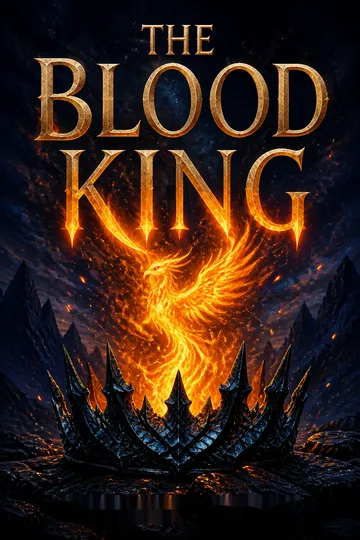
The Blood King receives mostly positive reviews, praised for its engaging plot, strong characters, and steamy romance. Readers enjoy the dragon shifter world-building, action scenes, and chemistry between Skylar and Ladon. Many appreciate the continuation of the series' storyline and look forward to future books. Some criticism includes pacing issues and underdeveloped relationships. Overall, fans of paranormal romance and dragon shifters find the book entertaining and eagerly anticipate the next installment in the Inferno Rising series.
Characters
Skylar Amon
The phoenix protectorSkylar is the eldest-feeling presence among four very different sisters, a trained fighter and pilot who has spent centuries preparing to keep her family alive. She is blunt, fast to act, and uncomfortable asking for help; beneath the bravado sits guilt over her mother’s death and a belief that protection is her personal duty. Her teleportation lets her move other people, not herself, an ability that reflects how readily she places others ahead of her own safety. Skylar distrusts dragon kings because of what Pytheios did to her family, but judges people by their actions once forced to know them. Her central tension is between self-reliance and the possibility of an equal partnership.
Ladon Ormarr
The burdened Blue KingLadon is the Blue Clan’s new king, known for ruthless fighting and a scar left by an earlier ruler. He accepted the throne because his people were impoverished and politically abandoned, not because he enjoys ceremony or power. Controlled, direct, and protective, he struggles to speak about vulnerability until Skylar makes evasion impossible. His fierce loyalty to his clan can make him controlling, especially when danger threatens someone he loves, yet he is willing to reconsider what leadership demands. He wants a queen who can act beside him, not merely represent him. Skylar attracts him partly because she challenges his authority and partly because she understands the burden of choosing others’ safety.
Kasia Amon
The visionary sisterKasia is Skylar’s red-haired sister, an engineer whose visions once came with painful, uncontrolled bursts of fire. She is brave, affectionate, and more willing than Skylar to trust the new dragon kings, though her foresight does not give her certainty about what she sees. Her bond with Brand lets her act as both partner and political ally, and she refuses to let his protectiveness keep her away from danger. Kasia serves as the bridge between Skylar’s suspicion and the rebellion’s goals, but she also insists that her sister make her own choices.
Brand Astarot
The exiled Gold heirBrand is a formidable gold dragon and the surviving heir to a clan whose throne was taken by Pytheios’s regime. He is taciturn, physically imposing, and wary of exposing weakness, but Kasia draws out a deep devotion that he rarely shows to others. His past as a hunted rogue leaves him suspicious of political promises and fiercely protective of those he considers family. Brand’s claim to rule rests on both lineage and the allegiance of dragons who choose to follow him. His determination to spare his people needless bloodshed shapes the strategy he shares with Ladon.
Angelika Amon
The youngest sisterAngelika is the youngest quadruplet, recognizable by her very pale blond hair and warm, outgoing nature. She trained as a nurse and has long been the emotional center of her sisters, the one most likely to offer kindness before judgment. Her gentleness is not the same as passivity: when her family appears, she makes her own decisions about where she belongs and what risks she will accept. Angelika has spent much of her life protected by others, which leaves her sensitive to being treated as a burden or a prize.
Meira Amon
The watchful sisterMeira is a quiet, observant sister with strawberry-blond curls, a gift for computers, and a deep dislike of blood. More cautious than Skylar or Kasia, she can mistake carefulness for cowardice and sometimes prefers the safety of being protected. Her mother’s separation of the sisters leaves her grieving in isolation, but she builds a life among guardians who respect her intelligence. Meira’s power is subtle and reflective, suited to watching from a distance before choosing when to act. She notices details others miss, particularly when family and political danger intersect.
Pytheios
The Rotting High KingPytheios is the Red Dragon King who seized the title of High King and has ruled through fear, manipulation, and the removal of rival royal families. He believes harsh control is necessary to preserve dragon society, a conviction that lets him recast personal ambition as public duty. Aging and physically deteriorating, he seeks supernatural power to extend his life and keep his rule intact. His fixation on phoenixes joins political legitimacy to literal survival, making the sisters targets in both senses. Pytheios is calculating rather than impulsive, but his need for permanent control makes him underestimate people he considers pieces on a board.
Maul
The sisters’ hellhoundMaul is a huge, dark hellhound the sisters found as a puppy and have trusted for centuries. He communicates through vivid mental images rather than speech, sharing memories and warnings that help the sisters understand events beyond their own experience. His loyalty is practical and fierce: he watches over them even when they order him to stay behind. The unnerving smell and red eyes make him look dangerous, but his longstanding attachment to the family reveals a patient guardian beneath the monstrous exterior.
Airk Azdaja
The forgotten prisonerAirk is the son of a former White Clan Beta and a childhood witness to the Amon family’s history. Pytheios has kept him imprisoned for centuries because a phoenix’s prophecy made killing him dangerous. Long isolation has left him formal and unused to touch, but his intelligence and steady patience remain intact. He survives by observing the prison’s systems and forming a quiet connection with Nathair, who brings him information and books. Airk understands the cost of hope, yet continues to plan for freedom rather than accepting the prison as his whole world.
Gorgon Ejderha
The patient Black KingGorgon has ruled the Black Clan for centuries by avoiding the provocations that allowed Pytheios to depose other kings. He remembers an earlier peace and has waited for a credible chance to challenge the High King. Careful and politically seasoned, he knows that an alliance can be sincere and still require proof. His composure makes him difficult to read, but his willingness to join Ladon and Brand signals that he values a restored order more than the comfort of remaining neutral.
Arden Ormarr
The warrior princessArden is Ladon’s younger sister, a rare female-born dragon and a member of his personal guard. She has had to resist expectations that her life should be limited to supporting male relatives and bearing no children. Sharp-tongued, stylish, and physically capable, she insists on having a public voice in a society built around male rulers. Her loyalty to Ladon is intense, but it does not prevent her from challenging his assumptions about who deserves representation.
Asher
Ladon’s battle-tested BetaAsher is Ladon’s Beta and closest military adviser, a severe fighter whose loyalty was tested when he secretly infiltrated the previous Blue King’s circle. He helped Ladon bring down a ruler who was starving and impoverishing the clan. Suspicious of Skylar’s intentions, Asher questions whether Ladon’s attraction is clouding his judgment. His skepticism is not mere hostility; he sees himself as responsible for guarding the king and the people who depend on him.
Rhiamon
Pytheios’s witchRhiamon is a powerful witch and Pytheios’s partner, whose magic helps sustain his reign and suppresses the powers of prisoners in Everest. She is composed, politically useful, and willing to drain supernatural beings for the king’s benefit. Her loyalty is entangled with dependence and shared ambition, making her more than a simple servant. Rhiamon’s work turns the bodies of other creatures into political resources, embodying the regime’s refusal to recognize limits on what it may take.
Nathair
The king’s restless brotherNathair is Pytheios’s younger brother, an intensely analytical man who communicates more easily through strategy and systems than through direct emotional exchange. He spends much of his time with games and technology, yet his mind is constantly working through possibilities. His visits to Airk provide the prisoner with rare contact, information, and an unexpected friendship. Nathair’s choices remain difficult to interpret because he operates close to Pytheios while retaining his own way of thinking.
Samael Veles
The Black King’s captainSamael is Gorgon’s captain of the guard, a formidable warrior who earned his position through discipline rather than royal birth. Gorgon gave him a chance after he lost his father, and Samael repays that trust with absolute seriousness about his duties. He is watchful, restrained, and accustomed to believing that service matters more than personal desire. His perspective exposes the class and rank assumptions that persist even among the kings opposing Pytheios.
Brock Hagan
The uncertain Gold heirBrock is the son and presumed successor of the Gold Clan’s former king. Young, ambitious, and more capable than the men who advise him, he is nonetheless surrounded by political weakness and threatened by Brand’s legitimate claim. Pytheios sees Brock’s anger and uncertainty as qualities he can direct. Brock wants authority and respect, but his position makes him vulnerable to anyone who offers him a path to both.
Carrick
The gargoyle guardianCarrick leads the gargoyle community in the Ural Mountains and offers Meira shelter after Serefina sends her away. Formal and difficult to read, he keeps his word and protects those entrusted to him. His guarded nature reflects a people who have survived by remaining apart from the wider supernatural world. Carrick’s relationship with Meira is shaped by protection and respect, though his reserved manner makes it hard for her to know exactly what he feels.
Bleidd
The wolf pack leaderBleidd leads the wolf shifters who hide Angelika and carries an old obligation to Serefina. He is measured, observant, and unwilling to let loyalty become an excuse for careless risk. His pack has suffered from dragon attacks, yet he continues to protect Angelika and later accepts cooperation with the dragon kings when the danger grows. Bleidd represents a community with its own claims to safety, not merely a refuge for the phoenixes.
Reid Herensuge
The watchful captainReid is Ladon’s captain of security, a skilled fighter who uses observation and timing rather than brute force alone. He jokes easily with the guard, but his loyalty to Ladon and Arden runs deep. He is attentive to political signals and personal danger, often noticing tensions that others overlook. His bond with Arden sits uneasily beside the restrictions imposed on female-born dragons and the expectations placed on a king’s sister.
Rainier
The steadfast twinRainier is one of Ladon’s trusted guards and the twin brother of Ivar. The brothers coordinate naturally in combat and remain deeply loyal to the Blue Clan. Rainier’s easy rapport with the others helps make the guard feel like a family rather than a rank of soldiers.
Ivar
The quick-witted twinIvar is Rainier’s twin and a member of Ladon’s personal guard. The brothers fight in close coordination, relying on years of shared instinct. Ivar is younger and more openly playful than some of the other guards, but he is no less committed when the clan is in danger.
Merikh
Pytheios’s overlooked sonMerikh is Pytheios’s son with Rhiamon, raised near the center of power but without the presence of a true partner in his father’s ambitions. His polished appearance contrasts with the practical, battle-ready heirs around him. Pytheios considers him in terms of usefulness and succession, leaving Merikh’s own ambitions difficult to discern.
Plot Devices
Phoenix inheritance
Power and successionPhoenix power is traditionally passed from mother to daughter, with the mother surrendering her abilities by choice or at death. Because Serefina has four daughters instead of one, the old political belief that a phoenix identifies the rightful High King becomes uncertain. The sisters inherit distinct abilities and their own claims to the past, so the legacy drives both their family story and the dragon clans’ struggle for authority.
Mating fire
A bond tested by choiceA dragon and phoenix mating is a physical and magical act in which their fires meet. If the phoenix has not chosen her mate, the dragon risks being consumed; a successful bond can later form a mark at the neck and a channel of shared awareness. The device links romance to political power, but Skylar’s insistence on consent prevents the bond from functioning as an automatic claim to her obedience.
The in-between
Travel with a costSkylar teleports others by touch, while Kasia can move herself and Meira travels through reflective surfaces. Their routes pass through a silent, sensationless interval that can become dangerous when a traveler loses contact or lacks enough strength. The sisters’ abilities are useful for rescue, infiltration, and sudden movement in battle, but the near-loss of Skylar and Kasia establishes that teleportation is not a risk-free escape hatch.
Dragon marks
Visible political allegianceDragon shifters carry family and king marks, allowing others to identify lineage and allegiance. A king’s mark can validate a claim to a clan throne, while a phoenix’s fire can make her authority visible to those who doubt her identity. These signs turn the body into political evidence, but the story also shows that marks can be imposed through violence, so a visible symbol does not by itself prove a just or freely chosen loyalty.
Maul's images
Memory without speechMaul communicates by sending pictures into the minds of the Amon sisters. His images reveal shared childhood memories and information that connects their family history to the dragons’ political struggle. Because his communication is visual rather than verbal, the sisters must interpret what they see, and the audience learns that Maul carries knowledge while remaining an animal companion rather than a conventional informant. His loyalty repeatedly turns information into action, especially when a sister is in danger.
Inferno Rising Series
About the Author


Download PDF
Download EPUB
.epub digital book format is ideal for reading ebooks on phones, tablets, and e-readers.








