


Plot Summary
Prologue
A thousand years before Meren’s story, King Eidolon watches his beloved Esha crowned queen of Aryd and imagines the peace they will build together. Instead, during the Celestial Alignment, Esha and her twin Lillnya immobilize the rulers and use a sand nymph’s body to imprison the six goddesses in glass amulets.
Lillnya dies from the effort. Eidolon escapes with his mother’s amulet, but Esha’s betrayal shatters his soul and turns love into a thousand-year campaign to free the goddesses.
The prologue gives Eidolon’s crusade a human origin without excusing what he becomes. He begins as a lover who expects a shared future, then watches Esha choose a cause she considers necessary over the bond he thought made them inseparable. His grief hardens into certainty, and certainty becomes permission to sacrifice others. The scene also establishes the story’s central moral danger: a wound can explain violence while still failing to justify it. The amulets, the Alignment, and the damaged bond are not distant history. They are the machinery that will govern Meren’s present.
A Memory Under Siege
Inside King Eidolon’s mind, Reven searches for the hidden record of the king’s past and finds the memory of Esha and Lillnya imprisoning the goddesses. The discovery explains how Eidolon’s grief began, but it gives him no reason to relent. Reven tries to tell Meren what he learned through their faint bond.
Before he can explain the revelation, Eidolon detects the connection and tears Reven away from her. Meren is left without the voice that has steadied her through his imprisonment, while Reven faces the king alone. Their shared fight becomes a race on two fronts: Meren must reach the last goddess’s amulet, and Reven must find a way out from inside Eidolon.
The opening makes knowledge both necessary and dangerous. Reven uncovers the origin of Eidolon’s violence, but the king’s control of their shared interior means even understanding cannot be safely communicated. Meren’s fear is sharpened by the sudden loss of contact, while Reven’s discovery risks turning empathy into complicity. The distinction matters: recognizing the grief that shaped Eidolon does not require accepting the destruction he has built around it. Their separation also establishes a structural tension for the novel. Each partner must act without the reassurance of the other, and intimacy becomes something they must repeatedly recover rather than assume.
Savanah Bars the Way
Meren leads her sister Tabra and their companions through a portal into Savanah, hoping to reach the Snarl and retrieve its amulet. As they leave the underground temple, Reven’s pain tears through Meren’s mind and then vanishes, leaving her unable to tell whether he is alive. She buries her feelings to silence the Shadows inside her.
Savanahan soldiers surround the group and refuse their request until Hakan reveals himself as Queen Wynega’s banished son. He lowers his lightning rather than attack his former people, but the guards demand that he and Tabra remain behind. Meren accepts the separation, taking only Cain, Vos, Tziah, Horus, Pella, and Bene toward the lethal maze.
Meren’s numbness is a survival strategy with a cost: by suppressing fear and grief, she also cuts herself off from the bond that might tell her whether Reven is safe. Hakan’s revelation echoes her own hidden identity, but his choice to stand down complicates the image of power as simple force. He can threaten the guards, yet doing so would turn an old rejection into a new war. The forced split leaves Meren with fewer allies and makes her role as the person who chooses who faces danger more explicit. Her willingness to proceed is courage mixed with self-erasure.
The Snarl’s Hungry Heart
Inside the Snarl, Meren and her friends pass through grass corridors littered with bones before she and Tziah reach the pond at its center. Meren calls out to Aesthetus, the cursed beast said to live beneath the water, and draws him up by letting herself feel the longing she has been suppressing for Reven.
Aesthetus mistakes her for his lost bondmate, Mimick, and attacks with a flute made from Mimick’s bones. Tziah’s sound power interrupts him, but Aesthetus manages one clear note. The maze opens, Mimick rises as a living creature of grass and earth, and the group is scattered. Meren survives by destroying Mimick, then finds Aesthetus ready to die when he believes his lover is gone.
The cursed pair turn love into a trap: Aesthetus uses Mimick’s remains in an effort to restore her, while the maze consumes outsiders who enter their grief. Meren’s ability to lure him depends on the very emotion she has been trying to amputate. Her victory over Mimick is therefore not clean. She acts to survive, but the Shadows make her doubt whether she has condemned another soul to an endless half-life. The episode confronts Meren with a frightening likeness between devotion and possession. Love can preserve a person, but it can also become a reason to deny that person freedom.
A Lesson in Darkness
After Aesthetus melts back into the pond and the Snarl falls still, a towering obsidian being named Scoria appears and accuses Meren of stealing souls. Meren explains that the voices inside her are fragments of Eidolon, not the dead people Scoria has been hunting. Scoria tries to remove them, but the Shadows seize Meren’s body and attack her companions.
Scoria cannot extract them, yet she can restrain them long enough to teach Meren how to shape darkness by first practicing with sand. When Eidolon reaches Meren through the power she borrows from him, he taunts her with Reven’s disappearance. Meren answers by using shadow against him and agrees to help reclaim Aryd before the Alignment.
Scoria’s intervention changes Meren’s problem from a private burden into a question of responsibility. The Shadows are not merely frightening thoughts; they can commandeer her body and injure the people who trust her. Meren’s request to be rid of them shows exhaustion rather than surrender, but Scoria offers training instead of a cure. That distinction is important. Control must be learned through repeated action, not granted by good intentions. Eidolon’s ability to reach Meren also reveals that the curse connects them more deeply than she understood. Her power can resist him, but every use risks opening the same channel he can exploit.
The Souls Become an Army
Meren learns to use shadow by shaping small figures, then applies Scoria’s method to Mimick, replacing the hellish darkness in her body with warmth from the mortal world. Mimick regains a human form, gives Meren the Savanahan amulet, and chooses to seek Aesthetus in the afterlife. Meren then enters the Wildernyss temple and restores the trapped souls Reven had sealed there.
At the Shadowood, she hopes to repair the larger wound he left behind. Eidolon arrives first. He feeds the forest’s darkness into the captive souls, turning them into a weaponized army that Meren cannot control. While Scoria and Bene hold Eidolon off, Meren pulls Reven out of the king and gives him a body through a shadow-healing rite.
Meren’s first successful act of power is restorative rather than destructive. By giving Mimick a mortal source of darkness, she makes room for choice, apology, and reunion instead of forcing the dead woman into another form of captivity. That achievement becomes a lesson and a lure: Meren thinks the souls in the Shadowood can be helped in the same way, but Eidolon converts her rescue into military advantage. The sequence distinguishes healing from control by its outcome. Meren offers Mimick a path; Eidolon turns souls into tools. Reven’s extraction repeats the motif at a more intimate scale, but the rite cannot restore what imprisonment has damaged.
Reven Comes Back Wrong
Reven wakes in a desert camp with no memory of the life he shared with Meren. He believes she stole Eidolon’s Shadows and tries to take them back by force. Meren and her friends stop him, and she traps him inside a shell of glass reinforced with shadow. Rather than treating him as an enemy, she offers a two-week stay so he can decide whether to trust them.
Reven accepts, then tests her by slipping away and returning when he finds he cannot bear the distance. Meren begins telling him how they met, but he remains wary. Their old attraction resurfaces in brief, confusing flashes, while Meren has to honor the difference between the man she remembers and the person standing before her.
The rescue does not restore the relationship because memory and identity are not interchangeable. Meren knows Reven’s habits and loyalties, but he has no access to the experiences that made those traits legible to him. Her decision to bargain rather than insist on their bond is an act of respect: she wants his choice, not a performance compelled by fate. Reven’s test of whether he can leave exposes a bodily attachment he cannot explain, but the pain of separation is not yet trust. The section turns romance into an ethical problem. Meren must make room for a new relationship without pretending the old one is intact.
The Spy Among Friends
As Meren’s allies prepare to retake Oaesys, Achlys arrives with evidence that Horus has been passing information to Eidolon’s forces. Horus admits he acted under threat to his sister Lana, whom Eidolon held as leverage. His reports helped expose the Shadowood and compromise the twins’ plans, though he denies causing every loss.
Meren asks him to account for each betrayal, then orders him bound through the coming battle and exiled afterward, choosing banishment over Bene’s offer of a quick death. The judgment costs Meren a trusted protector and divides her friends. Meanwhile, Tabra’s power flares under stress, and Meren helps her accept it rather than fight it, preparing her to take a more active role.
Horus’s betrayal complicates a familiar moral category. He has done real harm, but coercion and attachment to his sister make his choices more than a simple appetite for treachery. Meren refuses both easy absolution and immediate execution; exile recognizes the damage while preserving a narrow possibility of survival. Her ruling also has a public dimension. As a queen among wary allies, she must show that affection does not exempt someone from consequences. Tabra’s struggle offers a counterpoint: where Horus acts from fear, Tabra is learning to meet power without repudiating herself. Both scenes ask what responsibility looks like when control is incomplete.
The Twin Queens Return
Meren and Reven lead allied forces through portals into Oaesys, using Meren’s knowledge of hidden streets and palace passages to seize the city. The victory turns unstable when Zariph Cainis reveals that he plans to rule Aryd himself. He claims the twin sisters have no proof of their royal identity and orders them detained.
Pella counters his claim by exposing her father’s greed, while Cain challenges him under Wanderer law. Their fight ends when Cainis uses Tabra as a shield and Pella manipulates his emotions long enough for Cain to strike him down. Magda, Cainis’s wife, then takes her own life. Tabra publicly identifies herself and Meren as Aryd’s twin queens, and the people acclaim their return.
The city’s liberation exposes how quickly a coalition can reproduce the domination it claims to oppose. Cainis’s revolt is not an external complication but a test of whether the allies recognize the twins as legitimate when power is within reach. Pella’s use of her ability and Cain’s killing of his father leave no clean victor: the family’s struggle secures the queens’ position by destroying its own center. Tabra’s public address changes the meaning of their victory. She does not ask the people to fight for royal privilege; she asks them to join a shared defense. Legitimacy becomes a relationship that must be spoken and earned.
The Bond Is Broken
After the coronation, a priestess discovers that the luminous marks binding Meren and Reven are damaged and darkened. Reven’s memories remain lost, and Meren cannot restore the bond. In the dungeons, the captured advisor Pollux refuses to help until he reveals that Eidolon still holds a sick sand nymph named Hesperia. The group finds her in a cell.
Hesperia identifies Meren as the child she cursed and begins explaining that Meren was meant to serve as a conduit between Eidolon and Tabra’s power. Before she can finish, Eidolon takes control of Meren’s body and forces her to stab Hesperia. The nymph dies naming Eidolon as her killer, and Meren understands he has been steering her violence from within.
Meren’s worst fear is no longer that the Shadows will make her cruel; it is that she cannot reliably tell whose will is moving her. The damage to her bond with Reven removes the intimate certainty she once trusted, while Hesperia’s death gives the curse a concrete cost. The scene carefully separates responsibility from innocence. Meren’s hand commits the act, but Eidolon controls it, leaving her to bear the memory without having chosen the violence. Hesperia’s revelation also reframes the curse as a design with a purpose, not merely a punishment. Meren is both a person and a contested route into power.
Allusian’s Buried Heart
Meren’s portal opens onto Allusian, the hidden goddess who rules the afterlife. Allusian reveals that her sisters cut out her heart, fed pieces to their consorts, and buried the remainder. The supposed divine gift that created the Devourers was part of Allusian’s heart, not Nova’s.
Esha and Lillnya imprisoned the goddesses after Allusian told them of the sisters’ betrayal, though the Alignment and their borrowed power cost Lillnya her life. Allusian promises to help restore Nova if Meren returns her heart. Vos and Tziah identify the likely location as Mount Ynferno in Tyndra, where miners were transformed by the buried stone. The group sets out before Eidolon can claim it.
The revelation destabilizes the story’s moral map without simply reversing it. The goddesses who seemed absent and indifferent were also perpetrators of a concealed betrayal, while the queens who imprisoned them acted under Allusian’s guidance. Yet the truth does not make their choices harmless: the imprisoned sisters’ protections have failed, and the dominions are breaking. Allusian’s bargain is therefore both a chance at repair and another demand for trust. Meren has learned that divine authority cannot stand in for evidence. She insists on terms because the people who have suffered from hidden decisions will bear the consequences again if she accepts a promise unexamined.
The Heart Beneath Ynferno
Meren’s party descends through Mt. Ynferno’s icebound mine shafts and finds the heart missing from its burial place. Reven uses fragments of the stone, called jedite, to locate the larger piece beneath a frozen underground lake. When Vos raises it, the Gorecutter and Revoker attack. The fight leaves Vos grievously injured and Tziah unconscious, while Bene is swallowed by the Gorecutter.
Meren believes she cannot save him and traps the Devourers beneath shadow ice. Eidolon appears through the portal, seizes the amulets, and strikes Hakan with his own lightning. Horus arrives to help, and Meren steals the amulets back before destroying the portal between them. She carries Allusian’s heart away, unsure whether Bene survived.
The expedition forces Meren to act amid losses she cannot verify or reverse. Her decisions are practical, but they carry moral residue: she freezes the Devourers rather than killing them, yet believes Bene has died inside one of them. Eidolon’s arrival proves that no site is truly remote while the curse links him to Meren. The amulets and the heart become competing forms of leverage, and Meren must protect both while her friends are wounded around her. Her choice to escape with the amulets is not triumph so much as the refusal to let Eidolon dictate the next move. The cost remains unresolved, especially for Bene and the injured companions.
A Goddess Reborn
Meren returns Allusian’s heart and its scattered fragments. The goddess burns to ash, then reforms whole and carries Meren back to Oaesys. She restores Reven’s damaged memories, though he collapses and must recover, then gives the queens five days to prepare for the Alignment. Eidolon’s attack leaves Tabra in shock; when Meren visits, Tabra no longer recognizes her and recoils from the Shadows distorting her face.
Meren withdraws rather than force contact. Horus, having survived exile, returns with intelligence about Eidolon’s forces and asks no pardon. Meren assigns him to spy in Tyndra, making use of his skills without restoring his old position. The impending battle now threatens both the kingdom and Meren’s closest relationships.
Restoration arrives with limits. Allusian regains her strength and Reven begins recovering, but neither event reverses the harm already done to Meren’s family or friends. Tabra’s failure to recognize her sister makes the Shadows’ influence socially visible: Meren’s danger is not only what she may do, but what others see when they look at her. Her decision to give Tabra space respects the fear even as it deepens her isolation. Horus’s return similarly avoids a simple reset. Meren accepts his usefulness but does not erase his betrayal. The section insists that repair is a practice of boundaries, not a return to the exact arrangements that existed before the damage.
A Wall Around Oaesys
With the Alignment approaching, Meren raises a high sand-and-glass wall around Oaesys, exhausting herself to give the city time against Eidolon’s army. Cain visits afterward, and the two acknowledge that their love belongs to friendship, not the future they once imagined. He accepts her bond with Reven and remains her closest ally.
Reven’s memories return only in fragments, and Meren resists forcing him to name what they are. The allies secretly evacuate Oaesys’s residents and prepare several battle routes, keeping Meren out of some plans because Eidolon can use her as a conduit. When Horus arrives with word that Eidolon is minutes away, Meren and Reven move to seal the city beneath a dome of shadow.
The wall is a literal act of protection and a psychological answer to Meren’s sense that she can only react. She spends her own strength to give civilians a chance, even though the structure may not stop an Imperium attack. Cain’s goodbye is a different kind of fortification: they preserve intimacy by accepting that it cannot become romance. Meren’s restraint with Reven makes a similar claim about love, that a shared history cannot substitute for present consent. Yet the allies’ secrecy also has a cost. They protect Meren from Eidolon’s access by withholding information, leaving her both strategically useful and politically isolated.
The City Under Shadow
Eidolon’s forces gather outside Oaesys while Meren and Reven complete a shadow dome over the city. A land-wielding Imperium sends waves of earth against the wall, but the barrier holds long enough for the Wanderers to charge the Tyndran troops from behind. Reven turns the soldiers’ shadows against them, buying the attackers an opening.
When Eidolon brings in the Tropikan army he had taken during an earlier battle, the defenders face overwhelming numbers. Meren turns part of her wall into a portal and brings Wildernyssian soldiers through to reinforce the field. The battle spreads beyond the city’s defenses; the celestial bodies begin to align, and Meren realizes the moment to release the goddesses is arriving amid the fighting.
The battle converts the city’s defenses into a test of coordination rather than individual strength. Meren’s wall cannot win by itself, but it buys the time that lets Reven, the Wanderers, and the Wildernyssian army act together. Eidolon’s arrival with captured troops exposes the danger of assuming a setback has ended an enemy’s plans. The approaching Alignment is not a pause in the war; it compresses the timetable for the ritual into the most chaotic moment possible. Meren’s decision to open a larger portal shows how her craft can change from protection to logistics. Her power matters most when it connects other people’s capacities.
The Eclipse Takes Its Toll
Eidolon’s transformed shadow soldiers slip through the dome and attack the allied forces. Tziah is fatally struck while protecting Cain, and Vos reaches her too late. Meren can no longer hold the battlefield together by force. She breaks Aryd’s ancient glass barrier, allowing the Devourers to enter the dominion, and the falling shards devastate Oaesys.
At the same time, the Alignment begins. Scoria arrives to restrain groups of shadow soldiers, but the army keeps multiplying. Meren leaves the field for the throne room, where Allusian and Tabra are waiting. The battle continues outside, with Cain, Pella, Hakan, Vos, and Horus still exposed, while Meren and Tabra prepare to risk their powers on the amulets.
The cost of waiting for a perfect moment becomes impossible to ignore when Tziah dies and the shadow army spreads. Meren’s destruction of the glass barrier is a desperate breach of the very protection that defined Aryd, with consequences that reach beyond the immediate fight. She chooses to make the Devourers’ return possible because the current defenses are failing, not because she can predict what will follow. The choice captures the novel’s recurring bind: every available action can harm someone. Meren’s departure for the ritual is also a leadership decision. She leaves people she loves in danger because only she and Tabra can attempt the act that might end the war.
The Amulets Open
In the throne room, Allusian explains that Meren must soften the amulets while Tabra draws the goddesses’ souls out. Hakan cages the ritual in lightning as Eidolon repeatedly attacks, and Allusian sends him away long enough for the sisters to work.
Meren melts the glass back into sand; Tabra pulls the trapped souls free. The goddesses return, furious after centuries of imprisonment, and several vanish while Tyndra and others turn on Allusian. Eidolon joins their assault.
Reven, carrying a parasite from one of Eidolon’s past selves, attacks Meren. Tabra restrains him while Meren enters his darkness, separates Reven’s soul from the ghost, and pulls the parasite out. The toxic spirit is taken away, and Meren and Reven’s bond becomes whole again.
The release succeeds because the twins divide the work rather than imitate one another: Meren changes the glass, Tabra handles the souls. Their shared power is more than a hereditary tool; it is a form of cooperation that the old hierarchy had kept unevenly distributed. The goddesses’ return immediately complicates any expectation that liberation produces peace. Their anger is real, and Allusian’s history with them remains unsettled. Reven’s possession makes the personal stakes inseparable from the cosmic ones. Meren must enter the very darkness she fears to distinguish her beloved from the parasite using his body. Their restored bond follows an act of discernment, not magical certainty alone.
The King Loses His Shadows
Reven regains his memories as the parasite leaves him, and the bond between him and Meren heals. He pursues Eidolon, while Meren confronts the Devourers as they return to Aryd. Allusian draws the remaining pieces of her heart from them, restoring their human forms and weakening Tyndra.
The fighting continues: Tziah is already dead, Cain falls while helping Meren escape, and Horus dies defending her from Eidolon’s shadow soldiers. At the final confrontation, Meren uses sand and darkness to restrain Eidolon. Reven draws out the king’s fragmented souls, separating the parts that can be judged from the corruption accumulated across centuries. Allusian takes the souls, and Reven destroys Eidolon’s remaining body.
The climax refuses to make victory costless. Meren and Reven finally act together with memory and trust restored, but their reunion cannot save Tziah, Cain, or Horus. The losses give the defeat of Eidolon weight beyond a romantic or political triumph. The decision to separate the king’s fragments also rejects the logic that every wound must be answered by total annihilation. Reven recognizes that the original vow and the later corruption are not identical, while Allusian assumes responsibility for judgment. Meren’s simultaneous use of sand and shadow marks a dangerous capacity, but her power becomes protective when she chooses its limits and works in concert with others.
The Dead Are Honored
Allusian removes the curse binding Meren to Eidolon, ending the channel through which he controlled her. The goddesses promise to repair the dominions, and the surviving armies lay down their weapons. Meren and Tabra resume their rule in Aryd, while Meren later takes the throne of Tyndra beside Reven.
Before that future can begin, she makes glass coffins for Tziah, Cain, and Horus. She leaves a rosebud with Horus, her signet ring with Tziah, and Cain’s gold cuff beside him. Pella becomes a leader among the Wanderers, and Vos walks into the desert in grief. Meren closes the coffins and buries them beneath the sands, accepting that peace does not erase what it cost.
The resolution treats mourning as part of political reconstruction, not a private interval after the real story ends. Meren’s gifts to the dead preserve distinct relationships: Horus receives a promise of continued care for his sister, Tziah receives the sign of a bond between women who chose one another, and Cain receives an emblem of the future they once considered. These gestures keep grief specific rather than converting it into a generalized lesson. The queens’ leadership can begin only after they acknowledge the people who will not share it. Meren’s future with Reven is hard-won, but the final image belongs equally to loss, memory, and the community that survives.
Epilogue
Five years later, Meren rules Tyndra with Reven and returns to Aryd for the twins’ shared name-day celebration. The dominions have rebuilt, the seas are open again, and Meren has begun to live beyond the role assigned to her as a hidden substitute for Tabra.
Reven intercepts her before the festivities and takes her to their chambers, unwilling to spend another night apart. When Meren suggests rebuilding the Shadowood, Reven welcomes the idea. Their future is no longer a promise suspended between lives; it is work they can begin tomorrow.
The epilogue measures the ending by ordinary freedom rather than by spectacle. Meren can choose where to live, what to build, and how to use her time; she is no longer valuable only as a decoy, a conduit, or a queen in crisis. Reven’s return to the work of rescuing the desperate shows that his defining purpose survives the king’s corruption, now with Meren beside him by choice. Rebuilding the Shadowood also turns the story’s earlier refuge into a future project. The peace is not a blank slate. It is the chance to create institutions that protect people without demanding their erasure.
Analysis
The novel’s central conflict is not simply whether Meren can defeat Eidolon. It is whether she can use power without reproducing the logic that made him monstrous. Eidolon begins with a real injury, but his private grief becomes a public program of sacrifice. The goddesses, too, have concealed violence behind divine authority, while rulers repeatedly treat other lives as pieces in a strategy. Against that pattern, Meren’s most consequential choices are relational: she gives Reven room to choose her again, refuses to let Cain’s affection dictate their future, and demands terms from Allusian before returning the goddess’s heart. These decisions do not make her harmless. The Shadows inside her can act through her, and her anger sometimes makes cruelty feel reasonable. The book therefore resists the comforting idea that good intentions automatically make power safe. Meren must learn to distinguish her own will from Eidolon’s influence, accept help, and remain accountable when her choices have consequences. The sand and shadow imagery makes this problem material. Sand can build walls, portals, weapons, or a body; darkness can shelter someone or conceal a soul turned into a weapon. Neither substance carries a fixed moral meaning. What matters is who shapes it, for whom, and whether the person affected has any choice. The romance follows the same principle. Reincarnation gives Meren and Reven a history, but it cannot substitute for consent, trust, and present-tense knowledge. Their bond matters most when it supports rather than overrides choice. Finally, the ending does not equate victory with restoration to an untouched past. The dominions must rebuild, the dead remain dead, and the survivors carry grief into new forms of rule. Peace becomes a shared responsibility rather than a reward bestowed by the powerful.
Review Summary
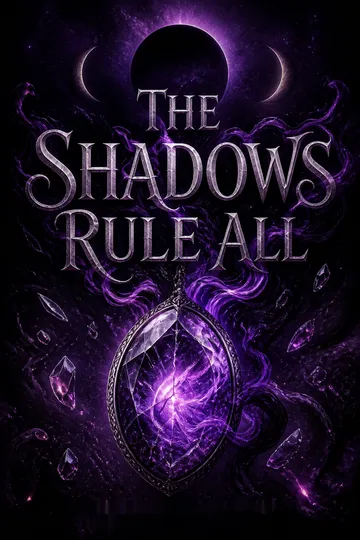
The Shadows Rule All concludes the Dominions trilogy with intense action, emotional twists, and bittersweet moments. Readers praise the unique world-building, magic system, and character development, particularly Meren's growth as a leader. While some found certain plot points repetitive or predictable, most agree it's a satisfying end to the series. The book features epic battles, romance, and explores themes of good versus evil. Reviewers appreciate the author's imagination and ability to keep them engaged, though some felt emotionally drained by the ending.
People Also Read


Characters
Meren
The hidden Arydian twinMeren is the younger twin raised to impersonate her sister, Tabra, and taught to regard her own life as expendable. Her early instinct is to protect others by taking danger onto herself, a habit that makes her brave and often reckless. She is observant, irreverent, and more comfortable among ordinary people than in court, having lived as a poor waif outside the palace. Her sand-wielding power gives her a practical, inventive way to solve problems, while her connection to darkness forces her to confront how little control she sometimes has. Meren’s deepest struggle is to remain responsible without confusing self-sacrifice with worth.
Reven
The rebel shadowraithReven is a fragment of King Eidolon’s soul who became a person in his own right, a shadow-wielding protector who rescues people whose distress he can hear. His reserve and suspicion come from knowing that his own power can become dangerous, not from indifference to others. He builds loyalty through action, sheltering the Vanished in the Shadowood and opposing the king who created him. His relationship with Meren tests whether identity can survive lost memory and whether love can be chosen again rather than inherited as obligation. Reven’s defining tension is between control and care: he wants to protect people without becoming the force that decides their lives for them.
Eidolon
The immortal shadow kingEidolon is King of Tyndra, a powerful Imperium who controls darkness and has survived across centuries by shedding fragments of his soul. His original devotion to Esha becomes entangled with grief after she helps imprison the goddesses, and he makes freeing his mother the purpose of his existence. Eidolon’s intellect and persistence once serve the possibility of peace, but his fixation narrows his moral world until other lives become acceptable costs. He is a distorted mirror for Reven: both hear cries for help and wield shadow, but they respond to that knowledge differently. The central question around Eidolon is how long an injury can explain a choice before the choice becomes its own identity.
Tabra
The firstborn Arydian twinTabra is Meren’s twin and the sister trained openly for Aryd’s throne. She is poised, diplomatic, and inclined to trust, qualities that can make others underestimate her determination. Meren has spent much of her life protecting Tabra, sometimes at the cost of her own sense of agency. Their closeness is built on affection but also on a family system that assigns them unequal roles. Tabra’s journey is toward taking responsibility for power rather than treating it as a burden imposed by birth. Her bond with Achlys gives her a private source of courage, while her relationship with Meren is the emotional center of their shared inheritance.
Cain
Meren’s desert-born confidantCain has known Meren since childhood, when he met her as a runaway girl and taught her to ride, fight, and survive among the Wanderers. He is protective, practical, and deeply loyal, sometimes to the point of trying to decide what risks Meren should be allowed to take. Their history gives him an intimacy with her that is different from Reven’s, rooted in shared childhood and years of friendship. Cain’s family duties and leadership among the Wanderers complicate his bond with Meren, but he remains a steady advocate for Aryd’s people. His emotional strength lies in caring without pretending that care guarantees possession.
Vos
The sharp-tongued generalVos is an Ice Hylorae and former general whose irreverent humor often masks tactical seriousness. He is a survivor of Eidolon’s system and one of Reven’s oldest allies, with a fierce attachment to Tziah and the people of the Shadowood. Vos challenges Meren when he believes she is moving too quickly, yet he also understands the burden of making decisions under pressure. His bluntness helps puncture royal formality, though his military past gives his wit a harder edge. He values loyalty but does not mistake loyalty for silence.
Tziah
The silent sound wielderTziah communicates through signs and wields sound as a physical force. Her quiet manner does not make her passive; she is observant, courageous, and often the first to recognize what another person needs. She shares a deep history with Vos and has endured the loss of her family in Tyndra. Tziah’s ability can protect a group or incapacitate an enemy, but she is careful about when to use it. Her strength comes from combining precision with empathy, and she often steadies others without demanding attention for herself.
Pella
The empathic WandererPella is Cain’s sister, an archer and empath who reads emotional states even when people try to hide them. She is competitive, sharp, and not especially gentle in the way she offers criticism, but her bluntness grows from a desire to see others survive and improve. Pella has a complicated relationship with her father and a developing closeness with Hakan. She understands that emotion can be useful information as well as a burden. Her courage lies in acting even when love, fear, and grief pull her in opposite directions.
Hakan
The exiled lightning heirHakan is a lightning-wielding Savanahan and the banished son of Queen Wynega. His controlled demeanor conceals the pain of being rejected by his own people for the danger they saw in his power. He is devoted to Pella and becomes part of Meren’s found family, though his loyalty does not erase his complicated history with Savanah. Hakan’s restraint matters as much as his strength: he knows he can harm those around him and works to direct his power with care.
Horus
Meren’s guarded protectorHorus is a skilled Wanderer, hunter, and bodyguard who offers Meren a steady, almost paternal presence. He has known displacement and loss, and he measures himself by whether he can protect the people entrusted to him. His reserve makes him difficult to read, but his actions are consistently attentive. Horus’s relationship with the Vanished and with Meren is shaped by a desire to find a place where his service has meaning. He represents the difference between being useful to a community and being accepted by it.
Bene
The shape-shifting DevourerBene is a Devourer who can reshape his body from a raven to a massive creature formed from sand. His size and appetite make him frightening to strangers, but he is devoted to Meren and deeply connected to the history of the goddesses. Bene communicates with Meren through their magical link and frequently protects her without being asked. Bene’s long life has given him knowledge others lack, yet the truth behind that knowledge is not always clear even to him.
Scoria
The obsidian soul guideScoria is an immense being made of obsidian who can sense and restrain souls. She initially mistakes Meren for a thief, but listens when Meren explains the Shadows inside her. Scoria is direct, patient in practical matters, and unwilling to soften the risks of her teaching. Her knowledge of the afterlife gives Meren a way to understand the difference between ordinary darkness and darkness inhabited by a soul. Scoria’s power is formidable, but even she has limits when faced with Eidolon.
Allusian
The absent death goddessAllusian governs death and the afterlife, a role that places her beyond the knowledge most mortals possess. Her absence from Nova’s histories is itself a source of danger, and her account of the past challenges the stories the dominions have accepted. She is proud, guarded, and capable of sharp anger, but she understands the responsibilities attached to power. Allusian’s damaged connection to the dead has diminished her strength and emotional reach. Her relationship with her sisters is marked by an old betrayal that she must face before she can help restore the world.
Hesperia
The sand nymph with answersHesperia is a sand nymph whose body contains the colors of Aryd’s deserts. She has lived through the events surrounding the goddesses’ imprisonment and carries knowledge about the curse binding Meren to Eidolon. Hesperia is careful with what she reveals, partly because she has reason to distrust both rulers and the people who seek her help. Her presence connects the twins’ birth to the ancient political history of Nova.
Aesthetus
The pond-bound loverAesthetus is a man cursed by Savanah into a bull-like beast after declaring himself and Mimick more beautiful than the goddesses. He remains consumed by the hope of finding his bondmate, and his grief shapes the dangers of the Snarl. His story shows how devotion can survive while its expression becomes destructive.
Mimick
The maze’s cursed makerMimick is a shapeshifter cursed into a monstrous form and confined to repeating the words of others. Alongside Aesthetus, she built the Snarl to keep intruders away. Her longing for her bondmate persists beneath the violence and the curse, making her more than the threat Meren first encounters.
Zariph Cainis
The ambitious Wanderer leaderCainis leads a powerful Wanderer zariphate and judges political claims through his ability to sense truth in speech. He is proud of his authority and expects family loyalty to support his rule. His children, Cain and Pella, each challenge the kind of legacy he wants to leave. Cainis’s confidence in his judgment makes him influential, but also leaves little room for the possibility that his own motives are clouding it.
Magda
Cainis’s steadfast partnerMagda is Cainis’s wife and a respected presence among the Wanderers. Her loyalty to her bondmate is profound, while her love for Cain and Pella gives her a separate emotional stake in their family’s conflicts. She carries herself with the dignity of someone accustomed to the costs of leadership.
Achlys
Tabra’s trusted companionAchlys begins as Tabra’s personal servant but is also her closest confidante and beloved. She is observant and quietly capable, with access to information and spaces that more prominent figures overlook. Achlys’s bond with Tabra is built on trust, tenderness, and a shared understanding of the dangers of court life. She is not a power wielder, but her judgment and loyalty make her central to the twins’ efforts.
Istrella
The observant Wildernyss queenIstrella rules Wildernyss alongside Trysolde and is curious, socially perceptive, and willing to support Meren after Meren helps restore her relationship with her husband. Her courtly grace does not obscure a practical understanding of political alliances. She represents a ruler who can offer help without demanding control of another dominion.
Trysolde
The metal-wielding kingTrysolde is Istrella’s husband and co-ruler of Wildernyss, a metal-wielding Imperium with a general’s sense of order. He has firsthand experience of possession and the damage it can do to both an individual and a marriage. His alliance with Meren is grounded in gratitude but becomes part of a larger defense of the dominions.
Pollux
Eidolon’s loyal advisorPollux serves as Eidolon’s advisor and believes the king’s cause justifies terrible sacrifices. He is a committed political operator rather than a battlefield leader, and his certainty makes him difficult to persuade. Through him, Meren sees how a damaged cause can recruit followers by promising order and a clear enemy.
Plot Devices
The sand nymph’s curse
A dangerous power conduitA curse laid on Meren as an infant binds her power to Eidolon and lets her draw on his control of darkness. It was meant to connect the king to Tabra, but Hesperia altered its target and purpose. In the present, the link gives Meren a way to oppose Eidolon, while also allowing him to sense and sometimes control her. The curse makes power relational rather than private: every time Meren uses it, she risks strengthening the route through which Eidolon can reach her. Its final resolution depends on restoring balance and ending the connection itself.
The goddess amulets
Six souls behind glassEsha and Lillnya used sand, soul power, and help from other rulers to imprison the six goddesses in glass amulets. The necklaces are both containers and political leverage, scattered between Eidolon and Meren’s allies. Their material links them to Meren’s sand power, while their captive souls require Tabra’s ability to draw them out. The amulets turn a thousand-year-old decision into a present crisis: their contents are needed to repair the dominions, but releasing them risks unleashing the goddesses’ anger.
The broken bond
Love without guaranteed memoryBondmates are meant to find one another across lives, and their bond leaves visible lines on their bodies. Meren and Reven’s connection is damaged by Eidolon’s interference, making it difficult to tell what comes from memory, magic, or freely chosen affection. Their relationship must therefore develop under conditions where fate cannot guarantee recognition. The bond first acts as a channel for communication and comfort, then becomes a source of doubt, and finally provides a path for Meren to locate Reven beneath a parasitic soul. The device tests whether a destined relationship can remain ethical when one partner has forgotten it.
The Celestial Alignment
A brief surge of powerOnce every hundred years, the sun and three moons align, opening a direct path to the Allusian heavens and intensifying Imperium powers. The old queens used the Alignment to trap the goddesses, and the present queens need the same brief surge to reverse the spell. Because the window lasts only minutes, preparation matters as much as strength. The Alignment also draws the plot’s ancient history into the immediate battle: the allies must protect the ritual while Eidolon attacks and the armies fight outside.
Glass portals
Travel through made glassMeren can shape sand into glass and use it as a portal between places she can picture or portals already established across the dominions. The ability makes her the indispensable link between scattered allies, allowing armies and individuals to move without crossing the dangerous, Devourer-haunted seas. Portals can be shattered or damaged, so they also create tactical vulnerabilities. Meren’s skill grows from making small glass flowers to repairing a cracked passage and building a broad battle route through a wall. The device turns a personal craft into infrastructure, making connection itself a form of power.
Dominions Series
About the Author

Download PDF
Download EPUB
.epub digital book format is ideal for reading ebooks on phones, tablets, and e-readers.








