


Plot Summary
Prologue
For five centuries, Serefina, a phoenix and daughter of the Red Clan’s former rulers, has hidden from Pytheios, the king who murdered her mate and seized power. When he finds her at a Kansas diner, she sends a warning to her four daughters, then uses her last strength to teleport them to separate refuges.
A knife in her spine cannot stop her. As Pytheios closes in, Serefina gives her daughters one final gift: the power and freedom to make their own lives. She dies in the flames, leaving them scattered, alone, and hunted by a king who knows they exist.
Serefina’s last act establishes the story’s governing conflict in practical terms: protection can become separation, and survival can demand a parent’s most painful choice. Her daughters inherit not just a supernatural legacy but the consequences of a history she could not undo. Pytheios, meanwhile, treats a phoenix as a source of political authority and stolen power, making the coming danger both bodily and institutional. The scattering of the sisters creates a deliberate imbalance: they are bound by family but denied the ordinary comfort of remaining together. Serefina’s command that they find their own way sets freedom, rather than obedience to inheritance, as the moral question of the novel.
Fire Behind the Glass
Brand Astarot, a rogue dragon working for Blue King Ladon, arrives at a supernatural clinic in Wyoming to investigate a mysterious woman. He is already pursuing a separate purpose: earning a clan’s backing for revenge against Uther, the gold king who destroyed his family. Inside the clinic, Kasia’s uncontrolled fire overtakes her, and Brand feels her pain as if it were his own.
He enters the fireproof room, holds her, and helps draw the flames back into her body. When she wakes, Kasia admits that visions have shown her Brand for a year, but hides her identity and family. Brand recognizes her as a phoenix and sees the answer to Ladon’s search, while his instinct to protect her complicates the mission he came to perform.
The first meeting makes supernatural recognition physical before either character can interpret it. Brand’s body responds to Kasia’s pain, so the connection precedes trust and even knowledge. His mission, however, gives the encounter an immediate ethical tension: he can regard her as a route to Ladon’s favor, or as a person in crisis. Kasia’s lies are not simple manipulation. They are survival habits learned under a threat she cannot safely name. Their opposing strategies, his practiced control and her guarded improvisation, create attraction without erasing the power imbalance between a hunted woman and the dragon sent to find her.
The Stolen Hemi
Believing Brand dangerous because he is a dragon, Kasia slips out of the clinic before dawn. She uses a wire hanger to break into his Plymouth Hemi Cuda, hot-wires it, and drives into the night, leaving a note so the staff will know she left voluntarily. Brand returns to find both patient and car gone. He follows her scent in dragon form and intercepts her on a rural road, repeatedly landing ahead of the speeding car until she stops.
Kasia confirms he is the man from her visions, but resists being delivered to Ladon, a king she has never met. Brand says he is taking her to Scotland for protection. With other creatures already hunting her, she reluctantly agrees to continue with him, though she keeps planning how to preserve her choice.
The car theft reverses the expected rescuer-and-prisoner arrangement. Kasia is vulnerable, but she is not passive: mechanical skill and nerve let her create distance, even when her teleportation remains unreliable. Brand’s decision to pursue her is partly obligation, partly the danger around her, and partly an instinct he does not yet understand. Her eventual agreement is not a surrender of agency so much as a provisional calculation. The road becomes a negotiation in motion, with each character forced to concede that survival may require cooperation before trust has been earned.
A Vision at the Motel
During a night in a French motel, Kasia’s vision begins while she is arguing with Brand. His touch eases the pain, and a kiss helps contain her fire. The images warn that men will break into their room and take her. They leave before the attack, but wolf shifters catch up in the parking lot and try to seize Kasia.
Brand fights the pack while she escapes her captor and returns with a shotgun, forcing the wolves to withdraw. Their leader communicates with her, offering another possible refuge, but she does not explain the exchange to Brand. Having seen him protect her in the vision and in the fight, Kasia chooses to continue toward Ladon. Brand knows she is still keeping secrets, yet they move on together.
The vision is useful precisely because it is incomplete. Kasia sees danger but cannot identify the attackers or control when the images arrive, so foresight does not remove risk; it changes how she responds to it. Brand’s touch also shifts the meaning of intimacy, linking desire with pain relief and making their physical connection unusually consequential. Kasia’s return with the shotgun marks a new kind of trust: she does not merely wait for Brand to rescue her, but risks herself to help him. Her concealed conversation with the wolf leader preserves a separate path she has not yet chosen.
Vampires on the Shore
After hiding in an abandoned seaside house, Brand and Kasia are attacked by two vampires. Brand shifts to fight them, but one reaches Kasia and bites her wrist. She ignites and destroys her attacker; Brand tears the second vampire apart and burns the remains before humans can find them. Kasia is furious that Brand used her as a diversion while he transformed, and he apologizes before checking her wound.
They take to the air, with Kasia riding on Brand’s back for the first time. She learns that his dragon can communicate mentally and that his animal instincts can override his judgment. The two travel to a remote supernatural biker refuge, where Brand hopes an old associate can hide them from the growing number of hunters.
This attack makes protection less comfortable than the word suggests. Brand’s tactic saves them, but it places Kasia in immediate danger without her consent, and her anger forces him to acknowledge that good intentions do not cancel the cost of his choices. Her ability to burn the vampire also revises her own image of herself: she is not only a prize that stronger creatures covet. The flight that follows is intimate but uneasy, introducing Brand’s divided control and Kasia’s precarious dependence on him. Each new revelation increases closeness while also giving her more reason to insist on boundaries.
Hershel’s Hidden Refuge
Brand brings Kasia to Hershel, an ancient spirit who runs a polished supernatural refuge disguised as a ruined biker bar. Its unusual patrons initially challenge the newcomers, but Hershel vouches for Brand and gives them food, beds, and security. He warns Kasia that Brand’s loyalty has limits when his own survival is at stake.
After a night of danger, exhaustion, and growing attraction, Kasia chooses to sleep with Brand. Their intimacy also eases the pain of her fire, though Brand insists their plan still leads to Ladon. At dawn, news of trouble reaches the refuge. Brand shifts to carry Kasia away, but Uther, the gold king who killed Brand’s family, attacks them from the air before they can leave safely.
Hershel’s refuge is a temporary counterworld: a place where outsiders are protected by personal allegiance rather than clan law. His warning names the danger in Brand’s self-reliance, while Kasia’s choice to be intimate with him gives her agency without resolving the political bargain surrounding her. Their bodies offer comfort, but the plan to deliver her to Ladon remains in force. Uther’s sudden arrival collapses the shelter’s temporary safety and ties Kasia’s pursuit to Brand’s buried history. Desire does not pause the plot; it makes the coming choices more consequential.
The Phoenix Revealed
During Uther’s attack, Kasia slips from Brand’s back and falls toward the ground. Brand catches her, then turns to fight Uther while she reaches Hershel’s house. A force of blue dragons arrives, and Brand carries Kasia to Ladon’s hidden stronghold beneath Ben Nevis. There, Ladon applies dragon fire to her neck.
Instead of the usual mating mark, feathers of flame spread over her skin and rise into fiery wings, confirming her identity as a phoenix. Ladon’s warriors welcome a possible ally, but Kasia sees their interest in what she can bring to the clan. Brand remains at her side, newly accepted among the Blue Clan’s people, while Kasia faces the prospect that her safety may depend on a king’s ambitions.
The reveal is staged as a public test, not a private discovery. Ladon’s fire turns Kasia’s hidden nature into visible evidence, and the gathered dragons immediately interpret that evidence politically. Her body becomes a site where other people hope to read legitimacy, fortune, and succession. Brand’s new acceptance offers him a home he has lacked, but it also makes his duty to Ladon more difficult to separate from his feelings for Kasia. The scene shifts the story from a chase into a court: the danger is no longer only capture, but being assigned a role before she has agreed to it.
The Queen Sets Terms
Ladon introduces Kasia to his sister Arden and his trusted warriors, then offers to court her rather than demand an immediate mating. Kasia learns that he needs a phoenix to challenge the Red King’s control of the dragon clans. She also explains that her father was Zilant, the former White King, and that Pytheios killed both her parents.
Instead of accepting the role of a lucky charm, she asks to train, participate in decisions, and stand beside Ladon as a partner if she chooses him. Ladon accepts those conditions. Kasia begins training with Arden, while Brand takes on guard duty and keeps his feelings hidden. The clan’s apparent safety gives her room to consider a choice, but not freedom from the political stakes surrounding it.
Kasia’s bargaining turns the courtship from a transaction into a question of governance. She understands that her supernatural status gives her leverage, but refuses to let leverage define the limits of her life. Ladon’s willingness to accept her terms distinguishes him from Pytheios, whose power rests on coercion, though Ladon still benefits from her presence. The contrast is important: ethical leadership does not mean having no political need, but making space for the person who bears its cost. Brand’s silence, meanwhile, reflects his habit of treating emotional restraint as loyalty, even when it leaves Kasia without clarity.
The Rotting King’s Bargain
Elsewhere, Pytheios learns that the phoenix escaped the clinic and is being pursued. His aging body is failing, and his witch, Rhiamon, keeps him alive by draining fire from other creatures. He wants a phoenix’s power, not merely her political legitimacy, and orders her daughters kept alive until he can siphon that power. Uther, wounded after failing to capture Kasia, is held in Pytheios’s mountain prison.
He bargains for support against Ladon and Brand in exchange for helping destroy the Blue Clan. Pytheios agrees to the alliance, intending to seize the phoenix for himself. The threat is now larger than a forced mating: Pytheios wants to use Kasia’s life as the fuel for his continued rule and to crush the clan sheltering her.
Pytheios’s weakness does not soften his rule; it sharpens his appetite for control. His failing body makes the phoenix’s power a resource to be extracted, and his reliance on Rhiamon turns intimacy and care into instruments of political maintenance. Uther’s bargain reveals that the kings’ apparent unity is conditional, held together by ambition rather than shared principles. This subplot reframes the pursuit of Kasia: she is threatened not only because she could legitimate a ruler, but because a desperate king sees her as a way to defeat mortality. The living body becomes the final territory over which power is contested.
The Vision Finds Maul
After two weeks of training and private meetings with Ladon, Kasia suffers a vision of gold and green dragons attacking the Blue Clan’s mountain. The images also show a wounded black dog.
When the enormous creature appears near the mountain, the Blue warriors prepare to kill it, but Kasia recognizes Maul, the hellhound her mother once left to guard her. She stops the attack and learns through images that Maul was injured by a gold dragon near the Pyrenees.
The location points toward the wolves who may be sheltering her sister Angelika, though Kasia keeps that connection private. Her vision also suggests an insider will help the enemy enter the Blue stronghold. The warning gives Ladon time to prepare, but Kasia knows her visions can alter events unpredictably.
The vision converts Kasia’s private burden into tactical knowledge, but its uncertainty prevents her from becoming an all-knowing oracle. She must interpret images, weigh the possibility that intervention changes their meaning, and decide what to reveal. Maul’s return supplies a living link to her mother and to the family life she lost, while his injury points outward toward Angelika without exposing her. Kasia’s loyalty is therefore divided carefully: she helps the Blue Clan, but does not surrender her sisters’ safety to its political needs. Her emerging power is inseparable from judgment about who deserves to know what.
Ben Nevis Is Breached
Brand infiltrates a gold-dragon scouting party and steals its map of the Blue Clan’s defenses, proving his value to Ladon’s warriors. He later gives Kasia a design combining her parents’ clan marks, a gesture meant to honor the bond her mother never lived to see completed. Before she can respond, gold and green dragons blast through the stronghold’s defenses.
Kasia teleports through the burning city to evacuate its people, while Brand and Maul help her reach the exit. They discover that Chante, Ladon’s viceroy, opened a way for the attackers. With the mountain compromised and enemy dragons filling the sky, Brand flies Kasia and Maul through an old concealed passage to the isolated cave he built as a boy.
The attack arrives at the moment Brand begins to make his care legible. The family-mark design offers Kasia a form of recognition that cannot be reduced to her value for a king, but the assault interrupts her response and forces action instead. Her teleportation shifts her from protected guest to active rescuer, while the breach exposes the limits of Ladon’s defensive system and the danger of trusting titles. Chante’s betrayal demonstrates that institutional proximity is not the same as loyalty. Their escape to Brand’s childhood home moves the story from public politics into private history.
A Bond Chosen Freely
In Brand’s hidden cave, he confronts Kasia’s recklessness and she answers with the same fierce independence that has carried her through every escape. Their argument gives way to desire, but the decisive moment comes when Kasia’s phoenix fire surrounds Brand without harming him. She realizes he is her destined mate and chooses him openly.
Brand returns her choice by giving her his fire, completing their mating. The new bond brings vivid visions and a sense of shared emotion, but it also overturns their plans: Brand had brought her to Ladon, and the Blue Clan had hoped she might mate its king. When Kasia falls asleep, Brand sees no easy way to protect her or preserve his place among the dragons.
The mating is not simply a biological reveal; it is a choice that reorganizes every political relationship around the couple. Kasia’s fire becomes a test of compatibility, but her explicit decision matters more than the test itself. Brand’s response exposes the limits of his carefully managed identity: he has spent centuries organizing life around revenge, yet now must imagine a future in which another person’s safety outranks the plan. The bond offers intimacy and mutual perception, but it does not magically remove mistrust or danger. Instead, it makes secrecy harder and the consequences of each decision more shared.
The Heir Leaves Alone
After Brand leaves to seek Ladon’s forgiveness, Kasia’s vision shows Uther murdering Brand’s family and the boy Brand surviving alone. She realizes he is the rightful heir to the Gold Clan and fears he mated her to reclaim the throne. Before Maul can stop her, another vision warns that gold dragons are heading toward the wolf settlement where Angelika may be hidden.
Kasia leaves to warn them. Meanwhile, Brand returns to find her gone and is imprisoned when he admits to Ladon that she is his mate. Ladon sees footage of Kasia leaving for the wolves and recognizes she may be in danger. Brand uses that evidence to persuade him to release the prisoner and hear a plan that could serve both their causes.
Kasia’s revelation is accurate in its facts but incomplete in its emotional interpretation. Seeing Brand’s childhood makes his motives intelligible, yet she reads his ambition as proof that he has used her, because betrayal is the pattern her mother taught her to anticipate. Her departure is simultaneously defensive and loving: she risks herself to protect Angelika, but cannot yet trust the man she has chosen. Brand’s imprisonment mirrors his childhood rejection by dragons, while Ladon’s decision to listen tests whether friendship can survive a breach of political expectation.
Wolves Become Allies
Ladon releases Brand after he proposes a pact: Brand will kill Uther and reclaim the Gold Clan, while Ladon keeps the Blue Clan and gains an ally against Pytheios. The two dragons fly to the Pyrenees, where Kasia has warned Bleidd’s wolf pack that Uther is coming. She is angry when Brand arrives, but agrees to let him help rather than expose Angelika.
Ladon and his warriors join the wolves, and the groups plan to draw the gold dragons into a defensible position. Kasia’s visions provide timing and details, while the wolves use their knowledge of the village and surrounding terrain. For the first time, Brand’s revenge and Kasia’s protective loyalties can be pursued through cooperation rather than competing plans.
The alliance is built from practical vulnerability rather than sudden affection between species. Wolves offer terrain knowledge and collective coordination; dragons bring force and aerial reach. Kasia’s warning creates the opening, while Brand’s proposed pact gives Ladon a political reason to take the risk. Her anger toward Brand remains active, so the partnership is not mistaken for reconciliation. Instead, they cooperate because the threat is concrete and the alternatives are worse. The strategic combination also challenges the hierarchy that treated wolf shifters as inferior, making tactical interdependence a direct rebuttal to dragon supremacy.
Uther Takes the Village
The attack begins earlier than the allies expected. Uther enters Kasia’s room, kills the wolf guarding her, binds her to the bed, and tries to force a mating. Unable to ignite a controlled flame while he throttles her, Kasia finds resolve in her choice of Brand and unleashes a violent burst of power.
The blast destroys the building and throws her into the street, where gold dragons begin burning the village. Injured and disoriented, Kasia uses short teleports to move wolves out of danger, while Ladon’s dragons engage Uther’s forces. Her power is already draining when she sees Maul surrounded and badly hurt. She rushes back toward him, even as the battle continues around her and Brand closes in on Uther.
Uther’s attempted mating makes the central conflict brutally explicit: he treats Kasia’s body as territory to occupy and her consent as irrelevant. Her escape is not a polished display of mastery; it begins as an uncontrolled explosion born from terror and determination. That imperfect power nevertheless breaks the physical arrangement of captivity. Kasia then spends her limited strength on rescuing others, continuing the ethic of protection that defines her bond with her sisters. The act is courageous but costly. By the time Maul is threatened, her agency has not vanished, yet her reserves are nearly gone.
Brand Shields His Mate
Brand reaches the village and battles Uther while Kasia transports trapped wolves to safety. When three gold dragons corner Kasia and Maul, Brand abandons his duel and covers them with his own body. The attackers tear into him, but his decision triggers the mating bond’s final mark on Kasia’s neck.
She feels his pain and tries to make him move, yet Brand refuses to leave her exposed. The wolves and blue dragons turn the fight, ending the assault on the pair. Brand collapses from his wounds, and Kasia finds him unresponsive beside Maul. The bond tells her they are connected, but it cannot promise that he will survive the damage he has taken.
Brand’s protection is the inverse of his earlier decision to use Kasia as a distraction. This time he does not calculate her risk from a distance; he places his own body between her and the attack, accepting the cost himself. The mating mark appears at the moment their bond is tested by danger, not as a prize for possession but as evidence of mutual commitment. Yet the scene refuses to make love a guarantee of safety. Kasia can feel Brand’s suffering, but emotional connection cannot substitute for medical survival, leaving her with the same helplessness that shaped her grief for her mother.
A Phoenix Gives Fire
Kasia believes Brand is dead and grieves beside him until Ladon prepares to execute Uther. She reveals the mating mark and insists that Brand’s death would take her with him. When Ladon’s healer confirms Brand is not breathing, her tears fall onto him and revive him through the phoenix’s healing power.
The reunion lets her tell Brand she wants him as her mate, not as a route to a throne. With Brand alive, Ladon pronounces Uther guilty of murdering Brand’s family and offers the gathered Blue dragons’ fire. Kasia takes their flames and burns Uther through his wounds. Brand and Kasia survive the battle together, while the larger struggle over the dragon clans remains unresolved.
The resolution makes care materially consequential. Kasia’s tears do not erase the battle or restore what was lost, but they return Brand from the threshold of death and allow her to act without surrendering to despair. Ladon’s offer of fire shows a political community choosing to lend its power rather than claim Kasia’s power for itself. Her final act against Uther is both personal justice and collective judgment, though it does not magically end the broader conflict. The novel closes the couple’s immediate uncertainty while preserving the unstable political world that made their choices dangerous.
Epilogue
Ladon gathers his council after Uther’s death and learns that Uther’s son, Brock, has taken control of the Gold Clan. Brand’s royal mark and the unrest among the gold dragons may offer a route to reclaiming the throne, but Ladon warns that a direct assault could cost them both their lives.
Before they settle on a plan, a woman enters the war room and confronts Kasia for choosing a dragon. Kasia identifies her as her sister Skylar. Ladon recognizes the stranger’s phoenix nature and, with a king’s confidence, claims that her arrival has made her his concern. The family reunion opens a new danger even as Brand and Kasia’s bond has only just been secured.
The epilogue turns the apparent conclusion into a new political and familial problem. Kasia has gained a mate and survived the king who hunted her, but her sister’s arrival reveals that the sisters’ separation has not ended and that their inherited power may extend beyond one phoenix. Skylar’s accusation also keeps the question of consent alive: choosing Brand was Kasia’s decision, yet the family’s old survival rules still shape how that choice is judged. Ladon’s response mirrors the possessive language of dragon politics, setting up a tension between protection and ownership. The ending promises that the next conflict will involve not only thrones, but the sisters’ right to define their own bonds.
Analysis
The novel builds its romance inside a contest over political legitimacy, so desire cannot be separated from power. Kasia is pursued because rulers believe her body can authorize a High King, restore stability, or provide extractable magic. Her resistance therefore has political force: she insists that protection must not become ownership and that a future queen should participate in decisions rather than function as a talisman. Ladon’s willingness to negotiate offers one model of leadership, while Pytheios’s exploitation shows the violence beneath claims of order.
Brand’s arc turns on the difference between loyalty and self-erasure. He has organized his life around revenge, treating his own history as a private engine and other people as possible means to the end. Kasia’s trust unsettles him, but the story does not make trust automatically wise. She has reason to suspect him, and his secrecy makes the suspicion credible. Their bond becomes meaningful because it requires repeated choices, including his decision to protect her at personal cost and her decision to name what she wants.
The sisters’ separation gives the romance a wider emotional frame. Serefina’s preparations preserve her daughters, but also leave them alone with danger and inherited fear. Kasia’s care for Angelika and her guarded concern for the other sisters show that love can mean refusing possession, even when separation hurts. The wolf alliance extends that ethic beyond family: survival improves when groups cooperate without pretending their differences have vanished.
Fire works as both power and consequence. It can reveal identity, destroy a captor, expose vulnerability, or consume the person who cannot control it. The story’s most useful distinction is not between fire and safety, but between power imposed by rulers and power exercised through consent. The ending gives Kasia and Brand a chosen bond and a measure of justice, while leaving the clans’ larger struggle unsettled. Their personal resolution is real, but it does not repair the system that made them targets.
Review Summary
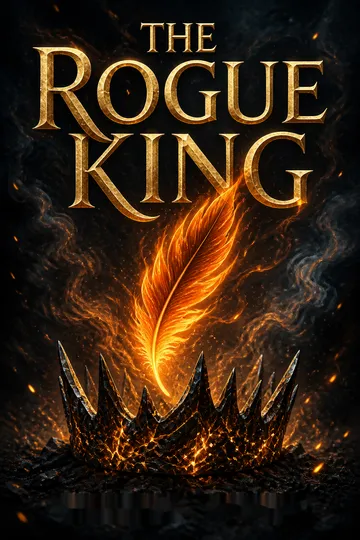
The Rogue King is a thrilling paranormal romance featuring dragon shifters and a phoenix. Readers praise the chemistry between Brand and Kasia, the world-building, and action-packed plot. Many enjoyed the forbidden love story and strong characters. Some critiques mention pacing issues and occasional plot inconsistencies. Overall, the book is well-received as an exciting start to a new series, with readers eagerly anticipating the next installment. The steamy romance and unique mythology make it a standout in the genre.
People Also Read








Characters
Kasia Amon
The guarded fire-seerKasia is a resourceful young woman raised in hiding, trained by her mother to survive changing eras and dangerous pursuers. She is quick with engines, stubborn about making her own decisions, and more comfortable acting than admitting how much isolation has cost her. Her visions arrive with pain and fire, giving her fragments of possible events rather than dependable instructions. She has a deep protective bond with her sisters and a wary curiosity about the world her mother taught her to fear. Kasia’s central tension is not between strength and vulnerability, but between protecting others and allowing herself to be protected without surrendering her independence.
Brand Astarot
The exiled dragon mercenaryBrand is a solitary dragon who works as a mercenary and keeps his history, loyalties, and emotions tightly controlled. He measures relationships through usefulness because dependence has repeatedly exposed him to betrayal. His self-command makes him effective in danger, but it also encourages him to treat care as a private obligation rather than something he must explain. Kasia unsettles that system by trusting his actions while challenging his motives. Brand’s guardedness is not indifference; it is a survival structure he has mistaken for a complete identity, and his growing attachment forces him to question what he has been living toward.
Ladon Ormarr
The embattled Blue KingLadon rules the Blue Clan after taking its throne from a previous king whose policies impoverished his people. Scarred, politically alert, and physically formidable, he is more comfortable with decisive action than the negotiations his crown demands. His loyalty to Brand is real, but kingship continually forces him to weigh friendship against the needs of the clan. Kasia’s insistence on partnership tests whether his rule can make room for someone whose value cannot be reduced to what she offers his cause. He is neither a gentle idealist nor a simple tyrant; his leadership is shaped by the violence required to gain power and the responsibility of using it differently.
Pytheios
The failing Red KingPytheios is the aging Red King who has extended his authority over most dragon clans through appointed rulers and coercive bargains. He views power as something secured by controlling bodies, succession, and access to resources. His deteriorating health deepens rather than moderates his ambition, making him willing to exploit fire creatures to preserve his life. He is capable of patience when it serves a long plan, but interprets resistance as a threat that must be crushed. His conflict with Kasia is bound to a wider effort to maintain a system in which one ruler’s survival outweighs everyone else’s autonomy.
Serefina
The hidden phoenix motherSerefina is Kasia’s mother, a phoenix who spends centuries keeping her daughters beyond Pytheios’s reach. Her love is expressed through preparation: she teaches practical skills, anticipates danger, and plans separate refuges for her children. That care gives the sisters tools to survive, but it also leaves them with a life shaped by secrecy and fear. Serefina carries grief for her lost mate and a strong sense of responsibility for the legacy she inherited. Her final counsel urges her daughters to make lives beyond the old rules, even as her choices show how difficult freedom can be under pursuit.
Uther Hagan
The usurping Gold KingUther is the ruler of the Gold Clan, a powerful and practiced fighter who has built his authority through violence. He is willing to bargain with Pytheios when their interests align, but keeps his own ambitions in view. His pursuit of Kasia treats her as a route to greater standing rather than as a person with a choice. Uther’s confidence comes from having survived and imposed himself on others for centuries, though that confidence makes him underestimate the resistance of people he considers weaker.
Zilant Amon
Kasia’s lost fatherZilant was Kasia’s father and the former King of the White Clan. He is remembered through Serefina’s grief and the family history she gives her daughters, rather than through an active role in the present. His reputation suggests a ruler who imagined a less hierarchical future for dragon clans and resisted centralized control. For Kasia, his name is both a source of inheritance and an incomplete story: she knows what his loss did to her mother, but has few personal memories with which to understand him.
Maul
The enormous black guardianMaul is a huge, smoke-scented dog who has watched over Kasia since her mother placed her in his care. He communicates through images and gestures, acts independently, and remains close without behaving like a tame possession. His fierce appearance makes other supernatural creatures wary, but Kasia knows his attachment is dependable. Maul embodies the kind of protection that does not demand political allegiance or obedience, and his loyalty gives Kasia a living connection to the family she has been forced to leave behind.
Hershel
The refuge’s ancient hostHershel, also known as Pazuzu, is an ancient spirit who runs a supernatural refuge behind the disguise of a rough biker bar. He gives Brand shelter and extends that protection to Kasia, relying on hospitality, hidden security, and a forceful sense of responsibility. His humor softens a hard-earned understanding of danger, but he does not mistake affection for safety. Hershel knows Brand’s loner habits well and offers Kasia a warning without trying to control her decisions. His refuge is a rare space where mixed supernatural communities can coexist under personal trust.
Angelika
Kasia’s sheltered sisterAngelika is the youngest of the sisters, warm-hearted and more physically vulnerable than her siblings. She lives under the protection of wolf shifters and has spent a long period separated from Kasia. Her nursing training makes her useful in emergencies, while her humor and emotional openness help keep fear from taking over. Angelika’s bond with the wolves reflects her ability to form attachments beyond her family, even as Kasia’s efforts to protect her shape the choices made at a distance.
Skylar
The fierce newcomerSkylar is a guarded, forceful woman with a sharp sense of danger and little patience for decisions she believes put loved ones at risk. She appears with a history of conflict around dragon shifters and a strong conviction that distance can be a form of protection. Her intensity contrasts with Kasia’s more improvisational approach, while their shared stubbornness hints at a close familiarity. Skylar’s arrival brings a new perspective on the family’s separation and the dangers surrounding their inherited abilities.
Meira
The serious sisterMeira is one of Kasia’s sisters, serious and angular in manner, with strawberry-blond curls. She was raised alongside her sisters in hiding and shares the family’s training in practical survival. Kasia’s memories of her reveal an observant sibling who prefers silence when she has something to keep private.
Rhiamon
Pytheios’s powerful witchRhiamon is Pytheios’s longtime witch and the magic worker who sustains his failing body. Her relationship with him mixes political dependence, intimate familiarity, and her own hopes for her son. She has considerable magical power, but years of using it have visibly weakened her. Rhiamon understands the cost of Pytheios’s plans, yet her loyalty and personal ambitions keep her bound to his rule.
Merikh
Pytheios’s uncertain sonMerikh is Pytheios and Rhiamon’s son, raised close to power but not yet equipped for the responsibility his father may place on him. He is proud, reactive, and accustomed to receiving attention, though his resentment suggests he recognizes how often Pytheios belittles him. His uncertainty makes him vulnerable to his father’s efforts to shape him into a political instrument.
Nathair
The king’s observant brotherNathair is Pytheios’s younger brother, a quiet observer who repeatedly manipulates a puzzle cube while others speak. His apparent distraction conceals a careful, analytical mind. He questions the logic of Pytheios’s plans when he sees a weakness, making his silence as significant as his rare interventions.
Jaakobah
Pytheios’s patient informantJaakobah is a pale, meticulously dressed member of Pytheios’s inner circle who gathers information and delivers it with unnerving composure. His theatrical pauses contrast with his practical value to the king. He is difficult to read, and his access to information makes him an important instrument in the pursuit of the phoenixes.
Chante
The Blue Clan treasurerChante is Ladon’s viceroy of the Reserve and oversees the Blue Clan’s resources. He is polished, status-conscious, and aware of the political value attached to a phoenix. His manner makes Kasia wary, though he is careful about how openly he displays his judgments.
Arden
The bold female dragonArden is Ladon’s sister, a female-born dragon who refuses the limited role her society expects of her. She is lively, curious, and eager to train, despite male warriors often assuming she is too small or too weak to fight. Her easy rapport with Kasia helps the newcomer feel less alone, while her persistence exposes the gendered restrictions inside dragon culture.
Asher
Ladon’s watchful BetaAsher is Ladon’s Beta and viceroy of security, a disciplined strategist who watches people before deciding whether to trust them. His reserve can seem hostile, especially to Kasia, but it comes from a role that requires vigilance. He values the Blue Clan’s safety and expects others to prove that their intentions are compatible with it.
Reid
The demanding guard captainReid commands Ladon’s personal guard and serves as viceroy of war. He is a demanding trainer, direct in conflict, and protective of his warriors, sometimes in ways that underestimate their capabilities. His interactions with Arden reveal an uneasy tension between care and respect for her independence.
Fallon
The adaptable clan healerFallon is a Blue Clan healer with a warm manner and unusual healing potential. He treats Kasia’s injured hands and supports the clan through dangerous encounters. His calm practicality makes him a reassuring presence amid political upheaval.
Bleidd
The wolf pack leaderBleidd leads the wolf shifters who shelter Angelika and later agree to help Kasia. He is measured, observant, and protective without being needlessly controlling. His authority rests on the pack’s collective trust rather than inherited wealth or a royal title. He approaches alliances pragmatically and expects other leaders to respect the wolves’ knowledge of their own territory.
Jedd
Angelika’s steady protectorJedd is a capable wolf shifter who remains near Angelika and takes responsibility for her safety. He is disciplined and practical, with a dry humor that she enjoys provoking. His presence helps establish the care and structure surrounding Kasia’s sister.
Rafe
The stubborn wolf fighterRafe is a stocky wolf shifter with a white streak in his rust-colored hair and a combative streak. He is a capable fighter and sometimes meets danger with bravado. His bluntness reflects the pack’s suspicion of dragons, especially those who have already injured its members.
Cairn
The wary pack warriorCairn is one of Bleidd’s wolf shifters, a capable fighter with a crooked nose and a distrustful view of dragons. He is quick to challenge outsiders, particularly those who have hurt members of the pack, but follows Bleidd’s leadership.
Plot Devices
Phoenix fire and mating
Power with a choicePhoenix power is both a supernatural inheritance and a political prize. A phoenix can wield fire and other gifts, while dragon lore ties her mate to legitimacy among the clans. The story complicates that lore by making the phoenix’s choice essential: a dragon cannot simply claim her without risking destruction. Kasia’s fire first appears as painful, uncontrolled episodes, then becomes a means of escape, rescue, and judgment. The mating bond links her fate to Brand’s, but it does not erase the need for consent or the consequences of their political surroundings.
Kasia’s visions
Danger seen in fragmentsKasia’s visions arrive with episodes of fire and bodily pain, showing people, places, and possible events without reliably explaining what they mean. Brand’s touch and later intimacy change the severity and clarity of some episodes, but the visions remain fallible rather than a simple forecast. Their value is practical: Kasia recognizes attackers, warns the wolf pack, and helps the Blue Clan prepare for a breach. Each intervention may alter the future she saw, so the visions create responsibility as well as advantage.
Clan marks
Identity made visibleDragon brands identify a shifter’s clan and king, shaping how other dragons read their allegiance. Marks also carry political and emotional weight: a rogue’s lack of a clan brand signals exclusion, while a mating brand signifies a bond. The marks help establish who can claim authority and who is treated as an outsider. Kasia’s phoenix fire produces a different sign from the standard dragon mating mark, complicating the assumptions other characters bring to her future. The device turns private lineage into a visible public fact.
Teleportation
Escape across distanceKasia inherits the ability to move herself through space, but initially can manage only short, inaccurate jumps that leave her exhausted. Her mother used the power to scatter the sisters beyond Pytheios’s reach, and Kasia gradually learns to use it for flight from confinement and for rescuing others during battle. Maul can also teleport, though his method and stamina differ from hers. The power is not a convenient escape hatch: distance, fatigue, panic, and the need to picture a destination all limit its usefulness.
The hellhound bond
A guardian beyond clansMaul is a supernatural guardian tied to Kasia’s family rather than to the dragon clans or wolf packs. He communicates through images, follows her across great distances, and can enter or leave places by teleporting. His presence gives Kasia protection, but his independent judgment means she cannot command him as a tool. Maul also connects the present danger to Serefina’s earlier preparations and helps Kasia locate the wolf settlement. He represents loyalty that is personal, chosen, and not dependent on political rank.
Inferno Rising Series
About the Author



Download PDF
Download EPUB
.epub digital book format is ideal for reading ebooks on phones, tablets, and e-readers.








