



Plot Summary
The Gate Takes Its Due
Fresh from winning the Crucible and becoming Queen of the Underworld,1 Lyra1 expects to begin her life with Hades.2 Instead, a use of Pandora’s Box draws her and her friend3 Boone3 through Tartarus’s gate, where Cronos, imprisoned King of the Titans,4 waits. Wards cut Lyra1 off from Hades,2 and the entrance strips both newcomers of their weapons and powers.
When Boone3 reacts to Cronos’s4 threat, the Titan4 slams him unconscious against the gate. Cronos4 insists Lyra1 will eventually free him, then drops her into the abyss before she can reach Boone.3 Lyra1 falls without knowing whether her friend3 will wake or whether she can survive. The promised homecoming becomes a prison with no visible exit.
The opening makes victory feel provisional: Lyra has gained a throne and a beloved, yet neither status protects her from divine systems she barely understands. Cronos resembles Hades closely enough to turn family resemblance into a threat, while the stripped weapons make Lyra’s new divinity feel suddenly fragile. Her separation from Hades is also more than romantic peril. It removes the person whose power and judgment have helped her orient herself, forcing her to act without the reassurance she has only just earned.
A Family Made of Longing
A red crystalline rupture catches Lyra1 in mid-fall and deposits her briefly in Hades’s2 water garden. He recognizes her as a future version of herself, but the rupture takes her away before she can understand what that means.
Her next landing is her old room in the Order of Thieves, where Hestia’s12 recorded image explains the first Lock: Lyra1 must surrender her deepest desire to pass. The trial gives her parents back, along with a future as Boone’s3 business partner and trusted companion.
Its warmth makes the invented life tempting, especially because it answers the loneliness she carried since childhood. Yet flashes of pain and memories of Hades2 expose the false history. Lyra1 rejects the life, and the apparent parents reveal themselves as Nightmares waiting to attack.
Hestia’s test weaponizes an old wound rather than inventing a new temptation. Lyra once wanted parental love and a place beside Boone, so the false future feels emotionally credible before it feels factually credible. The Lock makes her distinguish between a desire that shaped her and a desire that still defines her. Choosing Hades does not erase her childhood grief; it shows that she can honor what she lacked without allowing the fantasy of its repair to decide her present.
Nightmares at the Threshold
The Nightmares shed their disguises and attack Lyra1 and Boone3 in a chamber littered with bones. Still mortal and weaponless, Lyra1 tackles Boone3 out of a blade’s path, then uses her recovered axe to wound the creature holding him. They race through the opening Hestia’s12 Lock creates and emerge before the imprisoned Titans.
The Nightmares bow to Lyra1 and call her their future mistress, then withdraw, leaving the Titans to demand answers. The bell soon releases the Pandemonium, invisible forces that transform touched Titans into violent monsters. Boone3 makes the pair unseen and leads Lyra1 past a feral Theia to the cosmic pillars. Rhea5 hides them inside the Earth Pillar and reveals that the tunnels are Tartarus’s prison, not an escape route.
The first victory is practical, not triumphant. Lyra and Boone survive because they read danger quickly and rely on the habits they learned as thieves, while the Titans’ awe at Lyra’s connection to the Nightmares only adds another uncertainty. Tartarus keeps presenting apparent allies alongside hidden costs. Rhea’s shelter offers safety, but her explanation makes safety itself conditional: the bell, the prison tunnels, and the Titans’ changing bodies all mean that survival depends on learning the structure before trusting anyone’s account of it.
A Stranger in Hades' Past
While the Titans argue over whether to force her into another Lock, a red fracture takes Lyra1 into the past. She finds Cronos4 and Rhea5 with their young children, then meets Hades2 as a teenager, already isolated because his uncontrolled death power can harm those who touch him. Lyra1 reassures him that he can master it and takes his hand without being hurt.
The encounter vanishes before she can explain why she knows him. Back in Tartarus, the Titans identify the fractures as broken time: Cronos4 damaged time while trying to escape, and the cracks carry visitors into earlier eras. Lyra1 realizes Hades2 has met her before their supposed first meeting, but cannot yet tell whether the visions are reliable or what her visits have changed.
The past gives Lyra a new form of intimacy with Hades, one that precedes their romance and reaches into the fear that shaped him. Her touch matters because it contradicts his belief that his power makes him untouchable. At the same time, time travel destabilizes ordinary memory: Lyra knows the man she loves, but the young Hades knows her as a stranger who somehow recognizes him. Their connection is real in feeling, yet its chronology becomes a puzzle neither can solve alone.
The Chariot Against Death
Iapetus7 sends Lyra1 into Hades’s Lock, where she and Boone3 lose their goddess powers and face a seven-lap chariot race against smoke horses. Lyra1 summons winged gold horses for herself, while Boone3 calls up Hermes’s18 pixel-like steeds, using modern speed as a divine power. Hades’s2 team attacks with smoke whips, and the track fills with rising zombies that destroy Lyra’s1 first chariot.
Boone3 pulls her into his digital team, but zombies wreck his vehicle and drag him by the reins. Lyra1 cuts him free, then conjures Poseidon’s water horses to slow Hades’s2 fire steeds. She finally summons mares embodying Aphrodite’s14 lust. Hades’s2 horses stop to pursue them, letting Boone3 cross first and opening the Lock.
The race tests more than speed. Lyra and Boone survive by changing tactics, sharing risk, and treating their powers as tools rather than fixed identities. Lyra’s final solution is deliberately absurd, but it succeeds because she studies what the horses respond to instead of accepting Hades’s race as a contest of force. The partnership also becomes emotionally legible through action: Boone’s rescue and Lyra’s refusal to leave him show a bond grounded in earned trust, unlike the convenient friendship offered by Hestia’s illusion.
Seven Locks, One Mortal
The Hades2 who guards the Lock reveals that the seven pie-shaped chambers are safeguards created by the seven gods who imprisoned the Titans. Titans die when a Lock strips away their powers, which makes a mortal-born goddess like Lyra1 their only possible key.
She and Boone3 bargain for preparation and a promise that released Titans will not attack innocents. The Titans agree, though Lyra1 refuses Cronos’s4 offer to glamour them a more comfortable refuge. Phoebe’s prophecy names Lyra1 as their savior, and the damaged pillars suggest Tartarus itself may be failing.
The Titans begin training the pair for the remaining trials. Lyra1 learns that Hades’s2 guardian is not a simple recording, but a fragment of his soul, capable of remembering her visits and reacting to her presence.
The revelation turns Lyra from captive into necessary participant, but necessity is not the same as consent. The Titans need her, and their prophecy risks reducing her to a function even as they begin to treat her as a person. The guardian fragments complicate that pressure: each Lock contains a part of a god’s self, so the tests are not merely mechanical obstacles. Lyra is negotiating with fragments of the family that built her prison while deciding what obligations she owes to those who now depend on her.
The Gods Behind the Veil
Broken time carries Lyra1 into the war between the gods and Titans. She sees gods wearing iridescent veils and learns, through Rhea,5 that her emerging power lets her see glamours. In another visit, Lyra1 witnesses Cronos4 protect infant Hades2 from Uranus and Oceanus,10 killing Uranus with a god-slaying scythe after the Primordial tries to drown the child.
Later, she watches Hades,2 veiled and convinced his parents betrayed him, take Rhea5 toward Tartarus. Rhea5 saves him from acting on the lie, transfers his protective animal tattoos to him, and asks Lyra1 to help the Titans. Lyra1 swears on the Styx. The supposedly monstrous family may have been framed, while the gods who imprisoned them have been made to remember a false history.
Lyra’s new sight changes the moral problem from escape to accountability. The Titans are not simply innocent because they are vulnerable, and the gods are not simply right because they won. The memories show how violence can be made to look like protection when perception is controlled. Hades’s role is especially painful: he acts from a history that feels personal and complete, while Lyra can see the missing evidence. Her oath to Rhea commits her to a truth she cannot yet prove to anyone else.
The Wheat Field's Judgment
Demeter’s Lock strips Lyra1 of her powers, drugs her with kykeon, and sends her through three staged ordeals. A monster pursues Lyra1 and the mother who abandoned her to the Order; Lyra1 knocks her mother unconscious and carries her to safety, refusing to leave even after hearing how little she was wanted.
A runaway combine then traps Lyra1 with Chance, the bully who made her life at the den miserable. When he abandons her to climb clear, Lyra1 disables the machine herself. In the final stage, a grain-filled silo traps a hallucination of Lyra1 after Athena’s Labor. Guilt makes the real Lyra1 give up, but Hades’s Lock guardian2 boosts her over the rising grain. She escapes, and Demeter’s Lock opens.
Demeter’s test makes kindness costly by directing it toward people Lyra has every reason to reject. She does not have to forgive her mother or Chance to keep them alive, and the distinction matters: compassion is not reconciliation. The final test turns guilt inward, asking whether Lyra believes her own survival is deserved. Her surrender reveals how easily responsibility for other people’s suffering can become self-punishment. The Hades fragment intervenes, but Lyra must still accept his help and cross the threshold herself.
Time's Unkind Revisions
Lyra1 uses the fractures to revisit Hades2 at several points in his life, learning that he has remembered her visits for centuries. She sees the Titans’ family before their imprisonment, the attack on young Hades,2 and Aphrodite’s14 emergence from Uranus’s blood and semen.
She also discovers that time repeatedly resets when someone learns too much or dies. Determined to save Isabel, the champion killed in Poseidon’s Labor, Lyra1 tries more than a hundred variations, but each intervention resets events and Isabel still dies.
She finally accepts that she cannot repair every loss. During these trips, Lyra1 guides Hades2 toward choosing her as his champion and explains why he must keep her heart broken through Zeus’s11 Labor, where her curse conceals her from the sirens.
Repeated time gives Lyra the fantasy of correction, then exposes its cost. The ability to revisit a death does not grant the power to undo it; instead, each attempt makes grief recur with greater knowledge. Accepting Isabel’s death is not approval of the system that killed her. It is Lyra recognizing the limit between mourning and control. Her instruction to Hades also reverses the usual romance logic: emotional distance becomes an act of protection, even though both lovers know it will injure them.
The Sea Chooses Its Course
Lyra1 and Boone3 enter Poseidon’s Lock together and face a flooded obstacle course, electrified water, and moving hazards. Their thief training becomes essential: Boone3 coaches Lyra1 through the swinging hammers, and she learns to focus on the few threats that can actually hit her.
They later solve the Lock’s storm-tossed ship by using a horned sea monster’s charge against it, steering the vessel so its horn pins the boat and carries them toward a lighthouse. They reach land and unseal Poseidon’s Lock.
Outside, the bell releases the Pandemonium again. Iapetus7 is struck and transformed into a raging embodiment of pain; when Phoebe9 runs to him, Koios risks staying beside her as the Lock closes, leaving the Titans uncertain whether either will return.
The sea trial rewards collaboration over individual competence. Lyra can learn quickly, but Boone’s timing and strength let her apply that learning under pressure. Their solution turns the monster’s attack into propulsion, a small reversal of the book’s broader pattern: danger becomes usable only when its rules are understood. The victory is shadowed by Iapetus’s transformation, which shows that passing a Lock does not make the prison safer. Each success brings the group closer to freedom while exposing them to another system designed to break their bodies and trust.
A Head Behind the Wall
While searching for shelter from the Pandemonium, Lyra1 and Boone3 stumble into a hidden cell containing Medusa’s19 living head. The gorgon19 explains that Athena cursed her after Poseidon assaulted her, and that she awoke imprisoned in Tartarus with no memory of how she arrived. Boone3 distrusts the risk of carrying a creature whose gaze can turn people to stone, but Lyra1 refuses to treat Medusa19 as a weapon or leave her forgotten in a wall.
They promise to find a safe way to move her and investigate whether a healer or Hephaestus could give her a body. Before they can act, the bell and further danger pull them onward. Medusa’s19 confinement broadens Lyra’s1 suspicion that Tartarus holds more victims than the Titans alone.
Lyra’s response to Medusa tests whether her growing concern for the Titans is merely a strategy for escape. Medusa has little immediate utility and poses a genuine danger, yet Lyra sees the person beneath the feared reputation. Boone’s caution is not cruelty; it is the survival logic that has kept them alive. Their disagreement makes compassion concrete, requiring practical plans rather than sentiment. Medusa also echoes Lyra’s own experience of being defined by a curse and treated as a threat before anyone asks what happened.
The Lock That Keeps Killing
Hera’s Lock repeatedly sends Lyra1 and Boone3 across a storm-lashed trireme, using changing stars and sea monsters to misdirect them. They die in multiple attempts, and each reset leaves them remembering the pain. Lyra1 eventually doubts that the stars are meant to guide them at all.
When the recurring horned sea monster charges the ship, she orders Boone3 to steer directly into its path, then turns the vessel so its horn pierces the oar ports instead of splitting the hull.
They lash the monster to the boat and let its struggle tow them toward the lighthouse. The pair leap clear before the wreck, reach shore, and pass the trial. The Lock opens after twenty-three attempts, making persistence and reinterpretation more valuable than obedience to Hera’s17 apparent route.
Hera’s trial converts repetition into evidence. The first failures teach the pair the Lock’s violence; the later ones teach them that apparent instructions may be part of the trap. Lyra’s insight comes from noticing what repeats, not from becoming stronger or more fearless. The solution does not defeat the sea monster so much as redirect its force. That is a useful model for the novel’s temporal problem too: Lyra cannot erase every painful event, but she can learn which forces can be redirected without destroying the people caught inside them.
Boone's Broken Trial
While Lyra1 is away in the past, time moves differently in Tartarus. Boone3 enters Zeus’s Lock alone rather than wait for her, and the elemental trial breaks both his legs. Lyra1 returns to find the Titans setting the bones and Persephone6 holding Boone3 steady.
Persephone6 blames Lyra1 for being absent, sharpening the guilt Lyra1 already feels about her time experiments. Lyra1 then uses her glamour sight to remove a false veil from Persephone6 and Boone,3 restoring their clearer memories and healing Boone’s3 injuries.
Phoebe9 sees that the prophecy binding Lyra1 and Boone3 as fated partners was itself a glamour. The Titans lose the certainty that their planned saviors are destined to succeed, and a violent earthquake warns that Tartarus may collapse before they can try again.
The injury makes Lyra’s private search for control consequential to the people waiting for her. She did not choose when time returned her, but Boone’s decision to proceed alone and the group’s dependence on her collide in the same room. Removing the glamours gives her a concrete way to act, yet it also dismantles the prophecy that had made their suffering seem purposeful. The Titans must now continue without the comfort of a guaranteed fate, while Lyra has to distinguish responsibility for her choices from guilt for everything she cannot control.
The Father in the Fire
After the Zeus11 and Hera17 trials, Lyra,1 Boone,3 and Persephone6 approach Aphrodite’s final Lock. Cronos4 shoves Lyra1 away from the bridge and follows her into the chamber, volunteering as the required sacrifice. Aphrodite’s14 guardian explains that two hearts must enter: one must be consumed by the fire so the other can be released.
Cronos4 knows the price and will not let Lyra1 take his place. He gives her the two halves of the butterfly Hades2 carved for him, then steps into the flames as his body disintegrates. Lyra1 cannot reach him after the Lock strips her powers. His death opens the final Lock and Tartarus’s gates, while Rhea5 and the other Titans finally step into the world above.
The final Lock turns the question of sacrifice from abstract heroism into a relationship. Cronos’s choice is not proof that Lyra is expendable; it is an act by a father who refuses to make his daughter pay the cost he can bear himself. The butterfly, broken and then restored, carries a history of care that contradicts the story Lyra once believed about Cronos. His death gives the Titans freedom, but it makes that freedom inseparable from grief and from the limits of what even time can repair.
The Gods Turn Their Weapons
As the Titans emerge, a burst of power gathers the broken fragments of time into a single light and passes Cronos’s4 time ability to Lyra.1 The gods of death arrive to stop the Titans, still convinced by the glamour that they are dangerous.
Hades,2 believing Lyra1 remains buried, attacks Tartarus with smoke and blue fire while the gods strike back. Lyra1 uses her glamour sight to expose the lie, and several gods begin to recognize what they have done. In the melee, Hel kills Tethys20 with her lethal touch before Lyra1 can stop her.
Lyra’s1 reunion with Hades2 comes amid the destruction: she removes the glamour from his face, and he realizes that his parents4 were not the monsters he remembered. His grief over Cronos4 and the devastation he caused leaves the newly freed family facing a world in ruins.
Freedom does not end the conflict because the prison’s logic has traveled into the minds of those outside it. The gods act on a manufactured certainty, and Hades’s attempt to protect Lyra becomes another catastrophe. Lyra’s power can reveal truth, but it cannot instantly undo the harm done while others believed the lie. Tethys’s death makes this limit intimate. The scene refuses a clean distinction between victim and aggressor: people can be manipulated into violence and still leave real bodies behind.
Time Holds the Flood
Hades’s2 fire has left openings through which the oceans pour into Tartarus. Rhea5 tells Lyra1 to use Cronos’s power, and Lyra1 travels into the past to learn how to control it. She returns and gathers the Titans, Boone,3 Persephone,6 and Hades2 inside a protected moment. While they hold hands, she freezes their time and rewinds the world outside them, restoring the damaged landscape and preventing Tethys’s20 death.
She stops the reversal only after the Titans have crossed the open gate, then preserves Tartarus in its unlocked state while time outside returns to the moment Hades first tried to break in. The plan works, though it drains Lyra1 so badly that Rhea5 must lend her power. The Titans remain free, but Cronos4 does not return.
Lyra’s first act as goddess of time is not to erase pain wholesale. She protects one group from the rewind, restores selected losses, and keeps the prison from sealing again. The operation is ethically and physically costly because every correction risks undoing the escape itself. Her choice to save Tethys while accepting Cronos’s death marks a boundary between repair and resurrection. Time becomes a responsibility rather than a wish-granting device, and Lyra must use it without pretending that every loss can be made harmless.
A Queen Without Her King
The world has been restored, but the gods remember Hades’s2 attack. Anubis judges him with a scale weighing Hades’s2 power and guilt against the feather of Maat. The balance condemns him, and the gods of death strip away his divinity and immortality. Hades2 survives, now mortal, while Lyra1 remains Queen of the Underworld1 and Persephone6 shares its burden with her.
The gods leave the question of a new god of death for a future contest, and Boone3 takes the stunned Lyra1 and Hades2 to their rooms. She stays beside Hades2 as he wakes, unable to reverse the verdict without risking another disaster. He meets her fear with the promise that he has a plan. Their reunion is real, but their future has become uncertain again.
The judgment shifts the story’s danger from cosmic destruction to intimate imbalance. Lyra and Hades have finally reached one another, yet the restoration leaves them with different conditions of existence and a political system that has punished Hades without resolving the false history behind the crisis. The gods’ verdict may be understandable in light of what they witnessed, but it also exposes how easily justice becomes a response to visible damage rather than an inquiry into its causes. Hades’s final confidence keeps the ending open rather than secure.
Epilogue
The hidden deceiver reflects on having glamoured the immortal world for millennia, using other gods to sustain the lie that the Titans deserved imprisonment. The deceiver regards Hades’s2 violence as confirmation that he should have been killed as a child, while admitting that Lyra1 prevented the prophecy from fully unfolding.
With Hades2 now mortal, the deceiver sees the immediate threat as contained. The next plan is quieter: remain close to Lyra,1 become the sibling and confidant she never had, and exploit her if her mind proves vulnerable. The deceiver claims to like Lyra,1 making affection another possible instrument of control.
The epilogue turns the apparent victory into a problem of intimacy and access. The deceiver does not need to attack Lyra openly; the plan is to become someone she will trust. That strategy mirrors the novel’s central danger, where false memories work because they are embedded in real longing, family history, and love. Hades’s mortality may look like the removal of a threat, but the deceiver’s confidence is premature: the story ends with Lyra’s deepest vulnerability identified, not surrendered. Trust remains both her capacity for connection and the point an antagonist intends to exploit.
Analysis
The novel’s central conflict is not simply whether Lyra1 can escape Tartarus. It is whether anyone can make a just decision while living inside a history designed to mislead them. The Titans remember being betrayed, the gods remember being endangered, and both accounts feel true to the people who carry them. Glamour makes memory politically powerful: whoever controls perception can turn protection into punishment and then call the punishment proof of the original threat.
Lyra’s1 response is practical before it is ideological. She studies Locks, follows evidence, questions prophecies, and revises her assumptions when the facts change. That method matters because her empathy alone could make her vulnerable to manipulation. Her repeated attempts to save Isabel show the limit of care when care becomes a demand to control every outcome. Learning to stop trying is not indifference; it lets Lyra1 preserve energy for the people she can still help.
The romance with Hades2 sharpens the same problem. Their love depends on trust, but Lyra’s1 knowledge of the future repeatedly forces her to withhold information, while Hades’s2 fear of becoming a monster pushes him toward secrecy and emotional distance. His destructive response to her apparent loss is both an act of protection and a consequence of treating love as something he can secure through force. Their reunion cannot erase that contradiction. It makes accountability part of intimacy.
Cronos’s4 sacrifice complicates the novel’s language of fate. He chooses to die so Lyra1 can live and the Titans can leave, but Lyra1 later refuses to accept that the choice must be the last word. Her use of time preserves some lives and relationships while leaving Cronos’s4 absence intact. The ending therefore rejects both easy fatalism and effortless repair. Love can motivate enormous sacrifice, but it cannot make every cost disappear, and truth must still be followed by the difficult work of changing the world that depended on a lie.
Review Summary
The Things Gods Break receives mixed reviews averaging 4.29/5 stars. Readers praise the time travel concept, complex plot, and emotional depth, with many loving how it recontextualizes the first book. The romance between Lyra and Hades resonates strongly. However, common criticisms include excessive length, confusing timelines, repetitive trials, too much internal dialogue, and modern references like TikTok breaking immersion. Some readers felt frustrated by Lyra's character regression and the time travel trope itself. Most agree the book is action-packed and engaging despite its flaws, ending on a cliffhanger that leaves readers eager for book three.
People Also Read


Characters
Lyra Keres
The reluctant time goddessA former Order of Thieves clerk who has recently become a goddess and Queen of the Underworld, Lyra is quick-witted, physically brave, and more comfortable solving a practical danger than naming an emotional one. She grew up believing Zeus’s11 curse made her unlovable, so she learned to rely on skill and self-protection instead of expecting care. Her instinct to help people can override her own safety, sometimes to the point of self-erasure. Lyra’s humor keeps panic at a manageable distance, but it can also conceal grief and doubt. Her relationship with Hades2 challenges her belief that she must earn affection by being useful, while Tartarus forces her to decide which burdens are truly hers to carry.
Hades
The guarded god of deathHades is the god of death, ruler of the Underworld, and a powerful figure whose control over his own abilities was hard won. His family history has taught him to expect fear, betrayal, and the danger of losing control, so he often hides tenderness beneath command and distance. He is strategic, intensely protective, and slow to trust, but Lyra1 repeatedly reaches the isolated person beneath his authority. Their love is shaped by unequal knowledge and repeated separations: he wants certainty, while she often knows more than she can safely explain. Hades’s deepest struggle is not whether he can wield destructive power, but whether he can choose what to do with it when fear and love pull in opposite directions.
Boone Runar
Lyra’s thief and partnerBoone is Lyra’s1 oldest friend from the Order of Thieves, a formidable thief whose practical intelligence is matched by loyalty and an instinct to protect the people beside him. He tends to move from danger straight into planning, using observation, timing, and nerve rather than grand speeches. His protectiveness can become stubborn, especially when Lyra1 takes risks without him, and his distrust of Persephone6 grows from experiences he cannot initially explain. Boone’s bond with Lyra1 is built through work and shared survival, not romance. He is also capable of recognizing when his own assumptions are limiting, though Tartarus gives him little time to do so comfortably.
Cronos
The imprisoned Titan kingCronos is the Titan ruler imprisoned beneath the world and a father whose appearance and bearing echo his son Hades2. He initially meets Lyra1 as a dangerous captor, speaks in riddles, and treats her as central to his plan for escape. Beneath that severity is a patient strategist shaped by time, family, and the consequences of choices made long before Lyra1 was born. Cronos understands that people cannot be forced into trust, even when their cooperation is necessary, and he learns to meet Lyra1 where she is rather than demand that she accept his version of events. His care is often awkward, but it is grounded in a genuine longing to protect and nurture.
Rhea
The steady Titan motherRhea is Queen of the Titans, a composed and perceptive presence who offers Lyra1 shelter when other Titans would force her toward another trial. Her gentleness is not passivity: she can act decisively, read the emotional cost of information, and challenge Cronos4 when his secrecy harms the people around him. Rhea’s identity is deeply tied to motherhood and to the family she has been separated from, but she does not reduce Lyra1 to a substitute child or a tool. She gives Lyra1 room to resist, then trusts her with difficult truths. Her calm is a practiced form of strength, especially in a prison where fear can become another weapon.
Persephone
The spring goddess in TartarusPersephone is Demeter’s13 daughter, a goddess of spring whose warmth and optimism make her seem easy to read. She is more observant than her sunny manner suggests and has spent a long time waiting for events she cannot fully explain. Her history with Boone3 is complicated by repeated encounters, interrupted trust, and information neither can safely share. Persephone wants connection and believes Lyra1 will become her friend, but her certainty can feel intrusive to someone as guarded as Lyra1. Her sweetness is genuine, yet it does not make her naïve; she can make difficult choices and carry knowledge without disclosing it until the moment is right.
Iapetus
The impatient western pillarIapetus is a Titan associated with life, pain, and the western pillar of the sky. He is blunt, impatient, and often the first to argue that Lyra1 should be pushed toward the next Lock. His gruffness masks a deep investment in his family and a habit of acting before he has found a gentler way to help. Lyra’s1 resistance irritates him, but he gradually becomes one of the people who teaches and protects her. His blunt manner is both a source of friction and a useful counterweight to the Titans’ tendency to bury practical truths under prophecy and secrecy.
Mnemosyne
The keeper of memoryMnemosyne is the masked Titaness of memory and stories. She is careful about what Lyra1 learns and when, knowing that knowledge can destabilize the fragile course of events in Tartarus. Her caution can look like withholding, but it comes from a long history of watching memories and time interact dangerously. Mnemosyne can reveal the past in ways no ordinary witness can, though doing so risks overwhelming Lyra1. Her owl mask and controlled manner keep her difficult to read, even when she is trying to protect the group.
Phoebe
The burdened prophetessPhoebe is a Titaness of prophecy whose visions shape the Titans’ expectations of Lyra1. She is gentle and perceptive, but the burden of seeing possible futures leaves her vulnerable to pressure and uncertainty. Her prophecies are treated as guidance by the Titans, though the story makes clear that visions can be manipulated or misread. Phoebe’s marriage to Koios and her relationships with the other Titans ground her beyond her prophetic role. She does not wield certainty as authority; she experiences it as an unstable knowledge that can frighten as much as it can guide.
Oceanus
The absent water TitanOceanus is the Titan source of waters and the only member of his family not imprisoned in Tartarus. His distance from the other Titans has left a long shadow over their history, and they speak of him with anger and unresolved hurt. Lyra1 encounters him during a time rupture and finds a figure who prefers isolation and guarded answers to reunion. He knows more about Tartarus than his absence should easily allow, making him a source of suspicion. His connection to Tethys20 and the other Titans suggests that withdrawal can be a form of self-protection, betrayal, or both.
Zeus
The volatile sky kingZeus is the ruler of Olympus, god of thunder and lightning, and the source of the curse that shaped Lyra’s1 childhood. He is proud, volatile, and accustomed to having others absorb the consequences of his decisions. His authority depends on spectacle as much as force, and he treats challenges to his rule as personal offenses. Zeus’s place in Lyra’s1 story is not only that of a powerful antagonist: his actions become entangled with the larger question of who controls the gods’ memories and how divine power is kept accountable.
Hestia
The hearth behind the first LockHestia is the goddess of home and hearth whose Lock tests Lyra1 through an imagined life of family, safety, and belonging. The version Lyra1 encounters repeats its instructions like a damaged recording, but its test is emotionally precise. Hestia represents the longing for home that Lyra1 has carried since her parents left her with the Order. Her role shows how a place of comfort can become a trap when it asks someone to surrender the life they have chosen.
Demeter
The harvest goddessDemeter is the goddess of harvest, agriculture, and fertility, and Persephone’s6 mother. Her Lock subjects Lyra1 to a drugged trial that turns kindness into a physical challenge. Demeter is associated with abundance, but her test is not gentle: it asks Lyra1 to protect people who have hurt her while facing danger herself. Her care for Persephone6 and her ties to the Underworld make her an important bridge between Olympus and the imprisoned family.
Aphrodite
The love goddess and final gateAphrodite is the goddess of love, beauty, desire, and pleasure, with a sharp understanding of how attachment can empower or endanger people. Her Lock demands a sacrifice rooted in love rather than skill. She has a complicated relationship with the Titans and is more formidable than her glamorous presentation suggests. Aphrodite’s power also gives Lyra1 a way to reach Hades2 when force and divine authority fail, making emotional connection a practical means of intervention rather than a decorative theme.
Charon
The ferryman with clear eyesCharon ferries the dead through the Underworld and serves as one of Hades’s2 closest companions. He is observant, frank, and difficult to intimidate, even when Hades’s2 fear turns dangerous. Charon often understands the emotional truth of a situation before the gods involved are ready to name it. His practical loyalty keeps him beside Hades2, while his knowledge of the dead gives him a perspective that is less concerned with royal status than with the consequences of divine choices.
Cerberus
Hades’s loyal hellhoundCerberus is Hades’s2 three-headed hellhound and guardian of the Underworld. His heads have distinct temperaments, but all are fiercely loyal to Hades2 and deeply attached to Lyra1. He can detect changes in Hades’s2 emotional state and tries to intervene when fear threatens to become destruction. Cerberus offers the story a rare form of blunt affection: he does not need Lyra1 to explain why she matters before he treats her as family.
Hera
The queen of storm trialsHera is the goddess of marriage and a former Queen of Olympus. Her Lock tests Lyra1 and Boone3 through a storm at sea, shifting constellations, and monsters that punish misreading the course. Hera’s trial is cruel but patterned, rewarding the contestants who question its apparent instructions. Her presence embodies the authority of Olympus and the elaborate tests the gods use to control who may challenge it.
Hermes
The messenger turned adversaryHermes is the messenger of the gods and formerly the patron of thieves. He is fast, clever, and keenly aware of the status he has lost as Boone3 and Lyra1 rise. His skill with movement and communication makes him dangerous in a fight and useful in a crisis. Hermes’s resentment toward Lyra1 reflects the gods’ tendency to treat power and office as possessions, while his sharper instincts sometimes let him recognize that a familiar story may be false.
Medusa
The gorgon in the hidden cellMedusa is a gorgon whose severed head remains conscious inside a concealed Tartarus cell. She is sardonic, proud, and wary of men, with good reason to distrust the gods who punished her. Her condition makes her both dangerous and vulnerable, and Lyra’s1 decision to help her tests whether compassion can extend to someone who may offer no immediate advantage.
Tethys
The quiet water TitanessTethys is a Titaness associated with fresh water and nursing, and the twin sister of Theia. She is withdrawn after a long history of imprisonment and danger, often staying close to her sister. Her quiet presence makes the Titans’ family life visible in small gestures rather than speeches. Tethys’s bond with Theia and her place within the Titan family underline how much is at stake beyond the rulers who dominate the conflict.
Plot Devices
The Seven Locks
Seven trials guard freedomEach Lock was created by one of the gods who imprisoned the Titans. The chamber strips supernatural powers before testing an entrant through a challenge tied to its creator. Titans cannot survive the loss of their power, so Lyra1, born mortal and later made a goddess, becomes the only viable person to open them. The Locks provide the story’s main sequence of physical trials, but they also force Lyra1 to confront desire, kindness, judgment, optimism, and sacrifice. Passing one opens a route forward while leaving the larger prison and its dangers intact.
Broken Time
The past keeps returningCronos’s4 damaged control over time creates red crystalline fractures that pull Lyra1 and others into earlier eras. A visit can reveal hidden history or let a traveler alter a small detail, but certain revelations or deaths can reset events. The repeated loops make cause and effect difficult to trust, especially because people inside Tartarus retain memories that the outside world may lose. Lyra1 eventually gains control over time, but the power is not a simple opportunity to undo every tragedy: large changes threaten the escape itself and exact a serious physical cost.
The Glamour Veils
False memories shape realityGlamours alter what their victims perceive and remember, allowing the gods to see the Titans as monstrous enemies and allowing individual illusions to feel like lived truth. Lyra1 develops the ability to see and remove these veils, though her control grows gradually. The device turns the central conflict into a question of evidence: a sincere memory may still be false, and a beloved person may be acting on a history that has been manipulated. Glamours also explain why revealing the truth does not instantly repair the damage done under their influence.
The Pandemonium Bell
A warning that changes TitansA distant bell announces the release of the Pandemonium, invisible and soundless forces that roam Tartarus. A touch can drive a Titan into a violent transformed state, turning that Titan’s own domain into a weapon. The bell makes sound and shelter strategic concerns, since the group must find rooms that can be sealed before the threat reaches them. Lyra’s1 later ability to see through glamours lets her perceive the Pandemonium’s form and origins more clearly, but understanding them does not make their effects harmless.
The Fated Prophecy
Hope built on uncertain visionsPhoebe’s9 prophecy convinces the Titans that Lyra1 will be their savior, while a later vision appears to bind Lyra1 and Boone3 through fate. The prophecy motivates the Titans to prepare for her arrival and pressures Lyra1 to accept a role she never chose. When glamour interferes with what Phoebe9 sees, the group learns that prophecy can be manipulated just as memory can. The device creates hope, then tests whether the characters can keep acting when certainty disappears.
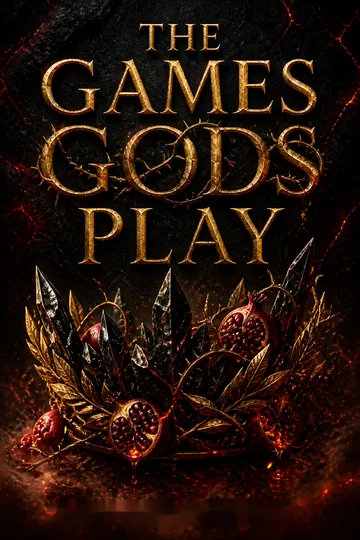
The Crucible Series

About the Author
Other books by Abigail Owen
Download PDF
Download EPUB
.epub digital book format is ideal for reading ebooks on phones, tablets, and e-readers.








