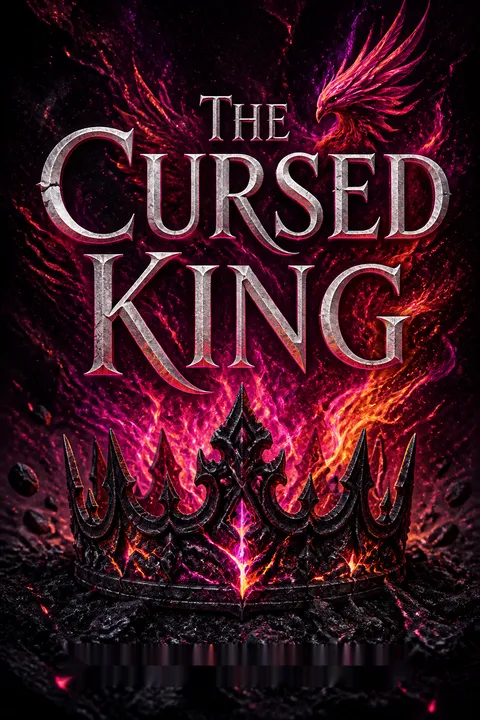


Plot Summary
Prologue
Three months earlier, Angelika Amon, the hidden daughter of a murdered White Clan king and a phoenix, slips outside the Scottish stronghold where she is concealed. She meets Airk Azdajah, a white dragon shifter who survived centuries of imprisonment but cannot safely release his dragon.
Angelika recognizes his isolation and offers friendship; when she suggests he might help her sisters oppose the usurper Pytheios, Airk realizes she knows who he is. Their attraction is immediate, but Angelika also sees a political partnership: the phoenix’s daughter and the White Clan’s rightful heir could make formidable allies. She wonders whether Airk would ever agree to mate her.
The prologue makes intimacy and political necessity difficult to separate from the beginning. Angelika approaches Airk with kindness, but she also sees a possible alliance in him, just as her family’s survival has made every bond carry strategic weight. Airk’s confinement has left him suspicious of contact, while Angelika’s lifelong hiding has taught her to reach outward before fear can close a door. Their first meeting therefore establishes a useful tension: her instinct is to include him, his is to retreat, and both mistake the other’s vulnerability for something they can manage.
The Mirror Escape
Airk Azdajah escapes a Siberian dragon settlement with an injured leg and a captive human woman over his shoulder. He had gone there to persuade White Clan dragons to abandon Pytheios, the usurper who imprisoned him, but the residents attacked when he approached them. Angelika appears at a concealed doorway and guides him to an intact mirror.
Through it, her sister Meira opens a passage to the Black Clan stronghold, where King Samael and Meira wait. They escape just before their pursuers reach the room, though a dragon’s arm is severed when it reaches through the closing portal. The rescued woman explains that she was imprisoned for refusing an assigned mate, making the allies’ opposition to coercive rule immediate and personal.
Airk’s rescue mission fails as diplomacy, yet it succeeds as evidence of what his old clan has become: a community so trained by fear and propaganda that it attacks the heir it should recognize. Angelika does not simply save him; she makes connection possible at the moment his instinct is to keep moving and trust no one. The woman they rescue also gives the political conflict a bodily cost. Pytheios’s order is not only a struggle over titles. It reaches into people’s choices about their own lives.
A Kiss, Then Retreat
At the infirmary, Angelika treats Airk’s deep leg wound and tells him why being useful matters so much to her. She has no active phoenix powers, and her family’s war has left her feeling like a protected bystander. She proposes that they work together, first to persuade White Clan leaders and perhaps eventually to mate.
Airk refuses to discuss mating, but when Angelika admits she wants him, he kisses her with a force that unsettles them both, then abruptly ends the encounter and leaves. He tells Samael that diplomacy is a poor use of him and offers instead to assassinate Pytheios’s supporters. Samael accepts the strategy and agrees to keep it from Meira, who is already burdened by war and pregnancy.
Angelika’s wish to matter is not vanity; it is a response to being repeatedly protected out of the very history she wants to help repair. Airk’s refusal is equally defensive. He treats desire as a threat because he has learned that attachment gives captors leverage and gives his dragon a route toward the surface. Their kiss breaks through his isolation, but his retreat restores the familiar structure: Angelika reaches, Airk withdraws, and danger becomes an excuse to avoid choosing closeness.
The Assassin's Guest
After learning Pytheios is targeting her, Angelika refuses her sisters’ plan to hide her with the gargoyles. She persuades Meira to let her join Airk instead, then secretly appears in the chamber where he has come to kill Belyy, a former adviser to her father. Airk orders her to stay out of his mission, but Angelika introduces herself as Zilant Amon’s daughter and asks Belyy to support her family.
Belyy admits he regrets failing to resist Pytheios and agrees to switch sides if he can be bound by an oath. He also reveals that Pytheios’s new mate, Tisiphone, resembles a female-born dragon he knew, not a phoenix. Airk postpones the killing, though he remains wary of Belyy.
Angelika’s diplomacy works because she makes room for guilt without pretending it is innocence. Belyy’s past inaction remains real, but she gives him a route toward accountability rather than reducing him to his worst decision. Airk’s assassination plan assumes fear is the only language his clan understands. Angelika tests another possibility and finds an ally. The revelation about Tisiphone unsettles Pytheios’s claim to legitimate power, planting a question about the supposed phoenix before the conflict reaches its final test.
The Amon Mark
Belyy gathers White Clan dragons to hear Angelika and Airk. When Tovar, Airk’s childhood friend, recognizes him, he attacks, believing Pytheios’s story that Airk is dead. Angelika stops the fight by explaining Airk’s identity and recounting her family’s history. The group questions her claim to be a phoenix, so Tovar tests her with dragon fire; she shows no phoenix mark and admits her powers are dormant.
Airk declares that she will be his mate, startling them both. To secure the new allies, Angelika asks the witch Delilah to bind them by oath. The spell gives its participants the Amon family mark, not the expected clan allegiance, making Angelika their pledged leader.
The oath turns political belief into visible obligation, but its unexpected mark also reveals the difference between legal authority and inherited legitimacy. Angelika does not conceal her lack of powers to win support; she risks losing the room by telling the truth. Airk’s instinctive claim complicates the scene, since it expresses a desire he has repeatedly denied. Tovar’s attack, meanwhile, shows how thoroughly Pytheios’s false account has shaped the White Clan’s memory. Airk must now recover not only trust, but the truth of his own existence.
The Tail in Bed
After the oath, Angelika and Airk give in to their attraction, but Airk’s dragon partially shifts in his sleep and curls its tail around her. He manages to restrain it without waking her, then decides their closeness is too dangerous and withdraws. Before they can settle the question, Angelika’s sisters arrive with news that the Black and Gold Clan strongholds have fallen to Pytheios’s forces.
The allied kings and their surviving people are crowded into the White Clan’s mountain, and Airk predicts Pytheios will let hunger and internal conflict weaken them before striking again. Angelika insists on contributing rather than being sent into hiding. She and Airk leave for the wolf-shifter Federation to seek allies.
The tail makes Airk’s fear concrete: tenderness can become physical danger without his conscious consent. His retreat is meant as protection, but it repeats the abandonment Angelika has experienced whenever others decide her safety matters more than her agency. The fall of two strongholds sharpens that conflict. Their alliance cannot afford to treat either of them as a private problem when the war is dismantling whole communities. Angelika’s decision to keep moving is both strategic and emotional: she will not let fear turn her into a spectator again.
Wolves at the Castle
On the journey to the Federation’s Romanian headquarters, Angelika gets cold in the forest, and Airk draws her into his lap to warm her. Their intimacy builds again before wolf sentries find them and escort them to the castle. Federation leader Madrigan identifies himself as a berserker, an ancient warrior whose battle fury can be triggered by blood and rage.
Angelika asks him to help the dragon clans; Airk warns that Pytheios will eventually threaten wolves as well. Madrigan considers the danger but offers Angelika a mating alliance. Jedd, Angelika’s former bodyguard and friend, appears and rejects the idea that the wolves need dragon allies. His pain at her earlier refusal to mate him makes their reunion uneasy.
The wolf encounter widens the war beyond dragon succession and tests whether old species rivalries can yield to shared vulnerability. Madrigan’s nature makes him a formidable ally and a danger to those around him, so the request is not a simple exchange of forces. Jedd’s presence adds another form of political pressure: his sincere love does not make him the right partner for Angelika. She must distinguish gratitude, safety, and desire instead of allowing any one of them to decide her future.
Brock Takes Flight
Jedd and Angelika agree to try to recover their friendship, while Madrigan pledges the Federation’s support to the Amon sisters. Angelika and Airk travel to Kamen, the White Clan’s headquarters, where Pytheios has installed Brock Hagan as its intended king. Brock also claims the Gold throne and announces that he will take Angelika as his mate.
Airk attacks him before he can reach her, driving both men through a window and out over the mountain’s atrium. Brock shifts into a gold dragon and flies; Airk falls, unable to shift. Angelika leaps after them, forcing the reluctant White Clan Beta to catch her in dragon form so she can search the mountainside for Airk.
Brock’s threat joins political conquest to sexual possession, exposing how the same system that chooses rulers can treat women as instruments of rule. Airk’s response is instinctive and costly: he acts before he can calculate whether his human body can survive the fall. Angelika’s leap echoes her refusal to be protected into passivity, but it also forces the White Clan’s leadership to reveal whether it will act for her. The crisis makes Airk’s inability to shift more than a private trauma; it becomes a public limit on his power.
White Fire, No Mark
Airk’s dragon takes control after he crashes, and he shifts fully for the first time, then attacks Brock in the air. He drags the gold dragon to the ground and kills him, though the violence leaves Airk barely in control of himself. Angelika reaches him and bursts into red-gold flames that do not burn her.
The fire proves to be dragon sign, not the phoenix power she hoped to inherit. Airk’s touch extinguishes it, and he recognizes that her sign has appeared because of him. They make love, but when his dragon again threatens to emerge, Airk flees rather than risk harming her. Angelika returns to Kamen alone, uncertain whether he will come back.
Airk’s first shift is both liberation and danger. The dragon saves him from Brock, but its uncontrolled violence confirms the fear that has governed his life. Angelika’s fire seems to offer a bridge between them, yet it does not resolve the question of her identity or her safety. The intimacy that follows briefly makes them feel chosen for one another; Airk’s flight turns that hope into fresh uncertainty. Each time they draw close, he interprets risk as proof that he must disappear.
The Story Pytheios Buried
Airk returns to Kamen and meets Jordy, a trusted friend of his parents who explains why everyone believed Airk had died. Pytheios falsely claimed that Airk’s father killed the kings and phoenixes, then died with his family; he told the White Clan that Airk had also been killed. Airk realizes his continued existence can disprove the lie.
He and Angelika confront the White Clan Beta, who says he believed Pytheios and did not know Airk was imprisoned. Before they can repair the clan’s divisions, Pytheios broadcasts to dragon shifters everywhere, claiming his mate Tisiphone is a phoenix and pregnant with his heir. He threatens any clan that refuses his authority, increasing the urgency of proving the truth.
Jordy’s account shows how authoritarian power survives by controlling what a community believes happened, not merely by defeating its opponents. Airk’s body becomes evidence against the official story, but evidence alone cannot undo five centuries of compliance. The Beta’s ignorance may be genuine, yet it also exposes the moral cost of accepting convenient explanations. Pytheios’s broadcast answers their attempt to recover history with a new performance of legitimacy: a mate, an heir, and a threat directed at everyone listening.
The Vision's Second Chance
Kasia’s vision warns that Pytheios will attack the White Clan, and Airk initially refuses to risk mating Angelika because his dragon might hurt her. Then Kasia reveals another vision: Angelika and Airk together, with the mating bond working. Airk stops treating the vision as permission to take what he wants and tells Angelika that he wants a life with her, not merely to protect or transform her.
She accepts. They mate in Airk’s family rooms, and he shares his dragon’s fire without losing control. The bond steadies both halves of him and gives Angelika the chance to become a dragon shifter. Airk and Angelika then prepare to face the White Clan openly as partners.
The vision does not make the choice for them; it gives Airk a possibility he had been too afraid to test. His decisive change is not simply accepting that Angelika can survive his fire. He finally admits that he wants her as a partner, with the risks and responsibilities that entails. Angelika’s consent matters equally: she has repeatedly offered herself, but now he must choose her freely rather than accept her as a solution to his danger.
The White Clan's Welcome
At Kamen, Angelika addresses the White Clan in the ceremonial dress made for her mother and offers to serve her father’s people rather than claim rule over them. She takes Airk’s hand and publicly commits herself to a White Clan mate. Together they walk through the mountain’s shops, where residents begin to recognize them.
An attacker lunges at Angelika in a tea shop, but Airk catches him before he can reach her, and Angelika prevents Airk from killing him so the guards can question him. Later, a gift arrives: a crude doll resembling Angelika, mutilated with animal entrails. The threat confirms that some White Clan dragons oppose her, but she insists on continuing to meet them in person.
Angelika’s public offer is deliberately different from a claim of entitlement. She asks the clan to decide whether it will receive her, and her willingness to hear refusal becomes a form of leadership. The attack and mutilated doll show the limit of that generosity: openness can invite trust, but it cannot neutralize organized hatred. Airk’s restraint at the tea shop is a parallel test. He protects Angelika without letting fear dictate the punishment, because she insists that accountability requires more than immediate violence.
Ashes on the Screen
Pytheios attacks Ben Nevis, and the surviving Black, Gold, and Blue clans flee into Kamen, where Angelika organizes triage for the wounded. Kasia’s vision then warns of an assault on the White Clan, prompting the allies to move most of their forces to a remote Alaskan mountain while Angelika and her sisters remain as bait.
In Alaska, Airk questions the tortured informant Jakkobah, who gives him footage of Rhiamon using Serefina’s ashes to transform Tisiphone into a phoenix. Meira broadcasts the evidence to dragon shifters worldwide. Airk presents it to the White Clan, but the Beta, Mös, urges half the clan to stay neutral. Pytheios tracks the sisters’ signal to Kamen; Delilah teleports them to Alaska before his forces can capture them.
The video is powerful because it converts rumor into something many people can witness, but it does not compel them to change sides. Mös’s neutrality demonstrates that visible truth still competes with fear, habit, and self-interest. Angelika’s decision to remain at Kamen turns her body into bait, while the coalition’s relocation makes the same act a calculated risk rather than a surrender. Their strategy relies on coordination across powers and species, precisely the cooperation Pytheios’s divided order has discouraged.
Angelika Burns
Pytheios reaches the Alaskan mountain, where the clans fight above and around the caves. Rhiamon enters the inner chamber, and the sisters try to make her abandon Pytheios; she insists she is bound to him. Delilah and Alasdair restrain the witch long enough for Hershel to send her to the underworld. Tisiphone then attacks Angelika.
Jedd takes the blast meant for her and dies from his burns. A gargoyle pulls Angelika into the mountain before Tisiphone can strike again, but Tisiphone later carries her back into the battle. Pytheios burns Angelika to ash in front of Airk. The hellhounds arrive, kill Tisiphone, and the ashes of Angelika and her mother begin to rise together.
Jedd’s sacrifice is not a romantic claim on Angelika but the final expression of a friendship he has chosen to preserve without possessing her. His death makes the cost of the war intimate, while the gargoyle’s rescue shows that even reluctant allies can keep a promise. Tisiphone’s use of stolen phoenix fire turns the power struggle into an assault on lineage itself. Angelika’s apparent death is therefore both personal catastrophe and the point at which her mother’s ashes, long used by Pytheios, return to her own story.
A Phoenix Reborn
Angelika rises from the mingled ashes as a true phoenix, with white fire and the power to bind every dragon around her. She immobilizes the armies, including Airk, and cannot initially recognize him as her mate because he did not die with her; their bond had not solidified. Airk stops fighting his dragon and asks Angelika to turn him, accepting that she may kill him.
His willingness and their shared fire restore her memories and transform him. Their bond finally takes hold, healing Airk’s body and joining him with his dragon rather than leaving them at war. Angelika releases the others but keeps Pytheios restrained, allowing Airk to confront him as an equal.
Angelika’s new power first appears as coercion, not benevolence. Grief and fury have made her capable of the very domination she opposes, and the frozen armies force her to face what unchecked power can do. Airk’s choice is the counterweight: he accepts vulnerability rather than demanding that she restore him. Their bond works only when neither is using the other as a remedy or instrument. His integration with the dragon mirrors her return to herself, making partnership an ethical practice as much as a magical one.
A Throne Rebuilt
Angelika holds the combatants in place while Airk fights Pytheios in dragon form. After Airk brings the red king down, Angelika judges him for murdering her family, corrupting Rhiamon’s magic, deceiving the clans, and stealing lives to extend his own. She shows Pytheios the history of phoenixes and dragons, then kills him with her fire.
Her power spreads across dragonkind, undoing the damage caused by earlier betrayals. The cost nearly kills her, but her sisters give her their phoenix fire and the hellhounds surrender their remaining life force to revive her. In the aftermath, the clans choose new leaders and redistribute Pytheios’s stolen wealth. Airk is crowned White Clan king, while the rulers agree to govern together.
The ending refuses a simple return to the old order. Angelika’s revelation makes the dragons’ history one of mutual origin, not a hierarchy in which one species must dominate the other. Her judgment of Pytheios is specific, naming the political and personal harms that his rule concealed beneath claims of service. Yet even victory is not cost-free: restoration depends on the sisters and the hellhounds giving something of themselves. The new council and redistribution of wealth turn the supernatural resolution into institutional change, however imperfect.
Epilogue
On Airk’s coronation day, Angelika finds him in the Everest cell where he spent centuries. He needed to visit the place once more before leaving it behind. She brings him back to Kamen, where the six clan rulers have agreed to govern through a council rather than restore a single High King.
Airk then names Angelika High Queen, with the authority shared among the rulers. Their people kneel, and Angelika accepts the office with Airk at her side. The story that began with a hidden princess trying to prove she could help ends with her taking responsibility for a new order.
Airk’s return to Everest gives the coronation a private counterpoint: public authority cannot erase the place that shaped him, but he can leave it by choice rather than being dragged from it. Angelika’s appointment as High Queen reverses the old system without simply replacing one absolute ruler with another. The council distributes authority, while her role provides continuity across clans. The closing image joins personal and political repair, but does not pretend that love alone solves governance. Their bond supports a structure they must still build together.
Analysis
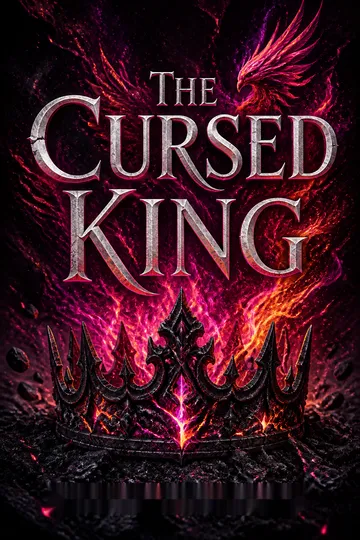
The Cursed King treats political legitimacy as a problem of memory, consent, and material power. Pytheios does not hold the clans through strength alone. He controls what they believe about the deaths of their rulers, presents a manufactured phoenix as proof of his right to rule, and uses coercion to turn private choices into public instruments. The resistance must therefore do more than defeat him in battle. Angelika and Airk have to recover testimony, show evidence, rebuild trust, and imagine institutions that cannot be captured as easily by one ruler.
Angelika’s arc is shaped by the conviction that care makes her useful. She has spent centuries hidden and has no obvious supernatural power, so she repeatedly risks herself to prove she belongs in the struggle. The novel values her ability to listen and persuade, but it also shows the danger in making self-sacrifice the measure of worth. Her leadership becomes more convincing when she offers service without demanding obedience and when she learns that compassion needs boundaries and shared responsibility.
Airk’s central conflict is not simply man versus dragon. His captivity has made control feel like the only alternative to catastrophe, so every desire appears to him as a threat. Angelika does not cure him through love; their bond succeeds when he accepts risk, speaks honestly, and stops treating his dragon as an enemy to be buried. Their relationship is reciprocal: she helps him imagine belonging, while he comes to respect her agency rather than using protection to overrule it.
The ending rejects the old concentration of authority. Angelika’s revelation that dragons and phoenixes share an origin reframes dependence as kinship, while the council and redistribution of wealth attempt to turn that insight into practice. The novel’s hopeful claim is not that a good ruler ends conflict. It is that power becomes less destructive when truth is public, leadership is shared, and those previously treated as instruments can choose how they participate.
Review Summary
The Cursed King received mostly positive reviews, with readers praising its action-packed plot, steamy romance, and satisfying conclusion to the Inferno Rising series. Many enjoyed the character development of Angelika and Airk, as well as the world-building and mythology. Some readers found Airk's indecisiveness frustrating, while others appreciated the emotional depth. The book's unexpected twists and incorporation of various supernatural creatures were also highlighted. Overall, fans of paranormal romance and dragon shifter stories found it an enjoyable read.
People Also Read




Characters
Angelika Amon
The Unpowered PhoenixAngelika is the youngest of four hidden daughters of Zilant Amon and Serefina Hanyu, raised to survive by moving through the human world under protection. She is a trained nurse, a skilled observer of people, and someone whose optimism is active rather than naive: she uses warmth to make others feel seen and heard. Because she lacks the visible powers her sisters possess, she is sensitive to being sidelined and determined to contribute on her own terms. Her instinct to care for others can become self-endangerment, especially when she mistakes usefulness for the price of belonging.
Airk Azdajah
The Caged White HeirAirk is the son of the White Clan’s former Beta and a legitimate heir whose childhood ended when Pytheios imprisoned him. Centuries of isolation taught him to suppress emotion, distrust touch, and regard his own survival as expendable. His dragon is feral from prolonged confinement, making control a daily struggle rather than a simple matter of will. Airk is observant, disciplined, and frighteningly capable, but he mistakes emotional distance for responsibility. Angelika’s persistence challenges that belief by offering care without treating him as a project.
Pytheios
The Usurping High KingPytheios is a powerful Red Clan ruler who has claimed the High King’s position without the traditional phoenix bond. He presents his ambition as a defense of dragon independence, but he relies on secrecy, propaganda, coercion, and violence to keep control. His certainty that he knows what is best for dragonkind lets him treat other people’s freedom as expendable. He is a political strategist as well as a brutal antagonist, able to make fear look like stability and to exploit the clans’ desire for order.
Meira Amon
The Empathic StrategistMeira is Angelika’s closest sister, a thoughtful computer expert with the ability to sense others’ emotions and travel through reflections. Her practical intelligence makes her central to communications and the family’s political work, while her empathy can leave her carrying feelings that are not her own. She is protective of Angelika but understands that keeping a sister safe by excluding her can also cause harm. Meira balances cautious planning with a deep commitment to those she loves.
Skylar Amon
The Fierce PilotSkylar is one of Angelika’s sisters, a pilot and a bold fighter who tends to meet danger head-on. Her confidence can look reckless, but it rests on quick judgment and a willingness to act when delay would cost lives. She is fiercely loyal to her sisters and works closely with her mate, Ladon, without surrendering her independence. Skylar’s directness contrasts with Angelika’s gentler persuasion, though both refuse to accept that protection should mean silence or exclusion.
Kasia Amon
The Visionary SisterKasia is Angelika’s sister and a seer whose visions can reveal dangers before the family understands how to interpret them. Her engineering studies and practical mind complement her supernatural gift, but seeing possible futures does not spare her from uncertainty or responsibility. She is loyal, analytical, and sometimes hard on herself when a vision seems unclear. Her partnership with Brand gives her a trusted ally, while her sisters remain the people most likely to understand the emotional burden of what she sees.
Jedd
Angelika’s Wolf ProtectorJedd is the wolf shifter assigned to protect Angelika and becomes her close friend during years of hiding. He is brave, loyal, and accustomed to expressing care through vigilance and physical protection. His feelings for Angelika make their friendship difficult when she does not want the same kind of relationship, but he values her agency even when it hurts him. Jedd’s history with Angelika gives him a place in her life that cannot be reduced to the question of whom she will mate.
Samael Veles
The Black Clan KingSamael is the Black Clan’s warrior king and Meira’s mate. He is decisive, physically formidable, and accustomed to evaluating danger before acting. His protectiveness intensifies around Meira, especially as she carries their child, but he respects her intelligence and abilities even when he worries about the risks she takes. Samael provides Airk with practical support while remaining alert to the dangers his unstable dragon might pose.
Brand Astarot
The Gold Clan KingBrand is the Gold Clan’s king, a former mercenary whose bluntness and readiness for violence conceal a strong sense of responsibility. He is Kasia’s mate and takes threats against her personally, but he can be persuaded to consider restraint when it serves his people. Brand’s difficult relationship with his clan’s divided loyalties makes him a practical ally in the struggle against Pytheios.
Ladon Ormarr
The Blue Clan KingLadon is the Blue Clan’s scarred, formidable king and Skylar’s mate. He is a skilled commander who thinks strategically under pressure, though his protective instincts can make him overbearing. His trust in Skylar’s judgment is tested by the need to let her fight beside him rather than keep her out of danger. Ladon also maintains a network of informants that helps the allied clans understand Pytheios’s plans.
Madrigan
The Berserker LeaderMadrigan leads the Federation of Packs and is an ancient berserker, a warrior whose battle fury is triggered by blood, rage, and the pressure of conflict. His dry humor and controlled manner contrast with the violence he can unleash. He recognizes that the dragons’ war could eventually threaten wolves and other shifters, and he is willing to consider an alliance that challenges generations of species rivalry.
Belyy
The Regretful White ElderBelyy is an elder White Clan leader who once served Angelika’s father. He carries regret for failing to oppose Pytheios, but he is not initially sure how to make amends without endangering his people. Angelika’s willingness to offer him a path back into the struggle prompts him to reconsider his loyalties. Belyy is cautious, politically experienced, and aware that changing sides has consequences for an entire mountain.
Tovar
Airk’s Childhood FriendTovar was Airk’s friend as a boy and expected to stand beside him in the White Clan’s leadership. Years of believing Airk dead have made him wary of the returning man and the political story surrounding him. He is a capable fighter who cares about loyalty, but he needs evidence before abandoning what his clan has been taught to believe.
Mös
The Cautious White BetaMös is the White Clan Beta under the former king, a leader who prioritizes his people’s immediate safety. He has accepted Pytheios’s account of the past and is slow to trust a change in allegiance. His caution is understandable in a clan threatened by war, but it can shade into neutrality when decisive action is needed.
Jordy
Airk’s Family FriendJordy was a trusted attendant and confidant to Airk’s family before Pytheios’s coup scattered the household. He has survived by adapting to the changed order without forgetting the people who were lost. His memories help Airk understand how the White Clan’s official history was constructed, and his steady kindness offers a rare link to Airk’s life before imprisonment.
Jakkobah
The Double-Edged InformantJakkobah, known as the Stoat, is one of Pytheios’s close advisers and an informant for the allied kings. He is clever, patient, and skilled at hiding his intentions behind an irritatingly composed manner. His access to the Red King’s inner circle makes him valuable, but his long strategy leaves others to bear risks he avoids himself. His information can alter the war, though it does not erase his compromises.
Rhiamon
Pytheios’s Powerful WitchRhiamon is a witch whose magic gives Pytheios abilities he could not wield alone. Her power is formidable, but using it exacts a visible physical cost. She is bound to Pytheios through a complicated history involving loss and control, and her intentions are difficult for the opposing side to read. Rhiamon represents the danger of magic placed in service to a ruler who treats people as tools.
Tisiphone
Pytheios’s New MateTisiphone is introduced as Pytheios’s mate and as the phoenix who appears to legitimize his claim to rule. Her resemblance to Angelika and her sisters raises questions about where she came from and what she wants. She presents herself as assured and ambitious, making her difficult to read as either a victim of Pytheios’s designs or a willing partner in them.
Delilah
The Mysterious WitchDelilah is a powerful and discreet magical practitioner, married to the warlock Alasdair. She understands binding oaths and can act where ordinary shifter defenses fail. Delilah does not explain more than a situation requires, which makes her difficult to categorize but dependable when she chooses to intervene.
Alasdair Blakesley
The Coven LeaderAlasdair heads the Covens’ Syndicate and is Delilah’s husband. He is a powerful warlock who supports the allied effort while respecting the limits of his group’s involvement. His calm authority and discretion make him a useful connection between dragon politics and the wider supernatural world.
Hershel
The Ancient SpiritHershel is an ancient spirit and an ally of Brand’s who possesses formidable supernatural power. He is genial and informal, but his presence signals that the conflict has reached a level requiring help beyond the dragon clans. He remains distinct from the dragons’ political structures and acts according to his own nature.
Carrick
The Gargoyle GuardianCarrick leads the secluded gargoyles who sheltered Meira. He is guarded, loyal to his people, and reluctant to enter a war that could expose them. His connection to Serefina gives him a personal reason to keep faith with the Amon family, even when he refuses a broader alliance.
Plot Devices
Mirror passages
Fast, fragile escape routesMeira can use reflective surfaces to open passages between distant places, making mirrors essential for rescue, communication, and rapid movement of allies. Their convenience creates a vulnerability: Pytheios’s witch can interfere with the power, and Pytheios eventually learns to exploit the reflections himself. The mirrors therefore function as both infrastructure and risk. When they fail, the characters must rely on alliances, ordinary travel, or other powers rather than assuming escape is always available.
Mating bonds and dragon sign
Love becomes magical anchoringDragon mating bonds connect partners physically and emotionally, and a phoenix’s fire can transform or strengthen a dragon mate. Dragon sign offers clues that a human woman may be able to mate a dragon, but it is not proof that she has phoenix powers. Airk’s fear that his feral dragon will harm Angelika makes the bond dangerous as well as desirable. Their eventual connection gives Airk an anchor and lets him integrate with his dragon, while changing Angelika’s place in the supernatural world.
The binding oath
Trust made magically bindingAngelika asks Delilah to bind Belyy and other White Clan supporters to an oath so their change of allegiance can be trusted. The spell behaves unpredictably and marks the participants with the Amon family crest rather than the clan marks they expected. That result makes Angelika’s lineage a source of political authority even though she believes herself powerless. The oath creates allies, but it also places responsibility on Angelika for people who have formally pledged themselves to her.
Kasia’s visions
Warnings with uncertain timingKasia’s visions reveal important events, but they do not always identify when or where those events will occur. The family must interpret images and remembered details, then make plans before they have complete information. Her warning about an attack on the White Clan is initially read too narrowly, teaching the allies to compare exact details rather than rely on a convenient interpretation. The visions can guide action, but they do not remove the need for judgment or cooperation.
Ashes and hellhounds
Death carries unfinished businessHellhounds embody the reincarnated souls of warriors killed before completing their work. Their arrival connects the present battle to the murdered kings and to the Amon family’s history. Phoenix ashes also retain transformative power: Pytheios uses Serefina’s ashes to create the appearance of a new phoenix, while the ashes later become part of Angelika’s return. The device makes death an active force in the plot, but not a simple escape from grief or consequence.
Inferno Rising Series
About the Author


Download PDF
Download EPUB
.epub digital book format is ideal for reading ebooks on phones, tablets, and e-readers.








