

Key Takeaways
Conserve the Founding's limits, not a frozen version of the past
A living inheritance. George Will defines American conservatism not as loyalty to old customs for their own sake, but as preserving the Founding's principles: natural rights, government by consent, and limits on public power. Those principles require judgment in changing circumstances, not mechanical imitation of the eighteenth century.
Contingency made visible. The book opens at Princeton in 1777. Washington's victory there, after his retreat across New Jersey and triumph at Trenton, kept the Revolution alive. A night march and a commander willing to rally fleeing troops altered what seemed a nearly lost cause. The episode illustrates the author's resistance to historicism, the belief that events follow an impersonal, inevitable course. Choices matter, and inherited institutions need active defense.
The opening story gives the book a useful method: treat political outcomes as contingent, then ask which choices and institutions made a difference. That approach resists both fatalism and the comforting idea that a nation naturally progresses. It also complicates nostalgia. If the Founding depended on improvisation, preserving its principles cannot mean repeating its arrangements unchanged. The harder question is how to distinguish enduring principles from the historical compromises that accompanied them.
Protect rights from majorities, not just from kings
Rights come first. The Founders' argument, drawing especially on John Locke, is that individuals possess rights before government exists. Government is created to secure those rights, not to grant them. Majority rule is therefore a means of governing, not a license to override every individual's freedom.
The flag-salute reversal. In 1940, the Supreme Court upheld a school rule compelling Jehovah's Witness children to salute the flag. The ruling helped fuel harassment of Witnesses. In 1943, the Court reversed itself, holding that constitutional rights cannot depend on an election or majority vote. For Will, the episode captures the republic's central tension: democratic consent matters, but some questions must remain beyond majority power.
The distinction between democracy as a decision procedure and liberty as a limit on decisions is the book's central test for political power. It clarifies why protecting dissent is not an exception to self-government but one of its conditions. The tension is real, however: rights require interpretation, and judges can disagree about their scope. The argument for limits therefore needs more than reverence for rights. It also needs disciplined reasoning about what the constitutional text protects.
Treat human nature as a limit on political ambition
A disagreement about change. Will contrasts the Founders' belief in a broadly stable human nature with the progressive belief that social conditions can remake people. If character is highly malleable, politics can claim a vast role in shaping citizens. If people have durable capacities and limits, government should be more cautious about trying to engineer a perfected society.
Wilson's alternative. Woodrow Wilson argued that the Founders' political ideas belonged to an earlier age and that modern government should adapt to history's changing demands. Will sees this as a decisive shift: rights become products of law and changing social purposes, rather than standards that government must respect. The author connects this faith in malleability to ambitious projects of social management, including early twentieth-century eugenics.
The book's warning is strongest when it asks what follows politically from a theory of human nature. Claims about human malleability can enlarge the jurisdiction of experts and officials, especially when they promise to remake citizens for their own good. Yet stable human tendencies do not settle every policy question. Social conditions plainly shape development, and a fixed nature can be invoked to excuse preventable disadvantage. The useful lesson is not to deny nurture, but to distrust claims of unlimited control.
Make government earn every expansion of its power
Power changes institutions. Will traces the growth of the modern presidency from Theodore Roosevelt's expansive view of executive duty, through Wilson's call for expert administration, to Franklin Roosevelt's enlarged federal role during the Depression. The Constitution's separation of powers was designed to make concentrated action difficult. A larger administrative government, however, shifts decisions from elected lawmakers to executive agencies.
A visible imbalance. In 2016, Congress passed 2,966 pages of laws while federal agencies issued 97,110 pages of regulations. Will argues that Congress often delegates broad discretion, then lacks the time and expertise to supervise it. The result, he contends, is a sprawling administrative state that makes rules, enforces them, and sometimes adjudicates disputes, weakening accountability and the legislature's role.
The account draws attention to a structural problem, not simply a parade of unusually powerful presidents. Legislatures may delegate because complex policy is difficult to write in detail, while agencies possess specialized staff and continuity. That arrangement can improve implementation, but it also blurs who is responsible for a decision. The key question is therefore not whether administration is needed, but how to preserve clear authorization, meaningful oversight, and a public able to identify which officials made consequential choices.
Use courts to block factional privilege disguised as public welfare
Judicial restraint has costs. Will argues that courts should not automatically defer to laws simply because elected officials enacted them. The Founding's purpose, in his account, was to protect liberty as well as establish majority rule. Judicial review gives courts a role in enforcing that distinction, particularly when a majority or a well-organized faction burdens people who have little political influence.
The bakery and the casket makers. In 1905, the Supreme Court overturned a New York limit on bakery workers' hours, reasoning that workers and employers could contract freely absent a sufficient public justification. Will presents the case as an example of courts scrutinizing economic regulation. He also cites later licensing rules that blocked Louisiana monks from selling simple wooden caskets, despite no clear health need. Such rules, he argues, can protect established businesses from competition.
The examples show why a regulation's stated purpose is not always a reliable guide to its effects. Licensing can protect consumers, but it can also protect incumbents by making entry costly. Courts can expose that difference when ordinary politics overlooks it. The risk runs both ways: aggressive review may invalidate legitimate safeguards, while automatic deference can shelter favoritism. The book's strongest formulation is a burden of justification, not a presumption that every regulation is corrupt.
Let markets coordinate knowledge no central planner can possess
Prices carry dispersed information. Drawing on Friedrich Hayek, Will argues that economic knowledge is scattered among countless people and cannot be gathered completely by a central authority. Prices help coordinate decisions without requiring each participant to understand the whole system. This is why a planner's good intentions do not guarantee that a plan will fit local needs.
An early American lesson. Plymouth's communal corn system failed to produce enough food. In 1623, the colonists assigned families plots to cultivate for themselves. William Bradford reported that people worked harder and planted more. Will treats the episode as an early demonstration of incentives. He also recognizes that markets depend on law, contract, and public institutions. His target is not every government role, but the confidence that officials can replace decentralized decisions with superior knowledge.
The market appears here as a discovery process as much as an allocation system. Local choices reveal needs and constraints that a central office may not see, while price changes transmit some of that information quickly. This is a powerful case for humility in policy design. It does not prove that every market outcome is fair or that markets reliably provide public goods. The practical challenge is to correct genuine harms without assuming that regulators can calculate all the consequences.
Judge opportunity by what families equip children to do
School starts before school. Will challenges the simple claim that equal legal access creates equal opportunity. He points to the Coleman Report, a 1966 study finding that family background was a stronger predictor of student achievement than many measured differences among schools. He also notes that children spend only about 9 percent of their time from birth to age nineteen in school, with the rest in homes and communities.
The early gap. The book cites studies reporting large differences in how much language children hear at home. One estimate puts the three-year-old word gap between poor and professional-class households at about 30 million words. Will argues that family instability and early deprivation can limit what schools later accomplish. His emphasis is not that opportunity can be made perfectly equal, but that formal access alone does not remove the obstacles children bring with them.
This section usefully shifts attention from school inputs alone to the environments in which children first learn language, trust, and persistence. It also makes the opportunity debate harder: equal rules do not erase unequal starting conditions. The evidence should not be used to treat family structure as destiny or to blame parents facing severe constraints. It instead raises a practical question about which forms of early support strengthen caregivers and children without pretending that schools can substitute for every function of family life.
Do not promise universal security through permanent government transfers
Benefits shape expectations. Will argues that the New Deal and Great Society changed government's role from protecting conditions for people to pursue happiness toward providing material well-being directly. He points to the expansion of entitlement spending, which rose from 28 percent of federal spending in 1960 to 67 percent in 2010, and to the growing use of borrowing to fund current benefits.
A disputed social consequence. The author connects the spread of assistance with rising dependency, declining work among men, and family breakdown. He reports that out-of-wedlock births rose from 7.7 percent in 1965 to more than 40 percent in 2012. These correlations do not by themselves prove that public benefits caused the changes. Will's broader claim is that a government promising security from every hardship can weaken expectations of self-reliance while accumulating obligations it cannot sustainably meet.
The most important distinction here is between describing a trend and demonstrating its cause. The figures make the scale of social change visible, but family structure, employment, policy, and economic conditions influence one another. The book is persuasive that benefits create constituencies and can make costs less visible when financed by debt. A careful reader should hold that institutional insight separately from the stronger causal claim that transfers themselves produced social decline.
Teach national memory as inheritance, not propaganda
A people needs a shared past. Will argues that democratic government requires more than residents who happen to share territory. Citizens need enough common memory and civic understanding to argue about their country as a shared project. He recalls Lincoln's fear that the living history of the Revolution would fade as eyewitnesses died, leaving later generations less connected to the principles that shaped the nation.
Education as transmission. The book defends teaching influential works and historical episodes as a common intellectual inheritance, while insisting that students should examine national failures, including slavery and racial exclusion. Will objects to teaching history only as a struggle among groups for power, because that can make persuasion and shared standards seem impossible. He calls for education that teaches students to recognize excellence, understand contingency, and learn from both admirable achievements and grave wrongs.
Shared memory is not the same as a flattering national story. A civic tradition becomes more credible when it can name both its principles and its betrayals of them. The argument against reducing every text to a symptom of power also protects the possibility of genuine disagreement about ideas. Still, a canon can exclude as well as unite. The educational task is to preserve demanding common material while broadening the voices and experiences through which students interpret it.
Export universal principles without mistaking them for ready-made institutions
A creed can travel; institutions do not. Will sees American foreign policy as shaped by the Declaration's claim that rights are universal. But he warns against assuming that every nation can quickly adopt American political arrangements. At the 1919 Paris peace conference, Wilson's advisers drew borders in the name of self-determination, yet the principle could not neatly separate peoples whose identities and territories overlapped.
The cost of blueprints. The book extends this caution to later efforts at nation-building, including Iraq. Democratic institutions require habits, shared political understandings, and leaders capable of maintaining them. Will argues that military power cannot simply install those foundations on a timetable. He favors supporting the recognition of rights while acknowledging that history, national character, and local conditions limit what foreign governments can accomplish.
This is a useful distinction between universal moral claims and universal institutional recipes. The language of self-government can inspire resistance to oppression, yet borders and constitutional models imposed from outside can intensify conflict when they ignore local identities. The caution also needs a boundary: appeals to cultural difference can become an excuse to tolerate abuses indefinitely. A restrained policy still requires deciding which forms of support, pressure, and protection are justified, and accepting that no choice is consequence-free.
A secular citizen can defend natural rights and civic virtue
Faith is not a political requirement. Will argues that the Founders' political case for natural rights did not depend on everyone sharing a religion. Their secular constitutional design left religious belief free while preventing government from establishing a national creed. Religion can still nurture trust, moral habits, and voluntary community, but its usefulness does not prove its theological claims.
Wonder without certainty. The book ends by connecting cosmology and Darwinian evolution to a conservative appreciation of limits and spontaneous change. Scientific accounts of an immense, mostly inhospitable universe challenge human self-importance, while the emergence of complex life remains astonishing. Will argues that a secular view need not erase moral responsibility: people can recognize human limits, exercise agency, and build institutions without claiming that history or government can perfect them.
This conclusion widens conservatism beyond a religious identity while preserving its concern for moral formation. It separates the question of whether faith is true from the question of what religious institutions contribute to community life. That distinction is valuable in a pluralist society, though the weakening of shared religious practice may leave real social functions unmet. A secular politics must explain how habits of responsibility and mutual obligation are sustained, rather than assuming that constitutional rules produce them automatically.
Analysis
The book is a large argument about political philosophy told through American history. Its organizing contrast is between a Founding-era view of rights as prior to government and a progressive view that treats government as an instrument for adapting society to historical change. The narrative moves from Princeton's contingent military victory to constitutional design, executive power, courts, markets, family life, education, and foreign policy. That breadth makes the book difficult to compress: its specific episodes matter because Will uses them as evidence for a single account of how political assumptions shape institutions and character.
Its most durable contribution is to insist that good intentions do not remove the dangers of concentrated power. The discussions of delegation, rent-seeking, dispersed market knowledge, and presidential symbolism turn abstract constitutional arguments into recognizable mechanisms. The account also complicates a simplistic defense of equality of opportunity by emphasizing early childhood and family conditions.
The argument is intentionally adversarial. Progressive governance is often presented through its ambitions and risks, while limited government is presented through its principles and best possibilities. This asymmetry makes the case vivid but leaves important questions open. Public institutions can provide goods and protections that private associations do not reliably supply, and market coordination does not by itself settle questions of fairness. Likewise, associations between public benefits, family change, and work patterns do not establish a single causal direction. The strongest reading of the book treats its claims as a demanding presumption for restraint and scrutiny, not as proof that every expansion of government fails. Its central challenge remains valuable: require public power to justify its reach, and require critics of government to reckon with the concrete conditions that make liberty usable.
Review Summary
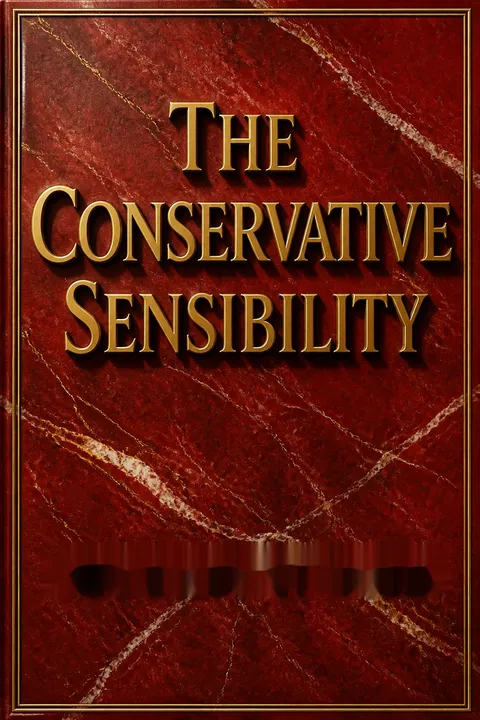
The Conservative Sensibility receives mixed reviews averaging 4.11/5 stars. Supporters praise Will's erudite, thoughtful defense of constitutional principles, natural rights, and limited government, calling it essential reading on conservative philosophy. Critics fault his elitism, oversimplification of poverty and social problems, cherry-picking of evidence, and failure to address Trump or conservatism's complicity in current political dysfunction. Many note the book's length, density, and baroque prose style. Reviewers across the spectrum acknowledge Will's intellectual rigor and departure from vulgar populism, though some question whether his classical liberal conservatism remains relevant to today's political landscape.
People Also Read








Glossary
Natural rights
Rights preceding governmentRights people possess by virtue of being human, rather than rights created or granted by political authorities. In Will's account, government is instituted to secure these rights, including life and liberty. Their priority over government supplies the philosophical basis for limited power and for judging laws against standards beyond majority preference.
Enumerated powers
Listed federal authoritiesThe specific powers the Constitution assigns to the federal government. The Founders' design treated those powers as limited, leaving other responsibilities to states or individuals. Will argues that this constraint has largely lost force as federal authority has expanded into areas once considered outside national jurisdiction.
Administrative state
Agencies making policyThe modern system of executive agencies that write detailed regulations, enforce them, and sometimes adjudicate disputes. Will argues that broad congressional delegation lets unelected administrators make consequential policy with limited accountability, weakening the separation of powers and the legislature's responsibility to decide.
Judicial engagement
Courts scrutinizing government powerA judicial approach in which courts examine whether government action is constitutionally justified instead of presuming that laws are valid simply because elected bodies enacted them. Will contrasts this with judicial restraint and argues that active review can protect individual liberty from majorities and politically influential factions.
Spontaneous order
Order from decentralized choicesA social or economic pattern that emerges from many individual decisions rather than from a central plan. Markets are Will's principal example: prices coordinate dispersed knowledge among people who need not know the entire system. The concept supports caution about replacing decentralized processes with comprehensive government direction.
Fatal conceit
Overconfidence in social planningThe mistaken belief that officials or experts can gather enough knowledge to design and manage a complex society according to a comprehensive plan. Will uses Hayek's term to describe the limits of centralized economic planning, where relevant information is dispersed among individuals and changes continually.
Moynihan's scissors
Employment and welfare divergeDaniel Patrick Moynihan's name for a mid-1960s pattern in which minority male unemployment declined while new welfare cases increased. The divergence challenged the expectation that improved employment alone would reduce dependency, directing attention toward family structure and cultural conditions as factors affecting opportunity.
Positional economy
Competition for scarce statusA part of economic life involving goods, jobs, or credentials whose value depends on being available to only a limited number of people. As basic material needs are met, people may compete more intensely for elite education, desirable locations, and status. One person's access can exclude another's, so general prosperity cannot satisfy every positional demand.
Download PDF
Download EPUB
.epub digital book format is ideal for reading ebooks on phones, tablets, and e-readers.








