

Plot Summary
Prologue
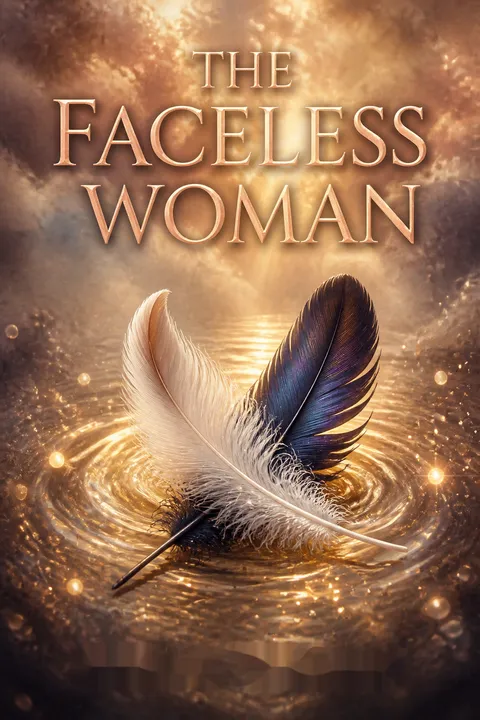
Two swan sisters guard feathers that can grant any wish, refusing powerful visitors whose requests expose greed or violence. A raven asks for nothing for himself; he wants the sisters to become human so he can give them a happy life.
The younger swan grants him a feather, and his wish transforms her into a woman. The magic changes the raven too: he is revealed as a Fae prince, ready to claim her as his bride.
The fable gives the novel a moral measure for magic: a wish reveals the character of the person making it. The raven’s apparent selflessness is complicated by his wish that the swan never leave his side, making love and possession inseparable from the opening. That tension returns in Aisling and Bran’s story, where magic can bind people together before either understands the cost. The swans also foreshadow the book’s transformation of beauty into a burden. A feather may promise power, but the tale quietly asks who gets to decide what another person should become.
The Witch’s Bonfire
Aisling feeds abandoned children and entertains them with stories of the Raven King, while hiding her appearance beneath layers of clothing. When villagers arrive with a witch hunter, she sends the children away with her cat sidhe companion, Lorcan, but the mob captures her and ties her to a tree.
As flames climb toward her, Aisling sees a raven-shaped Fae watching from the woods and recognizes the figure from her childhood legend. He does not rescue her quickly enough to prevent her burning, so she spends her remaining strength binding his life to hers. Bran, the Unseelie Fae, breaks through the crowd and pulls her from the fire. Her desperate spell has made their pain and survival mutual.
Aisling’s first defining choice is not an act of trust but a desperate attempt to prevent her death from being hers alone. The curse makes Bran responsible for a woman he initially sees as a curiosity, while exposing how little protection her kindness has earned from the villagers. Feeding children and treating neighbors do not soften their fear once they can name her a witch. The scene also turns Aisling’s bedtime story into a brutal test: the legendary rescuer arrives, but only after she has had to act for herself. Her magic saves her by creating a bond she cannot control.
Eyes Beneath the Ink
As Aisling wakes from a childhood memory, she recalls Badb, the war crow, tattooing eyes into her palms and darkening her fingertips to conceal her face from the Fae. The spell was meant to keep Aisling safe, though she has spent years trying to understand and undo it. Bran has healed her burns, but she cannot release the life-binding curse she placed on him.
When Aisling attempts the counterspell, her own magic lashes back and leaves a crater in the earth. With no way to separate their lives, Bran insists that they travel together to find the materials he needs. Aisling agrees, still convinced that breaking their bond is the only reason to follow him.
The palm tattoos embody Aisling’s central contradiction: they give her a channel for magic while marking the limits imposed on her by someone who claims to protect her. The failed counterspell makes that contradiction physical. Power is present, but access to it is neither simple nor fully hers. Aisling’s refusal to trust Bran is not mere prickliness; it is a survival strategy formed by repeated abandonment and unwanted attention. Yet the binding curse forces a new kind of dependence, one neither character has chosen. Their journey begins with cooperation as a practical necessity, not an emotional reconciliation.
A Red Door Between Worlds
Aisling learns that Bran’s plan requires entry to the Otherworld, where he claims they can find a way to sever their bond. At a stream, she builds a blood-powered portal, despite her grandmother’s warning that crossing into the Fae realm will change her life. Bran enters first, and Aisling follows with Lorcan.
The strange forest overwhelms her with living trees and unfamiliar Fae, while Bran explains that the Unseelie court includes beings rejected by the Seelie for their appearance or refusal to obey its rules. Aisling also discovers that her traveling companion is an Unseelie prince. His intended first ingredient is the blood of a dead god, a dangerous errand he has described far less clearly than she would like.
The portal is both a literal threshold and a decision Aisling makes against inherited caution. Her grandmother’s warning matters, but Aisling weighs it against the life she has actually been living: threatened, poor, and treated as an outsider. The Otherworld complicates her ideas about beauty and social order. Bran’s court is not simply a nest of monsters; its inhabitants have often been made monstrous by the standards of the supposedly refined Seelie. This new information gives Aisling a reason to look beyond Fae stories, while Bran’s concealment of his rank reveals a habit of controlling what others know.
Blood from Stone
At a hanging tree, Aisling and Bran enter a cavern where ten golden-masked guards protect a stone figure. Bran draws the guards toward him, buying Aisling time to reach the altar, where she finds a dead god pinned in place. When Bran is wounded in the fight, the shared curse transfers his injuries to Aisling.
The god awakens after her blood touches him and identifies her as a changeling, seeing through the magic that hides her face. He agrees to give her the blood Bran needs and directs her to a stone blade. Aisling drives it into his heart, then takes the blood that hardens into a red gem. She returns to Bran, who has defeated the guards.
The cavern turns the pair’s abstract bond into a bodily fact: Bran’s wounds arrive on Aisling even when she is elsewhere, making his secrecy a danger to them both. Her choice to approach the god is not triumph without cost. She must wake and stab a being who has already offered himself, then carry the proof of that encounter back through a battle. The god’s recognition of her as a changeling gives Aisling a new name for her difference, but not yet a safe place to belong. The gem is simultaneously a quest object and a reminder that power in this world is often acquired through another body.
The Price of the Ruby
Back at the hanging tree, Aisling helps Bran bind his wounds, and the two finally exchange their chosen names. He admits that the next ingredient is a heart held by the Duchess of Dusk, ruler of a court of discarded Fae. The ruby from the god tries to draw Aisling’s attention, and Bran warns her that its power can compel whoever carries it.
While the travelers rest, Aisling dreams of Badb and later encounters a faceless, antlered creature that recites a bird-counting omen ending with the Raven King. The warning unsettles her, but Bran does not explain its meaning. With Lorcan following, they set out for the Duchess’s palace, where Bran expects to be captured.
This pause in the quest shows intimacy growing beside distrust rather than replacing it. Aisling tends Bran’s injuries and gives him her name, but she still recognizes that his plan is incomplete and that he is withholding its purpose. The ruby sharpens this imbalance: an object sought as an ingredient can also influence the person who holds it. The dream and the antlered messenger introduce a second narrative pressure, one that does not fit neatly into Bran’s practical list of materials. Aisling’s old stories now appear to be more than comfort for children; they may contain knowledge of a future she has not agreed to enter.
The Duchess’s Story
Bran leads Aisling into the Palace of Twilight, intending to let the Duchess capture them so he can get close to her heart. The Duchess rules a court of damaged and rejected Fae beside a Duke whose followers surrender body parts to him. When the Duchess demands an account of Aisling, Aisling offers her complete story in exchange for a few nights’ safety and secrecy.
She explains that she was born into a Seelie family, rejected because she was growing toward the Unseelie, and left in the human world. A young witch took her in, and Lorcan became her companion. The Duchess accepts the bargain, then sends Aisling to a poor room, where Aisling wards herself against spying.
Aisling’s bargain converts the private history she has guarded into a form of leverage. She does not tell her story because she has suddenly become trusting; she chooses what to disclose and makes secrecy part of the price. The Duchess recognizes narrative as a resource, something powerful enough to hold a court’s attention and bind a visitor to a promise. That dynamic mirrors the book’s interest in who controls a person’s identity. Aisling has been defined by her family, humans, and Fae, but here she takes the role of narrator. Her account makes her abandonment legible without making it the whole of who she is.
A Face Returned
The Duchess examines Aisling’s hand tattoos and recognizes that the spell hiding her face is protection, not the binding curse Aisling assumed it was. She gives Aisling a counterspell but warns that removing the protection may expose what it has kept at bay. Tired of existing unseen by her own kind, Aisling uses the palace pool to wash the magic from her skin.
When she looks into a mirror, she sees a face she has not remembered for years, one bearing a striking resemblance to her family. Bran sees her before the ball and mistakes that resemblance for the face of a woman he once loved. Aisling does not correct him, fearing that the truth will deepen the distance between them.
The release of the face spell is a genuine choice, but not a clean liberation. Aisling accepts visibility without knowing what the protection has been holding back, and the first consequence is not recognition but misrecognition: Bran reads her through his own past. The mirror gives Aisling an image, yet it cannot supply a settled sense of identity. Her face resembles people who rejected her, making visibility emotionally complicated rather than simply joyful. The scene also distinguishes being seen from being understood. Bran can look directly at Aisling and still interpret her as someone else.
Dancing Among Monsters
At the Duchess’s ball, Aisling reads tea leaves and warns that an arrow points toward their hostess. The Duchess answers by having a blue-skinned guest killed, turning entertainment into a display of authority. As Aisling watches Bran move easily among the court’s outcasts, she recognizes how naturally he belongs among beings others call ugly.
The Duchess presses her about her fear of fire, and Aisling describes the terror of the villagers who tried to burn her. The court then forces Aisling and Bran to dance. Despite his painful recognition of her resemblance to his former love, he does not pull away. Later, he and Aisling spend the night together, each choosing intimacy while leaving important truths unsaid.
The ball stages beauty and violence in the same room. The Duchess’s court treats a killing as spectacle, while Aisling discovers that Bran’s ease among the outcasts reflects a real affinity, not a performance of tolerance. Their dance makes physical trust possible even as the face that has returned to Aisling carries painful associations for Bran. Their intimacy is therefore neither a simple cure for his heartbreak nor a resolution of their secrecy. It is a chosen closeness under unstable conditions, made meaningful precisely because neither can yet offer the other a complete account of the past.
Nightshade and Ravens
The next morning, the Duchess draws Aisling into her garden and reveals that the palm eyes existed before Badb added the protection on her fingertips. She also names Aisling as the intended consort of the Raven King. Before Aisling can escape, the Duchess coats her claws with nightshade and paralyzes her.
Bran arrives as Aisling’s life begins to ebb through their shared bond. He attacks the Duke, tears away his mask, and exposes a face covered in stolen eyes; ravens destroy the eyes, freeing the Duke from the body he built by taking from others. Bran then pulls the Duchess’s glass heart from her chest. The Duchess dies, and Bran carries the poisoned Aisling away.
The Duchess’s revelation changes the meaning of Aisling’s tattoos: Badb did not create the original marks but added protection around an older, unexplained power. That distinction makes Aisling’s history less secure just as the Duchess names a future Aisling has not chosen. The poisoning then turns the shared life curse into an immediate deadline. Bran’s violence is directed at two forms of possession: the Duke’s collection of other bodies and the Duchess’s attempt to control Aisling. Yet taking the Duchess’s heart also makes Bran complicit in the court’s lethal logic. Rescue and revenge arrive as one act.
Sisters on Skye
Bran carries Aisling to the Fortress of Shadows, where the warrior Scáthach can treat the nightshade. On the shore, Elva, Bran’s former love, recognizes the unconscious woman as her younger sister. Bran stays near Aisling while Scáthach treats her, and Elva tells him that their parents gave Aisling away because she did not fit the Seelie ideal.
Aisling wakes in Elva’s tent and has heard enough to understand the history between them. She and Elva speak honestly, but Aisling refuses to remain on the island and rebuild a family on demand. With her strength returning, she leaves with Bran and Lorcan. Elva warns that Bran has hidden important truths, and Aisling acknowledges that she has secrets of her own.
The family reunion offers Aisling something she has wanted in theory, but the timing does not erase the years of separation. Elva’s grief and regret are real, yet Aisling refuses to treat them as a debt she must repay by staying. Her boundary is not a denial of kinship; it is an insistence that repair cannot be demanded on another person’s schedule. Bran’s past with Elva also becomes concrete, no longer a vague wound attached to Aisling’s face. The three characters carry different versions of loss, and none can resolve it simply by naming the relationship.
The King Below
At the Unseelie castle, Bran leads Aisling through a living library and past his spider-bodied mother, the Unseelie Queen, to reach the waters beneath the castle. Aisling falls into Swan Lake and meets the Raven King, who resembles an older version of Bran. He explains that Bran is his successor, and that the blood, the Duchess’s heart, and the lake water are ingredients for breaking the Raven King’s curse, not Aisling’s life-binding spell.
Bran has led Aisling through the dangers because time is running out for him to escape his inheritance. The Raven King also confirms that Aisling is his destined consort. She takes the lake water, then returns to find Bran and the others confronting the truth.
The revelation reframes the journey as a story of consent and concealed purpose. Aisling believed she was helping Bran undo a curse binding them together; in fact, the quest has been organized around his attempt to escape a role she did not know he held. The ingredients remain real, but their meaning changes, exposing how technical truth can still be used to mislead. The Raven King’s claim that Aisling is destined for him adds another imposed identity to a life already shaped by others’ decisions. Her retrieval of the water is not agreement to that fate. It is the final act of a quest whose premise she must now judge for herself.
The Raven Queen
The Raven King explains that the collected ingredients could free Bran from becoming his successor, but would leave Aisling bound to the Raven King as his consort. If Bran refuses the ritual, he will become the Raven King and keep Aisling beside him. Rather than choose his own freedom at her expense, Bran smashes the vial of lake water.
The decision triggers their transformation: he takes on the Raven King’s role, while Aisling becomes a swan. In the closing sequence, moonlight restores her human form briefly, and she serves as Raven Queen among the Sluagh while Bran leads the Wild Hunt. Lorcan searches for a way to break their curses, but neither has yet escaped the fate they now share.
Bran’s destruction of the vial is an ethical decision with an irreversible cost. He refuses to treat Aisling’s future as a fair price for his freedom, but his sacrifice does not undo the system that binds them; it transfers him into its central role and changes her body. The ending resists the easy romance fantasy that mutual devotion dissolves structural constraint. Aisling and Bran choose each other, yet their days and nights are governed by imposed forms and obligations. Their new authority over the Sluagh carries responsibility as well as power. The conclusion offers companionship and an unfinished struggle, not a simple release.
Analysis
The novel makes identity a contested territory. Aisling is repeatedly named by others before she can name herself: witch, changeling, unwanted child, hidden face, and destined consort. Each label carries a different system of power. Humans use the word witch to justify violence; the Seelie use beauty and conformity to decide who belongs; and the Fae use prophecy to treat personal futures as inherited property. Aisling’s resistance is not a simple rejection of every community. She feeds children, protects Lorcan, and eventually accepts responsibility among the Sluagh. What she resists is the assumption that belonging requires surrendering the right to choose.
The book’s bodily magic makes that conflict concrete. The life-binding curse turns emotional dependence into shared pain. The hidden-face spell protects Aisling while depriving her of an ordinary relationship to her own reflection. The Duke’s stolen eyes literalize a court that consumes other people’s bodies to enlarge its ruler. Even Bran’s transformation is not a metaphor alone: his choice changes what he is and what Aisling must live as. Magic offers power, but it never arrives without a question about consent, cost, or ownership.
Bran and Aisling’s romance develops through friction, caretaking, and imperfect honesty. Their attraction does not erase the consequences of Bran’s concealed purpose or Aisling’s fear of being seen and rejected. The final choice matters because Bran refuses a freedom purchased with Aisling’s unwanted consortship. Yet sacrifice does not undo fate. It changes the form of their shared burden and gives them authority within Underhill without giving them an immediate escape. The ending therefore holds two truths together: chosen loyalty can oppose coercion, but love alone cannot dissolve the structures that made coercion possible. Aisling and Bran’s continuing search for release keeps the story’s promise alive without pretending that their new roles are a happy resolution.
Review Summary
The Faceless Woman receives enthusiastic praise from readers who appreciate the witty banter between Aisling, a cursed witch, and Bran, an Unseelie prince bound together by magic. Reviewers highlight Emma Hamm's world-building in the dark Unseelie realm, the snarky chemistry between leads, and compelling character development. Common criticisms include forced banter feeling immature, rushed pacing in the romance, and an intense cliffhanger ending. Most fans consider it their favorite in The Otherworld series, praising the Celtic mythology elements and Swan Princess retelling aspects.
Characters
Aisling
The hidden-faced witchAisling is a resourceful witch who gives food and shelter to children even though she has little for herself. Her guarded manner comes from a life shaped by rejection, danger, and the knowledge that people often respond to difference with violence. She uses humor, bluntness, and self-reliance to control how close anyone can come, while her curiosity keeps drawing her toward magic and unfamiliar places. Aisling does not mistake kindness for safety, but she is not hardened into indifference: she protects Lorcan, worries about the children, and notices the suffering of creatures others dismiss. Her struggle is to claim a self beyond the labels and protections imposed on her.
Bran
Raven-marked Unseelie princeBran is an Unseelie prince whose body bears unmistakable raven traits and whose wandering keeps him at a distance from his family’s expectations. He is proud, teasing, and drawn to danger, often treating plans as constraints rather than safeguards. His humor masks an unsettled relationship with his court and with the role he may be expected to inherit. Bran is more compassionate than his reputation suggests, but he can still conceal information when he believes he knows what must be done. Aisling challenges both his arrogance and his assumptions, forcing him to face the difference between wanting freedom for himself and making choices that affect another person.
Lorcan
A cat with a conscienceLorcan is Aisling’s large, sharp-clawed cat sidhe companion and longtime protector. He complains about her habits, questions her decisions, and often tries to steer her away from danger, but his vigilance is rooted in loyalty rather than control. Lorcan has helped raise Aisling and functions as her closest family, even when their affection takes the form of bickering. His practical instincts and knowledge of magic make him an important counterweight to Bran’s improvisation and Aisling’s appetite for risk.
Badb
The war crow guardianBadb is a powerful Tuatha dé Danann associated with battle, ravens, and the frightening side of protection. She appears in Aisling’s memories as a stern, watchful elder who uses magic to keep the child safe from the Fae. Badb’s intentions are protective, but her methods leave Aisling with secrets and constraints she does not fully understand. Her influence connects personal care with control, raising the question of whether a safeguard remains loving when the protected person has no say in its terms.
The Duchess of Dusk
The undercourt’s sharp rulerThe Duchess of Dusk rules a court of beings rejected, altered, or damaged by the greater Fae world. Small in stature and formidable in judgment, she treats stories, secrets, and spectacle as tools of power. Her sharp perception allows her to recognize vulnerabilities that others overlook, while her court’s theatrical cruelty reveals how readily she turns suffering into entertainment. The Duchess is neither a simple monster nor a safe confidante. She offers bargains, but every kindness arrives with the possibility of a test.
The Duke of Dusk
The body-taking consortThe Duke of Dusk is the Duchess’s husband and a practitioner of dark magic. His followers treat the surrender of body parts as an honor, and he wears the consequences of their devotion behind a mask. He embodies a courtly form of power built through the taking and accumulation of what belongs to others. His attachment to the Duchess complicates his brutality, but does not erase the damage his rule has caused.
Elva
The warrior from Bran’s pastElva is a Seelie warrior who has learned to rely on discipline and physical strength. Her past with Bran carries unresolved affection and disappointment, but she is no longer the young woman whose choices were controlled by royal expectations. Elva’s guardedness reflects the cost of living as someone else’s political answer. When she encounters Aisling, she must confront how much has been lost and how little remorse can repair by itself. Her strength lies not in being untouched by regret, but in continuing to build a life after it.
Scáthach
The fortress’s warrior healerScáthach leads the women at the Fortress of Shadows, where martial training and healing coexist. She is formidable, direct, and protective of the rules that keep her community safe. Her authority comes from demonstrated skill rather than beauty or inherited rank. Scáthach understands that knowing how to wound must be matched by knowing how to mend, a principle that shapes the fortress’s culture.
The Unseelie Queen
The spider-crowned motherThe Unseelie Queen is Bran’s mother and the ruler of a court where strange bodies are a source of power rather than shame. Her spiderlike form and commanding presence make her difficult to approach, while her sharp attention quickly detects what her son is trying to hide. She values Unseelie ideas of endurance and honor, even when those values become a means of pressuring Bran. Her relationship with him is affectionate only in flashes, often obscured by criticism and expectation.
The Raven King
The ruler of UnderhillThe Raven King is the legendary ruler associated with the Sluagh and the Wild Hunt. He appears in stories Aisling tells children long before she encounters him in the Otherworld. His presence combines attraction, danger, and an unnerving familiarity, making him difficult to dismiss as merely a figure from folklore. The Raven King speaks in terms of fate and succession, but his authority does not make his claims morally neutral.
Plot Devices
The face-veil and palm eyes
Conceals identity, channels magicThe eyes tattooed in Aisling’s palms help channel her magic, while the darkened fingertips conceal her face from the Fae. They make her difficult to recognize and give her a measure of protection, but also leave her unsure of who she is and what the spell is actually doing. The Duchess’s discovery that the face-veil is protective rather than a binding curse changes Aisling’s understanding of her own magic. The device links visibility to agency: removing the spell gives Aisling access to her face, while exposing her to other people’s interpretations and claims.
The life-binding curse
Makes survival mutualAisling casts the binding curse on Bran while she is dying in the bonfire. It ties their lives together so that injury and pain can pass between them, making either person’s recklessness dangerous to both. The curse forces the strangers to travel together, but it also makes their developing care materially consequential. Bran cannot treat Aisling as a temporary curiosity, and Aisling cannot simply abandon him when they disagree. The curse is the practical engine of the journey and a test of whether dependence can become mutual responsibility.
Otherworld portals
Crosses hostile realmsAisling’s blood-powered portal lets the travelers enter the Otherworld, while later passages through hidden gateways connect forests, courts, the castle, and the sea. Portals make the journey possible but never safe: the first pulls the travelers through a violent red current, and later crossings require knowledge, magic, or risk. They also mark thresholds in Aisling’s life. Each crossing moves her farther from the secluded human existence she knew and closer to the Fae histories that shaped her without her knowledge.
The three quest ingredients
Turns escape into a moral costBran’s quest requires the blood of a dead god, the Duchess’s heart, and water from Swan Lake. Aisling initially believes these materials will break the life-binding curse, which gives her reason to endure the dangers of gathering them. The Raven King later reveals that they are meant to free Bran from his own inheritance instead. The ingredients therefore function as a mystery and a measure of trust: the objects are real, but the purpose Bran gives them is incomplete. Their final use forces a choice between Bran’s freedom and Aisling’s future.
The swan and raven forms
Makes fate bodily and recurringThe swan and raven imagery begins in the prologue, where a raven’s wish changes a swan into a human woman and exposes the raven as a Fae prince. Later, swans, ravens, and the Raven King’s stories recur as signs of power, inheritance, and transformation. The forms are not merely emblems of romance: they determine what Aisling and Bran can do and when they can appear as themselves. Their bodily changes make the costs of the story’s magic visible, even after the pair choose to stay together.
The Otherworld Series

About the Author
Other books by Emma Hamm

Download PDF
Download EPUB
.epub digital book format is ideal for reading ebooks on phones, tablets, and e-readers.








