

Plot Summary
Prologue
A curious young woman flees home and falls asleep in a faerie’s forest. The creature transforms her into a swan-like being, then offers her a kingdom and a husband in exchange for staying inside a glass boundary.
She grows content among the faerie folk, but the barrier’s reflections keep tempting her with a world beyond it. When she finally steps outside, her kingdom crumbles into dust, and her husband blames her for destroying them all.
The fairy tale gives the novel its governing image: a woman offered safety at the price of confinement, then blamed when curiosity carries her beyond the limits others set. Its glass wall makes comfort inseparable from control. The woman’s choice destroys her home, but the story leaves open whether the true fault lies in her desire or in a bargain that made freedom impossible. That uncertainty prepares us for Aisling, whose transformations, romantic bond, and responsibilities repeatedly force her to ask whether belonging is worth the cost of surrendering choice.
Aisling Rules Underhill
As Raven Queen, Aisling tends the sluagh, former human souls trapped in ravenlike bodies, calming their hunger with nightly ceremonies and treating them as people rather than weapons. Their king, Bran, is her beloved, but a curse divides them: he becomes a raven by day, while moonlight turns her into a swan.
They meet only briefly, then Lorcan, Aisling’s familiar and oldest friend, searches the human world for a cure. When a sluagh reports that an ancient voice is stirring in Underhill, Aisling learns it may belong to Carman, the legendary first witch, supposedly imprisoned there. The report changes her private search into a threat to the kingdom she is trying to hold together.
Aisling’s authority is first measured not by force but by attention. The calming ritual gives the sluagh a way to manage impulses that their rulers have historically exploited, while her willingness to touch them counters their own disgust. Her tenderness does not erase the danger they pose; it creates a fragile practice for living with it. The curse makes love similarly provisional, reducing intimacy to a daily interval. Carman’s rumored return therefore threatens more than political order. It endangers the small, deliberate forms of care Aisling has built in a place designed to contain the unwanted.
Bran Burns His Record
Bran reaches his rooms overwhelmed by the sluagh’s expectations and the prospect of commanding an army capable of devastating both faerie and human worlds. A panic attack leaves him struggling to breathe, while his fear of becoming like his cruel parents keeps him from asking Aisling for comfort. His sister Isolde, scarred and blind after years of their father’s abuse, visits in secret.
She gives Bran a book in which she recorded every beating he suffered, explaining that she preserved his history because she cared for him. Bran reads the account of one attack, then burns the book. The act does not erase what happened, but marks his decision to define himself by the kingdom he hopes to build rather than his family’s violence.
Isolde’s book turns memory into both witness and burden. Bran has been isolated inside a family where abuse was normalized and affection concealed, so the record gives him something rare: confirmation that another person saw what happened and judged it wrong. Burning it is not denial so much as a boundary between inheritance and identity. Yet his panic shows that a symbolic break cannot instantly undo learned fear. His uncertainty about leadership is psychologically tied to a more intimate terror: that power will make him resemble the people who once controlled him.
Darcy Summons the Hunt
Darcy, the former Raven King who left Underhill’s creatures to Aisling and Bran, returns with a summons from Midir and Etain, leaders of the Wild Hunt. They want the sluagh to locate changelings living in the human realm, promising to suspend part of the royal curse while the Hunt lasts. Aisling objects because changelings are faeries cast away by their own families, not quarry.
Bran agrees to participate, believing he can protect them from the other hunters and secure a few more hours with Aisling. At the Seelie gathering, Aisling recognizes Sorcha, a red-haired midwife she once helped, now queen beside Eamonn. Aisling also tells them that she herself was a changeling, making the Hunt’s target personal.
The Hunt packages coercion as tradition and a romantic reward: the rulers can briefly ease a curse if Aisling and Bran lend their people to a pursuit they distrust. Bran’s agreement reflects both his political conditioning and his longing for private time with Aisling. Her resistance is not abstract rebellion; she knows what it means to be discarded and recognizes the human lives hidden inside the word changeling. Meeting Sorcha offers a counterexample to the courts’ exclusions, but the gathering also exposes how easily a former outcast can be welcomed once she holds a crown.
Carman Speaks Through Feathers
Before joining the Hunt, Aisling finds a motionless sluagh speaking with Carman’s voice. The ancient witch claims that Underhill’s magic belongs to her and suggests Aisling is meant to succeed her. Aisling hesitates when Carman asks why she has not warned Bran, then banishes the intruder from the sluagh’s body.
Lorcan explains that Carman’s influence can spread through whispered suggestions, and that the possessed creature has already been lost. Aisling releases its soul rather than leave it under Carman’s control. The death shakes her, so Lorcan temporarily removes the memory before she faces the courts. She proceeds with the Hunt carrying an unease she cannot fully name.
The possession scene tests the limits of Aisling’s compassion. She wants to protect the sluagh as individuals, yet freeing one from Carman requires an act that resembles the violence she opposes. Lorcan’s memory spell offers immediate relief but also complicates her agency: she consents, then loses access to the knowledge that might help her judge later choices. Carman’s question about Bran introduces a second vulnerability, the possibility that Aisling’s silence is itself a form of isolation. The scene’s cost is not only a lost soul, but a secret carried forward without its emotional context.
Seven Find Shelter
During the Wild Hunt, Bran summons the sluagh and feels their appetite for souls flood his thoughts until Aisling steadies him. Together they find an elderly changeling who refuses Underhill’s shelter, preferring to risk punishment for a chance to die on the land where he was born.
Aisling cannot change his mind, but Bran opens escape routes for others. Seven changelings reach Underhill, where Aisling feeds them and begins turning the ruined palace into a home.
Her happiness breaks through her fear of rejection, and she tells Bran she loves him. He returns the feeling, and they spend their first full night together in months. The Hunt has not ended the courts’ cruelty, but it has given seven abandoned people a place to choose their own lives.
The elderly changeling’s refusal prevents Aisling’s rescue work from becoming another form of control. She offers safety, but cannot decide what home means for someone whose memories and loyalties differ from hers. Bran’s struggle with the sluagh’s hunger makes his authority physically dangerous, while Aisling’s touch gives him a way back to himself without making her responsible for curing him. Their declaration of love follows concrete work, not a political victory. The seven refugees make intimacy public in another sense: the couple’s private bond now has consequences for the community they choose to shelter.
War Reaches Bran’s Family
More changelings arrive, and Aisling organizes food, lessons, and repairs, while Bran fears that keeping them will provoke the courts. Lorcan returns with word that Bran’s brother Eoin is preparing to challenge their parents for the Unseelie throne.
Bran leaves to prevent a civil war, despite Aisling’s doubts that his family can be reasoned with. In the throne room, Eoin declares himself the rightful successor, while their parents treat the crisis as entertainment.
Darcy backs Eoin and offers Bran a supposed way to break Aisling’s curse. He then presents Elva, Aisling’s sister and Bran’s former love, disguised as Aisling. To save her from a knife, Bran pledges himself to the woman he believes is his queen, unknowingly severing his bond with Aisling.
Aisling and Bran diverge over the meaning of responsibility. She makes Underhill more inhabitable by allowing newcomers to settle; he sees the political danger of becoming a sanctuary large enough to challenge the courts. His family’s crisis then reveals how readily he is pulled back into old patterns of fear and manipulation. Darcy exploits Bran’s urgency, using the rescue reflex that defines his better nature to make him speak an oath under false assumptions. The deception shows that devotion alone cannot protect a relationship when one partner is denied information and forced to act inside someone else’s trap.
Darcy Invades the Refuge
At Underhill, Darcy tells Aisling that Bran chose Elva and that their bond is broken, then demands she join him in ruling the faerie courts. Aisling doubts his story and tries to bring down a chandelier, but Darcy’s shield turns it aside. She strikes him with a stone and escapes through a portal opened by Lorcan.
Meanwhile, Bran returns to find Darcy in the castle and unleashes the sluagh against him, then sends a portion of the army to search for Aisling. In the desolate region where she lands, Lorcan reveals that he has regained his human form and warns that Carman is tied to Aisling’s life. He believes the witch is pursuing her as a vessel, so Aisling begins a journey to learn how to stop her.
Darcy’s attack aims to isolate Aisling by making love appear conditional and already lost. Her refusal to accept his account matters more than her failed chandelier trap: she keeps evaluating evidence even while threatened. The stone that wounds him is an improvised act of survival, not a triumph over his power. Lorcan’s return to human form changes their partnership, but his revelation also makes their history newly uncertain. Meanwhile, Bran’s use of the sluagh against Darcy shows the danger of his own anger. Both protagonists are moving toward Carman, but each risks becoming harder to reach.
The Dead Duchess’s Rope
Aisling and Lorcan reach the banshees’ river, where women wash bloodstained clothes for the dead. Their leader, Aoife, agrees to help Aisling oppose Carman and gives her a knotted rope infused with ancient magic. As the price, Aoife breaks Aisling’s finger, sending Bran a message through their bond. On the other path, Bran and Elva ask Seelie King Eamonn and Queen Sorcha to locate Aisling.
Sorcha’s druid ancestors warn that Carman is hiding her and direct Bran toward the ancient druid Tlachtga. Elva insists on joining him, while Bran is forced to accept help instead of trying to search Underhill alone. The rope’s first knot and Bran’s response begin a spell that gathers powers from several parts of the realm.
Aoife treats assistance as an exchange with a bodily price, sharply contrasting Aisling’s instinct to offer care without demanding repayment. The broken finger makes that exchange reach across distance: Bran feels Aisling’s pain, but cannot control her choices or immediately rescue her. On his side, asking the Seelie royals for help forces him to confront his dependence on allies who do not share his court. The paired journeys shift the story from romantic separation toward practical interdependence. Neither lover can simply overpower the crisis; they must accept knowledge, debts, and aid from communities they once distrusted.
The Beast Names Carman
Following Aoife’s map, Aisling enters a thorn maze and meets the Questing Beast, a creature whose history of rejection mirrors her own. She trades her story for the explanation of the eye-shaped mark on the floor, then learns the beast is not merely a monster to be slain. It joins the spell, contributing the power of the present and warning that Carman is the first Raven Queen, bound to Underhill itself.
Killing her outright could destroy the land and its inhabitants. Aisling promises the beast a place among her people rather than treating it as another weapon. The new knot changes her magic, and the beast directs her toward Carman’s tomb, where the remaining choices become more dangerous.
The Questing Beast’s story reframes the encounter from monster-hunting to mutual recognition. Aisling gains its cooperation not by defeating it but by naming the wound shared by both: rejection does not prove the rejected person was defective. That insight becomes politically consequential when she offers it a home, extending her sanctuary beyond the recognizable victims of faerie custom. The revelation that Carman is bound to Underhill makes moral clarity harder, not easier. Aisling cannot simply destroy an enemy without considering the lives attached to her. Power here arrives alongside obligation and uncertainty.
Tlachtga’s Buried Blade
Bran and Elva climb to Tlachtga’s mountain, where the dead druidess lives through her bond with the land. She agrees to help after Bran vows not to harm her or her sons, then adds two knots to the spell and points him toward a weapon buried in her human-world grave.
During the search, Elva tells Bran how her former partner, Fionn, became cruel and addicted to opium, and how she stayed because she had lost trust in her own judgment. Bran does not prescribe a new romance; he urges her to decide what happiness means for herself. At the grave, he retrieves Tlachtga’s father’s blade. Badb and Macha then add two further knots and restore the Raven Kings’ suppressed memories.
Tlachtga’s survival depends on a relationship with place rather than a conventional body, foreshadowing the novel’s challenge to rigid categories of life and power. Bran’s blood vow is an admission that trust must be made legible when his word alone cannot erase his history. Elva’s account, meanwhile, shifts her from romantic rival to someone confronting the aftereffects of a coercive relationship. Bran’s response is significant because he avoids making himself the answer to her pain. The accumulating knots make communal aid literal: each new power comes through a relationship, a promise, or a remembered history.
A Raven Queen Betrayed
Badb’s memories carry Bran into the life of the first Raven King. He sees the king abandon a political wedding to marry the woman he loves, who is Carman’s sister. Carman arrives at the ceremony, devastated by the double betrayal, and curses the bride before binding her own fate to Underhill. Her grief becomes a threat to the land, and the Raven King is transformed and separated from his beloved.
Elsewhere, Aisling reaches Carman’s tomb and learns she descends from the witch’s sister. Carman argues that their shared abandonment makes them alike and urges Aisling to merge with her. When Aisling resists, Carman floods her with the pain of persecuted women across time, pushing her toward surrender.
The recovered history complicates the boundary between villainy and injury without excusing what Carman does. Her original wound is intimate, but she converts it into a claim over another woman’s body and an entire kingdom. Aisling recognizes the emotional logic of abandonment because she has lived its consequences, yet recognition does not require consent. Carman’s appeal to generations of female suffering is powerful precisely because the pain is real. The manipulation lies in turning that truth into a demand for domination. Aisling’s empathy is tested against the danger of confusing shared wounds with shared moral choices.
The Witch Ladder Tightens
Carman reveals that her life sustains Underhill and warns that the realm will keep dying unless Aisling lets her take control. Aisling refuses to surrender her people, but Carman uses visions of Bran and Elva to attack her remaining trust. The memories and pain of countless women overwhelm Aisling’s defenses.
Believing she can prevent greater suffering by accepting the burden herself, she releases Carman and completes the final knots of the rope spell, even as she understands it may cost her life. Bran, guided by the ancient powers and carrying Tlachtga’s blade, reaches the tomb with Elva. They arrive as Carman takes Aisling’s body and chains Elva in her place, leaving Bran to face the woman he loves under another’s control.
Aisling’s surrender is neither simple defeat nor triumphant empowerment. She makes a consequential choice under conditions Carman has engineered: Underhill’s survival, the people’s safety, and the suffering of women are all placed on one side of the scale, her autonomy on the other. The rope’s knots turn that choice into an irreversible structure. Carman’s tactic exploits Aisling’s most admirable trait, her willingness to bear pain for others, and makes self-sacrifice appear the only ethical option. Bran’s arrival with a weapon sets up a conflict where saving Aisling cannot mean treating her as an object to recover.
The Hanging Tree’s Price
Carman controls Aisling’s body and frees her three giant sons, while chains seize Elva. Bran attacks the giants, then gives in to the Raven King’s inherited violence as shadow-ravens tear at them. Lorcan arrives and weakens Carman’s hold, allowing Bran to drive Tlachtga’s blade into Aisling’s body, trusting her to return.
Aisling awakens long enough to reveal that the rope binds her and Carman to a shared death. She calls the hanging tree, which loops around her throat and draws taut. In the inner darkness, Aisling refuses Carman’s plea to survive at any cost. She chooses to die with her, and Carman dissolves into ash. Underhill’s former queens then restore Aisling through the land’s power.
The climax depends on restraint as much as force. Bran’s battle with the giants reveals how quickly grief can turn his inherited power into appetite, while Lorcan’s intervention creates an opening rather than solving the conflict for Aisling. The blade is a desperate means of reaching her, not a conventional rescue. Ultimately, Aisling makes the decisive choice herself, rejecting Carman’s equation of survival with rule. The hanging tree, previously associated with death and memory, becomes the instrument of a shared ending. Her return through Underhill’s power transforms sacrifice from annihilation into a changed relationship with the land.
Underhill Blooms Again
Aisling returns with Carman gone and discovers that Underhill now recognizes her as part of its living power. Her wound closes, dead soil greens, and the ruined realm begins to recover. Bran reaches her, shaken by her apparent death, and their reunion confirms that neither has been erased by the battle. The sluagh, no longer drained by Carman, grow healthier.
Later, the Seelie royals hold their son’s coronation in Underhill, a gesture of alliance between courts. Aisling gives the child a lasting blessing of luck, while she and Bran face the guests together rather than hiding their attachment. She still worries about the visiting faeries, but chooses the home and community she has built over their judgment.
The resolution answers the prologue’s image of a beautiful but restrictive kingdom by making the land responsive to care rather than obedience. Aisling’s new bond with Underhill does not simply grant her greater power; it makes her accountable for the conditions in which her people live. The healthier sluagh and the Seelie coronation show political change through material and social consequences, not a declaration that prejudice has vanished. Aisling’s blessing offers the child protection without demanding allegiance. Her final choice to enter the hall beside Bran locates belonging in a community that can change, not in the approval of those who once rejected her.
Analysis
The novel makes belonging a political question with physical consequences. Changelings are not simply lonely individuals; they are people displaced by a social order that confuses family honor with the right to discard its inconvenient members. Aisling’s answer is practical before it is symbolic: she feeds refugees, gives them rooms, teaches children, and helps build a community where their histories do not determine their worth. That work distinguishes her rule from the courts’ language of rightful place, which often conceals punishment and ownership.
Bran’s arc complicates the romance by refusing to treat love as a cure for power. Aisling can steady him, but she cannot make his inherited violence disappear. When he commands the sluagh in anger, the novel shows how easily protection can become domination, especially for someone raised by abusive rulers. His growth depends on accepting responsibility and help, not simply declaring himself different from his family. Aisling faces a parallel danger: her empathy can become a lever others use to make her sacrifice herself. Carman understands her pain accurately, then weaponizes that understanding to demand control.
The story’s most important distinction is between acknowledging suffering and granting it authority over others. Carman’s history makes her comprehensible, but does not make possession or destruction justifiable. Aisling’s compassion reaches even those rejected by everyone else, yet she resists letting another person’s injury dictate the fate of her body and kingdom. The gathered knots embody a different model of power: it comes through relationships among the dead, the living, the land, and its outcasts rather than through a single ruler’s command.
The resolution extends that model into the landscape. Underhill’s recovery is not a reward for defeating an enemy so much as evidence that its inhabitants can imagine a future beyond confinement and fear. The final alliance with the Seelie court remains a beginning, not proof that prejudice has vanished. Aisling’s lasting achievement is a home in which difference need not be cured before it can be welcomed.
Review Summary
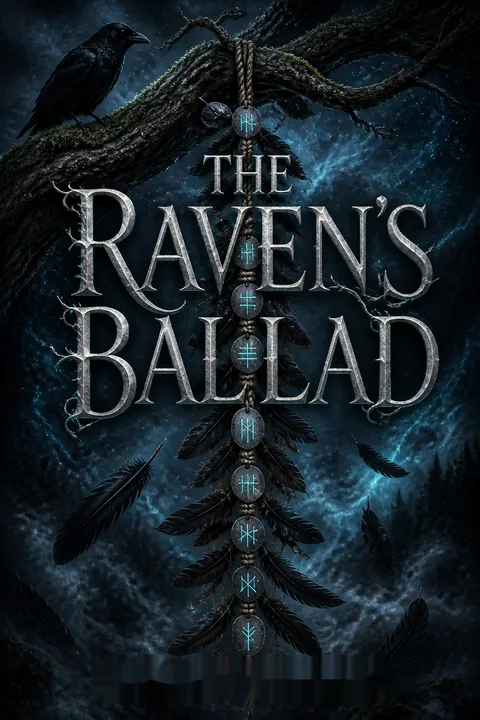
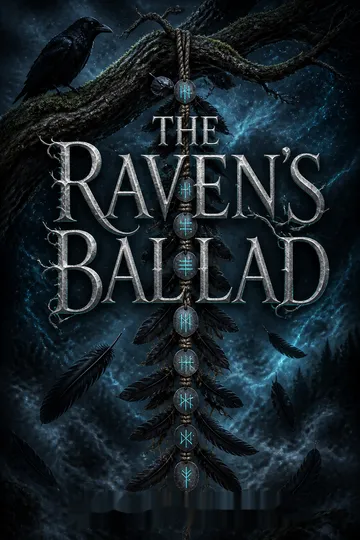
The Raven's Ballad concludes Bran and Aisling's duology with mixed reception. Readers praised the strong chemistry between leads, feminist themes, and imaginative world-building blending Irish mythology with fairy tale retellings. The curse separating the couple—Bran transforms into a raven by day, Aisling a swan by night—creates emotional tension. Many appreciated the empowering female protagonist and characters from previous books appearing. Criticisms included slow pacing, editing errors, underdeveloped villains, and abrupt endings. Some felt the story warranted only one book. Overall rating averages 4.23/5, with fans loving the dark fantasy romance despite flaws.
Characters
Aisling
The witch queenAisling is a witch and changeling who becomes Raven Queen beside Bran. Her life has taught her what it means to be treated as unwanted, so she notices the personhood of creatures other rulers reduce to tools or mistakes. She is compassionate without being meek: she questions faerie customs, confronts powerful figures, and makes practical shelters for those at risk. Her loyalty to the sluagh and other outcasts grows from lived experience, but it can also make her shoulder more pain than she should have to bear. Aisling’s struggle is to protect others without surrendering her own choices, and to distinguish empathy for someone’s suffering from agreement with what they do.
Bran
The reluctant raven kingBran is an Unseelie prince burdened with the Raven King’s power and responsibility for the sluagh. He is witty, provocative, and deeply uncomfortable with the tenderness leadership demands. His abusive family has taught him to expect cruelty and to hide his fear, leaving him uncertain whether he can rule without repeating his parents’ behavior. His love for Aisling draws out a more protective and humane self, but it does not automatically free him from inherited violence. Bran’s central tension is between the freedom to remain irreverent and the duty to wield dangerous power without becoming its servant.
Lorcan
The familiar turned allyLorcan is Aisling’s oldest friend, a witch who has long accompanied her in the form of a cat. He helped her survive when they were both poor and unwanted, and his practical suspicion reflects the hard lessons of that life. He is loyal, sarcastic, and often protective to the point of overriding Aisling’s wishes. Their closeness gives her a source of history outside the faerie courts, but it also means they must renegotiate a bond built around mutual dependence. Lorcan understands danger well; understanding when to trust Aisling’s own judgment is harder for him.
Carman
The buried witch queenCarman is an ancient witch whose legend reaches back to the earliest struggles among faeries and druids. She is associated with immense magic, a disputed history, and an influence that reaches into Underhill’s deepest places. Her intelligence makes her difficult to approach as a simple monster; she understands how grief and exclusion can shape a person’s choices. Yet her capacity to identify with suffering does not make her claims harmless. Carman represents the peril of turning a real injury into a permanent entitlement to control other people.
Elva
The estranged sisterElva is Aisling’s sister and Bran’s former love, raised within the Seelie world that cast Aisling away. She has spent much of her life trying to meet other people’s expectations, and her past relationship leaves her uncertain of her own judgment. Elva is trained, proud, and more vulnerable than her warrior discipline suggests. Her connection to Aisling carries both the intimacy of family and the distance created by years apart. She must decide what she wants apart from the roles assigned to her as daughter, lover, or potential queen.
Darcy
The former raven kingDarcy is the former Raven King, a scaled faerie who once ruled Underhill and left its inhabitants to others. He returns as a charming, manipulative political operator, skilled at provoking rivalries and exploiting what people most fear losing. His confidence masks a history of resentment and a hunger for influence. Darcy treats other people’s loyalties as handles to pull, making him dangerous even when he presents himself as merely delivering information.
Eamonn
The pragmatic Seelie kingEamonn is king of the Seelie Fae and an old friend of Bran. His life has given him an outsider’s perspective on courtly power, and he is more practical than ceremonial. He and Bran share a history of rivalry, rough affection, and mutual recognition. Eamonn can be blunt, but his loyalty is not merely personal; he is willing to use his position to help protect people the courts often disregard.
Sorcha
The druid queenSorcha is Eamonn’s queen, a red-haired druid with a history in the human world and ties to ancestral magic. She is perceptive about the burdens of rule and more willing than many faeries to question inherited customs. Her warmth does not make her politically naive: she weighs the cost of asking her ancestors for help and understands that powerful magic is rarely free. Sorcha offers Aisling an example of a woman who can move between worlds without surrendering her judgment.
Aoife
Duchess of the deadAoife leads the banshees, a people who have withdrawn from the faerie courts and tend the bloodied garments of the dead. She is ancient, watchful, and unsentimental about the costs of an alliance. Aoife tests Aisling before helping her, insisting that a request for aid carries obligations. Her perspective joins death, memory, and practical knowledge, making her a necessary guide through Underhill’s neglected histories.
Tlachtga
The mountain druidTlachtga is an ancient druidess whose presence is inseparable from a mountain and the land around it. She is formidable, dryly humorous, and protective of the life she has built with her sons. Her history includes profound violence, but she is not defined only by victimhood; she has transformed grief into a continuing relationship with the place that sustains her. Tlachtga treats promises seriously and expects visitors to show respect before asking for her power.
Badb
A stern ancestral goddessBadb is one of the ancient Tuatha de Danann and Aisling’s grandmother. She is formidable, strategic, and not always pleased with the choices Aisling makes. Her connection to the Raven Queens gives her access to history others have hidden or lost. Badb’s protectiveness is complicated by her belief that she knows what Aisling could become, making her a powerful ally who does not simply agree with the younger woman.
Macha
The candid ancestral goddessMacha is an ancient Tuatha de Danann and Badb’s sister. She is frank, lively, and more open than Badb about recognizing the value of those who do not fit traditional roles. Her bond with her sisters magnifies her power, while her directness exposes the tensions within their family. She can acknowledge Bran’s efforts without pretending he has nothing left to learn.
Isolde
The witness sisterIsolde is Bran’s oldest sister, visibly scarred by their father’s abuse and trusted by Bran despite the violence of their family. She has preserved his history in a private record, becoming a witness when no one else offered him one. Her care is quiet and deliberate rather than openly sentimental. Isolde understands that remembering what happened can matter, even when the person who endured it is ready to move beyond it.
Eoin
The ambitious brotherEoin is Bran’s Unseelie brother, physically imposing and convinced that he deserves their father’s throne. He values dominance and regards compassion for changelings as weakness. His challenge threatens to draw the Unseelie court into conflict.
Midir
A leader of the HuntMidir is one of the ancient leaders of the Wild Hunt, alongside Etain. Their authority gives the Hunt its standing among the faerie courts, and their summons forces Aisling and Bran to confront its treatment of changelings.
Etain
A leader of the HuntEtain leads the Wild Hunt with Midir. She belongs to the powerful Tuatha de Danann, whose decisions can draw the lesser courts into dangerous obligations.
Plot Devices
The Raven Consort’s Curse
Separates the lovers dailyThe linked transformations make Aisling a swan by day and Bran a raven under the curse of the Raven King. The pair can be together only during brief intervals, turning ordinary intimacy into a scarce resource and complicating their shared rule. The curse also shapes their dependence on one another: Bran’s power can overwhelm him, while Aisling’s presence helps steady him. Because the spell’s origin is tied to Underhill’s buried history, seeking a cure becomes both a personal need and a route into the novel’s central mystery.
The Wild Hunt
Turns tradition into a testThe Hunt is a faerie pursuit of changelings living in the human world. The courts describe it as a way to return lost faeries to their proper places, but Aisling knows that many are abandoned or punished when found. The Hunt forces Bran to choose between obeying the world that raised him and protecting the people he now rules. It also gives Aisling a chance to offer refuge to those who reject the courts’ terms, while revealing the danger of releasing the hungry sluagh beyond Underhill.
The Sluagh Bond
Makes kingship a living burdenThe sluagh are human souls transformed into ravenlike beings and bound to the Raven King. Their hunger can flow into the king, magnifying his power and violent impulses, while their dependence on a leader makes Underhill vulnerable when he is absent. Aisling’s rituals give them ways to calm themselves and build community beyond their function as an army. The bond therefore operates as both political inheritance and psychological pressure: Bran must govern dangerous power without reducing his subjects to instruments.
The Knotted Rope
Collects ancient powersAoife gives Aisling a rope that becomes a witch’s ladder as several powerful beings add knots to it. Each knot carries a different kind of aid, from the knowledge of the dead to druidic memory and the Questing Beast’s power. The spell gathers cooperation across groups that have long been isolated from one another. Its final knots bind Aisling and Carman to a shared fate, making the rope both a record of alliances and the instrument of Aisling’s most consequential choice.
Underhill’s Living Ground
Makes the land part of the conflictUnderhill is more than a refuge for rejected faeries and transformed souls. Its shifting geography hides kingdoms and creatures, and its condition reflects a power buried deep within the realm. Journeys depend on knowing where one is going, while ancient beings such as Tlachtga and the Questing Beast are tied to the land in unusual ways. The realm’s living nature raises the stakes of confronting Carman: a victory that ignores Underhill itself could destroy the home Aisling is trying to protect.
The Otherworld Series
About the Author
Other books by Emma Hamm

Download PDF
Download EPUB
.epub digital book format is ideal for reading ebooks on phones, tablets, and e-readers.








