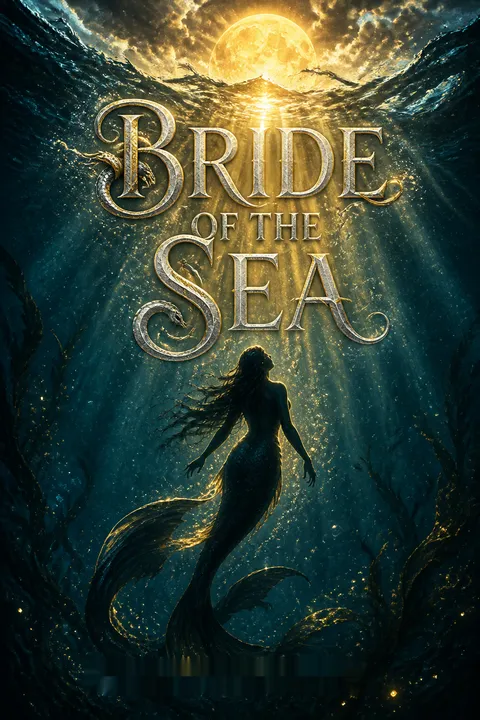


Plot Summary
Prologue
A small seashell waits on a beach until a sailor finds it, calls it beautiful, and promises to make it into a necklace when he returns. He carries it home and leaves it on a velvet pillow before going back to sea.
Years pass. Spiders build and abandon webs, dust gathers, and the house decays, but the sailor never comes back. The shell keeps waiting, its first promise of love turning into a long lesson in absence.
The shell’s story prepares the reader for a romance in which devotion and waiting are not automatically rewarded. Its beloved’s promise is sincere in the moment, but sincerity cannot guarantee a return. That distinction shadows Saoirse and Manus, whose bond feels fated yet remains vulnerable to choices, distance, and silence. The shell also makes waiting physical: time accumulates around a small object that cannot leave. Its quiet endurance is both touching and cautionary, an image of love that survives longer than the person who first awakened it.
The Sea Calls Two Rebels
Manus has paid his way onto a ship, where the crew keeps him from real work and beats him for resisting their orders. He prefers the open water to any settled life, and tells his friend Arturo that marriage would only tie him down. Far below, Saoirse, a dark-haired merrow who feels out of place among her beautiful sisters, retreats to a magical grotto and its land-born tree.
Her father has decided she must marry soon, and threatens to choose a husband for her if she refuses. Saoirse fears the merrow men, especially the brutal Craig, and longs to see the sunlight instead. With her future closing in, she decides she must find a way out of the ocean.
The opening gives both protagonists a form of captivity before they meet. Manus is physically aboard a ship but treated as an outsider, while Saoirse is protected by her underwater home yet denied control over her future. Their different refusals already contain the central conflict: Manus equates freedom with movement, Saoirse with choosing whom and where to love. Arturo’s family-mindedness offers Manus a model he dismisses, while Saoirse’s tree gives her a private image of life beyond inherited rules. Neither character is simply adventurous; each is trying to escape a future someone else has defined.
The Storm Takes the Ship
The captain steers toward a legendary land of riches despite Manus’s warning that the ship is entering faerie waters. A supernatural storm tears through the vessel, and a huge guardian rises from the depths to destroy it. Manus survives the wreck long enough to find Arturo, but the guardian drives him down into darkness, and Arturo does not make it back.
Saoirse has accompanied the guardian to the wreck and watches merrows gather the dead. She spots Manus still alive, lifts him from the water, and carries him to a nearby island. When he wakes, she keeps her merrow nature secret, hoping the sailor she rescued might become her escape from the marriage her father demands.
The wreck turns the sea from Manus’s chosen refuge into an uncontrollable force. His confidence in his ability to endure the ocean cannot protect him from its supernatural laws, and the loss of Arturo gives his recklessness a human cost. Saoirse’s rescue reverses their expected roles: the sailor is helpless, while the supposedly delicate merrow chooses whether he lives. Her decision is compassionate, but it also contains calculation. She wants Manus as a possible route out of her father’s control, so rescue begins as both an act of care and an attempt to claim a different future.
The Island Between Worlds
Manus wakes on an island where someone leaves him food and fresh water, but the dense, enchanted growth blocks his attempts to explore. A large faerie hound appears, and Manus names it Mac Lir after a sea god from his stories. When Saoirse finally reveals herself, he recognizes her as the woman from the wreck and calls her Pearl.
She returns with food and treasures from the ocean, and their talk turns into a growing exchange of trust. Later, Manus finds her in a freshwater pool and sees her merrow tail. They share their true names, binding themselves through an unfamiliar faerie bond that lets them find one another. Saoirse admits she wants to leave her people’s waters, and Manus welcomes her company.
The island allows attraction to grow in a space outside both characters’ ordinary societies. Manus cannot command the landscape, and Saoirse is not yet subject to her father’s rules there. Their naming ritual makes intimacy consequential rather than merely romantic: knowing each other becomes a magical connection neither fully understands. Mac Lir adds a quieter counterpoint to Manus’s assumptions about control. The hound comes when asked, but is not owned. Saoirse’s concealment, meanwhile, shows that trust develops unevenly. She is drawn to Manus while still shaping events around her need to escape.
Gold Beneath the Wreck
Saoirse takes Manus to an old shipwreck, where she keeps him breathing by sharing air through her gills. The danger draws them into their first kisses, and they explore a hidden cave filled with gold gathered by merrows. Manus tells her the tragic story of Cú Chulainn, prompting Saoirse to question whether celebrated heroes deserve admiration when their deeds harm women.
Their discovery is cut short when a shark drives them through the wreck toward a hunting party of merrow men. Manus fights his way toward the surface, but Saoirse is seized and dragged into the depths. He reaches the island alone, wounded and convinced he has failed to protect the woman who saved him.
The treasure cave brings material desire and emotional intimacy into the same space. Manus sees wealth as a path to security; Saoirse sees little value in it, but offers it because she wants to please him. Her response to Cú Chulainn’s story shows that she is not merely absorbing Manus’s world. She evaluates its legends through the consequences they conceal for women. The sudden attack destroys the private safety they had begun to build, exposing how little control either has over the rules of the merrow community. Their separation is the first serious test of a bond they barely understand.
Two Routes to Uí Néill
Mac Lir brings a Viking ship to the island, and its captain takes Manus aboard despite the danger of carrying a faerie hound. Meanwhile, Saoirse’s father condemns her for helping a human and confines her until she can be forced to marry Craig. Her mother secretly unlocks the cell and gives her a spiral shell that lets her hear the guardians.
With their guidance, Saoirse follows the ship routes toward Uí Néill, enduring a long journey by sea. She finds Manus at a dock beside his poor cabin. He has survived, but he cannot offer wealth or comfort. Saoirse asks to stay anyway, making clear that she crossed the ocean to choose her own life, not to be rescued into another arrangement.
Both characters reach the same destination through acts of help that refuse the logic of ownership. Mac Lir assists Manus because Manus asks, while Saoirse’s mother risks punishment to let her daughter choose. The shell extends Saoirse’s capacity to act by giving her a way to communicate with the guardians rather than merely interpret them. Her journey also reverses the earlier rescue: she is no longer being carried toward a possible future but navigating toward one herself. Manus’s poverty makes the reunion emotionally revealing. Saoirse chooses his presence before she knows whether he can provide the security she has been denied.
A Vow Against the Tide
Manus brings Saoirse to a church to marry her, but the priest objects when he discovers she is a faerie. He warns that Manus is poor, restless, and likely to put the sea before his wife. Saoirse refuses to let the priest or Manus decide for her, and the priest finally performs the ceremony.
The couple begin married life in Manus’s shabby cabin, where Saoirse delights in ordinary human things even as she struggles to learn clothing, customs, and social rules. Their affection deepens, but money quickly becomes a problem. Manus wants to give her a secure life, while Saoirse values the freedom to be herself more than a grand home or a formal place in human society.
The church scene gives Saoirse an explicit chance to choose with the risks visible. Her decision is not based on believing Manus flawless; she recognizes his flaws and commits anyway. That makes her agency more substantial than a simple fairy-tale rescue. Yet the priest’s warning is not empty. Manus’s devotion has not yet been tested against his desire for the sea, and the couple’s poverty places pressure on their idealism. Saoirse’s delight in human objects shows how curiosity can sustain adaptation, but her discomfort with social rules also signals that love will not make her identical to the world she enters.
Learning the Human Shore
As Saoirse explores the market, a glassmaker shows her how he turns sand into delicate art. Manus finds them together and reacts with jealousy, revealing how fear of losing her can become possessiveness. In a nearby tavern, Saoirse meets Declan, an Unseelie leprechaun who offers her a golden coin and warns that humans often disappoint.
Manus later visits Arturo’s widow and delivers his friend’s final message. Seeing the young mother and child left behind by a sailor’s death forces Manus to face the cost of his own choices. Saoirse, meanwhile, is learning that human society can be both beautiful and cruel. They love one another, but they carry different ideas of what safety, fidelity, and freedom should mean.
These encounters widen the story beyond the couple’s private attraction. The glassmaker’s craft gives Saoirse a glimpse of human creativity, while Declan offers a competing, more cynical interpretation of human behavior. Manus’s jealousy reveals that his desire to protect can easily shade into control, particularly when he cannot explain his fear. Arturo’s widow makes the sea’s risks intimate: a voyage does not end only for the sailor who dies, but for the family left waiting. The section complicates both lovers’ judgments. Neither the human world nor the faerie world can be reduced to a single moral character.
Gold Has a Price
With hunger closing in, Manus asks Saoirse to retrieve gold from the sea. She dives to a wreck and encounters a banished banshee surrounded by eels. The banshee lets her take treasure but warns that a faerie bound to a human may suffer when that mortal dies, and that Saoirse herself is not exempt from death. Saoirse returns with enough wealth to secure a better life.
Banker O’Sullivan helps Manus protect the money and acquire a manor, though their arrangement rests on old resentments. Manus sees the house as proof he has escaped the poverty of his childhood. Saoirse is less certain. The wealth eases immediate hardship, but it cannot make her comfortable with the human role everyone expects her to perform.
The treasure solves the couple’s material crisis while introducing a more intimate danger. Saoirse has made a choice without understanding that a faerie bond may expose her to human mortality and grief. The banshee does not force her to regret her love; instead, the warning makes its cost legible. Manus responds to poverty by seeking a house, money, and status, partly to protect Saoirse and partly to repair his own history. Their differing reactions reveal how security can mean different things: for him, a stable home; for her, a life that does not sever her from her nature.
The Ship Without Saoirse
Manus builds a new life around the manor and a ship he intends to captain. Saoirse visits the glassmaker again, where she heals the faerie-marked hands that have never felt wholly his; he gives her a glass merrow for her home. At a grand gathering, Declan teaches her the social signals of dancing, and Manus’s attention shifts between his wife and plans for the sea.
He leaves for the West Indies before she wakes, relying on a letter she cannot read. The servants read it aloud and reveal that they once worked with Manus at a brothel. Alone, Saoirse begins to lose memories and strength. Declan helps her recover the shell her mother gave her, and she realizes the distance is worsening the bond.
Manus’s departure is a betrayal less because he sails than because he decides for Saoirse and hides the decision. His letter cannot reach her on equal terms, since he has not taught her to read. The manor’s social performances and the servants’ knowledge of his past leave Saoirse increasingly isolated, even though she is surrounded by people. The glass merrow mirrors her divided existence: an image of sea life kept safely on land. Declan’s return of the shell restores not just memory but access to a world where Saoirse can communicate and act. Her decline gives emotional weight to the bond’s magical rules.
The Sea Takes Her Back
As Saoirse’s memory and strength fail, Declan tells her the bond is wearing her down and urges her to return to the ocean. She is pregnant but has kept the child secret, and she finally leaves the manor rather than die waiting for Manus. She finds a merrow pod led by Alannah, which grants her sanctuary despite her attachment to a human.
Saoirse accepts that her daughter may need a life among merrows and endures a dangerous birth with the pod’s help. The guardians keep watch over her, and she listens for news of Manus. Her choice restores her connection to the sea, but it cannot erase the love that drew her away from it or the hope that he might return.
Saoirse’s return is neither a rejection of love nor a simple homecoming. She leaves because continued separation is physically destroying her, and because she has a child whose needs exceed her wish to wait. Her decision requires giving up control of the future she imagined with Manus, while accepting help from a community she once barely understood. The pod’s sanctuary offers a different model of belonging from her father’s household: protection can be negotiated rather than imposed. Her daughter’s birth makes the choice urgent and embodied, transforming Saoirse’s private longing into responsibility for another life.
A Husband Turns Around
Manus returns from the West Indies expecting to find Saoirse, but the servants tell him she was swept away by a rogue wave. He destroys her room, then turns to drink, convinced he has lost her through his own neglect. Declan confronts him and explains that Saoirse left because the bond was killing her while he was gone. He also reveals that she had asked him to tell Manus the truth.
Manus stops treating her disappearance as abandonment and recognizes that she sacrificed her safety to preserve his freedom. He gathers a crew and takes his ship toward faerie waters, knowing the guardians may destroy it. This time, he chooses the dangerous voyage not for riches or adventure, but to reach the wife he failed to consult.
Manus’s grief initially reproduces his old habit of making Saoirse’s choices about himself. He assumes she left him, then lashes out at the rooms and objects that stand in for her. Declan’s explanation changes the meaning of her absence: she did not simply prefer the sea, she was trying to survive the consequences of a bond Manus never understood. The revelation forces Manus to confront the cost of his silence and his belief that protection justifies deciding for another person. His return to faerie waters marks a genuine change in motive. The sea remains his calling, but it no longer excuses leaving Saoirse behind.
Yellow Coral, Open Passage
As Manus’s ship enters faerie waters, the guardian attacks and the merrows prepare to destroy it. Saoirse’s new pod allies with her, growing yellow coral over the hull to mark the ship for safe passage. The plan cannot stop the battle at once: the guardian is wounded by cannon fire, and opposing merrows clash beneath the ship. Saoirse pleads with the guardian, who carries her onto the deck.
Manus reaches her, and she places their newborn daughter in his arms. He admits he should never have left without telling her, and chooses a life that makes room for both Saoirse and the sea. The merrow women join willing sailors, while the guardian returns to the depths, ending the attack and opening a future neither lover could make alone.
The climax resolves the conflict through negotiation and collective action rather than Manus defeating the guardian. Saoirse’s knowledge of the yellow-coral tradition gives the merrows a way to signal consent, while the guardian’s decision to carry her aboard acknowledges her agency. Manus’s return matters because he has changed the terms of his love: he no longer asks Saoirse to prove it by abandoning the sea. The child makes their reconciliation concrete, and the other merrows’ choices widen the ending beyond one exceptional couple. The story’s final solution is not sameness, but a shared life that accommodates different needs.
Epilogue
Years later, Saoirse and her daughter Orlaith gather treasures by the shore while Manus rows out to meet them. Orlaith gives her mother a small golden pirate, replacing the childhood prince Saoirse once imagined as her ideal.
The family travels between ship and sea: Manus and Orlaith sail, while Saoirse swims beside them and climbs aboard when she wishes. Her need for the water is no longer treated as a threat to their marriage. As the sailors dance on deck, Saoirse joins Manus, and their home becomes a moving one, held together by affection rather than by anyone’s surrender.
The ending does not resolve the couple’s differences by asking Saoirse to become fully human or Manus to give up sailing. Instead, they build routines that let each remain distinct: she swims, he captains, and Orlaith moves between both worlds. The pirate figure also revises Saoirse’s childhood fantasy. Her ideal is no longer an imagined prince polished free of flaws, but a real partner whose mistakes she knows and whose love has changed through consequence. Their family’s mobility answers the prologue’s image of a shell left waiting. Here, love includes return, but also the freedom to leave and come back.
Analysis
Bride of the Sea makes freedom more complicated than simply escaping one world for another. Saoirse leaves an underwater family that would arrange her marriage, but the human world presents its own restrictions: gendered manners, class hierarchies, dependence on wealth, and the expectation that a wife should wait quietly while her husband sails. Manus, meanwhile, experiences the sea as his truest home, yet uses that devotion to avoid the vulnerabilities of staying and communicating. Their love is genuine, but sincerity does not prevent harm when one partner makes decisions on the other’s behalf.
The story gives material objects unusual emotional weight. Saoirse’s tree, the glass merrow, the mother’s shell, the gold from wrecks, and the ship’s figurehead all embody competing forms of belonging. Some are refuges, some are reminders, and some are instruments of choice. The glass merrow is especially revealing: it preserves an image of sea life in a beautiful, controlled form, much as the manor tries to make Saoirse’s difference ornamental. Her continuing need for the ocean cannot be solved by a larger house or greater wealth.
The sea itself is not merely romantic scenery. It is livelihood, danger, memory, and community, with guardians enforcing boundaries that humans repeatedly ignore. Yet the final conflict does not argue that every ship must be destroyed or every human trusted. Saoirse persuades merrows to distinguish between invasion and a request for passage, while Manus learns that love cannot be proven through possession or sacrifice alone. The lasting resolution is a negotiated life between worlds. It honors the characters’ differences instead of treating those differences as flaws one must cure.
Review Summary
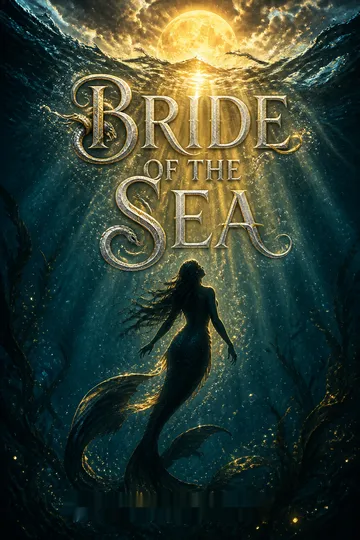
Bride of the Sea is a Little Mermaid retelling blending Irish mythology and dark fantasy, earning a 3.68/5 rating. Readers praised the gorgeous world-building, Celtic folklore elements, and flawed, realistic characters. However, many criticized the male lead Manus as selfish, possessive, and unlikeable, with weak chemistry between him and protagonist Saoirse. The romance felt forced to some, though others appreciated its realistic portrayal of relationships requiring compromise. Positive reviews highlighted Emma Hamm's poetic writing style and character development. The standalone companion to the Otherworld series divided readers between those loving its darker twist and those disappointed by execution.
People Also Read






Characters
Saoirse
Sea-born rule breakerSaoirse is a merrow with dark hair that makes her stand apart from her green-haired sisters. Curious, imaginative, and uneasy with the life prescribed for her, she seeks experiences beyond her family’s underwater world. She is quick to trust kindness but not passive: she questions inherited customs, notices the costs of other people’s choices, and insists on making her own. Her fascination with human life comes from a genuine appetite for discovery, not merely a wish to escape. Saoirse’s compassion can become self-sacrifice, and her longing to love fully sometimes outruns her understanding of what that commitment will demand.
Manus
Restless sailorManus is a tough, self-reliant sailor raised in poverty and shaped by years of being treated as an outsider. The sea gives him purpose and a kind of belonging he has rarely found on land. He is physically brave, sharp-tongued, and comfortable pursuing pleasure without promising permanence. Beneath that confidence sits a fear that he is not worthy of lasting love, coupled with a habit of treating protection as permission to decide for others. His loyalty to the sea is real, but so is his capacity to change when he recognizes that independence without honesty can injure the people he loves.
Declan
Unseelie guide and challengerDeclan is a leprechaun who moves through human society with confidence, humor, and an instinct for uncovering what people would rather conceal. He is skeptical of human virtue and quick to challenge Saoirse’s faith in Manus, yet his cynicism does not prevent him from helping her. Declan understands the practical risks of faerie ties and sees when Saoirse’s devotion is becoming dangerous. His loyalty is unconventional: he refuses to flatter her choices, but takes her wishes seriously enough to help her act on them.
Arturo
Manus’s loyal shipmateArturo is a fellow sailor who values home and family even while he remains at sea. He tries to make Manus consider the pleasures and responsibilities of a settled life, offering a contrast to Manus’s insistence that the ocean is enough. His concern for the wife and child awaiting him gives the risks of sailing a personal shape. Arturo’s warmth and practical outlook remain important to Manus long after their time together.
Mac Lir
Faerie hound companionMac Lir is the name Manus gives the enormous faerie hound he encounters on the island. Intelligent and independent, the dog does not behave like a pet under command. It responds to Manus’s requests when it chooses, and its presence links the sailor’s human life with the strange workings of faerie loyalty.
The guardian
Sentinel of merrow watersThe guardian is a colossal, scarred female being who patrols the boundaries of faerie waters. Her immense strength makes her dangerous to ships that trespass, but her actions are shaped by a protective duty toward the merrows. She communicates through deep songs that most creatures cannot understand. To Saoirse, the guardian is more than a weapon or a natural force: she is an attentive presence whose warnings come from care.
Saoirse’s mother
Quiet ally and motherSaoirse’s mother is gentle, observant, and more sympathetic to her daughter’s longing than the rest of the family. She understands the cost of living by rules that deny a person’s deepest wishes. Though she rarely dominates family life, she is willing to take risks when Saoirse needs practical help. Her restraint should not be mistaken for indifference.
Saoirse’s father
Traditional merrow patriarchSaoirse’s father is a powerful merrow who regards marriage and family alliances as necessities, not personal choices. He believes his authority protects his daughters and preserves the family’s place, but his methods leave little room for individual desire. His insistence on arranging Saoirse’s future makes him a direct source of pressure in her life.
Alannah
Pod’s guarded matriarchAlannah leads the merrow pod that offers Saoirse protection. Stern and pragmatic, she measures decisions against the pod’s safety and expects people to honor their responsibilities. Her authority comes from experience and from the trust her community places in her. She represents a different kind of merrow leadership from Saoirse’s father’s rule, though her first instinct is still to enforce tradition.
The banshee
Banshee of sunken warningsThe banished banshee lives among eels in the remains of a shipwreck. Bitter toward humans and wary of romantic promises, she speaks from long experience of loss and exile. Her appearance is frightening, but her warnings arise from knowledge rather than simple malice. She offers Saoirse a chance to see the danger hidden inside an apparently happy choice.
The glassmaker
Glassmaker touched by faerieThe glassmaker is a skilled artisan who turns sand into intricate figures, including works inspired by the sea. His craft draws Saoirse because it resembles a human form of magic: patient skill transforming ordinary material into beauty. His hands carry signs of a past shaped by faerie power, and he values making art even when it is difficult to sell.
O’Sullivan
Banker with a grudgeO’Sullivan is a wealthy banker who has old grievances with Manus but remains capable of practical generosity. He is proud of his position and fond of being admired, yet he can be persuaded to help when he sees a story worth following.
Orlaith
Curious young merrowOrlaith is an adventurous young merrow who enjoys exploring and resists being made to follow conventions that feel unnecessary. She is lively, stubborn, and comfortable moving between the water and the world of ships.
Arturo’s wife
Sailor’s grieving widowArturo’s wife is a young mother whose home makes visible the people left behind by a sailor’s appetite for the sea. Practical and grieving, she listens to Manus’s account of her husband with clear-eyed honesty.
Plot Devices
The true-name bond
Love with a costWhen Saoirse and Manus share their true names, an uncommon faerie bond links them and lets them sense how to find one another. Neither understands the consequences at first. Distance strains Saoirse and contributes to her declining health while Manus is away. The bond turns emotional commitment into a physical condition, forcing both lovers to face the difference between affection and responsibility. It also makes the ending’s renewed partnership consequential: they must change how they live, not merely declare that they love each other.
The guardian’s shell
A voice beneath the seaSaoirse’s mother gives her a spiral shell that allows her to hear and speak with the guardians, whose ordinary calls are beyond merrows’ understanding. The shell gives Saoirse access to guidance when she travels away from her family and later helps her reconnect with the sea as her memories weaken. It is both a practical communication tool and a link to the community that recognizes her beyond the human world.
Yellow coral markings
A sign of safe passageA tradition holds that a ship marked with yellow can pass through guarded faerie waters. Saoirse uses merrow magic to grow coral over Manus’s ship, turning that belief into a concrete attempt to prevent its destruction. The marking gives the merrows who oppose automatic violence a way to act collectively and gives the guardian a signal that the ship may be treated differently. Its importance depends on earlier knowledge of the guardian’s rules and the merrows’ ability to shape coral.
Sunken treasure
Love’s material bargainSaoirse treats wrecked ships as part of the ocean’s landscape, while Manus sees the gold and jewels they contain as a possible escape from poverty. Her ability to retrieve the treasure changes their circumstances, allowing them to buy a manor and support Manus’s plans for a ship. The wealth solves immediate needs but does not resolve their differences about safety, status, and freedom. It also draws Saoirse into a dangerous wreck where she encounters a banshee whose warning reshapes how she understands her bond with Manus.
Declan’s golden coin
A faerie’s watchful favorDeclan gives Saoirse a gold coin and promises to watch over her. Its value is not merely financial: it establishes a connection that allows him to keep track of her and intervene when she is in danger. Saoirse accepts despite Manus’s suspicion of leprechauns, partly because she needs support in a world she does not understand. The coin also provides a concrete link to Declan when Saoirse’s deteriorating memory leaves her unable to identify what is missing.
The Otherworld Series



About the Author
Other books by Emma Hamm








Download PDF
Download EPUB
.epub digital book format is ideal for reading ebooks on phones, tablets, and e-readers.








