

Key Takeaways
Use biblical prehistory to decode prophecy, while testing every historical link.
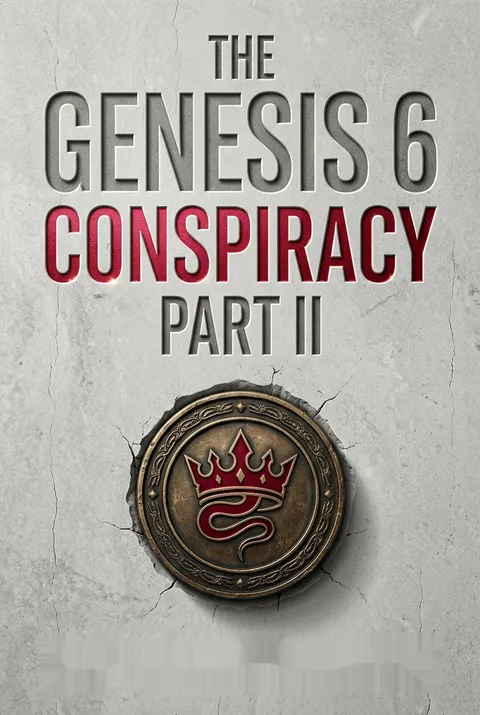
A connected history. Gary Wayne’s central claim is that end-time prophecy becomes clearer when read alongside the Bible’s accounts of creation, the flood, Babel, and ancient Israel. He treats Scripture as a continuous story whose early conflicts supply context for Revelation, rather than as disconnected stories or symbols. His method begins with Jesus’ account in Matthew 24, then compares related passages in Mark, Luke, and the prophets.
A strict measuring stick. Wayne says nonbiblical histories and religious traditions may offer clues, but Scripture must decide which clues count. He also advises checking translations and original Hebrew and Greek words. This approach shapes the entire book: textual details are linked to ancient peoples, empires, and future events. Its main challenge is that the argument combines biblical interpretation with many historical claims of unequal reliability.
What's striking is the ambition to make prehistory, biblical history, and prophecy answer one another. That can help readers notice patterns across texts and resist cherry-picking passages that support a favorite timetable. Yet a rule that Scripture arbitrates every outside source also limits independent testing: evidence that conflicts with the framework can be dismissed as unreliable by definition. Historical inquiry works best when claims remain open to revision from both textual and material evidence. The useful discipline here is to separate what a passage says, what the author infers from it, and what outside evidence can actually confirm.
Read Noah and Lot as warnings about corruption, violence, and judgment.
A broad warning. Jesus compares the coming of the Son of Man with the days of Noah, while Luke also invokes the destruction of Sodom in Lot’s time. Wayne argues these are not merely warnings that people will ignore danger. He reads them as a generation-wide pattern involving violence, sexual wrongdoing, corrupt societies, and divine judgment. He connects Genesis 6 with passages in 2 Peter and Jude that mention sinning angels, Noah, Sodom, and Lot.
A disputed extension. Wayne interprets Genesis 6 as describing angels producing giant offspring, and sees the flood and Sodom as precedents for end-time events. He also argues that days can mean a lifetime or generation, not only ordinary days. This widens the warning from a final crisis to a whole generation shaped by the same kind of corruption.
The Noah and Lot comparison has real interpretive force as a warning about complacency, violence, and moral breakdown. It also shows how biblical writers reuse earlier disasters to give later audiences a vocabulary for judgment. But a word with several possible meanings does not, by itself, establish which duration Jesus intended. Nor does a parallel between two episodes prove that every feature recurs literally. A careful reading can preserve the ethical warning while keeping claims about angelic reproduction and future events distinct from what the cited passages explicitly state.
Treat post-flood giants as a hypothesis, not settled history.
Two kinds of giants. Wayne distinguishes the Nephilim, associated with Genesis 6 before the flood, from the Rephaim, whom he identifies as giant peoples appearing afterward. He argues that the phrase about giants being present “after that,” together with later accounts of Rephaim, supports a second angelic incursion after the flood. He calls this proposed recurrence the Second Incursion. He also presents demons as the disembodied spirits of dead giants.
Texts and measurements. The book links this interpretation to named groups such as Anakim, Emim, Zuzim, and Zamzummim. It points to the reported size of Og’s iron bed and Goliath’s height as evidence that these were more than ordinary warriors. Wayne acknowledges that Scripture does not give a definitive account of how giants reappeared after the flood, and considers several possibilities, favoring a second incursion.
The distinction between Nephilim and Rephaim gives the book a clear way to organize scattered names, battles, and passages. It also exposes a genuine interpretive question: biblical texts mention giant peoples after the flood without explaining their origin in detail. The leap to a second angelic incursion is Wayne’s answer, not a settled historical conclusion. Lexical definitions and ancient measurements can suggest possibilities, but they cannot independently demonstrate supernatural parentage. The reader gains most by recognizing the hypothesis, its textual basis, and the absence of decisive evidence as three separate things.
Read Canaan’s wars as contests over land, loyalty, and power.
A long conflict. Wayne reads Genesis 14’s battle between four Mesopotamian kings and five cities near Sodom as a war involving Rephaim and their allies. Abraham joins a small force to rescue Lot after the eastern kings defeat the local coalition. Centuries later, Israel’s conquest narratives describe battles against peoples Wayne places within the same giant-led regional order.
The eastern campaign. The book gives special attention to Sihon and Og, kings whose territories Moses’ generation defeats east of the Jordan. It then follows Joshua’s campaigns against fortified cities and named rulers, including Jericho and Hazor. Wayne interprets these conflicts as part of a prolonged struggle over the land promised to Israel. He also emphasizes the scouts’ fearful report, Israel’s retreat, and the later campaigns as tests of covenant loyalty and reliance on God.
The narrative connects individual battles to a larger political question: who controls the land, and whose authority will Israel trust? That lens makes the sequence of migration, alliances, tribute, and conquest easier to follow. It also calls for care. The book’s framing of entire peoples as hybrid enemies can make ancient war stories sound like biological fact and can obscure the theological and political purposes of the texts. The language of total destruction deserves particular attention, since historical context can explain a passage without making its violence morally uncomplicated.
Map prophecy around Jesus’ sequence, not isolated predictions.
A chronological template. Wayne uses Jesus’ teaching in Matthew 24 as the organizing structure for end-time prophecy, then compares it with Mark 13, Luke 17 and 21, Revelation, and the prophets. In his reading, the abomination of desolation marks the midpoint of Daniel’s final seven-year period. The first three and a half years include escalating crises; the last three and a half bring the great tribulation and the wrath of God.
Keep the categories apart. Wayne distinguishes tribulation, which he says believers may endure, from divine wrath, which he places later. He also separates prophecies addressed to Israel from those addressed to Judah and the church, and urges readers to include passages that complicate their current view. His chronology treats Revelation as a sequence that can be aligned with Jesus’ outline, rather than as a set of interchangeable images.
A timeline can make a dense prophetic text more navigable, especially when readers compare parallel passages instead of relying on one isolated verse. The distinction between persecution and divine judgment also clarifies a recurring theological question. Still, the proposed sequence is one Christian interpretation, not a consensus timetable. Apocalyptic writing often combines chronology, symbolism, and repeated visions, so placing every passage on a single line can create confidence beyond the evidence. The strongest use of Wayne’s framework is as a reading model to test, not a calendar that resolves every disagreement.
Treat the seventy nations as a proposed map of spiritual rule.
A cosmic hierarchy. Wayne connects the seventy descendants of Noah in Genesis 10, the seventy members of Jacob’s family in Egypt, and the seventy divine beings he reads behind Deuteronomy 32 and Psalm 82. He interprets the passages as evidence that rebellious heavenly beings were assigned authority over nations, under Satan’s leadership. Ugaritic texts about Baal and a council of gods provide comparative material for this reading.
A textual hinge. Deuteronomy 32:8 differs across textual traditions: the Masoretic Text is commonly rendered with “sons of Israel,” while the Dead Sea Scrolls and Septuagint support readings referring to divine beings or angels. Wayne treats these readings as compatible layers of meaning. He then develops an angelic hierarchy of watchers, archangels, cherubim, seraphim, and other orders to explain how spiritual rule and earthly kingdoms connect.
The comparison between Deuteronomy 32 and ancient divine-council traditions is one of the book’s most intellectually fertile moves. It takes a real textual variant seriously and places Israel’s theology in conversation with neighboring cultures. The interpretive restraint matters, however: a variant reading may support a divine-council interpretation without proving that exactly seventy rebellious beings governed nations or that every ancient dynasty descended from them. Comparative mythology can illuminate shared ideas, but resemblance alone cannot establish direct descent or a coordinated historical system.
See Babylon as the bridge between ancient empires and end-time rule.
A recurring empire. Wayne presents Babylon as more than a place. It is the culmination of a recurring system that joins political power, trade, religion, and coercion. He reads Daniel’s empires and Revelation’s beast as stages in this history, with a final empire and Antichrist emerging from earlier ones. His account also treats the woman riding the beast as a powerful religion allied with rulers and merchants.
A contested extension. Wayne links that system to modern secret societies, Templar and Rosicrucian traditions, Jesuits, royal families, and heraldic symbols. He reads disputed translations such as “Lucifer,” “unicorn,” and “Sion” as possible clues to hidden agendas. These claims go far beyond the book’s biblical interpretation and rely on connections across names, symbols, and organizations that Wayne considers evidence of continuity.
The image of an empire that combines markets, ideology, and coercive power remains a useful political lens. It invites questions about how commercial systems and religious legitimacy can reinforce each other. The specific claims of a centuries-long secret network, however, require a different standard of proof from scriptural interpretation. Shared symbols, similar titles, or word resemblances do not establish a coordinated lineage. Historical research usually tests each proposed link against dated documents and independent evidence. That distinction allows the Babylon metaphor to be examined without treating modern groups as proven conspirators.
Use prophecy to sharpen discernment, not certify secret-society claims.
Preparation over prediction. Wayne’s stated aim is to help Christians prepare for deception and hardship by studying the whole body of Scripture. He urges readers to compare translations, investigate Hebrew and Greek terms carefully, and revisit conclusions when passages do not fit. He rejects treating one preferred end-times scheme as a rule that overrides inconvenient texts.
A call to vigilance. The book ties this approach to free choice, covenant loyalty, judgment, and the belief that Christ will resolve the conflict between God and rebellious angels. Its practical appeal is to remain alert, faithful, and willing to question religious teaching. But the author’s warnings about contemporary institutions and future events are not independently verified predictions; the reader must distinguish spiritual counsel from claims about real people and organizations.
The call to read broadly, check translations, and resist easy certainty is constructive, particularly in a field where readers can be pulled toward rigid timelines. A further step is to apply the same scrutiny to the author’s own claims. Source quality, alternative explanations, and falsifiability matter whether a claim concerns prophecy or a modern institution. Spiritual readiness need not depend on accepting a specific conspiracy or identifying current groups as agents of an ancient plot. It can rest on the more durable ethical themes of vigilance, humility, and fidelity.
Analysis
This is an apocalyptic synthesis, not a conventional history of ancient Israel. Its narrative runs from angelic rebellion and the flood, through post-flood giants and Israel’s wars, to a final conflict involving Babylon, Antichrist, and the return of Jesus. Wayne builds that arc by combining biblical exegesis, Hebrew and Greek word studies, ancient Near Eastern texts, later legends, and claims about modern organizations. The book’s scale and ambition are unmistakable: it tries to make prehistory, empire, theology, and prophecy parts of one continuous account.
Its strongest interpretive instinct is to read related passages together. The comparisons among Genesis 6, the flood, Sodom, the Rephaim narratives, and Jesus’ warnings invite readers to ask how biblical authors use earlier events to frame later judgment. The discussion of textual variants in Deuteronomy 32 and the distinction between tribulation and wrath also identify real questions within biblical interpretation.
The difficulty is that the argument often moves from textual ambiguity to certainty without enough independent support. A word with several possible meanings cannot establish an ethnic identity, and resemblance between names does not prove shared ancestry. Ancient myths, biblical genealogies, medieval legends, and modern secret societies also differ in date, genre, and evidentiary status. Treating them as corroboration can create a self-sealing theory: every similarity becomes confirmation, while disagreement becomes evidence of suppression. Claims about Jesuits, royal families, and contemporary institutions therefore need verification outside the book’s interpretive system.
The adaptation’s best use is as a map of Wayne’s worldview and a prompt for careful reading, not as a verified chronology of future events or a factual account of hidden dynasties. Readers can retain its call to compare passages and attend to themes of violence, power, and loyalty while demanding stronger evidence for its historical and conspiratorial conclusions.
People Also Read


Glossary
Nephilim World Order
claimed giant-led world systemWayne’s name for the political and religious order he believes was founded by antediluvian Nephilim and continued by their descendants after the flood. In his account, dynastic rulers and allied institutions use polytheistic religion and political power to dominate humanity. This is the author’s interpretive framework, not an established historical category.
Naphalim World Order
claimed fallen-angel hierarchyWayne’s term for the invisible system of rebellious angels that he believes directs the visible Nephilim World Order. He links it to Satan, fallen angels, national gods, and the heavenly hierarchy described in biblical and comparative religious texts. The term organizes his interpretation of history and prophecy; it is not standard scholarly terminology.
Second Incursion
proposed post-flood angelic returnWayne’s explanation for the appearance of Rephaim and other giant peoples after the flood. He argues that a second group of fallen angels reproduced with human women, creating new giant offspring and restoring a post-flood version of the earlier order. He acknowledges that Scripture does not directly explain how these later giants originated.
Rephaim
biblical giant peoplesA biblical term that Wayne uses for post-flood peoples he interprets as giants, including the Anakim, Emim, and other regional groups. He distinguishes them from the pre-flood Nephilim and treats them as rulers or warriors in the ancient Levant. The biblical term has varied uses, so his classification is an interpretation rather than a settled definition.
Harem-Anathema
oath binding fallen watchersWayne’s combined label for the mutual oath he believes rebellious angels swore at Mount Hermon before producing giant offspring. He connects the oath to the biblical idea of something devoted to destruction and to anathema as a solemn curse. The phrase expresses his interpretation of the Book of Enoch and related biblical passages.
Fig tree generation
generation before the endWayne’s term for the generation Jesus describes through the parable of the fig tree in Matthew 24 and parallel passages. He interprets it as the final generation before the millennium, marked by the sequence of signs and tribulations Jesus outlines. He suspects his own era belongs to this generation but says he is not a prophet.
Terrible Ones
giant rulers facing judgmentWayne’s specialized label for oppressive ancient rulers and peoples, especially Rephaim kings and their descendants, whom he associates with passages describing terror, violence, and judgment. He links them to both biblical enemies of Israel and future prophetic figures. The category combines several textual references and is not a standard historical people-name.
Download PDF
Download EPUB
.epub digital book format is ideal for reading ebooks on phones, tablets, and e-readers.








