

Key Takeaways
Treat brain health as a whole-body project, not a brain-only problem.
Look beyond the brain. Perlmutter begins as a neurologist frustrated by how little medicine could do for many chronic brain disorders. After his father dies with Alzheimer’s disease, and a period of grief and illness lands him in intensive care with a dangerous heart rhythm, he gives greater weight to stress, relationships, and daily habits alongside food. His central claim is that brain health is connected to the gut, metabolism, sleep, movement, and social life, so prevention should address the person as a whole.
A practical program. The book turns that view into a lifestyle plan: assess risks, change food and medication habits with professional guidance, add supportive practices, and schedule them realistically. It promises a route to better health, not a substitute for diagnosis or treatment.
What's valuable in this whole-person framing is its refusal to treat the brain as an isolated machine. Biology is a network: sleep, metabolism, immune activity, and mood influence one another, so a narrow intervention can miss important context. The author's personal experiences make that interdependence vivid without proving any specific treatment works. The same breadth also creates a risk: when many conditions are linked to one lifestyle package, the explanation can become too sweeping. A useful reading keeps the systems perspective while asking which recommendations have strong evidence for which outcomes.
Build meals around vegetables and healthy fats, not refined grains and sugar.
Change the plate. Perlmutter's food plan removes gluten, most grains, added sugar, and processed foods, while emphasizing vegetables, olive oil, avocados, nuts, seeds, eggs, and selected fish and meats. He suggests that about three-quarters of a plate be colorful, fiber-rich vegetables, with a modest serving of protein and added healthy fat. He also advises avoiding industrially processed oils and choosing organic or non-GMO foods when possible. His approach is low-carbohydrate and high-fat, though recipes and recommendations vary in how closely they match a strict ketogenic diet.
The supporting case. A one-year trial of 148 adults cited in the book found greater weight loss and improvements in several cardiovascular risk measures among participants assigned to a low-carbohydrate diet than among those assigned to a low-fat diet. The study supports one option for some people, not a single ideal diet for everyone.
The clearest practical insight is about food quality and substitution: replacing sugary drinks, packaged snacks, and refined starches with vegetables, nuts, and minimally processed meals can change both nutrient intake and satiety. The cited trial adds useful evidence that lower-carbohydrate eating can work for weight and some risk markers. It does not establish that all carbohydrates are harmful, that dietary fat is universally beneficial, or that gluten needs to be avoided by everyone. Individual health, preferences, culture, and sustainability matter, as does the difference between whole grains and highly refined products.
Feed gut microbes with fiber, and include fermented foods if tolerated.
Support the gut ecosystem. The microbiome is the community of microorganisms living in and on the body, especially in the intestine. Perlmutter argues that these microbes affect digestion, immune activity, metabolism, and communication between gut and brain. He emphasizes prebiotics, meaning fibers that people cannot fully digest but gut microbes can use as food. His examples include onions, garlic, leeks, asparagus, and acacia fiber. Fermented foods such as sauerkraut, kefir, and live-culture yogurt supply microbes or their products. The plan sets a daily prebiotic-fiber target of 12 grams.
Evidence and limits. A small study cited in the book, involving ten adults, found that gut microbial patterns changed within days when participants switched between plant-based and animal-based diets. That suggests diet can quickly affect the microbial community, but it does not show that a particular food or supplement prevents neurological disease.
The ecosystem metaphor helps explain why fiber matters beyond its role in digestion. Microbes transform parts of food into compounds that interact with the gut lining and immune system, making diet a way to shape a biological community rather than simply count calories. This perspective supports variety in plant fibers and attention to personal tolerance. It also counsels restraint: microbiome research is complex, and a change in microbial composition is not automatically a health improvement. Fermented foods and supplements can be useful options, but the book's specific targets and strain recommendations should not be mistaken for universal prescriptions.
View ketogenic eating as a medical strategy, not a guaranteed brain cure.
How ketosis works. Ketosis is a metabolic state in which the body makes ketones from fat and uses them for energy when carbohydrate availability is low. Perlmutter's plan sharply restricts carbohydrates, limits protein, and derives most calories from fat, with the aim of shifting the body toward ketone use. He highlights beta-hydroxybutyrate, a ketone that can fuel the brain, and notes that ketogenic diets have been used for drug-resistant epilepsy in children since the 1920s. He also discusses emerging research on other neurological conditions.
Promising is not proven. The book presents ketosis as potentially helpful across a wide range of disorders, but its evidence varies by condition. A history of use for epilepsy does not establish that the diet treats Alzheimer’s disease, depression, autism, or cancer. The book advises medical consultation before fasting or major dietary changes.
Ketosis is a genuine metabolic state, and the established use of ketogenic diets for some forms of epilepsy makes the topic more than a passing wellness trend. The key distinction is between a biological mechanism, a treatment that works for a defined condition, and a broad claim of prevention or cure. Those categories require different levels of evidence. A very restrictive diet can also complicate medication management and may not suit every person. The strongest interpretation is to treat ketogenic eating as a condition-specific option to discuss with qualified clinicians, rather than a universal upgrade to human metabolism.
Assess your starting point before choosing which health changes to prioritize.
Start with a baseline. The plan opens with a risk-factor questionnaire, laboratory testing, and reflection on habits. Perlmutter particularly emphasizes fasting insulin, fasting glucose, hemoglobin A1C, C-reactive protein, homocysteine, and vitamin D. These tests measure different things: for example, A1C reflects average blood sugar over roughly three months, while C-reactive protein is a marker associated with inflammation. The book gives target values, including fasting insulin below 8 and A1C between 4.8 and 5.4 percent, and recommends tracking progress over time.
Use the numbers carefully. The framework has three stages: assess risks, edit diet and medication habits, then add supportive practices and plan the routine. The suggested targets are the author's recommendations, not universal standards. Results need interpretation in light of medical history, medications, and the clinician's judgment.
Measurement can turn vague concern into a more useful conversation: a person and clinician can identify a baseline, select relevant goals, and see whether a change is associated with movement in the intended direction. Tracking habits in a journal can reveal patterns that a single laboratory result cannot. Yet measuring more is not automatically better. A target presented in a popular health book can sound like a diagnostic boundary even when clinical interpretation is more nuanced. The best use of these tests is as context for shared decision-making, not as a self-scoring system or reason to chase numbers without symptoms or medical guidance.
Protect movement, sleep, and close relationships as part of brain care.
Health is not only dietary. Perlmutter recommends regular aerobic activity, strength work, adequate sleep, stress reduction, time outdoors, gratitude, and in-person social connection. His exercise guidance begins with at least 20 minutes of cardio on six days a week, plus strength training several times weekly, adjusted to a person's abilities. He also urges a consistent sleep schedule and attention to problems such as sleep apnea.
The evidence he highlights. In one study described in the book, researchers followed 876 adults over 30 years and found that higher physical activity was associated with less brain-volume loss and lower Alzheimer’s risk. Another large survey analysis linked social relationships with health measures across age groups. These findings support taking movement and connection seriously, while association alone cannot prove that either practice prevents disease.
This section usefully treats health behaviors as mutually reinforcing rather than competing demands. Movement can support physical capacity, while sleep and relationships shape whether healthy routines are possible in the first place. The social dimension is especially important: health advice often addresses an individual as if time, safety, companionship, and caregiving responsibilities were irrelevant. A practical plan should therefore account for barriers, not merely prescribe discipline. The neurological findings are encouraging, but a lower-risk association is not a guarantee, and exercise should be adapted to injury, disability, age, and medical conditions.
Schedule meals and activity before a busy day makes the choices for you.
Make the plan concrete. The book treats timing and preparation as tools for consistency. Perlmutter recommends planning meals, shopping, snacks, and exercise in advance; keeping ready-to-eat options on hand; and using food, exercise, and general journals to record intentions and results. He also suggests eating more earlier in the day, having lunch before 3 p.m., and avoiding food within four hours of bedtime.
Timing example. In a 20-week weight-loss program involving 420 adults in Spain, participants who ate lunch before 3 p.m. lost an average of 22 pounds, compared with 17 pounds among those who ate later. The study makes meal timing worth considering, but it does not prove that a 3 p.m. cutoff is right for every schedule or body clock.
Planning reduces the number of decisions made while tired, rushed, or surrounded by convenient alternatives. That is a behavioral advantage even when the exact schedule is flexible. The lunch-timing result is memorable, but timing studies can be difficult to separate from work patterns, sleep, social meals, and other habits. The useful lesson is to notice whether late eating follows a chaotic day and to build a routine that fits real constraints. A rigid cutoff can be counterproductive for shift workers, caregivers, or anyone whose daily rhythm differs from the book's example.
Use fasting, supplements, and prescription changes only with medical guidance.
Avoid do-it-yourself medicine. Perlmutter suggests a 24-hour fast before starting the meal plan, occasionally skipping breakfast, and, for some readers, longer seasonal fasts. He also lists supplements including DHA, vitamin D, turmeric, alpha-lipoic acid, coffee fruit extract, prebiotic fiber, and probiotics. He urges readers who take prescription drugs to consult their physicians before adding supplements or changing medication.
Keep that caution central. The book questions several commonly used drug classes, including statins, acid-reflux medicines, pain relievers, and antibiotics. Its concern is that unnecessary medication can cause harm, but readers should not stop prescribed treatment on the basis of a book. Fasting and supplements can also carry risks, interact with drugs, or be inappropriate for particular health conditions.
The most durable advice here is not a particular capsule or fasting schedule, but the insistence that medication decisions belong in a clinician conversation. That principle protects against both reflexive prescribing and reflexive discontinuation. Supplements also vary in quality and can have meaningful physiological effects, so the label “natural” does not guarantee safety or benefit. The book sometimes moves quickly from plausible mechanisms to confident recommendations. Readers can preserve its interest in prevention while asking what outcome a product has actually been shown to improve, at what dose, and for whom.
Build a repeatable routine, not a perfect 14-day performance.
Make the plan livable. The book's 14-day menu is a starter template, not a finish line. It encourages repeating meals, cooking ahead, packing lunches, and keeping portable options such as eggs, nuts, vegetables, or leftovers available. Perlmutter proposes a 90-10 rule: follow the plan most of the time and allow some flexibility, then return to the routine after a lapse. He also recommends reducing household exposures gradually, such as replacing nonstick cookware or choosing BPA-free cans when practical.
Avoid all-or-nothing thinking. The broader goal is a pattern that can survive work, travel, family meals, and setbacks. The author also advises choosing organic and non-GMO foods where possible, while acknowledging that these choices can depend on availability and budget.
A plan succeeds when it can absorb ordinary disruption. Repetition, preparation, and portable meals are forms of environment design: they make the preferred option easier to reach without demanding heroic willpower at every meal. The 90-10 idea can also soften the cycle in which one exception becomes a reason to abandon the whole effort. Environmental precautions are most useful when proportionate and affordable. Because the book presents some chemical risks in forceful terms, readers should distinguish prudent exposure reduction from claims that every listed product is a demonstrated cause of disease.
Analysis
The book is best understood as a practical lifestyle manual built around a strong, sometimes overconfident theory: chronic inflammation, carbohydrate-heavy eating, and gut disruption help explain a wide range of modern illness, including brain disease. Its distinctive contribution is the insistence that brain health belongs in a larger system of digestion, metabolism, sleep, exercise, stress, and relationships. Its practical design is similarly broad, moving from self-assessment to food changes, supportive habits, and scheduling, then supplying a two-week menu to make the plan concrete.
That breadth is both its power and its limitation. Readers are offered many levers, which can make prevention feel actionable, but the book frequently moves from plausible biological mechanisms to stronger conclusions about disease prevention or treatment than the examples establish. A small study showing that diet changes gut microbes quickly does not prove that those changes prevent dementia. A weight-loss trial comparing low-carbohydrate and low-fat diets does not establish that every reader should follow a ketogenic diet. And a collection of personal success stories can illustrate possibility without estimating average benefit or separating diet effects from other changes.
The most responsible way to use the book is therefore selective. Its emphasis on less processed food, more vegetables, movement, regular sleep, planning, and social support offers a coherent starting point. Its more restrictive rules, laboratory thresholds, supplement schedules, and claims about gluten, fats, medications, GMOs, and glyphosate require independent clinical context. The 2016 publication date matters: the microbiome and nutritional sciences continue to develop, and evidence differs substantially by condition and intervention. The book is strongest as a prompt to examine everyday habits and discuss prevention with a qualified clinician. It is weakest when a single dietary explanation is treated as a near-universal answer. Readers should keep the useful systems perspective while remaining alert to evidence quality, individual needs, and the difference between lowering risk and promising a cure.
Review Summary
The Grain Brain Whole Life Plan received mixed reviews. Many readers found it informative and helpful for improving health through diet changes, particularly reducing gluten and sugar intake. Some praised the practical advice and recipes. However, critics noted redundancy with the author's previous work, questioned the scientific basis of some claims, and found the diet plan difficult to follow. Several reviewers appreciated the emphasis on gut health and brain function, while others felt the recommendations were too restrictive or lacked sufficient evidence.
People Also Read










Glossary
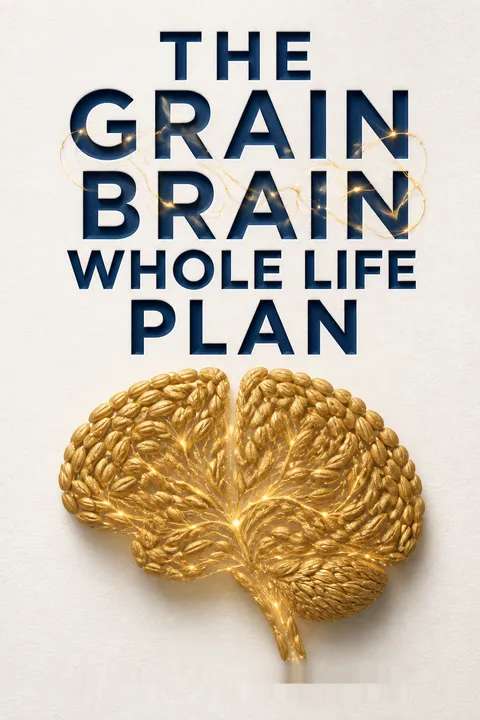
Grain Brain Whole Life Plan
Whole-person lifestyle programPerlmutter's program combining a low-carbohydrate, gluten-free eating pattern with strategies for gut health, exercise, sleep, stress, relationships, and daily planning. It is organized around assessing personal risks, changing food and medication habits, adding supportive practices, and making those practices fit ordinary life.
microbiome
Community of body microbesThe collection of microorganisms, their genetic material, and their products that inhabit the body, especially the digestive tract. In the book, the gut microbiome is treated as a contributor to digestion, immune activity, inflammation, metabolism, and communication between the gut and brain. Diet and medications are described as factors that can alter it.
prebiotics
Fiber used by gut microbesNondigestible food components that intestinal microbes can ferment and use. Perlmutter emphasizes certain fibers from foods such as onions, garlic, asparagus, and leeks, as well as acacia fiber. He presents these as nourishment for beneficial gut bacteria and recommends a daily target of 12 grams, while individual tolerance can differ.
probiotics
Live microbes consumed for benefitLive microorganisms taken in foods or supplements with the intention of supporting health. The book's examples include live-culture yogurt, kefir, fermented vegetables, and multi-strain capsules. Perlmutter discusses possible effects on gut balance and the intestinal lining, but the effects can depend on the organisms, product, and person.
ketosis
Using ketones for energyA metabolic state in which the body produces ketones from fat and uses them as an energy source, particularly when carbohydrate availability is low. The book presents ketosis as the aim of its very low-carbohydrate, high-fat approach and identifies beta-hydroxybutyrate as an important ketone that can fuel the brain.
epigenetics
Regulation of gene activityThe study of changes that influence how genes are expressed without changing the underlying DNA sequence. Perlmutter uses the concept to argue that diet, stress, environment, and other lifestyle factors can affect biological processes associated with health. The book also suggests that some epigenetic effects may influence future generations.
Nrf2 pathway
Cellular defense signaling systemA cellular signaling pathway centered on the Nrf2 protein. When activated, Nrf2 can influence the expression of genes involved in antioxidant production, detoxification, and defenses against cellular stress. Perlmutter describes certain foods and fasting as ways to stimulate this pathway, while presenting it as one mechanism within his broader prevention argument.
90-10 rule
Mostly follow, allow flexibilityPerlmutter's guideline for making the food plan sustainable: follow its recommendations most of the time while allowing some flexibility. The idea is to avoid treating a lapse as failure and to resume the routine rather than abandon it. It is a behavioral rule of thumb, not a measured nutritional threshold.
About the Author
Other books by David Perlmutter




Download PDF
Download EPUB
.epub digital book format is ideal for reading ebooks on phones, tablets, and e-readers.








