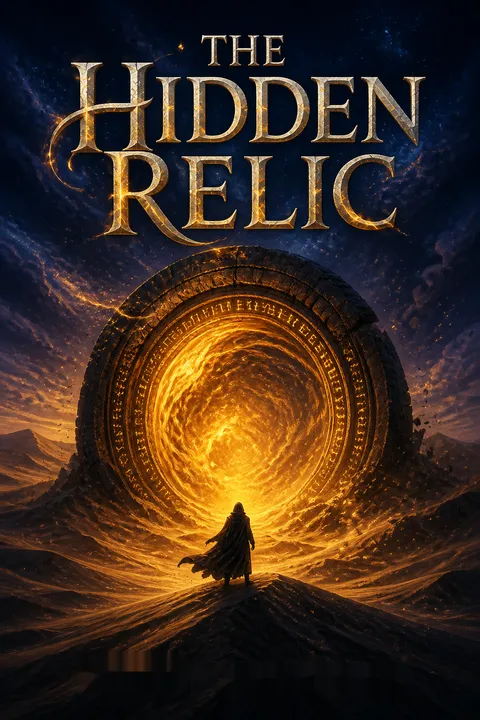


Plot Summary
Prologue
Killian enters Stonewater to destroy the machines that supply the Primate with essence, while the old runemaker Evrin Evenstar climbs toward the Pinnacle to destroy a secret hidden there. A fall leaves Evrin injured, but he reaches the chamber after Killian’s explosions bring down the luminous barrier.
Inside, he finds an ancient book and activates a destructive cube, only for it to roll away before it can destroy the book. The blast leaves Evrin trapped beneath rubble. A templar discovers the damaged book and takes it to the Primate, placing the secret Evrin tried to protect into the hands of the enemy.
The opening sets two missions in motion and makes their unequal outcomes matter: Killian succeeds in crippling the Primate’s machinery, while Evrin fails to destroy the knowledge that may undo that victory. The physical accident is more than an obstacle. Evrin’s old injuries and failing strength expose the cost of guarding history alone, while the book’s survival shows how easily a plan can be defeated by chance. The barrier’s disappearance also transforms a public symbol of faith into a dangerous archaeological discovery. The prologue asks whether knowledge can be protected by concealment, then answers only that secrecy is fragile when power is at stake.
A War Without Essence
Lord Marshal Miro Torresante studies a rune-lit battlefield simulator in Sarostar, trying to decide where Altura can resist the Black Army with its dwindling stores of essence. Veteran Marshal Beorn warns that shifting troops north could expose the south, while Miro suspects the Primate has also run short of power.
The arrival of Hazaran emissary Jehral and Castlemere trader Hermen Tosch seems to promise diplomacy, but Jehral’s questions focus on Miro’s sister, Ella, and her unusual enchantments.
High Lord Rorelan then arrives to complain that Ella is spending scarce essence on experiments with a new companion. Before Miro can find her, an explosion shakes the Crystal Palace. He heads toward the noise, unaware that Ella’s work has already made her a target.
Miro’s opening problem is strategic, but the scene quietly converts military scarcity into personal danger. He treats Jehral’s questions as diplomatic noise because he is exhausted and focused on the map; that misreading leaves Ella exposed. Rorelan’s complaint also frames innovation as a political liability when a society depends on a finite magical resource. Miro’s habits of calculation and boldness are useful in war, yet neither guarantees that he can read people as accurately as troop movements. The explosion interrupts planning with consequences that cannot be managed from a simulator. In this world, power is both a material supply and a relationship someone may exploit.
The Bladesinger in the Dead
After the Black Army crushes the allied attempt to free Ralanast, young Tapel searches the battlefield for valuables because he and his mother, Amelia, are starving. Among hundreds of corpses, he finds an old Alturan whose hand still grips his ankle. The stranger has killed scores of legionnaires but has suffered a severe throat wound and cannot speak.
Tapel and Amelia carry him home and feed him with what little they can buy from the battlefield’s discarded jewelry. Weeks later, Tapel presses the man to try again until he whispers his name: Rogan Jarvish, once the leader of Altura’s bladesingers. Rogan’s recovery gives Tapel’s household a living link to the war and to the resistance still possible in occupied Halaran.
Tapel’s discovery turns battlefield scavenging, an act of hunger, into an accidental rescue. His first response to the dead is revulsion, then necessity, and finally a child’s stubborn attention to the one survivor. That progression makes Rogan’s recovery depend on care from people the armies would treat as insignificant. Rogan’s lost voice mirrors the defeat of Ralanast, but his name returns through Tapel’s insistence, not through military ceremony. The scene also gives heroism a bodily scale: the legendary fighter is helpless, ravenous, and dependent on a poor family. His reputation can matter again only if ordinary people choose to shelter him.
The Primate Takes the Book
Primate Melovar Aspen surveys Stonewater’s wrecked harvesting plant and extraction system, then finds the Pinnacle reduced to rubble. His second-in-command, Moragon, concludes that the attack on the machinery and the destruction at the summit may have been separate missions. Melovar learns that a surviving pilgrim has been confined in Salvation, visits the dungeon, and takes from him a badly burned book made of Evermen metal.
To keep the book from anyone else, Melovar kills the templar who concealed the prisoner’s survival and orders the old man held. The destroyed refinery has ended the Assembly’s ordinary source of essence, but the rescued pages give Melovar a new lead: diagrams of a vast relic and a pool of power.
Melovar’s response to loss is not resignation but appropriation. He turns the prisoner’s survival into a source of information and kills a subordinate for withholding it, making knowledge inseparable from coercion in his regime. The damaged book becomes a substitute for the machinery he has lost: he does not yet understand it, but believes its promise can restore his control. Moragon’s distinction between two attackers matters because it hints that the Pinnacle’s secret is not merely another supply system. Melovar’s curiosity might resemble scholarship, yet his methods reveal its governing purpose. He seeks understanding chiefly to recover the capacity to command other lives.
Ella Vanishes in Green
By the Sarsen River, Ella practices elemental magic with Shani, a Petryan exile, while bladesinger Bartolo watches and teases them both. Shani’s skill exposes how much Ella still depends on enchanted tools rather than physical control, but their lesson is interrupted when the grove seems to repeat itself.
Ella recognizes an illusion and calls for Shani; Jehral emerges from the false greenery and knocks Ella unconscious. Miro soon discovers that Ella and Shani have disappeared, along with Jehral and Hermen. Though Rorelan orders Bartolo to stay for the war, Miro releases him to pursue the captors while he answers an attack on Altura’s eastern border. Ella wakes days later in a dark, magically confined wagon beside Shani.
The capture exploits the very discipline Ella is trying to acquire: she can identify that perception has been manipulated, but hesitation about harming Shani leaves her open to attack. Her power is real, yet it cannot replace trust, judgment, or the ability to act under uncertainty. Shani’s presence complicates the abduction because she is neither merely a hostage nor a passive companion; she is a fellow practitioner with her own reasons to distrust the Hazarans. Miro’s choice to send Bartolo after them while returning to the front exposes the central wartime bind: personal loyalty and public duty pull in opposite directions, and neither can be wholly abandoned.
Miro Faces the Nightshades
With Black Army forces testing Altura’s borders, Dunfolk healer Layla asks Miro to protect her people from Veznan nightshades, living trees that have already killed Dunfolk hunters. High Lord Rorelan refuses to spare troops from the south, so Miro goes himself.
Layla’s archers devastate the crossing soldiers with ordinary arrows, then Miro draws the larger nightshade away and uses a new lightning effect in his armoursilk to burn it before cutting it apart. He helps the hunters destroy the second creature and later bargains with their leader for bowmakers Prayan and Aglaran. Back in Sarostar, Miro pushes for rail-bows, weapons that could make unenchanted archers useful despite the allies’ dwindling essence.
Miro’s encounter with the Dunfolk changes his understanding of military value. Their arrows achieve what expensive essence-powered weapons cannot, and their knowledge comes from sustained practice rather than magical privilege. His decision to go north is also a moral correction: the Dunfolk saved Altura, so leaving them to face the nightshades alone would make alliance a one-way convenience. The victory does not erase the cost; it shows Miro that his army must combine forms of skill instead of treating lore as the only route to power. The proposed rail-bow extends that insight into strategy, turning a local rescue into a practical answer to a resource crisis.
Amber’s Failed Escape
In a prison camp outside Ralanast, Amber holds a dying child and watches prisoners disappear into an unknown fate. Pregnant and determined to survive, she joins Beatta and the older prisoner Ness in an escape attempt.
Ness stabs a guard to draw attention; Amber uses a stolen nightlamp to blind the others, and Beatta cuts through the fence. Beyond it, Beatta falls into a spike-lined pit and dies as guards seize Amber. Afterward, Amber realizes that resistance without a plan will only cost more lives.
When guard Hugo threatens her, she approaches High Lord Moragon and submits to his assault in exchange for food, shelter, and protection from removal to the feared vats. Moragon believes her unborn child is his, giving Amber leverage to endure captivity.
Amber’s survival strategy is morally painful because the camp has made dignity a resource that guards can ration. Her attempted escape depends on collective courage, but the spike pit turns apparent freedom into a trap, leaving her with grief as well as renewed caution. Her later bargain is not consent freely given; it is a calculation under threat, directed toward protecting a child who cannot protect itself. The distinction matters because Amber’s agency remains present even when her choices are constrained. She learns to use the oppressor’s assumptions about her body and the child to create a small zone of safety, while carrying the private cost of that compromise.
Rogan Builds a Resistance
After recovering enough to walk, Rogan explores occupied Ralanast with Tapel and sees Amelia carrying a basket of prismatic orbs. When two legionnaires corner her, Rogan kills them with his walking stick and takes their sword, then learns Amelia is helping a small underground resistance.
He meets Prince Tiesto Telmarran, heir to Halaran, and soldier Marcus Toscan; Rogan offers to train the citizens and promises contact with his former pupil, Miro. Amelia hides recruits and supplies in abandoned storehouses, disguising weapons as funeral goods carried through the city.
Rogan sets a timetable: by summer’s end, they will be ready to free the prison camp and trigger an uprising. His battered body is no longer suited to reckless solo combat, but his knowledge can make many others fighters.
Rogan’s return to action is defined by a change in scale. Once he led elite swordsmen; now he trains farmers, old veterans, and frightened citizens, while Amelia supplies the organization that his martial expertise cannot provide. His injury forces him to accept leadership as something other than personal prowess. The hidden weapons carried under funeral cloth also make grief perform two functions: the occupiers read mourning as submission, while the resistance uses it as cover. Rogan’s plan depends on patience and coordination, a sharp contrast to the warrior’s instinct to meet danger head-on. His usefulness lies in teaching others to act without needing him at the centre.
The Devil of Lyra
Jehral takes Ella and Shani by ship toward the Hazara Desert, where Ella learns that the prince has ordered her return despite their earlier friendship. Jehral explains that Prince Ilathor Shanti is rebuilding the abandoned city of Agira Lahsa and has invaded Petrya. When the three cross the desert for Torlac, they must refill their water at the Oasis of Lyra, home to a creature said to have killed most travelers.
A vast sandworm erupts beneath Ella’s horse and swallows her. She electrifies it from inside, then uses a heated dagger to force it to spit her out. Shani and Jehral escape with Ella’s horse, though Jehral is badly wounded. They reach Torlac and find Ilathor’s forces occupying the town.
The desert journey turns captivity into an uneasy negotiation. Jehral’s anger is grounded in genuine betrayal, yet his continuing care for Ella shows that political obedience has not erased their former friendship. The sandworm encounter makes the cost of the journey concrete: survival depends on Ella using her enchantress’s dress creatively, while Shani’s fire and Jehral’s riding skill help the group escape. Ella is no longer simply a protected asset being delivered to a prince. She makes decisions under physical danger and accepts that her knowledge can serve people whose aims she does not fully trust. The threatened passage through the desert also foreshadows the larger question of whether power can be redirected toward liberation.
Lake Halapusa Freezes
Prince Ilathor asks Ella to build a bridge across Lake Halapusa so his army can reach Tlaxor, but she cannot span such a distance with her earlier magic. Instead, she and Shani devise a way to transfer the lake’s heat into saltwater tanks beneath Torlac. Ella enchants lengths of rope and a ring of staves, then uses the cooling autumn weather to freeze the lake.
Ilathor’s hidden army crosses under an illusionary dust storm and storms the tiered city. Ella climbs the fortified wall to open a gate while Shani and Bartolo fight alongside the riders. They take Tlaxor, but Haptut Alwar escapes across the ice and falls through as it melts. Shani has helped free her people, though the victory begins in blood.
Ella’s solution is an act of systems thinking, not a single spectacular spell. She links water, salt, temperature, rope, and runes into an operation that others can build and sustain, making collaborative knowledge more decisive than raw magical force. Shani’s participation also changes the meaning of the victory: she is fighting for a Petrya no longer ruled by the man who murdered her family, not for a foreign conqueror. Yet the assault remains ethically unstable. The lake’s freezing saves the army and opens the city, while the melting becomes an execution method for Haptut. The scene refuses to make liberation painless or to pretend that a just cause automatically produces gentle means.
Ralanast Rises Again
Miro convinces Master Enchanter Goss to develop rail-bows by demonstrating their accuracy to Rorelan, then leads a dangerous assault across the Sarsen at the ruined Bridge of Sutanesta. A Halrana colossus destroys the enemy dirigibles and breaks the wall, allowing allied troops to recover buried ironmen.
Miro’s forces push through Halaran while Rogan’s uprising grows inside Ralanast. At the prison camp, Amber organizes prisoners, uses an enchanted heatplate to turn gravel into weapons, and raises a green beacon for Rogan.
Rogan’s fighters break in and free thousands. The city rises at dawn, and Miro’s army enters through an opened gate. He finds Amber alive, but her baby has been taken, and their reunion offers comfort without resolving her loss.
The liberation succeeds because separate forms of action arrive at the same point: Miro’s engineering, Rogan’s training, Amelia’s logistics, and Amber’s organizing all matter. The rail-bow and heatplate make ordinary materials militarily consequential, reducing dependence on the essence system the Primate has monopolized. Amber’s beacon is a particularly important reversal: the prisoner who once needed rescue becomes the signal that coordinates her rescuers. Yet victory does not restore what captivity has taken. Miro and Amber meet again, but the missing child keeps their reunion unfinished. The episode treats liberation not as a clean return to the past, but as the beginning of repair under conditions shaped by trauma.
The Dead Join Melovar
Studying Evrin’s damaged book, Melovar identifies a vast hidden store of essence and bargains with the exiled Akari leader, Dain Barden Mensk. The Akari can animate the dead and extract essence from them, so Melovar promises them a return to the empire and access to the relic in exchange for their warriors. He then authorizes facilities that kill prisoners to supply essence, while Templar Zavros oversees the work.
The arrangement gives Melovar’s armies fresh power, but it also makes the Akari dependent on his shipments and places the Primate’s ideals in direct conflict with his actions. After Ralanast is freed, Moragon’s soldiers abduct Amber from the city and take her to the army camp, where she is separated from the infant she bore.
Melovar’s alliance reveals the contradiction at the heart of his political project. He condemns the old houses for inequality and promises unity, yet replenishes his power through mass killing and treats prisoners as industrial material. The Akari are not simply reinforcements; their need for essence gives Melovar a means of controlling allies who possess a different and disturbing form of lore. Dain Barden’s bargain is driven by the desire to end exile, making his choice understandable without making it safe. Amber’s renewed captivity echoes her earlier imprisonment but raises the stakes: she has now tasted freedom and motherhood, so the regime’s control reaches directly into what she most wants to protect.
The Draugar Break the Army
As Ilathor’s army advances toward Tingara, it meets the Akari’s disciplined draugar, warriors who keep fighting after wounds that would kill the living. Ella, Shani, and Bartolo help the Hazarans escape, using fire and Ella’s newly made wand to disable the dead. The allied army is nevertheless defeated on the Azure Plains.
Miro had gone behind enemy lines searching for Amber, who Moragon’s men seized after Ralanast’s liberation, and returns too late to join the battle. Meanwhile, Ella refuses Ilathor’s order to remain protected and leaves alone to find the source of the Akari’s strength. She discovers a facility where prisoners are killed and their life energy processed into essence, then resolves to destroy it and free those held there.
The draugar transform familiar battlefield assumptions into liabilities: courage and sword skill cannot win if the enemy does not respond to injury as a living opponent would. Fire proves useful, but the defeat exposes the allies’ dependence on information they do not yet possess. Miro’s absence is emotionally costly because his attempt to save Amber leaves the army without its commander at a decisive moment; his personal duty and military responsibility become impossible to reconcile cleanly. Ella answers the defeat by refusing to wait for protection or permission. Her discovery of the essence facility gives the enemy’s seemingly supernatural advantage a material source, turning horror into something the allies can identify and potentially dismantle.
Angelmar Is Broken
At the Angelmar facility, Ella finds prisoners being processed for essence and begins an assault while using her enchanted dress and wand. There she encounters Killian, who had followed Evrin’s prisoner cart and been captured after trying to help him escape.
They share what they know: Killian explains that Evrin destroyed Stonewater’s essence machines but failed to destroy an important book, while Ella recognizes Evrin’s name from the Lexicons. They agree to work together.
Killian confronts Zavros, threatens his research, and frees a boy strapped into an experimental chair; the prisoners then help destroy the facility. The pair learn that the Primate is in Seranthia and that another essence site remains. Their search for Evrin now points toward the city and the book Melovar carries.
The reunion shifts the story from parallel quests to cooperation. Ella brings broad magical training and a political purpose; Killian brings direct knowledge of the Primate’s operations and a personal need to understand his own unusual body. Their agreement is practical, but it also rests on a trust that neither has fully earned or tested. Angelmar makes the regime’s abstraction brutally visible: essence is not merely a resource shortage but the residue of murdered people. Zavros embodies the danger of knowledge severed from ethical limits, while Killian’s intervention stops an experiment rather than replacing it with another theory. The destroyed facility gives the allies a concrete victory, but the remaining site and the book ensure that the larger threat persists.
Seranthia’s Gates Become a Trap
After the allies retake Halaran and Torakon, the armies converge on Seranthia, where Ilathor’s Hazarans attack the city’s defenses. The first assault is costly and fails to secure the gates. Bartolo and Shani remain with Jehral’s vanguard, even as the prince presses them toward another attack.
Miro, traveling separately, persuades Buchalanti sailmaster Scherlic to take the storm rider Infinity against the imperial fleet, ending the city’s last chance of escape by sea.
On the outskirts, Ella and Killian see the Primate’s ship approach the Sentinel, the ancient statue in Seranthia’s harbor. They realize Melovar is heading there for the relic described in Evrin’s book. Ella leaves to summon Ilathor, while Killian prepares to reach the island by swimming.
Seranthia gathers the campaign’s divided loyalties into one dangerous threshold. Ilathor’s preference for speed risks repeating the mistakes of the assault on Tlaxor, while Bartolo and Shani argue for restraint from within the force they are committed to serve. Scherlic’s choice matters because neutrality has become a political decision with consequences, not a safe position outside history. Meanwhile, Ella and Killian recognize the Sentinel as the probable destination of the hidden relic, but their different responses expose their priorities: Ella seeks allies, while Killian acts before the opportunity closes. The city’s defenses create a trap for the Hazarans, and the relic’s location creates a more consequential one for everyone.
The Sentinel Opens
At the Sentinel, Melovar identifies a hidden entrance and reaches the chamber containing a pool of essence and an oval portal sealed by three runic plates. Evrin tries to stop him, revealing that the portal leads to the place where the Evermen went, but Melovar removes the seals. Miro arrives and shoots the Primate into the pool, where the essence consumes him despite the elixir in his body.
The portal’s beacon begins to sound, and Evrin warns that it can only be silenced from the other side. Killian crosses the pool unharmed, replaces the seals, and steps through the portal so Evrin can close it behind him. Outside, the armies finally overwhelm Seranthia’s defenders; Moragon falls from the palace while trying to seize Amber’s baby.
The climax makes the story’s deepest conflict physical: a pool that can power civilization also destroys anyone who touches it, and the portal offers possibility at the price of catastrophic exposure. Melovar’s death is not simply military defeat; the substance he treated as an instrument consumes him, turning his own dependence on elixir into the mechanism of judgment. Killian’s immunity gives him the one capacity no one else can supply, but using it means accepting an unknown destination and surrendering any guarantee of return. His act is not a triumph over uncertainty so much as a choice made because others cannot safely make it. The simultaneous fall of Seranthia’s commanders ends one regime while opening a more ancient danger.
A World Without Gods
With the portal resealed and Seranthia secured, Miro finds Amber, who has recovered her son from Moragon’s chambers. She tells Miro the child is Igor’s, and Miro accepts both mother and baby, offering to help name him. Ilathor and Miro set aside their grievance over Ella’s capture after Jehral reminds them that victory belongs to people from many lands.
Dain Barden withdraws the Akari to the north rather than continue the war. Then Evrin reveals that he is the ancient Lord of the Sky, one of the Evermen, and that the gods enslaved humanity and harvested people for essence. He gave the nine Lexicons to human loremasters to help them revolt. He believes Killian may be his descendant, and fears he has sent his own kin through the portal.
The resolution repairs relationships without pretending that loss can be reversed. Miro’s acceptance of Amber’s son refuses to make biology or wartime shame a condition of love, while the agreement with Ilathor reframes victory as collective rather than proprietary. Evrin’s history radically revises the moral authority of the institutions that shaped the world: the sacred cycles were not merely inaccurate but designed to obscure enslavement. Yet his confession does not deliver uncomplicated liberation. Humans inherited the capacity for lore and self-rule, along with the possibility of reproducing domination. The final uncertainty about Killian personalizes the cost of revelation. Knowing the truth may create a better political future, but it cannot restore the person who made that knowledge possible.
Epilogue
The Primate’s body carried both essence and elixir into the pool beneath the Sentinel. Their mixture slowly altered the pool, corroded the stone around it, and drained away until the seals lost their power. The portal opened briefly, sounding its beacon, and a red-haired man in black stepped into the chamber.
Sentar Scythran, the Lord of the Night, had returned to the world the Evermen once ruled. He found the pool empty and the route to his brothers closed, but immediately began planning how to gather an army and refill it.
The ending overturns the apparent finality of Melovar’s defeat. His body is gone, but the substance that made his rule possible has left a consequence behind: elixir contaminates the essence pool, and the changed mixture defeats the protections Evrin believed secure. The return of Sentar Scythran also turns the book’s theological revelation into an immediate political threat. Humanity once escaped the Evermen by revolt, but the closing image suggests that the old hierarchy may return through a new army and a newly opened door. The epilogue’s irony is exact: Melovar’s attempt to monopolize power helps awaken the tyrant whose original crimes gave humanity its freedom struggle.
Analysis
The Hidden Relic builds its political argument through competing systems of power. The houses depend on specialized lore and scarce essence; the Primate promises to abolish their rivalries, yet his effort to impose unity depends on surveillance, prison camps, and the conversion of human bodies into fuel. His program is not exposed as false because equality is a foolish aim. It fails because he treats the people who would inhabit that equal world as materials to be managed. His central contradiction is practical as well as moral: coercion destroys the trust and participation any durable political order requires.
Against this model, the book repeatedly gives consequential work to people outside the established centers of authority. Tapel rescues Rogan. Amelia moves supplies through occupied streets. Amber organizes prisoners. Layla and the Dunfolk contribute a military skill that established commanders undervalue. Ella adapts lore across disciplines, while Miro changes strategy when he finally recognizes the value of archery and collaboration. These are not decorative subplots. Each supplies a capability that the ruling institutions lack, and each makes liberation depend on relationships rather than a single extraordinary warrior.
The romance threads sharpen the same question of agency. Miro’s care for Amber and his protectiveness toward Ella are sincere, but his instinct to keep loved ones safe can slide into the belief that he must control their risks. Ella resists that assumption, just as Shani’s history makes coerced protection feel dangerously close to possession. The story treats affection as meaningful when it allows another person to choose, not when it claims authority over them.
Evrin’s revelation reframes the world’s sacred history as political memory: the Lexicons helped the oppressed challenge their gods, but later generations inherited lore without its original account of liberation. The portal therefore embodies both technological and historical danger. Closing it cannot erase the past, and the epilogue shows how a defeated regime can leave material consequences behind. The novel’s most durable lesson is that no institution, however benevolent its stated purpose, should control knowledge and energy without scrutiny. Freedom requires shared power, public memory, and the ability to question the stories that make hierarchy seem natural.
Review Summary
People Also Read
Characters
Miro Torresante
Restless battlefield commanderMiro is Altura’s Lord Marshal, a gifted bladesinger whose instinct is to meet danger personally. He studies troop movements obsessively, but his decisions are also governed by fierce loyalty to Ella, Amber, and the soldiers who follow him. This combination makes him brave and effective, while leaving him prone to treating every loss as proof that he should have acted differently. Miro’s most important strength is adaptability: he accepts the Dunfolk’s archery, backs the rail-bow, and builds campaigns around resources others overlook. His challenge is learning that responsibility does not mean controlling every person’s fate. He seeks a form of leadership that can protect allies without turning affection into possession.
Ella
Inventive Alturan enchantressElla is Miro’s sister and a gifted enchantress, curious about other kinds of lore and unwilling to confine herself to the Academy’s inherited rules. She learns from Shani, studies animator and illusionist methods, and repeatedly turns unfamiliar materials into practical tools. Her compassion makes her attentive to ordinary people caught inside military decisions, but she is not politically naïve: she recognizes that liberation can become another form of conquest if leaders do not restrain themselves. Ella’s independence sometimes puts her in danger, especially when she refuses to wait for permission or protection. She is driven by a belief that knowledge should serve human possibility, and by a need to understand the people she loves without surrendering her own judgment.
Killian
Runebearing orphanKillian is a former street thief from Salvation who served the Primate before turning against him. He is unusually resistant to essence and can carry runes on his own skin, though he does not understand the source of that capacity. His craving to know who he is comes from a life without reliable family or home, not from vanity; he wants an account of himself that is more substantial than the roles other people assigned him. Killian is agile, resourceful, and guarded, with a tendency to pursue answers alone even when cooperation would be safer. His affection for Ella unsettles that isolation. He wants to be more than the person his desperate past required him to become.
Evrin Evenstar
Ancient keeper of loreEvrin is an old runemaker whose knowledge reaches back far beyond the history recorded in the Lexicons. He has spent centuries guarding dangerous truths and intervening only when a relic threatens to give one ruler too much power. His secrecy comes from protective instincts, but also from a paternal assumption that other people are safer when kept ignorant. The war forces him to confront the limits of that approach as Melovar acquires the book Evrin tried to destroy. Despite his immense knowledge, age and injury leave him physically vulnerable, making him dependent on those he once tried to protect from the burden of his history. He carries grief for a lost human love and guilt over the price of his choices.
Primate Melovar Aspen
Unifying zealotMelovar leads the Assembly of Templars and imagines a world united under one authority, without the rival houses and their competing lore. His critique of inequality and endless political division contains genuine insight, which helps explain his appeal. Yet he treats disagreement as an obstacle to be removed and regards human beings as resources when his project requires them. Elixir sustains his body and intensifies his authority, while the loss of essence makes him increasingly desperate to recover control. Melovar’s self-image as a necessary reformer shields him from recognizing how closely his methods resemble the oppression he claims to end. He is most dangerous when he mistakes a desired outcome for permission to use any means.
Amber
Prisoner who organizesAmber is an Alturan enchantress and a close friend of Ella, with a tender manner that does not prevent her from enduring brutal circumstances. Captivity forces her to make decisions about food, safety, pregnancy, and escape with almost no control over the conditions around her. She protects other prisoners when she can and becomes a capable organizer, using both practical judgment and her training in enchantment. Her love for Miro is longstanding, but she is also shaped by marriage, grief, and responsibilities beyond romance. Amber’s defining quality is not passive endurance; it is her ability to convert limited choices into leverage, while remaining painfully aware of what those choices cost.
Prince Ilathor Shanti
Hazaran war princeIlathor is the son of the Hazaran Kalif and the military leader bringing the desert tribes together as Raj Hazara. He combines charisma and strategic ambition with a sincere desire to free Petrya and help reshape the fractured empire. His feelings for Ella are genuine, but his first response to her refusal is to act on his authority rather than trust her choice. As a commander, he is willing to risk lives for speed and victory, which brings him into conflict with more cautious allies. Ilathor is neither a simple liberator nor merely a conqueror: he must learn that good intentions do not exempt a leader from accountability to the people his army affects.
Rogan Jarvish
Wounded bladesinger teacherRogan is Altura’s former blademaster, a veteran whose body bears the cost of a battle that left him unable to speak. Tapel and Amelia nurse him back to strength in occupied Ralanast. Rogan’s skill is formidable, but his deeper value lies in teaching people who have never been soldiers how to defend their city. He can be blunt, impatient, and uncomfortable with vulnerability, yet he recognizes courage in people others overlook. His relationship with Amelia brings affection into a life organized around duty, while Tapel draws out a protective, almost parental side. Rogan’s leadership evolves from personal combat toward building a resistance that can continue without depending on a single hero.
Shani
Exiled Petryan elementalistShani fled Petrya after her brother, sister-in-law, and nephew were executed by the High Lord. A trained elementalist, she is physically confident, sharp-tongued, and wary of pity. Her anger is not an abstract appetite for revenge; it grows from the loss of her family and the fear that her people will remain under the same tyranny. She teaches Ella to control elemental lore and becomes an essential ally in the campaign against Petrya. Beneath her hard exterior is a capacity for tenderness that she has rarely been allowed to express. Her friendship with Ella gives her room to imagine a future beyond survival and vengeance.
Bartolo Thorn
Protective bladesingerBartolo is an accomplished Alturan bladesinger assigned to protect Ella and keep watch over Shani. He enjoys verbal sparring and presents himself as vain, but his loyalty becomes unmistakable when the women are in danger. His skills make him a valuable fighter, while his pride can make him slow to acknowledge fear or dependence. Shani’s presence draws out a more vulnerable side, and their growing bond challenges the solitary image he has built around being a bladesinger. Bartolo is brave without being invulnerable; he understands that courage often means staying beside someone when the outcome is uncertain.
Moragon
Melding war commanderMoragon is the former Emperor’s executioner, now High Lord of Tingara and commander of the Black Army. His grafted metal arm gives him formidable strength, while the elixir’s taint binds him to Melovar’s political and bodily system. Moragon is disciplined and capable, but his loyalty to the Primate is reinforced by ambition and the promise of a unified empire. He can discuss strategy in a cool, practical manner while participating in atrocities against prisoners. His attachment to the child he believes is his reveals a more personal desire for continuity, though it does not erase the violence he commits.
Dain Barden Mensk
Exiled Akari leaderDain Barden leads the Akari, a people exiled to the frozen north for their practice of animating the dead. He is physically imposing, proud of his people, and eager to restore their place in the wider world. His bargain with Melovar arises from a legitimate grievance, but the alliance makes him complicit in a war whose aims he does not fully control. Barden values honor and takes promises seriously, even when the person making them has demonstrated little trustworthiness. His relationship to the draugar is distinct from Melovar’s use of prisoners: he sees Akari dead as continuing to serve their own community.
Templar Zavros
Unrestrained researcherZavros is the Assembly’s most knowledgeable specialist in essence and the creator of the Primate’s elixir. He believes knowledge can improve society, but he places discovery above consent and human welfare. His experiments on prisoners expose the gap between intellectual curiosity and ethical responsibility. Zavros is useful to Melovar because he can turn strange lore into functioning systems, yet he is not a simple follower; his real loyalty is to the research the Primate permits him to conduct. He represents the possibility that cruelty can be rationalized as progress when a researcher treats subjects as instruments rather than people.
Marshal Beorn
Miro’s veteran counterweightBeorn is an experienced Alturan marshal whose steadiness balances Miro’s daring. He advises caution, watches the supply situation closely, and accepts responsibility for difficult military decisions. Their relationship is built on mutual respect rather than blind obedience: Beorn challenges Miro when a plan seems reckless, but he can recognize when an unconventional idea has merit. His practical temperament helps keep the army functioning through scarcity and exhaustion. Beorn’s loyalty is expressed through candid counsel and consistent service, not through flattering agreement.
High Lord Rorelan
Altura’s cautious rulerRorelan governs Altura while Miro directs its military effort. He is an administrator under extraordinary pressure, responsible for food, essence, and the defense of a threatened homeland. His caution is often sensible, but his insistence on preserving the existing balance can make him resist innovations needed to survive. His clashes with Miro arise from competing responsibilities rather than personal hostility. Rorelan must judge how much risk a besieged country can afford, while Miro sees the cost of waiting on the battlefield.
Tapel
Boy who finds RoganTapel is a hungry boy living with his mother in occupied Ralanast. He searches a battlefield for valuables to keep them fed and finds the wounded Rogan among the dead. His curiosity and persistence help Rogan recover, even when adults caution him not to push too hard. Tapel is both vulnerable to the war and eager to prove himself useful. His admiration for Rogan gives him a sense of possibility, while his bond with Amelia keeps his courage grounded in family life.
Amelia
Resistance organizerAmelia is Tapel’s mother, a determined woman surviving the occupation of Ralanast. She helps move supplies and weapons through the city under the cover of ordinary domestic and funeral routines. Her practical intelligence complements Rogan’s military training, and she understands that a resistance needs food, shelter, secrecy, and trust as much as it needs fighters. Amelia is compassionate but not timid; she takes risks for her people and refuses to let Rogan’s authority dictate her choices.
Layla
Dunfolk healer and scoutLayla is a Dunfolk healer whose people are skilled at hunting, stealth, and archery. She asks Miro for aid against the Veznan nightshades and proves herself a capable guide in dangerous terrain. Her direct manner and quiet competence challenge the assumptions of commanders who overlook the Dunfolk because their lore is less visible. Layla’s loyalty is reciprocal: she helps Miro, then accompanies him because she believes a debt of mutual protection remains between their peoples.
Jehral
Hazaran emissary and scoutJehral is a skilled Hazaran warrior and trusted servant of Prince Ilathor. He first approaches Miro’s court as an emissary, then captures Ella under orders from the prince. His actions strain his friendship with Ella, but his anger reflects a genuine sense of betrayal after she concealed her identity and left the Hazarans. Jehral is proud, disciplined, and deeply loyal, yet his continued concern for Ella shows that obedience has not erased personal affection. He also serves as a bridge between the desert tribes and the other houses.
Prince Tiesto Telmarran
Heir to occupied HalaranTiesto is the heir to Halaran, forced into leadership while his people live under occupation. He relies on Rogan’s military experience and Marcus’s steadfast support, but must eventually lead fighters himself. Tiesto’s courage is real even when fear is present; he does not mistake noble birth for battlefield competence. He wants to restore his people’s freedom and learn what kind of ruler they need, rather than merely inherit authority.
Marcus Toscan
Tiesto’s loyal soldierMarcus is the soldier who helps Tiesto escape Ralanast and remains beside him as the resistance develops. Practical and brave, he is among the first to question Rogan’s plan and then commits himself to carrying it out. His loyalty is personal rather than ceremonial: he stays close to Tiesto because he believes in him and knows what Halaran stands to lose. Marcus gives the heir a dependable companion while helping turn an isolated claimant into a leader.
Prince Leopold
Disgraced Alturan princeLeopold is an Alturan prince whose flight during the defeat at Ralanast leaves him despised by many of the prisoners. Captivity and grief have stripped away much of his former authority, and he often appears disconnected from those around him. Yet he retains knowledge of people and events that can help the resistance. His presence complicates easy judgments about cowardice: the camp preserves the stigma of his past even while revealing the damage he carries.
Plot Devices
Essence and elixir
Power with a human costEssence is the energy used to animate constructs and activate magical devices. In the houses, it is generally extracted from plant matter and lignite, while the Primate’s elixir, made from essence, prolongs life and heals wounds but creates dependence. The destruction of Stonewater’s harvesting, extraction, and refining machinery initially deprives both armies of a vital resource. Melovar later restores supply through facilities that kill prisoners, and the Akari use their own method of extracting energy from the dead. Essence connects military logistics to moral choice: every faction’s power depends on who or what it is willing to consume.
The Evermen book and portal
A hidden history becomes a thresholdThe damaged metallic book recovered from the Pinnacle contains diagrams of an immense relic powered by a pool of essence. Melovar uses it to identify the Sentinel as the relic’s hidden location, where a portal is protected by three seals. Evrin tries to keep the portal closed, while Killian’s immunity to essence lets him cross the pool and act where no one else can. The device transforms the war from a struggle over empire into a question of whether the ancient Evermen can return. Its presence also gives the book’s surviving pages consequences far beyond their value as historical evidence.
Lexicons and runes
Knowledge made usableThe Lexicons preserve the knowledge of different schools of lore, while runes let trained users activate that knowledge through objects such as armoursilk, zenblades, nightlamps, cuffs, and bows. Because each discipline has distinct abilities and limitations, characters must learn from one another rather than rely on a single magical solution. Ella’s experimentation creates tools for battlefield problems, Miro’s rail-bow makes archery more effective, and the Primate’s damaged book points toward a hidden relic. The Lexicons are both practical manuals and symbols of access to knowledge, although the history of their creation is more complicated than the houses believe.
The rail-bow
Skill amplified without wasteThe rail-bow is an enchanted bow designed to improve aim rather than waste essence strengthening every arrow. Master Enchanter Goss develops the idea with Miro after the Dunfolk demonstrate how effective ordinary archery can be. Miro first secures approval by risking a demonstration against Rorelan, then uses the weapons to suppress enemy mortar teams and support the crossing into Halaran. Its strategic importance comes from combining low magical expenditure with a human skill that can be taught and deployed at scale. The rail-bow represents a change from dependence on rare enchanted weapons toward tools that extend the abilities of many soldiers.
Illusions and signals
Perception turned into strategyHazaran illusion lore creates convincing images, sound, storms, and concealment that can mislead enemies without physically changing the terrain. Jehral’s group uses illusion to capture Ella, and the Hazarans later mask their advance on Tlaxor with a dust storm. Amber’s green light works in the opposite direction: it is a visible signal that lets Rogan’s fighters coordinate an assault with the prison uprising. Together, these devices show that control of what people see can protect a force, conceal its numbers, or connect allies across distance. Their effectiveness depends on interpretation and timing, not merely on magical strength.
Evermen Saga Series

About the Author


Download PDF
Download EPUB
.epub digital book format is ideal for reading ebooks on phones, tablets, and e-readers.








