

Plot Summary
Prologue
Sentar Scythran, once the Lord of the Night, has returned to Merralya without the essence that once made him powerful. He needs it to reopen the portal and bring his brothers home, so he travels north to Ku Kara, where the Akari keep a private supply.
When hunters refuse to guide him, Sentar breaks their weapons and forces one to bargain for his family’s survival. He later kills the guide when the man tries to turn back. At Ku Kara, Sentar’s immunity to essence convinces the necromancer Renrik that his old master has returned. Renrik gives him allies, stolen essence, and a ship. Sentar’s invasion begins.
The prologue makes the antagonist legible through action before the main plot begins. Sentar is ingenious and determined, but his survival instinct immediately becomes coercion: he saves himself by destroying the hunters’ means of subsistence, then treats their desperation as leverage. His return also reframes the apparent peace that follows the previous war as a temporary condition, not a secure settlement. The stolen essence and Renrik’s devotion establish the material and ideological resources behind the coming threat. Sentar believes domination is preparation for restoration, which makes his cruelty purposeful rather than impulsive.
A Wedding Becomes a Bomb
After years of separation and war, Miro Torresante asks Amber, his childhood love, to marry him, and she accepts. At their wedding in Sarostar, the Empire’s leaders gather beneath a ceremonial shrine supposedly sent by the reclusive scholar Evrin Evenstar. Ella, Miro’s enchantress sister, recognizes that the gift does not fit Evrin and notices smoke.
She activates Miro’s zenblade to scatter the guests. The shrine explodes before she can get everyone clear. Father Morten dies, while High Lord Rorelan and Miro and Amber’s young son, Tomas, suffer a mysterious poison. The celebration becomes a political emergency: the Empire’s leaders are injured or frightened, the culprit is unknown, and Tomas lies gravely ill.
The attack turns a private commitment into a public vulnerability. Miro and Amber’s marriage is meant to mark a future beyond war, but the gathering of leaders makes the ceremony an ideal target for someone trying to destabilize the new order. Ella’s suspicion matters because it converts intuition into intervention, though she cannot prevent all harm. The poison also changes the scale of the conflict: this is no longer merely an assault on political authority, but a wound inside Miro and Amber’s family. Their hope begins under pressure, and love immediately becomes a reason to act.
The Ocean Has No Map
Ella searches the Academy’s libraries for an explanation of the blast and finds an old account by explorer Toro Marossa. His journal describes black powder and a deadly substance that caused the same nail spots and sickness now afflicting Tomas and Rorelan. The islands where he found them lie across the Great Western Ocean.
Miro decides that whoever made the poison may know its cure, and prepares to sail west. An urgent message from Evrin adds that the Sentinel’s portal has briefly opened and someone may have crossed into Merralya. Ella turns toward Seranthia to learn more. Amber, unable to bear another goodbye, secretly boards Miro’s ship, the Delphin, before it sails.
The explorer’s journal changes ignorance into a direction, but not into certainty. Miro chooses a perilous voyage because action is the only form of care he can offer Tomas, while Amber’s decision to follow expresses a different refusal: she will not let danger make her absent from Miro’s life. Ella’s investigation runs alongside his, showing that knowledge itself is divided between practical evidence and the older mysteries of lore. The portal message links the poisoning to a broader threat, yet the characters must pursue separate routes before they can understand how closely those crises are connected.
Knives Below Deck
Once at sea, Miro learns that the Delphin’s officers distrust Captain Meredith and fear the voyage will carry them beyond safe waters. First mate Julian Carver turns their anxiety into a mutiny. He plans to kill Meredith, frame Miro, and leave Amber to appear suicidal. When the mutineers attack, Miro fights them in his cramped cabin, but Carver takes Amber hostage and kills the captain.
Amber uses an explosive charm, damaging the hold and forcing Carver to deal with a flooding ship. Carver throws Amber overboard and has her hauled back, using the ordeal to threaten Miro. The prisoners are locked away, but Helmsman Werner offers them a chance to escape in exchange for silence about the mutiny.
The mutiny exposes how quickly shared danger can become a market for self-interest. Carver reads the crew’s fear accurately, then uses it to make murder sound like orderly command. His treatment of Amber is calculated to turn Miro’s love into a weapon against him. Amber’s explosive response disrupts the plan but does not make her safe; it only changes the captors’ immediate priorities. Werner’s offer is not moral rescue, but a bargain designed to protect himself. Miro and Amber must therefore judge allies by what they risk, not by what they promise.
The Island's Hidden Coast
When the Delphin reaches the Ochre Isles, Miro and Amber kill Carver’s control of the ship by escaping in a longboat and cutting the anchor line, sending the galleon onto the reef. Stranded on Valetta, they find abandoned buildings, a dry dock, and the enormous remains of a ship. Amber discovers a map engraved into a wall, revealing a vast continent farther west.
They cross to a second island, where volcanic destruction has buried much of an old settlement. There they uncover the Intrepid, a small caravel preserved beneath a protective roof. A note from Toro Marossa confirms it was left on his failed expedition. They launch it and steer west, hoping its builders’ descendants can provide Tomas’s cure.
The islands turn the expedition from a search for a single poison into an encounter with a vanished civilization. Amber’s discovery of the map and the caravel gives the couple a future route, but their progress depends on reading abandoned objects as evidence. The preserved ship is both practical refuge and historical message, left by an explorer who could not complete the crossing. Their decision to sail west is not optimism without cost: it means accepting a destination they cannot imagine over the familiar direction home. Shared labor begins to replace the life they had planned.
Beyond the Known World
A storm destroys the Intrepid’s masts, but Miro and Amber keep the caravel afloat until a heavily armed ship intercepts them. Commodore Deniz captures them, then brings them to Emirald, capital of Veldria, a prosperous nation across the ocean. Emir Volkan explains that Veldria’s ancestors fled an ancient magical war and have avoided contact with Merralya.
He forbids Miro and Amber from returning east, but allows Miro access to a library while he considers recruiting him. Miro finds a reference identifying the wedding poison as arsenic mixed with black powder, though the book says only the Alchemists’ Guild knows the cure. When reports arrive that Narea has fallen to a northern army, Volkan sends Miro and Amber toward Gokan to investigate.
Veldria overturns the couple’s assumption that the ocean is merely an obstacle between home and its lost neighbors. They have entered a society that deliberately chose separation, and Volkan’s hospitality is inseparable from the threat of imprisonment. The alchemical book confirms the poison’s identity but withholds the one thing Miro needs, so knowledge becomes a controlled resource. News of Narea’s fall expands the journey into a military investigation. Volkan and Miro are wary of each other, yet both recognize that the northern crisis may be larger than either nation can manage alone.
Ku Kara's Forbidden Lessons
While Miro sails west, Ella follows Evrin’s suspicion that an Everman has crossed the portal and will seek essence. In Ku Kara, she learns that Renrik, a senior Akari necromancer, has fled with several followers, essence, and the ship Icebreaker.
Dain Barden refuses to teach her the Akari’s art, but Ella persuades him that her knowledge of several magical schools and her connections across the Empire could help dispel fear of his people. Necromancer Aldrik teaches her to animate the dead.
When his lessons stop short of restoring memory, the exiled master Barnabas shows Ella how to combine necromancy with animator’s runes. She gains the dangerous skill she needs, though both teachers warn that restoring too much personality can make the dead turn berserk.
Ella approaches the Akari as a student, but she must first become a credible political intermediary. Barden’s hesitation reflects a history in which outsiders have treated Akari knowledge as a tool to steal or fear. Ella’s offer is not a magical device, but the possibility of changing how other nations interpret that knowledge. Her education also complicates her goal: the technique she needs is not a neutral instrument, and its risks concern the very personhood she hopes to restore. The warnings about unstable memory are foreshadowing, but they also force Ella to consider the ethical cost of treating the dead as a means.
Wengwai Meets the Dead
Miro and Amber travel through Gokan with the Order of Flowing Water, a group of healers whose gentleness unsettles Miro’s soldierly assumptions. At Wengwai, they find refugees fleeing a vast army. Miro joins the defenders on the walls while Amber searches for the Alchemists’ Guild.
The invaders advance in disciplined formations, and their commander rises above the battlefield, identifying himself as Sentar Scythran. Miro recognizes that the army consists of revenants, soldiers killed and restored to fight again.
A bombardment breaks the wall and throws Miro into a heap of bodies. Inside the city, Amber reaches the Guild, where alchemist Tungawa admits that the Guild once supplied Sentar with a device for the wedding attack. He gives her the arsenic antidote.
The siege makes the conflict’s underlying machinery visible: Sentar’s army grows from the bodies of those it conquers. The revenants transform military defeat into a resource, erasing the ordinary limit between casualties and reinforcements. Miro’s realization arrives as his own body is buried among the dead, an image that collapses tactical knowledge into personal danger. Amber’s encounter with the Guild introduces responsibility without absolution. Tungawa helped build the weapon that poisoned Tomas, but his confession and the antidote show that institutions are not morally uniform. Their knowledge can harm, yet individuals within them can choose repair.
A Sword Against the Night
Wengwai falls, and the revenants march survivors out while necromancers collect the dead. From his hiding place, Miro sees Amber among the prisoners. He sneaks to a processing vat, steals essence, and uses his limited knowledge of runes to enchant a plain sword. Then he attacks the camp, cuts through its guards, and frees prisoners from their cages.
He finds Amber with Tungawa’s flask, but Sentar appears before they can escape. The Lord of the Night burns Amber with lightning and overwhelms Miro. He orders Miro bound for interrogation and commands that Amber be killed and raised as a revenant. Miro’s rescue attempt has freed many captives, but he and Amber are now in Sentar’s hands.
Miro’s raid is a desperate conversion of memory into action. He cannot recover his lost armoursilk or zenblade, so he reconstructs a weapon from partial instruction and stolen essence. The sword’s power is real, but it does not erase the difference between skill and overwhelming force. Miro frees strangers even while searching for Amber, preserving the communal impulse that Sentar’s rule tries to extinguish. Yet the rescue fails at its most intimate point. Sentar makes Amber’s threatened transformation the next instrument of control, exposing the limit of individual courage against a system built to multiply force.
The Enemy's Army of One
Sentar interrogates Miro, demanding military intelligence and threatening to torture Amber. Miro lies about Altura’s strength and refuses to reveal what could help the invasion, even as Sentar beats him nearly to death.
Tungawa secretly frees Amber, then returns for Miro while the wounded man is being moved south with Sentar’s army. They escape through ranks of revenants, whose lack of suspicion lets them pass where no direct flight could succeed.
Tungawa’s antidote flask has been emptied by brigands, but he gives Miro a book containing the formula and the Guild’s secrets. He is fatally wounded during the escape. Miro and Amber continue toward Emirald with the book, the cure’s instructions, and the knowledge that Sentar intends to seize Veldria’s fleet.
Miro’s resistance is measured less by physical victory than by the information he withholds. Sentar’s threats exploit the fact that Miro loves Amber, but that attachment does not make him betray the people who would suffer from his answers. Tungawa’s rescue is a belated act of institutional conscience: he cannot undo the Guild’s complicity, but he can risk his life to counter it. The lost flask makes the written formula more important, while Tungawa’s death gives that knowledge a human cost. Miro and Amber leave with no guarantee the cure can be prepared, only a means to try.
The Name Behind the Orphan
Ella searches Stonewater’s orphanage records for Killian, whose red hair and blue eyes should make him recognizable, but a missing entry forces her to search Seranthia’s archives. The records reveal that Killian was born to Lady Alise and Lord Aidan Alderon, who was hanged for opposing Emperor Xenovere.
Alise was exiled, and her child was taken from her. Killian is therefore the late Emperor’s nephew and closest living relative. Ella realizes Lord Aidan’s bloodline may carry the power needed to cross the portal.
With Rogan’s reluctant support, she exhumes Aidan’s body and persuades Bartolo, Shani, and Jehral to bring the Alturan, Petryan, and Hazaran Lexicons to the Sentinel. Ella uses their power to open the portal and takes Aidan’s body through as her necessary companion.
Ella’s archival work transforms Killian’s private longing for origins into a political fact. The answer is not a comforting family reunion but a history of state violence: Xenovere’s punishment removed both parents from their child and concealed the evidence. Ella’s decision to exhume Aidan makes that suppressed history physically present, while the stolen Lexicons show how urgently her friends believe the Empire needs Killian. Her plan also crosses a moral boundary. To reach someone she loves, Ella must use a dead man’s body and accept that the portal’s rules may exact consequences she cannot control.
A Door into Shar
Ella crosses into Shar, the dim, ruined world beyond the portal, and stops its beacon before it can continue summoning the Evermen. She leaves Lord Aidan near the gateway and follows a stone road through abandoned cities built by the winged wrains.
At a constructed mountain resembling Stonewater, Ella finds the Evermen preserved in shells. Sentar’s shell is empty. Before she can investigate further, Killian attacks her, mistaking her for a hallucination after years of isolation and nightly danger.
Ella proves who she is with the pendant he gave her. Killian explains that he survived by studying the Evermen’s books, mastering their powers, and fighting the wraiths that hunt him. He also tells her that the Evermen destroyed the wrains’ civilization.
Shar gives physical form to the history that Merralya has treated as legend. The sleeping bodies in the shells make the Evermen less like distant gods than a political class waiting to reclaim power. Their empty cities reveal what that power has already cost another people. Killian’s attack on Ella is not a betrayal but an injury of isolation: in a world where dreams and danger blur, recognition itself has become difficult. The pendant restores a thread of shared memory. Their reunion begins not with uncomplicated romance, but with proof, explanation, and the labor of trusting each other again.
Father Against Son
As the portal opens for the last time, Lord Aidan’s restored memories overwhelm the revenant. His eyes turn red, and he attacks Killian while wraiths descend on Ella. Killian is forced to destroy the father he has only just met, using his powers as Ella fights to hold off the creatures. The portal begins to close, and Ella and Killian cross back into Merralya together.
One wraith follows them through. Shani uses a fireball to destroy it before it can escape the Sentinel chamber, while Bartolo and Jehral guard the Lexicons. The crossing succeeds, but Aidan is gone, Ella is wounded, and the group learns that the beings left behind in Shar can reach the gateway if it opens again.
The danger Ella’s teachers predicted becomes a family tragedy at the exact moment the portal’s narrow window closes. Aidan’s regained identity is not enough to restore moral agency; memory arrives with a destructive force that neither father nor son can master. Killian’s choice to stop him is therefore both self-defense and grief. The crossing also refuses a clean boundary between worlds: the wraith that follows proves that rescue can import danger along with the rescued person. Shani’s intervention protects Merralya, but the remaining threat makes closure a tactical necessity rather than a lasting guarantee.
Emirald's Burning Escape
After reaching Emirald, Miro tells Volkan that Sentar is leading the revenants and plans to seize Veldria’s ships for an invasion across the ocean. The Emir agrees to evacuate women, children, and other civilians toward Merralya, while Miro and Commodore Deniz organize the departure and destroy ships the enemy could use.
Amber joins the work, setting powder charges among the vessels. As the walls fall, the couple nearly become trapped between fires and pursuing revenants, but they reach Deniz’s ship, the Seekrieger.
Volkan remains behind and detonates the oil and black powder stored beneath his city. Emirald is destroyed along with part of Sentar’s force. The refugee fleet sails east, carrying survivors and a warning of the army still advancing behind them.
Volkan’s decision turns a defeated city into a deliberate act of refusal. Rather than let Sentar convert his citizens into revenants or his ships into invasion transports, he spends the city’s remaining infrastructure to preserve its people and deny the enemy a fleet. Miro’s promise of refuge gives that sacrifice a future beyond mere destruction. The evacuation also changes his idea of leadership: he is no longer traveling only to save his own child, but accepts responsibility for strangers whose homeland has vanished. Survival becomes collective, and the fleet’s course points toward a difficult new obligation.
An Heir Above the Mob
In Seranthia, Rogan struggles to contain riots driven by hunger, economic collapse, and public anger over the revelation that the Evermen were not gods. Bastian, a mason, turns those grievances against the Lord Regent, who refuses to answer unrest with a massacre. Lady Alise returns from her long exile and rejects Rogan’s request that she lead the people, since she is searching for her lost son.
Killian arrives above the crowd, flying across the harbour from the Sentinel. Alise recognizes him, and Rogan confirms his identity and lineage. The crowd’s anger gives way to reverence, and Killian is acclaimed as Emperor. His return supplies the Empire with a legitimate Tingaran ruler, though the political and material crises remain.
Seranthia’s unrest is not a simple contest between a wise ruler and a reckless crowd. Rogan’s honesty cannot feed the hungry, while Bastian’s appeals gain force from real deprivation even as he seeks influence. Alise initially refuses to become a symbol for a city that once helped destroy her family. Killian’s arrival changes the crowd’s emotional vocabulary: his ancestry offers continuity, and his powers revive the very reverence Rogan has tried to unsettle. The scene leaves a productive contradiction. A leader can unify a population through inherited authority, but legitimacy alone cannot repair the conditions that made it angry.
The Infinity Returns
The refugee fleet struggles across the ocean with dwindling food and water. A week after Miro and Amber leave Emirald, the Buchalanti ship Infinity catches up, carrying Ella. She tells them that Rorelan has died and Miro has been chosen High Lord of Altura; she also reports that Killian is now Emperor. Miro and Amber describe Wengwai’s fall, Sentar’s army, and their escape from Veldria.
Amber gives Ella Tungawa’s bloodstained book, asking her to find the arsenic cure within its pages. Ella agrees to study it and then return to Evrin’s unfinished machines. Miro’s new title now carries a practical burden: he must prepare Altura and the Empire to receive refugees and withstand Sentar’s eventual crossing.
The meeting between the Infinity and the refugee fleet reunites the two plotlines without making either journey feel complete. Ella brings news of political change, while Miro and Amber bring firsthand evidence of a threat the eastern Empire has not yet faced. The cure is still a written possibility, not a treatment in hand, and the fleet’s passengers need shelter before military preparations can begin. Miro’s elevation to High Lord is thus less a reward than an expansion of responsibility. The family’s private crisis and the Empire’s public survival now depend on the same limited resources.
The Child Opens His Eyes
Back in Altura, Ella works from Tungawa’s book to prepare the counteragent and gives it to Tomas. The remedy does not wake him at once, leaving Amber, Miro, and Ella watching for any sign that it has worked. At last Tomas squeezes Miro’s hand and opens his eyes, calling for Amber. The news reaches the waiting dignitaries, and Miro emerges to be recognized as High Lord after all.
He and Amber later find room to imagine an ordinary honeymoon, though the coming coronation of Killian and the danger of Sentar’s army remain close. Ella returns to Evrin’s work at Mornhaven, where the Empire’s essence machines are nearing completion. The household’s recovery and the larger defense both depend on patience and cooperation.
Tomas’s recovery resolves the emotional question that has propelled Miro and Amber across the ocean, but it does not erase the cost of their choices. The cure works through waiting, not spectacle, echoing the family’s repeated need to endure uncertainty without proof of success. Miro’s public investiture occurs only after his attention has been fixed on his child, suggesting that authority is meaningful when it remains answerable to intimate obligations. Ella’s return to the machines shifts the ending outward again. A family can resume its life, but the political world still requires collective repair.
Epilogue
Ella returns to Mornhaven as harvest wagons fill the roads and the nine-pointed star flies across the Empire. Evrin has assembled the templars and lignite needed to test the rebuilt essence machines. He gives Ella the honor of activating the harvesting plant.
The runes ignite, the machinery begins to rumble, and essence is poised to return to a society weakened by its absence. The machines will restore everyday tools and the magical defenses the houses need. Sentar’s threat remains, but the Empire is no longer facing it empty-handed.
The epilogue answers the novel’s material crisis without pretending that restored power automatically produces justice. Essence can bring back transport, light, warmth, and the specialized forces needed for defense, but the story has shown how the same power can support economies, protect communities, or fuel domination. Ella’s activation matters because the knowledge is now shared among people who had once treated one another as enemies, including the templars and the other houses. The moment offers readiness rather than victory. The machines restart a capacity for collective action; what the Empire does with that capacity remains its next moral test.
Analysis
The novel makes infrastructure a moral question. Essence, black powder, ships, archives, and machines are not neutral background objects: each determines who can move, survive, govern, or be turned into a weapon. Sentar’s revenant system literalizes a politics in which the conquered become fuel for further conquest. Veldria’s refusal of lore offers a countermodel, but its reliance on technology does not make it immune to violence. Its cannons and black powder can defend a city, yet they also enable devastation. The story rejects the comforting idea that one kind of power is inherently virtuous.
Its parallel journeys test two different forms of responsibility. Miro searches for a cure through physical danger, learning that leadership means protecting people beyond his own family. Ella searches through history and forbidden knowledge, discovering that rescue can require actions that disturb the dead and endanger the living. Both are driven by love, but love alone cannot determine what is right. Their choices require judgment, cooperation, and the willingness to accept costs without pretending those costs are harmless.
The political plot sharpens this argument. Rogan’s truth about the Evermen is ethically necessary, yet it leaves people without the faith or material security they depended on. Bastian’s influence grows because hunger cannot be answered by honesty alone. Killian’s return restores a source of legitimacy, but his inherited identity risks reviving worship of the very powers the Empire must understand critically. The book’s resolution therefore offers restoration without closure: Tomas recovers, the machines restart, and the houses begin to cooperate, but Sentar remains a threat. Hope comes from the renewed capacity to act together, not from the belief that power, tradition, or a rightful ruler will solve everything by itself.
Review Summary
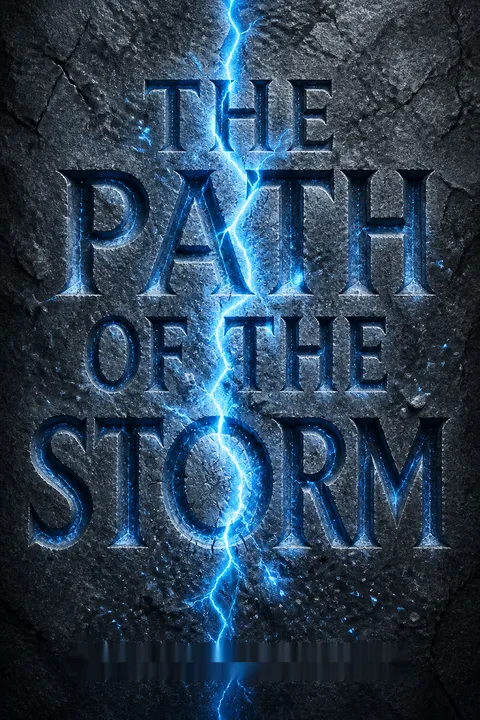
The Path of the Storm receives a 4.26/5 rating with mixed reviews. Readers praise the action-packed plot, interesting magic system, and world-building, though many find the characters one-dimensional and lacking depth. Common criticisms include excessive cliffhangers, predictable plotting, and protagonists like Ella, Miro, and Amber making frustrating decisions. The introduction of new kingdoms and the necromancy elements intrigue some readers, while others find the constant action exhausting. Despite flaws, most reviewers remain engaged enough to continue the Evermen Saga series.
People Also Read
Characters
Miro Torresante
Reluctant imperial anchorMiro is a bladesinger, a battle-trained leader who carries the responsibilities of Altura while trying to be present for Amber and Tomas. He tends to answer fear with action, which makes him brave but sometimes reckless; his instinct to take danger onto himself can leave the people he loves feeling shut out. His skill is not limited to enchanted weapons. When deprived of lore, he relies on observation, physical courage, and the lessons his sister Ella taught him. Miro’s deepest conflict is between public duty and family life, though the novel repeatedly shows that these obligations cannot be cleanly separated.
Amber
Courageous enchantress and motherAmber is an enchantress, Miro’s childhood love and Tomas’s devoted mother. Warm and socially perceptive, she is also practical under pressure, able to improvise with the tools available rather than wait for rescue. Her resolve is shaped by a life in which other people have tried to make choices for her, so she insists on acting beside Miro even when fear pulls her toward home. Amber’s care is not passive: it can mean joining a dangerous voyage, confronting the people responsible for harm, or tending to strangers. Her emotional strength comes with understandable vulnerability, especially when Tomas’s safety is uncertain.
Ella Torresante
Scholar of dangerous bridgesElla is Miro’s younger sister, an exceptionally curious enchantress who wants to understand how different forms of lore fit together. She often withdraws into research when grief or affection becomes difficult to face, but her intellectual concentration is also a form of service: she studies what others dismiss or fear. Her loyalty to Killian and her concern for the Empire pull her into increasingly dangerous work. Ella is not simply a gifted problem-solver; she questions who controls knowledge and what its use will cost. Her willingness to cross boundaries makes her resourceful, though it also exposes her to ethical and personal risks.
Killian
Orphan with untapped powerKillian grew up without a family, first in an orphanage and then among performers and street children. He wants to know where he came from, but his experiences have taught him to distrust institutions that claim to offer order or protection. A survivor with a quick intelligence and a capacity for deep attachment, he has repeatedly been forced to choose between the safety of belonging and the freedom to act on his own judgment. His connection with Ella carries tenderness and unresolved history. His unusual abilities make him important to others, but his central challenge is to remain a person rather than become a symbol.
Sentar Scythran
Returning master of the nightSentar is a cold strategist whose aim is to gather essence and restore his brothers to Merralya. He regards humans as material to be organized, conquered, and harvested, a worldview that lets him describe cruelty as necessary preparation. Deprived of his former powers at first, he adapts through manipulation and careful alliance-building, proving that cunning can be as dangerous as strength. Sentar’s contempt for ordinary people is matched by a need to control the future. He sees domination not as a choice but as the natural right of those he considers superior.
Evrin Evenstar
Keeper of forbidden historyEvrin is an ancient scholar who once possessed extraordinary power and now devotes himself to rebuilding the Empire’s essence machines. His knowledge spans history, lore, and the long consequences of choices made by rulers. He can be affectionate toward Ella, yet grief has made him wary of intimacy and impatient with distractions. Evrin’s restraint comes from having lived long enough to see how intervention can become control. He wants the world to survive, but he does not assume that every possible act of rescue is worth the risk. His caution gives Ella a necessary counterweight, even when she refuses to follow it.
Rogan Jarvish
Soldier holding the centerRogan is an Alturan soldier serving as Lord Regent during a fragile political transition. He thinks in terms of logistics, discipline, and the lives endangered by a decision, rather than in grand speeches. His honesty earns respect from soldiers but cannot by itself answer the hunger and resentment in Seranthia. Rogan is a principled man who fears becoming the author of violence, even when inaction may also cause harm. His care for Amelia and Tapel gives his public role a human center. He supports Ella and Miro while knowing that their plans may make an already unstable world harder to govern.
Ilathor Shanti
Desert prince turned leaderIlathor is the ambitious prince of Hazara, accustomed to treating political purpose as a duty that outranks private comfort. His relationship with Ella carries attraction and emotional complication, especially because her history with Killian remains unresolved. Ilathor can be difficult to approach, but he is not incapable of loyalty or grief. His responsibilities to his people shape the distance he keeps from others, and his position makes him a crucial bridge between the Hazaran world and the Empire’s shared leadership.
Layla
Dunfolk healer and truth-tellerLayla is a Dunfolk healer whose bluntness hides deep loyalty to Ella and Miro. She acts without ceremony, watching over people when they are too distracted to protect themselves. Her medical skill cannot always overcome the damage done by poison, but she provides care, steadiness, and clear-eyed judgment when others are desperate for reassurance. Layla’s presence reminds the central characters that help often arrives through practical attention rather than grand power.
Dain Barden Mensk
Akari ruler guarding knowledgeBarden is the Dain of the Akari, a direct and forceful ruler who carries responsibility for a people often feared by outsiders. He guards Akari lore because he knows how easily it can be misused, and he is wary of sharing it beyond his community. Beneath his stern manner is a political intelligence that recognizes how ignorance fuels hostility. His family matters to him, and his judgment is shaped by both affection for his people and suspicion of the wider Empire.
Renrik
Necromancer seeking a masterRenrik is an Akari necromancer whose devotion to the old Evermen shapes his ambitions. He is willing to defy his own ruler when he believes a powerful master can restore the order he favors. His knowledge gives him practical value, while his desire for advancement makes him vulnerable to promises of status. Renrik embodies the danger of confusing obedience with belonging.
Barnabas
Exiled master of the deadBarnabas is an elderly necromancer expelled from the Akari order for disregarding its rules. He is cantankerous, theatrical, and far more knowledgeable than his reputation suggests. His teaching pushes Ella to combine schools of lore rather than accept the boundaries imposed by established experts. Barnabas’s irreverence makes him an unconventional mentor, but he does not treat resurrection as harmless. He warns Ella that the mind cannot be restored without risk.
Aldrik
Akari teacher of revenantsAldrik is a necromancer who introduces Ella to the careful procedures used to animate the dead. He is proud of his order’s methods and wary of outsiders, yet he teaches her seriously once she has earned his attention. His explanations distinguish retained skill from restored identity, exposing the limits and dangers of Akari practice. Aldrik’s loyalty to his tradition gives Ella a necessary foundation even when she needs to go beyond his instruction.
Lord Aidan Alderon
A silenced noblemanAidan was a nobleman who opposed Emperor Xenovere and paid a severe price for that resistance. His history is known through court records and through the uncertain memories preserved by Akari lore. He matters to Killian not as an idealized ancestor but as the missing human connection behind an orphan’s questions. Aidan’s story also exposes how political power can erase a family by controlling what is recorded, who is punished, and which children are allowed to know their origins.
Lady Alise
Exiled imperial sisterAlise is Xenovere’s sister and Aidan’s wife, a woman whose life is defined by a political punishment she did not choose. She has spent decades isolated from the Empire and separated from her child. Her grief has not erased her composure, but she is cautious about returning to a society that once cast her aside. Alise’s loyalty is rooted in family rather than status, and she does not automatically accept the public role others would assign her.
Emir Volkan
Ruler of the Veldrin seasVolkan rules Veldria, a prosperous maritime nation that has deliberately kept itself separate from Merralya. He is curious about knowledge but distrustful of lore, believing his people escaped its destructive history by rejecting it. Volkan’s governing style combines ceremony, calculation, and a strong sense of collective identity. His dealings with Miro are shaped by competing obligations: protect Veldria’s secrecy, preserve its citizens, and respond to a threat that has made isolation impossible.
Tungawa
Alchemist choosing atonementTungawa is an elderly master of the Alchemists’ Guild, thoughtful and observant where some of his colleagues are arrogant. He knows that the Guild’s work helped Sentar’s attack reach Miro’s family, and the knowledge troubles him. Tungawa’s response is practical rather than self-congratulatory: he shares the cure’s formula and risks his safety to help Miro and Amber. He represents the possibility that an institution’s complicity can be confronted by a person willing to act against its consequences.
Commodore Deniz
Veldrin naval commanderDeniz is a disciplined Veldrin officer and accomplished swordsman who captures Miro and Amber at sea. He initially sees them as dangerous curiosities, but his conduct is governed by a recognizable code of honor. As the northern threat grows, he must translate naval discipline into a desperate effort to save civilians. Deniz’s respect is earned through demonstrated skill, and once he accepts Miro’s account, he commits himself to action rather than waiting for certainty.
Bastian
Mason stirring SeranthiaBastian is a mason who turns Seranthia’s unemployment, hunger, and religious uncertainty into political agitation. His criticism draws force from real grievances, especially the sense that foreign rulers and workers receive attention while local people go without. He is also attracted to influence and uses a crowd as an instrument. Bastian complicates the easy division between honest leaders and dangerous demagogues: some of what he says is true, even as his approach threatens to deepen the crisis.
Captain Meredith
Indebted captain at seaMeredith captains the Delphin on a voyage few other sailors will accept. Debt and personal disappointment have weakened his confidence, and alcohol has become an escape from responsibility. He remains courteous to Miro and understands the risks of the expedition, but his declining authority leaves the crew open to Carver’s schemes.
Julian Carver
Mutinous first mateCarver is the Delphin’s first mate, a capable organizer who uses the crew’s fear of the voyage to seize command. He plans carefully and treats violence as a tool for eliminating obstacles. His ambition is practical rather than visionary: he wants control, money, and a safe return, whatever the cost to others.
Sailmaster Scherlic
Buchalanti sailor of principleScherlic commands the magical ship Infinity and is bound by an old Buchalanti promise not to cross the Great Western Ocean. He refuses Miro’s plea for help, even when he knows the voyage may matter greatly. His return later shows that duty to tradition and compassion are not always easily reconciled.
Shani
Petryan elemental allyShani is a Petryan elementalist and Ella’s close friend. Bold, warm, and candid, she is willing to challenge Ella when affection threatens to cloud judgment. Her confidence in her own reading of danger makes her valuable in moments when hesitation could be fatal. Shani’s partnership with Bartolo gives her an intimate stake in the choices she makes, without diminishing her independence.
Bartolo
Blade singer and loyal friendBartolo is a skilled Alturan bladesinger, Shani’s husband, and one of Ella’s trusted friends. He is brave and direct, often expressing skepticism when Ella proposes a dangerous plan. His caution does not prevent him from helping when he decides the cause is worth the risk. Bartolo’s loyalty is practical: he brings his skill, watches the portal, and stands ready to defend the people depending on him.
Jehral
Hazaran adviser and guardJehral is Ilathor’s trusted adviser and a skilled Hazaran warrior. He approaches danger with discipline and a strong sense of duty, supporting Ella’s plan while recognizing how easily it could fail. His calm presence helps keep the group focused when Bartolo and Shani disagree.
Plot Devices
Essence and the vats
Power with a human costEssence is the energy that powers lore, enchanted tools, and the machines that support the Empire. The Primate’s machines were destroyed before the story begins, leaving economies and daily life badly weakened. The Akari possess a limited supply, and Sentar uses stolen essence to create vats that extract energy from the dead. The mechanism lets his army expand by turning victims into resources, making every conquest strengthen the next. Miro later steals a small amount to enchant a sword. The same power can sustain ordinary life, defend a community, or enable mass domination, depending on who controls its production.
The three Lexicons
A brief bridge between worldsThe Lexicons are powerful books holding the lore of different houses. Ella learns that bringing three of them together can supply enough energy to open the Sentinel’s portal for a short time. She builds a device to channel their power while preventing the books from draining completely. The plan lets her cross into Shar and return with Killian, but it allows no easy communication or rescue if she becomes stranded. Her friends must decide when to reopen the portal, knowing that keeping it open risks draining the Lexicons and admitting danger from the other side.
Arsenic and black powder
A weapon that links worldsThe wedding shrine disguises a timed explosive as a ceremonial gift. Ella initially suspects lore, but Toro Marossa’s old journal and the symptoms of Tomas and Rorelan point to a non-magical weapon: black powder combined with arsenic. The discovery sends Miro across the ocean to find its makers, while Ella’s investigation connects the attack to Sentar’s return. Tungawa’s account reveals that the Alchemists’ Guild built the device for gold, without understanding the full purpose. The weapon draws together two technologies and makes clear that magic is not the only source of catastrophic power.
The revenant process
Conquest that feeds itselfAkari necromancers use essence and runes to give the dead a limited form of life. In ordinary practice, revenants retain skills but little personality and can be directed through simple commands or battle patterns. Sentar turns the process into an engine of conquest: victims provide essence, and the dead become soldiers who need no food, fear, or rest. Ella learns that restoring more memory can make a revenant unstable and violent. Her use of that dangerous knowledge is essential to reaching Killian, but the process also creates a devastating risk for the man she tries to restore.
Toro Marossa's journals
A trail across the oceanThe explorer’s account is the only guide Miro has to the Ochre Isles. Its observations identify black powder, arsenic, abandoned settlements, and the strange shipyards left behind by a distant civilization. The journal gives Miro enough direction to find the islands, but it cannot tell him whether anyone still lives beyond them or whether a cure exists. Its notes turn the ocean from an empty expanse into a sequence of clues. The discoveries Amber and Miro make by following it eventually lead them to Veldria and the Alchemists’ Guild.
Evermen Saga Series
About the Author
Download PDF
Download EPUB
.epub digital book format is ideal for reading ebooks on phones, tablets, and e-readers.








