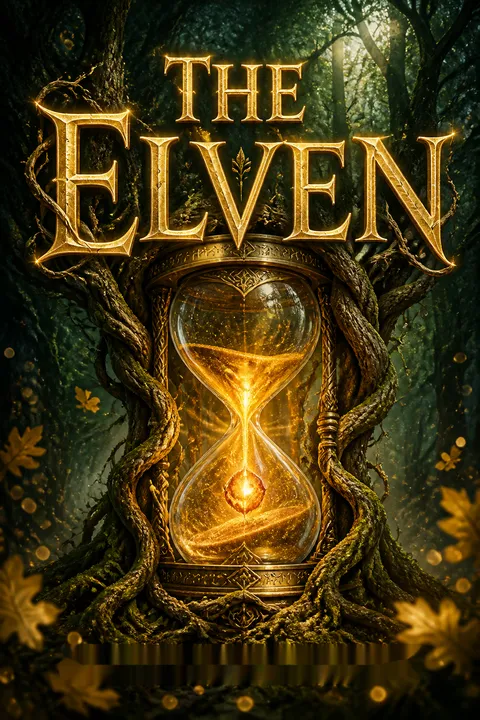


Plot Summary
The Manboar’s Hunt
Jarl Mandred Torgridson enters the snowbound forest to fulfill an oath to a dying stranger who warned of a man-eating boar. The creature kills Gudleif, Ragnar, and Asmund, then tears open Mandred’s thigh. Unable to wound it, Mandred lures it away from his village and crawls toward a cliff-top stone circle, hoping to light a warning fire.
The manboar follows but will not cross between the standing stones. As Mandred collapses, the beast speaks into his mind and leaves him alive. He wakes beneath a great oak in a springtime realm, healed and bound by the tree’s roots. A centaur escorts him to Queen Emerelle, where Mandred demands justice for his dead companions.
The opening makes leadership a burden measured in consequences, not rank. Mandred survives by abandoning the heroic script of standing and fighting: his duty is to warn the village, so retreat becomes a form of courage. The manboar’s deliberate sparing of him turns survival into a debt and introduces the story’s central unease: apparent victories may serve an enemy’s design. The stone circle, which protects Mandred while transporting him into a world he distrusts, makes passage itself morally ambiguous. His rescue is real, but so is the suspicion that someone has arranged it.
A Price for the Hunt
At Emerelle’s court, Mandred accuses the queen’s realm of sending the manboar, then learns that she has never heard of such a creature. When she confirms the beast still threatens Firnstayn, Mandred abandons his demand for blood money and offers himself in exchange for help. Emerelle instead claims his unborn first child, promising to collect the child in a year.
Mandred accepts because the village may otherwise be destroyed. She appoints Farodin, a courtly warrior, and Nuramon, a long-reborn elf shunned by his clan, to the elfhunt, with Mandred as their human leader. Their beloved, Noroelle, is courted by both men: Farodin hides his depths behind polished songs, while Nuramon’s fear of rejection keeps him at a distance.
Emerelle’s bargain exposes the difference between sacrifice offered by the self and sacrifice imposed on another. Mandred can offer his own life freely, but he bargains away a child who cannot consent, telling himself that the village’s survival makes the choice necessary. His decision is neither simple nobility nor selfishness; it is the compromise of a leader under pressure, made without consulting the person who shares its cost. The parallel courtship sharpens this problem of agency. Noroelle waits for Farodin to reveal himself and Nuramon to act, while both men mistake restraint for virtue.
The Hunt Turns
Before the hunt departs, Nuramon finally approaches Noroelle and begins a relationship that had been stalled by his fear. Noroelle sends Farodin and Nuramon away with mulberries, while her own gift to them is a promise that both must return.
Once the company crosses into the human winter, Mandred’s knowledge of the land proves essential. The trail is unnaturally fresh, and the manboar attacks when the hunters are divided. It leaves Aigilaos mutilated, kills wolfmother Lijema, and later causes Brandan’s death.
Vanna recognizes the creature’s silvery blood and identifies it as a Devanthar, an enemy believed extinct. Farodin secretly hears the demon claim that Mandred was sent to Albenmark as bait and that the hunters must meet it at the Cave of Luth.
The hunt transforms the mismatch between worlds into a tactical weakness: elves struggle with human distances, snow, and darkness, while Mandred reads the terrain instinctively. Yet practical knowledge cannot protect the company from an enemy who manipulates perception and isolates its victims. The deaths are not interchangeable losses; each removes a distinct capacity, from Aigilaos’s force to Lijema’s command of the wolves. Farodin’s secrecy after hearing the Devanthar matters because it converts fear into private responsibility. He withholds information to preserve the group’s courage, but that protective impulse also leaves his companions unable to judge the danger for themselves.
Luth’s Frozen Trap
The surviving hunters climb to the Cave of Luth, where the Devanthar waits among defiled offerings and a sealed Albenstar. Its scream drops deadly icicles, and it kills Vanna before the company can regroup. Farodin, Nuramon, Mandred, and the last wolf attack together. Farodin wounds the creature, then takes a mortal tusk wound; Nuramon exhausts himself healing him.
Mandred drives his spear through the Devanthar’s eye, killing it, but a wall of ice seals the cave. Trapped with their dead, Mandred and Nuramon share warmth while Farodin recovers. A young shipbuilder, Svanlaib, later breaks the ice with a wooden image of Luth. The three emerge in spring to discover that nearly thirty years have passed.
The battle succeeds only because the hunters combine forms of strength that their separate cultures value differently: Farodin’s precision, Nuramon’s healing, and Mandred’s physical force. Yet victory does not restore what they have lost. The cave converts time into another weapon, stealing years from Mandred while his wife and village continue without him. His friendship with Nuramon deepens in the enforced stillness after battle, when neither can fix the dead and both can only keep one another warm. The delayed rescue by Svanlaib also shifts the story’s scale: a local monster hunt has become a history-spanning consequence.
Noroelle’s Impossible Child
During the hunt, Noroelle dreams that Nuramon visits her from beyond death. A year later, she gives birth to a boy and names him Nuramon, convinced that her lover has returned to her. Emerelle senses that the child is neither fully elven nor safely understood, and orders Noroelle to bring him before the court.
Soldiers arrive first with an order to kill him. Noroelle hides the infant, crosses into the human world through an unstable Albenstar, and leaves him at a farmhouse door, where a couple takes him in.
She then returns alone and refuses to reveal the child’s location. Emerelle judges her guilty of endangering Albenmark and exiles her forever to an island in the Shattered World, sealing the route with the Albenstone and scattered hourglass sand.
Noroelle’s choice is shaped by knowledge she lacks and love she cannot suspend. She sees innocence in the child and trusts the intimacy of her dream, while Emerelle sees a possible threat to the entire realm. Neither woman can prove her interpretation before acting. Noroelle’s abandonment of the infant is therefore an act of protection that also wounds her, and her return to face judgment makes clear that she accepts the cost rather than betray him. The sealed exile transforms political punishment into a metaphysical prison: the queen does not merely separate Noroelle from her child, but removes the ordinary possibility of death, rebirth, and reunion.
The Son Who Waited
When Mandred returns to Firnstayn, he expects to embrace Freya and meet his newborn son. Instead, the village has become a town, and his childhood acquaintance Erek explains that almost thirty years have passed.
Freya died after Emerelle collected the child, grieving until her own mind failed. Mandred plants Atta Aikhjarto’s acorn at her grave and vows to recover his son. Back in Albenmark, Emerelle introduces the grown child, now called Alfadas, who has been raised among elves and resembles Freya.
Mandred embraces him, then learns the price of his bargain: Freya had accepted the exchange for Firnstayn’s sake but cursed the husband who made it without her. Mandred chooses not to reclaim the jarlship and begins the dangerous search beside his son.
Mandred’s return collapses the bargain’s abstract arithmetic into a family he can no longer recover. The village survived, but Freya paid with her life, and the infant he imagined holding is now an adult formed by another world. His grief is sharpened by the knowledge that Freya accepted the choice he made while still condemning him for making it alone. He cannot undo the bargain by claiming authority over Firnstayn; instead, he yields the title to the generations that continued without him. His vow at the grave makes his future less a quest for glory than an attempt to answer the harm he helped cause.
Noroelle’s Hidden Fate
After Mandred, Farodin, and Nuramon return to Albenmark, Obilee delivers Noroelle’s message: the child was conceived by the Devanthar, which had worn Nuramon’s appearance in her dream. Emerelle confirms that the demon survived the ancient war and wants the child dead, fearing the power he may inherit. She orders Nuramon to find and kill him, promising that success could free Noroelle.
Mandred and Alfadas join the search, while Ollowain leads a small force of sentinels. Farodin hides his own plan to gather the scattered grains of Emerelle’s broken hourglass, the only known route to Noroelle. The company leaves under cover of night, bound by a mission that turns love into a demand for another killing.
The revelation makes deception intimate: the Devanthar does not merely impersonate a monster but borrows Nuramon’s face and exploits Noroelle’s trust. The resulting child is treated as guilty before he can act, while Noroelle’s refusal to surrender him becomes the basis for her exile. Emerelle’s bargain with Nuramon repeats the moral structure of Mandred’s earlier choice, asking one person to sacrifice someone else for a larger good. Nuramon’s agreement reflects love and guilt, but also his susceptibility to being given a task that seems to make suffering meaningful. Farodin’s secret search offers a competing definition of loyalty, one based on refusing the queen’s verdict.
Guillaume the Healer
For three years, the companions follow reports of human miracles across the Other World, with Mandred’s son Alfadas among them. In Aniscans, they find Guillaume, a Tjured priest whose healing draws crowds. His appearance resembles Noroelle’s, and Nuramon recognizes him as her son.
When Guillaume heals an old man, the magic reaches into the elves nearby: Gelvuun dies, and Yilvina nearly follows him. Guillaume is horrified to learn his power has harmed them, but Nuramon sees no malice in him and tells him the truth about his parentage, Noroelle’s sacrifice, and the mission to kill him.
Guillaume accepts an escort to meet Emerelle, hoping his mother may yet be saved. Farodin distrusts the plan, while Nuramon insists that the queen should see the man before judging him.
Guillaume’s miracles expose the danger of judging power by its effects alone. His healing is genuinely benevolent toward humans, yet lethal to Albenkin, making intention insufficient as a measure of safety. Nuramon’s recognition of Noroelle in Guillaume complicates the queen’s abstract category of demon child: he sees a person capable of remorse, not simply inherited evil. Guillaume’s willingness to face Emerelle is an act of responsibility, not proof that he understands the political danger he carries. The episode also reopens Nuramon’s own conflict. He must decide whether love means obeying the queen’s demand or granting her son the chance to speak for himself.
Aniscans Burns
Before Guillaume can leave Aniscans, King Cabezan’s soldiers surround the temple, demanding the healer so their tyrant king can be treated. Guillaume refuses because saving Cabezan would prolong his murderous rule.
When the soldiers torture Father Ribauld and threaten the other priests, Guillaume surrenders himself to spare them. Farodin and Nuramon fight to protect him, but the attackers overwhelm them. Farodin escapes across collapsing scaffolding, while Guillaume falls from the roof and is killed; the soldiers hang his body beside Ribauld’s.
Mandred and Alfadas break through the bridge guards and help the survivors flee through wine cellars and tunnels. Nomja is killed during the escape. The survivors carry her north, then leave Alfadas in Firnstayn before returning to Albenmark to report their failure.
Guillaume’s death is the result of his compassion meeting a political order that converts healing into compulsory service. He refuses to save a tyrant, yet gives himself up when the king’s men threaten those who sheltered him. His choice protects others in the immediate moment but leaves no room for the truth of his origins to reach Emerelle. The group’s escape repeats the novel’s pattern of costly survival: Mandred and Alfadas reach their friends, but Nomja dies and Guillaume’s public image becomes the opposite of his actual character. The silence that follows allows propaganda to occupy the space where testimony should have been.
The Hunt Splits
After the survivors return to Albenmark, Emerelle rejects their report as fulfillment of her command: Guillaume died by human hands, not theirs. Farodin continues collecting grains of the shattered hourglass, while Nuramon seeks a different way to reach Noroelle.
Mandred refuses to abandon either friend. At the library in Iskendria, the disagreement becomes open: Farodin trusts the grains and his seeking spell, while Nuramon argues that searching a world’s deserts for scattered sand is futile.
Nuramon leaves with the dwarf Alwerich to seek the oracle Dareen. Farodin and Mandred take another route north, following rumors of elves held in the troll fortress of the Nightcrags. Their common purpose survives, but for the first time the three companions must travel separately.
The split is not a simple quarrel between faith and skepticism. Farodin’s sand represents disciplined persistence, shaped by centuries spent finding Aileen and later Noroelle; abandoning it would mean abandoning the method that once worked. Nuramon’s alternative expresses a newer confidence in his own judgment, but his challenge also strikes at Farodin’s longstanding assumption that experience makes his path the right one. Mandred’s refusal to choose a side preserves their friendship while leaving both plans to proceed. Their separation thus becomes a test of whether loyalty requires agreement, or whether companions can remain bound while carrying different burdens.
Dwarves Remember Nuramon
Alwerich brings Nuramon into the dwarven kingdom of Aelburin, where King Wengalf recognizes him as a friend from a life three thousand years earlier. The dwarves show Nuramon the body he once inhabited, preserved in crystal, and return his old bow and sword.
Their account gives him a way to understand rebirth not as a curse but as a life whose forgotten experiences may still shape the present. With Alwerich, he reaches the oracle Dareen through a gate that requires a paired song from a child of light and a child of darkness.
Dareen offers to restore Nuramon’s memories or show him the route toward Noroelle. He chooses the route. The oracle reveals a distant island and says an Albenstone, as well as the hourglass, could break the queen’s spell.
The dwarves offer Nuramon something his elven clan never did: a community that treats his repeated lives as continuity rather than stigma. Seeing his former body makes that continuity concrete, but it does not magically return his memories; he must choose to receive a past he cannot yet feel as his own. Dareen’s offer sharpens the choice between self-knowledge and love. Nuramon declines immediate access to his own history because the possibility of reaching Noroelle matters more. This is not self-erasure so much as a hierarchy of commitments: he accepts that understanding himself can wait, while her isolation cannot.
The Nightcrags Prison
Farodin and Mandred reach the Nightcrags, where Farodin once killed the troll prince Dolgrim, now reborn as Orgrim. Disguised as Emerelle’s envoy, Mandred enters the fortress and discovers that the trolls have kept elves in cages for centuries.
Orgrim denies holding captives, then imprisons Mandred when he challenges the prince. Farodin slips through the fortress’s hidden passages and finds seven survivors, including Yilvina, whom he had believed dead. He refuses to leave Mandred behind, though the captives resist rescue after generations of torture.
Farodin frees them, sets fire to the troll stores, and attacks Orgrim, but the shaman Skanga exposes him and nearly kills him. The fugitives escape through a flooded tunnel; Yilvina is already dead, and Elodrin dies during their flight.
Farodin’s long vendetta against Orgrim is revealed as more than private revenge: the prince’s continued rule has allowed a hidden atrocity to persist after official peace. Yet Farodin’s impulse to pursue the prince nearly conflicts with his immediate obligation to rescue the living. Elodrin’s despair shows how survival can outlast the capacity to imagine freedom; the captives have adapted to imprisonment so completely that rescue itself feels like another demand. Mandred’s insistence on returning for Farodin grounds the episode in reciprocal loyalty. His courage is not a claim that he can defeat trolls, but a refusal to leave a friend alone.
Forty-Seven Years Apart
The escape from the Nightcrags leaves Farodin and Mandred badly injured, but they reach the human world and eventually Firnstayn. Their passage through the gates has stolen more time. Nuramon, following Dareen’s advice, has waited in Firnstayn for forty-seven years, training its fighters and preserving Mandred’s story.
When the two travelers finally return, they look unchanged, while Nuramon has lived among several generations of humans. He welcomes them and hears that seven captive elves were rescued, though Yilvina died.
The reunion restores their search for Noroelle, and Nuramon shares Dareen’s image of the island where her prison lies. Farodin recognizes that the painting may guide them more effectively than his scattered sand, and the companions prepare to seek an Albenstone together.
The reunion measures time differently for each companion. For Mandred and Farodin, the interval is another dangerous journey; for Nuramon, it is a human lifetime spent converting waiting into useful work. His years in Firnstayn are not wasted interlude: he builds relationships, teaches fighters, and keeps faith with friends who may never return. The difference also unsettles their intimacy. They remain physically unchanged, yet Nuramon has become part of a human community and must now leave it. Their shared search resumes not by erasing the years apart, but by allowing each person’s altered experience to contribute a different kind of knowledge.
Valemas Falls, Yulivee Survives
The companions follow Nuramon’s painted landscape to an island Albenstar, but cannot break Emerelle’s barrier around Noroelle’s prison. They return to Iskendria’s hidden library, where a djinn tells Nuramon that the Free of Valemas have been destroyed by Tjured’s forces.
The spirit entrusts him with the last survivor, an unnamed child who knows stories of Emerelle but not her own origins. Nuramon gives her the name Yulivee, after the founder of Valemas, and accepts her as family.
Reilif explains that Albenstones can create paths and break barriers, then reveals an image of one belonging to the djinns: the fire opal in a missing royal crown. Farodin agrees to search for it, giving the companions a new goal after their failed attempt at Noroelle’s gate.
Yulivee’s rescue changes the emotional texture of the quest. Until now, the companions have carried losses and duties; the child brings an unfinished future into their midst. Her name is not merely a label but an act of chosen kinship, echoing the counsel Nuramon once received from Emerelle. At the same time, the destruction of Valemas shows that the Tjured movement is no longer a distant religious force. It is erasing communities that resist it. The missing crown offers practical hope, but the library’s endangered knowledge makes every discovery feel temporary. The group now travels not only to save Noroelle, but to preserve worlds from a spreading ideology.
Fargon’s March North
Farodin’s seeking spell leads the companions through Drusna and into Fargon, where they find that the crown has vanished from the marsh where it once lay. A new Albenstar, made with a different stone’s power, marks the trail of whoever took it.
In a Tjured temple, the company is recognized as demonic; they escape before the congregation can trap them. Yulivee later slips away invisibly to spy on the Tjured commanders and learns that a fleet is preparing to attack Firnstayn.
Nuramon and Mandred argue that they must warn their friends, while Farodin insists they need the crown to stop the larger threat. He finally yields, and the group uses the Albenpaths to return to Albenmark and seek Emerelle’s aid before the invasion reaches the Fjordlands.
The lost crown turns the search into a race against an enemy whose reach is growing faster than the companions’ plans. Yulivee’s spying demonstrates that her magic is not a child’s trick but a form of agency the adults have repeatedly underestimated. Her discovery forces Farodin to revise his priorities: pursuing the instrument that might free Noroelle cannot justify allowing Firnstayn to be destroyed. The conflict also reframes loyalty as a network rather than a private bond. Mandred’s homeland, the elven world, and the refugees under Tjured rule are all vulnerable to the same expanding power.
The Devanthar Returns
Emerelle accepts the plea for aid, and the elves join the Fjordlanders in a sea battle against Tjured’s far larger fleet. Mandred and Liodred defend the chained longships, while Nuramon and Obilee fight from the queen’s flagship.
A blue-robed priest kills Alvias with magic that drains the life from Albenkin, recalling Guillaume’s dangerous healing power. Mandred recognizes the old pattern and warns Nuramon. Through Emerelle’s water mirror, the queen identifies the commander as the surviving Devanthar, disguised as Tjured’s chosen priest, with another Albenstone in his possession.
The revelation explains the altered paths and the movement’s hatred of Albenkin. Emerelle uses her own stone to counter the demon’s attempt to open a gate into the emptiness between worlds, while the allies struggle to hold the fleet together.
The battle joins the story’s political and supernatural conflicts: Tjured’s armies are not simply hostile humans but a system shaped by the Devanthar’s surviving influence. The priest’s lethal power recalls Guillaume, but the resemblance is morally significant rather than identical; one man’s tragic gift has become a tool of organized persecution. Alvias’s death also brings the war into the queen’s inner circle, proving that command and ancient magic cannot guarantee safety. Mandred’s recognition of the pattern is crucial because his human history supplies evidence the elves might otherwise overlook. The alliance holds because each culture contributes a different kind of knowledge.
The Devanthar’s Last Body
The allies pursue the Devanthar through a gate to a Tjured monastery in the Shattered World. There the demon appears as Therdavan, chief priest, and reveals that it has trapped them in a time-distorting chamber.
It nearly kills Liodred and wounds the three companions, but Farodin uses Noroelle’s emerald to expose the demon’s vulnerability. With enchanted weapons, Mandred, Nuramon, and Farodin bring it down; Farodin severs its head and takes the golden Albenstone. The Devanthar’s final spell seals the paths and makes time race outside the monastery.
Nuramon uses the captured stone to break through the fiery barrier, though the strain leaves his memory fractured. They escape through a gate and discover that centuries have passed, Firnstayn is ruined, and Tjured’s soldiers have reached Albenmark.
The final confrontation is won through a convergence of earlier gifts: Noroelle’s stone, the enchanted weapons, Mandred’s strength, and Nuramon’s hard-earned control of Albenpath magic. The Devanthar’s defeat does not restore a stable world; its last act turns time into a prison and throws the survivors into a future they cannot recognize. Nuramon’s altered memory makes the cost personal, while the ruined city proves that the battle’s consequences continued beyond their perception. The victory is therefore incomplete by design. Killing the antagonist ends one body and one immediate plan, but not the historical machinery his followers have built.
The Last War
In the future, the companions find a vast Tjured army attacking Albenmark and learn that the invaders crossed through the rupture near Firnstayn. Emerelle gathers elves, dwarves, and trolls for a final defense. Nuramon leads the dwarves and elves against the main human force; Farodin holds the Shalyn Falah with Ollowain and Giliath; Mandred and King Liodred infiltrate the enemy command.
The fighting costs Alwerich and many others their lives. Mandred helps break the Tjured command and is gravely wounded by a shot from a fire rod. The allies win, and the Albenstones seal the worlds apart, ending the invasion but trapping Farodin and Nuramon in the human world. Mandred dies beside the linden trees, imagining his son Alfadas as a fisherman.
The war’s resolution refuses a clean victory. The alliance saves Albenmark by closing the paths that once allowed friendship, rescue, and exchange between worlds. The same boundary that protects the elves strands Farodin and Nuramon with the human consequences of the conflict. Mandred’s death brings his long arc back to its first moral problem: the cost of protecting a community. Unlike the bargain over his firstborn, this final sacrifice is chosen with full knowledge and alongside friends who share the danger. His last vision of Alfadas fishing turns the heroic ancestor back into a father still mourning the ordinary life he lost.
The Last Gate Closes
At Mandred’s burial, Xern plants Atta Aikhjarto’s acorn in the grave, joining the human’s remains to the ancient oak’s future. Emerelle opens one final gate to the Other World for Farodin and Nuramon and gives them the hourglass, hoping it can undo Noroelle’s exile.
They cross to the island and find Noroelle unchanged in appearance, though centuries have passed for her. After hearing the full history, she reveals that she remembers her earlier life as Aileen and chooses Farodin, her first great love, for the journey into the moonlight.
She comforts Nuramon, who accepts her decision without denying his grief. Noroelle and Farodin depart together. Nuramon, the last Albenkin in the human world, watches the moon and turns toward the unexplored continent beyond the island.
The ending resolves the love triangle not by declaring one suitor superior, but by allowing Noroelle to interpret the whole span of her lives and choose for herself. Farodin’s patience is rewarded, while Nuramon’s growth is measured by his capacity to release the beloved without treating her choice as a verdict on his worth. Their parting also completes the novel’s repeated tension between memory and identity: Nuramon carries a past he has only recently recovered, yet must begin again alone. Mandred’s grave and the final gate offer contrasting forms of continuity, one rooted in land and kin, the other closed to preserve a world.
Analysis
The novel’s central question is not whether love can survive time, but what people are entitled to do in its name. Mandred bargains away an unborn child to save a village, then spends decades confronting the consequences of a decision made without Freya. Noroelle protects her child by defying a queen, while Nuramon and Farodin repeatedly choose between private devotion and the survival of entire peoples. None of these choices is clean. The book’s moral pressure comes from characters acting with limited knowledge and then having to live inside the history their actions create.
Its fantasy mechanics make that problem material. Gates permit travel but can distort time; rebirth preserves souls but not memories; Albenstones can reunite separated realms or divide them permanently. Connection is therefore never free. The worlds’ permeability enables friendship, trade, and alliance, but also invasion, manipulation, and the spread of Tjured’s violence. The final sealing of Albenmark may save its people, yet it destroys the very routes through which relationships were formed and makes Nuramon’s reunion with Noroelle possible only at the cost of losing his home.
The scale grows from a village threatened by a single monster to a war between civilizations, but the emotional units remain concrete: a grave, an acorn, a healed wound, a horse left waiting, a hand held in a sealed cave. Those objects resist the abstraction of prophecy and politics. Emerelle can see futures, but cannot command every consequence; Nuramon can remember many lives, but cannot choose Noroelle’s heart; Mandred can become a legend, but cannot recover the years with his son. The ending grants Farodin and Noroelle their long-delayed union without pretending that every loss has been repaired. Nuramon’s departure alone is not a defeat so much as the beginning of an identity no prophecy has finished defining.
Review Summary
People Also Read

Characters
Mandred Torgridson
The stubborn human jarlMandred is the jarl of Firnstayn, a Northman whose courage is practical before it is glorious. He protects his people, trusts what he can test, and meets unfamiliar magic with suspicion, humor, and a warrior’s willingness to act. His blunt appetite for food, drink, and battle can make him seem crude, but he is unusually attentive to loyalty and obligation. He accepts terrible bargains under pressure, then spends the rest of his life trying to repair what those bargains cost others. His friendship with the elves grows from mutual dependence into chosen kinship, while his love for his family remains the private measure against which every public deed is weighed.
Nuramon
The searching elven healerNuramon is an elf repeatedly reborn without access to his earlier memories, a condition that makes his own clan regard him as a burden. He notices beauty and possibility where others see ugliness, and his healing magic turns another creature’s pain into his own. Long afraid to act on his love for Noroelle, he gains confidence through recognition, friendship, and difficult choices. He is not a conventional warrior or leader, but he learns to use magic, memory, and attention as forms of strength. His central impulse is to understand what connects people across lives, worlds, and losses, even when the answers threaten the identity he has built.
Farodin
The guarded elven warriorFarodin is a celebrated swordsman and court emissary whose flawless manners conceal a history of violence and grief. He has spent centuries searching for the soul of a woman he once loved, yet fears that revealing his past might compromise her freedom to choose him anew. His skill makes him decisive in battle, while his emotional restraint often leaves others guessing. Farodin trusts duty, discipline, and the familiar methods that have served him before, especially his seeking spell. His relationship with Nuramon blends rivalry with profound loyalty, and their shared search forces him to confront the difference between protecting love and keeping it at a distance.
Noroelle
The sorceress beyond reachNoroelle is a gifted sorceress whose spring, lake, and orchard reflect her ability to cultivate living magic. She loves Farodin and Nuramon for different reasons and refuses to reduce affection to ancestry, reputation, or court expectation. Her patience allows both men room to reveal themselves, but it does not make her passive: when her child is threatened, she acts against the queen and accepts the consequences. Noroelle’s defining strength is her capacity to recognize personhood where fear and political judgment see only danger. She carries an unusually layered sense of identity, shaped by love, memory, motherhood, and the long history of her soul.
Emerelle
The calculating elven queenEmerelle rules Albenmark with immense magical power and the difficult knowledge that her visions never provide complete certainty. She weighs individual lives against the survival of entire peoples, then bears the consequences of decisions that others may experience only as cruelty. Her composure is political as well as personal: she rarely exposes fear, even when she sees disaster approaching. Emerelle can recognize herself in outcasts such as Nuramon, and she is capable of tenderness, but her authority requires her to make judgments that affection cannot simply reverse. Her choices raise the question of whether foresight can justify control, especially when the future remains changeable.
Yulivee
The last child of ValemasYulivee enters the story as a gifted, curious child rescued from the destruction of the Free of Valemas. She has been raised among books and stories, and treats magic as something immediate and playful rather than distant or sacred. Her confidence can become recklessness, especially when she sneaks away to investigate danger, but her observations repeatedly reveal what older companions overlook. Nuramon names her and chooses her as family, giving her belonging without demanding that she become someone else. Yulivee’s curiosity, quick imitation of spells, and affection for Emerelle and Nuramon connect the novel’s history to a future that has not yet been decided.
Alfadas
Mandred’s elven-raised sonAlfadas is Mandred and Freya’s son, taken from the human world as an infant and raised at Emerelle’s court. He grows into a disciplined warrior and swordsman, more composed than his father but stubborn in his own way. His years among elves give him a divided inheritance: he belongs to the Fjordlands by birth and to Albenmark by upbringing. Mandred’s return forces Alfadas to reconsider the father he has known only through stories, while his own choices reveal a capacity to bridge cultures rather than simply choose between them.
Obilee
Noroelle’s steadfast confidanteObilee is a young elf from Alvemer placed in Noroelle’s care, becoming the sister Noroelle never had. Curious and observant, she understands court customs while remaining emotionally direct. She carries Noroelle’s message to Farodin and Nuramon with unusual fidelity, preserving both its facts and its tenderness across decades. As a warrior and sorceress, Obilee grows into a formidable figure without losing her loyalty to the people who shaped her. Her feelings for Nuramon are sincere, but she respects his attachment to Noroelle and chooses to remain connected without making love a claim of ownership.
Guillaume
The miracle-working priestGuillaume is a Tjured priest in Aniscans whose healing brings crowds of desperate people to him. Raised by a farming family and sheltered by Father Ribauld, he believes his power is a gift meant to ease suffering. His gentleness coexists with an unsettling capacity that he does not fully understand, and the encounter with the elves forces him to confront the consequences of his miracles. Guillaume is motivated by service rather than ambition, but his refusal to aid a tyrant places him in the path of political violence.
Ollowain
The queen’s exacting swordsmanOllowain is keeper of the Shalyn Falah and one of Emerelle’s most capable warriors. He values discipline, competence, and the responsibilities attached to service, often expressing concern through sharp criticism rather than warmth. His early contempt for Mandred gives way to respect as the human proves loyal under pressure. Ollowain’s loyalty to the queen is strong, but it does not make him blind to the demands placed on those he protects. His presence repeatedly tests whether skill alone is enough when the right course requires trust, compromise, or restraint.
Aigilaos
The boastful centaur archerAigilaos is a centaur famed for speed, archery, and an extravagant opinion of his own abilities. He jokes readily, drinks enthusiastically, and treats danger as another occasion to prove his courage. His easy companionship gives Mandred a familiar, rough-edged ally in the strange world of Albenmark. Beneath the boasting, Aigilaos is dependable in a hunt and understands the practical limits of his own body, even when his tongue claims otherwise.
Vanna
The perceptive hunt sorceressVanna rides with the elfhunt as a sorceress and is more sensitive than the others to the unnatural presence surrounding the manboar. She initially doubts her own perception because the Devanthar seems impossible, but she ultimately trusts what her senses tell her. Her knowledge helps the hunters understand that they face more than an unusually powerful beast. Vanna’s caution is not timidity; it is a form of disciplined attention in a group repeatedly tempted to mistake confidence for certainty.
Lijema
The white wolves’ motherLijema is the wolfmother who can communicate with the white wolves that accompany the elfhunt. She treats the animals as intelligent allies rather than equipment and helps Mandred understand their behavior. Her calm authority complements the hunters’ combat skills, while her bond with the pack makes the cost of the Devanthar’s attacks painfully immediate.
Brandan
The elfhunt’s trackerBrandan is the tracker chosen to follow the manboar’s trail through the human winter. He notices that the tracks are unnaturally fresh and treats that irregularity as a warning rather than an inconvenience. His expertise gives the hunters a way to pursue their quarry, while his practical caution contrasts with Mandred’s impatience and the elves’ confidence.
Nomja
The reborn archerNomja is a skilled archer who joins the later expedition and becomes a trusted comrade to the humans and elves around her. Her courage is quiet rather than boastful, and her attention to fellow fighters makes her a reliable presence in a group constantly exposed to danger. Her presence also makes the story’s account of rebirth tangible: a familiar soul may return in a wholly different body and temperament.
Alwerich
Nuramon’s dwarf comradeAlwerich is a young dwarf warrior from Aelburin, blunt, determined, and more comfortable walking than riding. He accompanies Nuramon to the oracle and treats their alliance as a serious bond between peoples. His devotion to Solstane gives him a different perspective on love across lives: he believes companionship can be renewed through rebirth, yet does not demand that every soul remember. Alwerich’s loyalty helps Nuramon encounter his own past without forcing him to become defined by it.
Wengalf
The dwarven kingWengalf rules the dwarves of Aelburin and remembers a former life in which he and Nuramon fought together. He values memory as a record that can be recovered, even when a reborn person cannot initially recognize their own history. His welcome gives Nuramon a rare experience of acceptance and shared heritage. Wengalf is proud of his kingdom, but his old friendship makes him willing to meet the elves as an equal rather than a subject.
Xern
The antlered gatekeeperXern is an antlered Albenkin who manages access to the crossings between worlds and speaks with the bluntness of someone accustomed to watching others make dangerous choices. He knows the old gates, respects the souled trees, and can move between the human world and Albenmark. His warnings often arrive with dry humor, but beneath it lies a strong sense of the consequences that follow when travelers treat passage as simple escape.
Orgrim
The calculating troll princeOrgrim is a troll ruler who is far more strategic and politically perceptive than human stories suggest. He can be hospitable, sardonic, and threatening in the same encounter, and he understands that old enemies may need to become allies when a greater danger arrives. His history with Farodin is personal, but Orgrim’s decisions are shaped by the survival of his people, not merely by revenge.
Skanga
The troll shamanSkanga is an ancient troll shaman who reads signs, senses magical threats, and counsels the troll king. Her authority comes from knowledge that is not reducible to military strength, though her methods unsettle those who do not understand them. She recognizes that the Tjured threat is unlike ordinary warfare and presses the trolls to treat it seriously. Skanga’s suspicion of Farodin reflects the old injuries between their peoples, even as necessity pushes them toward cooperation.
Giliath
The fierce Free of ValemasGiliath is a proud warrior of the Free of Valemas, a community that resists Emerelle’s authority and guards its independence. She challenges Farodin when his threats violate her people’s customs, then measures him by how he fights rather than by his lineage. Giliath is passionate, suspicious of royal power, and unwilling to let hospitality become submission. Her later service in the wider conflict reflects a loyalty freely chosen, not obedience demanded.
Liodred
The king of FirnstaynLiodred is Mandred’s descendant and the king who must lead Firnstayn against the Tjured fleet. He understands that courage alone will not win a war, so he prepares defenses around the fjord and tries to give his people a clear reason to fight. His respect for Mandred is balanced by his own sense of duty: he does not expect the famous ancestor to solve the battle for him. Liodred’s leadership joins family legacy to present responsibility.
Plot Devices
The Albenpaths and Albenstars
World-crossing routesInvisible paths of magic connect five worlds, while their junctions form Albenstars where travelers can open gates. Major stars lead to stable destinations; smaller ones may send travelers to unexpected places or through time. The paths allow the characters to pursue threats and loved ones across realms, but they also make travel dangerous and politically consequential. The Tjured forces learn to damage the stars, turning a means of connection into a target. The final struggle over the paths determines whether the worlds remain joined or are separated.
Rebirth and the Moonlight
Memory beyond deathMany Albenkin are reborn after death, carrying the same soul into new bodies but usually losing conscious access to earlier lives. Some, especially among the dwarves, preserve accounts that help them recover their past. The moonlight marks a soul’s passage beyond rebirth when it has fulfilled its purpose. This system shapes Nuramon’s shame, the dwarves’ understanding of identity, and the contrast between elven longevity and Mandred’s single human life. It also makes loss complicated: a familiar person may return, but not necessarily with the same appearance or memories.
The Albenstones
Power over magical bordersAlbenstones allow a skilled user to open or close gates, create or destroy Albenpaths, and overcome barriers between worlds. Each stone is unique, and its power may be difficult to sense even at close range. Emerelle’s stone protects Noroelle’s exile, while other stones become objects of pursuit and instruments in the war against the Tjured movement. The story uses them to turn intimate desires into large-scale political choices: the same force that can reunite a separated couple can also sever entire worlds.
The Hourglass Sand
A scattered key to exileWhen Emerelle seals Noroelle’s route to the Shattered World, she smashes an hourglass and scatters its sand, making the barrier difficult to reverse. Farodin learns to sense and collect the grains, believing their return may undo the spell. The grains provide a practical trail through a vast human world and a measure of his devotion, while their scarcity creates doubt about whether persistence alone can succeed. The hourglass ultimately remains one possible key alongside an Albenstone.
The Devanthar’s Masks
Deception made hereditaryThe surviving Devanthar changes form, hides its motives, and exploits the appearances and beliefs of others. It first appears as the manboar, later uses Nuramon’s likeness to reach Noroelle, and operates through the Tjured movement in human society. Its disguises blur the line between a person’s intentions and the power they inherit, especially in Guillaume, whose healing harms elves without making him cruel. The repeated masks prepare the final revelation that the political enemy and the ancient demon are part of the same threat.
Die Elfen Series
Download PDF
Download EPUB
.epub digital book format is ideal for reading ebooks on phones, tablets, and e-readers.








