

Plot Summary
A Vineyard Under Threat
Sixteen-year-old Phae is happiest at the Winemiller vineyard, where the orphaned girl has found a family and learned to work the land. Her unusual gift lets her erase another person’s memory when their eyes meet, but she uses it sparingly after discovering that people who forget her gradually stop including her.
Her closest friend, Trasen, returns from Finder training with rumors of Plague and war, then admits he may enlist to earn enough money for a homestead of his own. Before they can discuss what that future might mean, Prince Aransetis arrives and reveals that the Arch-Rike of Kenatos is hunting Phae. Master Winemiller distrusts the prince, so he secretly sends Phae and Trasen toward a mountain cabin while he investigates.
Phae’s earliest conflict is not simply between safety and danger. Her power can protect her from notice, but it also threatens the very attachment she wants most. The vineyard gives her a practical identity, built from work and shared routines rather than bloodline or magic. Trasen’s wish to earn a homestead quietly exposes a future neither has dared to name. Aransetis’s warning breaks into this grounded world with political forces Phae cannot understand, while Winemiller’s decision shows that family, for him, means choosing her safety over a stranger’s authority.
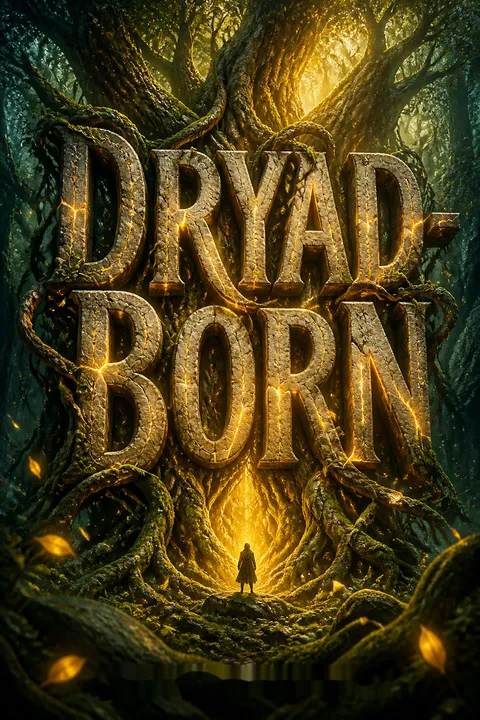
The Tree Names Her
At the cabin, Phae and Trasen spot a stranger approaching and retreat into the woods. Trasen stays behind to confront him, but the man survives an arrow to the chest and overwhelms him, leaving Phae to flee alone. Her instincts lead her to a huge oak, where she hides from the pursuer. An old Druidecht and a young Dryad emerge beside the tree.
The girl identifies Phae as Dryad-born, a memory-stealing spirit descendant, and notes that Phae also carries fireblood. She urges Phae to learn her heritage before the chance to enter Mirrowen disappears. Phae mistrusts the revelation and runs again. Exhausted, she wakes to find the scarred hunter beside her, alive and waiting to take her to Kenatos.
The oak offers Phae a first glimpse of belonging beyond the vineyard, but the revelation arrives in a form she has learned to fear: strangers claiming knowledge of her body and future. Her flight is not evidence that she rejects her heritage so much as a defense against being assigned a destiny without consent. The pursuer’s failure to see her near the tree suggests that her power is larger than her conscious control. Yet safety there is temporary. Phae must begin interpreting her instincts, because the adults around her keep turning protection into a demand that she surrender choice.
The Killer’s Locket
The scarred man identifies himself only as a Kishion, a death-dealing servant of the Arch-Rike. He claims Phae for Kenatos, but his strange immunity and near-silent manner leave her searching for a weakness. On the road, he gathers food for her and allows rests, even as he makes clear that escape will fail. At an abandoned homestead, he opens a musical locket taken from a man he killed.
Its mournful tune stirs a recognition he cannot explain. A spirit bear attacks, and the Kishion kills it after Phae flees. When he catches her, he apologizes for frightening her and admits that his office strips away his memories, including his name and past. He reveals that he killed her father, Tyrus, and that the locket belonged to him.
The Kishion’s violence is institutionalized and then concealed from him through memory loss. That mechanism protects the Arch-Rike from both guilt and accountability: the killer cannot build a self from actions he is forbidden to remember. Phae’s insistence that painful memories matter challenges a system that treats forgetting as mercy. The locket makes this argument tangible. Its melody reaches the Kishion where orders cannot, giving him an unchosen emotional connection to the dead man he killed and to the daughter he is escorting.
Fire at Stonehollow’s Gate
As the Kishion and Phae near Stonehollow’s only road out, Romani riders surround them and try to seize her for sale. The Kishion disables several attackers, but one man grabs Phae and lifts her toward a horse. Fear and anger unlock her fireblood.
Blue-violet flames engulf the captor, killing him and setting the grass alight; the remaining riders scatter. The Kishion carries Phae through the spreading fire on a stolen horse. At a stream, Phae is horrified by how powerful and exhilarating the killing felt, and insists she does not want to become like her escort.
The Kishion studies a map taken from the riders and recognizes their search for another route into Stonehollow. He also confirms that Tyrus intended to take Phae into the Scourgelands.
Phae’s first killing is both an act of self-defense and an unsettling discovery of appetite. Power solves the immediate danger, but its emotional reward frightens her more than the flames themselves. Her insistence on remembering the act rejects the Kishion’s learned rationale for erasure: guilt may be painful, but it can also shape future conduct. The map widens the conflict beyond her personal escape. The Romani are probing Stonehollow’s defenses, while the Arch-Rike’s ambitions and the approaching Plague make Phae’s inherited abilities politically valuable.
The Father Returns
At Stonehollow’s mountain road, Phae encounters the man she had believed the Kishion killed: Tyrus, her father, alive despite the dagger wound. Tyrus asks the Kishion to abandon his mission and help protect Phae, promising to explain how his stolen memories might be restored. He warns that the Arch-Rike controls the Kishion through a ring and fears what he might remember.
When the Arch-Rike commands the Kishion to kill Phae, she meets his eyes but chooses not to erase his memory. He drops his dagger, rejects the command, and the ring explodes. Prince Aransetis transports them to a hidden cabin. There Tyrus explains that Phae must enter the Scourgelands, bond with a Dryad tree, and recover the knowledge that could end the Plague.
Tyrus’s return transforms the journey from capture into a choice, but not an easy one. His offer to the Kishion depends on trust rather than force, and Phae’s refusal to use her memory gift at the decisive moment gives the man space to choose for himself. The explosion of the ring breaks an external bond without restoring the identity it suppressed. Tyrus then places an immense moral burden on Phae: her inheritance may save countless lives, yet the path requires a sacrifice she has not chosen. The novel keeps consent central even when survival seems to demand it.
A Brotherhood Poisoned
In Kenatos, Hettie and Paedrin arrive at the Bhikhu temple seeking Master Shivu’s help locating the lost Shatalin temple and its Sword of Winds. Their relationship is strained because Hettie has admitted she served Kiranrao to buy her freedom.
She asks Paedrin to break the Romani earring that binds her, and he does. At the temple, Paedrin finds most of the Bhikhu dead or dying. Master Shivu reveals that a Preachán poisoned their food with monkshood after Paedrin injured him in Havenrook.
Shivu dies urging Paedrin to forgive and restore Shatalin. A Cruithne soldier arrives to capture Paedrin, who escapes by floating from the temple roof. Outside, he accepts Hettie’s offer to learn Bhikhu discipline, though trust between them remains fragile.
Hettie’s broken earring gives visible form to a freedom she has pursued through deception and bargains. Paedrin’s choice to break it is an act of trust, but the temple’s poisoning immediately tests his ideals against a consequence caused by his own earlier violence. Shivu’s final request does not erase the dead or excuse the poisoner; it asks Paedrin to resist allowing injury to dictate his moral identity. His decision to keep traveling with Hettie, and to teach her, turns their uneasy alliance into a practical discipline of mutual dependence.
Annon Faces the Fire
Meanwhile, Annon of Wayland gathers allies for Tyrus’s campaign against the Plague. He revives a dead Provost-Rike, Lukias, hoping to learn the location of Basilides, the Arch-Rike’s secret oracle. Lukias agrees to guide them, though he continues to argue that Tyrus’s quest is misguided.
On the march north, Boeotian warriors pursue Annon, Khiara, Erasmus, and Lukias. Annon attacks first with his fireblood, while Khiara fights with her staff, Erasmus throws himself into the confusion, and Annon’s spirit-cat Nizeera tears through the enemy.
The fire and spirits rout the attackers, but the exhilaration nearly pulls Annon into madness. Lukias reveals that the Arch-Rike also has fireblood and fears Annon’s potential. Annon recognizes that their enemy’s power rests as much on controlling beliefs as on force.
Annon’s victory makes his greatest strength indistinguishable from his greatest danger. Fire answers an immediate tactical problem, but the pleasure of wielding it threatens to outgrow the purpose that summoned it. His companions matter not merely as reinforcements but as witnesses who help him recognize when power is changing him. Lukias’s revelation also complicates the enemy: the Arch-Rike is not an outsider to the persecuted fireblood, but a person who has converted shared vulnerability into political control.
Basilides’ Deadly Threshold
Lukias leads the company through mountain defenses guarding Basilides. A bronze face fills Erasmus with paralyzing fear, and a second guardian demands an answer from Vaettir lore; Khiara supplies it before the device can kill them.
At the lakeside shrine, two enormous spirit reptiles swallow Lukias and attack the rest. Their protective bands first deflect Annon’s fire, but Erasmus tears one band free, allowing Annon to destroy the creature. Lukias cuts his way out of the other and Khiara heals him. The group reaches the skull-shaped entrance to Basilides.
Annon uses friendly mountain spirits to hide his approach, then sets scaffolding ablaze to distract the guards. His companions enter through the open doors, but the smoke reveals Lukias to the Rikes outside, making his uncertain allegiance impossible to ignore.
Basilides tests distinct forms of knowledge: emotional regulation, cultural memory, observation, and willingness to improvise. Its guardians punish assumptions, including Annon’s belief that fire alone can solve a threat. Each survival depends on someone else noticing what he cannot. The protective bands also anticipate the later torc, establishing that the Arch-Rike’s defenses work by manipulating relationships between magic and living creatures. Lukias’s exposure at the entrance intensifies the question of whether self-preservation can ever become genuine loyalty.
The Oracle’s Hidden Door
Inside Basilides, the party confronts a chamber of darkness that recreates the terror of the Fear Liath. Annon’s fire reveals it to be a carved image rather than the creature itself.
In another cavern, flying cockatrices attack anyone who looks at them; Annon remembers their weakness and Khiara smashes the enchanted lights, forcing the creatures back into darkness. The group uses a surviving cockatrice to overwhelm Rikes in the next chamber. Among twelve stone biers, Erasmus realizes they are not graves but disguises bearing the names of living rulers, including the Arch-Rike and the King of Wayland.
Before he can explain further, black serpents kill him. Annon steals a torc from a dead Rike and learns it repels beasts. The barred door marked Basilides leads into the Scourgelands.
The oracle’s approach is a sequence of epistemic traps: what looks supernatural may be an image, and what looks like a tomb may be a political mask. Annon survives by revising his first interpretation rather than doubling down on it. Erasmus’s death makes the cost of partial understanding severe; his insight arrives too quickly to be shared in full. The torc offers a practical defense, but its power carries a moral hazard, as any tool built from captured spirits repeats the Arch-Rike’s logic of control.
The Sword Beneath Fog
Following Shivu’s directions, Paedrin and Hettie reach Lydi, a dwindling port city built from abandoned ships. They decide to enter in daylight and are directed to a vessel where Baylen, guardian of the Paracelsus Towers, waits.
Baylen claims he has watched Tyrus’s plans and wants to help them reach Shatalin, where Kishion are trained. He sails them through attacks by Paracelsus soldiers, using enchanted wind and fire orbs to break free. At the fogbound cliffs, Paedrin and Hettie climb toward the monastery.
Paedrin proposes drawing attention to himself while Hettie searches for the Sword of Winds. Their ascent is perilous: Hettie nearly falls, and Paedrin catches her, helping her reach a narrow ledge above the sea. The danger deepens their reliance on each other.
The voyage shifts Paedrin and Hettie from the familiar architecture of Kenatos into a landscape that cannot be mastered by city knowledge alone. Baylen earns provisional trust through coordinated action rather than persuasive claims. On the cliff, Hettie’s skill and endurance are real, but not sufficient to make her invulnerable. Paedrin’s catch exposes the difference between independence and isolation: her survival requires accepting help, while his care becomes harder to disguise as mere duty.
Tyrus Names the Cost
At the mountain road, Tyrus tells Phae that her Dryad heritage is the key to reaching the Scourgelands’ lost knowledge. A Dryad bonds with a tree, preserves its memories, and can enter Mirrowen, but the bond may keep Phae from the ordinary life she wants. She refuses to accept the mission solely on her father’s word and demands to see her mother, whose tree is in Kenatos.
Tyrus refuses because the Arch-Rike is threatening that tree and could destroy it if they approach. He offers instead to have a Dryad in Silvandom teach her. After an attack forces the group to flee, Tyrus separates from Phae and the Kishion to protect them. Phae tells her father she has decided to help, choosing the lives her knowledge might save.
Phae’s decision is not a simple conversion from fear to courage. She asks for evidence, demands access to her mother, and weighs the loss of a recognizable future before accepting. Tyrus’s refusal to take her to Kenatos protects the mother but also withholds the encounter Phae needs, leaving their relationship unresolved. Her eventual consent is therefore neither complete certainty nor obedience. It is a decision made under grief, with the understanding that meaningful choice can remain painful.
Trasen Loses Her
Trasen refuses to accept Phae’s disappearance and follows her trail toward Kenatos, then into Silvandom with hired trackers. When he finds Phae in a ravine beside the Kishion, he believes she has been kidnapped and tries to rescue her. Phae recognizes that the Arch-Rike has used his attachment to draw him into danger.
She tells Trasen she is choosing the Scourgelands, but he cannot trust the account he has heard from her. To keep the trackers and the Arch-Rike from using him again, Phae meets Trasen’s eyes and removes every memory he has of her. He returns to the Winemiller vineyard unable to recognize her name, while Phae grieves the love she understood only after erasing it.
Phae’s gift, once a means of evading inconvenience, becomes an instrument of protection with an irreversible emotional cost. She does not erase Trasen because she feels nothing; she does it because she understands how his love can be weaponized against him. The scene reverses the loneliness of her childhood power: this time, she chooses to make herself forgotten by someone she loves. Trasen’s safety is purchased with the destruction of their shared history, leaving Phae with memory but no witness to it.
Hettie Steals the Sword
At Shatalin, Paedrin challenges the monastery’s master, who reveals himself as Kiranrao, the Romani power broker. Kiranrao admits ordering the poisoning that killed Master Shivu and blinds Paedrin with the Sword of Winds before defeating him.
Hettie searches the upper tower and finds the sword missing from its rack, along with a cache of monkshood and the rare remedy. She discovers that a man wearing Kiranrao’s appearance is actually Stor, the Preachán who poisoned the Bhikhu.
Using her Romani knowledge and Bhikhu training, she disarms and questions him, learns that the real sword is on the floor, and removes the Kishion ring from his hand. She gives Stor the antidote rather than killing him, then disguises herself as Kiranrao to help Paedrin escape.
Hettie’s past supplies tools that the Bhikhu code alone cannot: she recognizes poison, reads disguise, and understands the coercion hidden in a ring. But she does not simply return to the identity she left behind. By treating Stor, she refuses the Romani cycle of punishment even when vengeance would feel justified. Her decision is costly and deliberate, converting practical knowledge into an ethical choice rather than a claim that the past can be erased.
Paedrin Claims Shatalin
While Hettie searches the tower, Paedrin wakes chained to a courtyard pillar with his eyes burning from the sword’s magic. He realizes the figure below, speaking and acting like Kiranrao, is an impostor because it uses a saying Hettie had shared with him. He breaks one chain by exhausting his breath and strength, then turns the loose length into a weapon against the trainees.
Hettie appears with the Sword of Winds, which lets her fly faster than a Vaettir. Baylen breaks into the courtyard, and the three escape through the gate. Paedrin uses the sheathed sword to reach the wall and declares his claim to the abandoned temple. Though his sight remains impaired, his sharpened senses guide him away from captivity.
Paedrin’s escape depends on two kinds of training working together. Bhikhu discipline lets him turn pain and restraint into leverage, while his intimacy with Hettie lets him recognize an imposture through a shared private detail. The sword grants mobility, but it does not make him sovereign over the weapon or the temple. His public claim is an act of commitment, a promise to rebuild the institution whose members were murdered, rather than a victory that can undo their loss.
Kiranrao Takes the Bargain
As war closes around Havenrook, Kiranrao uses the stolen blade Iddawc to infiltrate the Wayland camp and attempt to assassinate the king. The camp’s blue magical lights reveal his shadow, and he escapes without completing the killing. His trading empire is collapsing under the blockade, and he returns to find Tyrus waiting in a wagon.
Tyrus argues that ending the Plague would also weaken the Arch-Rike’s control and offers Kiranrao a chance to gain the Arch-Rike’s Tay al-Ard device. Kiranrao distrusts Tyrus but sees the prospect of wealth and freedom from the political order that is destroying his influence. He agrees to travel with him. Tyrus’s party gains a dangerous ally whose motives are practical, not benevolent.
Kiranrao’s recruitment shows how the same political crisis can produce radically different motives. Tyrus seeks to end the Plague; Kiranrao seeks to preserve wealth and escape a collapsing trade network. Their alliance is useful precisely because it is not founded on moral agreement. Tyrus does not mistake self-interest for virtue, but he recognizes that a shared enemy can temporarily align incompatible ambitions. The attempted assassination also shows that Kiranrao’s confidence in violence is no substitute for understanding the conditions around him.
Phae Meets Her Sisters
Following spirit butterflies through Silvandom, Phae and the Kishion reach a dead tree that proves to be a trap, then escape its swarm of insects. They hear Trasen among the trackers and Phae erases his memories before the Arch-Rike can use him. Later, a white stag leads them to a wounded Dryad tree in a burned grove.
Its guardian shares her memories with Phae and offers to trade places with Phae’s mother in Kenatos so Phae can learn her heritage. The mother cannot leave her dying tree, but sends love through the Dryad. Phae learns that becoming oath-bound would connect her to Mirrowen and make her responsible for preserving a tree’s memories. She accepts the obligation to stop the Plague.
The Dryad’s teaching gives Phae a language for the cost she has already begun to face. Her power is not merely a weapon or a family trait; it belongs to a lineage of guardianship, memory, and delegated responsibility. The mother’s absence remains painful, but the message prevents the absence from being mistaken for abandonment. Phae’s consent becomes more informed here, grounded in knowledge of what the oath demands. She accepts not because the life is easy, but because she can now name what it protects.
Canton Vaud Explodes
The group reunites near the Dryad grove, where Annon and its guardian, Neodesha, acknowledge their attachment. Tyrus rebukes Annon for allowing affection to distract him from the Scourgelands. The party then submits to questioning by Canton Vaud, hoping to clear Tyrus’s name. At the council, Tyrus exposes Rajas as the Arch-Rike’s spy, but the supposed Lukias is revealed as the Arch-Rike in disguise.
He detonates the pavilion, kills the Thirteen, and frames Tyrus’s company for the massacre. Before the survivors can respond, the Arch-Rike destroys both Neodesha’s tree and the tree in Kenatos that holds Phae’s mother. Tyrus uses the Tay al-Ard to carry his battered party to Boeotia, beyond immediate pursuit.
Canton Vaud’s collapse demonstrates that institutional legitimacy can be captured from within. The council’s procedures are not enough to establish truth when a spy controls the information and the Arch-Rike can manipulate appearances. His violence attacks memory as much as bodies: destroying the Dryad trees severs relationships and makes Annon lose the perfect recall Neodesha’s kiss had given him. The betrayal also turns the protagonists into fugitives in the eyes of the world, narrowing the space where they can seek help.
A Song Without Answers
In the wilderness of Boeotia, Annon mourns Neodesha and blames himself for leading the Arch-Rike to her tree. His restored memories fade when the Dryad bond breaks, leaving him with a dulled sense of the woman he loved and the friend he lost. Phae comforts him by sharing her own grief: Trasen has returned to the vineyard without knowing she ever existed.
The Kishion, now called Shion by Phae, gives her the locket taken from Tyrus and sings its melody from memory. The survivors remain alive, but their losses are not repaired and their mission is unfinished. The book closes with the group listening as the locket’s mourning tune gathers their separate griefs into one sound.
The ending refuses the comfort of a solved quest. The survivors have chosen a direction, but the victories that brought them there have stripped away memory, love, and political shelter. The locket’s music works as a temporary form of shared attention: it cannot restore what has been lost, yet it lets the group inhabit grief together rather than disguising it as strategy. Shion’s recovered capacity to sing hints that identity may return through feeling before it returns through facts. The closing note holds that possibility open without promising a cure.
Analysis
Dryad-Born makes memory more than a record of the past. It is a resource that can be stolen, stored, traded, weaponized, or deliberately relinquished. Phae’s gift initially appears to offer escape from embarrassment and danger, but its true cost emerges through the relationships it can erase. When she removes Trasen’s memories, she saves him from becoming leverage for the Arch-Rike while also destroying the shared history that made their love legible. Annon’s perfect recall creates a parallel problem: memory preserves responsibility and attachment, but it also intensifies grief until he can barely act. The novel’s magic therefore refuses the easy equation of remembering with healing and forgetting with freedom.
The political conflict echoes this intimate struggle. The Arch-Rike maintains power by controlling knowledge and shaping the explanations people accept. He does not need every kingdom to love him; he needs them to believe that the institutions he commands are necessary. Tyrus counters him with secrecy and strategic alliances, but his methods can resemble the manipulation he opposes. The Thirteen’s collapse shows how truth can fail when authority controls the evidence, while the false graves at Basilides turn political identity into a literal disguise.
The moral counterweight is consent. Phae questions her father, declines the Kishion’s invitation to let him control her memories, and accepts her Dryad inheritance only after learning what the oath entails. Hettie chooses to free and treat the man who helped kill her community. Paedrin’s challenge is to resist revenge after the Bhikhu temple is poisoned. These choices do not dissolve pain or restore the dead. They show characters refusing to let injury dictate what they become. The unfinished ending leaves the central question unresolved: whether a world built on coercion and concealed history can be changed without reproducing its methods.
Review Summary
People Also Read








Characters
Phae
The memory-bearing heirRaised among the Winemiller orphans in Stonehollow, Phae is practical, affectionate, and fiercely attached to ordinary forms of belonging: shared labor, stories, harvest, and family meals. Her ability to erase memories makes her sensitive to the difference between being safe and being known. She avoids using it after seeing how repeated erasure can make her disappear from other people’s lives. Phae’s fireblood gives her formidable power, but she fears the pleasure and danger of using it. Her central psychological struggle is to choose a life beyond the one she loves without allowing others to mistake her willingness to sacrifice for permission to control her.
Shion
The nameless protectorKnown first as a Kishion, Shion is an exceptionally capable enforcer whose memories have been removed to make violence easier to perform and easier for his masters to command. He is guarded, economical with words, and trained to understand people as threats or duties. Phae’s vulnerability unsettles that framework, drawing out a capacity for care he cannot explain. His curiosity about the locket and his lost past exposes how deeply he fears the person he may have been. Shion’s tension is not between innocence and guilt, but between surrendering judgment to authority and accepting responsibility for a self he cannot yet remember.
Annon
The young Druidecht leaderAnnon is a young Druidecht from Wayland, raised by a mentor who prepared him to challenge the Arch-Rike and investigate the Plague. A Dryad’s kiss has given him extraordinary memory, while his fireblood and bond with the spirit-cat Nizeera give him dangerous power. He tends to convert fear into action and responsibility into self-blame, making him an effective leader but a vulnerable one. Annon’s education requires him to question what he thinks he knows, especially when magic tempts him toward domination. His bond with Neodesha reveals a capacity for tenderness that conflicts with his belief that duty requires emotional hardness.
Tyrus
The hunted ParacelsusTyrus is a brilliant Paracelsus who has spent years studying the Plague and the hidden history of Kenatos. He manages risk by concealing knowledge, reading motives, and preparing more than one route through a crisis. This makes him a persuasive strategist and a difficult father: he can be tender, but he also asks Phae to bear a cost he cannot bear himself. His pursuit of the Scourgelands is driven by a wish to repair an old failure and save future generations, not simply by ambition. Yet his secrecy has consequences, and even sound plans leave the people he loves exposed to choices he cannot make for them.
Paedrin
The disciplined BhikhuA Vaettir orphan raised in Kenatos’s Bhikhu temple, Paedrin is a gifted fighter trained to value restraint, humility, and the preservation of life. His confidence can shade into pride, especially when he believes his discipline makes him morally secure. The poisoning of his temple forces him to confront how his own actions can injure people far beyond the original conflict. He uses movement, breath, and observation as tools for survival, but his harder work is learning to live with grief without turning it into vengeance. His growing bond with Hettie tests his desire for connection against his fear of trusting someone who has deceived him.
Hettie
The freed Romani strategistHettie has been raised within Romani systems of service, bargaining, and coercion, and learned to survive by hiding her motives. She is observant, tactical, and skilled at reading people, but her ingenuity has often been used to secure freedom at someone else’s expense. Breaking her earring marks a deliberate turn toward a different code, not a denial of the past that shaped her. Hettie studies Bhikhu discipline with unusual focus and tests whether its commitment to mercy can coexist with her hard-earned realism. Her relationship with Paedrin grows through conflict, shared danger, and the slow work of proving that a promise can be more than a maneuver.
Trasen
Phae’s oldest friendTrasen is Phae’s close friend from the Winemiller vineyard, a capable Finder who hopes to earn enough money to build a home of his own. His affection for Phae is intertwined with years of shared work and familiarity, though he hesitates to risk their friendship by naming it. He acts quickly when she is threatened and follows her far beyond the world he knows. Trasen’s practical ambitions make him a counterweight to the larger magical quest: he wants a life made from land, labor, and chosen companionship.
Prince Aransetis
Silvandom’s wary allyAransetis is a Vaettir prince who disguises himself in the clothing of a Kenatos Rike to study the institution he opposes. He is disciplined and politically connected, but his authority does not make him trusted automatically, especially by Stonehollow’s suspicious inhabitants. He takes risks to protect Phae and supports Tyrus’s campaign while keeping his own emotions tightly governed. His restraint reflects a belief that the mission must take precedence over personal attachment.
Khiara
The Shaliah healerKhiara is a Vaettir healer from Silvandom’s royal family. Her keramat lets her restore injured bodies, but her gentleness does not make her passive: she fights with a staff and Bhikhu techniques when her companions are threatened. She is careful, observant, and often reluctant to expose private feelings, especially in relation to Aransetis. The group depends on her healing, yet she also contributes independent judgment when others are tempted to act too quickly.
Erasmus
The calculating PreachánErasmus is a Preachán thinker whose unusual powers of observation and calculation make him invaluable to Annon’s group. He predicts likely outcomes, identifies gaps in others’ reasoning, and distrusts easy assurances. His skepticism is not a lack of courage; he continues into danger even when his calculations offer poor odds. Erasmus embodies the sharp intelligence of Kenatos’s trading world, while his willingness to aid Tyrus shows that analysis can serve a cause beyond profit.
Kiranrao
The Romani power brokerKiranrao is a wealthy, calculating figure who controls much of Havenrook’s trade through the Romani network. He treats information, favors, and loyalty as resources to be priced, and he is adept at noticing vulnerabilities in others. His ambition is rooted in self-preservation and wealth, not in Tyrus’s desire to end the Plague. That makes him dangerous but legible: he can be persuaded when a plan offers him a future better than the one his collapsing empire provides.
Neodesha
Annon’s Dryad guideNeodesha is the Dryad bound to the tree Annon once protected from attack. She guards a passage between the mortal world and Mirrowen and preserves memories through her bond with the tree. Her perspective on time and human attachment differs sharply from Annon’s, yet their connection makes his mortal vulnerability matter to her. She is patient and perceptive, but her duty limits what she can do directly. Her role connects the quest’s emotional stakes to its central concern with memory.
The Arch-Rike
Kenatos’s hidden rulerThe Arch-Rike governs Kenatos through a combination of scholarship, political influence, magical artifacts, and control over what others believe. He presents himself as a guardian of civilization and knowledge, a reputation that makes his opponents difficult to credit. He is strategic enough to infiltrate rival institutions and turn their procedures against them. His fear of the Plague and of losing authority appears inseparable from his desire to preserve the systems he controls. The Arch-Rike’s most effective weapon is often not force itself, but the story that makes force seem necessary.
Master Winemiller
Phae’s adoptive fatherMaster Winemiller is a stern, practical vineyard owner who has made a family by adopting children rather than fathering them. He values labor, preparedness, and loyalty, and his gruff manner conceals an unambiguous commitment to the people under his roof. Faced with a powerful stranger’s warning, he does not simply hand Phae over. He creates a plan that protects her while buying time to investigate.
Master Shivu
Paedrin’s Bhikhu mentorMaster Shivu leads the Bhikhu temple in Kenatos and teaches Paedrin that discipline must govern both combat and judgment. He is demanding without treating pain as a license for cruelty. His care for the temple’s orphans gives his moral instruction practical weight: he is responsible for the community that formed Paedrin, not merely for an abstract code.
Baylen
The watchful Cruithne guardianBaylen guards the Paracelsus Towers and has learned to observe people before deciding where his loyalty lies. A formidable fighter, he is also more subtle than his size suggests. He helps Paedrin and Hettie reach Shatalin, using his knowledge of Paracelsus devices and his own combat skills to get them through the harbor’s defenses.
Evritt
Tyrus’s woodsman hostEvritt is an old, capable woodsman who provides Tyrus and his companions a temporary refuge. His hospitality places him in danger when the Arch-Rike attacks the cabin.
Rachael
Phae’s vineyard companionRachael shares a room and a close friendship with Phae at the vineyard. Their affectionate farewell underscores how much Phae stands to lose when she leaves.
Rajas
A senior Druidecht councilorRajas is one of the Thirteen at Canton Vaud, a powerful Druidecht council whose members arbitrate disputes across the kingdoms. Her authority and confident manner make her difficult to read during a crisis.
Janis-Stor
The poisoned PreachánJanis-Stor is a Preachán whose skills in disguise and violence serve the Arch-Rike’s interests. His desperation reveals the guilt and coercion beneath his loyalty.
Plot Devices
Fireblood
Power with a perilous costFireblood is an inherited ability to summon and direct flame, carried by Phae, Tyrus, Annon, and the Arch-Rike. In Stonehollow, its bearers are feared and persecuted, though their blood is also believed to protect households from the Plague. Phae and Annon both discover that using the power can produce exhilaration strong enough to threaten their self-command. The gift therefore functions as both defense and temptation: it can save a life in the moment, but its unrestrained use risks madness. Its presence in both the rebels and their ruler complicates any simple division between innocent outsiders and powerful enemies.
Dryad Memory Bond
Memory tied to living treesDryads can take, preserve, and sometimes restore memories through their connection to a particular tree. Phae possesses this gift before understanding its origin, and her ability to make people forget is the first sign of her Dryad heritage. An oath-bound Dryad stores memories in her tree and gains access to Mirrowen, but the bond also creates obligations that pass through generations. The system makes memory physical and communal: a tree can hold what an individual has lost, while damage to the tree can sever relationships and identity. It is central to Phae’s choice and to Annon’s grief.
The Mourning Locket
A melody unlocks feelingThe small Paracelsus locket plays a mournful melody that the Kishion recognizes without being able to place. It belonged to Tyrus and becomes one of the few clues that his erased past remains emotionally present. The music opens a channel between the otherwise guarded Kishion and Phae, then returns at the close as the survivors share their grief. It does not restore anyone’s lost memories, but it gives hidden feeling a form the characters can recognize. Its power is intimate rather than tactical, contrasting with the weapons and devices that dominate the larger conflict.
Tay al-Ard
Escape through remembered placesThe Tay al-Ard is a magical device that transports its bearer and nearby companions to a place the bearer has personally visited. Tyrus uses it to move Phae and the Kishion from the mountain road to a cabin, and later to bring his company to safety after the assault at Canton Vaud. Its restriction matters as much as its power: it cannot take someone to a place they know only by report. The device makes memory a form of navigation, while its limited uses and need to recharge prevent it from becoming an effortless solution to danger.
The Scourgelands Torc
A shield against wild spiritsAnnon takes an ancient torc from a dead Rike in Basilides and learns that activating it repels dangerous creatures. Its protective force clears serpents from the chamber and is meant to help the company survive the Scourgelands. The torc also carries the ethical problem that defines Kenatos’s magic: its power depends on spirits trapped inside devices. Annon promises to free those spirits when the quest is over, but wearing the torc stirs aggression and fear in those nearby. It is simultaneously a practical defense, a temptation to control, and evidence of the Arch-Rike’s dependence on an exploitative system.
About the Author






Download PDF
Download EPUB
.epub digital book format is ideal for reading ebooks on phones, tablets, and e-readers.








