


Plot Summary
The Quake Beneath Phalesia
A cloudless night over Phalesia is split by thunder, then a violent earthquake tears through the city. Chloe, daughter of First Consul Aristocles, finds her younger sister Sophia pinned beneath the fallen roof of their villa. Unable to lift the beam without bringing more masonry down on her, Chloe leaves to find help, but a winged shadow brings Zachary, an eldran who can change into enormous creatures.
In giant form he clears the rubble and carries Sophia outside. Chloe spends the rest of the night treating the injured while eldren help rescue citizens. At dawn, fear turns against Zachary, whose repeated transformations have left him disoriented. Chloe calms him before the soldiers can attack, then sees the sacred flame has gone out.
The disaster establishes the story's central test in practical terms: people must decide whether to judge the eldren by what they fear they might become, or by what they actually do. Chloe's first response is not political or theological. She risks herself for Sophia, accepts help from Zachary, and then uses her voice to prevent a grateful city from turning on its rescuer. Her healing work also makes care a public action, not a private virtue. The extinguished flame leaves the quake open to interpretation, creating the conditions for fear to become policy.
The Ark Draws Ilea
A week after the quake, Chloe enters the Assembly to oppose Consul Harod's claim that the gods punished Phalesia for sheltering eldren. Her father redirects the debate by calling the quake a warning of danger, just as a sailor reports a foreign warship in the harbor.
Its commander, Kargan, expects to negotiate with a king; Aristocles explains that Phalesia is governed by elected consuls. At a welcome feast, Kargan praises the power of his empire and tests Phalesian steel, then accepts Aristocles's sword as a gift.
His attention shifts to the Ark of Revelation, a golden chest said to contain divine laws that must never be exposed. Kargan's questions make clear that the relic's gold may matter as much to the Ileans as its sacred meaning matters to Phalesia.
The first political clash is not simply between two nations but between two ideas of legitimate power. Aristocles's government depends on deliberation and consent, while Kargan treats authority as something embodied by a ruler and backed by force. The Ark sharpens that conflict: to the Phalesians it is a restraint on human certainty, while Kargan sees a valuable object that can be priced. Chloe's public defense of Zachary anticipates the larger struggle over whether fear and possession will govern relations between peoples.
Dion Takes the Shards
In Xanthos, King Markos's younger son, Dion, discovers that the quake has dropped a boulder into the only safe sea passage linking his city with Phalesia. His father expects him to report the damage and return, but Dion sees that the blockage will choke trade and leave both nations more isolated.
With veteran sailor Cob, he takes a small boat through the hidden route called the Shards, steering between submerged rocks and past merfolk. In Phalesia, he meets Chloe again, now grown, and learns that the foreign warship is Ilean.
He asks Aristocles to enlist an eldran to clear the narrows. Zachary takes serpent form and moves the boulder, reopening the route. Dion returns to Xanthos with trade restored and a far more dangerous question about the Ilean ship.
Dion's first consequential choice is to act before he has permission, but his disobedience is not mere restlessness. He identifies how geography, trade, and military security depend on one another, then accepts a physical risk to keep the connection open. The Shards make his skill visible in a world that prizes conventional combat, while his request for Zachary's help shows that practical cooperation can cross a boundary his country still distrusts. The route is cleared, but opening it also creates a path through which future danger can travel.
The Silver Heir Sets Sail
Back in Xanthos, Dion warns King Markos, his brother Nikolas, and adviser Peithon that Kargan's bireme outclasses the neighboring fleets and that the sun king may return. Dion argues that Xanthos needs knowledge of Ilea and a navy of its own, not just an army.
At his nephew Lukas's naming ceremony, the magus chooses iron, marking the boy for a warrior's life. A story about the ancient war between humans and eldren recounts how King Palemon stole a magical horn and sealed it in iron.
Markos permits Dion to return to Phalesia and continue his inquiry; if Aristocles approves, Dion may travel onward to Ilea disguised as a trader. Before he leaves, Nikolas gives him a finely made composite bow, the skill that lets Dion serve where swordsmanship has failed him.
Dion's family both constrains and equips him. Markos measures worth through the martial tradition he understands, while Nikolas recognizes that his younger brother has a different competence and gives him a weapon suited to it. The naming ceremony makes social identity feel assigned by ritual, yet Dion's own life already resists a neat fit between status and talent. The old account of the horn plants a historical danger inside what first appears to be sacred folklore. Knowledge, which Dion seeks as a practical tool, will become necessary to interpret the present conflict.
Chloe Crosses the Sea
Kargan invites Aristocles and several consuls aboard the repaired Nexotardis for a farewell banquet, insisting Chloe attend as a musician. He keeps the guests drinking and delays their departure until dawn; by then Chloe has been carried below deck, bound among supplies and the scars of the ship's enslaved rowers. Kargan takes her toward Ilea, past Cinder Fen, the ruined homeland of the eldren.
At Athos, Chloe uses her copper amulet to enter the Oracle's sacred path. The Seer foretells that Chloe will kill a man she pities, desire a man she fears, and marry a man she does not love. Kargan then brings her to Lamara, where the immense city and its golden pyramid reveal the scale of Solon's empire and his hunger for gold.
Chloe is taken through institutions that claim to protect order: a diplomatic feast, a sacred sanctuary, and a royal empire. In each, someone else tries to determine what her presence is worth. The prophecy intensifies her captivity by making the future feel prewritten, but its three outcomes are also dramatically specific enough to shadow choices she has not yet made. Her journey exposes the difference between the cultural authority of the Oracle and the political power of Solon. Neither offers comfort; each turns knowledge into a demand she must carry.
Dion Loses His Crew
Dion follows Chloe across the sea with Cob and three other sailors, but a sighting of a serpent drives them to shelter on Cinder Fen. Two crewmen leave their cave to search for gemstones and are seized by furies; as the survivors try to escape, a pack of ogres and a giant forces them to launch their boat in darkness.
A wild serpent attacks at sea, then a far larger leviathan smashes the vessel and swallows Cob and Sal. Dion clings to wreckage until a mermaid carries him to Athos. The Oracle refuses to read his future, finding that her powers cannot reach him, and orders him away. The magi provide a sleek boat, the Calypso, with food and his bow, giving Dion a chance to continue alone.
Dion's journey strips away the safety of competence. He knows how to sail, but the sea holds dangers no amount of skill can make manageable, and his decisions cannot save every companion. The wildren of Cinder Fen are not a single threat: some are people caught in transformation, others are predators beyond recovery. The Oracle's inability to see Dion's future makes uncertainty a literal limit in the world, not simply a personal mood. His survival depends on receiving help from creatures and people he cannot fully understand.
A Prisoner Bargains for Movement
In Lamara, Solon questions Chloe about Phalesia and the Ark, then confines her to the women's quarters with Princess Yasmina of Shadria, another royal hostage. Chloe persuades the dying king that her healing knowledge can ease his pain.
She prepares a tea from soma flowers, and Solon grants her limited freedom to search the bazaar for more ingredients. Chloe uses that access to obtain medicine, then asks Solon to free the enslaved brother of her bodyguard, Tomarys.
While the king campaigns in Shadria, Yasmina is executed as punishment for her family's rebellion. Horrified by how little protection rank offers, Chloe asks Tomarys to teach her to fight. He trains her in the abandoned arena, teaching her to exploit surprise and to turn an attacker's weapon against him.
Chloe negotiates freedom in increments, converting expertise into leverage without pretending that a favor makes her safe. Her use of medicine is both genuine care and a strategy for gaining access; the two motives do not cancel each other. Yasmina's fate demonstrates the regime's logic in its starkest form: a hostage's body is a message to relatives, not a person whose innocence matters. Chloe's training responds to that lesson by giving her a means to act when institutions have reduced her to a bargaining object.
Dion Enlists in Ilea
In Lamara, Dion recruits into the sun king's navy to study its biremes from within. Captain Roxana, a shipbuilder and commander from conquered Haria, tests his archery and accepts him as a marine.
Dion joins a hunt for a sea serpent and proves his skill, earning a place among the crew while learning how the warships maneuver and how they are built. The orphan Anoush eventually spots Chloe moving through the city under Tomarys's guard and carries Dion's message to her. Dion reaches the arena and sees Chloe practicing with a sword.
Mistaking Tomarys for her captor, he shoots at him. Chloe shoves Tomarys out of the arrow's path, and Tomarys beats Dion unconscious. Chloe recognizes the prince only after the attack has begun, and Dion wakes with his rescue attempt failed.
Dion's disguise lets him learn the machinery of Ilean power, but it also narrows his view of Chloe's situation. He arrives believing that rescue is a clean problem with one obstacle, the guard, and acts before understanding the relationship between them. Chloe's intervention is not a rejection of freedom; it is an attempt to protect the person who has helped her survive. Their near-meeting exposes the danger of treating another person's choices as evidence to be interpreted from a distance.
Chloe Ends Tomarys's Pain
After Solon returns from Shadria, he discovers Chloe's supply of banned soma flowers and accuses her of poisoning him. To punish her, he has Tomarys impaled in the palace courtyard. Tomarys is still alive when Chloe is brought to him, so she uses the small hidden knife in the amulet he made for her to end his suffering.
The guards imprison her beneath the palace, where she meets Triton, a one-eyed eldren held by a gold collar that prevents him from changing shape. He says Solon's army seized him after he fought to block Ilean expansion, and Chloe tells him about the Ark. Triton reveals that he wants what is inside it, but keeps the reason guarded. Chloe now knows Solon's campaign threatens both her home and the eldren.
Tomarys's death forces Chloe to enact the first part of the Oracle's prophecy through an act of mercy that is also irreversible violence. Solon frames her medical care as treason because control over the king's body matters more to him than relief from pain. In prison, Triton appears to offer a possible ally, but his interest in the Ark introduces a second danger distinct from Solon's appetite for gold. Chloe's compassion remains active, yet the story makes clear that compassion cannot keep every person alive.
The Harbor Catches Fire
Anoush warns Dion that Solon's navy is preparing to sail for Xanthos, apparently guided by someone who knows the secret passage through the Shards. Dion spends his remaining money on lamp oil, slips into the harbor, and sets fires among the biremes.
The blaze draws the palace into confusion. Solon orders Triton's collar cut so the eldren can help save the ships, and Triton changes into a dragon, then a serpent, to drown the flames. During the same disorder, Chloe uses Tomarys's lessons to overpower two guards and kill a third, then reaches Dion at his lodgings.
They flee Lamara by rooftop and escape in the Calypso. Chloe tells Dion that someone in Xanthos has betrayed the route through the Shards. Solon sails after them, taking Triton and the surviving fleet.
The simultaneous escapes reveal how quickly power can be disrupted when its systems depend on people it treats as disposable. Dion turns Ilean ship design against Ilea, while Chloe uses skills acquired in secret to break the palace's physical hold on her. Yet the fire does not free anyone completely: Triton's transformation saves much of the fleet, and Solon still has the ships needed for invasion. The discovery of a traitor converts their flight into a race against information already delivered to the enemy.
The Calypso Runs North
The return voyage tests both fugitives as the Calypso begins taking on water. Dion teaches Chloe to steer, and each learns the other has acted from loyalty rather than foolishness: Dion came to rescue her, while Chloe survived captivity and escaped without surrendering Phalesia's defenses.
A dragon pursues them, so Dion steers into a storm and wounds it with arrows. Chloe holds the tiller while he lowers the sail; together they endure the breaking waves and bail water from the sinking boat.
They eventually reach Cinder Fen, where their damaged vessel cannot carry them farther. Crossing the ashland on foot, they hide from furies and kill a giant that blocks the road. Chloe uses a sword taken from a dead traveler to save Dion when the giant nearly crushes him.
Trust develops here through shared labor rather than declarations. Chloe proves she can manage the boat and fight, while Dion's competence is balanced by exhaustion and the need to rely on her. Their disagreements matter because each has learned to survive by acting independently; cooperation requires them to revise those habits. The storm and the damaged Calypso make intimacy material: one person's mistake or fatigue can endanger both. Their alliance is forged under pressure, but the widening threat leaves little room to enjoy it.
Xanthos Falls Behind Them
At the road's fork, Chloe sends Dion toward Xanthos on a surviving horse so he can warn his family, while she continues to Phalesia. Dion sees his brother Nikolas's army encamped near the city, sent there to reinforce Phalesia, and realizes Xanthos has been left exposed.
The Ileans have already taken it. From the hillside he sees his father Markos, his mother Thea, and Nikolas's wife Helena impaled outside the palace. He reaches the Gates of Annika and tells Nikolas that Peithon must have given the enemy the secret route.
Grieving and convinced Dion himself disclosed it, Nikolas raises a sword against him but cannot strike. He orders Dion away. Peithon is present, denies the accusation, and remains beside the army as Dion rides into the Wilds alone.
The invasion makes strategic error intimate: Dion's warning arrives too late to protect the people whose support enabled his journey. Nikolas's reaction is psychologically credible because grief seeks an agent, and Dion's recent presence in Ilea makes him an available target. The failure of the sword to fall does not restore brotherhood; it leaves the relationship suspended between love and suspicion. Dion is forced to carry responsibility without knowing the whole truth, while the state's collapse turns his private losses into a political crisis.
Thea's Hidden People
In the Wilds, Zachary finds Dion and explains the truth about Thea. The original bride sent from Azeros died after a wildren attack; an eldran healer dyed her silver hair black, assumed her identity, and married Markos to prevent a human war against the eldren. Dion's resistance to metal and ease with nonmetal skills now take on new meaning.
Zachary also explains that Triton is not the unquestioned king of all eldren and that the Ark holds Marrix's horn, which could command wildren. If Triton claims it, an old war may begin again. Zachary agrees to help Dion's people, recognizing that Triton's alliance with Solon threatens the eldren too. Meanwhile, Nikolas buries his family and learns Peithon was caught hiding with stolen silver.
The revelation reframes Dion's identity without erasing the life he has lived. Thea's disguise was an act of survival and political care, but it also required her to conceal her origin from the family she loved. Dion's talents, previously treated as lesser substitutes for soldiering, become evidence that the categories governing his society never fully contained him. The horn connects family history to the conflict's largest danger: what looks like a sacred container may hold a technology of mass control.
Xanthos Marches Home
Nikolas leads the Xanthian army back to the city, where Solon's forces and eldren fighters hold the walls. The battle begins with hoplites confronting giants and ogres, while Ilean archers fire from above. Nikolas's disciplined shield line gains ground, but flying eldren circle behind and smash into the lightly armored archers.
Zachary and the eldren from the Wilds arrive, attacking the enemy's transformed fighters and giving the Xanthians time to reform. The army drives the Ileans from the city and reclaims Xanthos, but the cost is devastating.
Markos and Thea are buried; Nikolas also lays his wife Helena to rest. His son Lukas has been killed inside the palace. Dion joins the brothers after the battle, and Nikolas, now king, acknowledges that Dion did not betray them but cannot yet leave his grief to help Phalesia.
The battle shows that neither human discipline nor eldren power is sufficient alone. Nikolas's formation holds until a new threat attacks its least protected point; Zachary's intervention restores the possibility of human strategy. Victory, however, cannot reverse the damage that made it necessary. Nikolas's inability to move immediately toward Phalesia is not simple selfishness: his losses have emptied the future of its personal meaning. His duty as king must now compete with grief that has not yet found a form.
Phalesia's Harbor Breaks
Chloe reaches Phalesia and warns Aristocles that Solon is coming, while Dion brings Zachary and the eldren from the Wilds. Aristocles persuades the Assembly to accept their help. The Ilean fleet arrives with Triton's eldren fighting beside it, and the sea battle destroys Phalesia's smaller galleys.
Zachary's people are forced from the water, exhausted by transformations, and Amos's thin shore line faces the landing army. Dion joins the defense, but the Ileans force their way up the embankment and into the agora.
Solon's forces appear close to victory until Nikolas arrives with the Xanthian army, having chosen to aid the city after all. His troops crash into the Ileans and drive them back toward the ships. Solon retreats toward the harbor, but instead of escaping he mounts Triton's dragon form and flies toward the Temple of Aldus.
The defense tests the alliance at every scale: consuls must trust former enemies, eldren must risk their minds in prolonged transformation, and soldiers must hold ground against superior ships. The harbor's fall demonstrates the material imbalance between the fleets; courage alone cannot repair it. Nikolas's arrival is a political choice emerging from, not erasing, his bereavement. His return makes cooperation possible, but Solon's flight toward the Ark shifts the battle from territory to the relic that gave the campaign its purpose.
The Ark Opens Once
At the temple, Solon tries to open the Ark so Triton can take Marrix's horn. Chloe confronts them with a sword, but Solon knocks her down as Triton changes into a dragon. A second dragon, black-scaled and enormous, attacks Triton and gives Chloe time to rise.
Remembering Tomarys's lessons, she waits until Solon reaches into the Ark, then stabs him through the back. He dies before he can take the horn, and Triton retreats. The black dragon reveals itself as Dion, who leaps from the cliff afterward and appears lost.
Phalesia survives, but Chloe learns she is expected to marry Nikolas to secure an alliance. In the final scene, Zachary finds Dion near the edge of becoming wild and calls him back to his human identity. Dion lives, but his place among humans remains uncertain.
The climax gathers the book's competing uses of power into one room. Solon treats the Ark as wealth and a guarantee of personal salvation; Triton sees the horn as a means to command the wildren; Chloe acts to prevent either man from turning it into an instrument. Her killing of Solon fulfills the prophecy through a choice shaped by memory and timing, not passive fate. Dion's transformation saves her, but his apparent leap and later recovery do not settle his belonging. The political victory is real, while emotional and social futures remain unresolved.
Analysis
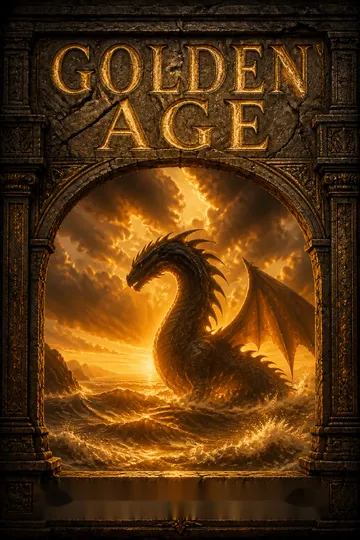
Golden Age makes political systems visible through bodies, routes, and objects. Phalesia's Assembly is more than a contrast to Solon's monarchy: its deliberative process protects civic legitimacy, yet can leave citizens waiting while danger advances. Xanthos's warrior culture produces discipline and courage, but initially dismisses Dion's maritime intelligence as an inferior form of service. Ilea's empire, by contrast, converts expertise into conquest and human beings into labor, from the rowing benches to the pyramid's construction crews.
The eldren conflict complicates any simple opposition between civilized humans and monstrous others. Their transformations make power spectacular, but the threat of becoming wild gives that power an intimate cost: a self can be lost through overuse. Humans also become dangerous when fear hardens into collective judgment, as in the attempts to blame Zachary for the quake or Peithon's hatred of all eldren. The distinction between eldren and wildren therefore asks whether identity is defined by origin, present conduct, or the capacity to remember oneself.
Chloe and Dion's development turns these questions into action. Chloe moves from healing and argument toward combat, not by abandoning care but by learning when care must include resistance. Dion's gifts in sailing and archery challenge a culture that equates masculinity with the sword. Their relationship grows through mutual dependence, although the ending denies them an easy romantic resolution. The Oracle's prophecy gives their futures a sense of pressure, while Dion's unreadable fate resists the idea that history can be fully predicted.
The Ark gathers the novel's central conflict into a single object. To Solon it is gold, to Triton it is control, and to Phalesia it is a moral boundary. The danger lies not only in opening the chest but in believing that possessing its contents will settle questions of justice, death, or belonging. The book ends with the immediate invasion defeated, yet leaves the larger war and Dion's place among humans unresolved. Survival is secured; reconciliation remains work still to be done.
Review Summary
People Also Read


Characters
Chloe
Phalesia's defiant healerThe eldest daughter of First Consul Aristocles, Chloe is a healer and musician who has learned to observe people as carefully as she studies wounds. Her devotion to her younger sister Sophia makes her protective, but it does not make her passive: she challenges male consuls when they scapegoat the eldren and later seeks practical skills when captivity strips her of choice. Chloe's first instinct is to help, yet she gradually learns that care can require force and that good intentions do not guarantee safety. Her compassion is disciplined by courage, not opposed to it. She is motivated by loyalty to family, her city, and the possibility of judging people by their actions rather than their ancestry.
Dion
The sea-minded princeDion is the younger son of King Markos and a prince who has never fit his father's ideal of a warrior. He struggles with sword and shield, but discovers an exceptional gift for archery and an even deeper aptitude for sailing. Curious, observant, and willing to improvise, he sees how trade and naval power will shape the future of the nations around him. His impulsiveness can put others at risk, especially when he assumes he understands their choices, but he can revise his judgment when confronted with evidence. Dion wants to prove that his abilities matter to his family and homeland, while his growing ties to the eldren complicate the identity he thought was settled.
Zachary
The eldran allyZachary is a silver-haired eldran who has long maintained a friendship with Chloe's family. His ability to change into powerful forms makes him invaluable in rescue and battle, but each transformation risks eroding his sense of self. Zachary is deliberate, gentle with those he trusts, and committed to preventing renewed war between humans and eldren. He does not confuse peace with refusing to confront danger; he accepts that wildren beyond recovery must be stopped. His restraint comes from knowing both the practical and psychological cost of power. Through him, the story presents the eldren not as a single people with a single will, but as individuals negotiating memory, danger, and responsibility.
Aristocles
Phalesia's first consulAristocles governs through a civic system that gives authority to an Assembly rather than a monarch. He is a measured speaker who knows that persuasion often succeeds where direct confrontation hardens opposition. As Chloe's father, he is affectionate and trusts her judgment, although his public responsibilities limit how quickly he can act on personal grief. He believes the eldren should be judged by conduct and recognizes the strategic danger posed by Ilea. His central difficulty is that deliberation, the source of Phalesia's legitimacy, can become paralysis when a crisis demands immediate action. Aristocles tries to preserve both his city's sovereignty and the procedures that make it distinct.
Solon
The dying sun kingSolon rules the Ilean Empire as an expansionist monarch whose authority is reinforced by military success and religious ceremony. He is intelligent, controlled, and acutely aware of how public weakness could damage his rule. Facing a fatal illness, he builds a vast gold-covered pyramid because he believes it will secure his passage into the afterlife. His fear of death does not make him reflective; instead, it narrows his attention toward an absolute solution and more territory to supply it. Solon can recognize skill in others, but treats people as instruments when their usefulness outweighs their independence. His political brilliance and spiritual desperation feed each other, turning empire-building into a personal attempt to control what comes after life.
Nikolas
Xanthos's warrior heirNikolas is Dion's older half-brother, the heir to Xanthos and a commander formed by the kingdom's military traditions. He is powerful, energetic, and proud of the responsibilities he has mastered, yet his affection for Dion is sincere and often expressed through practical support. Nikolas values discipline and strength, but his family life gives those values a human center beyond victory. He is accustomed to directing others and carrying the expectations of a future king. This confidence can coexist with vulnerability, especially when family and kingdom are threatened. Nikolas's relationship with Dion reveals a man who wants his brother to find a place, even when he does not fully understand what that place should be.
Thea
Xanthos's compassionate queenThea is King Markos's second wife and Dion's mother. She is graceful, thoughtful, and unusually willing to speak about the eldren without collapsing them into the category of wildren. Her past gives her a personal reason to fear violence, but she resists turning trauma into collective blame. Thea encourages Dion to understand before judging and offers a model of strength that is not built around combat. Her influence helps preserve a fragile peace between Xanthos and the eldren, even when others regard that policy as weakness.
Peithon
The king's bitter adviserPeithon manages Xanthos's treasury and trade, and was once a close companion of King Markos in war. He is capable and politically influential, but grief over a wildren attack has hardened into hatred of all eldren. He sees security through the lens of punishment and containment, while Thea argues for judging individuals. Peithon's ambition and resentment make him dangerous inside the royal court. He wants more than administrative responsibility, and his old loyalty to Markos now competes with his conviction that the kingdom must be remade around his own judgment.
Kargan
Ilea's naval commanderKargan commands the bireme Nexotardis and serves as a senior military adviser to Solon. He is imposing, proud, and accustomed to having his orders obeyed. His first encounters with Phalesia reveal little respect for its elected government or customs, and he sizes up people and resources as a commander preparing for advantage. Kargan is not merely a brute: he understands ships, logistics, and the risks of war. His loyalty to Solon makes him a formidable instrument of empire, although he can recognize when an alliance or plan carries dangers of its own.
Tomarys
Chloe's formidable guardianTomarys is a large, skilled eunuch assigned to guard Chloe in Lamara. His appearance makes him intimidating, but his competence rests on observation, patience, and careful control of how others read him. He teaches Chloe to use surprise, positioning, and an opponent's assumptions rather than relying on strength. Tomarys has family ties beyond the palace, and his concern for them shapes the limits of what he is willing to risk. He is not sentimental, but gratitude and loyalty matter to him. His training gives Chloe a language of action that changes how she understands vulnerability.
Triton
The one-eyed eldren kingTriton is a powerful, one-eyed eldran held by Solon in a gold collar that prevents him from changing shape. He carries himself as a ruler and negotiates with confidence, but his aims do not necessarily represent all eldren. He views the Ark as a source of something belonging to his people and is willing to ally with Solon to obtain it. Triton embodies the danger of turning historical grievance into a program of control. His strength makes him useful to a king, while his long memory makes him an uncertain partner.
Roxana
The shipbuilding captainRoxana is a skilled shipbuilder and captain in the Ilean navy, originally from the conquered land of Haria. Direct, practical, and respected by the sailors who work under her, she has earned authority in a system that still keeps her enslaved. She prizes knowledge as much as physical power and dreams of building an even more formidable warship. Roxana gives Dion access to naval life because he proves useful, not because she shares his politics. Her story exposes the difference between professional competence and personal freedom.
Sophia
Chloe's younger sisterSophia is Chloe's eleven-year-old sister, lively and accustomed to being cared for by her older sibling. The earthquake leaves her frightened and injured, making Chloe's protective role immediately clear. Sophia's questions about the gods and the eldren echo the anxieties circulating through the city, but she is also a child who can be teased into forgetting her bruises. Her bond with Chloe gives the story an intimate measure of what political violence threatens to destroy.
Anoush
Dion's resourceful guideAnoush is an orphaned boy who knows the streets and markets of Lamara better than a newcomer could. He is eager to earn money, quick to read what a client needs, and brave enough to keep helping Dion when the situation becomes dangerous. His resourcefulness is not romanticized: he survives by making himself useful in a city where children can be overlooked or exploited. Anoush becomes a link between Dion's covert work and Chloe's movements inside the palace.
Cob
Dion's veteran sailorCob is an experienced sailor who teaches Dion how to read wind, water, and risk. His cautious judgment often counters Dion's appetite for bold plans, but he is not timid and agrees to dangerous voyages when he believes the stakes warrant them. Cob's knowledge is practical and earned over a lifetime at sea. He gives Dion both a model of seamanship and a friendship not dependent on royal status.
Amos
Phalesia's scarred captainAmos commands Phalesia's city guard and is known for loyalty, discipline, and a weathered face marked by years of service. He follows Aristocles's orders while remaining attentive to the people those orders affect. Amos respects Chloe's courage and has worked alongside the eldren in protecting the city. His steady presence connects Phalesia's civic leadership with the soldiers expected to defend it.
Princess Yasmina
The sheltered hostageYasmina is a princess from Shadria who has lived under confinement in Solon's palace. Proud and accustomed to royal deference, she is reluctant to trust Chloe's plans for escape. Her caution reflects a hostage's awareness that individual freedom can carry consequences for an entire family or country.
Aristocles's wife
Chloe's remembered motherChloe's mother died of fever before the story begins. Her absence shapes Chloe's early responsibility for Sophia and her decision to study healing. Aristocles and Chloe remember her as a loving presence whose care remains part of the family's emotional life.
Plot Devices
The Ark of Revelation
Sacred gold conceals powerThe Ark is a massive golden chest kept at the Temple of Aldus in Phalesia. Citizens believe it contains divine laws and that opening it would bring catastrophe, so it serves as both a moral symbol and a visible test of civic resolve. Solon covets its gold for his pyramid, while Triton wants what is hidden inside for a different purpose. The competing interpretations force characters to decide whether tradition, wealth, or military advantage should govern their actions. Its contents connect the present conflict to the ancient war between humans and eldren.
Eldren and Wildren
Power risks lost identityEldren can change into forms suited to sea, land, or air, including merfolk, serpents, giants, furies, and dragons. Transformation is powerful but dangerous: if an eldran remains changed too long, wildness can take hold and the person may lose the ability to return. Wildren are therefore not simply another name for eldren; they are creatures whose former identity has been lost. This distinction drives Chloe's defense of Zachary and fuels political arguments in both Phalesia and Xanthos. The risk makes every transformation a choice with a personal cost.
The Oracle's Prophecy
Future shadows present choicesAt Athos, the Oracle gives Chloe a three-part prediction about love, marriage, and a death she will cause. The prophecy follows her through captivity and escape, shaping how she interprets danger without telling her what actions will fulfill it. Its function is not to remove agency but to make every consequential choice feel watched by an uncertain future. The Oracle also cannot read Dion, establishing that prophecy has limits and that some people remain outside its view.
The Materia Naming
Metal assigns social identityAt a child's naming ceremony, a magus selects one of four metals, each associated with a path in life: gold with leadership, silver with commerce, copper with arts and healing, and iron with warfare and labor. The chosen metal is represented by a necklace and shapes how a person's community understands their expected role. Dion's silver identity contrasts with his family's martial ideals, while Lukas's iron naming reinforces Xanthos's warrior culture. The ritual makes status feel sacred and fixed, even as the characters' lives repeatedly exceed the categories assigned to them.
The Bireme Fleet
Naval design changes the balanceIlea's biremes combine two banks of oars, a sail, a shallow hull, and a bronze ram. Their speed, maneuverability, and ability to beach directly on a shore make them superior to the smaller Galean galleys. Dion studies their construction after enlisting in the navy, while Roxana's expertise reveals that the ships depend on accumulated knowledge as much as timber, labor, and money. The fleet turns geography into a weapon: the Shards and the sea routes that once protected Xanthos and Phalesia become avenues of invasion.
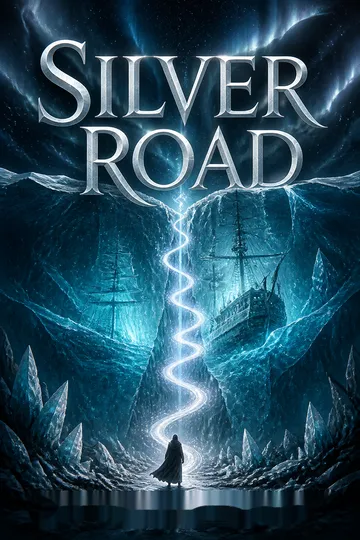
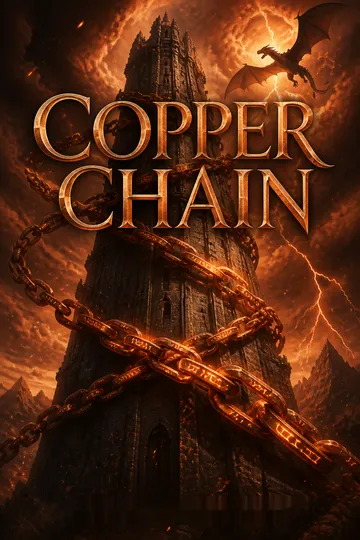
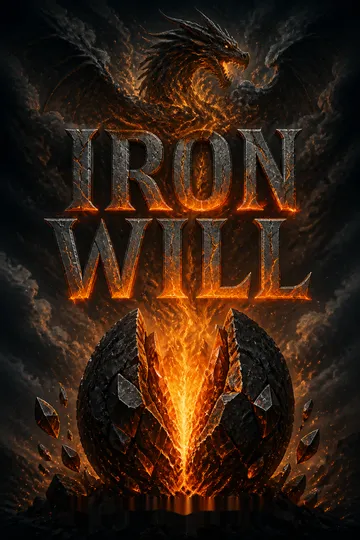
The Shifting Tides Series
About the Author

Download PDF
Download EPUB
.epub digital book format is ideal for reading ebooks on phones, tablets, and e-readers.








