


Plot Summary
The Solaris on Ice
Three centuries after Aleuthea sank, King Palemon still inspects the Solaris, his people’s last surviving ship, on the frozen plain where they have made their home. In the vessel’s preserved log, he reads how the eldren king Marrix destroyed Aleuthea, and how a storm scattered the fleeing fleet north until ice trapped them.
Now the exiles face starvation, and Palemon fears the settlement cannot survive another winter. The sorceress Zara discovers that the gold in her staff is drawn toward a powerful source, which she believes is the lost Ark containing Marrix’s horn. Its renewed magic may guide them back to the Realm of the Three Seas. Palemon takes the Solaris and a select crew to seek it, promising to return for the people left behind.
Palemon’s inspection ritual is both practical care and a way of keeping a vanished civilization tangible. The ship represents more than transportation: it is evidence that his people once possessed a world beyond ice and hunger. His decision to sail is therefore not a simple escape from scarcity. He assumes the role of a restorer, binding his authority to a promise that he will bring the others home. The log’s account also establishes a dangerous precedent: Aleuthea’s survival once depended on magical force, and its descendants may again mistake recovery of power for recovery of a homeland.
A Golden Argument
At the Temple of Aldus, Chloe joins her father, Aristocles, and Nikolas, king of Xanthos, in deciding what to do with the golden ark. Nikolas wants its gold to rebuild the fleets, while Aristocles resists destroying a relic his people have revered for generations.
Chloe proposes asking Zachary, the eldren leader who helped defend Phalesia, whether the horn inside can safely be moved. Nikolas forbids her to travel, but Chloe slips past his guard and rides toward the Wilds.
There she finds Dion, Nikolas’s exiled younger brother, practicing archery. Her sudden appearance nearly gets her shot; after she falls into the river, the two kiss, then Dion pulls away because she is betrothed to Nikolas. Chloe continues toward Zachary with an eldren guide.
Chloe’s choice to seek Zachary is an early act of political judgment, not merely rebellion. She recognizes that neither Nikolas’s urgency nor Aristocles’s reverence answers the practical question of whether the horn can be moved. Yet her private encounter with Dion exposes the personal cost concealed inside the public alliance: the marriage is already shaping her future before she has consented to it emotionally. Dion’s retreat shows how thoroughly family loyalty constrains desire. Both characters sense an alternative life, then suppress it because the existing arrangement feels more binding than their own wishes.
Gold Has a Price
At Zachary’s home, he tells Chloe that the horn is safe in an iron container, giving her the answer she needs to bring back to Nikolas. After she leaves, Liana, a young eldren who cannot change shape, overhears Zachary admit to his wife Aella that iron will corrode under the horn’s power. Gold alone can contain it indefinitely, so he intends to take the horn before the humans move it.
Liana also hears Aella decide to teach her healing rather than force her to fight. Eiric, Zachary’s son, finds Liana listening and reassures her that she belongs with them, offering her an amber necklace. Chloe returns to Phalesia believing the transfer is safe, unaware that the iron box will become a countdown.
The scene makes information itself a contested resource. Zachary lies not because he trusts the humans, but because he expects their desire for gold to overpower any warning; concealment becomes his attempt to control a decision he believes is already inevitable. Liana, by contrast, overhears both the strategic secret and a quieter possibility for her life. Her inability to transform has made her feel like a failed member of her community, yet Aella’s plan recognizes a form of contribution that does not depend on combat. The two revelations place different kinds of knowledge beside each other: one threatens a war, the other offers Liana a place.
The Village Burns
In the Waste, Triton persuades Jonas, a grieving guardian from Zachary’s community, that Marrix’s horn can restore his wife and son, who were lost to wildness. Jonas reveals the Village’s location.
When Triton’s followers attack, Dion races back to warn the eldren and fights through the burning settlement, but he cannot stop Triton from throwing him against a tree. Aella has already changed into a dragon while protecting Liana; she leaves the Village rather than risk attacking her.
Zachary follows her into the Wilds, while Eiric tears away the amber necklace he gave Liana and tells her to leave. The houses are destroyed, the community scatters, and Liana, convinced she has brought disaster upon the people who sheltered her, flees toward the human city.
Triton’s promise works because grief makes Jonas vulnerable to an answer that sounds more humane than acceptance of loss. His betrayal is not born from ambition but from desperation, which makes the ensuing destruction harder to reduce to simple villainy. The attack also exposes the fragility of Zachary’s peaceful community: its homes take years to grow, but a single raid can erase them in an afternoon. Liana’s exile sharpens that loss into self-blame. Eiric’s rejection may be grief speaking, yet to Liana it confirms her oldest fear, that belonging is conditional on becoming what others need.
A Wedding by Force
Aristocles dreams that the Oracle of Athos warns that destroying the ark will sound the horn. Although he promised Nikolas he would consult Zachary’s advice, he retreats from that commitment and calls for a vote.
Nikolas responds by using his guards to kill opposing consuls and seize control of Phalesia. Chloe and her younger sister Sophia are trapped in the Temple of Aeris. Nikolas forces Chloe into a marriage ceremony, making the political alliance binding before Aristocles can stop him.
With help from the consul Nilus and Captain Amos, Aristocles escapes the city, leaving his daughters behind. Chloe later tricks her guard, kills him when he refuses to let Sophia go, and sends her sister into hiding with the apothecary Balion before fleeing to find their father.
The sequence turns political indecision into a crisis of coercion. Aristocles’s appeal to the Assembly reflects genuine civic principle, but his reversal after the dream also gives Nikolas time to seize the initiative. Nikolas treats marriage as another instrument of statecraft, collapsing Chloe’s private consent into a public bargain. Chloe’s escape reverses that logic: she uses the guard’s assumptions about her weakness to free herself and Sophia. Yet her sister’s hiding place costs Chloe companionship and safety. Each choice preserves someone, but no choice restores the family’s former life.
The Horn in Hiding
Liana enters Phalesia disguised with dyed hair and a mixed-metal necklace, then gets work cleaning the barracks. When soldiers carry the horn from the fallen ark in a new iron box, she notices rust spreading across it and realizes the container is failing. She follows the guards and eventually steals the horn, keeping it hidden in her satchel.
Chloe, meanwhile, escapes the city after entrusting Sophia to Balion. At the gates she recognizes Liana, who is fleeing the barracks after being discovered, and invites her along. Soldiers pursue them toward Tanus, but the two women escape north and are rescued by Vikram, a wandering sorcerer whose staff uses copper to unleash a devastating sound. He brings them to his secluded villa.
Liana’s disguise is a costly experiment in belonging. The necklace irritates her, but she accepts that discomfort as the price of moving through a human city unnoticed. Her discovery of the rust transforms that experiment into a mission: she acts on the knowledge Zachary concealed, even though she has no clear plan for what to do with the horn. Chloe’s invitation gives their flight a fragile solidarity. Neither woman is simply rescuing the other; each is choosing company over the safer but lonelier course of protecting herself alone.
The Heart of Cinder Fen
After Aella’s death, Eiric refuses to follow the surviving villagers to Phalesia and searches Cinder Fen for Zachary. Dion helps him reach the region, then chooses to restore his old boat, the Calypso, and seek a life at sea rather than keep struggling to fit among the eldren.
Eiric tracks Jonas, defeats him in dragon form, and captures him. Under questioning, Jonas reveals that the horn has disappeared and that Triton is at Cinder Fen’s central wellspring, planning to destroy the source of eldren power.
Jonas dies before Eiric can learn more. Eiric continues to the heart of the Fen, where Triton captures and chains him, preventing him from changing shape. An elder named Dalton learns who Eiric’s mother was and recognizes that he may have a claim Triton lacks.
Eiric and Dion respond to the Village’s destruction in opposite but equally meaningful ways. Eiric doubles down on responsibility, pursuing the people who shattered his community; Dion accepts that affection for the eldren cannot make their world feel like his own. Neither path is framed as cowardice or betrayal. Jonas’s revelation gives Eiric a concrete destination, but the iron chain reverses his usual advantage and leaves him physically helpless. Dalton’s recognition of Eiric’s maternal lineage suggests that leadership may come from a history Zachary deliberately kept from his son, complicating the idea that authority is simply chosen.
The Free Men's Test
Dion reaches Myana hoping to sell Eiric’s gemstones, but a false soothsayer’s directions lead him into a pirate ambush. The Free Men question him about freedom, equality, faith, and slavery before offering him a place among them. Their leader Jax and Dion’s old sailing master Cob recognize each other, and Cob vouches for Dion.
At Fort Liberty, Dion signs the group’s articles, which give members a vote and forbid slavery. Jax challenges him to launch and sail a captured bireme around the island before sunset. Dion recruits Cob, the quartermaster Gideon, the priest Paolus, and other islanders, then organizes the launch and returns the ship safely. Jax awards him command of the warship, newly named the Dauntless.
The Free Men offer Dion something the royal court and the Village could not: a community in which membership is defined by chosen conduct rather than ancestry. Their ideals are not abstract, since the charter governs weapons, shared plunder, voting, and the treatment of captives. Dion earns command through coordination, not force. He turns scattered labor into a working crew by teaching, recruiting, and taking on difficult tasks himself. The successful launch makes his leadership visible to people who have little reason to grant him status automatically.
Vikram's Dangerous Lesson
Vikram recognizes Chloe’s aptitude for magic and teaches her that the four metals carry distinct powers. When Chloe touches his gold bracelet, she makes it glow, but the effort leaves a dangerous fire in her mind. Vikram insists she must learn control; Chloe studies his books and experiments with an iron pot, which rusts and crumbles after she overheats it.
While Chloe practices, Liana tries to overcome her fear of changing shape. Vikram hides the truth that he has killed two village girls and used their bodies to make Chloe appear dead. He then uses a copper tube at her throat to incapacitate her. Liana returns in giant form and kills him, stopping him from keeping Chloe captive. The friends stay at the villa to learn what they can.
Vikram’s teaching begins as an exchange between two isolated people, but his loneliness turns hospitality into possession. He sees Chloe’s gift as a reason she should remain with him, while she sees knowledge as a tool for returning to her own life. The metals make that conflict bodily: learning requires contact, concentration, and risk, and the rusting pot records the cost of a failed attempt. Liana’s transformation is likewise not a neat triumph over fear. It arrives through terror and anger, saving Chloe while showing how close protective force can come to uncontrolled violence.
Fort Liberty in Flames
During a raid, Dion commands the Dauntless and helps the Free Men capture a merchant fleet carrying Lady Fatima, wife of the powerful trader Mercilles. Fatima sets an oil-laden ship ablaze, killing Gideon and many of the pirates; Jax survives the fire but later dies from an arrow wound during an exchange meant to ransom Fatima. The Free Men return to find Fort Liberty burned.
Reece claims leadership and argues that the group should abandon its charter. Dion defends Jax’s principles and asks for a vote, but Reece invokes the charter’s combat rule. Dion begins the fight with an obsidian axe and, under mortal pressure, changes into a giant and kills him. The Free Men elect Dion their new leader, though his sudden power frightens even him.
The catastrophe tests whether the Free Men’s principles can survive the loss of both their home and their charismatic founder. Reece interprets vulnerability as proof that the charter failed; Dion argues that abandoning it would make the community indistinguishable from the powers that prey on them. His transformation settles the fight, but it also unsettles the people whose trust he needs. The victory gives Dion formal leadership without resolving his fear of what he is. Authority arrives through an act that appears to contradict the disciplined, cooperative command he had just demonstrated.
Kargan's Challenge to Mydas
Back in Lamara, Kargan discovers that Mydas, Solon’s brother, has become regent and is stripping gold from Solon’s pyramid. Mydas manipulates Javid, a skilled arena fighter, into killing Solon’s three sons by suggesting they were responsible for Javid’s brother’s death.
Kargan rejects Mydas’s plan for another invasion and leaves for independent Koulis with Javid. There he wins command of the imprisoned Ilean naval garrison by promising to protect Koulis from pirates. Aristocles, meanwhile, flees Nikolas’s advancing forces and reaches Koulis, where he and Kargan form an alliance against Mydas.
Kargan speaks publicly against the regent and gathers support among soldiers and citizens. But when Nikolas advances across the Waste, Kargan sends Aristocles back toward Phalesia, claiming he must secure his own rise to power first.
Kargan’s political turn is built from contradictory loyalties. He despises Mydas’s opportunism, yet he also sees that military strength alone cannot hold an empire whose provinces are slipping away. Aristocles gives him a language of popular accountability, while Javid insists that personal promises matter even when political expediency tempts Kargan to abandon them. The alliance works because both men need what the other can supply. Its weakness is equally clear: Kargan’s ambition may be sincere reform or merely a more competent route to rule, and his decision to send Aristocles home exposes that uncertainty.
Aristocles Meets the Free Men
Aristocles reaches Koulis seeking help, but the Council of Five refuses to commit itself. As he hides nearby, he overhears Kargan and the council arranging an exchange for Fatima, who has been captured by the Free Men. Aristocles realizes the pirates may be his only route home.
When Kargan’s planned exchange collapses and he is imprisoned with his men, Aristocles and Amos break them out. Aristocles persuades Kargan to support peace with Galea, then sails home on a merchant galley.
Dion’s fleet intercepts it, frees its chained rowers, and recognizes Aristocles. He asks the Free Men to help stop Mydas’s fleet in return for homes in Phalesia. Dion puts the proposal to a vote, reveals his identity as Nikolas’s brother, and leads them toward the coming battle.
The bargain joins two groups often treated as threats by established rulers. Aristocles needs a fighting force; the Free Men need a durable home and protection from retaliation. Dion does not enlist them by concealing the risk or claiming a hereditary right to command. He asks for a vote and reveals the lineage he has spent much of his life avoiding. His decision makes identity a public responsibility rather than a private secret. Aristocles, in turn, discovers that political legitimacy can come from keeping faith with people who have no formal standing in his Assembly.
The Dragon Over Pao
At Vikram’s villa, villagers gather to attack after he kills two of their women and disappears. Chloe tries to use his copper staff but cannot make it work. Liana senses Eiric’s distant distress, remembering the amber necklace he gave her and the assurance that she belonged.
She reaches across that mental distance and recognizes that he needs help. A dragon form finally answers her, and she lifts Chloe onto her back before carrying her away from the burning villa toward Cinder Fen. Chloe holds Vikram’s resonance staff and the horn in Liana’s satchel.
Below them, the villagers set fire to the house and its library, destroying the books Chloe hoped to study. Their flight brings them to Eiric’s crisis, but leaves Chloe without a teacher and Liana confronting the power she had feared.
Liana’s change begins not when she stops being afraid, but when attachment gives her a reason to act through fear. The amber necklace becomes a memory of care rather than a token of rejection, allowing her to reach Eiric when he is far beyond ordinary help. Chloe’s failed use of the staff is equally important: inherited knowledge cannot guarantee mastery under pressure. The fire consumes the library just as Chloe becomes committed to learning, forcing her to carry the lesson in her own body rather than rely on books or an isolated mentor.
The Horn Reclaims Sindara
At Cinder Fen’s wellspring, Triton chains Eiric with iron and announces his plan to destroy the gemstone at the pool’s bottom, ending the risk of eldren becoming wild. Dalton reveals that Aella, not Zachary, carried Marrix’s blood. When Liana and Chloe arrive, Liana attacks Triton while Chloe cuts Eiric free. Chloe uses Vikram’s copper staff to stun Triton, though the metal corrodes and disintegrates.
Eiric finds the horn in Liana’s satchel and sounds it. The blast summons the wildren, then reveals the horn’s true purpose: to bring them home and release those too far gone from their suffering. The wildren vanish, Sindara’s plants return, Zachary arrives in dragon form, and he kills Triton before collapsing into his own shape.
The horn overturns the assumptions that have driven both sides of the conflict. Triton believes power must be secured by controlling the source; Eiric learns that the horn was made to summon and release, not command. Chloe’s brief use of the staff matters because she acts despite imperfect mastery, while its destruction makes the cost of that act visible. The restoration of Sindara is not a simple victory: it brings Zachary back, but the wildren’s release also means accepting that some losses cannot be reversed. The scene replaces dominion with recognition and mercy.
The Silver Road Holds
As the horn’s wave reaches the sea, three wildren abandon Dion’s fleet instead of attacking it, allowing the Free Men to reach Roxana’s outnumbered Xanthian ships. Dion’s warships strike the Ilean fleet from the rear and help Roxana split and defeat it. On land, Nikolas’s army wins a costly battle against Mydas’s larger force, but his own losses are severe.
Kargan brings Nikolas Mydas’s severed head and asks for peace, explaining that he has no wish to rule Galea. Nikolas accepts, ending the immediate war and allowing the Galean states to negotiate with Ilea. Dion’s sailors recognize him as a Xanthian, but he chooses to return to Fort Liberty’s people rather than claim his brother’s crown. He promises the Free Men a home in Xanthos.
Victory comes from alliances that the older political order had treated as inconvenient or impossible. Roxana’s naval expertise, Dion’s improvised fleet, and the Free Men’s willingness to fight alongside royal forces defeat an enemy neither side could have overcome alone. The cost is not erased by success: Nikolas’s army loses heavily, and the Free Men have already lost their settlement. Kargan’s peace offer creates a chance to stop repeating the war, while Dion’s return to Xanthos turns victory into an obligation to provide shelter, not merely a claim to power.
The Cost of Return
Dion reaches Xanthos with the Free Men and learns from his uncle Glaukos that Chloe has been reported dead. In Phalesia, Aristocles returns expecting to restore the Assembly, but Nilus and three consuls stab him to preserve their own control. Nilus has also sent Sophia to Nikolas, telling her that Chloe died on the road.
Sophia accuses Nikolas of causing her sister’s fate, then poisons his wine and watches him collapse. Far away in restored Sindara, Chloe feels a violent surge of magic as Aristocles dies. Four magi from Athos find her and carry her away, explaining that her father is dead. Chloe has reached the homeland of the eldren, but the family and city she meant to return to have been taken from her.
The apparent end of the war does not end the struggle over who may choose a life. Nilus uses a fabricated death to direct Sophia toward the throne, while Sophia turns that arrangement into an act of revenge against Nikolas. Aristocles returns believing that military success can restore civic order, only to discover that his allies have made survival their first principle. Chloe’s power binds her private grief to the public consequences of decisions made elsewhere. The novel refuses a clean homecoming: peace arrives, but its institutions remain vulnerable to fear, ambition, and lies.
Palemon Reaches Imakale
The Solaris is lost at sea, its crew weakened by hunger, storms, and failing supplies. With Zara unable to find a route through the vanished magic of the ark, Palemon reveals the silver resonator he had kept hidden. He orders Zara to summon a wind strong enough to carry the ship east.
Her spell drives the Solaris through a violent storm and leaves her temporarily disoriented, but the vessel finally reaches Imakale. The starving Aleutheans recover with food and fresh water, then meet two local men. When they refuse to follow the strangers’ authority, Palemon draws his sword. Its iron glows with magic, and he sends the men fleeing with a warning that he has come to reclaim his people’s dominion.
The opening promise of return is fulfilled only in its most literal sense: Palemon reaches land, but not a recovered Aleuthea or a ready-made refuge. The hidden silver resonator saves his crew while repeating the old danger of uncontrolled magic, and Zara bears the cost of wielding it. Palemon’s first act ashore is not negotiation but threat. His arrival therefore closes one voyage while opening another conflict. The icebound king has carried his people out of starvation, yet his inherited vision of dominion may recreate the very pattern of conquest that destroyed their former world.
Analysis
Silver Road places three struggles over inheritance beside one another. Palemon inherits a vanished empire and treats restoration as a duty. Nikolas inherits a kingdom marked by murder and tries to secure it through force. Dion inherits a royal name he does not want, then finds authority among people who choose him. These contrasts make political legitimacy a practical question: who protects others, who listens, and who bears the cost of a decision?
The book also treats knowledge as an imperfect safeguard. Zachary lies about the iron container because he expects human greed to defeat caution. Vikram teaches Chloe magic but confuses mentorship with possession. The Oracle’s prediction gains power because Chloe interprets it as a command. In each case, information does not free characters automatically. Their assumptions about what the information demands can narrow their choices as much as ignorance does.
Magic is tied to material consequences. Metals tarnish, bodies suffer, and a horn once sought for mastery becomes a means of ending the wildren’s torment. The climax therefore revises the story’s central political instinct: a threat need not be conquered or controlled if its underlying condition can be understood. Eiric’s act restores Sindara, but it cannot restore every lost person or undo the damage caused by war.
The Free Men offer the sharpest alternative to inherited power, but the novel does not idealize their community. Their charter needs enforcement, their settlement can burn, and their leader can die. Dion’s rise matters because he repeatedly turns authority into shared work, then accepts obligations beyond his own freedom. The final image of Palemon arriving with a glowing sword deliberately unsettles that progress. One homeland has been restored through release; another claimant arrives expecting dominion. The book closes by making history feel cyclical, but not inevitable. The next choice still belongs to the people who inherit it.
Review Summary
People Also Read



Characters
Dion
The divided sailorDion is the younger brother of Nikolas and an experienced sailor whose mixed heritage leaves him feeling out of place among both humans and eldren. He is observant, physically capable, and more comfortable working beside a crew than asserting authority over one. His bond with Chloe is complicated by duty, timing, and his reluctance to challenge his brother. Dion’s deeper drive is not simply freedom from rejection; he wants a community where difference does not cancel a person’s worth. The sea gives him room to test that possibility through practical skill, shared labor, and the responsibility of protecting people who have chosen to follow him.
Chloe
The stubborn princessChloe is the daughter of Aristocles, Phalesia’s first consul, and a healer whose intelligence is sharpened by close attention to people and consequences. She has learned to navigate political danger, but she often mistakes endurance for choice, particularly when family duty and prophecy seem to demand sacrifice. Her feelings for Dion conflict with the alliance her father hopes to secure through marriage to Nikolas. Chloe is compassionate without being passive, and her encounters with Liana repeatedly force her to examine where she has surrendered agency. Her curiosity about healing, music, and the hidden workings of the world gives her a life beyond the role others assign her.
Palemon
King of the ice exilesPalemon is the thirteenth ruler to carry his name, leading Aleuthean descendants trapped for generations in a frozen land. Practical and disciplined, he distrusts superstition but relies on the preserved records and relics that keep his people connected to their lost history. He measures leadership through endurance and expects his warriors to be as hard as the landscape that raised them. Beneath that severity lies a determination to give his people a future beyond starvation. His central tension is between the responsibility to rescue his community and the inherited ambition to restore the empire that once defined it.
Nikolas
The grieving warrior kingNikolas rules Xanthos as a battle-tested king whose wife, son, and father were killed by the Ileans. His grief has made him fiercely protective of his people and impatient with deliberative politics, especially when he believes delay will invite another invasion. He respects strength and order, but his sense of responsibility can harden into control over the people he intends to protect. His relationship with Dion carries the pain of family loyalty strained by fear of the unknown. Nikolas is neither an uncomplicated tyrant nor a gentle ruler; he is a man whose genuine desire for security is repeatedly shaped by the violence he has suffered.
Aristocles
The cautious first consulAristocles leads Phalesia through the Assembly of Consuls and believes that public debate is a source of the city’s strength. He is a devoted father to Chloe and Sophia, a practiced negotiator, and a man who prefers long plans to sudden risks. His faith in civic process can become hesitation when events demand immediate action, but he is capable of adapting when danger strips away the comforts of office. Aristocles is drawn to compromise because he sees political stability as a form of care for ordinary people. His challenge is to preserve his principles without assuming that institutions will protect themselves.
Liana
The fearful healer-in-waitingLiana is a young eldren who has not learned to change shape, a difference that leaves her ashamed and wary of depending on others. After losing her parents, she is cared for by Zachary and Aella, but she still fears that affection can be withdrawn when she fails to meet expectations. Her curiosity about humans is genuine, and she approaches their city with the resourcefulness of someone trying to imagine a different future. Liana notices what others dismiss, carries difficult knowledge without knowing whom to trust, and longs to contribute without being forced into violence. Her friendship with Chloe becomes a space where both can reconsider what courage requires.
Eiric
Zachary's searching sonEiric is Zachary and Aella’s son, a powerful eldren warrior with a strong sense of duty to his community. He is confident in his abilities but not immune to grief, and his anger can make him mistake rejection for judgment. He treats Dion as a friend even when Dion doubts he belongs among the eldren, and he tries to reassure Liana in ways he does not always know how to sustain. Eiric’s understanding of leadership comes from watching his father combine strength with care. He is driven to protect those he loves, but must learn how to keep that purpose from being consumed by vengeance.
Zachary
The elder of the WildsZachary leads the eldren village in the Wilds and is a mentor to Dion as well as a trusted friend to Chloe. He values restraint, community, and the possibility of living without renewed war, even though his people’s history gives them ample reason to distrust humans. His knowledge of Aleuthean history makes him a guardian of truths others would rather simplify. Zachary tends to protect people by withholding information, a strategy that can preserve them in the short term while leaving them unprepared for consequences. His partnership with Aella gives him a model of care that is neither possession nor command.
Triton
The one-eyed eldren claimantTriton is an ambitious leader among the eldren of the Waste, commanding respect through his strength and his claim of descent from Marrix. He views humans as enemies and regards unity under his rule as the surest way to restore eldren power. His ability to read another person’s grief makes him a dangerous persuader, because he offers the vulnerable a future they desperately want. Triton is not content to defend his people or preserve their old home; he seeks to reshape the conditions of their existence. His certainty gives his followers direction, but it also narrows his capacity to recognize the cost of his plans.
Kargan
The Ilean fleet commanderKargan is a seasoned naval commander who has served the Ilean Empire through conquest and defeat. He is blunt, courageous, and intensely protective of the soldiers and sailors under his command. Court politics frustrate him, but he understands that an army cannot hold an empire together by force alone. His judgment is practical, sometimes to the point of self-interest, and he is quick to recognize where public loyalty may be turned into political power. Kargan’s relationship with Javid challenges him to answer for the promises he makes, while his dealings with Aristocles expose the difference between wanting order and being willing to share authority.
Zara
Palemon's gifted sorceressZara is the most skilled sorceress among Palemon’s exiles and specializes in working with gold. Her disciplined practice gives Palemon a possible route out of the ice, but her power requires concentration and can exact a severe personal cost. She is proud of her craft and unwilling to be treated as a mere instrument of the king’s plans. Zara’s relationship with Palemon combines professional trust with the imbalance between ruler and adviser.
Aella
The village's gentle healerAella is Zachary’s wife and an important presence in the eldren village, where her skill as a healer is matched by her patience with those who do not fit its warrior traditions. She offers Liana a path toward usefulness that does not depend on changing shape or fighting. Aella’s care is direct and practical, and she often sees emotional needs that Zachary’s concern for leadership can obscure.
Jonas
The grieving guardianJonas is a capable eldren guardian whose family has been lost to wildness. His grief leaves him vulnerable to promises that offer restoration, even when those promises require betrayal. He is respected as a warrior but deeply uncertain about what remains possible for the people he loves. Jonas shows how sorrow can be turned into political leverage without making the person manipulated entirely innocent.
Jax
The pirate kingJax leads the Free Men, a community of sailors, former slaves, and people pushed aside by the established powers. He is charismatic, playful, and attentive to the daily needs of his members, but he takes the group’s charter seriously. Jax understands that a reputation for fairness can protect the vulnerable as effectively as a fleet. His leadership rests on persuasion and example rather than inherited authority.
Sophia
Chloe's quick-minded sisterSophia is Chloe’s younger sister, a perceptive girl beginning her training as a priestess of Aeris. She is curious, proud, and more observant than adults sometimes assume. Her affection for Chloe is mixed with the frustrations of being protected or left out of difficult decisions. Sophia’s early interest in healing and practical work suggests a temperament that wants to be useful, not merely sheltered.
Amos
Aristocles' steadfast captainAmos is a veteran soldier and Aristocles’s most dependable protector. He is blunt, alert, and better at reading physical danger than political nuance, though he understands when a leader’s survival depends on retreat. His loyalty is expressed through preparation and action rather than speeches. Amos grounds Aristocles’s plans in the practical realities of travel, combat, and escape.
Roxana
The shipbuilding commanderRoxana is a skilled sailor and naval organizer whom Nikolas frees after the battle at Phalesia. She has spent years building and commanding ships for rulers who value her expertise more than her freedom. Direct and unsentimental, she insists that political leaders choose between competing demands rather than pretend one person can do everything. Her competence gives her authority in a world that often underestimates women who command.
Javid
The scarred arena fighterJavid is a formidable fighter shaped by violence, loss, and a strict personal code. He is not easily impressed by rank, and he asks Kargan for honesty before agreeing to serve him. His background as an enslaved man gives his beliefs about justice a practical urgency. Javid’s loyalty is real, but it depends on whether the people he follows honor their word.
Cob
Dion's old sailing masterCob is an experienced sailor who taught Dion much of what he knows about ships and navigation. Gruff, resourceful, and difficult to discourage, he serves as a steady link between Dion’s former life in Xanthos and his chosen life at sea. Cob is comfortable teasing his friends, but his judgment in dangerous waters is exacting.
Reece
Jax's hard-edged lieutenantReece is Jax’s second-in-command, a capable fighter who values discipline and caution. His suspicion of Dion comes from painful experience with nobles and a belief that rank allows the powerful to exploit people like his family. Reece is protective of the Free Men, but he interprets their charter differently from Jax, seeing its limits as liabilities.
Finn
The Free Men's quick-tongued purserFinn manages money for the Free Men and uses performance, disguise, and humor as tools. He is shrewd about how people behave when they think they are in control, yet his wit does not make him indifferent to the community’s losses. Finn’s theatrical instincts help him move through a world where appearances can be a form of protection.
Gideon
The former slave quartermasterGideon is a former slave who oversees the Free Men’s supplies, weapons, and provisions. He is literate, thoughtful, and attentive to the material conditions that make freedom possible, from food and blankets to fair treatment. His quiet intelligence counters the assumption that physical strength is the only form of usefulness in a pirate community.
Vikram
The isolated metal magusVikram is a reclusive sorcerer living in an ancient villa far from the cities. He understands the powers of the metals and has spent years honing his craft, but isolation has distorted his sense of what he may ask of others. His knowledge can be generous and dangerous at once. Vikram’s loneliness makes him hungry for an heir to his learning, and that hunger clouds his respect for another person’s freedom.
Nilus
The calculating consulNilus is a senior Phalesian consul skilled at navigating factions and maintaining access to power. He understands the Assembly’s habits and knows how to present himself as a useful ally to stronger leaders. His desire for influence is often disguised as practical concern for the city. Nilus measures political choices by their likely result, even when that calculation conflicts with personal loyalty.
Zanthe
The wary queen of TanusZanthe rules Tanus from a defensible mountain city and has a long memory for the injuries inflicted by neighboring rulers. She is sharp, skeptical, and unimpressed by gifts when a political offer fails to address her interests. Zanthe balances personal grievance against the immediate threats facing her people.
Plot Devices
The golden ark
A fragile magical sealThe ark is a gold container built by the ancient Aleutheans to hold Marrix’s horn. Its religious status has protected it for generations, while its value tempts political leaders to melt it down and finance a navy. The container is not interchangeable with ordinary treasure: the horn’s power corrodes other metals, making iron an unsafe replacement. Zara’s staff can sense the ark’s magic, so its changing state draws Palemon’s exiles toward the Realm of the Three Seas. The artifact joins the Aleuthean exile plot to the contemporary conflict among Phalesia, Xanthos, and the eldren.
The horn of Marrix
A call across speciesThe horn is a powerful eldren relic contained inside the golden ark. Triton believes it can restore his claim and reshape the fate of the eldren, while others fear what its recovery could unleash. Its power is misunderstood by nearly everyone who seeks it. When sounded, it summons wildren to Cinder Fen; its deeper purpose is to return them to their homeland and release those whose wildness cannot be undone. The horn’s repeated blasts turn a weapon of control into an instrument of return and mercy.
The four materia
Magic with a material costAleutheans draw different powers from iron, copper, silver, and gold. Copper channels sound, beauty, and harmony; iron evokes strength and violence and can project fire; silver can call wind but demands dangerous clarity of mind; gold inspires awe and leadership. Each use corrodes its metal, except gold, which does not tarnish. The power can injure the sorcerer when concentration fails. The system makes magic a physical negotiation between intention and material, and helps explain why the gold ark can contain the horn longer than an iron box.
The Oracle's prophecies
A fate Chloe interpretsThe Oracle of Athos gives Chloe three predictions: she will kill a man she pities, fear a man she loves, and marry a man she does not love. Because earlier predictions have come true, Chloe treats the final one as a fixed instruction rather than an outcome whose circumstances remain unknown. That interpretation helps her accept a political marriage before she understands what she truly wants. The prophecy functions less as a map of inevitable events than as pressure on Chloe’s capacity to choose, making belief itself part of the plot’s causal chain.
The Free Men's charter
Freedom made into rulesThe charter sets out how the Free Men share plunder, resolve disputes, compensate injuries, and choose leadership. Members of any gender can vote and carry arms, and the group forbids slavery while offering freedom to captives. Its articles are not decorative ideals: Dion signs them, relies on their procedures when Jax dies, and invokes a vote when the group must decide whether to join a war. The charter creates a rival model of political belonging, grounded in participation and conduct rather than bloodline, while leaving room for conflict over how its rules should be applied.
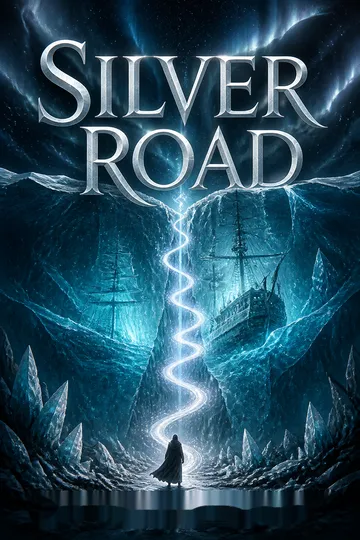
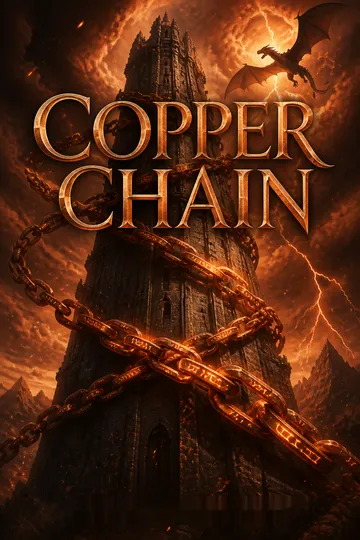
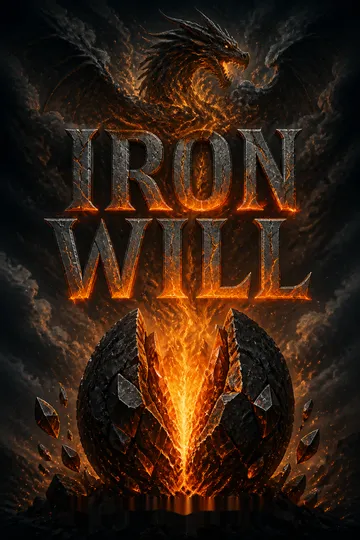
The Shifting Tides Series
About the Author


Download PDF
Download EPUB
.epub digital book format is ideal for reading ebooks on phones, tablets, and e-readers.








