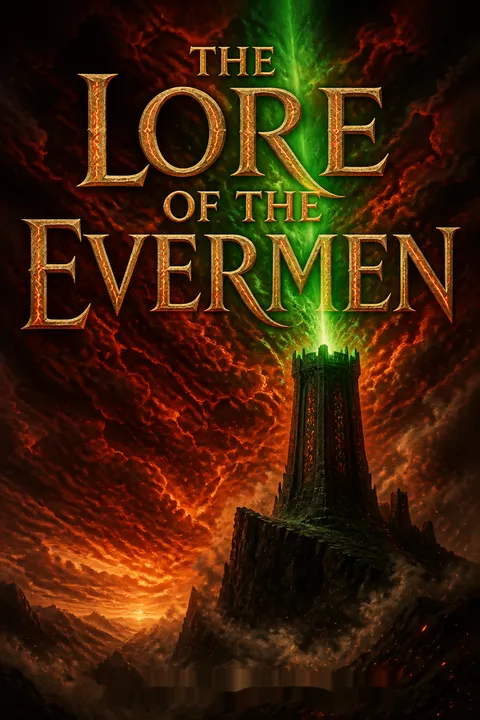


Plot Summary
Prologue
When Veldrian revenants overrun the island fortress of Nexos, pirate king Gorain Delman kills his wife, Sedah, and their five-year-old son, Arsan, rather than let them be turned into the walking dead. Their conqueror, Sentar Scythran, catches Arsan’s body before it reaches the sea, then kills Gorain and raises him as a revenant commander.
Gorain resists until Sentar threatens to keep Sedah and Arsan trapped in undeath. To win their release, Gorain agrees to serve. Sentar has already made the same bargain with two rival kings, and now has commanders for the invasion he means to carry across the ocean.
Gorain’s first act of love is also an act of terrible violence: he chooses his family’s deaths because he believes death is the only escape from a fate worse than life. Sentar turns that sacrifice into leverage, making Gorain serve by exploiting the very devotion that drove him to resist. The scene establishes the enemy’s method as more than conquest. Sentar converts grief, loyalty, and the bodies of the dead into instruments of war. It also plants the black-and-white banner of Nexos and makes the coming conflict personal before the central characters have even heard that the invasion is underway.
Altura Gets No Credit
High Lord Miro Torresante comes to Seranthia certain that Sentar Scythran will cross the ocean, but the Louan merchants refuse to provide Altura with weapons without payment. Rather than yield, Miro shows artificer Touana Mosas a quartz reflector, one link in a communication chain Ella is designing to connect the Empire’s capitals.
He argues that every house will need warning if the invasion comes. At the Imperial Chorum, he asks for more essence to defend Altura and for the other houses to promise mutual aid. The rulers choose equal allocations for every house, and even Emperor Killian votes against Miro’s request. The decision leaves Miro facing the invasion with too few weapons and no dependable promise of rescue.
The opening conflict makes preparation a political problem, not simply a military one. Miro sees that an enemy capable of turning casualties into new soldiers will punish delay, while the other rulers evaluate risk through familiar rules of fairness and allocation. The reflector embodies his attempt to build cooperation where trust is absent, but its usefulness depends on houses choosing to answer one another. His failure at the Chorum therefore creates more than a shortage of weapons: it reveals that the Empire’s institutions may not act quickly enough to protect the people they govern.
Ella Leaves Seranthia
Ella Torresante, Miro’s younger sister and an accomplished enchantress, presents the reflector network to Ada, daughter of the Akari leader, then receives separate requests from the Hazaran kalif, Ilathor, and a secret message from Killian.
She and the emperor share a private night together, but their closeness cannot quiet her fear that his Evermen powers may outlast her life. When Ella later arrives at the palace for the dinner Killian promised, his steward leaves her waiting and she never sees him.
At the Chorum, she discovers that Killian backed the vote against Altura. Ilathor then renews his interest in her, and Killian overhears enough to suspect their past was intimate. Miro asks Ella to travel with Ilathor and extend the reflector network through the desert.
Ella’s diplomatic labor and romantic uncertainty are entwined because both ask her to trust people whose responsibilities point in different directions. Killian’s imperial role makes his vote comprehensible, but his failure to meet Ella turns that public choice into personal abandonment. Ilathor offers a different form of security, rooted in loyalty to his people and in their shared history, yet Ella accepts his escort chiefly because Altura needs his help. Her departure is therefore neither a romantic choice nor a simple assignment. It is a decision to make herself useful while leaving an intimate rupture unresolved.
Carla Finds the Emperor
While Ella is away, Killian spots a woman waiting outside the palace and recognizes Carla, his first love from the travelling circus that once gave him a home. Their reunion brings back the night they returned to find the troupe destroyed by the emperor’s soldiers, and the years in which both survivors built separate lives.
Carla has struggled to find work and refuses to depend on a man, but Killian offers her rooms in the palace. His mother, Alise, warns that he barely knows the woman Carla has become and urges him not to confuse compassion with trust. Carla’s presence unsettles Killian’s feelings for Ella, while the unresolved danger to the Empire gives her access to a ruler already burdened by competing loyalties.
Carla’s return reaches into the emotional history that made Killian: the circus was not a passing childhood setting but the first community in which he felt wanted. His offer of shelter is consequently both an act of public responsibility and a private attempt to recover a bond severed by violence. Alise recognizes the danger in treating memory as proof of present character. Killian, however, is drawn to the intimacy of being known before he became emperor. The reunion plants a conflict between nostalgia and discernment, especially as his new office makes personal trust a matter of public safety.
A Signal Takes Shape
Ella reaches Agira Lahsa and mounts a reflector in the Hazaran palace observatory, then carries the chain north through the desert, connects Petrya’s capital, and installs the critical tower at Wondhip Pass.
Ilathor promises that his riders will answer Altura’s call, while his adviser Jehral gives Ella a sword whose enchantments will help him survive the journey ahead. Back in Sarostar, Miro and his commanders build walls, place cannon, and prepare to fight revenants that cannot be stopped by ordinary wounds.
Ella returns to the Academy and helps develop weapons, including black powder and a giant sword for a construct. She also learns that the alchemist’s warning about poison may point to a weakness in the Evermen, though she cannot yet interpret it.
The reflector network is both practical infrastructure and a test of whether political promises can become action. Ella builds it with painstaking attention to sightlines and local expertise, while Miro fortifies the places where the enemy is most likely to strike. Their work offers a counterimage to Sentar’s method: rather than treating people as fuel, they rely on skilled cooperation across cultures. Yet the system remains vulnerable because a chain is only as dependable as its links. The alchemist’s cryptic warning also shifts Ella’s attention from producing more force to understanding how power itself can become poisonous.
The Tower Is Rigged
Jehral discovers a wrecked ship on the Hazaran coast, its hold packed with revenants and one corpse still dangerous enough to kill several of his men. He races to warn Miro, but a group of Tingaran attackers ambushes him near Sarostar. Around the same time, fifteen-year-old Tapel, Amelia’s son and Rogan Jarvish’s stepson, follows a one-eyed stranger from the market and is captured by men guarding the reflector at Samson’s Bridge.
They force him to replace the real prism with a false one. Tapel throws the genuine device into the river instead. Bladesinger Bartolo follows clues from the ferryman Fergus, finds Tapel, and dives into the current to retrieve the glowing prism. Tapel restores it, allowing the warning chain to function again.
The tower plot makes the Empire’s political fractures physically legible: a device built to coordinate rescue can be quietly disabled by a handful of conspirators. Tapel’s fear does not make him heroic in a simple, triumphant way. He first obeys because he thinks resistance will get him killed, then makes one small choice that preserves the possibility of warning. Bartolo’s rescue and Fergus’s observation turn that choice into collective action. The episode also forces Miro’s allies to recognize that the enemy is not the only threat to their defenses. Internal sabotage can be as consequential as an army at the shore.
The Green Light Burns
Once Miro receives confirmation that the fleet is approaching the free cities, he orders the green reflector activated. The signal races east, but the station at Samson’s Bridge has only just been restored, so Bartolo sends allies to check the other links.
In Seranthia, Killian sees the green light and decides to take the Imperial Legion west, despite the danger of leaving his own capital exposed. Carla brings him a drink, then tries to stab him with a supposed enchanted knife.
Alise had secretly replaced the weapon and its poison, but Killian does not know that; he kills Carla when she lunges toward his mother. Mourning the friend he thought he had recovered, he still commits to defending Altura. Meanwhile, the Veldrin and Buchalanti fleets prepare to meet the armada.
The green signal transforms a theoretical question into a moral decision: Killian must choose whether imperial responsibility means protecting the capital or answering an ally’s distress. His choice is complicated by Carla’s attack, which turns emotional trust into a crisis of state security. Alise’s concealed intervention prevents the assassination, but it cannot prevent Killian from killing someone he loved. His decision to go west is therefore made amid grief, not after it has settled. The episode insists that leadership does not provide clean choices; it makes private losses and public obligations arrive at the same moment.
The Sea Takes Its Due
The Veldrin commodore Deniz and Buchalanti sailmaster Scherlic attack an armada carrying hundreds of revenants per ship. Their cannon and prismatic orbs sink many vessels, but the enemy’s numbers overwhelm them.
Scherlic rams a flagship and escapes aboard the battered Infinity; Deniz boards the pirate king Farix’s ship and dies after helping kill him. The defenders on Altura’s beach then meet the first revenants in the surf. Their arrows and blades hold the shoreline only briefly, while the enemy keeps landing.
Evrin Evenstar builds a stairway of light above the ocean and confronts Sentar, using a hidden binding device to drag both of them beneath the waves. Sentar resurfaces, wounded but alive. With Evrin gone, Miro’s forces must fall back to the prepared defenses.
The sea battle demonstrates the limits of courage when the enemy can spend bodies and ships without ordinary concern for loss. Deniz and Scherlic win costly tactical successes, yet those victories cannot undo the disparity in scale. Evrin’s confrontation with Sentar shifts the struggle from military arithmetic to a personal reckoning between former allies. His device wounds Sentar, but it does not remove him, and the apparent sacrifice buys time rather than certainty. That distinction shapes the defenders’ next choices: they must treat every setback as a delay to exploit, even when the price is a friend, a fleet, or a stretch of homeland.
Vezna Breaks Its Silence
While Miro retreats through successive defenses, his wife Amber tries to persuade Vezna’s high lord, Grigori Orlov, to promise aid. Grigori’s lord marshal, Sergei Rugar, drugs Amber, hides his daughter Katerina, and plants a forged ransom note to make Amber appear responsible.
He means to discredit Altura’s appeal and prevent Katerina, whom Grigori has named his successor, from ruling. Katerina remembers the heat-producing ring Amber gave her and uses it to burn through the living vines binding her.
Once she escapes and identifies Sergei, Grigori frees Amber and arrests his traitorous marshal. Amber convinces him to help. Veznan nightshades and infantry join the defense near Sarostar, while Ilathor’s Hazaran cavalry arrives earlier to rescue Miro’s dwindling force.
Amber’s imprisonment shows how easily a foreign woman can be made into a convenient explanation for a ruler’s fear. Sergei’s scheme depends on Grigori’s love for Katerina, but the same paternal attachment he exploits also creates the opening for Katerina to save herself. Amber’s earlier gift becomes practical evidence of her trust and ingenuity, not a token gesture. Grigori’s reversal matters politically as well as personally: he must admit that his cautious isolation has left him vulnerable to a conspiracy inside his own court. Aid begins only when he stops treating suspicion as wisdom.
Sarostar Nearly Falls
After the outer defenses are overrun, Miro’s survivors retreat to Sarostar, where Beorn dies in the fighting and Rogan Jarvish is gravely wounded. Ella uses the last of Altura’s pure essence, with High Enchanter Merlon’s help, to raise fifty buried swordsmen as revenants under her control.
She sends them across a bridge of lore to cut through the enemy in the city’s western quarter. Louan dirigibles then arrive with prismatic orbs, followed by Tingarans and avengers, and the coalition destroys the remaining western force.
The victory costs lives, including the Dunfolk healer Layla, whom Ella carries from the battlefield before her people take her body for burial. Hermen Tosch, the trader Ella had condemned for fleeing, is revealed to have financed the Louan weapons.
Ella’s forbidden use of the enemy’s own method is a desperate answer to a conflict in which the dead have become military property. She does not treat the revived swordsmen as faceless ammunition: she asks them to defend the home for which they had already died. Their return exposes the moral instability of calling necromancy evil only when an opponent uses it. The relief force also confirms that Miro’s earlier appeal was not entirely wasted, though help arrives only after Sarostar has paid heavily. Layla’s death prevents victory from becoming emotional absolution, while Hermen’s hidden generosity complicates Ella’s judgment of those who choose survival.
The White Signal Calls
As the survivors gather in Sarostar, the central reflector shines white, the distress color of the templars at Stonewater. Killian and Miro realize that Sentar split his forces: while one army attacked Altura, another struck Aynar in the east. They divide the battered coalition. Ilathor leads the fast Hazaran riders toward the enemy, while Killian, Miro, and the slower houses hurry toward Seranthia.
Ella and Shani ride north to find Dain Barden and his Akari army, which had been travelling south. The Akari camp is already failing: necromancers and warriors are sickening after contact with their revenants, and Ada, Dain Barden’s daughter, is among the afflicted. The warning that saved Altura now reveals that the Empire faces another front.
The white signal overturns the relief that followed Sarostar’s survival. Victory had suggested the coalition could recover, but the second front shows that Sentar has been manipulating the allies’ geography as well as their fears. The decision to divide forces repeats the dilemma Killian faced at the Chorum, only now there is no time to debate abstract fairness. Ella’s mission to the Akari also brings her into a system of necromancy that resembles the enemy’s, unsettling the boundary between ally and threat. The signal network succeeds at its purpose, yet it can only communicate danger, not solve the political and logistical crisis that follows.
Tainted Essence
Ella joins the Akari effort to repair wounded revenants and notices that the essence produces a foul smoke. When Ada dies and Ella’s own hair begins falling out, she recognizes the pattern of the camp’s illness.
Necromancer Aldrik has secretly tainted the essence because Renrik, now serving Sentar, is holding Aldrik’s sister hostage. Rather than be captured, Aldrik pours the poisoned liquid over himself. Dain Barden, grieving Ada and short of necromancers, chooses to spend his remaining revenants delaying the enemy.
On the road east, Jehral takes command when Gorain wounds Ilathor, then uses traps and diversions to slow the advancing force. Ella reaches Jehral with Shani and Akari fighters, but the Dain’s army is soon destroyed, leaving Dain himself alive among the dead.
The poisoned essence makes the story’s central technology ethically unstable: the same substance that animates soldiers can be altered into a slow, indiscriminate weapon. Aldrik’s betrayal is real, but coercion narrows his agency until the choices available to him are all catastrophic. Ella’s curiosity identifies the danger, yet her exposure means knowledge does not protect its discoverer. Dain Barden’s decision to spend his remaining forces on delay echoes Miro’s defensive strategy, while Jehral learns to replace instinctive charges with patience and deception. These choices show resistance becoming less about winning individual battles and more about controlling the enemy’s pace.
Ella Destroys the Cargo
At Seranthia, Sentar’s army surrounds the city while his fleet attacks the harbor and exposes the Sentinel. Ella realizes that the protected cargo ship must contain the essence Sentar needs to reopen the portal. Already dying from the Akari poison, she refuses to wait for a cure and uses enchanted slippers to walk across the water, hiding herself with her dress’s lore.
She climbs aboard, finds the ship’s immense stores of essence, and plants a destructive device in the lowest hold. The explosion tears the vessel apart, denying Sentar his supply. He catches Ella in the air, then drops her into the sea. She survives the impact but sinks among the spilled essence, her body poisoned and her consciousness slipping away.
Ella’s attack is not a triumphant escape from mortality but a decision made because she believes she has little time left. Her enchantments convert knowledge into movement, allowing her to cross a boundary that had seemed physically impossible, yet each step drains the power she needs to survive. The explosion attacks the material basis of Sentar’s ambition: he can command armies, but without essence he cannot immediately bring his brothers home. Ella’s fall makes the cost inseparable from the victory. She has bought time for Seranthia, but she has also entered the very substance that may kill her.
The Wall Comes Down
As the allied army reaches besieged Seranthia, Miro and Killian devise a plan that leaves Tiesto in command of the outside force. Miro drives his newly empowered zenblade through the base of the city’s Wall, cutting a long fissure while Bartolo protects him.
Killian and the elementalists summon a great wind that tips the Wall outward, crushing the revenants massed below it. The collapse opens the city but does not end the fight.
In the dust, Rogan battles Gorain while Miro joins the fray; Gorain kills Rogan, and Miro uses Rogan’s still-burning blade to destroy the pirate king. The allied ranks are near collapse until Petryan elementalists and Hazaran riders break through, followed by the Imperial Legion. Miro survives, wounded, as the battle turns.
The Wall’s destruction turns a symbol of protection into a weapon and asks whether defense can survive when its architecture becomes part of the assault. Miro’s plan depends on timing, trust, and a willingness to make the city physically vulnerable in order to crush the force outside it. The cost is intimate: Rogan dies in the struggle, and Miro can only continue by taking up his friend’s blade. Reinforcements arrive because the coalition has finally begun to act across borders, but they do not erase the losses already incurred. Victory here is improvised through shared risk rather than secured by superior strength.
The Sentinel Awakens
Sentar reaches the exposed Sentinel and uses his lore to awaken the colossal relic, ordering it toward Seranthia. Killian intercepts the construct and turns it away from the city, then confronts Sentar over the harbor. Their battle leaves Killian nearly powerless. At the same time, Ella drifts through visions of childhood, loss, and the people who shaped her.
She finds Evrin and Layla in a place between life and death, understands that her strength must come from within, and chooses to return. Revived by the essence that poisoned her, Ella reaches Killian as Sentar is about to kill him. She counters Sentar’s power, weakening his runes; Killian drives a sword through him. Sentar dies, and the invasion’s central commander falls.
The final confrontation binds the external and internal plots: Sentar’s attempt to command the Sentinel parallels Ella’s struggle to understand what can command her own life. Her return depends not on mastering another device but on holding fast to memory, love, and an inward source of strength. This does not make her triumph purely spiritual; she returns with power that can meet Sentar’s, and Killian still has to act at the decisive instant. Together they expose the weakness in Sentar’s claim to godhood. He is not defeated by one superior force, but by the union of knowledge, endurance, and human choice.
The Living Rebuild
With Sentar dead, the surviving allies clear revenants from the Empire and burn their bodies so they cannot rise again. Miro wakes wounded and learns that Rogan may not survive his injuries; after Rogan gives Ella a final chance to stop hiding behind work, he dies with Amelia beside him.
Ella and Killian eventually meet at Evrin’s concealed sanctum, where she has withdrawn among his books. She tells Killian the truth about Ilathor, and he explains what happened with Carla; they choose to be together.
Ilathor and Jehral prepare for Jehral’s new role as vizier, while Bartolo and Shani plan a life in Sarostar and learn they are expecting a child. The houses restore their alliance, allocate essence to those most harmed, and begin rebuilding the free cities.
The resolution refuses to equate survival with restoration. Rogan’s death remains a wound that no political settlement can repair, and Layla’s absence shapes Ella’s understanding of the cost of choosing to stand with others. Yet rebuilding becomes possible because relationships are spoken plainly rather than left to inference: Ella tells Killian what she concealed, Ilathor accepts Jehral as an adviser, and Bartolo and Shani imagine a shared home. The Empire’s new allocation of essence also answers the opening failure at the Chorum. Cooperation is no longer merely proposed; it is embodied in the distribution of resources and the work of repair.
Analysis
The novel’s central conflict is not simply between the living and the dead. It is between two systems for treating human life. Sentar’s army converts people into bodies, labor, and essence, while Miro’s coalition depends on people choosing to help one another despite old rivalries, unequal risks, and imperfect trust. The difference is not that the allies avoid using force. They build weapons, animate the dead, destroy cities, and make decisions that cost lives. Their moral distinction rests on whether those costs are acknowledged and whether people retain agency.
The reflector network gives this political argument a concrete form. It can transmit a call, but it cannot compel anyone to answer. Each signal exposes the gap between the Empire’s symbolic unity and its actual willingness to share danger. The first refusal at the Chorum is not erased when help eventually arrives; cooperation grows only after individual rulers and ordinary people see the consequences of isolation. The book treats alliance as labor: building towers, delivering supplies, risking a journey, and changing a decision when new evidence appears.
Ella’s trajectory develops the same tension inwardly. She trusts craft, study, and measurable systems because knowledge has given her a way to survive. Yet her most consequential insight comes when those tools fail to explain poison, love, grief, and the impulse to continue living. Her transformation does not invalidate reason; it widens the meaning of strength beyond mastery. Killian’s political and personal growth parallels this. His powers matter, but judgment, restraint, and the willingness to rely on others matter more.
The aftermath refuses easy restoration. Sarostar survives, but Beorn, Layla, Rogan, and countless others do not return to their families. Rebuilding and renewed cooperation are therefore not rewards that cancel the dead. They are obligations the survivors inherit. The ending suggests that a society becomes more resilient not by pretending loss can be repaired, but by distributing power, knowledge, and responsibility more honestly than it did before.
Review Summary
People Also Read

Characters
Ella Torresante
Inventive Alturan enchantressElla is Miro’s sister, an Academy-trained enchantress whose practical intelligence often becomes the story’s bridge between political ideas and physical solutions. She designs the reflector network, develops weapons, and reads patterns others overlook, including clues hidden in the behavior of essence. Her instinct is to work harder rather than admit uncertainty or ask for emotional support. That self-reliance makes her effective in a crisis but leaves her vulnerable to isolation, especially in her complicated bond with Killian. Ella is driven by loyalty to her homeland and the people she loves, yet she wants understanding as much as victory. Her development tests whether reason and craft can coexist with intuition, grief, and trust.
Miro Torresante
Altura’s embattled high lordMiro is Ella’s older brother, husband to Amber, and father to Tomas. A decisive battlefield commander, he sees the invasion’s likely route before most rulers accept that it is real. He is driven by responsibility for Altura and by the knowledge that Sentar has personally shown him what the enemy intends. Miro can be blunt, impatient, and slow to delegate, because he equates leadership with carrying the burden himself. His loyalty to Beorn and his affection for his family reveal a more vulnerable man beneath the high lord’s disciplined public face. He grows by accepting help and recognizing that a leader’s work includes trusting others to carry what he cannot.
Killian Alderon
Young emperor with Evermen powersKillian is the new emperor, an orphan raised among circus performers before war and extraordinary power reshaped his life. His Evermen abilities give him flight and formidable command of lore, but his youth leaves him uncertain how to balance his duties to Tingara with his responsibility to the whole Empire. He is personable and compassionate, often most at ease with people who knew him before he became a ruler. His relationship with Ella is complicated by fear of unequal lifespans, jealousy, and political choices neither can easily undo. Killian’s central pressure is learning that authority does not remove vulnerability. He must make decisions without certainty and accept the consequences when love and public duty collide.
Sentar Scythran
Lord of the NightSentar is an ancient Everman who commands necromancers and an army of revenants. He believes power entitles him to rule and regards ordinary people as resources for his wars and ambitions. His strategic patience is matched by a willingness to sacrifice followers, cities, and entire fleets when they serve a larger design. Sentar’s certainty is not simple confidence; it is a worldview that cannot tolerate human independence or the possibility that his authority might be questioned. He seeks to restore the Evermen to supremacy and to reopen the path to their former world. His conflict with Evrin and Killian is as much about what power means as who can wield it.
Amber Torresante
Miro’s steadfast partnerAmber is Miro’s wife and the mother of Tomas. She brings patience, persuasive skill, and emotional clarity to a campaign dominated by military urgency. Her work in Vezna requires her to win support from people who have little reason to trust Altura, and she approaches them with both evidence and empathy. Amber is not a fighter by training, but she is brave when danger becomes personal and resourceful when others underestimate her. She also serves as Miro’s most honest confidante, able to see the grief and exhaustion he hides from his soldiers. Her steadiness joins family devotion to political courage without reducing either to sentiment.
Evrin Evenstar
A remorseful ancient mentorEvrin is an ancient Everman who has spent much of his life hiding the truth about his kind and the world’s history. He mentors Killian in the use of power and offers Ella counsel when her technical knowledge cannot answer her deepest questions. His regret comes from having remained silent while people worshipped beings who had once enslaved them. Evrin’s humility distinguishes him from Sentar: he can acknowledge guilt, love humanity, and accept limits to his own power. He values learning but also understands that wisdom cannot be reduced to instruction. To Ella and Killian, he is both a source of rare knowledge and a model of what responsibility might look like.
Rogan Jarvish
Scarred mentor and statesmanRogan is an experienced swordsman and adviser whose loyalty has carried him through rebellion, war, and imperial politics. He is Amelia’s husband and Tapel’s stepfather, and he has long watched over Ella as a friend of her mother. Rogan’s bluntness is a form of care: he is willing to tell people truths they would rather avoid, especially when fear makes them retreat into familiar habits. He understands both military strategy and the emotional cost of leadership, though he is not immune to pride or the desire to remain useful. His relationship with Ella is quietly parental, built through years of attention rather than formal authority.
Jehral
Hazaran scout and adviserJehral is Ilathor’s trusted aide, a skilled horseman and soldier whose sense of honor is matched by practical judgment. He protects Ella during her journey through Hazaran lands and takes the danger of the western coast seriously when others are ready to abandon the patrol. In battle, he learns to use delay, traps, and misdirection rather than relying on a cavalry charge alone. Jehral’s loyalty is not blind obedience; he is willing to correct Ilathor when the kalif’s courage outruns his judgment. His friendship with Ella is affectionate but unpossessive, grounded in mutual respect. He values service most when it includes the freedom to speak honestly.
Ilathor Shanti
Proud Hazaran kalifIlathor leads House Hazara and has helped transform Agira Lahsa into a powerful city. He is proud, passionate, and deeply attached to his people, sometimes allowing emotion to push him into risks his advisers question. His history with Ella creates a private bond that complicates his political alliance with Altura. Ilathor does not hide his affection, but he can eventually distinguish desire from the kind of partnership that fits his life. His strongest commitments are to honor and to the survival of the desert tribes. He must learn that courage is not only the willingness to charge, but also the discipline to listen and preserve the people who follow him.
Shani
Petryan elementalistShani is Ella’s close friend and a powerful Petryan elementalist, trained to wield fire through enchanted cuffs. Her candor cuts through Ella’s evasions, especially when fear makes Ella avoid the difficult conversations she needs to have. Shani is also Bartolo’s partner, and their relationship combines teasing affection with genuine concern for one another’s safety. She is loyal to Petrya but understands that defending one homeland can require acting before its rulers agree. Her practical courage makes her both a formidable battlefield ally and an emotional anchor for Ella.
Bartolo
Veteran bladesinger and teacherBartolo is a seasoned bladesinger who trains young fighters at the Pens and serves as one of Miro’s most trusted warriors. His discipline is severe, but it comes from knowing that carelessness can be fatal. He takes responsibility for Tapel even when the boy’s choices create danger, and he risks himself to repair the reflector chain. Bartolo’s marriage to Shani links him to Petrya as well as Altura. He is brave, often stubborn, and more comfortable acting than discussing his own limits. His protectiveness is a strength, though it can lead him to take risks he would forbid his students.
Beorn
Miro’s veteran lord marshalBeorn is Miro’s older military adviser and a veteran of the rebellion. He understands logistics and strategy, and he is willing to challenge Miro when the high lord’s urgency begins to cloud his judgment. His gruff manner hides a deep loyalty to Altura and to the people who have fought beside him. Beorn does not seek promotion or prestige, but accepts responsibility when Miro insists he is the person the army needs. His steadiness helps translate Miro’s ambitious plans into practical defenses, while his friendship gives Miro a rare place to be corrected without being diminished.
Carla
Killian’s first loveCarla is a resourceful performer who shared Killian’s circus childhood and first experience of love. After the troupe’s destruction, she survives by relying on her own judgment and refuses to let poverty or vulnerability dictate her future. She is observant, skilled at reading people, and ambitious enough to seek influence in Seranthia’s dangerous street world. Her history with Killian makes their reunion emotionally charged, but she is no longer simply the girl he remembers. Carla’s insistence on independence shapes how she accepts help and how she navigates a city where the powerful often decide who gets safety.
Tapel
Young recruit and watchful observerTapel is Amelia’s son and Rogan’s stepson, a teenager who trains at Sarostar’s Pens despite beginning later than many of his peers. His Halrana accent and outsider status leave him unsure of his place among the other recruits. Tapel is observant and curious, noticing patterns adults overlook, but he is also frightened of failing the people whose reputations surround him. His first instinct under pressure is self-preservation, a response he judges harshly afterward. What distinguishes him is not fearlessness but the capacity to act despite fear and to recognize when one small choice can matter.
Dain Barden
Akari leader and fatherDain Barden leads the Akari, a northern people whose living architecture and disciplined warriors reflect their careful relationship with cultivation and lore. He is formidable, proud, and accustomed to making decisions without outside interference. His love for his daughter Ada makes him vulnerable to fear, while his duty to his people demands choices that cannot be softened by grief. Barden respects competence, even when it comes from someone outside his house, and he recognizes Ella’s intelligence. His leadership is shaped by the tension between preserving Akari independence and accepting that survival may depend on cooperation.
Grigori Orlov
Cautious Veznan high lordGrigori rules Vezna, a house that prefers isolation and protects itself through cultivated defenses and careful governance. He is reserved with outsiders and deeply devoted to his daughter, Katerina. That devotion can make him vulnerable to manipulation, but it also gives him a strong sense of what he must protect. Grigori’s challenge is to distinguish caution from paralysis and loyalty from unquestioning trust in his advisers. Amber’s appeal forces him to consider whether Vezna can remain safe while the rest of the Empire falls.
Katerina Orlov
Curious Veznan princessKaterina is Grigori’s young daughter, fascinated by seeds, plants, and the lessons her father teaches her. She is treated as a future leader, though the expectations surrounding that role place her in a society where a woman’s authority is contested. Katerina is curious and earnest, but also capable of gathering herself when frightened. Her interest in how plants grow becomes a practical kind of knowledge, and she takes Amber’s lessons seriously. Her relationship with her father is affectionate, while her questions about choice and adulthood show an independent mind beginning to take shape.
Sergei Rugar
Veznan lord marshalSergei is Vezna’s charming lord marshal and an influential adviser to Grigori. His easy manner helps him move between courtly friendship and political maneuvering, making it difficult for others to see where his loyalty lies. Sergei believes leadership should remain in male hands and is ambitious for authority. He regards people and institutions as pieces to position, and his confidence depends on keeping others from comparing his words with his actions. His role exposes the danger of a political system that grants trusted advisers power without asking them to account for how they use it.
Ada Barden
Akari heir and lorekeeperAda is Dain Barden’s eldest daughter and an Akari heir trained in her people’s lore. She is thoughtful and capable, with a disciplined manner that can read as stern to outsiders. Her meeting with Ella shows her interest in practical cooperation and in the mechanics of the reflector network. Ada carries the expectations of a leader while remaining part of a family whose traditions shape her choices.
Tiesto Telmarran
Halaran high lordTiesto rules Halaran and supports Miro even when his own forces are not fully prepared. He is conscientious and often visibly worried, but anxiety does not prevent him from carrying responsibility. Tiesto understands that logistics and timing matter as much as brave speeches, and he is willing to command the coalition when others entrust him with the task. His cautious temperament gives him a useful counterweight to Miro’s urgency.
Deniz
Veldrin naval commanderDeniz is a skilled Veldrin commodore whose experience at sea makes him essential to planning the defense against the armada. He is disciplined, perceptive, and deeply attached to the naval community that has become his family. Having seen his homeland conquered, he carries anger into the coming fight, but he also understands the difference between vengeance and protecting others. His judgment helps the allies make effective use of a smaller fleet.
Layla
Dunfolk healer and archerLayla is a small Dunfolk healer whose practical calm steadies Ella during the first battle on Altura’s coast. She can treat the wounded, use a bow, and tell Ella when fear is distorting her judgment. Layla’s people understand life as part of a continuing relationship with the natural world, a view that challenges Ella’s preference for explanations that can be tested and measured. Her friendship with Ella is affectionate, direct, and free of ceremony.
Hermen Tosch
Pragmatic free cities traderHermen is a trader who measures choices through family security, business, and the practical value of a safe route. Ella knows him through his work connecting communities and markets, but his cautious nature frustrates her when danger threatens Altura. He is not a soldier and does not pretend to be one. His decisions reflect the difficult line between self-preservation and responsibility to a wider community.
Amelia
Tapel’s mother and quartermasterAmelia is Tapel’s mother, Rogan’s wife, and a capable organizer trusted with provisioning soldiers during the defense of Sarostar. She is direct and protective, especially when she fears Tapel is in danger. Amelia’s work makes visible the labor that keeps an army functioning beyond the battlefield: feeding people, coordinating supplies, and sustaining the relationships that soldiers depend on.
Plot Devices
The Reflector Network
Carries calls across bordersElla’s quartz reflectors form a chain across the Empire, with each device lighting in the color of the house requesting help. A message can travel from one capital to the next when the reflectors have a clear line of sight. The system makes the alliances’ promises visible and gives rulers a chance to respond before an enemy reaches them. Its need for physical towers makes it vulnerable to sabotage, and the color code communicates urgency without conveying details. The network is both a military invention and a test of whether the houses can make cooperation real.
Essence and Revenants
Turns casualties into strengthEssence powers enchanted objects and can animate the dead, whose bodies are marked with runes that preserve strength and skill. Sentar’s army grows by converting fallen warriors into revenants and extracting essence from those he does not raise. The process changes the logic of battle: ordinary casualties can strengthen the enemy, and the living must consider what happens to their own dead. The Akari use related lore, which complicates any simple division between the Empire’s magic and Sentar’s. The substance can also be tainted, making its benefits inseparable from risks its users do not fully understand.
Lore and Enchanted Arms
Makes knowledge usable forceLore combines runes, essence, spoken sequences, and crafted materials to give objects abilities beyond their natural limits. It powers bladesingers’ weapons and armor, elementalists’ fire, constructs, reflectors, and the ships and devices used in battle. Some enchantments are single-use; more powerful effects require continuous chanting and concentration. Because the magic depends on understanding and technique, training matters as much as raw power. The novel also sets lore beside emerging chemistry and engineering, as Ella’s group develops black powder and other weapons. This mixture makes invention collaborative and leaves established authorities uneasy about knowledge they cannot control.
The Sentinel and Portal
Targets the war’s hidden purposeThe Sentinel is a colossal relic in Seranthia’s harbor, built through the combined lore of the Evermen. A portal within it leads to Shar, and Sentar intends to gather enough essence to reopen the way and bring his brothers back. The statue’s importance is not obvious to every ruler, which lets Sentar’s military campaign appear to be the whole threat. Its exposed mechanisms and hidden runes make it both a target and a potential weapon. The Sentinel binds the invasion’s immediate battles to a larger conflict over who will control the Empire and what the Evermen intend to restore.
The Pirate Kings
Give the dead commandersSentar personally revives three pirate kings, Gorain, Farix, and Diemos, preserving enough of their minds for them to lead troops and use the skills they possessed in life. Their flags distinguish their forces, while their command experience makes them more dangerous than ordinary revenants. Each king connects the larger invasion to a distinct confrontation in the Empire’s defense. The revenants’ unusual ability to keep fighting through wounds forces the living to target brains, heads, or whole bodies rather than rely on ordinary sword strikes. Their presence also demonstrates how Sentar turns former political rivals into a unified instrument of conquest.
Evermen Saga Series

About the Author


Download PDF
Download EPUB
.epub digital book format is ideal for reading ebooks on phones, tablets, and e-readers.








