

Plot Summary
A Home Turned Hostile
Owen Kiskaddon, Duke of Westmarch and the king’s most trusted general, rides to Dundrennan because its aging duke, Stiev Horwath, is dying. There he faces Elysabeth, called Evie, the childhood love he has avoided for seven years. Her husband, King Iago of Atabyrion, and their children make plain that she has built a happy life without him.
Owen warns her that Severn plans to give her inherited duchy to another lord. He also confides that he and the poisoner Etayne have been secretly protecting Lady Kathryn, whose husband Eyric is imprisoned and whom Severn is pressuring to marry him. The greatest secret is a boy called Drew, whom Owen identifies as Eyric and Kathryn’s son and the child foretold to save Ceredigion.
Owen’s return makes political crisis and private grief inseparable. Evie’s marriage is not simply a lost romance: it demonstrates that she has continued to choose, love, and parent while Owen has made loyalty to Severn the organizing fact of his life. His warning about Dundrennan shows that the king’s power now works by manufacturing insecurity among allies. Revealing Drew’s identity to Evie creates a second kind of trust, one based not on obedience to the crown but on protecting a vulnerable future. Owen begins the book burdened by knowledge he cannot safely share, and the visit shows how badly secrecy has isolated him.
The Sword Beneath Ice
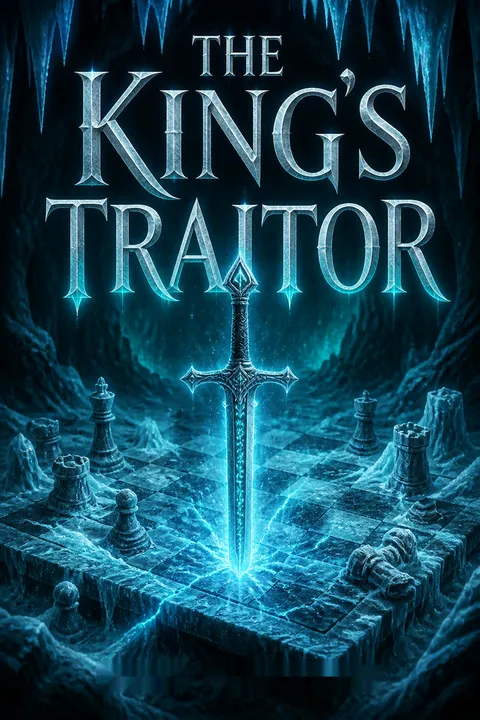
Before he dies, Horwath tells Owen that a Fountain-blessed hunter named Carrick found the Maid of Donremy’s sword in the northern ice caves. The old duke had concealed it because revealing a rival claim to kingship could invite conquest. He asks Owen to take up the duty of protecting the realm. Severn arrives too late to speak with Horwath, then confirms that Catsby will take Dundrennan, despite Elysabeth’s rightful inheritance.
He orders Owen to Brythonica to demand the duchess Sinia marry him, expecting her refusal to justify invasion. The king also forces Iago and Elysabeth to leave one child behind as a hostage. Elysabeth chooses Genevieve, and Owen promises to protect the girl, though Etayne must accompany him on the king’s mission.
Horwath’s death transfers more than political responsibility. His final confidence gives Owen a moral inheritance that conflicts with the king’s commands. Severn’s dispossession of Elysabeth turns loyalty into an instrument of control: the queen has served him, yet her family is punished for her husband’s past conflict with Ceredigion. The forced separation of Genevieve from her parents makes that coercion intimate and visible. At the same time, the hidden sword offers a possible alternative to a coup based on Owen’s ambition. The chapter’s pressure comes from the gap between power as inheritance and power as legitimate service.
The King's Captive Pieces
Back in Kingfountain, Owen inspects the tower where Eyric and Dunsdworth are imprisoned. Eyric remains hopeful that escape is possible, while Dunsdworth has sunk into bitterness and self-neglect.
Owen brings Eyric a book whose marked passages carry private messages to Kathryn, then learns that a man named Dragan was caught arranging a rescue attempt. Owen summons Etayne to identify the prisoner. She recognizes Dragan as her estranged father, a thief she has spent years avoiding, and his sudden Fountain magic alarms them both.
Owen orders him watched rather than tortured, then prepares to leave for Brythonica. Before departing, he warns Kathryn that Genevieve will soon join her at court and asks her to shelter the child. Kathryn agrees, though she fears being left alone with Severn and his persuasive power.
The tower gathers the book’s competing forms of captivity into one place. Eyric’s physical confinement, Kathryn’s political isolation, and Etayne’s childhood history with Dragan all show how power persists through dependency and fear. Owen’s small actions matter because he cannot yet dismantle the system: a book becomes a channel of marital loyalty, while a decision not to torture Dragan preserves a boundary the king would readily cross. Kathryn’s promise to care for Genevieve also creates a fragile alliance among women whom Severn has tried to make powerless. Owen’s departure therefore carries more than military risk; it leaves people he has protected exposed to the king’s attention.
A Proposal Turns Sideways
Owen enters Brythonica expecting to insult its ruler into rejecting Severn’s demand. The duchy’s open farms and busy trade ports make him wary of the easy conquest his king imagines. Lord Marshal Roux intercepts him, but Sinia receives Owen before her court. Dirty from the road, Owen kneels and offers marriage in the king’s name, deliberately mispronouncing the capital to sharpen the insult.
Sinia accepts. Roux is furious, yet Sinia calmly insists that she has made her own decision and asks Owen to stay. When Owen probes her with Fountain magic, he discovers that she is Fountain-blessed and powerful enough to detect his intrusion. He leaves the audience unsure whether she sees the marriage as escape, strategy, or something more personal.
Owen’s calculated discourtesy is meant to preserve emotional distance by turning a diplomatic mission into a predictable conflict. Sinia’s acceptance breaks that script. Her choice immediately complicates the assumption that Roux controls her, while her ability to recognize Owen’s probing establishes that she is not a passive object within his strategy. Their encounter exposes a contrast between two political cultures: Severn treats marriage as leverage, while Sinia answers as a ruler capable of choosing within constraint. Owen’s failure to control the meaning of his own proposal begins his education in a power that cannot be reduced to military calculation.
The Family Behind the Mask
After Sinia’s acceptance, Owen’s sister Jessica slips into his chamber and reveals that their parents and siblings are living safely in Ploemeur. Sinia sheltered them after Owen’s victories made them targets of Occitanian revenge, giving his father trusted work and his sister a place at court.
Owen’s family gathers to embrace him, ending sixteen years of separation, and he begins to understand that Sinia has quietly protected people he loves.
The next day, Sinia leads him along a cove where fragments of colored sea glass have washed ashore from the drowned kingdom of Leoneyis. Owen feels the lost city beneath the water as a painful memory. Sinia’s explanation of the beach’s protective customs hints that ancient covenants still shape what happens to the living.
The reunion restores a form of belonging Owen has treated as irretrievable. His relatives have not merely survived in Sinia’s realm; they have been given work, dignity, and protection, which gives her generosity a concrete political cost and consequence. The sea glass then extends this personal recovery into historical memory. Its beauty is made from the wreckage of a city, and its guarded collection suggests that restraint can preserve what force would consume. Owen recognizes that Sinia’s way of ruling differs from Severn’s not because she lacks power, but because she binds power to obligations and inherited limits. Her kindness is therefore both intimate and constitutional.
Storm Over the Grove
Owen and Etayne follow Sinia’s clues toward the forest Roux has guarded for years. At a stone plinth beneath an ancient oak, the Fountain directs Owen to fill a chained silver bowl and pour its water over the stone. A cloudless sky answers with a violent hailstorm. Owen’s enchanted scabbard shields him, but a falling hailstone knocks Etayne unconscious.
A black-armored rider charges from the trees. Owen defeats him in a hard sword fight, then discovers the dying man is Roux. The marshal names Owen Sinia’s protector and gives him a ring that makes him master of the woods. Once Etayne recovers, Owen reasons that Sinia may possess the foresight he has pretended to have, and that her realm faces a supernatural danger.
The grove makes political succession physical: Owen inherits Roux’s protective role only after surviving a ritual whose consequences he cannot control. The hailstorm punishes overconfidence in knowledge, while the scabbard’s protection reveals that old objects carry histories of service as well as force. Roux’s attack is not a simple betrayal; his final charge transfers responsibility to Owen, leaving him with the burden of protecting the woman whose marshal he has killed. The scene also alters Owen’s understanding of Sinia. Her apparent calm may be informed by knowledge beyond ordinary strategy, making trust less a matter of certainty than a decision made without full access.
The Board Names Sides
At St. Penryn, Owen retrieves the ancient Wizr set he hid outside Ceredigion and finds that its pieces have shifted. Sinia appears from the fountain and explains that the board maps a centuries-old struggle between Ceredigion and Occitania.
Severn’s violation of sanctuary has broken its rules, and the unnatural winters are the consequence; if he continues, Ceredigion may freeze, while Brythonica faces a flood. Sinia admits she can see past and future, and that she has secretly aided Owen before.
Owen reveals his plan to retrieve the Maid’s sword and use a prophecy to place Drew on the throne. He also learns the old tale of King Andrew includes a knight named Owain and a Lady of the Fountain. Owen and Sinia pledge themselves to each other as allies and future spouses.
The board transforms the novel’s political metaphors into a material system with consequences: moves on its squares correspond to decisions that affect weather, borders, and lives. Sinia’s knowledge does not erase uncertainty, because she refuses to dictate Owen’s choices or guarantee their outcomes. Their alliance therefore depends on reciprocal risk rather than omniscience. Owen’s proposed use of a staged prophecy also reveals that he is willing to manipulate appearances for a legitimate end, a dangerous distinction in a story about rulers who justify whatever serves them. The added legend of Owain places their relationship inside a historical pattern, but their pledge gives them a chance to choose differently.
A Prince Dies in Chains
Owen returns to Kingfountain and secretly watches the council debate Eyric and Dunsdworth’s fate. He discovers that Dragan, invisible through Fountain magic, has been working for Severn, who arranged the prisoners’ escape so they could be recaptured and condemned for treason.
Before dawn, Eyric dies in the tower; Dunsdworth survives but is incapacitated by drink. Owen reaches the docks as Eyric’s body is prepared for the river. Kathryn grieves, then confronts Severn, who uses his magic and years of attention to make her accept his ring.
Owen cannot stop the coercion without exposing himself. Afterward, he enters the great hall and publicly announces the Dreadful Deadman prophecy, claiming a child will draw the rightful king’s sword and that snow will continue until the crown changes hands.
The episode marks the collapse of Owen’s belief that private restraint can contain public cruelty. Severn engineers the legal appearance of justice while manufacturing the crime, turning procedure into a weapon. Kathryn’s coerced acceptance shows how domination can exploit attachment rather than rely on force alone; Severn’s real feelings do not make the use of magic consensual. Owen’s public prophecy is a counter-performance. He uses the court’s own faith in signs to challenge a king who has concealed violence behind law. The choice moves him from covert protector toward open opposition, and the first snow makes the political argument physically undeniable.
Snow Starts at Court
Severn dismisses Owen’s vision as legend, but the snow beginning outside the hall frightens the assembled lords. Rather than accept an heir, the king orders the Espion to watch the sanctuary and plans to summon children across the realm.
He names Owen a possible heir and protector, hoping to keep him close while preparing to marry Kathryn. Owen does not trust the offer. He consults historian Polidoro, who confirms that the prophecy comes from the ancient Wizr Myrddin and describes a White King, while acknowledging that the surviving records are incomplete.
Owen then discovers Sinia’s note in the hidden board and brings Genevieve and Drew together in the library. He promises to get Genevieve home and offers to teach Drew Wizr, while withholding the boy’s identity until he can protect him.
Severn responds to prophecy as a threat to be contained, not a warning to be interpreted. His plan to gather children exposes the logic of authoritarian control at its most literal: if a rival future can be identified, it can be eliminated before it speaks. Owen counters by building relationships rather than merely making claims. Genevieve’s friendship with Drew and her knowledge of Wizr become small forms of agency inside the palace. Polidoro’s uncertainty matters too: history supplies fragments, not a complete script. Owen must act with imperfect evidence, and the children’s trust becomes more reliable than the king’s managed certainty.
A Child Through the Falls
When Dragan finds Etayne’s hidden room and asks her to help reach Owen, she and Owen realize that the king’s thief can endanger Genevieve. They use Etayne’s disguises to remove the girl through secret passages, then launch a small boat from the palace cistern into the river. At the sanctuary dock, Genevieve loses her footing and falls into the current.
Owen’s ring, given to him by Roux, flares and parts the river long enough for him to pull her to safety. Sinia arrives through the fountain and takes Genevieve to her father in Atabyrion. Back at court, Owen tells Drew that Kathryn is his mother. The boy recognizes her, and she embraces the son she has been forced to lose. The reunion gives Drew a family, but not yet safety.
The rescue converts the story’s magical objects into an ethical test. Owen does not wield the ring to gain authority; its decisive use comes when he risks himself for a child. His dive is instinctive, an action that reveals what his principles mean under pressure. Etayne’s disguises make protection possible, but the river nearly defeats their careful planning, preventing magic from becoming a guarantee. In the quiet aftermath, Drew’s reunion with Kathryn gives emotional weight to the political claim that has so far remained abstract. His identity is not valuable only because it can legitimize a crown. It matters because a child has been separated from the people who love him.
The Poisoner’s Last Kiss
Etayne arranges a meeting with Bothwell, the Occitanian poisoner sent to kill Owen, while Kevan gathers Espion to capture him. Before they reach the meeting, Bothwell slips into Owen’s chamber and poisons the berries Sinia sent. The poison weakens Owen as Bothwell stabs him and forces another dose down his throat.
Etayne arrives in time to fight the assassin, but Owen has already stopped breathing. She uses her Fountain gift to bring him back, then takes the poison into herself through the kiss that restores his breath. Owen survives because the scabbard heals him, but Etayne dies beside him. Her long devotion, which Owen never returned as romantic love, ends in the act that saves his life.
Etayne’s death makes the cost of Owen’s divided loyalties impossible to treat as strategy alone. She has been his protector, confidante, and emotional refuge, yet he has not given her the love she wanted. Her final choice is an expression of agency, but it also exposes the asymmetry that has shaped their relationship: she can save him only by sacrificing herself. Owen’s survival is therefore not a clean victory. The scabbard repairs the body, while nothing can restore the person who chose to spend her life for him. This loss deepens Owen’s resistance to treating people as pieces, even as the board continues to demand political sacrifices.
Chains on Helvellyn
Severn discovers Owen’s correspondence with Elysabeth and accuses him of treason. He orders Owen stripped of his office and imprisoned, then brings the Wizr board to Holistern Tower to demand where it came from.
Dragan slips into Owen’s cell and tries to cut off his left hand for a promised reward, but Owen injures him and raises the alarm. The king marches north with Owen in chains, intending to leave him on Helvellyn, where the Maid of Donremy died. At the mountain, Owen’s allies strike before the execution can be completed.
Clark and Iago free him, while Kevan has secretly joined the rebellion. They return to Dundrennan, where Elysabeth and Iago have rallied the North against Catsby’s plundering. Owen learns that foreign armies are converging on Ceredigion.
Owen’s imprisonment reverses the hierarchy he has long enforced: the master of the Espion becomes a body monitored, disarmed, and scheduled for death. Severn’s use of the board and Dragan’s greed show how power recruits different kinds of violence, from royal decree to private profit. Yet the rescue reveals that loyalty has not vanished; it has shifted away from the king and toward people who have witnessed his choices. Kevan’s quiet allegiance is particularly important because it grows from observation over time rather than a sudden conversion. The siege beginning around Ceredigion widens Owen’s task from saving one rightful heir to preventing the destruction of an entire political world.
Firebos in the Glacier
Once safe at Dundrennan, Owen gathers Iago, Elysabeth, Kevan, and Clark and explains the danger posed by Severn and the enchanted board. He asks after Carrick, the Fountain-blessed hunter Horwath named before his death. Carrick leads Owen, Elysabeth, and Clark up the river to an ice cave inside the glacier that feeds Kingfountain. The Maid’s sword lies trapped within the ice.
Owen reaches through the cold and draws it free, with the scabbard and ring sustaining him. The weapon, Firebos, carries the power of the ancient White King. With the North in rebellion and the Atabyrion army supporting them, Owen prepares to confront Severn. The king sends Catsby with a letter claiming he will surrender, but Owen recognizes the message as a trap.
The sword’s recovery joins personal inheritance to political legitimacy, but the scene avoids making bloodline or relic alone sufficient. Carrick’s gift locates the cave, Elysabeth shares the dangerous climb, and Owen must still endure the ice to claim the weapon. The coalition around him similarly depends on many forms of loyalty, including Iago’s military support and Kevan’s intelligence. Owen’s rejection of Severn’s false surrender demonstrates how experience has sharpened his judgment: the letter sounds plausible, yet he recognizes the king’s willingness to use apparent mercy as a weapon. The sword gives him force, while discernment tells him when not to trust the forms that accompany it.
A Surrender Made of Lies
Severn’s army advances behind Catsby’s supposed surrender message. Owen orders his forces into position, but the fighting scatters them across the snow. The Maid’s sword blasts attackers away, yet Owen is wounded repeatedly and cannot reach his own men.
Severn arrives wearing the crown and uses the board’s magic to overpower him. Owen’s attack rebounds, and Severn stabs him, then takes Firebos and declares victory. Instead of killing Owen immediately, the king brings him to his tent, where Drew and Kathryn are held.
Severn moves the black king against the white tower on the board, intending to destroy Dundrennan and crush Elysabeth’s army. Sinia enters through the storm, frees Owen’s chains, and urges him to flee. Owen instead asks Drew to move the tower, changing the board’s move before the attack can finish.
This defeat is not merely a reversal of military fortune. Severn has learned to use the same enchanted system Owen hoped to turn against him, so technical access to power cannot substitute for moral judgment. Owen’s failed charge also exposes the danger in assuming a righteous cause will automatically protect its champion. The decisive counter-move depends on Drew, a child who has been treated as a hostage and political symbol, but who can act where Owen cannot. Sinia’s arrival gives them an opening; Owen’s choice to stay and trust Drew turns that opening into a new strategy. The scene shifts the climax from combat prowess to shared agency.
Ravens Break the Crown
After Drew moves the white tower away from Severn’s attack, Owen asks Sinia to summon the ravens that frighten the king. She fills the sky with magical birds, and their assault breaks Severn’s army’s formation. Owen confronts the king with the truth that Drew is Eyric’s son and the rightful heir. When the ravens tear at the tent, Severn panics and yields his sword and crown.
Owen refuses to claim the throne for himself. He recommends that Severn be restored as Duke of Glosstyr, and the defeated king accepts fealty to Drew. Kathryn, despite the harm Severn caused her, offers to remain with him for part of each year. The storm still hangs over the land, so victory must be followed by the boy’s coronation.
The climax resolves its central conflict through a combination of terror, truth, and restraint. The ravens confront Severn with the fear he has carried since childhood, while Drew’s identity forces him to face the family he displaced. Owen could take the crown, but refusing it is the clearest proof that his rebellion is not a disguised bid for personal sovereignty. His proposed restoration of Severn’s title also distinguishes justice from revenge. Kathryn’s offer is more ambiguous: it cannot undo the magic used against her, but it gives her a choice in what happens next. The scene suggests that breaking a cycle requires accountability without simply reproducing its cruelties.
The Sword Chooses Drew
The allied rulers gather at Kingfountain, but Elysabeth and Iago have not arrived. With the storm worsening, Owen takes Drew to the sanctuary and summons children from across the realm to try the fountain. None can draw the sword. At last Kathryn guides Drew forward, and he pulls Firebos from the water. The assembled people recognize him as the White King, and the snow begins to melt.
Soon afterward, Kathryn’s father arrives carrying Elysabeth’s letter: Iago’s ship has been wrecked on the return to Atabyrion, with no survivors found. Elysabeth stays with her children and mourns her husband. Owen is torn between riding to comfort her and keeping his pledge to Sinia. He chooses to remain with his duties, but the loss shadows the new reign.
The coronation gives the realm a legitimate center, but its public certainty arrives alongside private grief. The many children who fail to draw Firebos make the final act legible as a choice of the Fountain rather than a contest Owen can rig openly. Drew’s success ends the winter, yet does not restore everything the previous regime damaged. Iago’s presumed death reopens Owen’s old longing for Evie at the precise moment he has begun to build a future with Sinia. His restraint is not emotional indifference; it is an effort to honor both a promise and the life Evie has chosen. Political renewal, the book insists, cannot erase personal loss.
Owen Chooses the Living
As the weather clears, Owen leads Ceredigion’s forces through Westmarch, breaking the Occitanian siege at Averanche and capturing King Chatriyon when he tries to escape. Drew studies the Wizr board and learns to read the shifting positions of the invading rulers.
Owen then rides to Ploemeur, where Sinia waits at Glass Beach. He asks her to marry him as a man who now understands what she has risked and how badly he misjudged her. Sinia accepts. Owen speaks the ancient word that gives her a mortal soul, and the effort leaves him unconscious in her arms.
When he wakes, Sinia reveals that Iago survived the shipwreck because she gave him a protective brooch; he is recovering and will eventually return to Elysabeth. Owen has chosen Sinia without knowing that the choice would be painless.
Owen’s military success completes his public duty, but the emotional resolution depends on a decision no prophecy can make for him. He returns to Sinia not as the resentful envoy who tried to provoke her, but as someone willing to name his failures and ask for a shared life. The gift of a mortal soul changes their relationship in a literal way, transforming her status as well as their future. Sinia’s delayed disclosure about Iago restores hope to Elysabeth without making Owen’s choice contingent on it. This matters: Owen commits to Sinia before learning that his former beloved may be reunited with her husband. Love becomes an act of present allegiance, not a reward for fate’s convenient rearrangement.
Epilogue
Owen returns with Sinia and King Drew to the grove where Roux once guarded the silver bowl. They use the storm ritual again, this time sheltered by a shield, and Drew wears the hollow crown to summon the cold.
Frost splits the boulder that sealed a cave beneath the oak. From inside comes Myrddin, the ancient Wizr trapped there for centuries. The old man can still hear the Fountain’s whispers, and his release opens a new path into the lost history that shaped the kingdoms.
The epilogue turns an earlier site of violence into a place of deliberate restoration. Owen once triggered the grove’s storm without understanding the cost; now he acts with Sinia and Drew, informed by the limits and responsibilities of their powers. Drew’s use of the crown is not a threat to the realm but a controlled act that opens a prison. Myrddin’s survival also complicates the sense of closure: the rightful king has been crowned and the winter has ended, but the historical forces behind the board remain alive. The ending offers renewal without pretending that one political settlement can finish the work of understanding the past.
Analysis
The novel’s central question is whether loyalty remains a virtue when the person receiving it has abandoned the duties that once justified it. Owen’s service to Severn begins as gratitude and discipline, but the king’s abuses turn obedience into complicity. Owen’s rebellion is therefore difficult not because he lacks power, but because he fears that power will make him resemble the ruler he opposes. His refusal to take the crown for himself becomes the clearest evidence that he has changed.
The story makes political structures intimate. Severn’s violation of sanctuary is not an abstract breach of law: it imprisons Eyric, separates Kathryn from her child, turns Genevieve into a hostage, and brings winter down on ordinary people. The enchanted board externalizes this chain of consequences, making the weather a measure of political conduct. Yet the board does not dictate every outcome. Drew’s move matters, as do Owen’s choices to trust Sinia, spare Severn, and protect children whose identities could be used for power.
Love is presented as a form of allegiance that competes with duty without being reducible to it. Owen’s past with Elysabeth is real and enduring, but it cannot ethically become a claim upon her marriage or future. His bond with Sinia develops through the recognition of her independent authority and through his willingness to correct his first, cruel judgment of her. Etayne’s devotion offers a more painful contrast: loyalty can be profound and still go unanswered, and sacrifice cannot retroactively make an unequal relationship fair.
Finally, the book treats historical repetition as pressure rather than destiny. Old stories, relics, and prophecies show how the past shapes present choices, but characters remain responsible for whether they reproduce its betrayals. The White King’s return matters less as a miraculous restoration than as an opportunity to build authority around restraint, protection, and shared responsibility.
Review Summary
People Also Read


Characters
Owen Kiskaddon
The burdened strategistDuke of Westmarch and master of Ceredigion’s Espion, Owen is a gifted commander who has spent years serving King Severn even as the king’s conduct grows harder to defend. He reads people and political situations with unusual precision, but his sharp wit and habit of concealment often protect him from intimacy as much as from danger. His history with Elysabeth has left him suspicious of new attachments and inclined to treat love as another possible source of pain. Duty gives him structure, yet he increasingly questions whether obedience remains honorable when it serves a ruler’s abuses. His central tension is not whether he can seize power, but whether he can resist becoming the kind of ruler he fears.
Sinia Montfort
The guarded duchessDuchess of Brythonica, Sinia has ruled since childhood under the protection and counsel of Lord Marshal Roux. Her people regard her with deep affection because she takes their needs seriously, appearing in public to hear disputes and respond to hardship. She is patient where Owen is defensive, and her composure can conceal how much she feels. Sinia understands that small realms survive through relationships, customs, and careful choices as well as armies. She is drawn to Owen’s capacity for courage and compassion, though his cynicism tests her willingness to trust him. Her restraint is not passivity: she has learned to protect both her people and herself in a world that repeatedly treats her as a prize.
Severn Argentine
The embattled kingKing of Ceredigion, Severn took the throne after the death of his brother and has spent years consolidating power against rivals. He is intelligent, strategic, and acutely sensitive to humiliation, particularly because his physical deformities have made him expect rejection. His desire for loyalty is intense, but fear has taught him to secure it through surveillance, coercion, and divided allegiances. He can show generosity and genuine feeling, which makes his cruelty more complicated than simple malice. Severn believes the crown protects him from the instability that once threatened his family. His rule reveals how a person’s old injuries can become a rationale for inflicting new ones when no boundary checks the pursuit of control.
Etayne
The king’s poisonerA Fountain-blessed poisoner, Etayne serves Owen as confidante, protector, and expert in disguise. Her skill allows her to move through guarded spaces and impersonate others, while her loyalty is built on years of shared danger rather than obedience to the crown. She is perceptive about Owen’s motives and willing to challenge his indecision, though her feelings for him make that honesty costly. Etayne’s life has been shaped by a childhood with a father whose greed and unpredictability left her wary of dependence. She has fashioned competence into a defense, yet beneath her composure lies a longing to be chosen for herself rather than valued only for what she can do.
Elysabeth Victoria Mortimer Llewellyn
The faraway queenKnown to Owen as Evie, Elysabeth is Queen of Atabyrion, wife to Iago, and mother to Genevieve and a younger son. She shares a deep history with Owen, but her warmth is paired with political judgment and a strong sense of responsibility to her family. She is knowledgeable about history, attentive to people’s feelings, and willing to confront powerful men when they mistreat those she loves. Elysabeth has learned to build a life beyond her childhood home and first romance without denying that the past mattered. Her affection does not make her naïve: she understands the risks of challenging Severn and weighs them against the obligations she has to her children and people.
Drew
The quiet foundlingRaised at Dundrennan and later brought to Kingfountain, Drew is a serious boy who wants to train as a knight and is fascinated by Wizr. He has grown accustomed to being overlooked, so his reserve can look like obedience even when he is watching closely. Drew responds to kindness with trust, but he is also capable of asking direct questions about fairness, danger, and what makes a ruler worthy. His childhood has been shaped by separation from the adults who care for him, leaving him hungry for belonging and a place in the world. He approaches new responsibilities with reluctance rather than vanity, a quality that makes his quiet judgment important.
Lady Kathryn
The steadfast prisonerKathryn is Eyric’s wife and the mother of a son kept from her for years. Severn has surrounded her with luxury while limiting her freedom, hoping material comfort and constant persuasion will make her accept his claim. She remains loyal to her marriage and draws strength from the possibility of her child’s future. Kathryn is compassionate, but not weak; she understands the king’s influence and struggles to preserve her own judgment under sustained pressure. Her care for Genevieve shows that she can make room for another child’s fear even while living with her own grief. She embodies the difficult difference between surviving coercion and consenting to what a powerful person wants.
King Iago
The allied husbandKing of Atabyrion and Elysabeth’s husband, Iago is a forceful ruler whose loyalty to his wife and children shapes his political decisions. He can be blunt and combative, particularly when Severn threatens his family, but his affection for his children is evident in his patient, playful manner with them. Iago has reason to distrust Ceredigion, yet he is willing to cooperate when his family’s safety and the wider balance of the kingdoms demand it.
Eyric
The imprisoned princeEyric is Severn’s nephew and Kathryn’s husband, held in Holistern Tower alongside Dunsdworth. He endures confinement by reading and sending private messages to Kathryn through marked books. His care for his family has led him to accept risks that make him appear guilty to people who do not know the truth. Years of separation have not erased his hope of seeing his wife and child again.
Stiev Horwath
The northern patriarchDuke of North Cumbria and Owen’s mentor, Horwath has spent a lifetime balancing ambition with a strong sense of fairness. He gave Owen a home when the boy was young and treated him as family. Age and illness weaken him, but his concern for the future of his duchy remains sharp. His advice carries weight because he has experienced the cost of loyalty without losing his belief in service.
Brendon Roux
Sinia’s vigilant protectorLord Marshal of Brythonica, Roux has protected Sinia and her duchy since she was a child. His caution can seem controlling to outsiders, but it grows from the real danger that stronger rulers will seize his homeland. He is a skilled soldier, a careful reader of political threats, and deeply loyal to the Montforts. His relationship with Sinia is built on trust earned over years, not on a claim to rule in her place.
Dragan
The invisible opportunistA thief with Fountain-blessed abilities and Etayne’s estranged father, Dragan serves whichever patron offers the better payment. He treats loyalty as a transaction and relies on charm, concealment, and quick escapes to avoid consequences. His past has left Etayne wary of him, but he remains skilled at finding his way into spaces others believe secure. Dragan’s opportunism makes him dangerous precisely because he has no cause he will not sell.
Kevan Amrein
Owen’s veteran spymasterOwen’s second in command in the Espion, Kevan is older, capable, and skilled at reading both people and court politics. He offers Owen steady practical support without needing praise or spectacle. His loyalty is tested by a king who increasingly distrusts the service Owen has built, but Kevan’s sense of duty is grounded in the people he serves rather than in titles alone.
Genevieve
The outspoken hostageElysabeth and Iago’s daughter, Genevieve is curious, confident, and unusually comfortable asking adults difficult questions. She loves stories, games, and her family, and her lively presence quickly draws Drew out of his reserve. Though she is young, she notices unfairness and has inherited her mother’s willingness to speak plainly. Her separation from home makes her vulnerable, but not passive.
Lord Catsby
The king’s grasping favoriteA court official elevated to Duke of North Cumbria, Catsby is ambitious and eager to prove his usefulness to Severn. He sees offices and territories as rewards to be held, rather than responsibilities to the people who live there. His contempt for Owen is intensified by years of feeling overshadowed. Catsby’s lack of tact turns his political advantage into resentment among those he is meant to govern.
Carrick
The mountain hunterA young hunter from Dundrennan, Carrick is quiet, observant, and gifted with an unusual sensitivity to the Fountain. He discovers the hidden ice cave that others have passed without recognizing. His knowledge of the mountain landscape makes him a valuable guide, while his modest manner keeps attention on the work rather than on himself.
Fergus
Carrick’s hunting fatherFergus is a seasoned huntsman of North Cumbria and Carrick’s father. He is proud of his son’s instincts and knows the mountain country well. His practical experience helps the group travel safely through dangerous terrain.
Clark
The quiet field agentAn Espion agent and skilled hunter, Clark is a reserved man who acts decisively when danger comes. Owen once saved his life, and Clark repays that trust with careful service. He is particularly useful where patience, concealment, and knowledge of the land matter more than rank.
King Chatriyon
The Occitanian rivalKing of Occitania, Chatriyon is a powerful rival who resents Ceredigion’s expansion and seeks to reclaim lost territory. His ambitions threaten Brythonica as well as Owen’s domains. He is a political and military adversary whose actions reflect the instability Severn has helped spread across the neighboring realms.
Polidoro Urbino
The court historianPolidoro is a tireless scholar who gathers records from castles, sanctuaries, and old stories. His enthusiasm often carries him into long explanations, but his work preserves clues that official histories cannot fully verify. He distinguishes evidence from belief without dismissing either, making him a useful guide to the kingdom’s uncertain past.
Ankarette Tryneowy
Owen’s vanished mentorA poisoner who once saved and tutored Owen, Ankarette shaped his ideas about discernment, duty, and compassion. She taught him to look beyond a ruler’s reputation and judge the choices that ruler makes. Her influence remains present in Owen’s thinking long after their time together.
Jessica Kiskaddon
Owen’s returning sisterJessica is Owen’s older sister, now a lady in Sinia’s court. Warm and openly affectionate, she helps reconnect Owen with the family he has not seen for years. Her return makes Sinia’s quiet protection of the Kiskaddons tangible.
Dunsdworth
The bitter fellow captiveImprisoned beside Eyric, Dunsdworth copes with confinement through cynicism and drink. He resents his circumstances and rarely responds to the books or help Owen provides. His presence shows how prolonged captivity can hollow out hope in different ways.
Bothwell
The hired poisonerAn Occitanian assassin, Bothwell is skilled in poisons and driven by the pride of a professional who dislikes being outmaneuvered. His past conflict with Owen and Etayne gives his assignment a personal edge alongside its political purpose.
Plot Devices
The Wizr board
A map with consequencesAn ancient enchanted board represents the rival kingdoms and the people who shape their fate. Certain bloodlines can move its pieces, and those movements affect political events and even the weather. Severn’s violations of old rules trigger the unnatural winter threatening Ceredigion, while Owen and Sinia use the board to understand alliances, dangers, and possible counter-moves. Drew’s ability to move pieces becomes essential to resisting Severn. The board makes strategy literal, but it does not make choices morally simple: its power can serve a rightful succession or become another instrument of domination.
The hollow crown
A throne that shapes weatherThe ancient crown carries power connected to the Wizr board and the legitimacy of Ceredigion’s ruler. Severn’s rule, combined with his violations of ancient customs, turns that power into a source of unnatural cold. The crown is more than a symbol of office: it makes political choices physically consequential for the whole kingdom. Its role also raises the question of whether authority belongs to the person who can seize it or to the person who can uphold the obligations attached to it.
Fountain magic
Power with personal limitsThe Fountain grants different abilities to selected people, including heightened perception, persuasion, disguise, healing, and foresight. Its gifts help characters survive and communicate, but they do not eliminate uncertainty or guarantee wise choices. Severn uses his influence coercively, Etayne uses disguise to protect others, and Sinia’s unusual insight guides her without giving her complete control over events. Owen can resist other people’s magic, yet he remains vulnerable to grief, ambition, and error. The Fountain therefore connects supernatural power to character rather than treating it as a simple advantage.
Firebos and the raven scabbard
Relics that preserve and testFirebos, the Maid of Donremy’s sword, is a relic of the old kings and a source of formidable force in battle. Owen’s raven-marked scabbard heals injuries and protects him when he is near death. A ring from Roux can briefly turn aside the river, allowing Owen to save Genevieve. These objects repeatedly keep people alive, but their power comes with risks and does not settle questions of loyalty or succession by itself. Each relic requires a person to decide whom to protect and what the power is for.
The Dreadful Deadman prophecy
A claim to rightful ruleThe prophecy predicts a child who rises from death, draws a sword from the sanctuary fountain, and restores Ceredigion against a coalition of rulers. Owen uses the prophecy publicly to challenge Severn and prepare the court for a new sovereign. Its meaning is contested because rulers can treat it as either a warning or a threat. The prophecy does not remove the need for action: Owen must find the child, protect him, secure the sword, and persuade others to accept a different source of legitimacy.
About the Author





Download PDF
Download EPUB
.epub digital book format is ideal for reading ebooks on phones, tablets, and e-readers.








