

Plot Summary
Prologue
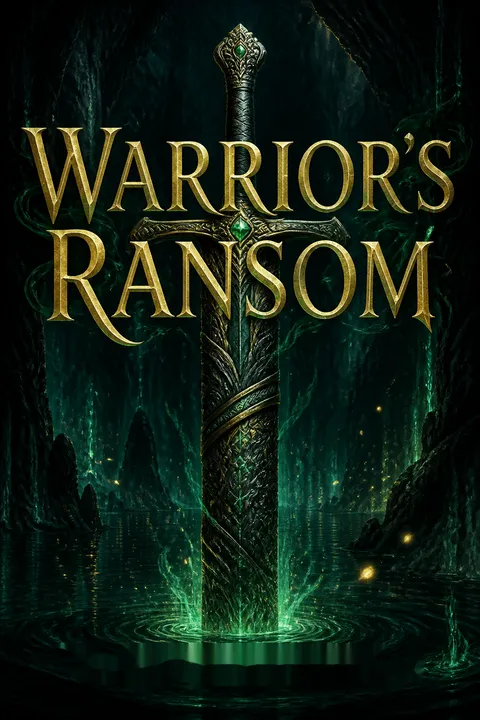
Far from Ceredigion, Ransom guards a Genevese caravan across the desert and turns back a band of raiders. At Chandleer Oasis, the Fountain draws him to a well. He descends underwater, finds an ancient raven-marked scabbard, and survives by breathing water.
The relic appears beside him when he wakes, while Claire’s braided bracelet is gone. In Kingfountain, Claire later finds the sand-streaked bracelet by the palace cistern and takes it as a sign that Ransom may still return.
The well makes Ransom’s pilgrimage a test of trust rather than a search for a convenient weapon. He must obey a summons that seems certain to kill him, and the scabbard arrives only after he gives up the bracelet that binds him to Claire. The exchange unsettles the romance before it resumes: devotion is not simply preserved, but placed under pressure by forces neither lover understands. Claire’s discovery reverses the image, turning the lost object into evidence of connection. Their intimacy is established through absence, risk, and an artifact that quietly carries both.
The Knight Comes Home
After years away, Ransom reaches Kingfountain with a new sword-scabbard and a longing to see Claire de Murrow, the Legaultan companion imprisoned with Queen Emiloh. The Elder King Devon welcomes him onto the royal council and gives him Josselin Castle, but refuses Ransom permission to court Claire because he intends her for his son Jon-Landon.
Ransom accepts the king’s favor without surrendering his hope. His new household includes Dearley, an adolescent ward trained in diplomacy but uncertain as a fighter, and Elodie, a young heiress whose marriage may be controlled by her guardian. Devon sends Ransom with fifty knights to warn Prince Benedict in the Vexin, where father and son are nearing another rupture.
Ransom returns expecting to recover a personal life, but Devon immediately folds him into the machinery of rule. The appointment is both recognition and leverage: a castle, council seat, and wards grant Ransom status while making him dependent on the king’s decisions. His refusal to exchange Claire for a politically convenient match distinguishes loyalty from obedience. He can serve Devon without pretending that the king owns every choice available to him. Dearley and Elodie also reflect the predicament Ransom once faced as a young dependent, giving his new authority an ethical test: will he reproduce the coercion that shaped him, or use power to protect the choices of others?
The Wrong War Begins
At Auxaunce, Benedict demands that Devon free Emiloh and formally name him heir. Ransom warns him that rebellion destroyed his elder brother, the Younger King Devon, but Benedict distrusts promises from a father who habitually withholds power.
Back at Kingfountain, Ransom advises against invading the Vexin; Devon ignores the warning and secretly redirects his army toward Occitania, blaming it for the Younger King’s death. At Bloissy, the Occitanian army intercepts them. Ransom holds the reserve until Benedict arrives, discovers his father’s real target, and joins the fight.
Ransom then charges into the battle to shield Dearley, newly knighted, from two attackers. A lance pierces Ransom’s back, but the raven scabbard seals his wounds and delivers a warning about an endangered Argentine heir.
The campaign turns family distrust into military danger, but the battle briefly reverses that momentum. Benedict can still choose cooperation when he learns the truth, and his arrival saves Devon’s army from being crushed between two enemies. Ransom’s decision to protect Dearley makes leadership bodily rather than ceremonial: he accepts the wound his inexperienced knight cannot yet withstand. The scabbard’s healing power is not just a reward for courage. Its warning places Ransom inside a larger obligation, one that will demand judgment beyond the immediate loyalties of the royal family. His service begins to mean protecting a future, not merely obeying a king.
Bayree’s Bleeding Welcome
Ransom negotiates with King Estian of Occitania, who offers him Claire in exchange for betrayal. Ransom refuses and secures more than Devon demanded: the duchy of Bayree through its heiress, Alix, and payments spread across a two-year truce. Devon awards him the duchy and expects him to marry Alix. At Kerjean Castle, Ransom finds Alix tending the soldiers wounded in the battle, including men from the army that killed her uncle.
He sends supplies and barbers from Josselin, then learns that she once brought him bread and bandages when he was a prisoner. Alix says they are both Fountain-blessed and describes herself as a pawn trapped by Occitanian intrigue. Ransom is drawn to her, but an injured knight attacks him on the stairs.
Bayree changes Ransom’s problem from unrequited love into a collision between duty, gratitude, and political possession. Alix’s care for enemy wounded complicates the image of a simple antagonist, while her earlier kindness to Ransom creates a debt that feels personal rather than strategic. His acts of relief for Kerjean’s soldiers show that he understands the cost of conquest, even while he benefits from it. Yet their growing closeness occurs inside a political arrangement Devon has imposed. Ransom’s uncertainty is not a failure to choose; it is an accurate response to a situation where affection, obligation, and power have been deliberately made difficult to separate.
A Ghost Demands Honesty
After Alix and Ransom share a kiss, she asks him to hide her identity from Devon. Ransom leaves Bayree unsettled, and his feelings for Claire return as he approaches Kingfountain. In a midnight vision, his former guardian, King Gervase, urges him to act on the truth he already knows. Ransom tells Devon that Alix is a trained poisoner who killed the Younger King and is Emiloh’s daughter.
When Devon questions the queen, Emiloh reveals the deeper history: Alix was fathered by the former King Lewis, who took the child from her. The king realizes the treaty depends on Alix’s disputed inheritance. He sends Ransom back to Pree to challenge Estian and investigate the magical Wizr board that may reveal enemy movements.
Gervase’s visitation gives Ransom no new tactic; it restores his capacity to act without arranging every consequence in advance. The difficult step is admitting what he concealed from Devon, even though confession may cost him Alix and the duchy. Emiloh’s account then shows how political stories are manufactured: Alix has inherited a false history that disguises the coercion surrounding her birth. Ransom’s loyalty becomes morally useful because it includes correction, not flattery. At the same time, the revelation complicates justice. Alix’s crimes are real, but the conditions that made her a weapon began before she could choose her own identity.
The Board Turns Against Him
In Pree, Alix learns Ransom has told Devon the truth. She admits she expected to explain her parentage but now considers them enemies, then escapes through a palace fountain before he can stop her.
Ransom enters Estian’s council chamber and discovers Benedict has sworn fealty to Occitania, trading away Westmarch in return for support against his father. Estian orders Ransom’s knights detained; Ransom holds a sword to the king long enough to free them and leave the city. The two-year truce begins to unravel.
Over the following year, Benedict captures Westmarch and its treasury, while Occitanian forces take Southport. Ransom’s lands are threatened, his allies dwindle, and Claire remains confined in Kingfountain as she hears the war unfold through letters and rumors.
The fountain escape is the point where Ransom’s private conflict becomes an open geopolitical crisis. Alix’s powers make ordinary boundaries unreliable, while Benedict’s oath turns a father-son dispute into an international alliance. Ransom prevents Estian from keeping his men, but he cannot prevent the larger defection. The long war that follows tests the difference between loyalty and attachment to a doomed leader. Claire’s letters preserve a second perspective on the conflict, but her confinement limits her to interpretation rather than action. Both lovers are therefore made witnesses to choices that reshape their lives without yet giving them a way to meet.
The North Changes Hands
During the winter, Ransom rides north to ask Duke Wigant for help. At Dundrennan, the welcoming escort feels wrong, so Ransom refuses to enter without safe conduct. The riders return with a much larger force, and he orders Dawson to carry warning to the king while the others retreat to high ground.
Ransom and his knights break the ambush, then drive the attackers back toward the town. He recognizes Sir James Wigant among them, but James escapes behind the palisade. A captured knight explains that Duke Wigant has died and James now rules the North.
The news confirms that Benedict has gained another powerful ally. Soon afterward, Devon’s council learns that Goff has died in a reported hunting accident at Chessy, leaving his young son Andrew without a father and the king with one fewer son.
Ransom’s suspicion saves him from the trap, but survival brings no simple victory. He defeats the force in front of him and still loses the political ground represented by the North. James’s inheritance turns a familiar personal rival into a ruler with an army, showing how private resentments can acquire institutional force. Goff’s death deepens the crisis because it removes a possible counterweight and exposes Andrew’s vulnerability. The official account calls the death an accident, yet its timing and political setting make certainty impossible. The novel lets grief and suspicion coexist, a realistic condition of war in which evidence often arrives after trust has already collapsed.
A Safe Conduct Broken
As the war turns against Devon, Ransom rides to Beestone Castle under safe conduct to persuade Benedict to negotiate. He finds Alix beside the prince, advising him and reinforcing his certainty that victory is the only acceptable outcome. Ransom fails to change Benedict’s mind. As he leaves, Alix touches his arm with a poisoned needle, and Sir Robert Tregoss takes him prisoner.
Robert binds Ransom, removes his raven scabbard, and carries him toward Kerjean, where Alix intends to keep him. Ransom’s Fountain magic does not free him, and Robert mocks his belief in knightly honor. The journey becomes a second captivity, but Ransom holds on to memories of Claire rather than letting Alix’s influence redefine his loyalties.
This capture strips Ransom of the visible signs of his power: his weapon, his relic, and even the freedom to choose where his body goes. Robert’s contempt for honor attacks the belief that has organized Ransom’s life, making captivity a moral assault as well as a physical one. Alix’s use of intimacy and poison also clarifies the danger of her gifts: she can exploit trust while presenting coercion as a choice. Ransom’s memory of Claire functions as an inner reference point, not an escape from fear. He cannot overpower his captors, but he can refuse to let their account of him become his own.
The Guardian’s Ring
Near the Vexin, knights from Brythonica intercept Robert’s party and demand Ransom’s release. Ransom uses the confusion to cut his bonds, kills an attacker, and pursues Robert on Sir Terencourt’s horse. He defeats Robert in single combat and recovers the raven scabbard, though Terencourt is mortally wounded.
Before dying, Terencourt gives Ransom an invisible ring and names him protector of Brythonica’s royal family and keeper of the Gradalis, a hidden sacred relic. Duchess Constance explains that the ring will summon him if the Gradalis is threatened. Ransom accepts, then takes ships from Brythonica to reinforce Devon at Dunmanis. The rescue gives him a new responsibility: protecting the child Andrew as well as the king he has served.
Ransom’s rescue does not restore his old position unchanged. Terencourt’s death transfers a responsibility that extends beyond the battlefield, tying Ransom to a child and a relic whose significance reaches into the realm’s ancient history. The invisible ring makes authority an obligation he must carry without public display. This contrasts with the hollow crown, whose visible weight fuels conflict among the Argentines. Ransom accepts the charge even though his loyalty to Devon remains primary, demonstrating that his commitments are becoming layered rather than exclusive. His return to the war is not simply a return to combat; it is a deliberate choice to protect a vulnerable future.
The River Opens
At Dunmanis, Ransom reunites with Dearley and finds Devon weakened by poison. When Estian’s army reaches the Pervenshere River, the king expects its depth and stakes to delay a crossing. Instead, an Occitanian leader uses magic to part the water and leads the first riders through. Ransom stays at the gate while the king and Jon-Landon flee inside.
He meets the advancing knights, holds the entrance long enough for defenders to regroup, and captures Sir Chauvigny amid the smoke as the town burns. The flames deny the invaders shelter but also make Dunmanis untenable. Devon abandons the fortress, and Ransom rides with him toward Glosstyr, while soldiers and townspeople are left to escape as best they can.
The river crossing overturns Devon’s confidence in fortifications and turns his defensive plan into a test of improvisation. The water, normally a boundary that protects the city, becomes a passage controlled by an enemy’s relic or magic. Ransom’s stand at the gate buys time but cannot reverse the strategic failure. His decision to leave Dunmanis acknowledges the limits of courage: holding ground is not always the same as protecting people. The burning town also gives victory a material cost that cannot be hidden by royal rhetoric. Devon’s retreat begins the final movement from command to surrender, while Ransom remains the practical shield between the king and capture.
A Crown Surrendered
Benedict catches the fleeing party outside Dunmanis. Ransom turns back with a lance and could kill the unarmored prince, but he strikes Benedict’s horse instead, stopping the pursuit without taking his life. Devon, sick from Alix’s poison, chooses to surrender and asks Ransom to take him to Tatton Grange. There Alix admits she poisoned the king and offers a cure only if Ransom kneels to Estian and murders him.
Ransom refuses. Estian and Benedict arrive to negotiate; Devon gives Benedict the crown and kingdom, while Estian demands the unpaid treaty money and Bayree. The surrender ends the battlefield campaign, but Devon’s final angry grasp at his son’s tunic reveals that victory has not repaired the family that produced the war.
Ransom’s choice to disable Benedict rather than kill him is the book’s clearest rejection of vengeance as a shortcut. He preserves the possibility of a future relationship even while defending Devon. At Tatton, Alix offers the inverse bargain: save one life by committing murder. Ransom refuses because a victory purchased through assassination would reproduce the moral logic that has made the conflict endless. Devon’s surrender is both a necessary political act and an emotional defeat. The crown passes, but the king cannot release his resentment. The scene distinguishes peace as a formal arrangement from reconciliation, which remains unfinished even when armies stop fighting.
The Name on the List
As Devon lies dying, he asks Ransom to protect Jon-Landon and clings to the hope that the prince remained loyal. Marcus brings the list of those who have submitted to Benedict. The first name is Jon-Landon’s, revealing that he secretly surrendered at Dunmanis.
Devon’s final hope collapses, and he dies that night. Ransom carries his body to the sanctuary for the funeral rites, where Benedict summons him afterward. Ransom tells the new king that Estian used Alix to kill the Younger King and poison Devon, and that Alix’s magic has distorted their judgment.
Benedict recognizes the influence and accepts Ransom’s account. He confirms Ransom’s council service, his grant of Glosstyr, and his right to marry Claire, then sends him to Kingfountain with the news.
The list turns betrayal from rumor into a single devastating fact. Jon-Landon’s name matters not only because he has changed sides, but because Devon had chosen to believe in him as the last son who might still offer loyalty. The king dies with that belief corrected too late. Ransom’s conduct after the death contrasts with the servants who strip the room: he insists on carrying Devon to the sanctuary with dignity. His honesty then gives Benedict a chance to recognize how Estian has exploited the family’s suspicions. The transition to a new reign is not secured by bloodline alone; it depends on whether the new king can accept evidence that challenges the story he wanted to believe.
The Tower Opens
Ransom returns to Kingfountain beside Simon and Lord Kinghorn, now carrying Benedict’s authority rather than Devon’s. He tells Emiloh that her husband is dead and finds Claire waiting with her. The news that the king has honored the marriage and Glosstyr grants turns their long correspondence into a shared future.
Claire embraces Ransom in the courtyard, and he promises they will go to Legault together to claim her inheritance. Their marriage is still ahead, but Claire is no longer confined to the tower. At Glosstyr, her journal records their arrival among cheering townspeople and the nobles who have come seeking peace. Ransom’s companions gather around them, while the couple prepares to bring Legault under Claire’s rule.
The reunion answers the emotional question raised at the beginning without pretending that love alone can free Claire. Her release depends on political recognition, and Ransom’s loyalty has helped make that recognition possible. Their future is therefore both intimate and public: marriage binds two people, while their joint claims link Glosstyr and Legault. The story gives Claire agency in the resolution, emphasizing that Ransom seeks her consent rather than treating a royal grant as ownership. The tower’s opening is a concrete change in her life, but the waiting wedding and unsettled Legault keep the ending from becoming an effortless triumph. Freedom begins as a task they will undertake together.
Epilogue
On Ransom and Claire’s wedding day at Glosstyr, Alix watches from the castle corridors with Sir Chauvigny, whom she has freed and drawn into her service. She uses her magic to mislead a servant about why they are absent from the ceremony, then learns that the remaining Argentines are gathered nearby.
Alix still intends to kill them and resents Ransom for choosing Claire. Rather than risk an impulsive attack, she restrains herself and turns her hurt toward revenge, keeping the danger alive beyond the couple’s celebration.
The epilogue refuses to make Alix’s rejection a neat lesson in remorse. She recognizes that impatience could ruin her plans, yet she interprets Ransom’s choice as a wound that demands repayment. Her persuasive magic lets her move through other people’s assumptions, but it does not give her emotional freedom: she remains governed by grievance and by the political role imposed on her. Placing her outside the wedding makes the celebration feel earned but not secure. Ransom and Claire have escaped one form of confinement; Alix’s continuing plot reminds the reader that personal happiness cannot by itself dissolve the machinery of dynastic violence.
Analysis
Warrior’s Ransom asks what loyalty means when the people a person serves repeatedly misuse the trust placed in them. Ransom’s answer is neither blind obedience nor easy rebellion. He tells Devon the truth about Alix even when confession threatens his advancement, refuses Alix’s bargain to save the king by committing murder, and spares Benedict when a fatal strike could have ended the conflict. These choices make loyalty a practice of restraint and truthful counsel, not a claim of ownership.
The Argentine family’s political crisis is also a family system in which affection and power have become difficult to distinguish. Devon loves his sons, but he withholds authority and expects gratitude for conditional rewards. Benedict interprets that pattern as proof that force is the only route to recognition. Jon-Landon’s hunger for status grows in the same emotional climate. Emiloh sees the damage clearly, yet confinement prevents her from repairing it. The book’s wars are therefore not merely disputes over territory. They are the public consequences of private injuries that no one has learned to name without turning them into weapons.
Magic sharpens this problem rather than solving it. Alix’s influence makes desire unreliable, the Wizr board turns people into pieces, and the Fountain gives Ransom power only in relation to service. The supernatural world repeatedly tests whether characters can distinguish their own wishes from the roles imposed on them. Claire’s refusal to be traded as a political match is essential here: her love for Ransom matters because she remains a person with the right to consent, not a reward for his loyalty.
The ending offers political continuity, not perfect repair. Benedict can hear the truth and accept counsel, but Devon dies without recovering the family trust he helped destroy. Ransom and Claire gain freedom and a shared future, while Alix’s revenge keeps the costs of coercion alive. The novel’s hard-won hope rests on a modest principle: power becomes more legitimate when it protects another person’s agency rather than replacing it.
Review Summary
People Also Read









Characters
Ransom Barton
The loyal Fountain knightA second son who has earned his place through service, Ransom is a skilled knight whose Fountain-given strength grows when he serves a cause beyond himself. His loyalty is not simple obedience: he can challenge a king, refuse an unjust demand, and still remain faithful to the people he serves. His affection for Claire has endured distance, political obstruction, and his own confusion. As he gains land and authority, he must decide whether power will make him controlling or more protective of the vulnerable. His warhorse Dappled, his raven scabbard, and the ring entrusted to him each mark a different form of responsibility.
Claire de Murrow
The imprisoned Legaultan heirClaire is the heir to Legault and the daughter of a noble house, yet she spends years confined in Kingfountain as Queen Emiloh’s companion. Her letters let her observe court politics with wit, skepticism, and emotional candor, even when she cannot act on what she sees. She loves Ransom but will not pretend that longing gives him authority over her future. Her identity is shaped by two homelands, Legault and Glosstyr, and by the tension between political duty and personal choice. Her humor keeps despair from becoming her only language, while her fierce attachment to her people gives her hope a practical purpose.
Devon Argentine, the Elder King
The unforgiving royal fatherDevon is a formidable king whose speed of thought and appetite for power have built a wide realm. He rewards ability, but he also treats his gifts as possessions he can reclaim, leaving even his sons unsure whether they are loved or merely useful. His anger is rooted in genuine grief and injury, especially in his estrangement from Emiloh, yet pride makes him mistake control for security. He can recognize courage and candor in others, particularly Ransom, while struggling to offer the same trust to his own family. His reign is defined by the conflict between a father’s desire to protect his children and a ruler’s refusal to share authority.
Benedict Argentine
The impatient warrior princeBenedict is Devon’s second son, a forceful soldier who has spent years proving himself in his father’s campaigns. His strength and competence are matched by impatience, wounded pride, and a deep suspicion of promises that keep power out of his hands. He wants to protect his mother and secure the inheritance he believes he has earned, but his methods can put an entire kingdom at risk. He is not simply a rebel or a dutiful son; he is a man shaped by the model of authority he resents. His relationship with Ransom is sharpened by rivalry, respect, and the possibility of candid counsel.
Alix
The enigmatic Bayree heiressAlix is a young noblewoman raised among the politics of Occitania, guarded in manner and unusually capable in dangerous situations. She tends wounded soldiers with real skill, yet her beauty and warmth can make others trust her before they understand her intentions. She is drawn to Ransom because he appears to offer a life outside the designs of kings, but she is also shaped by a childhood in which other people decided what she would become. Her intelligence is strategic, her feelings intense, and her understanding of freedom compromised by the power she has learned to wield. She embodies the danger of confusing genuine attachment with control.
Queen Emiloh
The captive queenEmiloh is Devon’s wife and the mother of the Argentine princes. Confined to a tower after a history of painful mistrust, she remains politically perceptive and emotionally resilient. Her bond with Claire grows into a source of companionship for both women. Emiloh knows how pride and silence can distort a marriage, but she cannot make Devon accept what she understands. Her connection to the Vexin is both an inheritance and a wound, and her experience shows how a royal woman’s private history can become a public instrument of power.
Estian
The Occitanian kingKnown as the Black Prince, Estian rules Occitania with patience for intrigue and a sharp eye for other people’s ambitions. He understands that land, marriage, money, and private grievance can be used together to reshape a political map. His dealings with Ransom reveal a ruler who prefers to identify what a person most wants before making an offer. He is a dangerous rival to Ceredigion, not merely because of his armies but because he knows how to make an alliance feel more reasonable than the truth.
Jon-Landon Argentine
The ambitious youngest princeDevon and Emiloh’s youngest son is clever, watchful, and hungry for lands that will prove his importance. He resents being left outside the decisions that shape the kingdom and can read a slight as evidence that he is unwanted. Unlike his warrior brothers, he has not had the same experience in battle, but he has learned the language of courtly ambition. His complicated feelings toward his mother and Claire make him difficult to understand, even to those who share his family name.
Devon Argentine, the Younger King
Ransom’s fallen former masterThe Elder King’s eldest son, the Younger King ruled briefly before his death in a rebellion against his father. Ransom served him and carries the loss into the events of this story. More approachable than the Elder King, he represented a different style of authority, one associated with warmth and personal loyalty. His death leaves a political wound that both Ceredigion and Occitania continue to exploit.
King Gervase
Ransom’s first guardianThe former king who raised Ransom at Kingfountain, Gervase gave the boy a home and an early model of royal care. He remains an important moral presence in Ransom’s memory. His attention to duty and compassion helps Ransom measure the conduct of the rulers he later serves.
John Dearley
Ransom’s first young knightDearley enters Ransom’s household as a young ward more confident in languages and diplomacy than in combat. His fear in his first battle does not prevent him from learning, and his gratitude to Ransom grows into steadfast loyalty. He is thoughtful, earnest, and attentive to the people around him. His relationship with Elodie gives him a personal stake in the future Ransom is trying to protect.
Elodie
The young heiress at JosselinElodie is a young ward whose inheritance makes her vulnerable to marriage arrangements made by others. Initially nervous around Ransom, she gradually finds room to speak for herself and to imagine a future of her own choosing. She is warm, perceptive, and drawn to Dearley, though the social rules surrounding her make even that affection difficult to express.
Sir Simon
The king’s trusted stewardSimon is Ransom’s friend and a practical adviser at court. As steward, he manages royal business and understands how land, wardship, and money shape noble lives. He is observant without being cynical, and his warnings about court maneuvering often help Ransom see a danger before it becomes a crisis.
Lord Kinghorn
The seasoned royal counselorLord Kinghorn is Ransom’s former mentor and a powerful nobleman whose judgment has been formed by years of war. He understands the costs of loyalty but does not confuse caution with cowardice. His concern for the royal family and his respect for Ransom make him an important counterweight to Devon’s impulsive decisions.
Lady Deborah
The blunt council strategistA widow and member of Devon’s council, Lady Deborah has earned influence through clear judgment rather than force. She is unafraid to give the king advice he does not want to hear and understands how political marriages and inheritance affect a kingdom. Her steadiness makes her one of the few people able to speak plainly in a court ruled by strong personalities.
Sir James Wigant
Ransom’s ambitious rivalJames is Ransom’s childhood rival and the son of the Duke of North Cumbria. He is socially agile and comfortable using charm, insinuation, and political opportunity to advance himself. His rivalry with Ransom is personal, but his ambitions reach beyond their old disputes. Claire’s distrust of him reflects her instinct for the self-interest hidden beneath his polished manners.
Lady Constance
The widowed Duchess of BrythonicaConstance is the Duchess of Brythonica and the mother of the young Andrew. Grief and political danger have made her cautious, but she remains capable of decisive action when her child’s future is threatened. Her knowledge of the ancient relics gives her a role in recognizing the responsibilities Ransom inherits.
Andrew Argentine
The vulnerable young heirAndrew is the young son of Goff and Constance. Too small to defend his inheritance, he becomes a focus of the wider struggle over the Argentine line and the future of the kingdom.
Sir Terencourt
Brythonica’s one-armed championTerencourt is Brythonica’s veteran champion, a knight whose life has been shaped by service and sacrifice. His encounter with Ransom in the tournament grounds leaves a complicated history between them, but his sense of duty remains stronger than personal grievance.
Goff Argentine
The overlooked royal brotherGoff is Devon and Emiloh’s son, a ruler of Brythonica whose interests lie more in trade and governance than in battlefield glory. His place in the family is complicated by the ambitions of his brothers and the Elder King’s tendency to prize military achievement.
Plot Devices
Fountain-blessed abilities
Power tied to serviceThe Fountain grants unusual abilities, including heightened perception, strength in battle, healing, and magical influence. These gifts are not interchangeable, and they do not make their users invulnerable. Ransom’s power flourishes when he serves another, while Alix’s ability can distort what people feel and believe. The Fountain’s prompts also guide characters toward obligations they may not yet understand. In the story, magic complicates ordinary questions of consent and responsibility: a choice may be sincere, manipulated, or both. Its influence is powerful, but characters still have to decide what they will do with it.
The raven scabbard
A relic that healsRansom receives the empty scabbard from a well at Chandleer Oasis. It adjusts to fit his sword and amplifies his Fountain power, its raven emblem glowing when its magic is active. It seals the wounds that should kill him after the battle at Bloissy and later helps him endure further fights. Its power has limits: it does not make him immortal, and it cannot solve every illness. The relic also carries a warning that connects Ransom’s service to the future of the Argentine family. It makes his survival part of a duty larger than his own ambitions.
The Wizr board
A map of hidden movesThe magical Wizr set is held by the rulers of Occitania and is more than a game board. Its pieces and movements are linked to real people and political events, giving its possessor a way to anticipate the actions of rival kingdoms. It helps explain how Estian can respond to plans that should be secret. Alix knows where the board is kept and offers it as a possible route out of her allegiance. The board embodies the temptation to treat people as pieces whose choices can be managed. Its influence makes strategy seem omniscient, but does not erase the responsibility of the players who act.
Claire’s bracelet
A thread between loversClaire gives Ransom a braided bracelet with a Gaultic design, and he keeps wearing it during his years away. The leather frays as he travels, becoming a physical record of distance and attachment. When he descends into the oasis well, the bracelet disappears as he receives the raven scabbard. Claire later finds the same bracelet beside the Kingfountain cistern and preserves it. Its return gives the lovers a tangible reminder that their bond has survived separation and political interference. The bracelet links the opening pilgrimage to their eventual reunion without turning their love into a substitute for choice.
The guardian’s ring
A call to protectSir Terencourt passes an invisible ring to Ransom as he dies. Duchess Constance explains that it makes Ransom the protector of Brythonica’s family and keeper of the Gradalis, a sacred relic hidden in the duchy. The ring can summon him if the Gradalis is threatened, transforming Ransom’s role from royal knight into guardian of a vulnerable heir and an ancient object. Its purpose links the personal stakes of protecting Andrew to a larger history of the Fountain. Unlike the crown, the ring is not a public emblem of dominion. It is a private burden that calls its bearer to service.
About the Author







Download PDF
Download EPUB
.epub digital book format is ideal for reading ebooks on phones, tablets, and e-readers.








