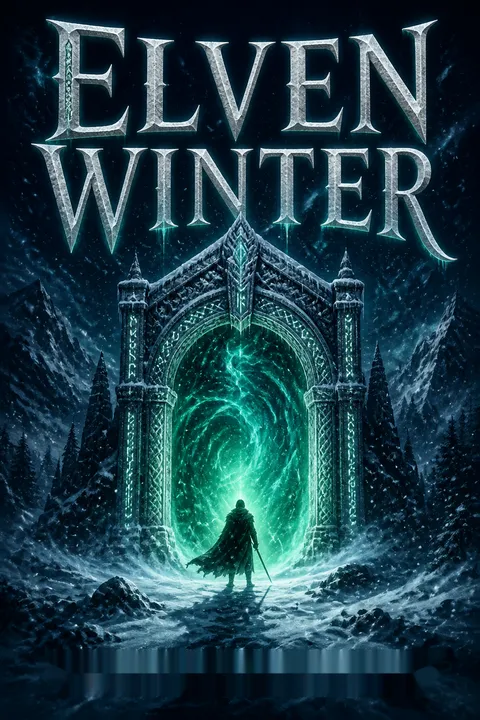


Plot Summary
Vahan Calyd Burns
At the Festival of Light, swordmaster Ollowain fears someone will exploit the gathered princes to kill Queen Emerelle. After two failed attempts, he asks Silwyna, a celebrated Maurawan archer, to watch the ships.
Emerelle refuses to avoid the ceremony, where she renews her claim to the throne. During the celebration, an arrow kills a holde beside her, and a second nearly strikes the boat. Ollowain gets her safely to the Moonshadow, where Shahondin presents his granddaughter Lyndwyn as a sorceress.
Her conjured firebird vanishes beyond the harbor towers. Fireballs immediately rain down from an unseen fleet, setting ships and the city alight. Ollowain finds Emerelle gravely wounded beneath burning straw, while the swan crown lies battered on deck.
The festival turns political spectacle into a security trap. Emerelle's public coronation gathers every rival close enough to threaten her, while her refusal to hide makes royal duty inseparable from personal risk. Ollowain's vigilance can identify danger but cannot control a city full of crowds, magic, and competing ambitions. Lyndwyn's firebird becomes an especially sharp uncertainty: a beautiful performance appears to precede catastrophe, encouraging suspicion before anyone knows what it means. The attack shatters the court's confidence that ceremony can contain conflict.
The Queen's Body Lies
Troll pack leader Orgrim reaches the Moonshadow after his galleass, the Rumbler, is rammed and sinks. He leads the assault on the elven flagship, where a wounded defender holds the quarterdeck until Orgrim kills him with a war hammer. The fighter is Ollowain, but the swordmaster had exchanged clothes with a guardsman so the real Ollowain could escape with Emerelle.
A burned young woman lies beneath a sheet wearing the swan crown. Orgrim proclaims Emerelle dead and expects the victory to earn him a duchy. The troll shaman Skanga tests the corpse with her magic and learns the dead woman is Sansella, daughter of Prince Hallandan. She senses the real queen near the mangroves, and Branbeard orders the hunt to continue.
Orgrim's victory is real in battle but false in meaning. He values recognition and rank, so the crown and dead body seem to complete the story he wants to tell about himself. Skanga's magic interrupts that easy certainty and turns triumph into another assignment. The decoy also reveals how reputation can be manipulated: a royal symbol persuades the conquerors more readily than evidence about the person beneath it. Yet the deception has a cost, because Sansella's death is absorbed into military strategy rather than treated as an individual loss.
The Shalyn Falah Crime
An account preserved among Master Alvias's papers exposes the crime behind the trolls' hatred. After the first troll war, Emerelle ordered the captured troll king and dukes taken to the Shalyn Falah, supposedly for imprisonment.
With their eyes covered and mouths gagged, the prisoners surrendered, believing themselves surrounded by superior forces. Ollowain refused the order to push them into the abyss. Farodin, seeking revenge for his murdered lover, also offered, but Emerelle rejected him because she wanted an execution without personal vengeance.
The confession's unnamed writer carried out the killings. The trolls were left believing their leaders had been imprisoned, while the truth remained concealed. Their invasion is therefore not only a bid to reclaim land, but the return of a buried execution.
The confession reorders the moral map of the war. The trolls are brutal conquerors, but their grievance originates in a deliberate act of state violence concealed by a false story. Emerelle's decision is framed as necessity, yet her demand for an executioner without personal feeling exposes how institutions can sanitize atrocity by separating action from emotion. Ollowain's refusal establishes a different kind of loyalty: he will serve the queen, but not every command. The concealed crime also shows how political peace built on silence remains vulnerable to inherited memory.
Escape Beneath the Flames
With the Moonshadow drawing enemy attention, Ollowain disguises himself as an ordinary guard and leaves the ship with Emerelle hidden among the wounded. Centaur prince Orimedes carries the boat-sedan through streets where fire and collapsing buildings cut off the direct route to the palace.
Queen's guard Yilvina keeps the group together, while the holde boatmaster Gondoran guides them toward a network of rainwater cisterns. Ollowain realizes the queen had requested a boat that could be made watertight, then uses Gondoran's knowledge to move the injured through hidden reservoirs.
They pass sealed doors and roaring fountains, where the many channels make pursuit difficult. The route offers concealment, not safety: an archer follows them, and the next exit has been left dangerously open.
Escape depends on forms of knowledge the court has overlooked. Ollowain commands soldiers, but survival rests equally on Gondoran's expertise and on a humble fishing boat converted for an unexpected purpose. The queen's preparations suggest foresight, though they do not spare the people around her from danger. The cisterns invert the city's public splendor: beneath its decorated streets lies a practical infrastructure that becomes a refuge. The sequence makes loyalty concrete. It is not a ceremonial oath, but the labor of carrying a wounded ruler through heat, water, and uncertainty.
The Bees Demand Stillness
At the cistern exit, trolls ambush the escaping party. Ollowain stays behind to hold them off while Orimedes carries Emerelle onward; Silwyna appears from the mangroves and kills the troll crushing Ollowain.
As the group is cornered in the marsh, Gondoran brings down gardener-bee nests, knowing the swarm will attack anything that moves. The bees overwhelm trolls and elves alike. Ollowain suffocates when his throat swells shut, but Lyndwyn cuts an airway and draws poison from the survivors.
She also heals Emerelle, whose chest wound had been close to fatal. Once conscious, the sorceress opens an Albenstar, a gateway into the paths between worlds. The survivors cross into the human world, still unsure whether Lyndwyn is their rescuer or a threat.
The bee swarm makes survival depend on surrendering the instinct to fight. Ollowain's discipline fails when pain overwhelms him, and the feared sorceress becomes essential through a risky, physical act of healing. This does not settle the question of her loyalty; it only makes distrust harder to sustain. Silwyna's return similarly complicates Ollowain's suspicions without erasing the reasons for them. The crossing into another world is a temporary reprieve, not a resolution. The group carries its injuries, secrets, and political danger with it.
Blood Chooses Kadlin
Far from the burning city, Alfadas Mandredson tries to belong in Firnstayn, the human village where he lives with his wife Asla and their children. His elven upbringing and fame as a warrior leave him feeling like an outsider even at home.
During the apple festival, Asla's uncle Ole brings a scarred, abused hound named Blood. When toddler Kadlin takes the dog's marrowbone, Alfadas fears Blood will attack and prepares to kill him. Instead, Kadlin strokes the dog's scarred muzzle, and Blood licks her face.
The next morning, Asla still wants the dangerous animal gone. Alfadas takes Blood to the fjord with an axe, but priest Gundar challenges his certainty. Alfadas chooses to spare the dog and bring him home, accepting responsibility rather than treating an omen as an order.
Blood's response to Kadlin disrupts Alfadas's tendency to turn uncertainty into a problem he can solve with force. He knows the dog's history and has reason to fear him, yet the child reveals a capacity for gentleness that Ole's violence has failed to erase. Gundar's theology does not give Alfadas a clear answer; it returns the decision to him. This scene mirrors the larger political story on a domestic scale. Fate may offer signs, but people remain accountable for what they choose to do with them.
The Queen Comes North
The survivors reach Firnstayn with Emerelle unconscious, Ollowain badly injured, and Lyndwyn still under suspicion. Alfadas welcomes his former teacher and foster father, while Asla receives the strangers under the law of hospitality despite fearing that the elves have come to take her husband away.
Silwyna's arrival revives Alfadas's old love for the archer, a relationship that ended without explanation. Ollowain questions her loyalty because arrows like the assassin's were in her quiver; Alfadas believes she would never harm the queen.
He offers to keep Emerelle hidden in his house, where no one would search for her. The gathering of elves and centaurs draws curious visitors, disrupting the family's privacy and consuming its winter stores, but the village becomes the queen's unlikely refuge.
Firnstayn brings private and political loyalties into the same crowded room. Asla's hospitality is generous, but it does not make the cost of the guests disappear; she must feed them and watch her husband's past return in living form. Alfadas's faith in Silwyna is shaped by love, while Ollowain's distrust is shaped by years of guarding a threatened ruler. Neither can fully read the other. The unconscious queen intensifies the tension: everyone serves her, yet no one can ask what she wants or whether she will wake.
Horsa Sounds the War Horn
King Horsa Starkshield summons Alfadas to Honnigsvald after hearing that the elven queen is in Firnstayn. At a crowded feast, Horsa presents a staged horn call as a summons from the war god and announces that the Fjordlands will aid Emerelle.
He restores Alfadas as duke and commander, then promises to send a thousand men through the gateway to Albenmark. Alfadas knows Emerelle never asked for help and warns that the enemy is beyond human measure.
On the return journey, Horsa admits that he wants his strongest and most independent fighters sent away, leaving his weak son Egil a clearer path to rule. Alfadas buys a heavy wagon and draft horses from wainwright Sigvald, giving his household a useful gift while the king's political plan gathers force.
Horsa's war is presented as generosity, but its hidden purpose is succession management. By sending capable men into danger, he hopes to protect his son from rivals without openly killing them. The false divine summons gives that strategy public legitimacy, turning the king's private calculation into collective duty. Alfadas recognizes the manipulation but cannot simply refuse: his authority depends on the same monarchy he distrusts. The wagon purchase adds a quieter counterweight to Horsa's grand ambitions. Alfadas still imagines a future in which practical comforts and family life matter.
Skanga Makes Soul Eaters
The troll shaman Skanga prepares a pursuit force capable of crossing the Albenpaths. She binds Prince Shahondin and his son Vahelmin, both enemies of Emerelle, and uses the boatman Maruk's life as the price of summoning two creatures from the void.
The Shi-Handan enter the elves and remake them into pale, enormous hunters that can consume a victim's life essence. Skanga makes the creatures promise to find Emerelle alive, while allowing them to kill anyone who shelters her.
Their vulnerability to kobold iron offers a narrow defense, but their attacks leave victims aged or emptied rather than conventionally wounded. Skanga restores Orgrim to command of the Wraithwind and orders him to cooperate with the hunt, turning his earlier disgrace into a new opportunity for power.
Skanga's magic converts political hatred into a weapon with its own appetite. Shahondin and Vahelmin are not merely captured; they become part of the force pursuing the queen, their resentment fused with the creatures inside them. The ritual also exposes the price hidden beneath troll victory: Maruk's life is treated as expendable material. Orgrim's restoration is similarly conditional. Skanga rewards competence, but her rewards bring him closer to a shaman whose power he cannot control. Ambition gains him a ship and a mission, not freedom.
Orgrim Breaks Reilimee's Wall
Branbeard's trolls struggle to take Reilimee, an elven city protected by harbor chains, towers, and powerful stone-throwing engines. Orgrim modifies the Wraithwind for a direct assault, using its mast and rigging to raise heavy boarding ramps against the wall.
He leads the first charge across, using shield and hammer to force the defenders back into a watchtower. The trolls take a section of the ramparts, but the victory costs lives and leaves the ship damaged. Branbeard rebukes Orgrim for losing the Rumbler earlier and for taking experienced fighters from other packs.
When the king insists on continuing the costly siege, Orgrim proposes a separate strike toward Whale Bay to disrupt Phylangan's supplies. Branbeard gives him one ship and two hundred fighters, with Mandrag and Birga assigned to accompany him.
Orgrim's success comes from seeing ships as adaptable tools rather than symbols of brute force. The ramp turns a vessel into a bridge, but the tactic cannot make the assault bloodless. Branbeard's response reveals a king anxious about authority: he minimizes Orgrim's achievement even as he depends on his initiative. Orgrim receives command, yet only a limited force and a dangerous independent assignment. His advancement is genuine, but it remains entangled with rivalries and the king's suspicion.
Lyndwyn Claims Phylangan
At Phylangan, Ollowain asks his father, Landoran, to prepare the fortress against the advancing trolls. Landoran distrusts Ollowain and yields authority to Lyndwyn after she claims Emerelle entrusted her with the Albenstone.
Ollowain knows she took the artifact from the unconscious queen, but cannot expose her without risking the stone's seizure. Later, Lyndwyn reveals that Shahondin had ordered her to kill Emerelle. After seeing Ollowain protect the queen, she shielded Emerelle from her brother's arrow and sent her firebird away from the attacking ships.
She used the Albenstone to heal the queen and the survivors. Lyndwyn also tells Ollowain that Emerelle foresaw the assault and accepted Vahan Calyd's destruction, a claim he rejects even as it unsettles him.
Lyndwyn's motives resist a simple division between treachery and loyalty. She had been prepared to participate in a murder, but her encounter with Ollowain's devotion changed what she could bear to do. Her subsequent deception gives her command and keeps the Albenstone beyond Landoran's reach, yet it also makes her impossible to trust without reservation. Her claim about Emerelle's foreknowledge raises a harsher question: whether protecting a realm can justify sacrificing its people. Ollowain's faith in the queen now has to contend with evidence rather than habit.
An Army of Castoffs
Alfadas gathers a ragged force from the Fjordlands, including poor farmers, volunteers, and men arrested or chained by Horsa's officials. He appoints the blunt outlaw Lambi and the ferryman Mag as war jarls, then builds a system around pikes, poleaxes, archers, and experienced fighters on the flanks.
Silwyna trains the recruits and defeats Lambi in a practice bout, making the men's assumptions about elven women harder to maintain. Ollowain, Ronardin, and Lysilla add troll-shaped wicker targets and lessons in the enemy's weaknesses.
Alfadas tests the formations against charging steers, and most men hold long enough to stop the animals. The drill reveals a force that can learn, but victory remains uncertain. Alfadas's request to Kalf to protect Asla and the children shows how personally he expects the campaign to cost him.
Alfadas does not turn his recruits into an elite army; he gives a disorganized group a structure sturdy enough to survive fear. The training recognizes that courage alone is insufficient against stronger opponents. Pikes, flanking guards, and repeated practice distribute risk across the group rather than asking one hero to bear it. Alfadas's request to Kalf links command to his domestic vulnerability. He is preparing the men for battle while quietly arranging for his family to have a future without him.
The King Takes His Threat Back
On the eve of departure, Horsa summons Alfadas and threatens to take Asla, the children, and Emerelle hostage if the duke rebels. Ollowain answers with a tale about a legendary curse arrow that pursued a king who had ordered an elf's murder. He claims Yilvina has written Egil's name on such an arrow. The threat is fabricated, but Horsa fears what it implies about his only son and backs away from taking Alfadas's family.
He admits, through his actions, that the prospect of becoming a tyrant troubles him. After the king addresses his soldiers, Alfadas permits only a hundred volunteers to join him. At the stone circle, he promises Asla he will return, then steps through the gateway into Albenmark with the men willing to follow.
Ollowain uses a story as political leverage because direct argument has failed. The invented arrow exploits Horsa's deepest fear, not physical danger but the possibility that his son will suffer for his choices. The king's retreat is therefore a moral opening rather than a full conversion. Alfadas also limits the force to volunteers, refusing to reproduce Horsa's coercion on a smaller scale. His farewell to Asla makes the departure intimate: the campaign's cost is not an abstraction but the family waiting at home.
The Gate Eats Men
As Alfadas's hundred soldiers cross the Albenpaths, Vahelmin waits in the void and breaks through the paths' protections. The Shi-Handan kills some travelers outright and steals decades from others, leaving seventeen dead and more than twenty visibly aged.
The survivors emerge in a snowy valley, frightened and weakened. Among them is Egil, Horsa's son, who has secretly joined under the name Ralf. Alfadas sends him to work with the shepherds so that the king's men and Lambi's outlaws will not identify him as a target.
The king's healer and skald also leave Horsa's service to join the expedition. When Count Fenryl reports that refugees are fleeing toward Phylangan, Alfadas agrees to meet the caravan, carrying his battered army toward the trolls' northern front.
The Albenpaths, once treated as reliable roads between worlds, become a site of predation. The damage is not only physical: sudden aging makes the soldiers confront time as an enemy, while the deaths expose the limits of the elves' assurances. Egil's disguise introduces a second danger, since Alfadas must protect the heir while maintaining order among men who may resent him. The decision to aid refugees shifts the campaign from strategic survival toward civilian responsibility, even as the army itself remains badly diminished.
The Wolfpit Is Changed
Orgrim's ship reaches the Snaiwamark, the northern homeland from which trolls were exiled generations earlier. At the Wolfpit, he and Mandrag find an elven garden where the trolls expected a fortress. Fountains, cultivated terraces, and softened stone have replaced the old halls and markings.
A map carved into a table helps Orgrim understand the terrain. Scout Brud reports a long refugee caravan moving toward Kingstor, with few fighters and a slow train of animals and sleds.
Orgrim sees a chance to seize prisoners and supplies before the refugees reach safety. He plans to send Brud's trackers to drive them through a narrow valley, where his own fighters can block their path. The refugees do not know the trolls are close, and Orgrim prepares an ambush.
The Wolfpit confronts Orgrim with a homeland that exists physically but not culturally as he remembers it. The altered fortress makes exile feel less like a temporary absence than an erasure carried out in stone and flowers. His response is to treat the refugees as an opportunity, continuing the cycle of displacement rather than distinguishing civilians from enemies. The carved map offers tactical clarity, but it cannot restore what the landscape has lost. Orgrim's longing for home sharpens his violence instead of softening it.
A White Elk's Lure
In Firnstayn, Ole hears his dogs stirring and goes into the forest with Killer and Skullbiter. He spots what seems to be a rare white elk and follows it away from his house, hoping to sell its hide. At a hunters' shelter, he finds Killer's body shriveled and realizes something has drained the dog's life.
The elk-shaped creature is actually a translucent Shi-Handan, which bites into Ole without leaving a conventional wound and pulls golden light from him. Ole's strength collapses.
He swings one of the whips used to terrorize his dogs, and the creature recoils from it before fleeing. Then Skullbiter attacks the injured Ole, breaking his leg and tearing into the wound. The story stops with Ole screaming in the forest, alive but helpless as the dog continues mauling him.
The final scene carries the war's supernatural violence into the human world through an ordinary act of greed. Ole mistakes the soul eater for a valuable animal because he is accustomed to seeing living creatures as things to control and sell. His whip briefly protects him, but the tool that once enforced his power cannot restore the life the creature has taken. Skullbiter's attack adds a human-made danger to the supernatural one: the abused animal's violence is not a magical curse, but the consequence of Ole's own cruelty. The scene ends without safety or explanation.
Analysis
Elven Winter treats war as an inheritance, not a sudden interruption. The trolls return with a grievance rooted in the murder of their leaders, while the elves defend a political order that has hidden the crime and preserved its benefits. The confession about the Shalyn Falah prevents a simple division between civilized rulers and monstrous invaders: the present violence has a history, and each side's story leaves something out.
The novel's leaders are shaped by different fears. Emerelle fears the collapse of Albenmark and may accept losses others cannot justify. Horsa fears his son will fail to rule, so he sends away men who could challenge him. Orgrim wants recognition and converts tactical ability into a bid for status. Alfadas, by contrast, tries to make responsibility local and concrete. He protects a family, trains imperfect soldiers, and asks Kalf to care for those he may leave behind. His leadership begins not with certainty but with an honest accounting of danger.
Across the story, symbols and systems that promise safety become unstable. The crown can be placed on a false body. The Albenpaths can carry an army or expose it to predators. The ancient Albenstone can heal, but its power brings political manipulation with it. Even the ordinary tools of rule, a king's command or a priest's omen, can be turned toward someone else's purpose. The book's strongest moral contrast is between imposed fate and chosen obligation. Alfadas cannot control the war's scale, yet he can choose how to treat recruits, family, and even a dangerous dog. That distinction offers no guarantee of survival. It does, however, preserve a form of agency in a world where rulers and sorcerers repeatedly make other lives part of their plans.
Review Summary
People Also Read





Characters
Ollowain
The queen's swordmasterOllowain is Emerelle's bodyguard, a renowned swordsman, and Alfadas's former teacher and foster father. He measures himself against an ideal of flawless duty, which makes visible imperfection and uncertainty especially painful to him. His loyalty is not blind: he can refuse an unjust command, but he still struggles to distinguish principled service from self-erasure. His deep suspicion of court politics protects him from some dangers and blinds him to others. He is most at ease when action gives him a clear task, less so when love, trust, and moral ambiguity require him to wait.
Alfadas
The human caught between worldsAlfadas is a celebrated warrior and elected jarl of Firnstayn, raised for much of his life among elves. His skill and fame do not settle his sense of belonging; he feels foreign among humans and can no longer imagine himself fully at home in Albenmark. Asla and their children give him a life he wants to protect, while his old loyalties and military reputation keep drawing him into danger. He teaches honor to his son but knows that survival may demand compromise. His central strength is a willingness to accept responsibility for people others dismiss.
Emerelle
The embattled elven queenEmerelle is the long-ruling queen of Albenmark, an immensely powerful sorceress whose authority rests on more than affection. Her people see a symbol of continuity; her enemies see a ruler who has shaped their lives without their consent. She can perceive possible futures, but that gift offers no simple command over them. Her restraint and secrecy complicate the devotion of those who protect her, especially when she withholds the reasons for her choices. She carries the burden of keeping many rival peoples inside one political order, often at a cost others cannot see.
Orgrim
The ambitious troll commanderOrgrim is a capable troll fighter and ship commander who wants his victories to earn lasting rank. He studies ships, tactics, and terrain rather than relying only on his race's physical strength. His ambition is sharpened by rivalry and by a keen awareness of how quickly a leader can fall from favor. Though he regards enemies through the brutal customs of his army, he can recognize courage even in a small opponent. His desire for distinction makes him resourceful, but it also leaves him vulnerable to rulers who offer advancement as a means of control.
Lyndwyn
The gifted court sorceressLyndwyn is Shahondin's granddaughter, a young sorceress whose confidence and ambition set her apart at court. She has trained intensely and expects her abilities to be judged on their results, not her age. Her family ties place her close to political feuds, while her fascination with Ollowain draws her toward a man whose loyalties challenge her assumptions. She can be calculating and emotionally impulsive at once. Her gifts include formidable creative magic and healing, but using them requires judgment about whose pain matters and what may be sacrificed.
Silwyna
The Maurawan huntressSilwyna is a skilled archer from the forest-dwelling Maurawan, a people regarded by other elves as difficult to predict. She thinks in terms of trails, prey, and opportunity, and she trusts her senses more readily than courtly assurances. Her history with Alfadas gives their encounters an intimacy neither can treat as simple friendship. She is independent enough to leave when she believes a cause is lost, yet capable of returning when danger changes. Her reserve is not emptiness; it is a way of protecting a private code from people who assume they understand her.
Asla
Alfadas's grounded partnerAsla is Alfadas's wife and the practical center of their household. She works hard, speaks plainly, and wants the family to live in the present rather than orbit the distant elven world that shaped her husband. Her warmth does not prevent jealousy or fear; she understands how easily Alfadas can be called away by duty and old attachments. She insists on hospitality even when guests strain her stores and privacy. Her humor and directness give the family a language of intimacy that Alfadas sometimes neglects.
Horsa Starkshield
The aging Fjordland kingHorsa is a veteran king whose authority comes from battle experience, charisma, and a keen understanding of the men who follow him. He is also aging, physically vulnerable, and anxious about the succession to his only son. His desire to preserve his dynasty can turn allies into expendable pieces. Yet he is not immune to shame or reflection, and the possibility of being remembered as a tyrant troubles him. His mixture of generosity, manipulation, and fear makes him more than the simple warrior-king his public image suggests.
Blood
The scarred guardian dogBlood is a huge black hound scarred by Ole's cruel training. His size and history make him dangerous, but his behavior cannot be reduced to the violence his owner intended to create. He forms an unexpected bond with Kadlin and becomes a watchful presence in Alfadas's home. Blood's guardedness mirrors the damage inflicted on him, while his response to care shows that cruelty has not entirely determined his nature.
Ulric
Alfadas's eager young sonUlric is Alfadas and Asla's son, an energetic boy who imagines himself as a future hero and army leader. He admires his father's swordsmanship but is still learning that courage and honor are not the same as winning. His questions about elves and warriors reveal a curiosity inherited from the stories surrounding his family. He looks to Alfadas for approval and instruction, even as his parents' conflicts and his father's absences shape his understanding of adulthood.
Kadlin
The fearless toddlerKadlin is Alfadas and Asla's young daughter. Curious and impulsive, she approaches Blood without understanding the danger adults see. Her spontaneous affection disrupts the fear surrounding the dog and reveals a gentleness no one expected.
Yilvina
The queen's disciplined guardYilvina is a veteran fighter in Emerelle's guard and a trusted commander under pressure. Her judgment is practical, her loyalty persistent, and her attention to security rarely relaxes. She follows orders but is willing to speak when a decision seems dangerous. Her cool exterior and twin swords make her difficult to approach, though her steadiness gives the people around her someone reliable to follow.
Orimedes
The blunt centaur princeOrimedes is a centaur prince whose loyalty is expressed through direct action rather than courtly manners. He drinks freely, speaks bluntly, and often resists Ollowain's authority before deciding what the moment requires. His physical courage is matched by a growing sense of responsibility for his people. He can be irreverent about danger, but he understands that leadership sometimes means surviving to fight again.
Gondoran
The holde watermasterGondoran is Emerelle's holde boatmaster and a guardian of Vahan Calyd's waterworks. He is proud of the systems his people maintain and impatient with outsiders who mistake practical expertise for low status. His knowledge of boats, cisterns, and hidden passages becomes crucial in a crisis. Beneath his argumentative manner is a firm sense of duty to the queen and to the people who depend on his craft.
Shahondin
The vengeful Arkadien princeShahondin is a prince of Arkadien whose polished manners conceal a deep feud with Emerelle. He uses wit and calculated provocation to unsettle stronger opponents, and his ambition is inseparable from inherited grievance. He is willing to make dangerous alliances when they advance his aims, but he distrusts any power he cannot direct. His son and family history tie his political decisions to a private legacy of revenge.
Vahelmin
The hunter princeVahelmin is Shahondin's son, known as a skilled hunter and archer. He is ambitious, competitive, and eager to prove his standing independently of his father's influence. His hunting skill gives him patience and an instinct for pursuing vulnerable prey. He is shaped by the violent feuds of his family and by a world in which power is often measured by what one can capture.
Skanga
The feared troll shamanSkanga is an ancient troll shaman whose frail appearance disguises a commanding presence and formidable magic. She understands fear as a tool and knows how to make other people act before they understand the cost. Her authority reaches even the troll king, though she conceals her motives behind riddles, rituals, and apparent weakness. She is patient where warriors are impulsive, and her schemes extend beyond the immediate battle.
Branbeard
The returning troll kingBranbeard leads the trolls back into Albenmark and presents their war as a campaign to end elven rule. He is forceful, proud, and shaped by old injuries that have left him physically and psychologically unsettled. He values strength and public authority, yet his suspicion of rivals can undermine capable commanders. His understanding of freedom is bound to his people's return, even when his own methods threaten the lives of others.
Landoran
The Normirga princeLandoran is Ollowain's father and a prince of the Normirga, the northern elves. He prizes sorcery, cultural achievement, and the carefully maintained beauty of his stronghold. His pride in his people makes him dismissive of those he considers deficient, including his own son. He views history through the injuries suffered by the Normirga and has difficulty recognizing the claims of those they displaced.
Kalf
The loyal village fishermanKalf is a fisherman who once held the jarl's position in Firnstayn and remains deeply connected to Asla. Quiet and dependable, he has built a life around work rather than competing for status. His feelings for Asla complicate his relationship with Alfadas, but he does not use that history to undermine the family. His practical kindness gives Alfadas a trusted person to turn to when the future looks uncertain.
Gundar
The fate-weaving priestGundar is a priest of Luth who reads signs in ordinary events and offers counsel without claiming that every decision can be made for someone else. He is warm, observant, and sometimes comic in his appetite, but he takes spiritual responsibility seriously. His belief in fate does not erase human choice; he urges Alfadas to listen to his own judgment rather than hide behind divine instruction.
Egil
The king's untested heirEgil is Horsa's only son and heir to the Fjordlands. He wants the respect of soldiers and resents being treated as an embarrassment by his father. His confidence exceeds his experience, and he mistakes battlefield service for a quick route to legitimacy. Beneath his entitlement is a real fear that no one will consider him worthy of ruling.
Lambi
The chained war jarlLambi is a blunt, irreverent fighter brought into Alfadas's army in chains after conflict with Horsa's authorities. His jokes mask neither courage nor a clear sense of how dangerous the campaign will be. He can win loyalty among rough men because he speaks their language and refuses to pretend the risks are small. Alfadas recognizes that his rough leadership can help turn an unwilling band into a unit.
Mag
The ferryman turned leaderMag is a young ferryman marked by a brand for stealing bread to feed himself and his brothers. Alfadas sees in that act a willingness to risk punishment for other people, and gives him responsibility among the soldiers. Mag is quiet and initially uncomfortable with authority, but his history gives him a bond with the poor recruits others might overlook.
Mandrag
The trolls' old counselorMandrag is an elderly troll who once led his people during their exile and remains close to Branbeard. He remembers the Snaiwamark as it was before the elves remade it, giving him a perspective younger warriors lack. His loyalty to the trolls does not prevent him from valuing lives or challenging reckless decisions. He serves as both a living archive and a wary adviser.
Plot Devices
The Albenpaths
Roads between worldsThe Albenpaths are magical routes linking distant places and worlds, entered through Albenstars. Travelers must stay on the marked path, since straying into the surrounding void can mean permanent loss. The routes allow Ollowain's group to escape Vahan Calyd and later carry Alfadas's human soldiers into Albenmark. Their apparent safety is disrupted when the Shi-Handan break the protective spell and attack travelers. The paths therefore function as both infrastructure and vulnerability: whoever controls access can move armies, hide fugitives, or hunt across worlds.
The Albenstone
Power held in stoneThe Albenstone is an ancient artifact given to the elven races by the Alben. Its power can reshape magical routes and assist a sorcerer in extraordinary works. Lyndwyn uses it to heal Emerelle and others after the attack, while its presence gives her political leverage at Phylangan. The stone links practical magic to political authority: possessing it makes Lyndwyn valuable, dangerous, and difficult for Ollowain to challenge openly. Its use also raises the question of whether immense power can be exercised without exacting a human cost.
The Shi-Handan
Predators of life essenceThe Shi-Handan are creatures from the void summoned by Skanga. They consume the life essence that allows their victims to be reborn, leaving bodies unnaturally aged or emptied rather than simply wounded. Skanga binds Shahondin and Vahelmin to the creatures, giving the hunters access to the Albenpaths and directing them toward Emerelle. Their restrictions shape the danger: they are forbidden to harm the queen but can attack those around her, and kobold iron can injure them. Their presence carries the war's violence across the boundary between Albenmark and the human world.
The Queen's Decoy
A crown disguises a bodyOllowain uses exchanged clothing, a disguised escort, and a dead body wearing Emerelle's crown to mislead the trolls about the queen's fate. The plan buys the real Emerelle time to escape Vahan Calyd, but it depends on the attackers accepting the swan crown as proof of identity. Orgrim initially believes the deception and claims victory, while Skanga's magic sees through it. The device reflects the larger political conflict: visible symbols can redirect an army, but they cannot guarantee that the truth will remain hidden.
The Fjordland Amulets
Borrowed winter protectionElven amulets protect the human soldiers from Albenmark's killing cold when worn against bare skin. Their plain appearance belies the magic that lets men from the warmer Fjordlands travel and fight on the snowy frontier. The amulets make the alliance materially possible, but they are borrowed and must be returned. Alfadas's army must also learn to survive trolls through tactics rather than enchanted weapons, using pikes, poleaxes, archers, and disciplined formations. The contrast keeps the humans vulnerable even as it gives them a chance to participate.
The Saga of the Elven Series

Download PDF
Download EPUB
.epub digital book format is ideal for reading ebooks on phones, tablets, and e-readers.








