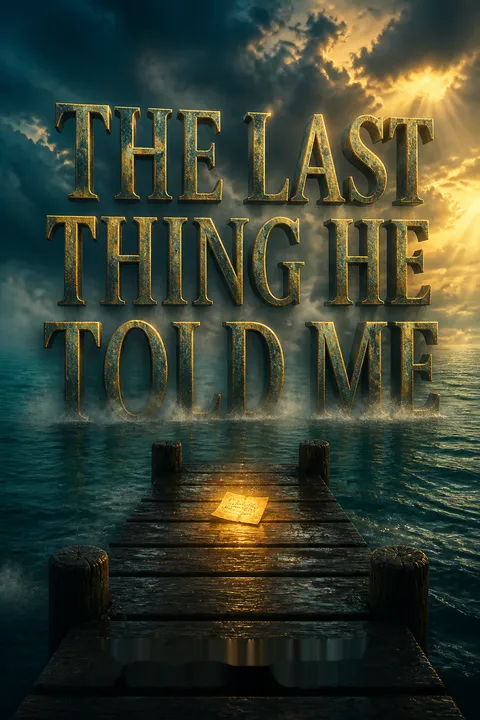


Plot Summary
Prologue
Hannah remembers how she lost the parking stub on her second date with Owen, while he turned her habit of misplacing things into a joke they shared. After he disappears, she dreams of him in that same garage, removing his wedding ring as if she has lost him too.
The memory frames their marriage as something intimate and imperfect, then turns Hannah's old fear of losing things into the question driving the story: what did Owen leave behind, and what has he taken with him?
The parking ticket is a small, concrete emblem of the novel's larger problem: a missing record can look like carelessness until someone decides it matters. Hannah remembers the garage through the warmth of courtship, but the dream recasts that scene as a forecast of abandonment. Her habit of losing objects becomes emotionally charged because she once learned that people can leave without making their departure clear. The prologue establishes her central vulnerability without reducing her to it. She must learn to distinguish a vanished person from a vanished truth, and to act before uncertainty becomes another form of loss.
Two Notes, One Disappearance
A soccer player delivers Hannah a folded note from her husband, Owen, while he is missing from work and unreachable. Its plea to protect Bailey, Owen's sixteen-year-old daughter, gives Hannah no explanation. At school, Bailey finds a second note and a duffel containing at least six hundred thousand dollars.
The same day, radio reports say the FBI and SEC have raided The Shop, the software company where Owen is its lead coder, and arrested CEO Avett Thompson for fraud. Bailey fears her father has fled with stolen money; Hannah cannot accept that conclusion, though she has no evidence to replace it. She brings Bailey home, hides the cash, and begins the search for a husband who has left both a warning and a fortune behind.
The notes turn absence into an active problem: Owen has not simply disappeared, he has assigned Hannah a responsibility without explaining its terms. The cash complicates the most comforting interpretation of his departure, since a large unexplained sum resembles both protection and evidence. Hannah's instinct is to keep Bailey from being overwhelmed, but the girl is already reading the situation as a judgment on her father. Their opposing needs begin here: Hannah needs time to investigate before deciding what Owen has done, while Bailey needs an answer that does not ask her to trust blindly.
Jules Knows Why He Ran
Hannah's longtime friend Jules arrives and admits she called Owen after learning that the raid was imminent. Her newspaper colleague had warned her that the FBI investigation centered on false financial forecasts and unfinished privacy software.
Owen's questions focused on how much time he had to leave, not on what the investigators knew, which makes his flight look deliberate. He may have understood the fraud, even if he did not design it. Hannah refuses to turn uncertainty into a verdict, but she can no longer pretend his disappearance was an innocent accident.
Jules stays with Hannah and Bailey through the night, while Hannah holds back the duffel's existence. She fears that telling anyone about the money will make Owen look guilty before she understands why he left it.
Jules's account changes the meaning of Owen's silence: he appears to have been preparing for an escape, not merely caught in the Shop's collapse. Hannah's refusal to disclose the money is not simple denial. She knows the evidence can be interpreted in more than one way, and she is trying to preserve the possibility that Owen acted to protect Bailey. That loyalty is also a form of risk. Her history with an abandoning mother has made her alert to departures, but it has not made her immune to choosing the explanation she most needs.
The Past Has No Paper Trail
U.S. Marshal Grady Bradford visits Hannah, offers help with Bailey's custody, and warns her to get a lawyer. His knowledge of Owen and the case feels too intimate, so Hannah withholds both notes and the cash.
FBI agents then question her and threaten to interview Bailey; their confusion about Grady's visit makes Hannah doubt every badge in the room. She contacts Jake Anderson, her former fiancé and a New York litigator, and searches Owen's laptop. A hidden will names an unfamiliar conservator, while the computer holds photographs of Owen's first wife and extensive Shop files.
Carl Conrad, Owen's closest local friend and a lawyer, refuses Hannah at his daughter's birthday party. His wife Patty accuses Owen of persuading them to invest their savings, leaving Hannah to investigate without local allies.
The investigation first appears as a contest over information, but Hannah has little leverage because every authority figure can define her as either a witness or an accomplice. Grady's offer of practical help makes him more unsettling, not less, because kindness can also be a method of access. The failed appeal to Carl shows how quickly a community's loyalty becomes conditional when money is involved. Hannah's workshop and Owen's computer offer a different kind of refuge: objects and records she can examine herself, even when they do not yet form a coherent account.
Austin Is the Loose Thread
Hannah finds an unexplained name in Owen's will and remembers how he twice reacted strangely to plans involving Austin. Bailey recalls a childhood wedding in the city, followed by a walk with her father to a vast football stadium glowing orange.
Hannah connects that memory to Grady's Texas office and decides they should go there, despite having no clear lead. Jake calls after their arrival and reports that Owen's biography cannot be verified: records for his childhood, education, and Seattle life are missing.
The available evidence begins only when Owen and Bailey settled in Sausalito. Hannah tells Bailey the truth she has learned, including that her own history may have been altered, and Bailey chooses to keep searching with her rather than retreat from Austin.
Austin becomes more than a location because it is the first place where Bailey's partial memory can challenge her father's account. Hannah's choice to take her there is a wager that a physical setting may recover what family stories concealed. Jake's findings intensify the wager: the problem is no longer whether Owen hid something at work, but whether the family has been living inside a constructed biography. Their alliance begins to change when Hannah stops protecting Bailey through selective silence and lets her share the frightening facts.
A Professor Remembers
Hannah and Bailey visit the stadium and nearby churches, but the church Bailey recognizes was closed for renovation during the year she remembers. At the University of Texas, Professor Cookman recalls the story Owen told about failing his mathematics exam, then helps them obtain his old class roster.
Bailey recognizes the professor's account of a female student who drew Owen's attention. Meanwhile, Carl admits that he and Patty never invested in The Shop; he had spent the money on an undisclosed relationship, and let Patty blame Owen.
This removes one accusation against Owen but not the larger questions. A parishioner helps match a wedding to a summer football scrimmage, giving Hannah and Bailey a likely Austin bar and a name from the roster to investigate.
The search progresses through imperfect evidence rather than a single revelation. Bailey's uncertain memory becomes useful only when Hannah treats it as a clue without insisting it be complete. Cookman's recollection lends the past a human witness, while Carl's confession demonstrates how easily blame can harden around a convenient story. The roster and wedding record narrow the field, but they do not yet explain why Owen erased his earlier life. The investigation is also reshaping Hannah's role: she is no longer merely interpreting Owen for Bailey; she is helping Bailey test what she remembers.
Bailey Remembers Kristin
A yearbook photograph points Hannah and Bailey to The Never Dry, the bar connected to a wedding in Bailey's memory. The image also shows Katherine Smith, whose features strongly resemble Bailey's. Inside, owner Charlie Smith reacts with alarm when Hannah shows him a photograph of Owen.
Bailey enters to help and Charlie recognizes her by another name, Kristin. Hannah pulls Bailey away, but the encounter unlocks enough clues for her to identify Owen as Ethan Young, the former son-in-law of Austin lawyer Nicholas Bell.
Ethan had testified against Bell, whose criminal clients included a powerful organization; he and his daughter vanished after the case. Bell's daughter Kate was killed, and Bailey's birth identity appears tied to her. Back at the hotel, Hannah realizes Bailey has disappeared too.
Recognition here is both liberating and dangerous. Bailey's recovered name gives her a piece of her own history, yet it arrives through a stranger's frightened reaction rather than a safe family conversation. Hannah's discovery recasts Owen's lies as a protective system built around a real threat, without making the deception harmless. The old identity also reveals how little control Bailey has had over the facts that define her. Her disappearance repeats Owen's flight on a smaller scale: when the adults manage information around her, she goes looking for truth on her own.
The Marshal's Old Promise
Grady takes Hannah to the marshal's office and explains that Owen, formerly Ethan Young, left witness protection after a leak exposed his and Bailey's identities. Ethan had helped Nicholas Bell build an encrypted system for criminal messages, then turned evidence against him after Kate's death.
He had moved Bailey away from Bell's world and tried to build a new life. At The Shop, Avett pressured Ethan to keep the failing software afloat, but Ethan documented his objections and eventual efforts to fix it.
While deputies search for Bailey, Jules opens the steel piggy bank and finds Ethan's fuller will. It names Hannah and Charlie as guardians under different circumstances. Grady reports that Bailey has been found, but urges Hannah to accept a new identity and enter protection with her.
Grady's account replaces the simple opposition of innocence and guilt with a history of compromised choices. Ethan helped a dangerous man before deciding that loyalty had become complicity; later, he stayed at The Shop because leaving could expose his past and endanger Bailey. His will shows that he had anticipated a crisis and trusted Hannah with his daughter's care. Yet the failed protection program leaves Hannah with a concrete reason to doubt the institution offering safety. The question is no longer whether she can restore the old family, but what kind of future can keep Bailey alive without erasing her again.
Hannah Makes the Bargain
Hannah returns to The Never Dry and persuades Charlie to take her to Nicholas Bell's estate. Bell is both a grieving father and a former defender of violent criminals, still protected by associates who owe him.
He blames Ethan for exposing him and taking Bailey away, while Hannah acknowledges the harm Ethan caused without accepting Bell's version as the whole truth. She offers Bell a way to know his granddaughter if he uses his influence to keep her and Hannah safe. Bell agrees to try, but makes clear he cannot protect Ethan from the organization Ethan betrayed.
Hannah understands that accepting Bell's help may mean living without Owen. Grady warns that Bell could be manipulating her and that revenge may still come. Hannah proceeds because she sees Bailey's continued life under her own name as worth the risk.
Hannah's bargain is not a clean reconciliation between enemies. She recognizes Bell's capacity for tenderness without mistaking it for innocence, and she accepts that his love for Bailey may coexist with self-interest and a violent history. Her offer shifts the measure of success: preserving the marriage is no longer the only way to honor Owen. By risking her own safety and surrendering the hope of reunion, she chooses Bailey's continuity over the certainty of institutional relocation. The decision is ethically unresolved, which is precisely why it feels like a choice rather than a rescue.
Home Without Owen
At the marshal's office, Bailey tells Hannah she found Ethan on the old class roster and received a brief call through the encrypted Signal app he had installed on her phone. He apologized and said he could not come home.
Grady tries to keep the possibility of his return open, but Bailey asks why her father is still absent if protection is truly available. Hannah does not offer false reassurance. She tells Bailey that she believes he cannot return, then lets the girl choose what happens next. Bailey asks to go home.
Hannah takes her back to Sausalito, promising that any contact with Nicholas and Charlie will happen on Bailey's terms. On the plane, Hannah gives Bailey the warm hoodie she forgot before, and Bailey accepts it. Their small shared gesture marks the beginning of a family rebuilt without Owen.
The encrypted call offers Bailey contact but not reunion, giving her the truth in a form she can bear only because Hannah does not dilute it. Their exchange marks a shift in authority: Hannah neither decides for Bailey nor abandons her to decide alone. The hoodie matters because Hannah has learned that care is not a declaration of good intentions; it is noticing what this particular person needs at this particular moment. Home is no longer the place where the old family waits intact. It is a place Hannah and Bailey can choose together, while grief remains unresolved.
Epilogue
Years later, Hannah exhibits her furniture in Los Angeles, where Bailey now lives. A heavily disguised man helps Hannah gather dropped papers, then leaves her with a private reference to the courtship they once shared. Hannah recognizes Owen, but does not follow him or call him back.
Bailey arrives moments later with her new boyfriend and greets Hannah as her mother. Owen's brief appearance offers no promise of reunion, only proof that he is still alive and still remembers them. Hannah keeps her attention on Bailey, whose life has continued to grow beyond the crisis that first brought them together.
The ending grants Hannah recognition without granting resolution. Owen's changed appearance and private signal suggest that his old self remains present, but his departure preserves the cost of the choice she made for Bailey. The decisive emotional fact is not whether Hannah and Owen will meet again; the book refuses to settle that question. Instead, Bailey's ordinary arrival and her use of the word mother confirm a relationship built through shared action, not inherited title. Hannah's attention turns toward the life she has managed to protect, even as the missing man remains part of its perimeter.
Analysis
The novel makes identity both a practical defense and an intimate injury. Owen's false biography protects Bailey from people who could recognize her, but it also deprives her of a truthful account of her own beginnings. The distinction matters: a secret may be motivated by love and still shape another person's life without consent. Hannah's task is therefore not simply to uncover facts, but to decide what care requires once those facts are known.
The book's competing models of protection are deliberately imperfect. Grady offers the structure of witness protection, which promises safety by requiring the family to surrender names, routines, and public selves. Nicholas offers a personal bargain rooted in influence and dangerous old loyalties. Neither option is clean. Hannah chooses a risk she can understand over a system that previously failed, accepting the possibility that Owen will remain absent so Bailey can keep the identity and future she has built. The choice is not presented as universally wise; it is an act of judgment under conditions where certainty does not exist. Hannah's relationship with Bailey develops through a shift from performance to reliability. Early on, she tries to earn affection with recipes, reassurance, and careful avoidance of conflict. Those gestures fail because Bailey needs someone who will neither flatter her nor edit the truth. Hannah improves when she admits what she does not know, gives Bailey real choices, and notices practical needs such as a warm sweatshirt. Their eventual closeness is earned through shared decisions rather than a sudden change of feeling.
The woodworking motif supports this ethical vision. Hannah studies the grain of a piece before shaping it; she cannot make the material into something else without attending to what is already there. The same discipline becomes necessary with Owen, Bailey, and Nicholas. Love does not require pretending that a person's harmful choices are harmless. It requires seeing the whole person, then deciding what can be carried forward. The final encounter with Owen leaves that question open, while Bailey's adulthood confirms that Hannah's most consequential promise was not to recover the past, but to make room for Bailey's life after it.
Review Summary
The Last Thing He Told Me received mixed reviews. Many readers found it engaging and praised the character development, particularly the evolving relationship between Hannah and Bailey. The mystery and pacing kept readers hooked, though some felt the ending was unsatisfying. Critics described it as more of a domestic drama than a thriller, with a slow-paced plot. Some readers were disappointed by the lack of suspense and predictable twists. Overall, the book's emotional depth and exploration of family bonds resonated with many, while others found it lackluster.
People Also Read






Characters
Hannah Hall
Woodworker turned guardianHannah is a New York woodworker who moves to Sausalito to build a life with Owen and his daughter. Raised largely by a steady grandfather after her mother withdrew from her life, she values self-reliance and pays close attention to the details other people overlook. Her difficulty is not a lack of courage but the risk of mistaking loyalty for certainty. When the family crisis begins, she tries first to protect Bailey by softening the truth, then learns that trust depends on sharing difficult facts and following through. Her craft shapes her way of thinking: she studies what lies beneath a surface and accepts that making something sound requires patient, practical work.
Owen Michaels
Absent husband, devoted fatherOwen is Hannah's husband and Bailey's father, a talented software coder whose warmth and humor have made him the center of their family. He is attentive to Bailey's habits, protective of her, and proud of Hannah's craft. Yet he keeps parts of his history sealed away, making his devotion difficult to separate from the secrecy used to preserve it. He tends to carry danger privately rather than ask others to share its cost. His choices leave Hannah and Bailey to interpret not only where he has gone, but how much of the life they remember can still be trusted.
Bailey Michaels
Guarded teenage daughterBailey is Owen's sixteen-year-old daughter, a theater enthusiast with purple-streaked hair, sharp judgment, and little patience for Hannah's attempts to win her over. Her resistance is not casual cruelty: she is protective of the bond she has had with her father and wary of another adult entering her home. Losing her mother young has left her with an incomplete account of her own past, though she does not initially know how much is missing. Under pressure, Bailey is observant and persistent. She wants the truth even when it threatens the identity she has taken for granted, and she gradually learns to let Hannah stand beside her rather than treating her as an intruder.
Jules
Hannah's steadfast confidanteJules is Hannah's oldest friend, a San Francisco Chronicle photo editor whose loyalty began in adolescence and has survived distance and adulthood. She offers comfort without demanding that Hannah perform calmness, while her journalistic instincts help connect the Shop investigation to Owen's departure. Jules is capable of acting quickly, sometimes before she knows the consequences, and she accepts responsibility when her warning call becomes part of the crisis. Her bond with Hannah gives the investigation a dependable human center and later helps uncover a document Owen concealed.
Grady Bradford
Marshal with divided loyaltiesGrady is a U.S. marshal based in Austin who has known Owen for years and arrives in Sausalito offering help. Young, personable, and more casual than Hannah expects an investigator to be, he can move from easy charm to professional pressure without warning. He wants to locate Owen and prevent Bailey from being exposed to danger, but he believes official witness protection is the safest path. His history with Owen gives him insight that Hannah lacks, while his confidence in institutions conflicts with the family's experience of a previous security failure.
Jake Anderson
Former fiancé, sharp lawyerJake is Hannah's former fiancé, a high-powered New York litigator who remains confident that he understands her motives. He offers legal strategy and hires an investigator to examine Owen's background. His directness is useful, but his habit of turning crises into cases can make his help feel presumptuous. Jake represents a version of Hannah's past built around ambition and analysis rather than the family life she chose with Owen. He cares enough to offer shelter to Hannah and Bailey, even when he disagrees with Hannah's determination to keep searching.
Nicholas Bell
Austin lawyer with shadowsNicholas is a former Austin public defender whose professional life and family history carry the weight of old loyalties. He is intelligent, measured, and skilled at presenting complicated choices in terms that favor his own moral account. His affection for his daughter and granddaughter is genuine, but it exists alongside a willingness to defend people who cause profound harm. He understands that people can be loving within their families and destructive beyond them. Hannah's encounter with him forces her to distinguish compassion from absolution and to judge what his care might make possible.
Charlie Smith
Bar owner with old tiesCharlie owns The Never Dry, a family bar in Austin, and is connected to a history that Hannah and Bailey are trying to reconstruct. His first response to Hannah's questions is defensive and frightening, shaped by years of strangers turning his family into a spectacle. Beneath that reflex is grief and an attachment to the people he has lost. Charlie's relationship with his father is more tender than Hannah expects, while his connection to Bailey is complicated by the years they have spent apart.
Kate Smith
The face in the yearbookKate appears first in an old university photograph, where her resemblance to Bailey makes the past suddenly feel immediate. She was a student at the University of Texas and part of a close Austin family. Her history is pieced together through other people's recollections, photographs, and the consequences of a violent event. In the story, the gap between the person Bailey believes she remembers and the woman whose image she sees becomes a painful measure of how little she has been allowed to know.
Olivia Michaels
The mother in Owen's storyOlivia is the woman Owen identifies as Bailey's late mother, a teacher with red hair and a love of swimming. Hannah knows her through a handful of photographs and the stories Owen shares, rather than through any personal meeting. Those recollections help Hannah understand the family she has joined, but they also reveal how dependent Bailey and Hannah are on Owen's version of the past. Olivia's place in their lives is shaped by affection, loss, and the unanswered questions left by her absence.
Carl Conrad
Owen's compromised friendCarl is Owen's closest friend in Sausalito and a local lawyer who has built a family life with Patty. Hannah distrusts his repeated infidelity, while Owen values the loyalty Carl has shown him. When the Shop scandal breaks, Carl initially avoids Hannah and lets his wife blame Owen for a financial loss. His eventual admission reveals how self-protection can make one person else's reputation an acceptable cost.
Patty Conrad
Carl's angry wifePatty is Carl's wife and the mother of their young children. She is organized, judgmental, and quick to hold Hannah responsible for the damage she believes Owen has done. Her anger is sharpened by the fear that her family's savings and future have been taken from them. Patty's certainty about Owen contrasts with Hannah's uncertainty, though the certainty rests on information Carl has not honestly given her.
Avett Thompson
The Shop's ambitious founderAvett is the CEO of The Shop and a longtime client of Hannah's through his wife, Belle. He is confident, impatient, and invested in the promise of the company's privacy software. His public standing makes the company's collapse a major threat to employees and investors alike. To Owen, Avett is both an employer and a source of pressure, and the distance between the company's public claims and its working technology becomes central to the investigation.
Belle Thompson
Avett's defensive wifeBelle is a former model and Avett's wife, a wealthy client whose homes Hannah has furnished. She is accustomed to comfort and to controlling how a story is presented. After Avett's arrest, she insists that the case is a setup and seeks reassurance that Owen will not cooperate with investigators. Her self-protection makes her an unreliable source, even when she provides Hannah with a clearer sense of what the company may be hiding.
Tobias Cookman
Owen's exacting professorCookman is a distinguished mathematics professor at the University of Texas whose demanding teaching style left a strong impression on one of his former students. He initially resists helping Hannah and Bailey, then recognizes the importance of the story they bring to him. His memory and access to old university records give them a practical route into Owen's past. Beneath his sternness is a capacity to respond when he sees that a student's family is in real distress.
Bobby
Bailey's college-bound boyfriendBobby is Bailey's boyfriend, a high-school senior headed to the University of Chicago. He encourages Bailey's independence and sometimes reinforces her resistance to Hannah. His question about Owen's missing Princeton record becomes an early clue that the biography Bailey has inherited may not hold together.
Plot Devices
Owen's two notes
A warning without contextOwen leaves one note for Hannah and another for Bailey, each carrying a fragment of instruction but no account of why he has gone. Hannah's message makes Bailey her responsibility, while Bailey's note asks her to help Hannah and trust what she knows about herself. Together, the notes create a puzzle that is also an emotional test: can the women act on Owen's love without accepting every unexplained choice he made? Their incomplete guidance keeps the search moving and makes Hannah's eventual decision to tell Bailey the truth a direct response to the silence Owen leaves behind.
The sealed piggy bank
A will hidden in plain sightThe blue piggy bank in Bailey's room appears to be a childhood keepsake, but its steel interior contains a small safe. Owen takes it with him during a storm evacuation, and Hannah later notices the name on it matches an unfamiliar conservator named in his will. Jules and a safecracker open it to find a more complete legal document, revealing how Owen planned for Bailey's care. The object combines sentiment with preparation: what first looks like his nostalgia is also evidence that he anticipated a crisis and had chosen people he trusted to protect his daughter.
The Austin memory trail
Place unlocks the pastBailey's fragmentary memory of a wedding, an orange-lit stadium, and a bar gives Hannah a route through Austin. Each location narrows the search: the stadium suggests the University of Texas, old church records identify a wedding during a scrimmage, and a yearbook photograph leads them to The Never Dry. The clues are not perfectly reliable, so Hannah has to test them against rosters, records, and other people's recollections. The trail makes the city's physical landscape a counterweight to the invented family history, allowing Bailey to recover parts of her past through recognition rather than being told what to remember.
The erased biography
Identity becomes the mysteryJake's investigator finds no dependable record of Owen's life before Sausalito, turning the missing paper trail into a central piece of evidence. Hannah and Bailey compare the official gaps with details Owen has shared casually, including his professor, a former classmate, and the story of a wedding. Those fragments lead them to Ethan Young and the name Kristin, exposing a past that includes Bailey's actual family history. The absence of records initially supports multiple explanations, from crime to witness protection. Its eventual meaning does not erase the harm of Owen's secrecy, but shows that the false biography was also designed to keep Bailey from being recognized.
Signal and witness protection
Contact under surveillanceOwen installs the encrypted Signal app on Bailey's phone, insisting that she have a private way to communicate. After he disappears again, she receives a short call through it and learns that he cannot return. The app provides a narrow bridge between father and daughter without revealing his location. In parallel, the U.S. Marshals offer a formal protection plan that would give Hannah and Bailey new identities, but Owen's earlier experience with a compromised program has made him wary. Together, these devices define the novel's tension between communication and safety: a message can reach the people one loves, but neither technology nor official protection can guarantee a shared life.
FAQ
Synopsis & Basic Details
What is The Last Thing He Told Me about?
- A Husband's Sudden Disappearance: The story centers on Hannah Hall, a woodturner whose life in Sausalito is upended when her husband, Owen Michaels, vanishes, leaving behind only a cryptic note: "Protect her." This single message thrusts Hannah into a desperate search for answers, forcing her to confront the possibility that Owen is not who he claimed to be.
- An Unlikely Alliance for Truth: Hannah finds herself unexpectedly allied with Owen's estranged teenage daughter, Bailey, who initially resents her. Together, they embark on a perilous journey to uncover Owen's hidden past, navigating a corporate fraud investigation, the FBI, and a dangerous criminal network that Owen had desperately tried to escape.
- A Quest for Identity and Safety: As Hannah and Bailey follow a trail of clues to Austin, Texas, they unravel the truth about Owen's former identity, his first wife's tragic death, and the powerful, vengeful family he fled. Their quest becomes a race against time to secure Bailey's safety, even if it means sacrificing the life they knew and the man they love.
Why should I read The Last Thing He Told Me?
- Emotional Depth and Relatability: Readers are drawn into Hannah's raw emotional journey as she grapples with betrayal, fear, and fierce maternal love. The novel explores universal themes of trust, identity, and the lengths one goes to protect family, making it a deeply resonant read for anyone interested in emotional impact in fiction.
- Intricate Mystery and Pacing: Laura Dave masterfully weaves a suspenseful narrative, blending a domestic thriller with a compelling whodunit. The dual timelines and flashbacks and gradual revelation of Owen's past keep readers guessing, offering a satisfying unraveling of secrets that will appeal to fans of mystery and suspense novels.
- Powerful Character Transformation: Witness Hannah's evolution from a self-reliant artist to a determined protector, and Bailey's journey from a hostile teenager to a resilient young woman finding her own agency. Their evolving relationship forms the heart of the story, showcasing the strength of chosen family and the enduring power of love in the face of adversity, making it a great read for those interested in character development in thrillers.
What is the background of The Last Thing He Told Me?
- Contemporary Setting & Tech Scandal: The novel is set in modern-day Sausalito, California, against the backdrop of a major tech company (The Shop) embroiled in a financial fraud scandal. This grounds the personal drama in a relevant, high-stakes corporate world, reflecting current anxieties about corporate ethics and online privacy.
- Author's Personal Inspiration: Laura Dave drew inspiration from her own life, particularly her experience with woodturning, which became Hannah's profession and a central metaphor for shaping and reshaping life. The novel also explores themes of family and identity, reflecting Dave's interest in the complexities of human relationships and the secrets people keep.
- Exploration of Witness Protection: The narrative delves into the realities and limitations of witness protection programs, moving beyond cinematic portrayals to explore the profound sacrifices and challenges faced by individuals forced to abandon their identities for safety. This provides a realistic and poignant backdrop to Owen's desperate measures.
What are the most memorable quotes in The Last Thing He Told Me?
- "Protect her.": This two-word directive, the titular "last thing he told me," serves as Owen's ultimate plea and Hannah's unwavering moral compass. It encapsulates his profound love and fear for Bailey, driving every decision Hannah makes and becoming the central theme in The Last Thing He Told Me of sacrifice and protection.
- "Owen Michaels doesn't exist.": Delivered by Jake, this shocking revelation shatters Hannah's perception of her husband and her entire life. It's a pivotal moment that underscores the novel's exploration of identity, deception, and the profound impact of hidden pasts, forcing Hannah to question the very foundation of her marriage and Owen Michaels' motivations.
- "Mom," she says. (from the ending): This single word, spoken by Bailey to Hannah years later, signifies the culmination of their journey and the profound bond they've forged. It represents healing, acceptance, and the triumph of chosen family over biological ties and past trauma, offering a powerful and emotional resolution to their complex relationship and Hannah Hall's character development.
What writing style, narrative choices, and literary techniques does Laura Dave use?
- First-Person Introspective Narrative: The story is told from Hannah Hall's perspective, immersing the reader directly into her thoughts, fears, and evolving understanding of events. This intimate point of view allows for deep emotional engagement and highlights Hannah's internal struggle to reconcile the man she loved with the secrets he kept, enhancing the emotional impact of The Last Thing He Told Me.
- Dual Timelines and Flashbacks: Laura Dave employs a non-linear structure, interweaving present-day investigations with flashbacks to Hannah and Owen's courtship and key moments from Owen's past. This narrative choice builds suspense, gradually revealing layers of deception and sacrifice, and keeps the reader actively piecing together the puzzle alongside Hannah, a key aspect of Laura Dave's writing style.
- Symbolism and Metaphor: Dave subtly uses symbolism, particularly Hannah's craft of woodturning, as a metaphor for shaping and reshaping lives, revealing inner truths, and finding beauty in imperfection. Recurring motifs like the "lost things" and the concept of "home" underscore the novel's themes of identity, belonging, and the search for stability amidst chaos, providing rich ground for The Last Thing He Told Me symbolism analysis.
Hidden Details & Subtle Connections
What are some minor details that add significant meaning?
- Hannah's Habit of Losing Things: The prologue establishes Hannah's tendency to misplace items, which Owen teases her about. This seemingly innocuous detail foreshadows the ultimate "loss" of Owen himself and the disorientation she feels, culminating in her dream where Owen says, "Look, Hannah, he said. Now you've lost me too," symbolizing the profound void he leaves and her struggle to find stability.
- The Ritz-Carlton Parking Garage: The location of Hannah and Owen's second date, where Hannah lost a parking ticket, becomes a recurring motif. It's where Owen appears in her dream, taking off his wedding ring, signifying the "cost" of their relationship and his eventual disappearance. This detail subtly links their romantic beginning to his eventual, painful departure, highlighting the sacrifices inherent in their love story.
- Owen's Wedding Ring Material: Hannah crafts their wedding rings from brushed steel and white oak. This choice of materials subtly symbolizes Owen's hidden strength and rootedness (oak) beneath a polished exterior (steel), reflecting his carefully constructed identity. The fact that he never takes it off, even when planning his disappearance, underscores his enduring commitment to Hannah despite his secrets.
What are some subtle foreshadowing and callbacks?
- Owen's Intense Questions on Their Second Date: Owen "grilled" Hannah about her past, asking about "the could-have-been boys." This foreshadows his own deep secrets and his need to understand how much Hannah reveals, hinting at his own carefully guarded history and the lengths he goes to avoid becoming a "could-have-been" in Bailey's life.
- Owen's Discomfort with Austin/New Mexico: When Hannah suggests a vacation to Austin or New Mexico, Owen becomes visibly uncomfortable, dismissing it as "a weird part of my life." This directly foreshadows the revelation that his past, and the danger he fled, is deeply rooted in Austin, making his evasiveness a clear clue for the reader.
- The "Prom King" Encounter: A stranger at a flea market mistakes Owen for a "prom king" from Roosevelt High in Texas, class of 1994. Owen's firm denial, despite the strong resemblance, is a crucial piece of foreshadowing in The Last Thing He Told Me, directly pointing to his former identity as Ethan Young and his Texas origins, which he meticulously erased.
What are some unexpected character connections?
- Hannah's Grandfather and Owen's Shared Philosophy: Hannah's grandfather, a woodturner, taught her that "good wood is defined by one thing," and Owen echoes this sentiment about people: "one thing defines them." This shared philosophy subtly connects Owen to Hannah's most stable and loving figure, suggesting a deeper compatibility and shared values despite Owen's deceptions, enriching Hannah Hall's character development.
- Charlie Smith's Deep Loyalty to Owen: Despite Charlie's initial anger and accusations that Owen "stole all our fucking money," his later confession that he lied to his wife about the investment reveals a profound, if conflicted, loyalty to Owen. This is further solidified by Owen naming Charlie as a guardian for Bailey in his true will, highlighting a bond that transcends the family feud and the criminal past, offering a deeper look into Charlie Smith's character analysis.
- Grady Bradford's Personal Stake in Owen's Safety: Grady, the U.S. Marshal, exhibits an unusual level of personal concern and knowledge about Owen's past, even admitting he tried to talk Owen out of marrying Hannah. This suggests a relationship beyond professional duty, implying a long-standing, almost paternal, commitment to Owen's well-being, adding complexity to Grady Bradford's motivations.
Who are the most significant supporting characters?
- Jules, the Steadfast Confidante: Hannah's oldest friend, Jules, is more than just emotional support; she's a practical lifeline. Her role as a photo editor at the San Francisco Chronicle provides crucial access to information and research tools, and her willingness to "crack a safe" for Hannah demonstrates unwavering loyalty, making her instrumental in uncovering Owen's hidden will and the truth about Owen Michaels' past.
- Professor Tobias "Cook" Cookman, the Unlikely Mentor: This gruff but brilliant mathematics professor at UT-Austin becomes a pivotal figure in confirming Owen's true identity. His vivid memory of Owen as his "worst student" (and the framed midterm) provides the first concrete evidence of Owen's life before Sausalito, serving as a crucial link in the chain of revelations about Ethan Young's identity.
- Charlie Smith, the Bridge to the Past: Kate's brother and Nicholas Bell's son, Charlie is a conflicted character whose initial hostility gives way to a desire to protect Bailey. His connection to both sides of the family—the criminal underworld and Owen's new life—makes him the essential intermediary for Hannah's deal with Nicholas, highlighting the complex family dynamics and the enduring impact of Nicholas Bell's influence.
Psychological, Emotional, & Relational Analysis
What are some unspoken motivations of the characters?
- Owen's Need for Redemption: Beyond protecting Bailey, Owen's meticulous planning and eventual disappearance are driven by a deep-seated need to atone for his past actions and the harm he inadvertently caused Kate's family. His decision to leave the incriminating files for Grady suggests a desire for justice against Avett, but also a final act of self-sacrifice to ensure Bailey's future is untainted by his choices, revealing the depth of Owen Michaels' motivations.
- Bailey's Search for a Mother Figure: Despite her initial hostility, Bailey's deep-seated need for a maternal presence, stemming from her mother's early death, subtly influences her actions. Her eventual acceptance of Hannah as "Mom" isn't just about convenience; it's a fulfillment of a profound emotional void, showcasing the complex Bailey Michaels identity crisis and her longing for belonging.
- Nicholas Bell's Desire for Legacy: Nicholas's relentless pursuit of Bailey (Kristin) is not solely about vengeance against Owen, but also a desperate attempt to reclaim a piece of his lost daughter, Kate, and to secure a legacy that transcends his criminal past. His willingness to make a deal with Hannah, despite his hatred for Owen, underscores his profound desire for a connection to his granddaughter, offering a nuanced Nicholas Bell character analysis.
What psychological complexities do the characters exhibit?
- Hannah's Overcoming of Abandonment Trauma: Hannah's childhood abandonment by her mother instilled in her a fear of loss and a tendency to "lose things." Her journey forces her to confront this trauma, transforming her into a fiercely protective figure who refuses to abandon Bailey, even when it means losing Owen. This arc highlights her psychological resilience and the healing power of chosen family, central to Hannah Hall's character development.
- Owen's Masterful Compartmentalization: Owen's ability to live a completely fabricated life for over a decade, maintaining genuine love and connection with Hannah and Bailey while hiding a dangerous past, demonstrates an extraordinary level of psychological compartmentalization. This complexity reveals the immense mental and emotional toll of his protective mission, making his character both admirable and tragic in The Last Thing He Told Me analysis.
- Bailey's Identity Integration: The revelation that her entire life is a lie forces Bailey into a profound identity crisis. She grapples with the dissonance between "Bailey Michaels" and "Kristin Young," ultimately choosing to integrate both, demonstrating a mature psychological process of self-definition and agency, a key aspect of Bailey Michaels' identity crisis.
What are the major emotional turning points?
- Hannah's Vomiting After Bailey's Note: Upon reading Owen's second note to Bailey and seeing the duffel bag of money, Hannah physically reacts, vomiting. This visceral response marks a critical emotional turning point, signifying the overwhelming shock and the complete shattering of her perceived reality, moving her from confusion to a desperate need for action to protect Bailey.
- Bailey's Tears on the Bench: After a terrible day at school, Bailey sits on the dock bench, her lip quivering, unable to hide her fear and loneliness. This moment of raw vulnerability is a significant emotional shift, breaking down her defensive walls and allowing Hannah to connect with her on a deeper, more empathetic level, solidifying their nascent bond and driving Hannah's decision to go to Austin.
- Charlie Calling Bailey "Kristin": When Charlie Smith, Kate's brother, sees Bailey and calls her "Kristin," it's a devastating emotional turning point for Bailey. This single word shatters her constructed identity, triggering suppressed memories and forcing her to confront the truth of her past and her mother's fate, leading to a profound emotional reckoning and a deeper understanding of Owen Michaels' motivations.
How do relationship dynamics evolve?
- Hannah and Bailey: From Estrangement to Chosen Family: Their relationship begins with Bailey's open hostility and Hannah's awkward attempts at connection. Through shared trauma, a desperate search for truth, and mutual vulnerability (e.g., the switched Cokes, Bailey's tears), their bond transforms into a deep, trusting, and ultimately maternal relationship, culminating in Bailey calling Hannah "Mom" in the epilogue, a powerful theme in The Last Thing He Told Me about chosen family.
- Hannah and Owen: From Idealized Love to Sacrificial Acceptance: Hannah's love for Owen evolves from an initial idealization of their "effortless" connection

Download PDF
Download EPUB
.epub digital book format is ideal for reading ebooks on phones, tablets, and e-readers.








