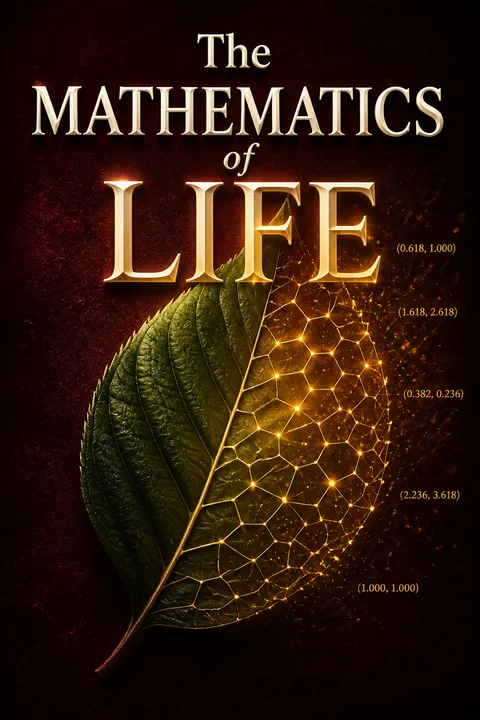


Key Takeaways
Treat mathematics as biology's engine for explanation, not bookkeeping
A changing science. Biology’s earlier revolutions came from new ways to see and organize life: the microscope revealed cells, classification made diversity legible, evolution explained change, genetics tracked inheritance, and DNA exposed heredity’s molecular basis. Stewart argues that mathematics is the next revolution because it helps explain how living processes work, not merely count or catalogue their results.
Models reveal mechanisms. Mathematics now links questions across scales, from how molecules fold to how ecosystems fluctuate. It can describe patterns and processes that are difficult to observe directly, including events that unfold too quickly, too slowly, or at too small a scale. The relevant tools are varied, and biological questions often require new mathematical ideas rather than routine calculations.
What's distinctive is the shift from mathematics as a measuring instrument to mathematics as a way of proposing mechanisms. A model makes assumptions explicit, so biologists can ask what would follow if cells, molecules, or populations interacted in a particular way. That is a stronger role than data processing. It also demands restraint: a successful model explains a defined feature of life, not life in full. The book’s revolution is therefore methodological, not a promise that biology will acquire one master equation.
Use classification as a map, not a final theory of life
Names make comparisons possible. Carl Linnaeus built a hierarchy for organizing living things, from broad groups down to genus and species. His double-part scientific names distinguish organisms that everyday labels blur. The blue tit, for example, can be located among eukaryotes, animals, chordates, birds, and tits, before its species name completes the address.
A useful but imperfect map. Taxonomists had named roughly 1.5 million species by the time Stewart wrote, while estimates of the total ranged from 2 million to 100 million. Classification helps researchers compare organisms and recognize patterns, but categories can be disputed or revised. The resemblance between a tiger and a zebra, for instance, does not make them close relatives: more informative traits may be less visually obvious.
Classification is not merely clerical work. It creates shared reference points, making cumulative research possible across generations and disciplines. Yet any hierarchy risks making nature look tidier than it is. The useful question is not whether categories are perfectly natural, but whether they support a particular inquiry, such as identifying ancestry or distinguishing organisms. The map metaphor also guards against a common error: mistaking a stable naming system for proof that nature itself comes in sharply separated boxes.
Explain plant spirals through growth mechanics, not golden-ratio mysticism
A repeated numerical puzzle. Many flowers have petal counts such as 5, 8, 13, 21, or 34. Pineapples and sunflower heads show paired spirals whose counts often come from the same Fibonacci sequence, in which each number is the sum of the previous two. In many plants, successive leaves also emerge at angles close to the golden angle, about 137.5 degrees.
Geometry follows growth. At a shoot’s tip, new leaf-forming clumps, called primordia, appear near the center and are pushed outward by their neighbors. Models and experiments show how their spacing can settle near the golden angle, packing seeds or leaves efficiently. The account involves growth, forces, and chemical signals, not a mystical preference built into nature.
This example shows how a numerical pattern becomes explanatory only when connected to a process that could generate it. Counting Fibonacci spirals is observation; modelling the crowded growth tip offers a mechanism. The distinction matters because the golden ratio attracts unsupported claims about shells, buildings, and beauty. A pattern can be genuinely important in one system without being a universal signature. Mathematical resemblance is a clue to investigate, not a license to declare a hidden law.
Read natural selection as a biased filter operating within an ecosystem
Darwin found a mechanism. During the Beagle voyage, Darwin collected Galápagos birds without realizing that many were related finches. Expert John Gould identified distinct species, whose beaks suited different foods. Reading Malthus on population growth helped Darwin see why inherited differences matter: organisms produce more offspring than resources can support, so not all survive to reproduce. Alfred Russel Wallace independently reached a closely related explanation, and their papers were presented together in 1858.
Selection is contextual. The phrase “survival of the fittest” can mislead. Fitness is not a fixed score, and survival alone is not enough; reproductive success matters. A trait’s advantage depends on competitors, food, predators, and habitat. Mutations can arise without direction, while selection systematically favors some outcomes in a particular environment.
The filter analogy clarifies why natural selection is neither pure chance nor a purposeful march toward improvement. Variation supplies possibilities; local conditions bias which ones leave descendants. This also explains why the same trait can help in one setting and hinder in another. The analogy has limits, since real ecosystems change and organisms alter their surroundings. Selection is not an external sieve with fixed holes. Its effects depend on an interacting system that can change while the filtering occurs.
Treat inheritance as probability, not as parental traits blending together
Mendel counted outcomes. In a monastery garden, Gregor Mendel cross-bred about 29,000 pea plants and tracked traits such as purple or white flowers. Crosses did not produce intermediate colors, as the popular blending theory predicted. Instead, purple could mask white in one generation, while white reappeared in roughly a quarter of the next generation under certain crosses.
Hidden factors explain the ratios. Mendel proposed that each plant carried two inherited factors, one from each parent, and passed only one to each offspring. A factor could be dominant, showing its effect when paired with a recessive one. A Punnett square lays out the possible combinations; probability explains why repeated trials approach ratios such as three purple plants to one white plant without matching them perfectly every time.
Mendel’s achievement was not just noticing a ratio, but using a quantitative pattern to infer an invisible mechanism. This is a powerful scientific move: outcomes can reveal structure that instruments cannot yet detect. It also shows why statistical regularities belong to biology, not just to laboratory bookkeeping. The pea-plant case is unusually clean, however. Many traits involve multiple genes and environmental effects, so Mendel’s simple dominant-recessive pattern is a starting model, not a universal template.
Read a genome as one contributor to development, not a complete blueprint
Sequence is not assembly. The Human Genome Project mapped roughly three billion DNA bases, but the sequence alone does not explain how an organism develops. Before sequencing, researchers expected about 100,000 protein-coding genes. The human genome instead revealed roughly 25,000, with many genes able to contribute to multiple proteins. The result complicated, rather than completed, the account of how bodies are built.
Context changes gene activity. Epigenetic effects alter gene expression without changing the DNA sequence. DNA methylation can reduce activity in a region, while RNA interference can switch genes off. Cells also rely on signals, physical properties, and interactions among genes. DNA is essential, but a list of parts cannot specify all the processes that put those parts to work.
The blueprint metaphor is attractive because it turns development into a simple decoding problem. The book replaces it with a more realistic picture: information is interpreted by cellular machinery, chemical conditions, and interactions that change over time. This distinction is useful well beyond biology, wherever a specification depends on a system that executes it. The caution is not that genes matter less, but that their influence is relational. A gene’s effect cannot always be understood in isolation from the organism it helps shape.
Follow molecular shape and topology to understand what biological sequences cannot explain
Structure does work. Many viruses assemble their protein coats into icosahedra, shapes that approximate a sphere and can be built from repeated protein units. Mathematical constraints help explain their architecture: a spherical coat made of five-sided and six-sided units requires twelve five-sided units. More flexible models, including viral tiling theory, account for some structures that simpler geometric rules miss.
Molecules have histories of motion. DNA’s two strands twist around each other, creating topological obstacles when the molecule is copied or cut. Researchers can infer how DNA-cutting enzymes act by identifying the knots and links left behind. Protein folding poses a related challenge: the amino-acid sequence does not directly show the final shape, and the number of possible configurations is enormous.
These cases make mathematics tangible without reducing biology to arithmetic. Geometry constrains how viral parts can fit; topology preserves evidence of how DNA was manipulated; energy models help describe folding. Each tool answers a different kind of question. The broader lesson is that representation matters: a sequence, a shape, and a history of transformations contain different information. Still, elegant geometric fit does not by itself prove a biological mechanism. The strongest explanations connect mathematical constraints to observed molecular behavior.
Look for local chemical rules behind spots, stripes, and developing forms
Simple reactions make patterns. Alan Turing proposed that interacting chemicals, called morphogens, could create patterns through reaction and diffusion. Reactions alter local concentrations; diffusion spreads chemicals through surrounding tissue. Together, these processes can produce spots and stripes without a separate instruction for every mark. Models based on this idea help explain patterns on animals and seashells.
Predictions can surprise. A model of tropical angelfish predicted that their stripes should move. Researchers photographed the fish over time and saw stripe patterns shift, as predicted. Pattern formation also offers a way to think about development, where chemical signals interact with cell growth, movement, and death. The emerging shape is not simply read from DNA; it arises through processes unfolding in space and time.
Turing’s proposal is striking because it turns visible design into an emergent result of local interactions. The moving angelfish stripes are especially persuasive: a mathematical model risks a prediction that observation can check. This is a productive standard for modelling. At the same time, reaction-diffusion is a family of mechanisms, not a single explanation for every biological pattern. Similar-looking stripes can arise through different processes, so the model must be tested against the particular organism and developmental conditions.
Study a biological network's wiring, because connections create capabilities
Connections change behavior. A human brain contains roughly 100 billion neurons, each able to send signals to others. Networks of simpler units can produce dynamics that no single unit displays. In animal movement, a central pattern generator, a neural circuit that creates rhythmic activity, can coordinate the timing of legs. Mathematical models of such circuits have generated gait patterns that researchers then looked for in animals.
Even slime mould solves routing problems. Researchers placed food at locations corresponding to cities around Tokyo and let Physarum polycephalum grow. The mould formed tubes connecting food sources, producing a network resembling the region’s railway system. Its network balanced cost, transport, and resilience, illustrating how local changes to connections can yield useful large-scale organization.
Networks provide a bridge between microscopic parts and system-level behavior. Their key explanatory feature is not merely the number of components, but who connects to whom and how those links change. The slime mould example makes this intuitive: an organism without a central planner produces a workable transport structure through local growth and pruning. Yet resemblance to a human-designed network does not mean the optimization goals are identical. Efficiency always depends on what the system is trying to move and what failure it can tolerate.
Model evolutionary strategies as contests whose winners depend on opponents
Lizard success cycles. Male side-blotched lizards use three mating strategies associated with orange, blue, and yellow throats. Orange males can displace blue males, blue males can defeat yellow males, and yellow males can exploit the distraction of orange males. The cycle resembles scissors-paper-stone: no strategy wins in every encounter. Game theory formalizes such contests by assigning payoffs to the outcomes of different strategies.
Species can split without a wall. Sympatric speciation means the formation of distinct species in the same geographic area. Models show how a population can divide when different traits exploit different resources and mating patterns reduce interbreeding. Gene flow tends to blend groups; selection can push them apart. A species boundary may emerge gradually from changing patterns of interaction rather than from a clean physical barrier.
The lizard cycle exposes the weakness of treating fitness as a permanent ranking. A strategy succeeds against some opponents and fails against others, so evolutionary outcomes depend on frequency and context. The same logic helps make sympatric speciation plausible: a population need not be physically divided if its members increasingly stop exchanging genes. The evidence and mechanisms vary across species, however. Models clarify conditions under which a split can occur; they do not reconstruct every historical speciation event.
Allow ecosystems to fluctuate instead of forcing them into static balance
A crowded ocean puzzle. Gause’s competitive exclusion principle predicts that species competing for the same limited resources cannot coexist indefinitely. Yet plankton communities contain many species sharing a seemingly small set of resources. One answer is that competition unfolds through time. Species can use resources at different moments as populations rise and fall, rather than one permanently defeating all the others.
Variation can be orderly. Mathematical models show that simple population rules can produce cycles and chaos, irregular behavior that remains within a bounded range. In a long laboratory study of plankton, populations fluctuated substantially even when external conditions stayed constant. This challenges the idea that a stable ecosystem must remain unchanged. Stability can mean persistence through bounded change, not a frozen balance.
The plankton paradox challenges an appealing but misleading picture of nature as a settled equilibrium. A system can persist precisely because its components do not stay in fixed proportions. This connects ecological stability to resilience: the capacity to absorb variation without losing the system’s basic organization. The complication is that fluctuations can also become dangerous, causing populations to collapse or disappear. Calling a system dynamic does not make every fluctuation harmless; the range and structure of change matter.
Define life by what it does before assuming it must look like us
Life is hard to pin down. Earth’s organisms share familiar chemistry, but defining life only by DNA, cells, or carbon would rule out alternatives by assumption. A useful working description focuses on organized structure, energy use, response to surroundings, growth, reproduction, and adaptation. No single checklist resolves every borderline case: even viruses raise disputes about whether they count as alive.
Worlds need not be Earth copies. Features that evolved repeatedly, such as vision or flight, may be more general than local details such as five fingers. Stewart calls the general features universals and the local accidents parochials. A methane-based metabolism on Titan is speculative, not evidence of life, but it shows why searches should not assume all life needs Earth’s exact conditions.
The distinction between general functions and local forms is a useful guard against human-centered science. Earth supplies one example of life, not a complete inventory of what life can be. The same reasoning also disciplines speculation: an unfamiliar possibility deserves investigation, but possibility is not evidence that it exists. A functional definition can widen the search while remaining difficult to apply consistently. That ambiguity is not a defect to hide; it is part of the scientific problem.
Analysis
The book’s central contribution is a change in what counts as a biological explanation. Cataloguing organisms and sequencing their components are indispensable, but neither alone describes how living systems operate. Stewart’s examples repeatedly move from static inventory to process: a leaf pattern emerges from growth and force, a neural signal from ion dynamics, a protein shape from molecular interactions, and ecological persistence from population change. Mathematics supplies ways to make these processes explicit and testable.
The strongest feature of this approach is its methodological pluralism. The book does not claim that one equation can capture life. It ranges across probability, geometry, topology, dynamical systems, and networks because different biological questions have different structures. A model can be deliberately incomplete and still be useful, provided its simplifications preserve the mechanism under investigation and its consequences can be checked against observation. The angelfish prediction and the enzyme-generated DNA knots exemplify this standard particularly well.
There is a productive tension in the argument. Mathematics gains power by stripping away detail, while biology often depends on context, history, and interactions among many levels. The same abstraction that reveals a general mechanism can hide differences between organisms or environments. A model’s elegance is therefore not its validation; empirical fit, predictive risk, and a clear statement of scope are essential. The book is most convincing when it shows those checks, and more provisional when it extrapolates from a model to a broad account of life or alien possibility.
Its lasting insight is not that biology should imitate physics, but that biological complexity is approachable when questions are carefully framed. Mathematics can expose structure in what first appears unruly, while biology supplies the constraints that keep the mathematics meaningful. The disciplines improve one another through that exchange.
Review Summary
The Mathematics of Life receives mixed reviews, with an average rating of 3.62. Readers appreciate Stewart's clear writing and fascinating insights into mathematical applications in biology. Many find the book educational, covering topics like Fibonacci sequences, DNA structure, and evolutionary patterns. However, some criticize the uneven depth of content, with early chapters feeling too basic and later ones becoming overly complex. A few reviewers note factual errors and incomplete explanations. Overall, the book is praised for its interdisciplinary approach but may be challenging for readers without a strong scientific background.
People Also Read







Glossary
Biomathematics
Mathematics for biological processesThe use and development of mathematical ideas to explain biological systems and processes. It goes beyond statistics or data handling: mathematical models can investigate how organisms develop, how populations change, how molecules behave, and how species interact with ecosystems. Biological questions can also motivate new mathematical methods.
Phyllotaxis
Plant organ arrangementThe spatial arrangement of leaves and other structures on a plant, especially the placement of successive leaves around a stem. Many plants place new organs at angles close to the golden angle. The pattern relates to Fibonacci numbers and can be explained through growth, crowding, chemical signals, and forces among developing structures.
Epigenetics
Inherited changes beyond DNA sequenceChanges in gene expression or an organism’s characteristics that can be passed between cells or generations without altering the underlying DNA sequence. Examples discussed in the book include DNA methylation, which can reduce gene activity, and RNA interference, which can switch genes off. Epigenetic processes show that DNA sequence alone does not determine development.
Reaction-diffusion equations
Equations for chemical pattern formationMathematical equations describing chemicals that react locally and diffuse through surrounding space. Alan Turing showed how interactions between nonlinear chemical reactions and diffusion can generate spatial patterns, including spots and stripes. The equations provide models for biological markings and aspects of development, although different organisms may require different mechanisms.
Symmetry breaking
A symmetric system forms an uneven patternA process in which a system governed by symmetric rules settles into a particular state that has less symmetry than the rules themselves. Small disturbances can grow when a uniform state becomes unstable. The concept helps explain patterns such as stripes or cell differentiation, and models of populations dividing into distinct types.
Central pattern generator
Neural circuit for rhythmic movementA network of neurons, often located in the spinal cord, that generates rhythmic signals coordinating repeated movements such as walking. Its activity can set the timing of muscle groups without requiring the brain to direct every movement individually. Mathematical models use the network’s connections and symmetries to investigate how different gaits can arise.
Evolutionarily stable strategy
Strategy resistant to invading mutantsA strategy in evolutionary game theory that cannot be successfully displaced by a rare alternative strategy. Whether a strategy is stable depends on the payoffs it produces against others in the population, not on an absolute measure of strength. The concept offers a way to analyze how behavioral strategies persist or change through natural selection.
Competitive exclusion principle
One species displaces a rival niche userA principle associated with biologist Georgyi Gause stating that the number of coexisting species in an environment should not exceed the number of available ecological niches. Species competing for the same niche are expected to displace one another. The high diversity of plankton sharing resources creates a notable challenge for simple versions of the principle.
Levinthal paradox
Protein folding cannot search every shapeThe argument that a protein cannot reach its functional shape by trying every possible arrangement of its amino-acid chain. Even a modest chain can have an astronomically large number of configurations, far too many to test one by one within a realistic time. Protein-folding models therefore need to explain how molecules reach useful shapes through constrained pathways.
Viral tiling theory
Geometric model of virus coatsA mathematical approach to describing how protein units assemble into virus capsids. It extends simpler icosahedral models by allowing more varied arrangements and bonding patterns, including structures with more than twelve five-sided units. The theory uses higher-dimensional geometry to represent complex patterns in ordinary three-dimensional space.
Universals and parochials
General traits versus local evolutionary accidentsTerms used to distinguish features likely to recur in life from traits specific to Earth’s evolutionary history. A universal is a broad function, such as vision or flight, that could emerge in different forms under suitable conditions. A parochial is a particular local realization, such as feathered wings or five digits, not expected to recur in the same form elsewhere.
Cellular automaton
Grid following local update rulesA mathematical system consisting of cells arranged on a grid, each with a state and a rule for changing that state based on nearby cells. Repeated updates can generate complex behavior from simple instructions. Cellular automata are used to study self-replication, artificial life, and the broader possibility that simple local rules can produce elaborate system-level outcomes.
FAQ
What's Mathematics of Life about?
- Interdisciplinary Exploration: Mathematics of Life by Ian Stewart explores the intersection of mathematics and biology, demonstrating how mathematical concepts are crucial for understanding biological phenomena.
- Historical and Future Revolutions: The book outlines five historical revolutions in biology and proposes a sixth revolution driven by mathematics, emphasizing its growing importance in biological research.
- Diverse Applications: Stewart covers a range of topics, from population dynamics and neural networks to the philosophical questions about life and the potential for extraterrestrial life.
Why should I read Mathematics of Life?
- Unique Perspective: The book offers a unique perspective on the application of mathematical principles to biological phenomena, appealing to those interested in both fields.
- Accessible Writing: Ian Stewart's engaging writing style makes complex topics accessible, even for readers without a strong background in mathematics or biology.
- Current Relevance: With ongoing advancements in biological sciences, understanding the mathematical frameworks that underpin these developments is increasingly important.
What are the key takeaways of Mathematics of Life?
- Mathematics as a Central Tool: Mathematics is not just a support for biology but a central tool that provides insights into biological processes and phenomena.
- Patterns and Complexity: The book highlights the prevalence of patterns in nature and the complexity of life, from molecular structures to ecosystems, and how mathematics helps model these complexities.
- Evolutionary Insights: Stewart discusses how mathematical models can explain evolutionary dynamics, such as natural selection and species diversity.
What are the best quotes from Mathematics of Life and what do they mean?
- "Biology will be the great mathematical frontier of the twenty-first century.": This quote underscores the growing importance of mathematics in biological research, suggesting future discoveries will rely on mathematical insights.
- "Mathematics is the language of nature.": This emphasizes the fundamental role of mathematics in understanding the natural world, suggesting that mathematical principles underpin biological processes.
- "Simple causes can have complex effects.": This reflects the idea that simple mathematical models can lead to unpredictable and intricate behaviors in biological systems.
What are the five revolutions in biology discussed in Mathematics of Life?
- Microscope Invention: Allowed scientists to observe cellular complexity, revealing that organisms are made of cells.
- Classification of Species: Carl Linnaeus's systematic classification laid the groundwork for modern taxonomy and biological diversity organization.
- Theory of Evolution: Darwin's Origin of Species introduced natural selection, fundamentally changing our understanding of species diversity.
- Discovery of Genes: Gregor Mendel's work on inheritance established the foundation for genetics and trait transmission.
- Structure of DNA: Watson and Crick's discovery of DNA's double helix provided insight into heredity and life's mechanisms.
How does Ian Stewart define life in Mathematics of Life?
- Organized Structure: Life possesses an organized structure essential for maintaining internal processes and responding to environmental changes.
- Regulation and Adaptation: Life forms regulate their internal behavior in response to stimuli and adapt to long-term environmental changes.
- Reproduction and Growth: The ability to reproduce and grow is central, with reproduction involving variability that allows for evolution.
How does Mathematics of Life explain the role of mathematics in understanding evolution?
- Mathematical Models: Models simulate evolutionary processes, helping scientists understand species adaptation and change over time.
- Game Theory Applications: Game theory analyzes survival and reproduction strategies, predicting behaviors in populations.
- Statistical Analysis: Statistics help analyze biological data, identifying patterns and making inferences about evolutionary relationships.
What is the paradox of the plankton discussed in Mathematics of Life?
- Competitive Exclusion Principle: Gause's principle states that two species competing for the same niche cannot coexist indefinitely, yet plankton species exhibit high diversity.
- Chaotic Dynamics: Chaotic dynamics in ecosystems allow for species coexistence by enabling population size fluctuations.
- Implications for Biodiversity: The paradox challenges traditional ecological theories, suggesting ecosystems can support more diversity than previously thought.
What mathematical models are used to explain population dynamics in Mathematics of Life?
- Logistic Growth Model: Describes how populations grow rapidly at first and then level off as they approach carrying capacity.
- Leslie Matrix: Accounts for age structure and mortality rates, allowing detailed analysis of population changes over time.
- Chaos Theory: Explores how simple models can lead to unpredictable and complex behaviors, highlighting nonlinear interactions in ecological systems.
How does Mathematics of Life illustrate the relationship between mathematics and ecology?
- Modeling Ecosystems: Mathematical models simulate ecological interactions, helping understand population dynamics and ecosystem stability.
- Network Theory: Relationships among species are represented mathematically to analyze ecosystem structure and function.
- Predictive Power: Models provide predictive insights, allowing anticipation of ecosystem changes due to environmental pressures or human activities.
What role does lateral inhibition play in development, according to Mathematics of Life?
- Cell Differentiation: Lateral inhibition allows cells to differentiate by inhibiting neighboring cells from adopting the same fate.
- Mathematical Modeling: Models simulate lateral inhibition effects, showing how small differences can produce complex patterns.
- Emergent Patterns: Random fluctuations can lead to distinct cell types, demonstrating the power of mathematical modeling in understanding biological processes.
What is the significance of the Fibonacci sequence in Mathematics of Life?
- Natural Patterns: Appears in various natural patterns, such as leaf arrangement and tree branching, reflecting underlying mathematical principles.
- Mathematical Relationships: Connected to the golden ratio, illustrating harmony between mathematics and the natural world.
- Modeling Growth: Used to model growth processes in plants, demonstrating how mathematical concepts provide insights into biological phenomena.
About the Author
Other books by Ian Stewart

Download PDF
Download EPUB
.epub digital book format is ideal for reading ebooks on phones, tablets, and e-readers.








