

Key Takeaways
Treat counterterrorism claims as political choices, not neutral emergency measures
A raid without terror charges. In 2009, FBI agents surrounded Imam Luqman Abdullah’s Detroit mosque community after a two-year undercover operation. Informants drew Abdullah and several congregants into a scheme involving goods they believed were stolen. The indictment charged crimes related to stolen property and firearms, not terrorism, though the government portrayed the mosque as a terrorist threat. During the raid, agents shot Abdullah dead. The book presents his case as an example of how counterterrorism can turn political suspicion into lethal force, even when a court has not established a terrorist plot.
Routine can hide power. The author argues that under President Obama, many Bush-era measures became ordinary policy: indefinite detention, expanded drone killings, and domestic surveillance. The result was not the end of emergency government but its normalization.
What's striking is how a terrorism frame can do political work even when prosecutors bring no terrorism charge. It changes what the public thinks a person represents, and can make extraordinary force seem ordinary. The case also invites a careful distinction between evidence of government misconduct and the harder counterfactual claim that Abdullah would certainly have survived without the sting. The broader lesson remains strong: emergency powers deserve scrutiny precisely when they become routine, because routine procedures can conceal choices that would otherwise provoke public debate.
Recognize how Muslimness becomes a racial marker, even without biological race
Race is socially assigned. Kundnani uses Islamophobia to mean more than personal hostility toward Muslims. It is a structural form of racism that marks people as suspect through religion, ancestry, names, clothing, or perceived culture. After 9/11, people who were not Muslim, including Sikhs and Christian Arabs, were also targeted because others read them as Muslim. The book traces this process across different histories: African-American Muslims, Arab workers in Detroit, and South Asian communities in Britain.
Acceptance has conditions. Some Arab Americans had been treated as white under official categories, yet after 9/11 many found that assimilation, professional success, or declarations of patriotism did not protect them from profiling. Muslim identity became less a matter of belief than of how others classified them.
This account helps explain why discrimination cannot be measured only by explicit slurs or stated religious prejudice. Institutions can treat visible markers as proxies for danger, turning a flexible social category into a durable hierarchy. The comparison with other forms of racialization is illuminating, while still leaving room to criticize religious ideas without racializing their adherents. That distinction matters: protecting people from discriminatory treatment does not require shielding any religion from argument. It requires judging individuals and institutions by conduct rather than presumed group character.
Reject both the civilizational clash and the state-approved moderate Muslim test
Two explanations, one premise. The book calls one approach culturalism: it treats Islam itself as resistant to modernity and a source of violence. The other, reformism, says Islam is largely benign but has been distorted into a violent political ideology. Culturalists demand distance from Muslim identity; reformists offer acceptance to Muslims who embrace approved interpretations and political loyalties.
Both make culture the target. Reformism is less openly hostile, but still invites governments to promote certain religious leaders, interpretations, and identities. In Britain and the United States, this meant officials and partner organizations tried to distinguish good Muslims from bad ones. The author argues that both approaches focus on Muslim ideas while pushing political conditions, including Western foreign policy, out of the explanation.
The distinction between these approaches is useful because liberal inclusion can still be conditional. Recognizing diversity within Islam is a genuine improvement over treating a whole religion as a threat, but state sponsorship of approved theology creates a different problem: the government becomes an arbiter of religious legitimacy. The analysis is strongest when it shows how both camps can turn Muslim identity into a security object. Its challenge is to leave enough room for ideology to matter without treating ideas as either irrelevant or mechanically responsible for violence.
Do not confuse radical beliefs with evidence of a coming attack
Prediction without a control group. Security agencies adopted radicalization models to identify people who might become terrorists. The New York Police Department described a four-stage path from ordinary life to violent action, with indicators such as growing a beard, changing clothes, joining a Muslim group, or expressing political grievances. The FBI used a similar model. Yet the studies behind such claims often relied on small samples of known cases and lacked a comparison group of people who displayed the same behaviors without turning to violence.
Ordinary acts become suspicious. When the final stage is the only one involving criminal conduct, surveillance reaches backward into lawful religious practice, reading, association, and speech. The book argues that these models offer authorities a vocabulary for suspicion without demonstrating reliable predictive power.
This is a classic base-rate problem: even a behavior common among a small number of attackers may be shared by vast numbers of people who pose no threat. Without comparison groups and clear measures, a risk checklist can look scientific while generating many false alarms. That does not mean prevention is impossible. It means prevention should be anchored in specific evidence of preparation, financing, or incitement, rather than identity markers that are common and lawful. The model's practical danger is not only mistaken prediction, but the trust lost when ordinary life is treated as evidence.
Trace political violence through reciprocal actions, not theology alone
A changing political frame. Anwar al-Awlaki was once regarded by US officials as a moderate Muslim preacher. He condemned attacks on civilians and supported political activism to defend Muslim civil rights. His public position shifted as he came to describe the conflict as a global war against Islam. Kundnani links this shift to events including the Iraq invasion, US actions against Muslim organizations, and al-Awlaki’s imprisonment in Yemen. The book argues that his political interpretation changed more clearly than his basic religious vocabulary.
Explanation is not excuse. The author does not defend attacks on civilians. He argues that state violence and nonstate violence shape each other, and that analyzing only the attacker’s beliefs leaves out the political conflict that gives those beliefs force.
The relational approach improves on simple accounts in which a text or doctrine supposedly produces violence on its own. It asks how people interpret actions, what alternatives they think remain, and how each side legitimizes force. The al-Awlaki example makes that mechanism vivid, though reconstructing a person's motives from public statements can never establish a complete causal account. Political grievance is not a sufficient explanation for violence, either. The value lies in treating it as evidence that deserves analysis, rather than dismissing it as a convenient disguise for pathology.
Keep schools and community care separate from counterterrorism intelligence
Prevention moved upstream. Britain’s Prevent program aimed to identify people before they committed crimes, using schools, local councils, police, youth workers, and community groups. Its Channel project assessed individuals considered vulnerable to extremism and could offer counseling, mentoring, or religious instruction. Between 2007 and 2010, Channel identified 1,120 people as potential risks. More than 90 percent were Muslim, and 290 were under sixteen.
A student becomes a case. Jameel Scott, a teenager who joined a left-wing party and protested an Israeli official’s visit, was referred to Channel despite not identifying as Muslim. Police contacted his family and school, questioned his political associations, and discouraged him from attending demonstrations. He described the process as frightening and politically intrusive. The example shows how a counterterrorism system can redefine lawful activism as a warning sign.
The boundary between support and surveillance matters because schools and youth services depend on trust. A student who expects political disclosures to reach security agencies may stop seeking help or speaking honestly. That is a real cost even when the intervention is friendly in tone. There can be legitimate reasons for professionals to report credible signs of violence, but vague markers such as grievance, social change, or activism are not equivalent to such evidence. Clear thresholds, transparency, and independent oversight are necessary if care is not to become covert policing.
Audit sting operations for plots agents designed and defendants lacked capacity to execute
The government supplied the plot. In the Newburgh case, an FBI informant befriended four poor men in upstate New York and offered money, a plan, equipment, and fake explosives for attacks on synagogues. The men had little capacity to carry out an attack on their own. Judge Colleen McMahon concluded that the government had instigated and brought the plot to fruition, yet the defendants received long prison sentences.
Talk is not preparation. The book describes similar operations in which informants pressure people who have expressed radical views into agreeing to imaginary attacks. Prosecutors then treat those views as evidence that defendants were predisposed to terrorism. Kundnani argues that this turns political speech into a proxy for criminal intent and can manufacture evidence of the threat the state says it is preventing.
Undercover operations can uncover genuine plans, but their legitimacy depends on distinguishing detection from creation. If an informant supplies the target, means, and inducement, the resulting arrest may reveal more about investigative incentives than about an independent capability to attack. The Newburgh defendants' poverty and vulnerabilities heighten the ethical concern, without automatically proving innocence or eliminating personal responsibility. A sound audit would ask what the suspect proposed before government involvement, what resistance followed, and whether the operation increased danger rather than reduced it.
Apply the terrorism label consistently, including to far-right violence
The category has politics. Kundnani argues that terrorism is commonly reserved for violence attributed to Muslims, while comparable far-right violence is described differently or receives less attention. He cites European figures for 1990 to 2012: 249 deaths in far-right violence and 263 in jihadist violence. In the United States from 1990 to 2010, he cites 348 deaths from far-right political violence, compared with 20 caused by Muslim-American citizens or long-term residents.
The far right borrowed the script. Britain’s English Defence League presented itself as an anti-extremist movement, while Anders Breivik invoked a war to defend Europe from Islam and multiculturalism. The author argues that both drew on the same civilizational threat language already circulating in official politics.
Consistent labeling is not a cosmetic issue. Categories influence which groups are monitored, which victims receive attention, and what policies appear justified. The numbers sharpen the comparison, though different datasets and definitions make exact equivalence difficult; they should prompt scrutiny, not settle every question of relative risk. The more important point is methodological: the same definition of political violence should be applied regardless of the perpetrator's religion or race. Otherwise, threat assessment quietly becomes a system for protecting some groups and suspecting others.
Read radicalization in Minnesota through Somalia's war, not Muslim identity alone
An overseas conflict reached Minneapolis. Between 2007 and 2009, about twenty young men from Minnesota traveled to Somalia and joined al-Shabaab. The book connects their choices to the 2006 Ethiopian invasion, supported by the United States, and to the resulting insurgency. Some recruits described wanting to defend Somalia, while others also experienced blocked opportunities and discrimination in the United States.
Surveillance deepened suspicion. The FBI questioned Somali Americans, monitored mosques and campuses, and encouraged community members to report changes in religious practice or social life. The author does not excuse joining an armed group. He argues that treating a whole community as a threat, while leaving few lawful outlets for political anger, can intensify alienation and make violent groups appear to offer purpose.
The case shows why local behavior sometimes cannot be understood without international context. A young person's decision can reflect nationalism, social belonging, religious language, and state treatment at once. The feedback loop is also important: surveillance intended to reduce risk may strengthen a sense of collective suspicion. Still, the book's account should not be read as proving that repression caused any individual's recruitment. Its strongest claim is narrower and more useful: policy analysis should examine both the conflict that recruits invoke and the domestic conditions that shape how that appeal is received.
Restore political space instead of policing Muslim identity for dissent
Solidarity became suspect. The Holy Land Foundation provided humanitarian aid to Palestinian charities. Prosecutors argued that supporting charities connected to Hamas helped the organization win public support, even though the foundation was not accused of sending money directly for attacks. The leaders were convicted of material support, and the case helped chill Muslim political organizing around Palestine.
Politics needs alternatives. The 2011 Egyptian uprising showed Muslims and Christians joining mass protests around dignity, rights, and social justice, challenging the idea that Muslim societies could not generate democratic politics. Kundnani's conclusion is that counterterrorism should target actual preparation for violence, while communities retain room to debate foreign policy and organize for change. Suppressing dissent, he argues, can leave violent vanguardism as the only visible form of opposition.
The book's political alternative is not simply more dialogue. It is the ability to contest policy, build coalitions, and influence the distribution of power without being treated as a security risk. That is a demanding standard because governments must distinguish dissent from genuine incitement, and that line is not always easy to draw. But broad restrictions do not remove political conflict; they push it out of public institutions. A durable response to violence therefore requires both focused law enforcement and civic channels credible enough to make nonviolent action feel consequential.
Analysis
The book's central intervention is to change the unit of analysis. Instead of asking what is wrong with Muslim belief, it asks how state policy, racial classification, surveillance, and political violence interact to produce a domestic security regime. Its examples move from a fatal FBI raid in Detroit to predictive radicalization models, British school referrals, American sting operations, Somali recruitment, and far-right mobilization. Across these cases, the same pattern recurs: broad cultural claims turn political dissent into a security indicator, then state institutions act on that indicator as though it were evidence of future violence.
The strongest contribution is its close attention to the institutional life of ideas. Radicalization is not only an academic theory in this account. It becomes a checklist, a funding rule, a school referral, a police informant's prompt, and a courtroom argument. That translation explains why a theory can matter even when its predictive evidence is weak. The book also avoids treating the far right as a separate anomaly, showing how anti-Muslim movements reuse the war on terror's own language of cultural defense.
The argument is most persuasive when it documents specific procedures and contradictions, such as criminal charges without terrorism counts, or a sting operation that supplies crucial means. Its broader causal claims require more caution. The political context of violence matters, but explaining how an attacker understood events does not establish that a policy caused an attack, nor does it erase individual agency. The book occasionally risks making state violence so explanatory that the diversity of motives and the independent force of ideology receive less attention than they deserve.
That tension does not undo its main lesson. A security system should distinguish preparation for violence from identity, association, and dissent, and it should test its predictions against evidence rather than treating suspicion as proof. The book's standard is demanding but coherent: condemn nonstate attacks without granting state violence automatic innocence, and defend political participation even when its arguments are uncomfortable.
Review Summary
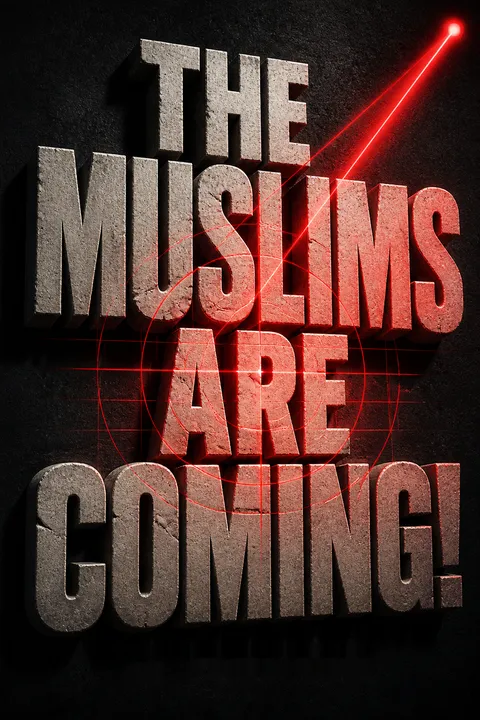
The Muslims Are Coming! is praised for its insightful analysis of Islamophobia and the War on Terror in the US and UK. Reviewers commend Kundnani's examination of government surveillance, radicalization narratives, and the impact on Muslim communities. The book challenges prevailing notions about terrorism's origins, arguing it stems from Western foreign policy and domestic repression rather than Islamic ideology. Readers appreciate the well-researched content, compelling case studies, and the author's ability to expose flaws in counterterrorism strategies. Many consider it essential reading for understanding contemporary Islamophobia and its political context.
People Also Read


Glossary
Islamophobia
Structural racism against MuslimsKundnani uses Islamophobia to describe more than individual prejudice or hostility toward Islam. It is a structural form of racism that turns markers associated with Muslim identity, such as dress, names, ritual, or ancestry, into signs of danger or foreignness. It matters because those assumptions can shape policing, civil rights, public debate, and the treatment of Muslim victims of state violence.
culturalism
Culture as cause of conflictCulturalism is the explanation of political violence through a fixed account of Islamic culture, often described as inherently hostile to modernity or Western values. In this view, social and political circumstances become secondary to an assumed cultural essence. Kundnani argues that culturalism recasts political conflict as a Muslim cultural problem and can make discriminatory state action appear necessary.
reformism
State-guided religious moderationReformism rejects the claim that Islam itself causes terrorism, but argues that extremist ideologues have distorted an otherwise benign religion into a violent political ideology. It therefore supports promoting approved Muslim leaders and interpretations while restricting ideas classified as extremist. Kundnani sees this as less openly hostile than culturalism, but still a project of reshaping Muslim identity through state power.
radicalization
Proposed path to extremismIn the counterterrorism discourse examined by the book, radicalization is a presumed process through which a person moves from ordinary life toward extremist beliefs and, possibly, terrorism. Models identify psychological, social, religious, or behavioral indicators as early warnings. Kundnani argues that these models often blur political dissent, religious practice, and violence, while offering weak evidence that the indicators reliably predict attacks.
Prevent
UK counter-extremism programPrevent, short for Preventing Violent Extremism, was a British government program launched in 2006. It funded community initiatives and sought to identify people considered vulnerable to extremist ideas before they committed crimes. The program drew local government, schools, police, and community organizations into counterterrorism work. Kundnani argues that its support and intelligence functions became entangled.
Channel
Individual prevention referral systemChannel is the individual referral and intervention component of Britain's Prevent program. Police and other professionals could refer people judged vulnerable to radicalization for mentoring, counseling, or religious guidance. Referrals did not require evidence of a crime. The book questions the reliability of the indicators used, the collection of sensitive personal information, and the effects on trust between young people and service providers.
material support
Support prosecuted as terrorismMaterial support is a US legal category used to prosecute assistance to designated terrorist organizations. In the book's account, its application widened beyond direct aid for violent acts to include charitable or expressive activity associated with such groups. This raised concerns about due process and free speech, especially when political solidarity or communication was treated as support for terrorism.
counterinsurgency
Integrated campaign against insurgencyCounterinsurgency is a strategy combining military force, policing, political messaging, intelligence gathering, and social programs to weaken insurgents and separate them from potential supporters. Kundnani traces its colonial history and argues that similar methods were adapted for domestic counterterrorism. In Britain, this meant treating Muslim communities as terrain for surveillance, persuasion, and ideological intervention.
The ideal enemy
Enemy defined by differenceThe book adopts this phrase for a figure imagined as both culturally distinct and ideologically hostile, yet sufficiently threatening to justify an ongoing security response. Muslims are cast in this role when diverse communities are treated as a single adversary. The concept helps explain how fear can unify political audiences while diverting attention from internal conflict and state conduct.
FAQ
What is The Muslims Are Coming!: Islamophobia, Extremism, and the Domestic War on Terror by Arun Kundnani about?
- Critical examination of counterterrorism: The book analyzes how the domestic war on terror in the US and UK has targeted Muslim communities through policies rooted in Islamophobia and flawed radicalization theories.
- Focus on surveillance and criminalization: Kundnani explores the development and consequences of counterradicalization strategies, surveillance, and the criminalization of Muslim political expression.
- Historical and political context: The book situates these issues within broader histories of racism, imperialism, and political repression, arguing that counterterrorism policies have created a new form of racialized state control.
Why should I read The Muslims Are Coming! by Arun Kundnani?
- Insight into counterterrorism’s impact: The book provides a detailed, evidence-based critique of counterterrorism policies, exposing their failures and unintended consequences for Muslim communities.
- Understanding Islamophobia: Kundnani connects state policies with the rise of Islamophobic violence and far-right movements, showing how official discourses legitimize anti-Muslim racism.
- Human rights perspective: The book highlights the erosion of civil liberties and the impact of surveillance, emphasizing the need for political empowerment and protection of dissent.
What are the key takeaways from The Muslims Are Coming! by Arun Kundnani?
- Flawed radicalization models: Government theories often conflate political dissent with terrorism risk, leading to overbroad surveillance and targeting of law-abiding Muslims.
- Surveillance and policing: Multiagency programs like Prevent and FBI informant networks intrude into the private and political lives of Muslims, fostering fear and self-censorship.
- Islamophobia and far-right movements: The rise of groups like the English Defence League is linked to official anti-extremism rhetoric, fueling racism and violence.
- Political consequences: The securitization of Muslim identity restricts political expression and undermines democratic engagement, prompting Kundnani to call for ending the war on terror.
How does Arun Kundnani define and critique the concept of radicalization in The Muslims Are Coming!?
- Definition and critique: Radicalization is commonly defined as a process leading individuals to adopt extremist ideologies and commit terrorism, but Kundnani argues this model is oversimplified and lacks empirical support.
- Policy misuse: Radicalization theories have been used to justify intrusive surveillance and interventions, often targeting Muslims broadly rather than focusing on actual threats.
- Empirical shortcomings: Studies show that indicators like political grievances or religious conservatism are poor predictors of terrorist acts, leading to misdirected counterterrorism efforts.
- Criminalization of dissent: The radicalization framework expands counterterrorism to include nonviolent political expression, eroding civil liberties.
What is Islamophobia according to The Muslims Are Coming! by Arun Kundnani, and how is it connected to structural racism?
- Islamophobia as structural racism: Kundnani defines Islamophobia as the racialization of Muslimness, turning cultural markers into racial signifiers that justify state violence.
- Enabling state control: Islamophobia enables systematic violations of Muslim rights and sustains the ideological power of the war on terror.
- Symbiotic relationship: The book highlights how Islamophobia and official counterterrorism practices reinforce each other to maintain political legitimacy and social control.
- Impact on civil liberties: This structural racism leads to the demonization and criminalization of Muslim communities, undermining their rights and freedoms.
How does The Muslims Are Coming! by Arun Kundnani critique government radicalization models and their consequences?
- Lack of predictive power: Radicalization models fail to reliably predict who will become terrorists and often conflate holding radical ideas with a propensity for violence.
- Ignoring political context: These models neglect the role of Western foreign policy and state violence in shaping political violence, focusing instead on individual psychological or theological factors.
- Consequences for civil liberties: The models justify intrusive surveillance, community policing, and criminalization of constitutionally protected activities within Muslim communities.
- Expansion of counterterrorism: The radicalization framework broadens the scope of counterterrorism to include nonviolent dissent, undermining democratic rights.
What is the UK’s Prevent strategy, and how does Arun Kundnani assess its impact in The Muslims Are Coming!?
- Prevent’s objectives: Prevent aims to stop people from becoming terrorists by countering extremist ideology and reshaping Muslim identities through multiagency partnerships and interventions.
- Conflation of dissent and extremism: Kundnani argues that Prevent conflates extremism with dissent and foreign policy opposition, leading to the targeting of law-abiding Muslims.
- Surveillance and intervention: The program involves confidential panels and co-opts public service providers into intelligence gathering, blurring lines between support and surveillance.
- Community consequences: Prevent fosters alienation, mistrust, and self-censorship within Muslim communities, while failing to address root causes of political disaffection.
How does the FBI’s use of agents provocateurs and informants feature in The Muslims Are Coming! by Arun Kundnani?
- Infiltration and entrapment: The FBI uses undercover agents and informants to infiltrate Muslim communities and provoke individuals into criminal acts, often manufacturing terrorism cases.
- Targeting the vulnerable: Operations frequently target marginalized individuals with mental health or addiction issues, raising ethical and legal concerns.
- Community impact: The widespread use of informants creates mistrust and fear, discouraging open political discussion and activism within Muslim communities.
- Legal and civil rights issues: Entrapment defenses rarely succeed, as courts often equate radical views with predisposition to terrorism, undermining constitutional rights.
What is the relationship between Islamophobia, far-right movements, and the war on terror in The Muslims Are Coming! by Arun Kundnani?
- Interconnected phenomena: Islamophobia and far-right groups like the English Defence League draw on official anti-extremism rhetoric to justify racism and violence.
- Culturalist ideology: Far-right movements adopt a framework that sees Islam as a monolithic extremist threat, using identity politics to mobilize support.
- Conspiracy theories: The shari’a conspiracy theory, alleging a secret Muslim plot to impose Islamic law, fuels anti-Muslim legislation and sentiment.
- Political consequences: The rise of Islamophobia legitimizes discriminatory policies and violence, while obscuring structural causes of social tensions.
How does Arun Kundnani describe the impact of counterterrorism policies on Muslim communities in the US, such as the Somali diaspora in Minneapolis, in The Muslims Are Coming!?
- Case study of Minneapolis Somalis: The FBI’s Operation Rhino targeted Somali Americans with intense surveillance and questioning, despite limited evidence of domestic threat.
- Community divisions: Local leaders competed for government favor, while mosques and activists faced suspicion and pressure, creating an atmosphere of fear.
- Social and economic context: Kundnani highlights poverty, discrimination, and trauma as underlying factors in youth disaffection, which counterterrorism policies often ignore.
- Consequences: These policies led to alienation, mistrust of authorities, and self-censorship, undermining community cohesion and political activism.
What solutions or alternatives does Arun Kundnani propose in The Muslims Are Coming! to the current war on terror approach?
- Ending the war on terror: Kundnani advocates dismantling the war on terror’s racialized surveillance and counterradicalization apparatus, which he sees as counterproductive and rights-violating.
- Restoring political spaces: He emphasizes the need for open, democratic spaces where Muslim communities can express dissent and engage in solidarity without fear.
- Addressing root causes: The book calls for tackling social and economic inequalities, neocolonialism, and exclusion that fuel disaffection and extremism.
- Protecting civil liberties: Kundnani stresses the importance of safeguarding free speech, privacy, and due process, warning against the normalization of totalitarian surveillance.
What are the best quotes from The Muslims Are Coming! by Arun Kundnani and what do they mean?
- On radicalization models: “Radicalization theories are not only empirically flawed but serve to legitimize the policing of dissent and the expansion of state power.” This highlights how such models are used to justify intrusive policies.
- On Islamophobia: “Islamophobia is not simply a matter of individual prejudice but a structural form of racism embedded in state practices.” This underscores the systemic nature of anti-Muslim discrimination.
- On political engagement: “The solution to extremism is not more surveillance, but more democracy.” Kundnani argues for political empowerment and open debate as antidotes to violence.
- On the war on terror: “The war on terror has become a war on political dissent.” This quote encapsulates the book’s central critique of how counterterrorism undermines democratic freedoms.
Download PDF
Download EPUB
.epub digital book format is ideal for reading ebooks on phones, tablets, and e-readers.








