

Key Takeaways
A decoy convoy hid Roosevelt while the Big Three met in Tehran
The President was elsewhere. On November 28, 1943, Franklin Roosevelt was due to travel across Tehran to meet Winston Churchill and Joseph Stalin. Soviet officials warned that Nazi agents were active nearby and might attack. With the President's route exposed, Secret Service chief Mike Reilly sent a convincing motorcade through the main streets, complete with a stand-in dressed as Roosevelt. The real President took a separate, unremarkable car through narrow side streets to the Soviet embassy.
A move with two purposes. Roosevelt then stayed inside the walled Soviet compound, alongside Churchill and Stalin, reducing the need for dangerous trips across town. The threat prompted an extraordinary deception, but the summit still proceeded. Its purpose was not merely to survive the meeting. The three leaders needed to settle strategy for a war whose outcome remained uncertain.
The decoy illustrates a basic principle of protective security: concealment can matter more than adding visible force. A large escort may deter an attacker, but it also advertises the target's location and route. Reilly instead created two competing stories, one public and one real. That is effective precisely because it makes an adversary's observation less reliable. The tactic also depended on coordination and risk acceptance: the stand-in and the public convoy remained exposed, while the President's disability made rapid movement especially difficult. Security here is not invulnerability. It is the deliberate management of who knows what, and when.
Pearl Harbor ended American neutrality, but Hitler widened the war himself
A sudden reversal. Before December 1941, Americans strongly resisted entering another European war. In April 1941, 81 percent opposed joining the conflict. Roosevelt supported Britain through Lend-Lease, but he had promised voters that American troops would not be sent into a foreign war. Japan's surprise attack on Pearl Harbor changed the political reality. Congress declared war on Japan the next day, with only one House member voting against it.
Hitler chose escalation. Roosevelt had not asked Congress to declare war on Germany. Hitler did so first, four days after Pearl Harbor, convinced that the United States was weak and that he should seize the initiative. His decision transformed a Pacific war into an unmistakably global conflict. It also made Roosevelt's eventual wartime partnership with Churchill and Stalin possible, though the three leaders had profoundly different interests and political systems.
The sequence distinguishes public consent from strategic choice. Pearl Harbor created a clear basis for American entry, while Hitler's declaration removed the remaining ambiguity about the European conflict. Political leaders often imagine they control escalation, but adversaries can make choices that collapse domestic limits and redraw the decision space. The book's account also resists a tidy story of inevitability: before the attack, American public opinion constrained Roosevelt, and support for aid did not equal support for war. A crisis can change what is politically possible, but it does not erase the choices made before and after it.
Trace Nazi ideology into the offices and systems that made mass murder possible
Violence became administration. Nazi persecution was not only the work of battlefield units. The SS intelligence service, the Sicherheitsdienst, and its mobile killing units, the Einsatzgruppen, helped identify, deport, and murder civilians in occupied territory. At the Wannsee Conference in January 1942, senior officials discussed how to coordinate the murder of Europe's Jewish population, estimated in their planning at eleven million people. Their language was bureaucratic; the policy was genocide.
The machinery kept expanding. The Einsatzgruppen shot civilians in mass executions, including 33,771 people at Kyiv's Babi Yar ravine over two days. As this approach proved insufficient to the Nazis' intended scale, officials developed gas vans and then a centralized system of death camps. The siege of Leningrad shows the same ideological contempt for civilian life through starvation: Nazi leaders refused surrender negotiations and aimed to erase the city's population.
The unsettling lesson is how institutions convert prejudice into repeatable procedure. Bureaucratic categories, transportation plans, quotas, and chains of command can make extreme violence appear like ordinary work to participants. This does not mean ideology alone explains every act: incentives, coercion, careerism, and local collaboration also shaped conduct. But examining the administrative machinery prevents the convenient fiction that mass murder was simply a collection of isolated excesses. The account is strongest when it connects hateful ideas to specific decisions and organizations, while still leaving room to examine how individuals enabled, resisted, or carried out those decisions.
Iran's railway made a distant capital a front-line target
A crucial supply route. After Germany invaded the Soviet Union in 1941, the United States and Britain used Iran's Trans-Iranian Railway to move weapons and supplies north to the Red Army. British and Soviet forces occupied Iran, replacing a government that had been friendly to Germany. The railway made Tehran strategically valuable, even though Iran was far from the main battlefields.
A spy built a network. Nazi agent Franz Mayr remained in Tehran after the occupation, using aliases and local contacts to build a pro-German underground movement called Melliun. Berlin eventually sent a team of parachutists in Operation Franz, initially hoping to disrupt the railway and support Mayr's network. Mayr thought the plan ill judged, and the team struggled with poor coordination, limited local knowledge, and the danger of operating in an Allied-controlled city. The episode shows why geography and logistics mattered as much as battlefield strength.
Iran's importance makes the war's geography feel less like a map of fronts and more like a web of dependencies. A railway thousands of miles from Moscow could influence the Red Army's ability to fight, while a local agent's survival could affect plans made in Berlin. This is a useful lens for understanding modern conflicts too: chokepoints, transport corridors, and supply chains can make seemingly peripheral places strategically central. Yet the Germans' repeated failures caution against equating strategic value with operational capability. Recognizing a target's importance is not the same as having reliable intelligence, trusted partners, or a workable plan.
The Allies had to negotiate a second front before they could fight one
A bitter strategic dispute. Stalin wanted Britain and the United States to invade Nazi-occupied France, forcing Germany to divert troops from the Eastern Front. Churchill feared that an early cross-Channel assault would fail disastrously and favored operations in the Mediterranean, which he considered a less dangerous route into Europe. The Western Allies delayed the invasion repeatedly, while Soviet forces bore the largest share of the fighting against Germany.
Roosevelt tried to hold the coalition together. In 1943, he secretly proposed a one-on-one meeting with Stalin, believing he could speak more freely without Churchill present. Churchill felt excluded, and Stalin remained furious when the invasion was postponed again. At Tehran, Roosevelt and Stalin pressed Churchill to commit to a firm schedule. The dispute was not a sideshow to military planning: each leader's trust, fears, and calculations shaped what armies could do.
The alliance resembles a bargaining system more than a friendship. Each leader needed the others, but each also judged risk from a different position: Britain feared a failed landing near home, while the Soviet Union faced catastrophic losses on its own territory. Roosevelt's personal diplomacy helped create room for agreement, though his secret maneuver with Stalin damaged Churchill's trust. The episode complicates the idea that unity requires harmony. Coalitions can act together while members disagree sharply, provided they can translate grievances into commitments. It also reveals a limit: promises lose force when one partner repeatedly bears costs that others postpone.
Follow the informants, not just the uniforms, to understand Tehran's spy war
People moved the intelligence. Mayr relied on his Iranian girlfriend, Lili Sanjari, to contact local associates and preserve his cover. Unbeknownst to him, Sanjari was also seeing American soldier Robert Merrick, who informed U.S. counterintelligence about what she learned. British agents used information from this network to arrest Mayr in August 1943, months before the Tehran summit.
A second network watched the first. Soviet teenager Gevork Vartanian and his bicycle-riding team, nicknamed the Light Cavalry, monitored suspected German activity around Tehran. Elsewhere, Soviet spy Nikolai Kuznetsov, disguised as a German officer in Ukraine, learned of a secret mission through a German's casual remark about Persian rugs. These episodes show how intelligence often depended on human relationships, observation, and small clues, not only uniforms, radios, or official reports.
The spy stories make intelligence legible as social knowledge. A lover, a trusted colleague, or a bicycle-riding teenager could reveal more than an impressive technical apparatus if that person was near the right conversation. This resembles network analysis: influence travels through relationships, and a single intermediary can connect otherwise separate worlds. But personal sources are also vulnerable to misunderstanding, self-interest, and manipulation. The same intimacy that gives an informant access can make the information hard to verify. The reader should notice not only who gathered intelligence, but how each person could know what they claimed to know.
Separate the credible danger from the plot's disputed details
The warning had consequences. Soviet officials told the Americans that German parachutists were near Tehran and that the Allied leaders could be targets. Roosevelt moved to the Soviet embassy, and security forces searched the city. Yet the historical record does not firmly establish every part of the alleged assassination plan. British intelligence chief Joe Spencer questioned the claims, and Averell Harriman later said Molotov described precautions taken in response to rumors, not a confirmed plot.
The evidence remains uneven. Soviet agent Vartanian later described a German advance team and a second group supposedly led by Otto Skorzeny. But accounts contain inconsistencies, including the appearance of a German radio operator who had already been arrested by the British months earlier. The authors judge a genuine threat plausible, while treating dramatic details, such as a plan to enter through water tunnels, as unverified.
This is a case study in calibrated historical judgment. A source can be credible about one layer of events and unreliable about another; the choice is not simply to accept or reject an entire account. The practical test is to separate independently corroborated facts from later recollection, hearsay, and claims made in a climate of national rivalry. The authors' middle position is persuasive because the Soviet warning produced immediate protective action, yet the surviving evidence does not settle every operational detail. Still, plausibility is not proof. The distinction matters most when a dramatic story becomes part of a nation's preferred memory.
Tehran turned a vague promise into a May 1944 invasion commitment
The meeting produced a deadline. At the Tehran Conference, Stalin pressed the Western Allies to stop treating the cross-Channel invasion as an option that could be postponed. Roosevelt backed him, and Churchill finally accepted a firm commitment to launch Operation Overlord in May 1944, with a supporting operation in southern France. Stalin promised that Soviet offensives would help prevent Germany from shifting troops west.
The promise became an operation. The Allies built a vast deception plan, Operation Bodyguard, to conceal the real landing place and timing. On June 6, 1944, Allied forces landed in Normandy. The landing did not end the war immediately, and the fighting brought heavy losses, especially on Omaha Beach. But it opened a sustained Western front against Germany. The Tehran summit mattered because it converted years of argument into a coordinated plan, not because a photograph alone won the war.
The conference's achievement was institutional as much as symbolic. A deadline gives staffs something to schedule against, forces leaders to confront tradeoffs, and makes later retreat more politically costly. Stalin's promised eastern offensives also show how coordination can multiply pressure across separate theaters. The landing's success depended on vast preparation and deception, not simply on resolve at a summit table. That distinction guards against leader-centered history: Roosevelt, Churchill, and Stalin could authorize a strategy, but millions of people and many layers of military organization had to make it real.
Analysis
The book's central tension is that a meeting intended to produce Allied unity may have exposed its leaders to a Nazi attack, while the evidence for the attack remains incomplete. This uncertainty is not a flaw to be tidied away. It is the story's historical problem: secret operations leave thin records, participants have incentives to conceal or exaggerate, and later governments reshape wartime memory for political use. The authors' strongest move is to hold two ideas together. Soviet intelligence may have identified a real danger, and some of the most vivid claims about the proposed operation may still be unproven.
The narrative also shows that the war was fought through systems as much as battles. Iran's railway carried supplies to the Soviet Union; intelligence networks depended on lovers, informants, and codebreakers; and the Tehran summit joined military planning to personal diplomacy. The debate over the second front reveals why coalition warfare is less a story of shared values than of unequal costs and negotiated commitments. Stalin's anger was rooted in Soviet sacrifice, Churchill's caution in fear of a failed invasion, and Roosevelt's task was to keep those calculations from breaking the alliance.
The book's dramatic pacing brings these distant decisions close, but the same technique can make uncertain intelligence feel more settled than it is. Its closing account corrects that risk by distinguishing evidence from inference and by showing how competing memories of the war shaped the plot's reputation. The result is not simply a tale of a thwarted assassination. It is a study of how fragile cooperation was built under pressure, how intelligence can be both useful and unreliable, and how even an apparent success depends on people and institutions whose actions are only partly visible to history.
Review Summary
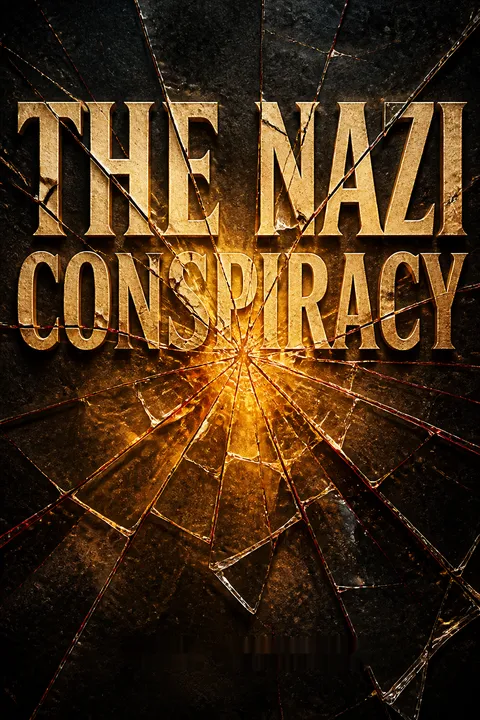
The Nazi Conspiracy received mixed reviews. Many praised its engaging writing style and ability to make history accessible, comparing it to fiction. Readers appreciated learning new WWII details and the focus on Allied leaders' relationships. However, some felt misled by the title, as the assassination plot is unproven and occupies little of the book. Critics noted the dramatic writing style and cliffhanger chapter endings as drawbacks. Overall, reviewers found it an interesting, if somewhat sensationalized, account of the Tehran Conference and its context.
People Also Read



Glossary
Operation Franz
German mission in IranA 1943 German intelligence mission that sent parachutists, weapons, and radio equipment into Iran to reconnect with agent Franz Mayr. Mayr had built a pro-German network in Tehran, but the team also received orders to disrupt the railway carrying Allied supplies to the Soviet Union. The operation suffered from poor coordination and was compromised when British intelligence arrested Mayr.
Melliun movement
Iranian pro-Nazi networkThe underground pro-German resistance network Franz Mayr cultivated in Iran while the country was under Allied control. Its members and supporters included people connected to the Iranian military, police, and business community. Mayr hoped the network could assist a German advance and help overturn Allied control, though British intelligence eventually penetrated it and arrested key participants.
Light Cavalry
Soviet bicycle spy teamA group of young Soviet intelligence recruits in Tehran, organized by Gevork Vartanian and supervised by experienced NKVD officers. They used bicycles to move quickly through the city without attracting much notice. Their work included watching suspected fascist agents, contacting informants, passing messages, and tracking German activity around the Tehran Conference.
Einsatzgruppen
Mobile SS killing unitsNazi mobile units that followed the German army into conquered territory, particularly in Eastern Europe and the Soviet Union. They rounded up and murdered civilians categorized as enemies of the Reich, with Jewish people increasingly targeted for being Jewish alone. Their mass shootings and use of gas vans formed part of the escalating Nazi campaign of genocide.
Forschungsamt
Nazi signals intelligence bureauA German signals intelligence organization that intercepted communications, deciphered codes, translated messages, and distributed reports to selected Nazi leaders. Its daily reports were called Brown Sheets and were closely controlled. The agency's work gave Nazi officials access to sensitive Allied communications, although the exact sources and methods behind some reported intercepts remain unclear.
Cicero Affair
British embassy document leakA wartime espionage operation in which Elyesa Bazna, a valet employed by the British ambassador in neutral Turkey, photographed confidential documents and sold the images to German officials. The Germans called the source Cicero. His material gave Nazi intelligence a valuable view of British diplomatic communications and information related to the region around Iran and Turkey.
Operation Overlord
Allied invasion of NormandyThe codename for the Allied cross-Channel invasion of German-occupied Western Europe. At Tehran, Roosevelt, Churchill, and Stalin agreed on a May 1944 target and on coordinating the invasion with Soviet offensives. The operation began in Normandy on June 6, 1944, after delays caused by conditions and extensive military preparation.
Operation Bodyguard
Allied invasion deception planThe broad Allied deception effort designed to hide the timing and location of the Normandy invasion from Germany. It used false plans and misleading signals to support the real operation, Operation Overlord. Its purpose was to make German commanders uncertain about where the main Allied attack would come, helping protect the landing force.
Operation Long Jump
Disputed plot nameA name widely attached in later accounts to the alleged Nazi plan to assassinate the Allied leaders at Tehran. The book notes that there is no clear evidence German planners used this name at the time. The alleged operation's existence is plausible, but its specific plan, leadership, and intended method remain disputed or unverified.
Final Solution
Nazi plan to murder JewsThe Nazi regime's coordinated program to murder Europe's Jewish population. At the 1942 Wannsee Conference, senior officials discussed deportation, forced labor, and killing, with planning that covered an estimated eleven million Jewish people. The policy expanded existing mass shootings into a continent-wide system of deportation, forced labor, and extermination.
About the Author
Download PDF
Download EPUB
.epub digital book format is ideal for reading ebooks on phones, tablets, and e-readers.








