

Plot Summary
The Girl Who Stayed Silent
Hannah Stills is nine when police arrive to tell her mother that her sixteen-year-old sister, Jenny, is dead. Hannah has held Jenny’s cold body near Morrison’s Point, her own feet cut and bleeding, but she cannot explain what happened. Her mother, Hope, already ill with cancer, retreats from life and dies weeks later.
At Jenny’s funeral, Hannah lays her sweater over the coffin because she imagines her sister will be cold underground. When investigators ask questions, she says nothing, then hates herself for the silence. Fostered by Kitty and Henry McLean, she grows up carrying memories she cannot bear to name. Twenty-five years later, she decides that silence has protected no one and reaches out to Rachel Krall.
Hannah’s silence begins as a child’s overwhelmed response, not a deliberate concealment. The adults around her mistake the absence of testimony for the absence of evidence, and that mistake becomes part of the damage. Her sweater on the coffin makes grief concrete: she tries to care for Jenny after death because she could not protect her while alive. The story’s first injustice is therefore also a failure of communication. Hannah’s eventual decision to write is not a sudden recovery, but an attempt to give form to memories that have governed her without being spoken.
A Letter Finds Rachel
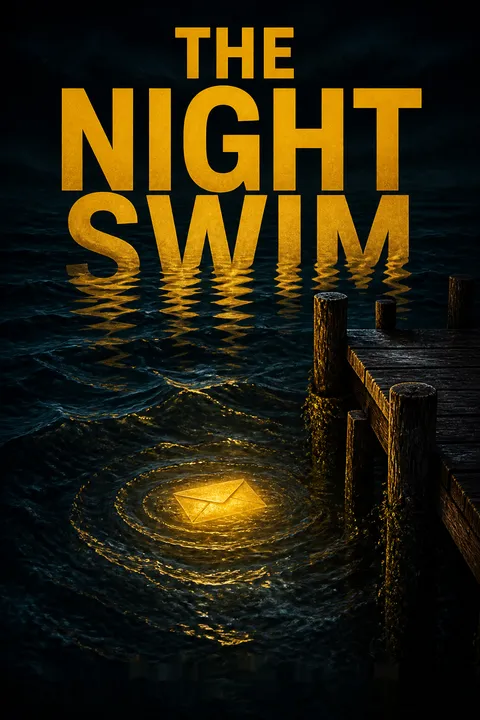
Rachel, the investigative host of Guilty or Not Guilty, is driving to Neapolis to cover the trial of champion swimmer Scott Blair when she finds a letter beneath her windshield wiper at a highway stop. Hannah says her sister Jenny was murdered there decades ago and asks Rachel to investigate.
The note unsettles Rachel because its writer seems to have recognized her despite her carefully maintained anonymity. A silver sedan appears to follow her, strengthening her suspicion that the letter was planted by someone who tracked her journey.
Rachel calls her injured producer, Pete, but refuses to involve police. She reaches Neapolis intending to report on the active trial, then learns Hannah has left another message arranging a meeting at Morrison’s Point. Curiosity overrules caution, and Rachel goes.
Rachel’s professional identity is built on entering other people’s pain, but Hannah’s letter unsettles her because it crosses the boundary between story and private life. The unexplained pursuit makes her feel vulnerable in a way a prison interview did not: she cannot identify who is watching or what they want. Her choice to meet Hannah is both investigative instinct and a response to guilt over the form rejection Hannah received. That tension will shape Rachel’s judgment. She wants to help, yet her work turns suffering into public material, a contradiction the novel keeps testing.
The Shortcut to the Party
Rachel’s podcast reconstructs the night Kelly Moore vanished. Sixteen-year-old Kelly misses her bus on the way to her friend Lexi Rourke’s party and takes a lonely path through a field. At the party, a guest secretly adds potent vodka to the soda, and Kelly becomes badly intoxicated without knowing why.
Lexi, drunk and jealous over former boyfriend Lou Lowe, finds Kelly outside with him and locks her out of the house. Kelly has left her phone and belongings inside, so she starts walking home alone.
Harris Wilson, a senior from school, follows her and shares bourbon with her at a playground. When Harris leaves to fetch marijuana, Kelly waits on a swing. Scott Blair arrives in his sports car, promises to take her home, and drives away with her.
The route to danger is made from ordinary decisions and other people’s carelessness: a missed bus, adulterated soda, a friend’s jealousy, an absent phone. None of these choices makes Kelly responsible for what follows, but each narrows her options. Rachel’s reconstruction exposes how quickly a community can turn such details into a prosecution of the victim herself. The field and playground also make isolation material rather than abstract. Kelly is not simply alone; she has been separated from the means by which she could ask for help, while those around her mistake her intoxication for permission or misbehavior.
Two Stories in Court
At the courthouse, prosecutor Mitch Alkins presents Scott as a calculating athlete who arranged for Harris to keep Kelly at the playground while he came to collect her. Harris testifies that Scott was competing with his college roommate, Dwaine Richards, to sleep with the most women and had planned to add Kelly to the tally.
Dwaine confirms their contest and the degrading ratings they recorded. The defense lawyer, Dale Quinn, answers with Scott’s swimming achievements, charity work, and the claim that Kelly willingly had sex and regretted it afterward.
Forensic expert Wendy North says Kelly’s bruises and injuries indicate assault, but Quinn’s expert disputes her interpretation and insists the evidence cannot establish consent. The jury must weigh testimony, physical findings, and each lawyer’s carefully shaped account.
The courtroom does not present evidence in a neutral container. Alkins and Quinn select facts that invite different moral readings of the same behavior: Scott’s celebrity becomes either leverage or a ruined future, while Kelly’s decisions become either context or suspicion. The roommate’s contest gives the prosecution a motive, but the defense’s focus on reputation and ambiguity shows how readily character can crowd out conduct. The competing experts sharpen the problem: bodily evidence can document injury, yet its meaning is argued over by people with institutional authority. The jury is asked to decide not only what happened, but which framework makes the details believable.
Kelly Takes the Stand
Kelly tells the jury that Scott was friendly during the drive and at the pizza shop, then became forceful when she refused to go beyond kissing. She says he held her down, raped her repeatedly, made her wash afterward, and threatened to damage her reputation if she reported him.
During cross-examination, Quinn turns her earlier cooperation into questions about whether she wanted Scott, and presses her over how fear, crying, and resistance could coexist. Kelly begins hyperventilating and collapses into a panic attack after only eleven minutes.
The court gives her time away, but her parents and therapist fear another appearance will devastate her. With her testimony not yet tested by a full cross-examination, the trial’s outcome hangs in the balance.
Kelly’s testimony makes visible the cost of converting trauma into admissible evidence. She must narrate an intimate assault in public, then defend the consistency of her fear against a lawyer trained to make ordinary reactions appear contradictory. Quinn’s questions exploit a false expectation that terror should produce one clear, legible response. Her collapse is not a failure of credibility; it is a bodily limit reached under scrutiny. The scene also exposes a structural imbalance: Scott can remain silent, while Kelly’s account must survive exhaustive examination before the court can rely on it.
The Drowning That Wasn't
While the trial proceeds, Rachel searches the records of Jenny’s death. The local newspaper reported an accidental drowning at Morrison’s Point, but gave the story little space, and the police station has no file under Jenny’s name.
At the hospital morgue, longtime attendant Stuart remembers bruises across Jenny’s body and secretly kept photographs showing injuries inconsistent with a simple fall against rocks. The medical examiner dismissed his concerns, and no homicide investigation followed.
Rachel also finds Jenny’s grave defaced with an insult, while residents repeat old claims that she was promiscuous and therefore responsible for her fate. These discoveries turn Hannah’s plea into a concrete investigative question: who benefited from calling Jenny’s death an accident, and why was the evidence allowed to disappear?
The official account does more than misclassify a death. It gives the town permission to replace investigation with judgment. The sparse newspaper notice, missing police file, and hidden morgue photographs form a chain of institutional neglect, while the graffiti shows how public memory keeps punishing Jenny after the state has stopped looking. Rachel’s work therefore shifts from checking Hannah’s recollection to examining how facts were filtered out. Stuart’s preserved photographs matter because they are both evidence and an act of resistance: he could not challenge the system openly, but he refused to let its version become the only surviving record.
A Town Keeps Score
Hannah’s letters fill in the Stills sisters’ precarious childhood: Hope’s cancer, Jenny’s responsibility for her younger sister, and the hostility they faced from a town that treated their family name as a stain. Rachel learns that boys used Jenny’s name as a crude measure of girls’ sexual reputations.
A florist, Renata, finds repeated orders for flowers at Jenny’s grave, each carrying a request for forgiveness. Rachel presses Mitch Alkins, the prosecutor, and he finally admits that Jenny was his first crush.
He had believed rumors about her and approached her selfishly, hurting her before she died, though he says he never physically harmed her. Alkins agrees to seek the old case records. Rachel also learns that Dan Moore, Kelly’s father, grew up under the authority of former police chief Russ Moore.
The town’s sexual reputation system outlives the people it targets. Jenny’s name becomes a tool boys use to discipline other girls, and adults preserve the same judgment by treating it as common knowledge. Alkins’s confession is limited but revealing: even a decent adult can participate in harm when rumor offers an easy excuse for selfishness. His annual flowers acknowledge private guilt without repairing public memory. Rachel’s growing awareness of Dan’s family history adds another layer, suggesting that Neapolis’s power structures are personal and inherited. The old case cannot be understood by evidence alone; it must also be read through the town’s loyalties.
The Cost of Returning
After Kelly’s panic attack, Dan and Christine Moore disagree over whether she should return to court. Dan wants Scott punished and believes testifying may help Kelly reclaim her life; Christine fears the process will deepen her daughter’s trauma.
Rachel tells them plainly that without Kelly’s completed cross-examination the defense can ask that her testimony be erased. Dan finally accepts Christine’s decision, and Kelly does not return. Judge Shaw strikes her testimony from the record, leaving the prosecution in grave danger.
Meanwhile, the defense presents character witnesses, including the scarred beach resident Vince Knox, who describes Scott rescuing a child from rough water. His reluctant manner troubles Rachel, but she does not yet know why this witness has entered the trial or what he has withheld.
Dan and Christine face a choice with no clean outcome: protecting Kelly may let Scott escape the most serious charge, while pursuing conviction may demand more suffering from their daughter. Their disagreement is not a simple contest between justice and care. Dan understands accountability as a possible route to restoration; Christine sees the immediate psychological cost and refuses to make Kelly bear it for everyone else. The judge’s ruling turns that private decision into a legal consequence. The courtroom’s insistence on procedural fairness has a human price, and the family must decide who is asked to pay it.
The Witness Behind the Wall
Rachel recognizes a pattern between Hannah’s letters and Kelly’s testimony: both girls were covered with a large plaid shirt after an assault. She seeks out Vince Knox, who lives in a boat shed, and discovers he once used another name, Bobby Green.
In court, after Kelly’s testimony is struck, Alkins recalls him. Bobby explains that he was at the beach the night Kelly was assaulted. He found her injured and disoriented, covered her with his shirt, then watched Scott return and order her to wash and keep silent.
Quinn attacks Bobby’s criminal past and his credibility, but Bobby admits his own wrongdoing without retreating from what he witnessed. His account supplies direct evidence that Kelly’s testimony can no longer provide and prevents the case from being dismissed.
Bobby’s testimony is powerful partly because he does not present himself as morally spotless. Quinn’s attack assumes that a damaged past makes a witness incapable of telling the truth, but Bobby distinguishes accountability for his own crimes from honesty about Scott’s. His care for Kelly echoes his earlier effort to protect Hannah, linking the two timelines through an action rather than a symbol alone. The plaid shirt is the hinge: a small practical gesture survives when official records and human recollection have failed. By speaking, Bobby breaks the isolation that once allowed powerful people to decide which witnesses counted.
Hannah Names the Past
Hannah’s last account describes following Jenny into the woods and seeing several boys attack her. Bobby hides Hannah beneath a canvas cover and shields Jenny with his shirt, then tells Hannah to escape. She reaches a phone booth, but one of the boys stops her from calling for help. After the group leaves, Rick drives Hannah back to the beach, where she finds Jenny gone and later sees police pull her sister from the water.
Years afterward, Rick tells Hannah that he saw a boy fleeing that night. Hannah connects his memory with her own and asks Rachel to witness a confrontation at Morrison’s Point. Rachel realizes Bobby’s shirt links both assaults, but the man Hannah suspects remains unnamed in the letter. She agrees to meet her there.
Hannah’s account converts scattered childhood fragments into a sequence: abduction, violence, a failed call for help, and the disappearance of Jenny’s body. The child’s limited perspective explains why she could not name what she saw at the time, while the adult narrator can now distinguish Bobby’s protection from the attackers’ cruelty. Rick’s recollection provides an external anchor, but it does not erase the uncertainty of memory. Hannah seeks Rachel not as a substitute detective alone, but as a witness who can prevent the truth from collapsing back into private accusation. The request is an act of trust and a calculated risk.
The Jetty Confession
At the jetty, Hannah confronts the man she believes killed Jenny: her own father, Dan Moore. He admits he and his friends assaulted Jenny, then carried her to the water because he feared she could expose them.
He says he pushed her from the jetty and later let his father, police chief Russ Moore, disguise the fatal crash that killed two accomplices and left Bobby blamed for it. Dan points a gun at Hannah and Rachel, insisting that exposure would destroy Kelly. Rachel secretly alerts Pete, then lies that their conversation has been recorded.
Dan throws her phone into the sea and escapes, leaving both women on the jetty edge. Hannah falls into the water; Rachel jumps after her, strips away Hannah’s waterlogged cardigan, and pulls her to shore as police arrive.
The revelation collapses the boundary between victim-protector and perpetrator: Dan’s public devotion to Kelly coexists with the crime he concealed for decades. His appeal to protecting his daughter repeats the logic of the original cover-up, where protecting a family’s standing mattered more than Jenny’s life. Rachel’s false claim about the recording buys time, but it does not secure evidence; her decisive act is physical, saving Hannah from the same water that swallowed Jenny. The climax refuses easy justice. The confession is witnessed but not preserved, and Dan’s flight leaves the women with truth but without an immediate legal remedy.
Verdicts and Wildflowers
The jury finds Scott Blair not guilty of rape but guilty of sexual assault and two counts of sexual battery. The verdict spares him the rape conviction yet ends his competitive swimming career and makes him a registered sex offender. Kelly has left Neapolis with her mother, seeking a life beyond the town’s scrutiny.
Dan’s body is later found in the water, tied to one of his boats in what authorities regard as a staged accident. Detective Cooper tells Bobby the truth about the crash that ruined his life. Hannah stays in Neapolis, plans to paint again, and helps place a memorial plaque for Jenny at Morrison’s Point. Before Rachel leaves ahead of a storm, she frees the hotel’s silent nightingale from its cage and carries it with her.
The two cases resolve unevenly. Scott faces legal consequences, but the jury’s split verdict preserves the ambiguity that has burdened Kelly throughout the trial. Dan’s death prevents a public prosecution of Jenny’s murder, so the memorial plaque becomes a modest correction rather than a complete restoration. Bobby receives the truth about his culpability, while Hannah begins to imagine a future not organized around guilt. Rachel’s decision to release the nightingale is an earned gesture: after watching institutions demand testimony and confine voices, she refuses to treat a living creature as decoration. Freedom here is practical, partial, and still worth choosing.
Analysis
The Night Swim is built around a conflict between testimony and the systems that decide whether testimony counts. Kelly’s assault is debated in court through forensic interpretation, credibility attacks, and competing accounts of consent. Jenny’s death was distorted earlier and more completely: injuries went uninvestigated, records vanished, and town gossip supplied a ready-made explanation that blamed her. The paired cases show that injustice does not always require a single dramatic conspiracy. It can be produced by routine habits of disbelief, by reputations that substitute for evidence, and by institutions that find it easier to close a file than challenge local power.
Rachel’s podcast makes these pressures visible while exposing its own ethical problem. By inviting listeners into a virtual jury box, she broadens access to the trial but also turns private pain into public judgment. Her commitment to helping Hannah is sincere, yet her investigation repeatedly crosses boundaries and places her at risk. The novel does not resolve this tension by declaring storytelling either rescue or exploitation. Instead, it asks whether a reporter can create attention without claiming ownership over another person’s grief.
The characters’ silences carry different meanings. Kelly cannot endure further testimony without being harmed; Hannah once could not speak because she was a child confronting violence; Bobby withholds what he saw because he distrusts institutions; and Dan’s family history shows how authority can enforce silence. Their choices should not be treated as equivalent. The book distinguishes self-protection from the deliberate suppression of another person’s account.
Its ending offers partial, uneven forms of repair rather than a perfect verdict. Scott is convicted of sexual assault and battery but not rape. Jenny receives a public memorial, while the man who admits killing her dies before he can face trial. Bobby learns that he was not responsible for the deaths attributed to him, and Hannah begins returning to art. These outcomes cannot restore what was taken. They do, however, replace some false stories with truthful ones, suggesting that justice may begin with accurate memory even when punishment remains incomplete.
Review Summary
The Night Swim received mostly positive reviews, with readers praising its gripping narrative, powerful themes, and realistic portrayal of rape trials. Many appreciated the dual timeline structure and podcast format. The book was lauded for its thought-provoking exploration of rape culture and victim treatment. Some readers found it emotionally challenging due to the subject matter. A few critics noted issues with pacing or realism, but overall, the novel was considered a compelling and important read that surpassed expectations for many.
People Also Read








Characters
Rachel Krall
Relentless crime podcasterRachel is the investigative host of Guilty or Not Guilty, known for revisiting cases that institutions have mishandled. She is curious, disciplined, and unusually willing to enter uncomfortable spaces, though her confidence can blur the line between persistence and intrusion. Her podcast asks listeners to judge evidence alongside her, making her both reporter and public interpreter. She feels responsible when desperate people are ignored, a belief that drives her to take Hannah’s letters seriously even as an active trial consumes her time. Rachel’s central psychological tension is that empathy can motivate her work while also making her vulnerable to manipulation. She wants to correct injustice, but must reckon with the power her storytelling holds over other people’s lives.
Hannah Stills
Keeper of buried memoriesHannah is Jenny’s younger sister, a gifted artist who was adopted by Kitty and Henry after losing her birth family as a child. She is observant and emotionally perceptive, but years of grief have taught her to disappear into silence, unstable relationships, and periods of self-destructive behavior. Her letters to Rachel let her approach memories at a distance before she can face them directly. Hannah’s need for truth is tangled with guilt: she believes she failed to protect the people she loved, even when she was too young and powerless to do so. Her return to Neapolis forces her to choose between the safety of avoidance and the painful work of remembering.
Kelly Moore
Teenage complainantKelly is a bright, active sixteen-year-old whose plans include school, sports, and a possible future helping others. Before the assault, she is sociable and energetic; afterward, fear and public scrutiny make ordinary routines difficult. Her case becomes the center of a highly visible trial, though she cannot publicly answer the town’s gossip while proceedings are underway. Kelly’s experience shows how a victim’s behavior before and after an assault can be recast as evidence against her, even when those actions are ordinary responses to confusion or fear. Her parents’ competing ideas about justice reflect the difficult balance between seeking accountability and protecting her capacity to heal.
Jenny Stills
Hannah’s older sisterJenny is a sixteen-year-old who often acts as the responsible adult in a struggling household. She collects Hannah after school, helps their mother manage daily life, and works at a supermarket as Hope’s illness worsens. Warm and protective, Jenny also longs for a life beyond the family’s financial hardship. The town’s sexualized judgments obscure her actual character, turning rumors into a public identity that follows her family. Through Hannah’s memories, Jenny is seen not as a symbol but as a sister who reads, swims, cooks, and tries to keep a fragile home functioning. Her story anchors the novel’s examination of how communities remember girls.
Dan Moore
Kelly’s protective fatherDan is a former naval officer and tour-boat operator who takes pride in discipline, work, and his close relationship with his daughter. He is controlled in public, but the trial places him under sustained emotional strain as he watches Kelly suffer and hears Scott’s family shape the public narrative. His instinct is to pursue accountability, sometimes without appreciating what the process may demand from Kelly. Dan’s loyalty to his family is intense, and his own difficult childhood has shaped his understanding of authority, violence, and belonging. He is a central figure in the town’s long history, though Rachel initially knows him chiefly as a grieving parent.
Scott Blair
Accused swimming starScott is a nineteen-year-old champion swimmer whose Olympic prospects have made him a local celebrity. He is disciplined in training and accustomed to admiration, while his family and defense team present his sporting record and community service as evidence of character. The prosecution describes a very different young man, one willing to treat sexual access as part of a competition. Scott rarely speaks publicly once his lawyer takes control of the case, so his image is constructed largely by other people. His fame matters because it changes how the town interprets the same evidence: some see a promising local hero under attack, while others see entitlement protected by status.
Mitch Alkins
Hometown prosecutorMitch is a formidable trial lawyer who returned to Neapolis after building a career as a high-profile defense attorney. He is imposing, strategic, and careful with the force of his courtroom presence. In prosecuting Scott, he argues that planning and motive can be read from texts, testimony, and physical evidence. His connection to the town’s past gives him a personal stake he does not initially explain to Rachel. Alkins is not presented as untouched by the culture he challenges; his history with Jenny complicates his public role and makes his sense of responsibility more than professional.
Vince Knox
Scarred beach witnessVince lives on the margins of Neapolis, taking seasonal work, sleeping where he can, and keeping largely to himself. His face and body bear scars, and his rough manner makes others quick to distrust him. He is wary of police and courts, partly because his life has taught him that institutions can punish the vulnerable more readily than the powerful. Yet he cares for injured birds and notices people in distress. Vince’s guardedness is not indifference; it is a survival strategy. When he chooses to speak, his willingness to admit his own failures gives his testimony a different kind of credibility.
Pete
Rachel’s producerPete has worked with Rachel since the beginning of her podcast career, handling sound, production, social media, and the flood of messages sent by listeners. He understands how the work affects her and often acts as a practical counterweight to her investigative impulses. Though recovering from serious injuries, he continues editing episodes and searching for information from his hospital bed. Pete’s loyalty is expressed through labor and vigilance rather than grand gestures. He worries about Rachel’s safety and about the costs of turning intimate tragedies into a public series, even while helping her do exactly that.
Christine Moore
Kelly’s steadying motherChristine is Kelly’s mother and Dan’s wife, a quiet source of care during a period when her daughter’s confidence and health have sharply declined. She supports Kelly through medical treatment and the pressures surrounding the trial, while resisting the idea that justice must come at any cost. Christine understands that a courtroom victory cannot automatically heal trauma. Her disagreement with Dan is rooted in protection, not indifference to accountability. She sees the person Kelly is now, not only the case the town wants her to represent.
Nick Cooper
Detective with local rootsNick is a detective and experienced diver who once left Neapolis for police work elsewhere before returning to the coast. He is practical, observant, and more cautious than Rachel about approaching dangerous people or reopening old matters without evidence. His local childhood gives him relationships with figures in the trial and a perspective Rachel lacks. Nick’s professional instincts are tempered by memories of how authority operated in the town when he was young. He becomes an important bridge between Rachel’s reporting and the police investigation.
Dale Quinn
Charismatic defense lawyerDale is a celebrated defense attorney hired by Scott’s wealthy family. Handsome, folksy, and carefully theatrical, he uses small displays of awkwardness to appear approachable before conducting aggressive cross-examinations. Quinn’s skill lies in changing the emotional meaning of evidence: he emphasizes doubt, reputational damage, and the danger of conviction without certainty. He is not careless or spontaneous; even his apparent stumbles are part of a studied method. His courtroom performance reveals how a legal argument can depend as much on shaping trust as on presenting facts.
Harris Wilson
Teenage party witnessHarris is a senior at school who follows Kelly from Lexi’s party because he does not want her walking home alone. He is impulsive, easily influenced, and less calculating than Scott, but his decisions still help put Kelly in danger. He gives police an incomplete account before testifying under a plea arrangement, allowing the defense to attack his reliability. Harris’s mixture of guilt and self-preservation makes him an imperfect witness rather than a simple villain. His story also shows how a bystander can participate in harm through choices made for convenience or fear.
Lexi Rourke
Kelly’s jealous friendLexi is Kelly’s friend and the host of the party that grows far beyond its intended size. Her jealousy about Lou Lowe turns a private insecurity into a consequential act when she leaves Kelly outside without her phone or belongings. Lexi is socially confident but impulsive, and alcohol worsens her judgment. Her behavior helps create the circumstances that leave Kelly isolated, though it does not make Lexi responsible for Scott’s later actions.
Russ Moore
Former police chiefRuss is Dan’s father and Neapolis’s former police chief, a powerful local figure whose influence reaches beyond the station. He was known publicly for authority and service, but Dan’s family life was shaped by fear and violence. Russ’s position gives him access to the town’s institutions and makes his approval or disfavor consequential. His presence in the story is felt through the way older residents defer to established families and through the gaps in the historical record.
Kitty McLean
Hannah’s adoptive motherKitty and her husband Henry foster and adopt Hannah after she loses her birth family. Warm, patient, and protective, Kitty makes a home where Hannah can grow without demanding that grief disappear on schedule. She comforts Hannah through nightmares and supports her interests in art and school. Kitty’s instinct is to interpret Hannah’s withdrawal as a child’s fear that can be softened with steady care, even when Hannah cannot explain the source of her distress.
Plot Devices
Hannah’s letters
Memory delivered in fragmentsHannah’s letters let the novel alternate between Rachel’s present-day investigation and the sisters’ childhood. Each message supplies a new memory rather than a complete account, reflecting how trauma returns in pieces and how Hannah controls the pace of disclosure. The letters also function as clues: descriptions of people, places, and objects gain investigative meaning when Rachel compares them with the trial and the town’s records. Their intrusive delivery initially makes Rachel suspect a stalker, so the device carries both narrative information and unease. As the letters approach the night of Jenny’s death, personal testimony becomes the counterweight to an official story built on omissions.
The podcast format
Listeners become jurorsRachel’s show reports Scott Blair’s active trial in installments, giving listeners testimony and competing legal arguments as they emerge. The format creates a public jury alongside the actual jury, but it also exposes the hazards of crowdsourced judgment: audiences react quickly, often before they understand the evidence, and direct their anger at Rachel, Kelly, or Scott. The podcast frames questions of bias, victim-blaming, and proof without making the audience’s verdict equivalent to a legal one. It also gives Rachel a reason to keep investigating even when the case becomes emotionally costly, since her listeners expect her to translate the courtroom into a story they can follow.
The paired investigations
One trial reopens anotherThe Scott Blair trial and Jenny Stills’s decades-old death run alongside each other, linked by questions of consent, testimony, and whose account receives institutional belief. Rachel’s work on Kelly’s case brings her to Neapolis, where Hannah’s letters draw her toward Jenny’s. The parallels are not identical: the living complainant faces a public trial, while Jenny’s death was dismissed before a meaningful investigation could begin. Their relationship allows the book to compare different forms of silence, from an overwhelmed child unable to speak to a community that chooses not to listen. Each case changes how Rachel interprets the other.
The plaid shirt
A remembered object links assaultsA large plaid shirt appears in Kelly’s account of the night on the beach and in Hannah’s memory of Jenny’s assault. At first, the detail seems incidental: a garment used to keep a frightened or injured girl warm. Rachel recognizes that the repeated act points toward a person who was present in both cases. The shirt therefore works as a physical bridge between the two timelines, turning a remembered kindness into an investigative lead. Its significance also complicates the idea of a witness as purely innocent or guilty, since the person connected to it has a troubled history and a reason to fear the authorities.
The caged nightingale
Silence made visibleThe silent bird in the hotel lobby appears as Rachel begins her work in Neapolis and recurs as she confronts stories in which women and girls are pressured into silence. Guests expect the bird to sing on demand and tap its cage when it does not, turning the ordinary lobby decoration into a small image of forced performance. Rachel notices its distress and eventually removes it from captivity before leaving town. The bird’s role is modest but pointed: voice cannot be demanded as proof of life or sincerity, and care begins with recognizing the limits imposed on a vulnerable creature.
FAQ
Synopsis & Basic Details
What is The Night Swim about?
- Dual Narrative Mystery: The Night Swim follows true-crime podcaster Rachel Krall as she investigates a present-day rape trial in Neapolis while simultaneously being drawn into a decades-old mystery surrounding the death of a young woman named Jenny Stills.
- Unraveling Past and Present: The story interweaves Rachel's podcast coverage of the trial with her personal investigation into Jenny's death, revealing hidden connections and challenging the reader's perception of justice.
- Themes of Truth and Justice: The novel explores themes of victim-blaming, the power of secrets, and the complexities of seeking justice in a world where truth is often obscured by personal biases and societal pressures.
Why should I read The Night Swim?
- Intricate Plot Twists: The novel offers a compelling narrative with unexpected twists and turns, keeping readers engaged and guessing until the very end.
- Exploration of Complex Themes: The Night Swim delves into thought-provoking themes such as the nature of truth, the impact of trauma, and the challenges of seeking justice in a flawed system.
- Compelling Characters: The story features well-developed characters with complex motivations, making their journeys both relatable and emotionally resonant.
What is the background of The Night Swim?
- Small-Town Setting: The story is set in the fictional coastal town of Neapolis, North Carolina, a place with a seemingly idyllic surface that hides a history of secrets and injustices.
- Cultural Context: The novel explores the cultural context of small-town dynamics, where everyone knows everyone, and how this can both protect and hinder the pursuit of truth.
- Contemporary Issues: The book tackles contemporary issues such as victim-blaming, the impact of social media, and the challenges of navigating the legal system in cases of sexual assault.
What are the most memorable quotes in The Night Swim?
- "It was Jenny's death that killed my mother. Killed her as good as if she'd been shot in the chest with a twelve-gauge shotgun.": This quote, from Hannah's letter, powerfully illustrates the devastating impact of Jenny's death on her family and sets the tone for the novel's exploration of grief and loss.
- "When it comes to rape, it seems to me 'if only' is used all the time. Never about the man. Nobody ever says 'if only' he hadn't raped her. It's always about the woman. If only …": This quote from Rachel's podcast highlights the pervasive issue of victim-blaming and challenges readers to question societal attitudes towards sexual assault.
- "You can't save the world, Rachel. Maybe not. But I can save one person at a time.": This exchange between Rachel and Pete encapsulates Rachel's driving motivation and her commitment to helping those who have been failed by the justice system.
What writing style, narrative choices, and literary techniques does Megan Goldin use?
- Alternating Perspectives: Goldin employs a dual narrative structure, alternating between Rachel's present-day investigation and Hannah's letters, creating suspense and revealing different layers of the story.
- Podcast Format Integration: The inclusion of Rachel's podcast transcripts adds a unique dimension to the narrative, providing insights into her thought process and the broader context of the cases she investigates.
- Foreshadowing and Symbolism: Goldin uses subtle foreshadowing and recurring symbols, such as the nightingale and the ocean, to enhance the novel's themes and create a sense of unease and impending danger.
Hidden Details & Subtle Connections
What are some minor details that add significant meaning?
- The Lemonade: The recurring mention of lemonade as a family remedy highlights the Stills family's attempts to cope with trauma and loss, and its absence after Jenny's death symbolizes the loss of hope.
- The Birdcage: The nightingale in the hotel lobby, unable to sing, mirrors the silenced voices of victims and the stifled truths within the town of Neapolis.
- The Graffiti: The word "WHORE" on Jenny's tombstone reveals the lasting impact of victim-blaming and the dehumanization of women who are perceived as sexually active.
What are some subtle foreshadowing and callbacks?
- The Jetty: The Morrison's Point jetty, initially a seemingly random location, becomes a recurring site of significance, linking Jenny's death, Hannah's trauma, and Rachel's investigation.
- The Crack Pipe: The discarded crack pipe in the field foreshadows the dangerous environment where K was attacked, highlighting the vulnerability of women in isolated spaces.
- The Two-Toned Ribbon: The faded blue ribbon found at Jenny's grave is a callback to the ribbon used by the high-end florist, connecting the past and present and hinting at a hidden connection.
What are some unexpected character connections?
- Mitch Alkins and Jenny Stills: The revelation that Mitch Alkins had a past connection with Jenny Stills adds a layer of complexity to his character and his motivations in prosecuting the Scott Blair case.
- Dan Moore and Bobby Green: The connection between Dan Moore and Bobby Green, revealed through their shared past and the cover-up of the car accident, highlights the cyclical nature of violence and the long-lasting impact of past actions.
- Detective Cooper and Judge Shaw: The revelation that Detective Cooper and Judge Shaw were childhood neighbors adds to the sense of interconnectedness in Neapolis and suggests a history of shared experiences and biases.
Who are the most significant supporting characters?
- Pete: Rachel's producer, Pete, serves as a grounding force, providing support and guidance while also offering a contrasting perspective on the cases she investigates.
- Kitty McLean: Hannah's adoptive mother, Kitty, represents a source of love and stability in Hannah's life, highlighting the importance of family and support in overcoming trauma.
- Vince Knox (Bobby Green): The character of Vince Knox, a former convict with a troubled past, serves as a crucial witness, providing an alternative perspective on the events of the night of Kelly's assault and revealing the truth about Jenny's death.
Psychological, Emotional, & Relational Analysis
What are some unspoken motivations of the characters?
- Rachel's Need for Control: Rachel's obsessive focus on her work and her tendency to break rules stem from a deep-seated need to control her environment and to right the wrongs she sees in the world.
- Hannah's Self-Blame: Hannah's self-destructive behaviors and her desire to meet Rachel at the jetty stem from a deep-seated guilt and a need to atone for her perceived failure to protect her sister.
- Mitch Alkins's Guilt: Mitch Alkins's decision to become a prosecutor is driven by a deep-seated guilt over his past actions and his desire to atone for his role in Jenny's death.
What psychological complexities do the characters exhibit?
- Rachel's Trauma: Rachel's past experiences with crime and her tendency to break rules reveal a complex psychological profile, marked by a need to control her environment and a deep-seated fear of vulnerability.
- Hannah's PTSD: Hannah's night terrors, self-harm, and difficulty forming relationships are all symptoms of post-traumatic stress disorder, highlighting the long-lasting impact of trauma on her life.
- Dan Moore's Internal Conflict: Dan Moore's internal conflict between his desire to protect his daughter and his guilt over his past actions reveals a complex psychological profile, marked by a history of violence and a desperate need for redemption.
What are the major emotional turning points?
- Hannah's Decision to Meet Rachel: Hannah's decision to meet Rachel at the jetty marks a turning point in her journey, as she finally confronts her past and seeks to bring Jenny's killer to justice.
- Rachel's Discovery of the Truth: Rachel's discovery of the truth about Jenny's death and the cover-up that followed is a major emotional turning point, fueling her determination to expose the truth and seek justice.
- Kelly's Testimony: Kelly's emotional breakdown on the stand highlights the devastating impact of sexual assault and the challenges faced by victims in seeking justice.
How do relationship dynamics evolve?
- Rachel and Pete: The relationship between Rachel and Pete evolves from a professional partnership to a deep friendship, with Pete providing emotional support and a grounding influence on Rachel's intense personality.
- Hannah and Kitty: The relationship between Hannah and her adoptive mother, Kitty, evolves from a strained connection to a loving bond, highlighting the importance of family and support in overcoming trauma.
- Dan and Christine Moore: The relationship between Dan and Christine Moore is strained by the trial and their differing views on how to protect their daughter, highlighting the challenges of navigating trauma and seeking justice as a family.
Interpretation & Debate
Which parts of the story remain ambiguous or open-ended?
- Bobby Green's Motives: The true extent of Bobby Green's involvement in Jenny's death and his motivations for helping Hannah remain somewhat ambiguous, leaving the reader to question his role in the events.
- The Nature of Consent: The novel leaves the reader to grapple with the complexities of consent, particularly in cases where alcohol and power dynamics are involved, highlighting the challenges of defining and proving consent in sexual assault cases.
- The Long-Term Impact: The long-term impact of the trial on Kelly Moore and her family, as well as the future of Scott Blair, remains open-ended, leaving the reader to consider the lasting consequences of trauma and injustice.
What are some debatable, controversial scenes or moments in The Night Swim?
- The Portrayal of Scott Blair: The novel's portrayal of Scott Blair as both a potential predator and a victim of false accusations is controversial, challenging readers to confront their own biases and assumptions about guilt and innocence.
- The Use of Graphic Details: The novel's use of graphic details in describing the sexual assault and the aftermath of Jenny's death is controversial, raising questions about the ethics of depicting violence and trauma in fiction.
- The Role of the Media: The novel's portrayal of the media's role in shaping public opinion and influencing the outcome of the trial is controversial, highlighting the potential for bias and sensationalism in reporting on sensitive cases.
The Night Swim Ending Explained: How It Ends & What It Means
- Dan Moore's Suicide: Dan Moore's suicide, while seemingly a way to avoid punishment, also serves as a final act of self-punishment and a desperate attempt to protect his daughter from the truth.
- Scott Blair's Mixed Verdict: The mixed verdict in Scott Blair's trial highlights the complexities of the legal system and the challenges of proving guilt in cases of sexual assault, leaving the reader to question the nature of justice.
- Hannah's Path to Healing: Hannah's decision to stay in Neapolis and pursue her art represents a step toward healing and reclaiming her life, suggesting that even in the face of tragedy, there is hope for recovery and growth.
Download PDF
Download EPUB
.epub digital book format is ideal for reading ebooks on phones, tablets, and e-readers.








