

Plot Summary
The Knife in Her Pocket
Liv Reese wakes in a cab with no memory of leaving her summer office, and finds autumn leaves falling in the cold. At the Brooklyn apartment she believes she shares with Amy, strangers insist she has the wrong home. They are right: her furniture is gone, and the couple now lives there. Outside, Liv finds a bloodied knife wrapped in a shirt in her cardigan pocket and throws both into a trash can.
She heads to Nocturnal, a bar written on her hand, where the bartender recognizes her and says she spends her nights avoiding sleep. Liv cannot remember him, the man she was with earlier, or why her hands warn her to stay awake. The knife and the bartender’s familiarity turn confusion into fear.
The opening makes Liv’s body a more reliable witness than her mind: she carries a bloody weapon, handwritten warnings, and habits that strangers recognize. Her lost keys and missing purse seem ordinary until the changed apartment exposes a larger rupture. Even the season has moved on without her. The bar offers recognition, but not comfort, because each familiar detail belongs to a life she cannot access. By discarding the knife, Liv makes a frightened decision that may erase evidence as readily as it protects her.
Blood on the Window
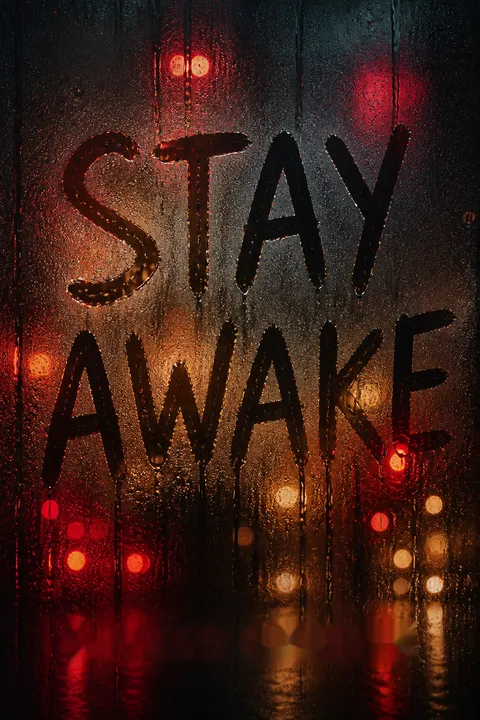
Detective Darcy Halliday reaches a short-stay apartment where a cleaner has found a naked man dead in bed. The victim has one precise stab wound to the heart, no defense injuries, and gashes across the soles of his feet. Halliday suspects he was drugged before the stabbing. A trail of blood leads to the window, where the killer has written a backward message meant to be read from the street.
The cleaner’s discarded rubbish contains notes with warnings about sleep, doors, and phone calls. Detective Jack Lavelle joins Halliday, and they find a long dark hair on the pillow and a wine bottle beside the bed. The message seems deliberate, but neither detective yet knows whom it addresses or why the killer staged it for passersby.
The crime scene is arranged as a communication as much as a killing. The single wound suggests control, while the cut feet and blood-written window imply time spent composing a message. Halliday resists the easy assumption that visible spectacle reveals motive; she reads details against one another instead. The discarded notes quietly connect the murder to Liv’s habits, but their meaning remains uncertain. This tension between evidence and interpretation establishes the novel’s central investigative problem: clues can be accurate and still point toward the wrong story.
Two Years Missing
After dozing on a park bench, Liv discovers that the city around her belongs to a later life. Her hair is far longer than she remembers, her salon has changed hands, and Cultura Magazine has been remodeled and staffed by people who treat her as someone returning from London. The receptionist does not know her, and her old colleagues have disappeared.
Liv tries to check her email and bank account, but she cannot access either; the bank says she closed her account years earlier. A calendar search gives her the terrible measure of the gap: more than two years have passed since her last remembered summer day. On the office television, footage of the murdered man’s window shows the same message scrawled on Liv’s wrist.
Liv’s crisis becomes measurable through institutions that remember what she cannot: a bank account, an office, a calendar, and strangers’ assumptions. Their records are not merely background information; they contest her sense of identity. She has not simply forgotten recent events. She has been socially replaced. The matching message on her skin and the crime-scene window gives her a concrete link to the murder, but not an explanation. Her need to regain control pushes her toward places and people she hopes will restore continuity.
The Mirror Four Exhibition
Two years earlier, Liv is a food writer at Cultura, dating ambitious entrepreneur Marco Reggio and sharing an apartment with her closest friend, Amy Decker. Amy is a doctor in training, and her boyfriend, surgeon Brett Graham, moves in their social circle.
When editor Frank assigns Liv to cover an anonymous performance artist called Q, she enters a dark warehouse exhibition and finds a real woman tied to a chair behind velvet ropes. Tools that could free the captive sit nearby, but warning signs and the audience’s chanting keep Liv from acting.
The artist later frames her inaction as a choice. Liv leaves unsettled, then continues her life, trying to balance Marco’s demands with her loyalty to Amy. The exhibition plants a troubling question about watching harm without intervening.
Q’s exhibition turns spectatorship into a moral trap: Liv sees a person in distress but cannot tell whether the danger is staged, and the rules discourage intervention. Her hesitation is not simple indifference; it reflects a learned reliance on external authority when the situation is ambiguous. That pattern will matter as Liv later asks institutions to validate fears they cannot easily verify. The artist’s challenge also echoes the book’s larger concern with memory: a person may possess the facts of an event yet remain uncertain about what those facts require.
Warnings Become Harassment
Liv begins receiving anonymous messages that reveal what she is wearing and doing. Someone enters her apartment, moves her belongings, leaves food and flowers, and replaces drugged chocolates after she falls asleep.
A paid intruder, Joe Chalmers, later admits he was given keys and instructions to unsettle the women in the apartment, though he says he refused a later order to kill. Liv reports the incidents, but Detective Krause treats her as paranoid because nothing appears stolen and the evidence seems implausible.
His partner, Larry Regan, notices signs that Liv’s fear is genuine, but cannot persuade Krause to investigate. As the warnings accumulate, Liv becomes more vigilant and less able to trust either her senses or the people meant to help.
The harassment is designed to make ordinary life feel unprovable. Milk in a refrigerator or a flower arrangement can be dismissed as a mistake, while repetition turns each small intrusion into a pattern. Krause’s refusal to take Liv seriously deepens the harm: his authority converts uncertainty into a verdict about her character. Regan’s private doubts show that institutions are not monolithic, but his junior position limits what he can do. Liv’s growing vigilance is therefore both a survival response and a condition the harasser can exploit.
The Bedroom Attack
On a summer day, Liv leaves Cultura after Amy calls her home. In Amy’s bedroom, she finds Amy and Marco dead in bed, each killed by a stab wound. Before Liv can understand what she is seeing, an unseen attacker restrains her, forces a knife into her hand, and stabs her in the torso. Liv manages to reach a phone and call emergency services, but loses consciousness before help arrives.
She survives and remains in a coma for nearly two weeks. When she wakes, she remembers almost nothing about the attack or the murders. Investigators suspect she killed Amy and Marco in jealousy, then stabbed herself, but the prosecutor declines to charge her. Liv leaves New York carrying an unexplained scar and a past she cannot reconstruct.
The attack removes the event that should explain Liv’s life and leaves only its consequences: two deaths, a scar, and public suspicion. Because Liv cannot narrate what happened, other people supply competing accounts, and the first available account belongs to a detective who has already dismissed her. The near-fatal wound also gives the repeated warning to stay awake a literal origin, rather than making it only a symbol of anxiety. Her survival preserves the possibility of truth, but not her access to it.
A Life Rebuilt in London
After recovering, Liv moves to London and works for Cultura’s British edition. She meets Ted Cole, falls in love, and becomes engaged to him, but remains consumed by the unsolved murders and her missing memories. Ted eventually returns to New York for work, and their relationship ends.
Years later, Liv begins suffering repeated memory blackouts: sleep erases everything since the day Amy and Marco were killed. She tries to fight the cycle with caffeine and wakefulness drugs, which worsen her exhaustion and confusion.
When Ted’s new engagement reaches her through an invitation, she turns up at the party unable to recognize him. Worried by her condition, Ted helps arrange care with neurologist Dr. Brenner and moves her to a rented apartment for safety.
London gives Liv a genuine life beyond the crime, but it cannot resolve the part of her history she cannot remember. Her fixation on the murders is not just a search for a culprit; it is an attempt to recover authorship over her own past. The recurrent blackouts then transform sleep into a threat, making the strategy of staying awake feel necessary even as it damages her. Ted’s return offers practical support, but the invitation to his new life also exposes how much time has passed beyond Liv’s grasp.
The Victim Is Ted
At the precinct, Halliday and Lavelle learn that a fingerprint on the wine bottle belongs to Liv Reese, a woman once investigated after a double murder. A missing-person alert from London and building footage identify Liv as the long-haired woman seen entering the apartment with the victim.
The apartment owner’s records identify the dead man as Edward Cole, known as Ted. His fiancée, Elisabeth, confirms that he had rented the room to protect his former partner, Liv, and had recently begun asking questions about her old case.
She also gives detectives a sketch of a dotted fleur-de-lis design Ted was investigating. The links make Liv look like a likely killer, but Ted’s concern and the odd drawing suggest he was uncovering something beyond a private romantic conflict.
The investigation turns Liv’s survival history into apparent evidence of guilt. Her print, her presence, and the message on the window align neatly, while Ted’s private concern complicates that picture. Elisabeth’s account introduces a different motive for the rental: protection rather than secrecy for an affair. Halliday’s willingness to keep uncertainty alive becomes ethically important, because a suspect who cannot reliably explain herself is especially vulnerable to a tidy accusation. The fleur-de-lis sketch is a small, concrete clue that refuses to fit the simple story.
Home Behind the Wrong Door
Following the address on her hand, Liv reaches a shabby basement apartment where a shopkeeper and doorman recognize her, though she does not recognize them. Inside, she finds caffeine pills, energy drinks, notes covering the walls, and the charred remains of a journal that once recorded her recent life.
She attends an appointment with Dr. Brenner, who explains that she has a rare repetitive dissociative fugue linked to sleep and psychological trauma. Liv still cannot accept the explanation.
When she returns to Cultura, staff tell her that Ted is dead and that he had been her fiancé. Hearing his name on the news, alongside footage of the blood-written message, she realizes she may be connected to his murder. Overwhelmed, she leaves before police can question her.
The destroyed journal is more than a missing object. It is the external memory system that allowed Liv to move through a world she could not reliably retain. Its absence forces her to depend on strangers, each with partial knowledge and their own assumptions. Dr. Brenner offers a clinical account, but understanding a diagnosis does not instantly make it emotionally credible. At Cultura, public grief gives Liv a new fact she cannot absorb: Ted mattered profoundly to her, though she has no felt memory of loving him.
The Case Krause Buried
Halliday and Lavelle obtain the files from Liv’s earlier investigation. Regan explains that he doubted Krause’s murder-suicide theory, partly because Liv’s wound could not have been self-inflicted and her stalking reports were never properly pursued.
He had also seen a man watching Liv’s apartment with binoculars. The detectives find Joe Chalmers, who admits a stranger paid him to enter the apartment, deliver unsettling gifts, and make Liv feel watched. The stranger later offered him money to kill Amy and Marco; Chalmers refused and fled town.
Separately, handwriting analysis shows that the person who wrote the crime-scene message was right-handed and taller than Liv, who is left-handed. The evidence weakens the case against her, while leaving the unknown stalker at large.
The old case is not merely unsolved; it was shaped by an investigator who treated an appealing theory as a destination. Regan’s account restores neglected observations, while Chalmers supplies a material method for the seemingly impossible intrusions. Neither man can name the person behind them, so the revelation opens the investigation rather than closing it. The handwriting results likewise challenge the convenient reading of the window message. Together, these findings demonstrate that responsible investigation requires tolerating incomplete answers instead of forcing evidence into an early narrative.
A Phone Full of Warnings
After leaving Cultura, Liv travels through the city and eventually wakes at Penn Station with a ticket to Miami, unsure how she got there. A phone number written on her hand leads her back to Nocturnal. Bartender Harry returns a cracked phone that Liv had lost, and she unlocks it with her thumbprint.
Ted’s messages and an email in Liv’s own handwriting explain her condition, their relationship, and his effort to investigate her friends’ murders. Liv sees her own image on the news and calls the police hotline, then hangs up when officers begin searching nearby.
Outside, she meets Brett Graham, Amy’s former boyfriend, who offers her a ride. As Brett drives, Liv recognizes the distinctive dotted design on his shoes from Ted’s sketch and sends Halliday her location.
Liv’s phone offers a portable archive when the journal is gone, but its information arrives amid a public manhunt and cannot make her feel safe. Her choice to call the police is a genuine movement toward trust; fleeing before contact shows how fragile that movement remains. The shoe pattern turns an abstract drawing into a bodily recognition, a clue that survives even when autobiographical memory does not. Liv acts before she can fully explain what she knows, sending her location as a small but decisive act of self-preservation.
The Shoes Give Him Away
Brett notices Liv’s alarm but keeps presenting himself as someone helping her reach Amy. She pretends to fall asleep, knowing that sleep could erase the warning she has just recovered. He drives to an abandoned warehouse and brings her inside, where he finally drops the pretense. Brett admits he killed Ted and staged the bedroom to implicate Liv, hoping police would connect Ted’s death to Amy and Marco’s murders.
He also reveals that he killed Amy and Marco, then stabbed Liv and left her to be blamed. Brett searches the cluttered basement with a gun, demanding to know where Liv hid the knife she carried away from Ted’s apartment. Liv hides among stacked furniture, buying time while Halliday follows the location Liv sent.
Brett weaponizes the exact weakness that has governed Liv’s life: he assumes sleep will erase her ability to resist. His false promise to take her to Amy turns her grief into a tool of control. Yet Liv’s warning is now embodied in action: she feigns sleep, hides, and has already sent Halliday her location. The revelation also reorganizes earlier evidence. The knife Liv discarded, the blood message, the shoe pattern, and the old harassment are no longer separate mysteries but pieces of a sustained effort to control what others believe.
Halliday Enters the Dark
Halliday follows Liv’s tracking signal to the warehouse and hears gunshots before backup arrives. She enters through a basement window and finds Liv hiding beneath a desk while Brett searches for her. When Brett raises his weapon, Halliday fires twice, striking his gun hand and shoulder. She cuffs him to a desk, secures the weapon, and calls for medical help.
Liv is alive, and Halliday has heard Brett confess to killing Ted and Amy and Marco. Police take Liv to hospital rather than arresting her. Brett’s paint-stained evidence, the knife, the distinctive shoes, and his access to Liv’s medical records give investigators ways to corroborate the confession and connect him to the murders.
The climax hinges on a crucial difference between control and force. Brett uses the gun and the warehouse to make Liv’s world feel sealed; Halliday enters at personal risk and disarms him without killing him. Her shot protects Liv while preserving the possibility of legal accountability. Liv’s location message makes the rescue possible, but Halliday’s willingness to act on it completes the chain. The scene also reverses the earlier police failure: this time a detective listens to a frightened woman before the danger becomes irreversible.
A Future Without Recall
In hospital, Liv remembers the night at the warehouse and recognizes Halliday as the detective who saved her. Halliday explains that police now believe Brett killed Ted and staged the scene to frame Liv; evidence also links him to the earlier murders.
Liv will not face charges for Ted’s death, though she grieves that he died while trying to help her. Doctors believe regular sleep and avoiding stimulants may prevent further blackouts, but they cannot restore the two years she has lost. Her journal, which held the details of that life, is gone.
Halliday returns to the case with a clearer sense of Liv’s vulnerability, while Lavelle recommends her for a permanent homicide position. Liv’s immediate safety is restored, but recovery begins without the memories she wanted back.
The ending refuses the easy comfort of a recovered past. Liv gains safety and a credible explanation for the crimes, but no account can return the years she cannot remember or the people who inhabited them. Her future must be built from records, relationships, and choices made in the present rather than recovered certainty. Halliday’s professional advancement parallels this ethical lesson: good detective work depends not on confidence alone, but on revising judgment when the evidence changes. The case closes more fully than Liv’s grief does.
Analysis
Stay Awake makes memory both a psychological condition and a contest over who gets to define reality. Liv’s blackouts do not simply conceal a solution from the reader. They leave her dependent on records, witnesses, institutions, and a body that remembers danger without supplying its context. Her handwritten reminders and journal are practical technologies of selfhood: fragile, imperfect, and necessary. When those records are altered or destroyed, Liv is not only confused; she is deprived of the evidence through which she can recognize her own life.
The novel also examines how plausible stories become dangerous when treated as settled facts. Krause reads Liv’s distress as manipulation because the murder-suicide theory already satisfies him. Halliday, by contrast, tests the theory against the wound, the handwriting, the harassment reports, and the testimony of people whose details do not align. Her method suggests that skepticism is not the same as disbelief. It means preserving uncertainty long enough for the neglected evidence to speak.
Q’s exhibition gives this problem an ethical mirror. Liv’s hesitation before a seemingly real captive reflects the larger question of when a person should act without certainty. Later, Halliday chooses to trust Liv’s distress and location message despite evidence that makes her look guilty. That choice is not blind faith; it is a response to incomplete information backed by careful investigation. The book’s most useful lesson is therefore not that instinct is always right, but that a person’s apparent incoherence should not be mistaken for proof. Liv’s recovery cannot restore the lost years, and justice cannot return Amy, Marco, or Ted. What it can do is establish a truer account, give Liv a chance to sleep without fear, and leave her to build a future from the limited but real choices still available.
Review Summary
Stay Awake is a gripping psychological thriller that keeps readers on edge. Many praise its fast-paced, suspenseful plot and clever premise of a protagonist with memory loss. The dual timeline and multiple perspectives add intrigue. While some found the ending predictable or underwhelming, most enjoyed the twists and turns. Readers appreciate the well-developed characters, particularly Detective Halliday. Some criticize plot holes and repetitiveness, but overall, it's widely regarded as an entertaining, page-turning read that's hard to put down.
People Also Read









Characters
Liv Reese
Memory-haunted writerLiv is a food writer whose life has been shaped by an unstable childhood, a fierce attachment to the few people she trusts, and a habit of turning experience into notes and lists. She is observant and resourceful, but her uncertainty about her own perceptions makes her vulnerable to manipulation. After surviving a violent event she cannot remember, she tries to rebuild her life while pursuing answers about the people she lost. Her repeated memory blackouts leave her dependent on journals, handwritten reminders, and the kindness of people who may know her better than she knows herself.
Darcy Halliday
Evidence-minded detectiveHalliday is a disciplined NYPD detective with military experience, a sharp eye for physical evidence, and a strong instinct for questioning consensus. She is ambitious but wary of being underestimated, and her commitment to service is complicated by the grief of losing friends after combat. On the homicide investigation, she takes Liv’s condition seriously without assuming that it proves innocence. Halliday’s persistence keeps overlooked clues in play, while her willingness to challenge her partner allows the investigation to move beyond its most convenient theory.
Jack Lavelle
Reluctant homicide partnerLavelle is a veteran homicide detective known for working alone and trusting instincts honed by years on the job. He values efficiency and tends to treat probability as a practical guide, which initially makes Liv’s guilt appear straightforward to him. His partnership with Halliday forces him to defend assumptions against a colleague who will not simply agree. Beneath his guarded manner, Lavelle is a devoted father and a serious investigator who respects evidence, persistence, and the rare partner willing to disagree thoughtfully.
Amy Decker
Liv’s closest friendAmy is a gifted medical trainee and Liv’s longtime roommate, confidante, and chosen sister. Charismatic, tactile, and socially assured, she often gets what she wants through charm, but her confidence can shade into certainty about what is best for others. Amy values her medical work and dreams of humanitarian service, while her romantic life is more complicated than her public warmth suggests. She knows Liv’s history better than almost anyone and offers the intimacy and friction of a friendship built on years of shared secrets.
Marco Reggio
Liv’s ambitious boyfriendMarco is a charismatic entrepreneur who left finance to build a technology company. He is attentive and affectionate in ways Liv finds reassuring, yet he compartmentalizes work and romance and expects people close to him to support his ambitions. His dislike of Amy creates strain around Liv, who hopes her closest relationships can coexist. Marco’s appeal lies partly in his confidence and ease, but Liv senses that she does not always know where she fits in his carefully managed life.
Ted Cole
Liv’s former fiancéTed is a British magazine executive who once shared a deep romantic bond with Liv. He is protective and practical, but his wish to build a stable future conflicts with Liv’s consuming need to understand her past. His care for her does not erase the painful limits of their relationship or the distance that grew between them. Ted’s life in New York and his professional connections place him at the intersection of Liv’s present-day confusion and the history she cannot remember.
Brett Graham
Amy’s surgeon partnerBrett is a successful cardiothoracic surgeon whose demanding career and polished confidence make him seem dependable. He is accustomed to high-pressure decisions and holds a strong place in Amy’s life. His professional authority gives him access to people and institutions that others may trust without question. Around Liv, he is connected to the close-knit circle formed by Amy and Marco, making him part of the emotional world Liv is trying to understand.
Harry
Barroom witnessHarry tends bar at Nocturnal, where Liv repeatedly arrives during the hours she cannot sleep. He recognizes her routines and speaks to her with the familiarity of someone who has watched her struggle over time. His kindness is practical: he offers water, remembers what she has lost, and keeps a phone she can use to reconnect with her life. Harry becomes a rare witness whose memories remain steady when Liv’s do not.
Larry Regan
Doubting case detectiveRegan worked with Krause on the investigation following the attack on Liv and Amy and Marco’s deaths. As a younger detective, he had less authority, but he noticed inconsistencies in the murder-suicide theory and believed Liv’s fear of a stalker was genuine. His independent inquiries preserve details that the official investigation neglects. Regan represents the value of conscientious doubt, especially when a senior investigator’s certainty threatens to narrow the search too soon.
Detective Krause
Dismissive investigatorKrause is an experienced detective who believes Liv killed Amy and Marco after discovering their relationship. He treats her reports of stalking as inventions that support his theory rather than leads that might challenge it. His confidence illustrates how professional authority can harden a plausible explanation into tunnel vision. Krause is not simply a source of opposition; his decisions shape what evidence is pursued, what is ignored, and how easily Liv’s distress is mistaken for proof against her.
Joe Chalmers
Paid apartment intruderChalmers is a small-time criminal who accepts payment to enter Liv’s apartment and perform unsettling errands. He claims he was hired through an intermediary and refuses a later offer to kill. His actions help explain how a stalker made Liv doubt her own memory and senses. Chalmers is pragmatic rather than ideological, motivated by easy money until the work crosses a line he will not accept.
Q
Anonymous performance artistQ is a secretive artist who constructs immersive performances designed to provoke moral discomfort. His work blurs the boundary between spectacle and real danger, leaving audiences unsure whether rules are protecting them or excusing their inaction. Liv encounters him while reporting for Cultura, and the experience unsettles her beyond the gallery. Q’s artistic method raises difficult questions about responsibility, consent, and the power of an observer who can choose to intervene.
Elisabeth
Ted’s fiancéeElisabeth is Ted’s fiancée, a magazine colleague who approaches Liv’s history from the position of someone building a future with him. She is hurt by the complications surrounding Ted’s former relationship, but she cooperates with detectives after his death. Her account reveals how private loyalties can distort what people believe they know about one another. Elisabeth is neither a simple rival nor a detached witness; she is navigating grief, uncertainty, and the consequences of choices made before she understood their full context.
Dr. Brenner
Memory specialistDr. Brenner is a neurologist who evaluates Liv’s memory disorder and arranges brain imaging and further psychiatric care. He offers a clinical framework for her repeated blackouts while acknowledging that the underlying cause remains uncertain. His work gives Ted and Liv a route toward treatment, but his explanations cannot replace the memories Liv has lost. He represents the difference between diagnosing a condition and restoring the personal history that condition has taken.
Marcia Nichols
London social workerNichols is Liv’s social worker in London and helps her manage daily life through written reminders, routines, and a journal. She understands how vulnerable Liv becomes when sleep resets her recent memories. Her practical support offers a model of care that respects Liv’s autonomy while recognizing the help she needs. Nichols also gives Halliday crucial context about Liv’s condition and the safeguards that have supported her.
George Yanis
Former magazine photographerYanis is a Cultura photographer whom Liv reported for sexual harassment. He loses his job and is remembered as one possible source of resentment in the period before the murders. The allegation makes him relevant to the old investigation, though the evidence does not establish that he was responsible for the threats Liv experienced. His role shows how a person who reports misconduct can be left to carry uncertainty about possible retaliation.
Plot Devices
Repetitive memory fugue
Resets Liv’s recent pastLiv retains memories from before the attack on Amy and Marco, but sleep erases the more recent experiences she has formed. Each waking can therefore feel like a return to the same summer day, even when she is in a different city or surrounded by people she later came to know. Insomnia and stimulants make the cycle worse. The condition generates suspense while shaping the investigation: Liv cannot reliably testify about her own actions, and the detectives must distinguish memory loss from guilt.
Handwritten reminders
External memory and warning systemLiv writes reminders across her hands and leaves notes around her rooms so that a waking version of herself can find essential information. The messages begin as a practical adaptation to memory loss, but fear turns them into urgent commands about sleep, strangers, and danger. Since the handwriting appears on both Liv and the murder scene, it also becomes misleading evidence. The same tool that helps her function can be copied, misunderstood, or used to frame her.
The missing journal
A life written outside memoryLiv’s journal records the days she cannot retain, including her treatment, relationships, addresses, and investigation into the old murders. It acts as a durable account that lets her resume life after each blackout. When Brett destroys it, Liv loses the best record of what she has learned and must rely on a cracked phone, scattered clues, and other people’s testimony. Its destruction raises the stakes because her private archive is also the evidence she needs to understand her own past.
The blood-written message
A clue designed to misdirectThe killer writes a short message in the victim’s blood on a window, reversing it so it can be read from outside. Its wording matches the kind of reminders Liv writes to herself, making her appear connected to the crime. Halliday questions why the killer chose the window and who the intended audience might be. The message functions as both a public spectacle and a planted clue, while forensic analysis of the handwriting eventually challenges the assumption that Liv wrote it.
The dotted fleur-de-lis
A visual link to the killerLiv sketches a dotted fleur-de-lis after a flash of memory from the attack, and Ted asks a designer to identify the pattern. The symbol is distinctive because a custom shoemaker gives each client a unique dotted medallion design. The sketch later helps Liv connect a familiar pair of expensive shoes to a person she encounters in a car. It converts a fragment of visual memory into an actionable clue without requiring Liv to reconstruct the entire event.
FAQ
Synopsis & Basic Details
What is Stay Awake about?
- Amnesiac woman's quest: Liv Reese wakes up with no memory of the past two years, finding her life and surroundings completely changed. She must piece together her lost time while being hunted for a murder she may or may not have committed.
- Twisted reality and identity: The story explores Liv's struggle to reconcile her fragmented memories with the present, as she grapples with a world that feels both familiar and alien. She must determine who she can trust and what is real.
- High-stakes mystery thriller: The novel is a fast-paced thriller with elements of psychological suspense, as Liv races against time to uncover the truth about her past and clear her name, all while being pursued by both the police and a mysterious killer.
Why should I read Stay Awake?
- Unique amnesia premise: The novel offers a fresh take on the amnesia trope, with Liv's memory resetting every time she sleeps, creating a constant state of disorientation and urgency. This makes for a compelling and suspenseful read.
- Intricate plot and twists: The story is filled with unexpected twists and turns, keeping readers guessing until the very end. The complex web of relationships and secrets will keep you engaged and invested in the outcome.
- Exploration of identity and trauma: Beyond the thriller elements, the novel delves into deeper themes of identity, memory, and the impact of trauma. Liv's journey is both a thrilling mystery and a poignant exploration of the human condition.
What is the background of Stay Awake?
- Psychological thriller elements: The novel draws heavily on psychological thriller conventions, exploring themes of paranoia, unreliable narrators, and the fragility of memory. The story is designed to keep readers guessing and questioning the reality of the situation.
- Contemporary urban setting: The story is set in a modern urban environment, with scenes in New York City and London. The settings add to the sense of isolation and disorientation that Liv experiences.
- Focus on technology and media: The novel incorporates elements of modern technology and media, such as social media, cell phones, and news broadcasts, to enhance the sense of realism and immediacy. These elements also play a role in the plot, as Liv uses technology to try to piece together her past.
What are the most memorable quotes in Stay Awake?
- "Just because you're paranoid doesn't mean they aren't after you.": This epigraph from Joseph Heller's Catch-22 sets the tone for the novel, highlighting Liv's constant state of paranoia and the possibility that her fears are justified.
- "You're never in bed at this time. Then where am I? Here. Drinking. Talking to me. Taste-testing my new cocktails. Anywhere but in bed.": This quote from the bartender at Nocturnal reveals Liv's aversion to sleep and hints at the deeper reasons behind her insomnia and memory loss.
- "Everyone has roles to play. Sometimes we don't know it until it's too late. You were given a choice, Liv. Every choice has a consequence.": This quote from Q, the performance artist, highlights the theme of free will and the consequences of choices, which is central to Liv's journey.
What writing style, narrative choices, and literary techniques does Megan Goldin use?
- First-person perspective: The novel is primarily narrated from Liv's point of view, which allows readers to experience her disorientation and confusion firsthand. This narrative choice enhances the suspense and creates a sense of intimacy with the protagonist.
- Non-linear timeline: The story is told in a non-linear fashion, with flashbacks and fragmented memories interspersed throughout the narrative. This technique mirrors Liv's own fragmented state of mind and adds to the overall sense of mystery.
- Foreshadowing and red herrings: Goldin uses subtle foreshadowing and red herrings to keep readers guessing and to create a sense of unease. Seemingly minor details gain significance later in the story, adding layers of complexity to the plot.
Hidden Details & Subtle Connections
What are some minor details that add significant meaning?
- The fleur-de-lis pattern: The dotted fleur-de-lis pattern on Brett's shoes, initially a seemingly random detail, becomes a crucial clue linking him to the Decker-Reggio murders and his attempt to frame Liv. This detail highlights the importance of observation and the way seemingly insignificant details can reveal hidden truths.
- The color of the walls: The black paint in Liv's basement apartment, initially a sign of her paranoia, becomes a symbol of Brett's attempt to erase her past and control her narrative. This detail underscores the theme of manipulation and the struggle for control.
- The recurring mention of coffee: Liv's constant need for coffee and caffeine drinks, initially a sign of her insomnia, becomes a symbol of her desperate attempt to stay awake and retain her memories. This detail highlights the physical and psychological toll of her condition.
What are some subtle foreshadowing and callbacks?
- The mention of a "clean break": Dean's comment about Liv wanting a "clean break" after moving to London foreshadows the idea that she was trying to escape her past, and that her memory loss is a way of doing so. This line hints at the deeper psychological issues at play.
- The waiter's comment about Liv's columns: The waiter at Café del Mar, Kevin, mentioning that he's a fan of Liv's columns in Cultura Magazine foreshadows his later involvement in her life and the stalking incidents. This seemingly innocuous comment becomes a chilling reminder of the dangers lurking in her past.
- The description of Q's art show: The description of Q's art show, with its themes of violence and voyeurism, foreshadows the danger that Liv will face later in the story. The show's themes mirror the events that unfold in her life, highlighting the way art can reflect and predict reality.
What are some unexpected character connections?
- The connection between Q and Milo Zee: The revelation that the performance artist Q is actually Milo Zee, the artist Liv reviewed, adds a layer of complexity to the story. It suggests that Liv's past actions have come back to haunt her, and that her life is more interconnected than she realizes.
- The connection between Brett and the shoe designer: The connection between Brett and the shoe designer, Lou, reveals that Brett was aware of Liv's investigation and was actively trying to cover his tracks. This connection highlights the way seemingly unrelated characters are all part of a larger web of deceit.
- The connection between the bartender and Liv: The bartender at Nocturnal, Harry, knowing Liv's name and her usual drink order, suggests a deeper connection than initially apparent. This connection highlights the way seemingly minor characters can play a significant role in the story.
Who are the most significant supporting characters?
- The bartender, Harry: Harry's knowledge of Liv and her habits, as well as his willingness to help her, makes him a significant supporting character. He provides a sense of familiarity and comfort in Liv's disorienting world.
- The social worker, Marcia: Marcia's insights into Liv's condition and her efforts to help her manage her memory loss make her a crucial supporting character. She provides a sense of empathy and understanding in a world that often feels hostile to Liv.
- Detective Larry Regan: Regan's skepticism about Liv's guilt and his willingness to investigate other leads make him a significant supporting character. He provides a counterpoint to the prevailing view of Liv as a suspect and highlights the importance of open-mindedness in investigations.
Psychological, Emotional, & Relational Analysis
What are some unspoken motivations of the characters?
- Brett's desire for control: Brett's actions are driven by a deep-seated need for control, stemming from his fear of being exposed for his past crimes. His attempts to manipulate Liv and frame her for murder are all part of his effort to maintain his power and avoid accountability.
- Liv's need for closure: Liv's obsession with finding out who killed Amy and Marco is driven by a deep-seated need for closure and a desire to make sense of her past. Her inability to remember the events of that night fuels her determination to uncover the truth.
- Ted's guilt and responsibility: Ted's actions are driven by a sense of guilt and responsibility for Liv's trauma. He feels compelled to protect her and help her find answers, even at great personal cost. His motivations are rooted in a desire to make amends for his past actions.
What psychological complexities do the characters exhibit?
- Liv's dissociative fugue: Liv's condition is a complex psychological phenomenon, characterized by repetitive memory blackouts and a struggle to reconcile her past and present. Her condition highlights the fragility of memory and the impact of trauma on one's sense of self.
- Brett's narcissistic tendencies: Brett exhibits narcissistic tendencies, characterized by a need for control, a lack of empathy, and a willingness to manipulate others to achieve his goals. His character highlights the dark side of human nature and the dangers of unchecked power.
- Halliday's internal conflict: Halliday's internal conflict between her desire for justice and her empathy for Liv highlights the complexities of law enforcement. She struggles to reconcile her duty to uphold the law with her desire to protect the vulnerable.
What are the major emotional turning points?
- Liv's realization of her memory loss: Liv's realization that two years of her life are missing is a major emotional turning point, as she grapples with the loss of her identity and the uncertainty of her future. This moment sets the stage for her journey of self-discovery.
- Liv's discovery of the scar: Liv's discovery of the scar on her torso is a major emotional turning point, as it provides tangible evidence of the trauma she has endured. This moment intensifies her desire to uncover the truth about her past.
- Liv's realization of Brett's betrayal: Liv's realization that Brett is the killer is a major emotional turning point, as she confronts the betrayal of someone she once trusted. This moment forces her to confront the danger she faces and to fight for her survival.
How do relationship dynamics evolve?
- Liv and Amy's friendship: The novel explores the complexities of Liv and Amy's friendship, highlighting the deep bond between them and the impact of their loss on Liv's life. Their relationship is a source of both comfort and pain for Liv, as she grapples with the memories of their shared past.
- Liv and Marco's relationship: The novel explores the complexities of Liv and Marco's relationship, highlighting the way their past actions continue to haunt them. Their relationship is a source of both comfort and distress for Liv, as she grapples with the possibility that he may have moved on or is hiding something crucial.
- Liv and Ted's relationship: The novel explores the complexities of Liv and Ted's relationship, highlighting the way their past actions continue to haunt them. Their relationship is a source of both comfort and distress for Liv, as she grapples with the possibility that he may have moved on or is hiding something crucial.
Interpretation & Debate
Which parts of the story remain ambiguous or open-ended?
- The exact nature of Liv's memory loss: While the novel provides a psychological explanation for Liv's memory loss, the exact nature of her condition remains somewhat ambiguous. The extent to which her memory is affected and the possibility of future blackouts are left open to interpretation.
- The full extent of Brett's crimes: While Brett is revealed to be the killer, the full extent of his crimes and his motivations remain somewhat ambiguous. The novel leaves open the possibility that he may have been involved in other crimes or that his motivations were more complex than initially revealed.
- The possibility of future threats: The novel ends with Liv having regained her memory and with Brett in custody, but the possibility of future threats remains. The novel leaves open the question of whether Liv will ever truly be safe and whether her past will continue to haunt her.
What are some debatable, controversial scenes or moments in Stay Awake?
- Liv's initial distrust of the police: Liv's initial distrust of the police, stemming from her past experiences, is a controversial element of the story. It raises questions about the role of law enforcement and the extent to which they can be trusted.
- The portrayal of Brett Graham: Brett's character is a complex and controversial figure, as he is both charming and manipulative. His actions raise questions about the nature of evil and the extent to which people are capable of deception.
- The use of violence and gore: The novel contains scenes of violence and gore, which may be disturbing to some readers. The use of these elements raises questions about the author's intentions and the extent to which they are necessary to the story.
Stay Awake Ending Explained: How It Ends & What It Means
- Brett's capture and Liv's recovery: The ending sees Brett Graham captured and Liv Reese recovering her memory, bringing a sense of closure to the main plot. However, the ending also highlights the lasting impact of trauma and the challenges of rebuilding a life after such a harrowing experience.
- The cyclical nature of memory and trauma: The ending underscores the cyclical nature of memory and trauma, as Liv's memory loss is linked to her past trauma. The novel suggests that confronting one's past is essential for healing and moving forward.
- The importance of resilience and self-discovery: The ending emphasizes the importance of resilience and self-discovery, as Liv learns to navigate her fractured reality and reclaim her life. Her journey is a testament to the human capacity for survival and the power of the human spirit.

Download PDF
Download EPUB
.epub digital book format is ideal for reading ebooks on phones, tablets, and e-readers.








