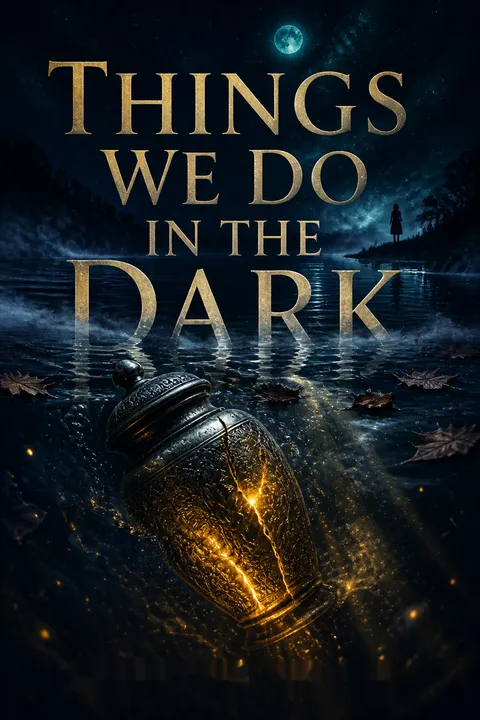


Plot Summary
Razor in the Bathroom
After returning from Vancouver in the early hours, Paris Peralta finds her husband, comedian Jimmy Peralta, submerged in a blood-filled bathtub. She tries to lift him out, slips, and strikes her head. When she wakes, Jimmy is dead and his assistant, Zoe Moffatt, is screaming downstairs. Police find Paris in the bathroom, blood on her clothes and Jimmy’s straight razor in her hand.
Dazed and unable to explain why she is holding it, Paris drops the blade and is arrested. She tells Detective Kellogg that she cannot remember whether she killed her husband. Her answer, her head injury, and the scene around her make grief look like guilt before she has even understood what happened.
The opening makes the body both evidence and a rupture in Paris’s carefully managed life. Her missing memory has a plausible physical cause, but it also reflects a practiced response to danger: under stress, she separates from her body rather than inhabit what is happening. The razor intensifies this uncertainty because it belongs to Jimmy’s ordinary grooming routine, yet in Paris’s hand it becomes proof to the watching world. The arrest immediately turns a private death into a public image, where appearance threatens to outrank fact.
A Marriage of Secrets
Jimmy’s longtime friend Elsie Dixon arrives as Paris’s lawyer and reconstructs the night with her. She reveals that Jimmy attempted suicide years earlier, a history he never shared with Paris.
Toxicology later finds cocaine and amphetamines in his system, while Paris admits he had begun forgetting ordinary things and had refused medical appointments. His hand tremor had also worsened, making his collection of straight razors dangerous. Detective Kellogg challenges Paris’s Vancouver alibi: her phone stayed at home, and a border-system failure has erased the immediate record of her return.
Paris lies that she simply forgot the phone. Elsie argues that suicide fits Jimmy’s past, but the combination of concealed illness, drugs, and uncertain timing leaves the case dangerously open.
Marriage here does not mean complete knowledge. Paris and Jimmy built a workable intimacy around independence, but both protected private histories, and his secrecy about illness deprived her of the chance to recognize a crisis. Elsie’s disclosures complicate her role: she is an advocate, yet also the person who knew Jimmy longest and carries her own grief. Paris’s lie about the phone shows that her past has already trained her to conceal facts reflexively. Even when the truth might help her, secrecy has become a survival habit with legal consequences.
Forty-Six Million Motive
At the arraignment, prosecutor Nico Salazar reveals that Jimmy signed a new will six weeks before his death. Rather than the one million dollars specified in Paris’s prenuptial agreement, she stands to inherit about forty-six million from an estate valued at eighty million.
The news gives the prosecution a powerful motive, and the judge formally charges Paris with first-degree murder, setting bail at five million dollars. Paris raises the bond by borrowing against her condo, selling her wedding ring back to the jeweler, and arranging to return her Tesla.
Since the house remains a crime scene, she moves into a luxury hotel under electronic monitoring. Zoe supplies clothes and fan mail, but Paris fires her by text, still convinced the assistant’s public accusation was unforgivable.
The will changes the case without changing the physical evidence. Money gives the public a simple story to prefer: a much younger wife kills a wealthy older husband. Paris’s actual financial position is more precarious than that narrative allows, since bail forces her to liquidate the symbols of security she acquired through marriage. Her firing of Zoe is an attempt to regain control through a decisive gesture, but it also narrows her circle at the moment she most needs reliable allies. Public judgment and personal isolation begin reinforcing each other.
Ruby's Letter Returns
While opening Jimmy’s fan mail at the hotel, Paris finds a letter from Ruby Reyes, the mother she has not seen in decades. Ruby is serving a life sentence for murdering banker Charles Baxter, and she claims she will soon be paroled. She demands three million dollars in exchange for keeping Paris’s past secret, including the truth about whose ashes lie in an urn marked with the name Joelle Reyes.
Paris knows Ruby is not bluffing: she once ignored an earlier demand and now faces exposure as a woman who vanished after a Toronto house fire. In Toronto, journalist Drew Malcolm reads the same parole news and decides to make Ruby the subject of his podcast, driven by his memories of her daughter, Joey.
The letter reconnects two plotlines through a material object that has survived Paris’s reinvention: the urn. Ruby understands that identity is not merely a name but a chain of records, remains, and people who remember. Her demand turns the past into leverage, while Drew’s response offers a different kind of return, one motivated by loyalty and guilt rather than money. Both characters begin moving toward Paris without knowing the full truth. The threat is therefore not only exposure, but the collision of people carrying incompatible memories of the same girl.
Joey's Childhood on Paper
Drew meets Deborah Jackson, the former social worker who supported Joey Reyes after Ruby’s arrest. Deborah gives him Joey’s case file and six diaries, preserving the account of a childhood shaped by hunger, beatings, cigarette burns, and Ruby’s succession of men. The diaries also reveal why Ruby went to prison: after a neighbor reported Joey’s injuries, authorities found evidence of abuse, and Joey’s writing connected Ruby to Charles Baxter’s murder.
Drew had once known Joey as a quiet young woman who loved books, but he now sees how little of her childhood she had been able to disclose. He begins reading the notebooks to prepare his podcast, though each page makes his old friendship feel more like an obligation he failed.
The diaries restore a voice that institutions and adults repeatedly filtered through their own purposes. They are intimate records, but Drew must decide how much private pain can ethically become public testimony. His guilt makes the project morally unstable: giving Joey a voice may honor her, yet it also risks turning her suffering into content. Deborah’s preservation of the notebooks functions as an act of care, while Drew’s decision to read them forces him to distinguish service to the dead from an attempt to absolve himself.
Maple Sound's Second Cage
After Ruby’s arrest, thirteen-year-old Joey is sent to live with her aunt Flora, uncle Micky, and their children in Maple Sound. The household provides regular meals, but not safety. Micky watches Joey at night and makes unwanted advances; Flora and Joey’s grandmother shame and strike her. When Ruby’s murder trial begins, Joey hopes that telling the truth will help her mother, and at Ruby’s urging she denies that Charles ever abused her.
Ruby is convicted after Joey describes the killing, leaving the girl feeling responsible for her mother’s life sentence. Later, when Micky enters her bed, Joey uses a hidden box cutter to wound him and make him flee. She tells no one, convinced that another placement would bring another predator.
The move from Ruby’s apartment to kinship care changes the setting but not Joey’s basic predicament: adults control the story, the home, and the consequences of speaking. Her testimony is shaped by conditional love, while her silence about Micky is shaped by the rational fear that disclosure could make her less safe. The box cutter marks a shift from dissociation toward self-protection, but it is not liberation. Joey has learned that survival may require private action because the systems around her offer shelter without dependable protection.
The Cherry's Missing Dancer
Drew returns to the Golden Cherry, where Joey once worked as a dancer under the stage name Ruby. Its owner, Cherry, remembers Joey’s closeness with another Filipino dancer, Betty Savage, and says Betty disappeared the same weekend Joey died in a basement fire.
The two women looked remarkably alike and had matching butterfly tattoos. Drew also recalls the night he discovered Joey dancing there, then drove her home and judged her for the work that paid her rent.
They argued about his departure for Vancouver and his impending marriage, and he left without repairing the damage. After Joey died in the fire hours later, Drew identified her burned body by the tattoo and the ruby pendant she wore. The new clues make him question whether the fire was truly accidental.
The nightclub complicates Drew’s memory of Joey by showing a self she kept separate from the shy friend he believed he knew. Her stage name, Ruby, suggests both performance and an attempt to control the identity that had once controlled her. Drew’s regret is not abstract: he remembers the specific moment he chose judgment over curiosity. Cherry’s evidence gives him a new investigative path, but it also exposes the danger of treating a person as a puzzle only after she can no longer correct the story.
Mae's Dangerous Trail
Drew traces Betty Savage to Mae Ocampo through police licensing records and learns that Mae was involved with Vinny Tranh, a violent member of the Blood Brothers. Vinny’s older brother, Tony Tranh, confirms Mae was his brother’s girlfriend and says she had stolen something valuable.
Sergeant Hannah McKinley finds Mae’s old record and a photograph of her butterfly tattoo, then helps Drew compare it with Joey’s. During an interview at Sainte-Élisabeth, Ruby describes being paid to keep a secret, though she refuses to identify the person paying her.
Drew initially treats these as separate leads. Then, at his mother’s home, a magazine article about Jimmy’s wife shows Paris Peralta beside Jimmy. The face, tattoo, and pendant confirm the impossible: Paris is Joey, alive under another name.
The investigation advances by convergence rather than a single confession. Cherry supplies social memory, Tony supplies motive-shaped suspicion, and McKinley supplies records; none alone proves what happened. The repeated butterfly tattoo is both an identifying mark and a reminder that resemblance can be dangerous when people are mistaken for one another. Drew’s discovery turns his podcast from an inquiry into Ruby’s past into a direct confrontation with his own. Paris’s public image has finally made her visible to the one person who remembers the life she buried.
The Fire That Made Paris
On New Year’s Eve 1998, Joey finds Mae on her sofa, gravely wounded after Vinny attacked her while searching for cash and drugs Mae had hidden in Joey’s apartment. Mae dies before Joey can find a working phone.
Believing Vinny may return and kill her too, Joey takes Mae’s cash and drugs, places her own ruby pendant around Mae’s neck, and sets the unsafe basement fireplace alight. The fire destroys the apartment and makes Mae’s body appear to be Joey’s. Bouncer Chaz helps Joey exchange the drugs for false identification, and she leaves Toronto as Paris Aquino.
Years later, after Ruby’s blackmail, Paris secretly leaves a Vancouver yoga convention to search for Joey’s urn in Maple Sound. She flees when she sees the dead Micky’s face at a window, abandoning the attempt.
Joey’s reinvention is built from an act that is neither clean escape nor simple deception. She uses the same violence that has surrounded her to sever her identity, while leaving Mae’s body to bear the cost of her disappearance. The fire functions as practical cover, but its moral residue persists: Paris can live under a new name, not erase the choice that created it. Her later attempt to recover the urn shows that reinvention has not ended her relationship to the dead; she is still trying to control what remains.
The Alibi Finally Arrives
With attorney Sonny Everly, Paris examines the prosecution’s evidence and learns that Jimmy’s new will also gave Zoe five million dollars plus twenty percent of his streaming deal. Zoe had both motive to influence the will and access to Jimmy’s smart-home account, whose usage records have been erased.
Sonny considers her a possible alternative suspect, though Paris and Elsie still believe Jimmy died by suicide. The missing border record finally surfaces as time-stamped photographs showing Paris crossed into the United States after the medical examiner’s estimated window of death.
The examiner classifies the underlying cause as undetermined, not homicide. The District Attorney withdraws the charge. Paris returns home, where Zoe apologizes and helps, but Paris remains unsettled by a straight razor missing from the bathroom evidence photographs.
The legal reprieve arrives through a combination of technological failure and analog proof. The erased smart-home records point toward someone with access, while the border photographs restore a fact Paris could not make credible by speaking alone. Yet acquittal does not settle the emotional question of Jimmy’s death, and suspicion shifts rather than disappears. The will’s competing beneficiaries make affection and financial self-interest difficult to separate. Paris’s attention to the absent razor shows that release from prosecution is not the same as understanding; her home still contains an unanswered physical clue.
Drew Comes Through Glass
Drew arrives unannounced at Paris’s Seattle home just after the murder charge is dropped. Paris recognizes him through the patio doors and lets him in, but holds a cleaver until he convinces her he wants to talk, not expose her.
Over dinner, she explains how Mae died and how she used the fire to escape Toronto. Drew admits he spent nineteen years believing he had failed Joey by leaving her after their last argument. His questions soon turn accusatory, as he notices that several people around Paris have died violently.
Paris rebukes him for making his remorse another demand on her, and insists he cannot judge the choices that kept her alive. Drew accepts the rebuke, apologizes without qualification, and stays. Their friendship begins again, fragile and changed.
Their reunion tests whether intimacy can survive the return of a concealed self. Drew’s guilt makes him want a complete account, but his questions initially reproduce the judgment Paris has spent her life escaping. Her anger is not a refusal of connection; it is a boundary against being made responsible for his absolution. When Drew listens rather than defending his intentions, the relationship becomes possible again. The scene’s central negotiation is not whether Paris deserves forgiveness, but whether she can be known without surrendering ownership of her own history.
Elsie's Missing Razor
While looking for a disposable razor for Drew, Paris notices that one of Jimmy’s straight razors has returned to a drawer where crime-scene photographs show it missing. Zoe explains that she delivered a new cassette to Jimmy at about nine thirty on the night he died, after he asked to rehearse in the bathroom. The police tape contains Elsie’s voice, yet Elsie had told Detective Kellogg she last saw Jimmy days earlier.
Paris realizes the recording must come from that night. She confronts Elsie, who admits she went to the house, argued with Jimmy over his new will and his devotion to Paris, then lunged with the razor. The blade cut his thigh during their struggle. Elsie staged the scene as suicide and allowed Paris to be suspected.
The mystery turns on ordinary chronology: a fresh cassette cannot contain a conversation from days earlier. The analog recording resists the deleted smart-home data because it preserves a trace Elsie failed to account for. Elsie’s motive is not simply greed; she wants the history and intimacy she believes Paris displaced. But her sense of entitlement converts grief into violence, then into a cover-up. The returned razor completes the evidence chain and exposes how loyalty can become possessive when someone mistakes shared history for a claim over another person.
Joey's Last Testimony
Before meeting Ruby in Maple Sound, Paris revisits the night Charles Baxter died. At thirteen, Joey had accompanied Ruby to his house after he ended their affair. Charles later entered the guest room and sexually assaulted Joey. Ruby found them, confronted him, and stabbed him sixteen times.
Joey initially tried to clean up and protect her mother, as she later testified in court. But when Charles revived and begged for help, Joey understood that Ruby had not stopped him from hurting her before and would not reliably protect her again.
She put on Lexi Baxter’s sharpened ice skate and crushed his throat. In the present, Paris tells Ruby this hidden truth before demanding the urn. Ruby had used the murder as blackmail, but Paris refuses to let her rewrite who made the final choice.
This revelation revises the moral meaning of Joey’s testimony without turning her into an uncomplicated avenger. Ruby’s violence against Charles begins as rage and jealousy, while Joey’s act follows a long history of betrayal and a direct threat to her safety. The legal record preserved a useful version of events, not the whole one. By telling Ruby, Paris claims authorship of the decision she once hid, separating responsibility from shame. Her honesty does not undo the killing; it ends her mother’s monopoly on its meaning.
The Urn in the Pond
Ruby brings out the urn labeled with Joey’s name and demands ten million dollars. Paris has a cashier’s check for one million, but tears it when Ruby insists the larger sum is owed. She takes the urn and walks away. Ruby charges after her and shoves her into the deep pond. Paris cannot swim; Drew pulls her from the water while recording Ruby’s attack on his phone.
The urn opens, and Mae’s ashes disperse into the pond. Police arrive and arrest Ruby for violating parole, sending her back toward the life sentence she had escaped. The video captures the assault, but Paris’s identity remains unconfirmed to the officers. She has lost the remains she came to retrieve, yet she has refused to buy freedom from her mother.
The final struggle makes the price of silence literal. Paris can purchase the urn, but not a clean past, and tearing the check breaks the economic arrangement Ruby has imposed on their relationship. The pond, once a childhood danger, becomes the site where Paris nearly drowns and where Mae’s remains are finally released from the false identity imposed on them. Drew’s recording supplies evidence without requiring Paris to persuade authorities by herself. Ruby’s force is exposed, while Paris’s refusal marks a boundary she could not safely draw as a child.
What Paris Keeps
Jimmy’s celebration of life is filled with friends and laughter, as he would have wanted. Elsie, who confesses and pleads to manslaughter, is sentenced to seven years, with the possibility of release after four. Paris keeps Jimmy’s cassette players and tapes, and joins Drew in Toronto to see the places Joey once lived.
She and Chaz recognize each other across the Cherry’s parking lot, exchanging a silent acknowledgment of the help that let her escape. At Maple Sound, Ruby is taken away after the pond attack. Paris leaves without paying her, carrying no urn and no promise that the past is finished. She knows she did not kill Mae or Jimmy, but she did kill Charles. For the first time, she can name that truth without letting Ruby name her.
The ending refuses a simple cleansing. Paris loses Mae’s ashes and remains a person who has committed a killing, while also rejecting the idea that one act defines every part of her. The memorial honors Jimmy through shared laughter rather than celebrity spectacle, and the preserved tapes carry his private habits into her next life. Chaz’s silent recognition offers a form of gratitude without demanding reunion. Drew’s presence suggests a possible future, but it does not erase the years apart. Paris’s final self-understanding is more precise than innocence: she can accept responsibility without accepting her mother’s version of her.
Analysis
Things We Do in the Dark is built around the instability of identity and the stories people use to survive. Paris’s reinvention is literal: she takes another name, leaves her former life behind, and lets a dead woman’s body stand in for her own. Yet the novel refuses to treat this as a clean escape. Her new life includes love, work, and genuine choices, but its foundations remain entangled with Mae’s death, Ruby’s abuse, and the killing of Charles Baxter. The past is not simply a secret waiting to be uncovered; it is a set of consequences that keeps changing shape as different people interpret it.
The book also questions who gets to tell the truth. Joey’s diaries preserve what she could not say aloud, while the courtroom turns her experience into testimony shaped by prosecutors, defense lawyers, and her mother’s demands. Drew’s podcast threatens to repeat that transformation by making Joey’s private suffering public. His eventual reunion with Paris requires him to stop treating her as a story whose ending he can repair. Paris’s boundary-setting is therefore as important as her disclosures: she chooses when to speak, and refuses to let Drew’s guilt dictate what she owes him.
The two murder investigations mirror each other without making the deaths equivalent. Jimmy’s death appears to be suicide, then becomes a homicide concealed by a trusted friend; Paris’s arrest demonstrates how circumstantial evidence and public appetite can turn grief into guilt. Meanwhile, the revelation about Charles makes Paris neither innocent nor reducible to a single crime. Her action was shaped by years of abuse and by a child’s understanding that adults would not protect her, but she still claims responsibility for it.
The novel’s sharpest insight is that survival and innocence are not synonyms. Paris can acknowledge the life she took without accepting Ruby’s version of her, and she can grieve Jimmy without pretending she understood all his suffering. The closing movement offers no spotless beginning. It offers something more credible: a woman able to name what happened, refuse further coercion, and decide which relationships might still be worth keeping.
Review Summary
Things We Do in the Dark received mixed reviews from readers. Many praised Hillier's writing and character development, finding the story gripping and suspenseful. However, some felt the plot was predictable and lacked the expected twists. The book's dark themes and graphic content were noted as potentially triggering for some readers. While some found the pacing slow at times, others appreciated the intricate backstories. Overall, opinions were divided, with some considering it a compelling thriller and others feeling it fell short of Hillier's previous works.
People Also Read










Characters
Paris Peralta
The woman who remade herselfA Filipino Canadian yoga instructor in Seattle, Paris has built a life far removed from the childhood and young adulthood she left behind. She values privacy, self-sufficiency, and the ordinary routines that make a home feel safe. Stress can send her into dissociation, a learned defense against experiences she once could not control. Her marriage to Jimmy is affectionate without being idealized, and she resists the assumption that youth, money, or public appearances explain her motives. Paris is resourceful and observant, but her instinct to conceal danger often isolates her. Her central struggle is not simply to prove what she did or did not do, but to decide which truths she can live with and who has earned the right to hear them.
Drew Malcolm
The friend who remembersA Toronto journalist turned true-crime podcaster, Drew is intelligent, persistent, and emotionally invested in stories that touch his own life. He once shared a home and a close friendship with Joey, whose quietness and love of books drew out his protective instincts. Yet his certainty about what was best for her could turn judgmental, especially when her choices challenged his image of her. His work depends on assembling evidence into a compelling narrative, a skill that becomes ethically fraught when the subject is someone he loved. Drew’s loyalty is real, but so is his guilt, and he must learn that listening to a person is different from investigating them.
Ruby Reyes
The mother who controls storiesA beautiful, charismatic Filipino immigrant, Ruby can command a room and alter its emotional temperature in an instant. She is fiercely self-interested, quick to anger, and skilled at presenting herself as the injured party when her actions are challenged. Her life has been shaped by poverty, racism, and a harsh upbringing, but she uses those facts to justify rather than examine her cruelty. Ruby treats affection as conditional and other people’s memories as material she can rearrange to suit her needs. Her relationship with her daughter is therefore both intimate and dangerous: love, fear, resentment, and dependence coexist, and Ruby’s need to control the story often matters more to her than the people inside it.
Jimmy Peralta
The comedian seeking a returnA celebrated comedian and actor who once starred in a hit sitcom, Jimmy is funny, generous, stubborn, and deeply accustomed to living by his own rules. His career brought awards and wealth, but also addiction, depression, and periods of destructive behavior. After retiring and returning to Seattle, he finds a quieter partnership with Paris and a renewed reason to perform. He prefers old technology, familiar habits, and a small circle of trusted people. Jimmy’s warmth is genuine, but so is his capacity to hide pain and shut out concern. The contrast between his public comeback and his private vulnerability drives much of the uncertainty surrounding his final days.
Elsie Dixon
Jimmy's oldest friend and lawyerA sharp, theatrical attorney, Elsie has known Jimmy since high school and carries decades of affection, disappointment, and loyalty into his final crisis. She is protective of him and initially suspicious of Paris, whose marriage challenges Elsie’s own complicated history with Jimmy. Her legal competence is matched by a restless, forceful personality, but emotional closeness can cloud her judgment. Elsie’s relationship with Paris shifts as they confront the difference between defending Jimmy and possessing a claim over his past.
Zoe Moffatt
Jimmy's indispensable assistantZoe has worked for Jimmy for years, handling his schedule, business, household, and the practical details he dislikes. She is ambitious for his career and loyal to him, partly because he supported her when she was a young musician trying to establish herself in Los Angeles. Her devotion can look intrusive to Paris, who resents how often Zoe is present. Beneath their mutual suspicion, both women care about Jimmy and struggle to understand the pressures surrounding his return to performance.
Mae Ocampo
Joey's closest club friendA Filipino dancer at the Golden Cherry, Mae is spirited, volatile, and resourceful. She and Joey bond over difficult childhoods and their shared work, though Mae’s relationship with dangerous people brings instability into her life. The two women look alike enough to be mistaken for one another, an outward resemblance that becomes significant to how others perceive them. Mae’s friendship gives Joey a rare connection based on mutual recognition rather than obligation.
Deborah Jackson
Joey's steady social workerDeborah is the social worker assigned to Joey after Ruby’s arrest. Patient, observant, and warm, she offers Joey practical care without demanding immediate trust in return. She keeps the girl’s diaries and remains a meaningful presence after Joey leaves her supervision. Deborah understands that a child’s silence can be protective, though she cannot always see the danger Joey is navigating. Her care becomes one of the few examples Joey has of attention that does not immediately demand repayment.
Hannah McKinley
The detective who follows cluesA homicide detective with a dry sense of humor, McKinley is curious, practical, and willing to pursue an unusual lead when evidence supports it. She helps Drew search old records and identify Mae, balancing professional caution with genuine interest. Her investigative instincts are paired with an understanding that certainty can be emotionally seductive, especially when someone desperately wants a particular answer.
Chaz
The bouncer who helps JoeyA large, physically imposing bouncer at the Golden Cherry, Chaz is gentler and more perceptive than his appearance suggests. He cares for Joey without demanding that she return his feelings, and he respects her independence even when he fears for her safety. His practical knowledge and willingness to take risks make him a rare source of help in a world where most people either control Joey or look away.
Henry Chu
Paris's yoga partnerHenry is Paris’s business partner at Ocean Breath Yoga and one of her closest friends. A former technology worker, he helped the studio grow and continues to manage it when Paris is unable to teach. He is warm, loyal, and inclined to use humor when situations become frightening. Henry supports Paris, while also representing the ordinary community and livelihood threatened by the spectacle surrounding Jimmy’s death.
Tony Tranh
A polished former gang figureTony is a wealthy businessman with a polished home and an unhurried manner. His past is connected to the Blood Brothers and to his younger brother Vinny. He speaks carefully, offers little freely, and gives the impression of someone who has survived by understanding what not to say. Drew’s questions about Mae disturb the smooth surface of Tony’s life.
Vinny Tranh
Mae's violent boyfriendVinny is a small, boyish-looking man whose apparent harmlessness conceals a reputation for violence. He is involved with the Blood Brothers and has a volatile relationship with Mae. His politeness can turn unsettling when he feels challenged, making him difficult to read and dangerous to underestimate.
Flora Escario
Joey's reluctant auntFlora takes Joey into her home after Ruby’s arrest, but her care is entangled with resentment and the government support attached to kinship placement. She is hardworking and responsible for her own children, yet she offers Joey little emotional safety. Her sharp judgments echo the family cruelty Joey has already known.
Miguel Escario
Joey's intrusive uncleKnown as Tito Micky within the family, Miguel is Flora’s husband and the father of three boys. He can appear convivial in daylight, but his attention toward Joey makes her feel watched and unsafe. His presence deepens the divide between the appearance of a stable family home and the reality of Joey’s vulnerability.
Celia
Joey's sharp-tongued grandmotherJoey’s grandmother is an elderly woman with a sharp tongue and a commanding presence. Her judgments carry the authority of family tradition, but little tenderness. Ruby’s own harshness has roots in the household Celia helped create.
Charles Baxter
The powerful bankerCharles is a wealthy bank president whose public standing contrasts with his private conduct. His affair with Ruby draws Joey into the orbit of a privileged family and exposes the unequal power between adults and children. His household, especially its comforts and abundance, becomes a painful measure of what Joey lacks.
Lexi Baxter
Charles's absent daughterLexi is Charles Baxter’s daughter, a competitive figure skater whose bedroom holds trophies, bookshelves, and possessions Joey can scarcely imagine. Though she is away at university, her home and belongings shape Joey’s understanding of privilege and family life.
Sonny Everly
Paris's blunt defense lawyerSonny is an experienced criminal defense attorney with an aggressive manner and little patience for evasions. He pushes Paris to examine evidence the way a jury will, even when his methods offend her. Beneath the abrasiveness is a practical understanding of how legal narratives are built and dismantled.
Belinda Malcolm
Drew's perceptive motherBelinda is Drew’s mother, a retired teacher living in assisted care after a serious accident. She remains funny, direct, and attentive to her son’s emotional habits. Her memories of Joey and her questions about Drew’s motives help him see how grief can distort a journalist’s sense of objectivity.
Plot Devices
The Ruby Pendant and Urn
Identity carried by remainsJoey’s ruby pendant is a childhood gift connected to Charles Baxter and remains with her through the final night in Toronto. When she places it on Mae’s body before the fire, the necklace helps make Mae’s remains identifiable as Joey’s. The urn later preserves that false identity in Ruby’s home and gives Ruby leverage over Paris. The object changes function across the story: a marker of childhood, a tool of escape, and finally evidence of how the dead can be made to carry another person’s history.
The Matching Butterflies
Mistaken identity made visibleJoey and Mae get matching butterfly tattoos, and their similar appearance already leads people at the club to confuse them. Drew identifies Joey’s burned body by the tattoo, but the same resemblance later gives him reason to question the official account of the fire. McKinley’s record of Mae’s tattoo and the photographs from the Cherry help connect the missing dancer to the woman now known as Paris. The tattoos turn resemblance from a passing detail into an investigative clue.
The Cassette Recording
A timestamp without technologyJimmy records his comedy practice on cassette tapes, a habit that reflects his preference for familiar, older devices. A fresh cassette placed in the bathroom stereo on the night of his death captures Elsie’s voice. Because she claims she last saw Jimmy days earlier, the recording contradicts her account and helps reveal her presence at the house. The tape becomes decisive precisely because it lacks the editable, networked history of the smart-home system whose usage records were erased.
The Straight Razors
A murder weapon disguisedJimmy’s collection of straight razors is introduced as part of his old-fashioned habits and becomes central to both the suspected suicide and the actual events of his death. Paris is found holding one after she wakes in the bathroom, while the crime-scene photographs show another missing from its drawer. The later return of that razor draws attention to who had access to the house. The blades are similar enough to confuse investigators, but the engraved razor ultimately connects the physical evidence to Elsie.
The Rewritten Will
Money reshapes suspicionJimmy’s updated will gives Paris a far larger inheritance than she expects and also provides substantial money to Zoe and Elsie. Its revelation makes Paris look like a plausible financial predator, while its other beneficiaries complicate the prosecution’s neat motive. The will also intensifies old emotional rivalries and exposes how different people interpret their closeness to Jimmy. It functions as both a source of suspicion and a map of the private relationships that shaped his final months.
FAQ
Synopsis & Basic Details
What is Things We Do in the Dark about?
- A woman's past resurfaces: The story centers on Paris Peralta, a woman arrested for the murder of her celebrity husband, Jimmy. Her carefully constructed new life is threatened as secrets from her past begin to surface.
- A web of lies and deceit: The narrative explores themes of identity, trauma, and the consequences of past actions. Paris must navigate a complex web of lies, blackmail, and public scrutiny as she fights to prove her innocence.
- A journey of self-discovery: The novel follows Paris's journey as she confronts her past, grapples with her true identity, and seeks redemption. It's a story about survival, guilt, and the possibility of a fresh start.
Why should I read Things We Do in the Dark?
- Intricate plot and suspense: The novel offers a compelling mystery with unexpected twists and turns, keeping readers engaged and guessing until the very end. The narrative is skillfully crafted, blending suspense with emotional depth.
- Complex and flawed characters: The characters are multi-dimensional, with their own motivations and secrets. The exploration of their psychological complexities adds layers to the story, making it more than just a thriller.
- Exploration of dark themes: The book delves into dark themes such as trauma, abuse, and the consequences of violence. It explores the complexities of human nature and the lengths people will go to protect themselves.
What is the background of Things We Do in the Dark?
- Contemporary setting in Seattle: The story is set in present-day Seattle, a city known for its tech industry and vibrant culture. The setting provides a backdrop for the story's themes of reinvention and the pursuit of a new life.
- Focus on celebrity culture: The novel explores the impact of fame and public perception, particularly through the character of Jimmy Peralta, a retired comedian. The media frenzy surrounding his death adds to the tension and complexity of the plot.
- Exploration of trauma and abuse: The story delves into the long-term effects of childhood trauma and abuse, particularly through the character of Paris. Her past experiences shape her present actions and motivations.
What are the most memorable quotes in Things We Do in the Dark?
- "There's a time and a place for erect nipples, but the back of a Seattle police car definitely isn't it.": This opening line immediately establishes the dark humor and unexpected situations that define the novel. It also highlights Paris's initial shock and vulnerability.
- "Karma has come for her.": This quote reflects Paris's belief that her past actions are catching up to her. It underscores the theme of consequences and the inescapability of one's past.
- "You can run all the way from Toronto, away from the dead bodies and into a whole new life with a whole new name, and it still doesn't matter. Because while you can reinvent yourself, you can't outrun yourself.": This quote encapsulates the central theme of the novel, highlighting the struggle to escape one's past and the internal battles that persist despite external changes.
What writing style, narrative choices, and literary techniques does Jennifer Hillier use?
- Dual timelines and perspectives: Hillier employs a non-linear narrative, weaving together past and present events to reveal the complexities of Paris's life. This technique builds suspense and allows for a deeper understanding of her character.
- First-person perspective: The story is primarily told from Paris's point of view, which allows readers to experience her thoughts, emotions, and internal struggles. This creates a sense of intimacy and empathy for her character.
- Foreshadowing and red herrings: Hillier uses subtle foreshadowing and misdirection to keep readers guessing. Seemingly minor details gain significance later, adding layers to the mystery and enhancing the suspense.
Hidden Details & Subtle Connections
What are some minor details that add significant meaning?
- The pink ostrich feather slippers: Initially presented as a frivolous gift, the slippers become a symbol of Paris's perceived wealth and entitlement, playing into the media's narrative of her as a gold-digger. They also highlight her attempt to fit into a life that isn't truly hers.
- Jimmy's collection of straight razors: These razors, initially presented as a quirky hobby, become a central element in the mystery surrounding his death. The specific razor he used, a gift from Elsie, adds a layer of complexity to their relationship.
- The recurring mention of the song "Free Bird": This song, played on Jimmy's old boombox, becomes a symbol of his past and his struggle with addiction. It also foreshadows the themes of freedom and escape that are central to the story.
What are some subtle foreshadowing and callbacks?
- Paris's past trauma: The novel subtly hints at Paris's past trauma through her disassociation and her knowledge of self-defense. These details foreshadow the revelation of her true identity and the violence she has experienced.
- The mention of a previous suicide attempt by Jimmy: This detail, revealed later in the story, foreshadows the possibility that his death was not a murder. It also adds depth to his character and his struggles with mental health.
- The description of the house on Acorn Street: The details about the house's poor condition and the dangerous fireplace foreshadow the tragic events that occurred there. It also highlights the stark contrast between Paris's past and present lives.
What are some unexpected character connections?
- Elsie and Jimmy's past relationship: The revelation that Elsie and Jimmy were high school sweethearts adds a layer of complexity to their friendship and Elsie's initial suspicion of Paris. It also explains her deep loyalty to Jimmy.
- Drew and Joey's shared history: The fact that Drew and Joey were not just friends but also roommates and had a deeper connection adds emotional weight to their reunion. It also highlights the impact of their past on their present lives.
- Zoe's connection to Jimmy's past: Zoe's long history with Jimmy, and her knowledge of his struggles, makes her a more complex character than initially presented. It also raises questions about her true motivations and her role in his death.
Who are the most significant supporting characters?
- Elsie Dixon: As Jimmy's best friend and lawyer, Elsie plays a crucial role in the story. Her initial suspicion of Paris and her eventual support highlight the complexities of loyalty and friendship. Her own history with Jimmy adds depth to her character.
- Henry Chu: As Paris's business partner and friend, Henry provides emotional support and a sense of normalcy amidst the chaos. His loyalty and unwavering belief in Paris make him a significant figure in her life.
- Zoe Moffatt: As Jimmy's assistant, Zoe's actions and accusations drive the plot forward. Her complex relationship with Jimmy and her own motivations make her a significant supporting character.
Psychological, Emotional, & Relational Analysis
What are some unspoken motivations of the characters?
- Paris's desire for anonymity: Paris's primary motivation is to protect her new identity and escape her past. Her actions are driven by a deep-seated fear of exposure and a desire for a peaceful life.
- Elsie's possessiveness of Jimmy: Elsie's actions are driven by a deep-seated possessiveness of Jimmy and a resentment of anyone who threatens her place in his life. Her jealousy and desire to protect him ultimately lead to his death.
- Zoe's ambition and loyalty: Zoe's motivations are complex, driven by a desire to see Jimmy succeed and a need to secure her own future. Her actions are a mix of loyalty and self-preservation.
What psychological complexities do the characters exhibit?
- Paris's disassociation: Paris's use of disassociation as a coping mechanism highlights the long-term effects of trauma. Her struggle to stay present and connected to her emotions adds depth to her character.
- Jimmy's addiction and depression: Jimmy's struggles with addiction and depression reveal the complexities of his character. His attempts to reinvent himself are constantly undermined by his past demons.
- Ruby's manipulative nature: Ruby's manipulative and controlling behavior stems from her own traumatic past. Her inability to take responsibility for her actions highlights her psychological complexities.
What are the major emotional turning points?
- Paris's discovery of Jimmy's body: This event triggers a series of emotional responses, including shock, grief, and fear. It sets the stage for the rest of the story and forces Paris to confront her past.
- The arrival of the blackmail letter: This event forces Paris to confront her past and the life she left behind. It triggers a sense of panic and desperation, as she realizes her carefully constructed new identity is at risk.
- Paris's confession to Drew: This moment of vulnerability allows Paris to finally share her deepest secrets and fears. It marks a turning point in her journey toward healing and self-acceptance.
How do relationship dynamics evolve?
- Paris and Jimmy's unconventional marriage: Their relationship is characterized by mutual respect and understanding, but also by a lack of deep emotional intimacy. The age gap and their separate bedrooms highlight the unconventional nature of their bond.
- Paris and Elsie's strained friendship: Their relationship is marked by suspicion and jealousy, but also by a shared love for Jimmy. Their interactions reveal the complexities of female friendships and the challenges of navigating shared history.
- Paris and Drew's complicated past: Their relationship is marked by a deep connection and a shared history, but also by unresolved conflicts and unspoken feelings. Their reunion forces them to confront their past and consider the possibility of a future together.
Interpretation & Debate
Which parts of the story remain ambiguous or open-ended?
- The true nature of Jimmy's death: While the official cause of death is ruled undetermined, the novel leaves open the question of whether Jimmy's death was truly a suicide or an accident. The ambiguity surrounding his death adds to the complexity of the story.
- The extent of Zoe's involvement: While Zoe is not directly implicated in Jimmy's death, her actions and motivations remain somewhat ambiguous. The novel leaves open the possibility that she may have played a more significant role than initially revealed.
- The future of Paris and Drew's relationship: The novel ends with a sense of hope for Paris's future, but the exact nature of her relationship with Drew remains open-ended. The possibility of a romantic relationship is hinted at, but not fully resolved.
What are some debatable, controversial scenes or moments in Things We Do in the Dark?
- Paris's decision to fake her death: Paris's decision to fake her death and assume a new identity is a controversial one, raising questions about morality and the lengths people will go to protect themselves.
- The portrayal of Ruby Reyes: The novel presents Ruby as a complex and flawed character, raising questions about the nature of good and evil. Her actions and motivations are open to interpretation, sparking debate about her culpability.
- The depiction of violence and abuse: The novel contains scenes of violence and abuse, which may be disturbing to some readers. The portrayal of these events raises questions about the impact of trauma and the cycle of violence.
Things We Do in the Dark Ending Explained: How It Ends & What It Means
- Ruby's return to prison: The ending sees Ruby back in prison, having violated her parole. This signifies the end of her control over Paris and the breaking of the cycle of abuse.
- Paris's release from legal charges: The withdrawal of the murder charge against Paris allows her to move forward with her life, free from the burden of false accusations. This signifies her liberation from the legal system and the public scrutiny she faced.
- A new beginning for Paris: The ending suggests the possibility of a fresh start for Paris, as she embraces her true identity and seeks healing from her past. The open-ended nature of her relationship with Drew leaves room for hope and the possibility of a brighter future.
About the Author



Download PDF
Download EPUB
.epub digital book format is ideal for reading ebooks on phones, tablets, and e-readers.








