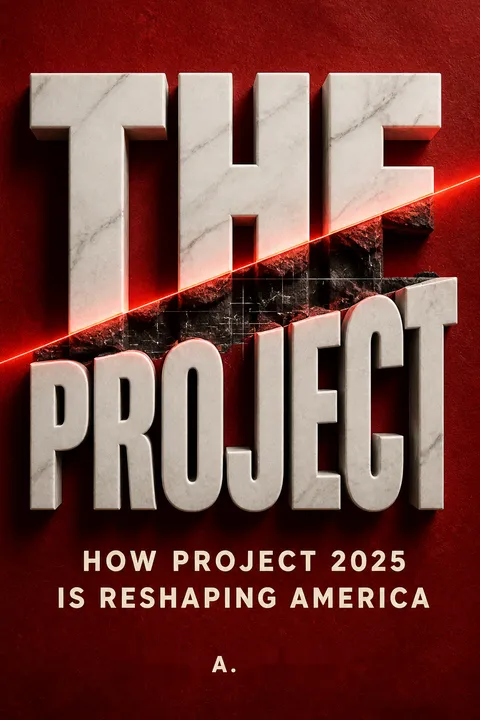


Key Takeaways
Project 2025 is an operating plan for power, not merely a policy wish list.
Preparation is the innovation. Project 2025, organized by the Heritage Foundation, combines a policy program with a database of possible hires, training for future officials, and a confidential playbook for the first months of a new administration. Its 922-page centerpiece, Mandate for Leadership, follows a precedent: Heritage’s 1980 version helped guide the Reagan transition, and the foundation says 60 percent of its recommendations became policy in Reagan’s first year.
People make plans executable. Project 2025 began before Republicans had chosen their presidential nominee. By 2024, its organizers said they had identified 10,000 potential hires and developed roughly 30 training courses. The book notes that 37 of 47 executive actions taken in Trump’s first days back in office matched Project 2025 recommendations in whole or in part.
The distinction between policy ambition and implementation capacity is the book’s strongest lens. A proposal matters more when its advocates have prepared staff, legal arguments, and administrative instructions in advance. This resembles organizational change in large institutions: a new leader’s public priorities can be diluted unless people inside the system can translate them into routine decisions. The Reagan precedent shows that outside policy groups can shape transitions, but it does not prove that every recommendation will be adopted. A plan is an instrument, not a guarantee; its reach still depends on political support, law, and the president’s choices.
Recasting civil servants as obstacles concentrates government power in the president.
A new kind of bureaucracy. Project 2025 uses the term “administrative state” for the federal agencies and professional workforce that carry out laws. Its authors argue that career officials can obstruct a president’s agenda, especially when those officials are politically out of step with the administration. Their proposed answer includes reviving Schedule F, a Trump-era plan to reclassify policy-related civil service jobs so their occupants could be fired more easily. The proposal could affect roughly 50,000 roles.
The budget becomes leverage. Russell Vought also argues for greater presidential control through the Office of Management and Budget. One contested tool is impoundment, meaning the executive branch withholds or delays spending that Congress has approved. Congress restricted this practice in 1974. Reclaiming it would weaken the practical force of Congress’s constitutional power over federal spending.
The dispute is not simply about whether bureaucracies resist change. Career protections can preserve expertise and lawful continuity, but they can also make agencies slow to respond to elected leadership. The design question is how to correct obstruction without replacing competence with personal loyalty. Schedule F and impoundment shift that balance sharply toward the president. In institutional terms, they reduce the number of independent veto points, which can make action faster while making mistakes harder to stop. The book’s central warning is that a reform advertised as restoring accountability may instead make accountability run in one direction.
Political control of the Justice Department can turn law enforcement into intimidation.
Independence is a safeguard. The Justice Department belongs to the executive branch, but long-standing guidelines limit direct political interference in its work. Project 2025 argues for tighter presidential supervision of litigation and a more subordinate FBI, including ending the bureau director’s fixed ten-year term. Its Justice Department chapter cites a survey finding that 46.6 percent of Americans viewed the department as too political, corrupt, or untrustworthy.
The proposed cure intensifies the risk. The book argues that the plan would remove limits on White House contact with the department and align litigation with presidential priorities. That could make investigations and legal action against critics easier to initiate, even when they do not lead to charges. The department’s power over federal prosecutions, civil rights cases, and investigations makes the stakes unusually high.
Public trust is not restored by declaring an institution impartial; it depends on procedures that make impartiality credible to people on both sides. This is why the department’s mixed status matters: presidential accountability is real, but so is the danger of using prosecution to punish opponents. The strongest version of the reform argument is that unelected officials should not set policy beyond elected leaders’ control. The counterweight is that law enforcement must apply rules consistently, including to the president and allies. Without that boundary, formal supervision can become selective enforcement in the language of accountability.
Make the preferred family model the measuring stick for public rights.
A narrow model guides policy. Project 2025 puts a married man and woman with children at the center of its vision for social life. Its proposals reach far beyond abortion: the plan would restrict abortion medication, seek enforcement of the Comstock Act against abortion-related mail, and reduce federal recognition of gender identity. It also calls for rolling back workplace protections involving sexual orientation and gender identity, and for policies that favor faith-based adoption agencies rejecting some prospective parents.
Liberty comes with prescribed duties. The plan’s authors present family-centered policy as a way to protect children and strengthen society. But the preferred family structure becomes a basis for deciding whose choices receive public support and whose identities are recognized. In this framework, individual rights can be subordinated to religiously defined expectations about sex, marriage, parenthood, and gender.
Family policy inevitably expresses judgments about care, responsibility, and the conditions children need. The important distinction is whether government supports families broadly or makes one family form the test for equal treatment. That choice affects people who do not fit the ideal, including single parents, same-sex couples, and transgender people. A government can pursue family stability without denying that families take different forms. The book is especially persuasive when it traces how a broad phrase such as protecting children can authorize policies across health, employment, and education, rather than remaining a private moral conviction.
Choice-based reforms can shift public costs onto families and states.
Public funding, private decisions. Project 2025 would move education away from the federal government and toward family choice, including vouchers or savings accounts that could fund private and religious schools. It also proposes eliminating the Department of Education and ending Head Start, an early-childhood program serving low-income children. The book argues that public schools could lose the resources needed to sustain standards, while states could diverge sharply in what and how they teach.
Healthcare follows a similar direction. The plan favors greater use of private Medicare Advantage plans, adds work requirements and possible limits to Medicaid, and reduces federal involvement in insurance. Supporters present these shifts as choice and efficiency. The practical question is who bears the risk when a family cannot afford an alternative, or when a state chooses not to maintain services.
Choice is meaningful only when people have viable options and enough information to compare them. In education and healthcare, those conditions are unevenly distributed. Moving decisions closer to families can make services more responsive, but withdrawing public guarantees can leave households with less bargaining power and regions with sharply different provision. The key issue is not whether local choice is good or bad in itself. It is whether the financing and safeguards travel with the responsibility. Without those, a reform can increase formal freedom while narrowing the options available to people with the fewest resources.
Mass deportation can disrupt the labor markets it claims to protect.
The executive branch has many levers. Project 2025 proposes expanding detention and deportation, narrowing asylum access, ending some temporary legal statuses, and making work eligibility checks mandatory. It would also pressure states and local agencies to cooperate with federal immigration enforcement by tying cooperation to grants. Some proposed measures, such as wider expedited removal, could leave people with little chance to challenge deportation.
The costs are human and economic. The book recalls the 1954 mass removal campaign against Mexican migrants, in which more than a million people were apprehended. U.S. citizens were swept up, conditions were inhumane, and people died. The campaign did not solve unauthorized migration; the government later created a legal labor route in response to employer demand. Today, the book warns that removing immigrant workers could raise costs in sectors such as agriculture and construction.
Border enforcement is often discussed as a question of state capacity, but labor demand and legal pathways are part of the same system. A crackdown can reduce one form of migration while leaving employers’ need for workers untouched, encouraging a new cycle of scarcity and political pressure. The 1954 example makes this more than a theoretical concern: enforcement produced serious harm, yet employers’ needs helped prompt a legal alternative. This does not settle the right level of immigration or enforcement. It does show why a durable policy must account for both the people seeking work and the industries that rely on them.
MAGA economics promises protection while retaining tax cuts and weaker safety nets.
The coalition disagrees about trade. Project 2025 includes competing arguments for tariffs and free trade. Peter Navarro favors protection against China, while free-market contributors warn that tariffs raise costs for American consumers. One contributor estimates that recent tariffs add about $1,200 per household each year. The plan offers no clear, unified answer to inflation, despite the issue’s importance to Trump’s campaign.
Other promises pull in different directions. The document supports lower corporate and personal taxes, weaker financial regulation, and cuts to anti-poverty programs. Yet it does not clearly identify the large spending reductions needed to balance the budget, and it avoids major cuts to Social Security and Medicare. Its labor proposals speak to working families while limiting union power and loosening some worker protections.
The disagreements reveal that Trumpism is a coalition, not a settled economic doctrine. Protectionism can appeal to workers anxious about industrial decline, while tax cuts and deregulation appeal to business interests. Those goals can coexist politically even when their costs and benefits diverge. The book is right to emphasize the missing arithmetic: promises about lower prices, lower taxes, stronger defense, and protected entitlements cannot all be assessed separately. A useful test for any economic platform is to ask who pays, who benefits, and which commitment gives way when the numbers conflict.
Climate policy is reduced to cheap energy by removing evidence and safeguards.
The plan’s priorities run in one direction. Project 2025 would roll back federal climate programs, repeal or weaken parts of the Biden-era infrastructure and climate laws, and expand oil and gas leasing on federal land. It treats low-cost fossil fuel production as the central energy goal, while describing climate concerns as exaggerated or politically motivated. The document gives little attention to worsening drought, fires, or extreme weather.
The proposed cuts reach the information system. The plan calls for closing climate offices and reducing climate research. One contributor proposes privatizing the National Oceanic and Atmospheric Administration, whose forecasts help people prepare for dangerous weather. It also seeks to weaken environmental rules covering issues such as water pollution and endangered species. The book notes a recurring tension: the plan worries about reliable electricity but overlooks how fossil fuel systems themselves can fail, as Texas’s 2021 winter grid crisis demonstrated.
Energy policy must manage two time horizons: immediate affordability and long-term reliability under changing conditions. A focus on near-term prices is politically legible, but it can obscure the costs of pollution, climate damage, and infrastructure vulnerability. Forecasting agencies also function as shared public infrastructure: their usefulness depends on broad access to trusted information, not only commercial quality. The plan’s strongest challenge to climate policy is that regulations can impose costs and should be evaluated carefully. Its weakness is treating reduced regulation as inherently cheaper, without consistently counting the risks and expenses it leaves elsewhere.
Treat China as a strategic rival without turning public service into ideological screening.
China becomes the organizing threat. Project 2025 calls for a stronger military, expanded nuclear modernization, higher defense spending, and a more confrontational strategy toward Beijing. It also urges closer cooperation with allies and treats Taiwan’s defense as central to U.S. interests. On foreign aid and diplomacy, the plan favors using resources more directly to counter Chinese influence.
The external contest is linked to an internal purge. The authors argue that progressive ideas weaken the State Department, Pentagon, and intelligence agencies, and recommend replacing staff they see as obstacles with officials aligned to the president. The book compares this suspicion of government employees to earlier periods when officials were accused of ideological disloyalty. It also points to a tension: the plan seeks military readiness while proposing exclusions that could shrink the pool of eligible service members.
A serious strategic competitor can justify sustained attention, investment, and coordination across agencies. But national security also depends on accurate information, and a workforce selected for ideological reliability may be less willing to deliver unwelcome assessments. The book’s historical comparison is useful because it separates legitimate concern about bureaucratic resistance from suspicion that dissent signals disloyalty. Civilian control of the military is essential, yet political direction need not mean that technical expertise is treated as a partisan threat. The practical test is whether personnel changes improve capability or mainly narrow the range of advice leaders hear.
A blueprint can transfer authority faster than it can settle coalition disputes.
Implementation does not erase disagreement. Project 2025’s authors share a desire to reshape the executive branch, but they do not agree on every policy. Its pages contain rival positions on tariffs and free trade, while its calls for reduced spending sit beside proposals for a larger defense budget and expanded executive capacity. Trump’s political promises also conflict with some traditional conservative priorities, including cutting major retirement programs.
The machinery still matters. Trump publicly distanced himself from Project 2025 during the campaign, yet many contributors entered his administration, including Russell Vought at the Office of Management and Budget. The book argues that prepared deputies and agency-level staffing can advance a plan even when a president’s choices are improvised. The result is influence without perfect unity: the blueprint can shape what government is ready to do, but not guarantee agreement about what it should do.
This distinction keeps the analysis from collapsing into either alarm or dismissal. A policy document is neither a script that the president must follow nor harmless rhetoric. It can make certain actions easier by supplying personnel and administrative proposals, while leaving major political conflicts unresolved. The book’s evidence of matching executive actions supports its claim of influence, but matching does not by itself establish that every action came from the document or that its entire program will endure. Readers can assess its force by tracking implementation, legal constraints, and the conflicts between its own constituencies.
Analysis
The book’s central argument is about governing capacity. Project 2025 matters not only because of what it proposes, but because it tries to prepare the staff, legal theories, and administrative routes that make those proposals actionable. That shifts attention from campaign language to institutional mechanics: hiring authority, budget control, agency independence, enforcement discretion, and the flow of information to the president. These are less visible than a wall or a tax cut, yet they determine how policy reaches daily life.
The plan’s most important tension is its claim to restore democratic accountability by concentrating power in the presidency. Its authors describe unelected officials as a barrier between voters and policy. But weakening civil-service protections, independent enforcement norms, or Congress’s spending authority can also weaken the checks that make electoral control constitutional rather than personal. Responsiveness and restraint are not opposites to be solved once; they are competing requirements of democratic administration.
The policy chapters reveal a coalition held together more firmly by shared opposition than by a consistent economic or governing theory. The document joins social traditionalism, fossil-fuel expansion, protectionism, deregulation, and demands for larger executive power, even where the parts strain against one another. That inconsistency does not make the plan irrelevant. It means implementation is likely to be selective, contested, and shaped by which officials control the administrative machinery.
The book is strongest as a map of proposals and their institutional consequences. It is less able to establish in advance which proposals will survive courts, Congress, public resistance, or conflicts within the administration. Its most useful lesson is therefore methodological: treat a political blueprint as evidence of intent and preparation, then judge its real power by appointments, directives, enforcement decisions, and durable changes to government capacity.
People Also Read




Glossary
Project 2025
Conservative transition planA Heritage Foundation-led effort to prepare for a future Republican administration. It combined a policy document, a database of prospective hires, training for staff, and a playbook for early executive actions. Its significance lies in joining a political agenda to the personnel and administrative planning needed to carry it out.
Mandate for Leadership
Heritage policy blueprintThe Heritage Foundation’s name for its extensive governing recommendations for a prospective Republican administration. The 2025 edition runs 922 pages and covers federal agencies as well as policy areas. Its 1980 predecessor helped guide the Reagan transition, making the title a deliberate claim to an earlier role in conservative governing.
Administrative state
Federal agencies and workforceA term used in the book for the network of federal agencies and career officials that administer laws and regulations. Project 2025’s authors argue that this system can resist elected presidents and frustrate policy change. The term is politically contested because it can describe both the practical machinery of government and a target for reducing its independence.
Schedule F
Policy-job reclassification planA proposed change to federal employment categories that would move some policy-related civil-service positions into a classification with fewer job protections. A president could then remove employees in those roles more easily. Project 2025 supports reviving the Trump-era plan, which could affect roughly 50,000 federal positions.
Impoundment
Withholding approved federal spendingThe executive branch’s refusal or delay in spending money that Congress has appropriated. Congress restricted presidential impoundment through the 1974 Congressional Budget and Impoundment Control Act. Project 2025 supporters seek to restore or expand the president’s ability to block spending, a move that could diminish Congress’s control over the federal budget.
Title 42
Public-health border authorityA public-health authority used during the COVID-19 emergency to turn away many people crossing the U.S. border without allowing them to pursue asylum claims. The book reports that the government recorded 2.8 million turnaways under the policy. Project 2025 proposes a similar mechanism based on a claimed loss of border control rather than a health emergency.
Comstock Act
Federal mailing restriction lawAn 1873 federal law restricting the mailing of material deemed obscene, including language concerning abortion-related materials. Because abortion had been legally protected nationwide for decades, its abortion provisions were largely dormant. Project 2025 contributors argue that the law could be enforced against the mailing of abortion medication and related materials.
Download PDF
Download EPUB
.epub digital book format is ideal for reading ebooks on phones, tablets, and e-readers.








