

Key Takeaways
Claim the page before anyone grants you the title of writer
Writing starts with use. Cameron argues that writing is not a prize reserved for the published or professionally trained. Children discover its power when they use words to name what they want; adults often lose that confidence after school rewards orderly, impersonal prose and marks down detours. Cameron began writing stories to attract a boy in her class. The boy did not become her boyfriend, but the pleasure of pursuing an idea in words stayed with her.
Process comes first. The book is less a guide to grammar or publishing than a case for writing as a human activity: a way to notice, communicate, and make experience one's own. A private story, an unfinished poem, or a letter counts. Recognition may follow, but it is not what makes the act real.
The democratic claim matters because people often confuse writing skill with permission to write. School and publishing can teach useful standards, but they can also make external approval seem like the source of legitimacy. Cameron's distinction restores a useful order: expression comes before evaluation. That does not mean every draft is ready for readers, or that craft is irrelevant. It means the private act of making language should not be held hostage to public judgment. The boyhood story makes the point memorable: an imperfect motive can still open a serious creative life.
Write in the life you have, not the imaginary year you are waiting for
Time is made, not found. Cameron challenges the familiar promise to write once there is a year off, a quieter house, or a better mood. A book is built from sentences, and sentences can be written in small intervals. She points to lawyer Scott Turow writing his novel during his commute and to students fitting screenplays and books around jobs, study, and parenting.
Start with a small ritual. Cameron's Morning Pages are three pages of longhand, free-form writing done soon after waking. They are not meant to be polished or even interesting. They clear mental clutter and make beginning less dramatic. Other low-pressure aids include a short timed session, a welcoming place to write, or a small treat afterward. The point is to start before the conditions feel perfect.
The practical strength of this advice is that it attacks a hidden assumption: meaningful work requires ideal conditions. Small sessions reduce the psychological cost of starting, while a repeated cue can turn a choice into a routine. The approach is especially useful for people whose lives cannot be reorganized around a creative project. Still, small intervals do not eliminate every constraint. Some work requires sustained concentration, and caregiving or exhausting jobs can leave little discretionary time. The realistic lesson is not that everyone has equal time, but that waiting for a perfect block often gives away the time that is available.
Separate first-draft discovery from the later work of judgment
Drafting has another job. Cameron calls free, rough first-draft writing "laying track": putting down material without stopping to assess every sentence. She once revised as she wrote, and found that her work swung between brilliance and failure depending on her mood. Separating drafting from revision made it easier to keep moving and left more material to shape later.
Let details arrive early. A gun appeared in a character's kitchen before Cameron understood its purpose; much later in the script, the character needed it. She argues that early images and apparent detours can contain information the conscious planner has not yet recognized. She also describes "The Wall," a point when a promising project triggers doubt and the urge to take control. Her remedy is to accept an imperfect draft and continue rather than demand proof of greatness.
Separating invention from evaluation resembles a useful division in many crafts: generate possibilities first, then select and refine. It lowers the cost of experimentation and allows patterns to emerge from material rather than forcing every choice through an early outline. The method is not a universal argument against planning. Reported journalism, technical writing, and complex collaborative projects may need structure from the start. Cameron's more durable point is to notice when planning serves the work and when it is disguising fear. Revision remains essential, but it is easier to revise something that exists.
Replace vague statements with sensory details readers can trust
Specificity earns belief. Cameron treats writing as an act of attention. Instead of announcing that a character feels bad, a writer can identify whether the feeling is disappointment, resignation, or something closer to despair. Instead of naming a horse, describe its color, markings, and movement. Concrete details let readers infer a scene and its emotional temperature rather than being told what to think.
Notice before explaining. Sounds, smells, objects, verbs, and setting all give a reader evidence. Cameron also recommends writing toward a particular person who understands the writer's humor and habits, rather than imagining a faceless audience. The more personally and precisely a scene is rendered, the more readily another person can recognize something familiar in it. For Cameron, this kind of close observation is a route to a distinct voice, not a decorative flourish.
Specific detail works like evidence in an argument: it gives an abstract claim something observable to rest on. It also invites readers to do interpretive work, which can make emotion feel earned rather than prescribed. This connects craft to attention: a writer cannot describe what has not been noticed. Yet detail is not valuable merely because it is vivid. Too many particulars can obscure the scene's purpose. Selection matters. The writer's task is to preserve the details that alter meaning, sharpen feeling, or locate the reader, and to leave the rest outside the frame.
Put painful experience on the page before it becomes shapeless noise
Writing can metabolize hurt. During a painful divorce, Cameron received newspaper clippings about her husband's affair. She pinned them near her desk and used the anger they stirred as material for a screenplay, which was later sold to Paramount. She called the display her Wall of Infamy. The point was not to remain trapped in grievance, but to give difficult emotion a form that could be examined and transformed.
Make a map of experience. Cameron's Morning Pages provide a daily place to notice thoughts and feelings. She also recommends a Narrative Time Line, a chronological account of major life events, followed by "cups": focused pieces about particular memories, people, or episodes. These exercises turn an overwhelming life into specific material that can be understood, remembered, and developed.
Writing can create distance without requiring emotional denial. Naming an event and shaping it into a narrative may help a person distinguish what happened, what it meant, and what choices remain. That is different from assuming that writing automatically heals every wound. Repeatedly revisiting pain can intensify rumination, and some experiences call for professional or communal support. Cameron's examples are strongest as invitations to make experience legible, not as promises of therapy. A useful test is whether writing produces greater clarity or merely rehearses the injury.
Refill your creative well with experiences unrelated to the current project
Ideas need fresh input. Cameron calls the store of impressions a writer draws on "the well." If work goes flat after a productive stretch, she suggests the reservoir may be depleted, not that the writer has lost talent. Her Artist Date is a weekly solo outing chosen for curiosity and sensory pleasure: a museum, plant shop, concert, or other place that offers something new to notice.
Change the body's scenery. Cameron describes writers who find ideas while walking, hiking, skating, or driving. A fiction writer she knew revived stalled work by listening to classical music while housebound; another restored her energy by visiting neighborhood plant and pet shops. These activities need not relate directly to the manuscript. Their value is in bringing fresh images and attention back to the writer.
This is a useful counterweight to the idea that productivity comes only from longer hours at the desk. Creative work draws on attention, memory, and recombination, so varied experience can supply material that deliberate effort alone does not produce. The principle also resembles incubation: a problem can remain active while attention moves elsewhere. The recommendation to go alone will suit some people, but not everyone. A shared outing, accessible sensory activity, or ordinary walk can serve the same purpose if it restores curiosity rather than becoming another assignment.
Protect early drafts from readers who mistake criticism for help
Not every reader is safe. Cameron recounts a young Scottish writer who sent her two strong stories, then showed them to friends who said they did not understand them. He stopped producing new story ideas. She urged him to keep writing and stop circulating the work indiscriminately. She calls the practice of protecting vulnerable work "containment."
Choose readers deliberately. A Friendly Reader is someone who enjoys reading and can identify what is working without turning every response into a verdict. Cameron suggests asking such a reader what they liked and what they would welcome more of. She tells of another writer who abandoned short fiction for nearly fifteen years after a competitive peer warned that one story would damage her career. Early encouragement does not replace editing, but the wrong audience can interrupt a work before it has taken shape.
Early drafts are unusually sensitive to social evaluation because their possibilities are still unsettled. A reader who responds only with verdicts can narrow the writer's attention toward self-defense instead of discovery. Cameron's advice is a strong case for matching feedback to the stage of work: encouragement and close reading first, harder critique when the writer has something stable to assess. The caution is not to treat all negative feedback as sabotage. A supportive reader can still be mistaken, and serious revision eventually requires honest criticism. Timing and specificity make the difference.
Let honest vulnerability, not clever performance, give your writing its voice
Truth sharpens the sentence. Cameron argues that writing often goes limp when the writer avoids a difficult fact or feeling. She noticed this after reacting angrily to a friend's comments about artistic credibility. Her first response blamed the friend; writing helped her admit that she still cared about seeming fashionable and respected. That less flattering truth gave her a clearer account of herself and eased the strain in her work.
Personal can be widely understood. Cameron praises candid writing because readers recognize the specific pressures and contradictions of human experience. Vulnerability does not require publishing every private fact. It begins as a willingness to see clearly on the page. A question such as "What am I afraid to say?" can help locate the sentence the draft is avoiding. Precision about an uncomfortable truth often does more than polished generalities.
The connection between honesty and voice is persuasive because voice is not merely a style of sentences. It also reflects what a writer is willing to notice and risk saying. That does not make confession the only route to good writing. Fiction can be emotionally truthful without being autobiographical, and privacy is a legitimate boundary, not a failure of courage. The key distinction is between selective craft and evasive self-protection. A writer can shape, disguise, or withhold material while still being honest about the emotional logic that animates it.
Write toward the stakes that matter to you, then share the work
Care makes stakes legible. Cameron uses "stakes" for what a character or writer stands to gain or lose, and how much that outcome matters. A threatened family ranch means something different to someone whose roots are buried there than to someone who longs to leave. The writer must show why the outcome matters, not merely announce that it does.
Follow commitment with action. Cameron's book The Artist's Way was initially rejected by her agent, who doubted there was a market. Cameron self-published it, sold thousands of copies, and later found a new agent and publisher. She recommends writing what matters before making publication the only measure of success, while also submitting work and exploring ways to share it. The act of writing establishes the practice; practical steps give the work a route into the world.
Personal investment can give a project urgency that market imitation rarely supplies. Clear stakes also help readers understand why a scene, choice, or subject deserves their attention. Cameron's publishing story demonstrates initiative, but it is an anecdote, not a guarantee that persistence will produce commercial success. A balanced application separates two questions: what is worth writing, and how might it reach readers? The first is guided by values and curiosity; the second requires craft, persistence, and realistic decisions about audience and format.
Analysis
The book's central move is to shift writing from a credentialed product to a repeatable human practice. That shift reorganizes nearly every obstacle it addresses. Lack of time becomes a question of small, available intervals. Writer's block becomes a relationship with judgment, fear, and depleted attention. A weak voice becomes a problem of distance from concrete experience. Rejection becomes one source of feedback, not the authority that decides whether writing is legitimate.
Cameron's method is notable for pairing permission with structure. She invites playful, imperfect work, but also gives readers repeatable exercises: daily pages, chronological life mapping, focused memory pieces, and solitary outings that refresh attention. The spiritual language of inspiration and guidance sits beside practical craft advice about drafts, details, readers, and stakes. Those registers are not fully reconciled, but their tension is productive: creativity is treated as both something received and something cultivated through ordinary effort.
The book's strongest evidence comes from stories of individuals changing how they write or understand their lives. Those stories make the advice vivid, but they do not establish that writing reliably relieves depression, resolves trauma, or leads to publication. A careful reader can keep the method while declining the universal promises. Writing may clarify experience, but it cannot substitute for every form of care, and a manuscript still benefits from rigorous revision.
The most transferable lesson is therefore not that writing is always easy or curative. It is that access to the page should not depend on being exceptional, inspired, or approved. A person can begin with the material at hand, protect it while it is fragile, and learn what it is through continued attention. That is both a humane artistic ethic and a workable production method.
Review Summary
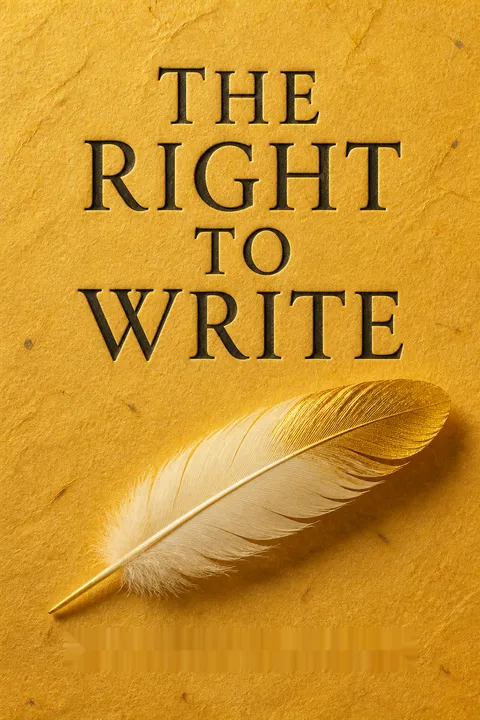
The Right to Write is praised as an inspiring and motivational guide for writers. Many readers appreciate Cameron's encouraging approach and emphasis on writing as a process rather than product. The book offers practical advice, writing exercises, and philosophical insights about the writing life. Some criticize its spiritual tone and repetitiveness, while others find it deeply affirming. Overall, readers value Cameron's message that anyone can and should write, and that writing is beneficial for personal growth and self-expression.
People Also Read



Glossary
Morning Pages
Daily freewriting practiceThree pages of longhand, stream-of-consciousness writing completed in the morning. The writer records whatever thoughts arise, without trying to make polished prose. Cameron presents the practice as a way to clear mental distractions, reduce self-censorship, and build a regular relationship with writing.
Artist Date
Solo creative replenishmentA regular outing taken alone to explore something that interests or delights the writer, such as a museum, plant shop, concert, or aquarium. The purpose is to replenish the writer's store of images and impressions, not to gather material for a specific project.
Narrative Time Line
Chronological life accountA longhand account of major people and events in one's life, organized in chronological intervals. Cameron uses it to help writers see their histories from their own perspective rather than relying only on a family's or community's version. The exercise can reveal experiences that may become material for later work.
cup
Focused personal memoryA short, detailed piece drawn from a particular episode, person, memory, or theme in a writer's life. Cameron's term refers to selecting a concentrated portion of experience from a broader life account, then developing it through sensory detail. A cup may become a seed for a story, play, essay, or script.
laying track
Unjudged first-draft writingCameron's name for writing a rough first draft without stopping to polish or condemn each passage. The writer follows thoughts and images as they appear, allowing the work to develop material and shape. Editing is reserved for a later stage, when the writer can evaluate the draft with more distance.
The Wall
Mid-project doubtA point in a project when the writer's initial pleasure gives way to self-consciousness, comparison, and fear of failure. Cameron describes it as a barrier created by the demand to produce something impressive. She recommends continuing with humility and a willingness to write imperfectly rather than trying to force confidence.
Wall of Infamy
Pain converted into materialCameron's technique of keeping painful or angering reminders visible while writing, so the emotional charge can be directed into creative work. During a divorce, she displayed newspaper clippings about the betrayal and used the resulting feelings as fuel for a screenplay. The method turns injury into material rather than requiring it to be ignored.
Friendly Reader
Supportive early readerA person who enjoys reading and can respond to a developing piece with care, attention, and specific encouragement. Cameron recommends asking such readers what is effective and what they would like to see explored further. The role is distinct from that of a critic or editor focused primarily on faults and marketability.
FAQ
What's The Right to Write about?
- Invitation to Writing Life: The Right to Write by Julia Cameron explores writing as a natural and essential part of life, emphasizing it as a birthright and spiritual practice.
- Focus on Joy of Writing: The book encourages writing for joy rather than external validation, aiming to dismantle negative myths about the writing life.
- Practical Tools and Exercises: Cameron provides tools and exercises, like Morning Pages, to help writers tap into creativity and overcome blocks.
Why should I read The Right to Write?
- Empowerment for Aspiring Writers: Ideal for those held back by self-doubt, Cameron's approach empowers readers to embrace their identity as writers.
- Transformative Writing Practices: Learn practical techniques, such as Morning Pages, to transform writing habits and mindset, encouraging self-exploration.
- Inspiration and Motivation: Filled with inspiration and encouragement, it rekindles the passion for writing for both new and experienced writers.
What are the key takeaways of The Right to Write?
- Writing is a Birthright: Cameron asserts that everyone has the right to write, making it a fundamental human aspect.
- Importance of Morning Pages: A central practice involving writing three pages of thoughts each morning to clear the mind and foster creativity.
- Connection to Self and Others: Writing connects us to our inner selves and others, serving as a means of processing emotions and experiences.
What are the best quotes from The Right to Write and what do they mean?
- “The Right to Write is a birthright...”: Suggests writing is an inherent part of humanity and a spiritual journey accessible to all.
- “Writing is like breathing.”: Compares writing to a natural act, encouraging regular practice without pressure.
- “Wherever you are is the entry point.”: Highlights starting from one's current situation, reassuring that writing can begin anytime.
What is the Morning Pages method in The Right to Write?
- Daily Writing Practice: Involves writing three pages of stream-of-consciousness thoughts every morning to clear the mind.
- No Wrong Way to Write: Emphasizes there is no right or wrong way to do Morning Pages, focusing on continuous expression.
- Benefits of Morning Pages: Helps reduce self-doubt, increase creativity, and provide clarity on personal thoughts and feelings.
How does The Right to Write address writer's block?
- Understanding Writer's Block: Often stems from self-doubt and pressure for perfection; Cameron encourages recognizing these feelings.
- Tools to Overcome Blocks: Offers tools like Morning Pages and "sketching" to help writers move past blocks with a relaxed approach.
- Embracing Imperfection: Advocates for embracing "bad writing" as part of the creative process, freeing writers from perfectionism.
How does The Right to Write redefine the concept of a "real writer"?
- Challenging Myths: Challenges the notion that only published authors are "real writers," asserting anyone who writes is a writer.
- Emphasizing Process Over Product: Focuses on the writing process itself rather than the end product, encouraging fulfillment in writing.
- Encouraging Self-Identification: Empowers individuals to embrace their identity as writers, writing for satisfaction and joy.
What is the Narrative Time Line in The Right to Write?
- Autobiographical Writing Exercise: Involves creating a chronological account of significant life events to inform writing.
- Fostering Self-Reflection: Helps gain insights into personal narratives and stories, encouraging deeper self-awareness.
- Foundation for Future Writing: Serves as a foundation for developing "cups," detailed explorations of specific memories or themes.
What are "cups" in The Right to Write?
- Concept of "Cups": Refers to specific memories or episodes extracted from Narrative Time Lines for deeper exploration.
- Detailed Writing Exercises: Focuses on particular moments or themes, encouraging writers to delve into experiences.
- Building Blocks for Larger Works: Can serve as seeds for larger projects, creating compelling and authentic narratives.
How does The Right to Write encourage creativity?
- Emphasis on Playfulness: Encourages approaching work with play and curiosity, fostering creativity in exploration.
- Artist Dates: Introduces solo excursions to nurture creativity and inspiration, engaging with the world for new experiences.
- Creating a Supportive Environment: Stresses the importance of supportive individuals who encourage creative expression.
What is the significance of vulnerability in writing according to The Right to Write?
- Embracing Vulnerability: Allows for deeper emotional connections in writing, creating more authentic work.
- Overcoming Fear of Judgment: Helps confront fears of judgment, encouraging writing from a place of honesty.
- Strength in Vulnerability: Writing about personal experiences can be empowering, leading to greater creativity and understanding.
How can I apply the concepts from The Right to Write in my daily life?
- Establish a Writing Routine: Incorporate Morning Pages or similar exercises into daily life to foster creativity and reflection.
- Embrace Imperfection: Write freely without pressure for perfection, allowing "bad writing" as part of the process.
- Engage with Your Emotions: Use writing to explore and express emotions, gaining insights into feelings and experiences.
About the Author
Other books by Julia Cameron


Download PDF
Download EPUB
.epub digital book format is ideal for reading ebooks on phones, tablets, and e-readers.








