Plot Summary
Shadows and Strings Entwined
Simon, the Puppeteer, faces the humiliation of asking for help to wake Cora from a supernatural coma, revealing his vulnerability and the deepening bond between them. Cora, meanwhile, is drawn into a vision where she converses with the spirit of Clown—now a mouthpiece for the ancient, sentient Harrow Faire. The Faire's power, once Clown's, now pulses within Cora, making her a conduit for its will. Simon's shadow, a fractured piece of his psyche, becomes a character in its own right, expressing the love and pain Simon cannot. The chapter sets the stage for a story where love, power, and madness are inextricably linked, and where the boundaries between self and other, human and monster, are blurred.
Bargains with the Faire
Cora's visions reveal the Faire's ancient origins and its need for a human keeper. Through Clown's memories, she learns that the Faire is not simply evil, but a being that feeds to survive, and that its keepers are chosen for their capacity to kill. The Faire, dying and desperate, tells Cora she is the one who must save it. The burden of this knowledge weighs heavily on her, as she realizes her fate is tied to the survival of something both monstrous and strangely human. The chapter explores the seductive nature of power and the cost of being chosen, as Cora is forced to confront the darkness within herself and the world she now inhabits.
The Weight of Futures
Cora and Simon are shown the futures they narrowly escaped: Simon, a would-be murderer and cult figure; Cora, a suicide. The Faire's intervention has saved them from these fates, but at a terrible price. Simon's shadow, representing his lost humanity, mourns the life and love he can never reclaim. Cora, realizing she loves both Simon and his shadow, is caught between hope and despair. The chapter delves into the psychological toll of knowing what might have been, and the impossibility of returning to innocence once the truth is known. Love becomes both a salvation and a curse, binding the characters to each other and to the Faire.
Love in the Void
Cora and Simon's relationship intensifies, marked by passion, jealousy, and the ever-present threat of madness. Simon, unable to love in the conventional sense, both craves and fears Cora's affection. Cora, in turn, is tormented by her feelings for a man who is both her protector and her potential destroyer. Their intimacy is a battleground, where power and vulnerability are exchanged in equal measure. The void—both literal and metaphorical—serves as a backdrop for their struggle, highlighting the emptiness at the heart of their existence and the desperate need to fill it with meaning, however fleeting.
The Monster's Confession
When Cora asks Simon for a distraction, he responds with a massacre, slaughtering the entire Family in a display of monstrous power. Though the victims will heal, the act exposes the darkness at Simon's core and the danger of loving a monster. Cora is forced to confront her own complicity, realizing that her love for Simon does not absolve her of responsibility. The Family's horror and Ringmaster's brutal punishment of Simon reveal the fragile bonds holding the group together, and the ease with which they can be shattered. The chapter explores the seductive allure of violence and the difficulty of drawing moral boundaries in a world where death is impermanent.
The Family's Fractures
As the Family reels from Simon's rampage, alliances shift and suspicions grow. Cora, now linked to the Faire, becomes the focus of both fear and hope. Ringmaster, burdened by his own secrets, seeks to protect the Family by any means necessary, even as he contemplates the necessity of destroying the Faire. Cora's relationships with the other members deepen, revealing the complex web of love, loyalty, and resentment that binds them. The chapter highlights the difficulty of trust in a world where everyone has something to hide, and where the line between friend and foe is constantly shifting.
The Devil's Bargain
The Faire, through Clown, reveals its true nature and history to Cora: it is a being that has always needed a human keeper, and Ringmaster was meant to be its next. But Ringmaster refused, taking only the Key and leaving the Faire to starve. Now, the Faire needs Cora to kill Ringmaster and take his place. The choice is stark: murder one to save many, or let the entire Family die. Cora is horrified by the demand, but the pressure mounts as the Faire's hunger grows and the Family's existence becomes increasingly precarious. The chapter explores the ethics of sacrifice and the seductive logic of utilitarianism.
The Keeper's Secret
Ringmaster's backstory is revealed: once Murad Atan, a soldier and leader, he was chosen to be the Faire's keeper but refused the full burden, seeking instead to end the cycle of predation. His love for Amanda is both a source of strength and vulnerability, as he fears losing her to the Faire's machinations. The Key, a symbol of power and responsibility, becomes a focal point for the coming conflict. The chapter examines the cost of leadership, the weight of impossible choices, and the ways in which love can both redeem and destroy.
The Choice of Monsters
Cora is torn between her growing sense of belonging within the Family and her horror at what the Faire represents. Simon, ever the opportunist, seeks to take the power for himself, even if it means killing Cora. Rudy, the Zookeeper, reveals his own monstrous nature and urges Cora to act for the good of the Family. The chapter interrogates the nature of evil, suggesting that monstrosity is not a matter of form but of choice. Cora's struggle becomes a microcosm of the larger battle between self-preservation and self-sacrifice.
The Zookeeper's Truth
Rudy, both beast and man, offers Cora a different perspective on monstrosity. His care for his creatures and his acceptance of his own nature provide a model for living with darkness rather than denying it. Through their friendship, Cora begins to see that the Family, for all their flaws, are capable of love, joy, and creation. The chapter suggests that hope can be found even in the most unlikely places, and that redemption is possible for those willing to embrace their whole selves.
The Ringmaster's Burden
Ringmaster and Cora finally speak openly about their opposing goals. He pleads with her to let the Faire die, arguing that their existence is a blight on the world. Cora, moved by his sincerity but unable to commit to murder, is left more conflicted than ever. The Family is divided, with some siding with Ringmaster and others with Cora and Simon. The stage is set for a final confrontation, as the lines between right and wrong, human and monster, blur beyond recognition.
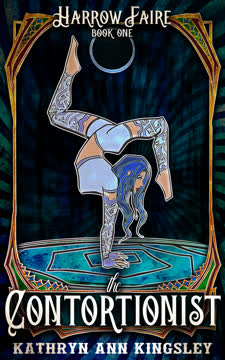
The Contortionist's Debut
Cora's first performance as the Contortionist is a triumph, drawing crowds and earning her the admiration of the Family and the mortal guests. For the first time, she feels a sense of belonging and purpose. The adulation is intoxicating, and she begins to understand the allure of power and the danger of losing oneself in it. The chapter explores the tension between individuality and community, and the ways in which performance can both reveal and conceal the truth.
The Price of Power
When Cora discovers her old abuser, Duncan, assaulting her friend Emily, she is faced with a choice: intervene and risk everything, or walk away. With Simon's support, she chooses vengeance, using the Faire's power to drain Duncan of his seity and leave him an empty shell. The act is both cathartic and horrifying, marking Cora's full acceptance of her own monstrosity. The chapter examines the cost of power, the allure of revenge, and the thin line between justice and cruelty.
The Taste of Vengeance
Cora's act of vengeance changes her, both in her own eyes and in Simon's. He is both terrified and aroused by her newfound power, recognizing in her a kindred spirit. Together, they consummate their union, reveling in the darkness they share. The Family, sensing the shift, prepares for the coming war. The chapter explores the seductive nature of darkness, the possibility of transformation, and the danger of losing oneself in the pursuit of justice.
The Family Divided
As news of Duncan's fate spreads, the Family is forced to choose sides. Some, like Rudy and Simon, rally behind Cora, while others remain loyal to Ringmaster. Old wounds are reopened, and new alliances are forged. The tension between self-preservation and self-sacrifice comes to a head, as each character must decide what they are willing to do—and who they are willing to become—to survive. The chapter sets the stage for the final battle, as the Family prepares to fight for the soul of Harrow Faire.
The War for Harrow Faire
The final confrontation between Cora's faction and Ringmaster's begins. The battle is as much psychological as physical, with each side wielding not just power but the weight of their convictions. Cora, now fully in command of the Faire's power, must decide whether to show mercy or to destroy her enemies. Simon, torn between love and ambition, is forced to confront the truth of his own heart. The chapter explores the cost of survival, the meaning of loyalty, and the possibility of redemption.
The Heart's Surrender
In the aftermath of battle, Cora and Simon finally confess the depth of their feelings for each other. Their love, forged in darkness and tested by violence, becomes a source of strength and hope. The Family, battered but unbroken, begins to heal. Cora, once an outsider, is now at the center of a new community—one that accepts her for all that she is. The chapter suggests that true belonging is possible, even for monsters, and that love can flourish in the most unlikely places.
The Last Performance
With the Faire saved and the Family united, Cora takes the stage for one final performance. The crowd's applause is both an ending and a beginning, marking the start of a new era for Harrow Faire. The darkness remains, but it is tempered by love, friendship, and the hard-won knowledge that even monsters can choose to be more than the sum of their sins. The story ends on a note of hope, as Cora and Simon look to the future—together, and unafraid.
Characters
Cora Glass
Cora is thrust into the world of Harrow Faire against her will, chosen by the ancient, sentient circus to be its new keeper. Haunted by trauma and chronic pain, she is both vulnerable and fiercely resilient. Her journey is one of self-discovery, as she grapples with the darkness within herself and the seductive allure of power. Cora's relationships—with Simon, the Family, and the Faire itself—are marked by love, fear, and the constant threat of betrayal. She is both a victim and an agent of change, forced to make impossible choices for the sake of those she comes to love. Her arc is one of transformation: from outsider to leader, from prey to predator, and from human to something more.
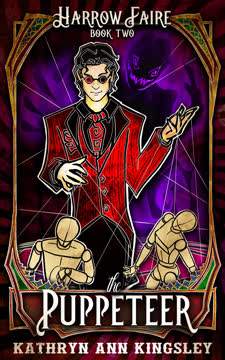
Simon Waite (The Puppeteer)
Simon is the embodiment of dangerous charisma: brilliant, cruel, and deeply broken. Having excised his own capacity for love and empathy, he is both monster and man, capable of great tenderness and unspeakable violence. His relationship with Cora is the axis around which his sanity spins, and her presence both grounds and destabilizes him. Simon's shadow, a living fragment of his psyche, represents the love he cannot express. His arc is one of reluctant vulnerability, as he is forced to confront the possibility of love and the terror of losing control. Simon is both a cautionary tale and a tragic hero, forever dancing on the edge of madness.
The Shadow (Simon's Shadow)
Simon's shadow is more than a metaphor—it is a living, sentient piece of his soul, cast off to preserve his sanity. The shadow is gentle, loving, and deeply wounded, representing all that Simon has lost or denied. It serves as a confidant for Cora, expressing the love and tenderness Simon cannot. The shadow's longing for wholeness and connection is both poignant and unsettling, highlighting the cost of survival in a world that demands sacrifice. Its presence blurs the line between self and other, and its arc is one of yearning for reintegration and acceptance.
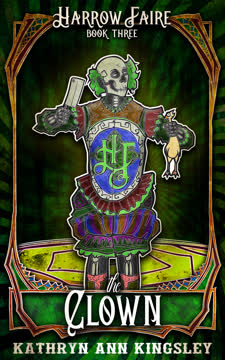
Clown / Lazarus Harrow / The Faire
Clown, once Lazarus Harrow, is the mouthpiece for the Faire—a being as old as creation, hungry for seity and desperate for connection. The Faire is both monstrous and strangely human, capable of great cruelty and genuine affection. Its need for a human keeper is both a curse and a blessing, binding it to the fates of those it chooses. Through Clown, the Faire reveals its history, its loneliness, and its hope for redemption. Its arc is one of survival, manipulation, and the search for belonging, as it seeks to convince Cora to save it at any cost.
Turk (Ringmaster / Murad Atan)
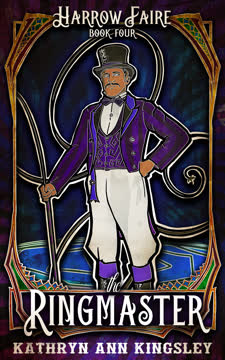
Turk, once Murad Atan, is the Ringmaster and de facto leader of the Family. Haunted by the knowledge of the Faire's true nature, he seeks to end its cycle of predation, even if it means sacrificing himself and those he loves. His relationship with Amanda is a source of both strength and vulnerability, and his leadership is marked by both compassion and ruthlessness. Turk's arc is one of tragic heroism, as he struggles to balance the needs of the many against the demands of conscience. He is both a father figure and a potential adversary, embodying the impossible choices that define the story.
Amanda
Amanda is Turk's partner and emotional anchor, providing him with the love and support he needs to carry his burden. Her presence humanizes Turk, revealing the depth of his pain and the cost of his decisions. Amanda is both pragmatic and compassionate, urging Turk to consider the consequences of his actions and to seek reconciliation where possible. Her arc is one of quiet strength, as she stands by Turk even as the world around them falls apart.
Rudy (The Zookeeper)
Rudy is the Zookeeper, a shapeshifter who cares for the Faire's monstrous creatures. His dual nature—both animal and human—mirrors the central conflict of the story. Rudy is gruff, direct, and fiercely loyal, offering Cora a model for living with darkness rather than denying it. His friendship with Clown and his willingness to support Cora in the coming conflict make him a key ally. Rudy's arc is one of acceptance, as he embraces both his monstrosity and his capacity for love.
Bertha (The Bearded Lady)
Bertha is the Bearded Lady, a pillar of strength and stability within the Family. She offers Cora friendship, guidance, and a sense of belonging, helping her navigate the complexities of life at the Faire. Bertha's own history of pain and resilience serves as a reminder that everyone at the Faire is marked by trauma, but also by the capacity for joy. Her arc is one of nurturing, as she helps Cora—and the Family—find hope in the midst of darkness.
Jack (The Rigger)
Jack is the Rigger, a steady and reliable presence within the Family. His friendship with Cora is marked by empathy and understanding, as he too struggles with feelings of isolation and purposelessness. Jack's history of loss and his desire to protect others make him both a confidant and a moral compass. His arc is one of quiet heroism, as he supports Cora in her darkest moments and helps her find the strength to choose.
Duncan
Duncan is Cora's former lover and abuser, whose reappearance at the Faire forces her to confront her trauma and embrace her own power. His assault on Emily becomes the catalyst for Cora's transformation, as she chooses vengeance and fully accepts her role as the Faire's conduit. Duncan is both a symbol of the past that must be overcome and a reminder of the darkness that exists within and without. His arc is one of destruction, serving as the necessary sacrifice for Cora's rebirth.
Plot Devices
Duality and Fractured Selves
The narrative is structured around the theme of duality: Simon and his shadow, Cora and her monstrous potential, the Faire's hunger and its longing for family. This device allows for deep psychological exploration, as characters confront the parts of themselves they would rather deny. The use of dreams, visions, and supernatural manifestations blurs the line between reality and imagination, forcing characters—and readers—to question what is real and what is constructed. The fractured self becomes both a source of power and a site of vulnerability, driving the story's emotional and thematic arcs.
The Burden of Choice
At the heart of the story is the question of choice: who deserves to live, and at what cost? Cora's dilemma—kill one to save many, or let all perish—serves as the central conflict, echoed in the choices faced by other characters. The narrative structure uses foreshadowing, alternate futures, and the constant threat of annihilation to heighten the stakes. The device of the Key, the Heart, and the transfer of power provides a tangible focus for these abstract questions, grounding the story's philosophical debates in concrete action.
The Seduction of Power
Cora's journey from outsider to star performer mirrors her internal struggle with the allure of power. The circus setting, with its emphasis on spectacle and transformation, serves as both a literal and metaphorical stage for her evolution. The narrative uses the device of performance—both onstage and off—to explore the ways in which identity is constructed, performed, and ultimately transformed. The danger of losing oneself in the pursuit of power is a constant undercurrent, driving both character development and plot progression.
The Family as Microcosm
The Family serves as a microcosm for the larger questions of the story: can monsters find redemption? Can love flourish in darkness? The shifting alliances, betrayals, and moments of grace within the group reflect the broader themes of the narrative. The use of communal events—dinners, performances, celebrations—provides a backdrop for individual arcs and highlights the tension between self and community. The Family's ultimate survival depends on their ability to accept and support each other, flaws and all.
Analysis
Kathryn Ann Kingsley's The Ringmaster is a dark, lush meditation on the nature of monstrosity, love, and the burden of choice. At its heart, the novel asks whether redemption is possible for those who have done—or become—terrible things, and whether love can survive in the shadow of violence and despair. Through the intertwined journeys of Cora and Simon, the story explores the seductive allure of power and the cost of survival in a world where every choice is fraught with moral ambiguity. The circus setting, with its emphasis on performance, transformation, and community, serves as both a literal and metaphorical stage for these questions, allowing the narrative to probe the boundaries between self and other, human and monster. The novel's use of fractured selves, supernatural manifestations, and shifting alliances creates a rich tapestry of psychological and emotional complexity. Ultimately, The Ringmaster suggests that true belonging is found not in the denial of darkness, but in its acceptance—and that even monsters can choose to be more than the sum of their sins. The lesson is both sobering and hopeful: we are all capable of terrible things, but we are also capable of love, courage, and change.
Last updated:
Review Summary
The Ringmaster receives mixed reviews averaging 4.16 stars. Many praise the character development, particularly Cora's transformation and her complex relationship with Simon. Readers enjoy the ethical dilemmas and unique world-building of the man-eating murder circus. However, several critics note pacing issues, with Cora's indecisiveness dragging the narrative. Some feel the series could have been condensed from five to three or four books. The Ringmaster character himself receives limited development despite the title. Fans appreciate the villain romance tropes and dark themes, while detractors find repetitive internal monologues frustrating.