

Key Takeaways
Read Rome as one changing state, not a sequence of unrelated empires.
One polity, many forms. The Roman state began around the eighth century BC as a small, Latin-speaking monarchy near the Tiber. By its final centuries it was a Greek-speaking Christian empire centered on Constantinople. Its language, religion, territory, and government changed profoundly, but Roman institutions and political identity connected these eras. The people modern historians call Byzantines called themselves Romans and their state Romanía. They would not have recognized the modern habit of ending Roman history when Constantinople was founded in 330.
A useful boundary. The book traces the state from Rome’s beginnings to 1204, when the Fourth Crusade conquered Constantinople and replaced Roman institutions with foreign rule. It distinguishes that rupture from earlier changes of constitution, such as the move from monarchy to republic or republic to empire.
The framing changes the basic historical question from why Rome fell in the west to how a political community lasted through repeated transformations. That is a productive shift: labels such as ancient, late antique, and Byzantine can make later Romans seem like strangers to their own past. The institutional definition also has limits. Language, religion, and the capital changed so much that continuity cannot mean sameness. The useful test is whether a governing system and its people still understood themselves as one polity, not whether they looked familiar to their ancestors.
Make newcomers stakeholders, but give trust time to grow.
Membership as strength. Roman origin stories portrayed the city as a community built by immigrants and outsiders, not a single ancient people rooted in one place. The historical examples match that ideal: Tarquinius Priscus arrived from Etruria and became king, while Servius Tullius rose from a background associated with slavery to reshape the state. Freed slaves could become citizens, and in AD 212 citizenship extended to every free person in the empire.
Inclusion was not instant. Rome’s ability to absorb people helped it grow, but citizenship did not erase unequal power or guarantee acceptance. Sulla massacred Samnites whose Roman citizenship he refused to recognize. The book argues that newcomers and established Romans needed time to develop trust. When leaders treated incorporation as a quick bargain, or used new groups as expendable troops, suspicion could turn to bloodshed.
Rome’s unusually broad citizenship policy is best understood as a way to expand participation and capacity, not as a claim that the empire was egalitarian. Enslavement, conquest, and coercive settlement remained part of its history. That tension sharpens the lesson: granting status can create loyalty, but status without protection is hollow. The Roman examples also suggest that integration is a process of repeated exchanges, not a ceremony or a law. The state benefited when newcomers gained a real stake and established groups accepted that the community was changing.
Give soldiers a political stake before military service becomes leverage.
The army changed politics. Rome adopted the Greek phalanx, a formation in which heavily armed infantry fought shoulder to shoulder. Because victory depended on disciplined citizen soldiers rather than individual aristocratic heroes, military service strengthened the political claims of Romans who could afford equipment. King Servius Tullius counted citizens by wealth and organized an assembly that gave greater weight to those expected to fight.
Service without voice bred resistance. After the monarchy fell, patricians restricted plebeian influence. In 494 BC, plebeian soldiers refused to serve and withdrew from the city until they won the right to elect their own protected officials, the tribunes. Later, disputes over debt and land continued to push citizens toward secession. Rome became stronger when political institutions recognized the people whose labor and military service sustained it.
This is a striking example of military organization reshaping civic life. A new battlefield technique changed who mattered politically, and Rome’s constitution had to catch up. Similar dynamics appear whenever institutions rely on groups that have little say in decisions: participation becomes a source of bargaining power, whether leaders welcome it or not. The Roman settlement was not equal democracy. Voting remained weighted by wealth, and the early republic restored patrician privilege. Its durability came from negotiation that gradually widened participation, not from resolving every inequality at once.
Scale conquest through flexible membership, not one-size-fits-all rule.
A ladder of belonging. After defeating Italy’s rivals, Rome did not give every community identical status. Some became full citizens, some received citizenship without voting rights, and others remained allies with local governments but had to provide troops. This patchwork, sometimes called the Roman commonwealth, let Rome draw on a vast pool of soldiers without directly administering every city’s daily affairs.
The arrangement multiplied Roman power. During the wars against Carthage, Rome could replace armies devastated by Hannibal because its citizens and Italian allies supplied new troops. But expansion overseas took a different path. Sicily, Sardinia, and Corsica became provinces governed by Roman officials, while local populations had little political voice. The book shows that Rome’s success depended not simply on conquering territory, but on choosing workable terms for each relationship.
The Roman commonwealth functioned like a scalable political architecture: different communities could be connected to Rome at different levels, rather than forced into one uniform arrangement. That flexibility helps explain the republic’s ability to mobilize more resources than its rivals. It also exposed a central tradeoff. Allies and nonvoting citizens supplied troops without equal influence, while provincial subjects faced extraction by officials they could scarcely challenge. Flexibility made the system effective, but it did not make its terms fair. The distinction matters when treating Roman expansion as integration rather than domination.
Treat inequality as a threat to the shared rules of citizenship.
Conquest created wealth. After defeating Carthage, Macedon, and the Seleucids, Rome gained treasure, slaves, mines, and lucrative contracts. A small group of financiers and contractors accumulated enormous fortunes, while family farms were divided into plots too small to support their owners or qualify them for military service. The republic had no effective way to redistribute wealth or repair the shrinking prospects of ordinary Italians.
The conflict became constitutional. Tiberius Gracchus proposed reclaiming public land above a legal limit and distributing it to landless citizens. When a fellow tribune blocked the measure, Tiberius pushed for his removal. His killing in 133 BC, followed by the killing of his brother Gaius and thousands of supporters, damaged the belief that law could settle disputes. The issue was not inequality alone, but whether the rules still served a shared public good.
The key insight is that economic inequality became dangerous when citizens could no longer see a credible route from contribution to security. Land, military eligibility, and political influence were intertwined, so the erosion of small farms challenged both livelihoods and the republic’s model of citizenship. Yet redistribution also raised a real legal problem: property rights mattered, and many landholders were Italian allies without a vote. The crisis was therefore not solved by declaring one side morally pure. It required a process capable of building agreement, and Roman politics lost that capacity.
Do not trade constitutional restraints for a leader’s promise of order.
Emergency rule can become precedent. After political violence and civil war, Sulla seized Rome with an army, killed opponents, confiscated property, and rewrote the republic’s rules. Julius Caesar later concentrated power while pardoning many enemies, but his murder left no stable successor. Augustus survived by keeping Republican offices and the Senate in place while holding the decisive military powers himself. The forms of the republic remained, though power had shifted.
Stability needs limits. Tiberius later tried to let the Senate take greater responsibility, but senators had become accustomed to deference and feared the emperor’s judgment. The story shows how both unchecked leaders and hollowed-out institutions can damage political life. Augustus’s settlement worked partly because he could provide security and funds, yet it depended heavily on one person’s influence and resources.
Institutions can act as commitment devices: they reassure rivals that losing a political contest will not mean losing their lives or property. Sulla broke that assurance, and later leaders inherited a system in which opponents expected violence. Augustus restored predictability, but his solution concentrated power rather than rebuilding an independent republic. That distinction is important. Order can be genuine and valuable while still leaving a system vulnerable to succession crises or a less capable ruler. The Roman experience cautions against confusing calm under a powerful individual with durable institutional trust.
Rebuild institutions around the territory the state can actually govern.
Administration had to change. After the third-century crisis, Diocletian divided rule among four emperors and reorganized provinces, taxation, and coinage. His reforms helped the state respond across a vast territory, but the tetrarchy’s succession plan failed after his retirement. Constantine then founded Constantinople and promoted Christianity, while Justinian codified Roman law and reconquered parts of the west. His victories came at immense cost, especially in Italy, where war and plague devastated cities.
Smaller systems could be stronger. After losing much of the Middle East and Africa, the empire could no longer fund its old administrative and military structures. Later rulers organized defense through regional armies and officials. In the ninth century, Nicephorus I integrated military and civilian administration into themes, or regional districts. Basil II later expanded Roman power by combining capable administration, campaigning, diplomacy, and incorporation of local elites.
Roman resilience was not just a matter of clever emperors. It depended on matching administrative design to available territory, revenue, and trained personnel. Diocletian’s reforms and Nicephorus’s themes illustrate that capacity can be rebuilt in different forms rather than simply restored to an earlier scale. Justinian’s reconquests show the opposite risk: military success can exceed a state’s capacity to sustain it. The crucial question is not whether a state is large or small, but whether its systems can reliably collect resources, move them where needed, and make local officials answerable.
Religious uniformity cannot be ordered into existence overnight.
Christian Rome grew by stages. Constantine favored Christianity, restored church property, and backed the Council of Nicaea, which sought to define a common creed. Yet he did not force ordinary Romans to become Christian, and pagan worship continued. Later emperors used law and force more aggressively to privilege one Christian doctrine and suppress others. These policies produced conflicts among communities and bishops, not a simple, unified church.
Belief could become a political fault line. In the eighth century, emperors Leo III and Constantine V blamed religious images for military disasters and promoted Iconoclasm, the rejection of sacred images. Irene reversed that policy at the Second Council of Nicaea in 787. Leo V restored Iconoclasm after further defeats, but emperors eventually abandoned it again. Across these disputes, people often interpreted military fortune as evidence of divine approval, turning each policy shift into a risky test.
Religious policy mattered because it shaped belonging, authority, and the interpretation of crisis. Constantine’s use of imperial power to settle a church dispute gave Christian institutions support, but also made doctrinal disagreements matters of state. Iconoclasm shows the further danger of reading battlefield outcomes as a verdict on one contested practice. The book does not present religious tolerance as a simple cure: rulers still sought unity, and churches themselves competed for authority. The larger lesson is that state-backed conformity can settle a dispute temporarily while deepening the cost of disagreement.
A neglected ally can become an armed alternative to the state.
Refugees needed a real place. In 376, Goths crossed the Danube with families, hoping to settle peacefully and serve Rome. Officials failed to provide enough food, mishandled the settlement, and treated desperate migrants as a source of profit. The Goths rebelled, and their victory at Adrianople in 378 destroyed much of the eastern field army. Theodosius later negotiated a settlement, but some Goths believed Roman commanders had used them as disposable troops.
Bad faith made the rupture worse. Alaric repeatedly sought a secure position for his people inside the empire. Honorius’s government rejected agreements, executed Stilicho, and massacred the families of allied soldiers. Alaric’s forces sacked Rome in 410. Meanwhile, the eastern empire showed that negotiated settlement could work when Uldis’s followers accepted Roman terms and were resettled. The western failure was not an inevitable clash of civilizations. It was a failure to sustain trust and practical support.
The Goths were neither simply invaders nor automatically loyal future citizens. Their position depended on food, land, security, and whether Roman leaders kept agreements. That makes the story more useful than a morality tale about openness alone: integration has costs, requires administrative capacity, and can fail when large groups are concentrated or exploited. The eastern settlement of Uldis’s followers offers a contrasting possibility, not proof that every migration could be managed smoothly. Rome’s vulnerability came from treating people as useful when needed and disposable afterward.
The Roman state ended in 1204, not when its people stopped being Roman.
The west did not end the whole story. Western emperors disappeared in 476, but Roman government continued in the east. Justinian reconquered territory in the west, though his wars ravaged Italy. Centuries later, the eastern empire rebuilt, expanded under Basil II, and survived despite severe military and political crises.
Conquest broke institutional continuity. In 1204, Fourth Crusade forces captured Constantinople, partitioned Roman lands, and installed a foreign emperor who did not govern through Roman institutions or consult Roman officials. Roman communities and successor states survived, and the Nicaean Romans retook Constantinople in 1261. But, in the book’s definition, they did not restore the uninterrupted state founded at Rome. The distinction is between a people’s continuing identity and the political institution that had carried it across two millennia.
The 1204 endpoint is a deliberate argument about what counts as state continuity, not a claim that Roman culture or identity vanished. It also clarifies why 476 is an incomplete ending: the eastern government remained Roman, and its citizens said so. The hardest question is whether the Nicaean regime was wholly separate or a successor with meaningful institutional inheritance. The book favors a strict boundary because conquest replaced the existing government rather than adapting it. Readers can debate that threshold while keeping the crucial distinction between a state’s death and a people’s survival.
Analysis
The book’s most important move is methodological: it treats Roman history as the life of a political institution rather than as a sequence ending with the western emperors. That makes the eastern empire central, not supplementary, and turns survival itself into the puzzle. Its answer is not a single Roman virtue but an interaction among adaptable citizenship, usable institutions, military organization, and time. Rome repeatedly gained strength by bringing people and resources into the system, then adjusting rules to make that participation workable.
This is persuasive because the narrative links changes in military practice to political membership, and changes in territory to tax systems and administration. The same logic explains why Rome could recover after disasters yet fail when leaders stopped honoring the arrangements that made cooperation worthwhile. The Gothic settlement and the treatment of provincial populations show that inclusion depended on material competence and credible commitments, not merely an expansive civic ideal.
The book’s central emphasis on openness needs qualification. Rome incorporated newcomers, but often through conquest, slavery, unequal citizenship, and forced migration. Inclusion was a source of state capacity, not proof of political equality. Likewise, institutional continuity can obscure how radically ordinary life changed as Roman language, religion, and economic structures shifted. The author’s definition of the state helps unify the story, but it is a choice: a historian who gives greater weight to the Nicaean recovery of Constantinople might describe 1261 as restoration rather than a separate Roman polity.
The ending sharpens rather than resolves the argument. Rome did not fall because it stopped changing. It fell when external conquest destroyed the institutional framework that had converted change into continuity. The broader lesson is therefore not that any durable state can last two millennia, but that adaptability works only when paired with shared rules, administrative capacity, and enough trust to make people invest in a future larger than themselves.
Review Summary
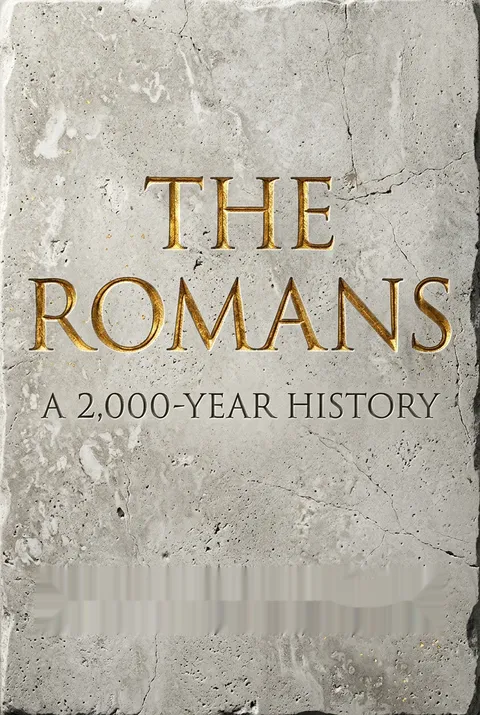
The Romans: A 2,000-Year History by Edward J. Watts receives mixed praise. Readers appreciate its ambitious scope covering Rome's founding through Constantinople's 1204 fall, with accessible prose and balanced treatment of both Roman and Byzantine periods. Many find it an excellent primer drawing on extensive sources. However, critics note insufficient depth and analysis, describing it as chronological mini-biographies rather than exploring institutional resilience or answering fundamental "why" questions. The 700-page compression leaves readers wanting more context, though it successfully introduces intriguing figures and periods for further study. Overall, it's praised as an engaging gateway to Roman history.
People Also Read



Glossary
Roman state
Rome’s continuous political institutionThe political entity that formed around the city of Rome, probably in the eighth century BC, and continued until the Fourth Crusade captured Constantinople in 1204. Its governments, language, religion, and borders changed substantially. The book defines continuity through institutional and political connection, distinguishing the Roman state from later Roman successor states.
Roman commonwealth
Layered citizenship and allianceA system that connected Rome to conquered Italian communities through different legal relationships. Some people became full citizens, some received citizenship without voting rights, and others remained locally governed allies who supplied troops. This flexible arrangement let Rome mobilize resources without directly administering every community in the same way.
Tetrarchy
Rule by four emperorsThe system established by Diocletian in which two senior emperors, called Augusti, shared power with two junior colleagues, called Caesars. Each ruler represented the imperial college, and the arrangement was intended to improve regional response and provide an orderly succession. Rivalries and competing claims eventually undermined the system.
Antonine Constitution
Citizenship for free imperial residentsThe law issued by Caracalla in AD 212 that extended Roman citizenship to all free people living in the empire, while leaving their local rights and customs intact. It completed a long process of expanding citizenship. It did not erase cultural distinctions or automatically grant every person equal practical access to power.
Senatus Consultum Ultimum
Emergency senatorial decreeA decree through which the Senate instructed Roman magistrates to take exceptional measures to protect the state. In the late republic, it could suspend key protections, including a citizen’s right to appeal or receive a trial. Its use against political opponents helped weaken the expectation that law would restrain political conflict.
Iconoclasm
Opposition to sacred imagesThe imperial policy and religious movement opposing the use or veneration of icons, images of Christ, the Virgin Mary, and saints. Emperors Leo III and Constantine V promoted it in the eighth century, while Irene’s council at Nicaea in 787 restored icon veneration. A second period of Iconoclasm began in the ninth century before the policy was abandoned again.
theme system
Regional military-civil administrationA system that organized Roman territory into regional districts, or themes, where military forces were based and local administration supported their defense. Nicephorus I strengthened the arrangement by linking military command, tax collection, and civic administration. It helped the reduced empire coordinate resources and defend regions with fewer central resources.
porphyrogenitus
Born to imperial purpleA title for a child born into the imperial family, often specifically in the purple chamber of the palace. The term emphasized a direct dynastic connection to Roman authority. Constantine VII was known as Constantine Porphyrogenitus, a status that strengthened his legitimacy even when other figures exercised effective political power.
Download PDF
Download EPUB
.epub digital book format is ideal for reading ebooks on phones, tablets, and e-readers.








