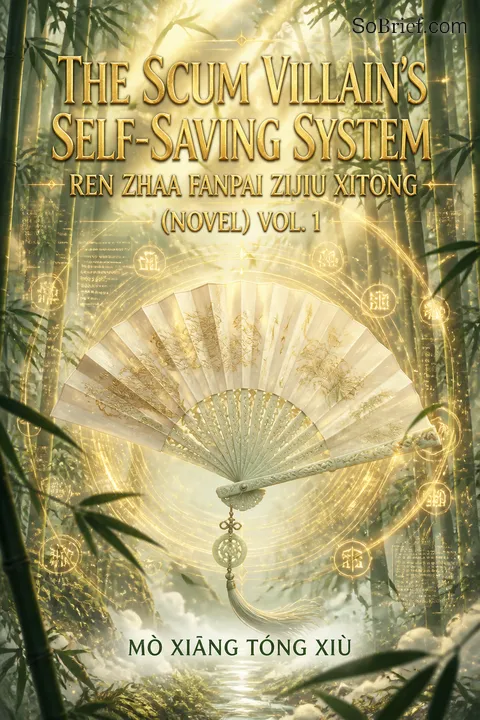


Summary Unavailable
This book is not suitable for a summary (it may be a textbook, workbook, cookbook, reference book, or collection). However, you can still explore the FAQs, about author, and other metadata below!
Plot Summary
The Reader Becomes Shen Qingqiu
Shen Yuan dies after finishing Proud Immortal Demon Way, a sprawling fantasy whose plot holes and dim-witted villains have driven him to fury. In the darkness after death, a mechanical System offers him a chance to improve the novel from within. He wakes as Shen Qingqiu, the elegant but vicious peak lord he had condemned, and learns that his survival depends on earning points while obeying the character’s original behavior.
The greater danger is already waiting: Luo Binghe, Shen Qingqiu’s abused young disciple, is locked in a woodshed. In the novel’s future, Luo will become a ruthless ruler and turn on the master who tormented him. Shen Yuan’s readerly certainty has become a trap with a face and a name.
The premise turns criticism into responsibility. Shen Yuan once treated the novel’s people as disposable mistakes in an author’s construction; now each is a person whose actions can wound him and whose choices he can affect. The System makes that reversal explicit through points and punishments, but its most important constraint is psychological: Shen Qingqiu cannot simply become a good man overnight. His first task is not to defeat a villain, but to act within a role he despises while trying to prevent its consequences. The comedy comes from his familiarity with the plot; the tension comes from discovering that knowing what happens is not the same as controlling it.
The Woodshed’s First Mercy
When Shen Qingqiu calls for Luo Binghe, the fourteen-year-old arrives bruised from years of punishment and false instruction. Shen Qingqiu cannot visit him or openly behave like a kind teacher without triggering the System’s out-of-character warnings, so he disguises concern as contempt and gives Luo medicine.
Soon afterward, he secretly watches Ming Fan and several disciples seize Luo’s treasured jade Guanyin, a fake charm his poor adoptive mother had saved to buy.
Shen Qingqiu cannot directly intervene without losing points, but he sends sharp leaves into the fight, driving the bullies off, then retrieves the pendant. Luo never sees who helped him. The System rewards the recovered object, and Shen Qingqiu begins to understand that small interventions can change the plot without announcing themselves.
The jade pendant concentrates the novel’s central moral problem into an object. To Shen Yuan, it is initially a useful plot device and a possible bargaining chip. To Luo, it is the last material link to a mother who chose him in a life otherwise defined by abandonment. Shen Qingqiu’s hidden rescue is morally meaningful precisely because it is incomplete: he protects Luo without giving him the reassurance that would make the kindness legible. That gap between action and recognition becomes a recurring source of misinterpretation. The System’s reward also turns virtue into a game mechanic, forcing Shen Qingqiu to wonder whether he is helping Luo for Luo’s sake, for points, or for his own survival.
The Skinner at Shuang Hu
An introductory System quest sends Shen Qingqiu and Qing Jing Peak’s disciples to Shuang Hu City, where young women have been skinned and left as corpses. Ning Yingying disappears from the market, and Shen Qingqiu follows a trace of demonic energy with Luo Binghe to an abandoned house. A demonic attack knocks him unconscious.
He wakes bound beside Luo and Ning, stripped to the waist and unable to use his spiritual power. The killer, Die-er, reveals that he changes skins and disguises each new victim with the previous corpse, allowing him to move through the city unnoticed. Shen Qingqiu recognizes the danger but cannot simply fight: the original Shen Qingqiu would never protect Luo openly, and the System is still watching.
The first quest tests more than Shen Qingqiu’s combat ability. It places his new concern for Luo inside the old teacher’s reputation for cruelty, making every helpful gesture liable to be read as another scheme. Die-er’s disguises also echo the story’s wider problem of uncertain appearances: people wear roles, bodies conceal histories, and a person’s visible identity may not match their loyalties. Shen Qingqiu has useful foreknowledge, but he must still improvise because the System has altered the ordinary plot and withheld information. His survival depends on manipulating the villain’s vanity while keeping Luo alive, a balance between ethical action and theatrical deception.
Liu Qingge Lives
Shen Qingqiu tricks Die-er into attacking Luo, then uses the opening to free himself and strike the demon down. The System completes the quest, unlocks his ability to act out of character, and rewards him for changing the plot. He gives Luo the correct cultivation manual, then enters seclusion to strengthen his own body. There he finds Liu Qingge, the formidable Bai Zhan Peak Lord, suffering a qi deviation.
Shen Qingqiu stabilizes him instead of repeating the original Shen Qingqiu’s fatal betrayal. When demons later invade Qiong Ding Peak and sever the bridges between the Twelve Peaks, Shen Qingqiu leads the defense. Luo wins the final duel, but a poisoned attack wounds Shen Qingqiu, leaving him dependent on a slow treatment.
This sequence establishes that changing one event does not erase the past; it creates new obligations. Saving Liu Qingge removes a future accusation from the board, but it also gives Shen Qingqiu a powerful, difficult ally who must learn to trust evidence rather than history. Luo’s victory at the demon invasion works differently: Shen Qingqiu sends him into danger, then publicly expresses confidence in him. Luo interprets the risky choice as faith, not exploitation, deepening his attachment to a master who still cannot explain his motives honestly. The poison also makes vulnerability concrete. Shen Qingqiu can no longer treat strength as a convenient inheritance; his body has limits and those limits affect everyone around him.
A Dream Reassigns Trust
A demon called Meng Mo traps Luo Binghe in a nightmare built from his childhood: street beatings, his adoptive mother’s illness, poverty, and the abuse he suffered after joining Qing Jing Peak.
Shen Qingqiu is pulled into the dream in place of the gentle female disciple who occupied this role in the original story. When Luo’s memories drive him to attack, Shen Qingqiu blocks the blow and brings him back to himself. He tells Luo that human and demon blood do not decide whether someone is good, and promises protection even if Luo never becomes powerful.
Luo accepts Meng Mo’s instruction only after insisting that Shen Qingqiu remain his sole shizun. Shen later moves Luo from the woodshed into a room beside his own, and their daily life grows close.
The dream gives Luo’s pain a structure that Shen Qingqiu can finally witness rather than summarize from a novel. His intervention matters, but it also places him in an emotionally intimate role he did not intend to occupy. Luo’s refusal to attack the dream figures reveals how much of his identity still depends on restraint, while Shen Qingqiu’s promise offers a radical alternative to the world’s strong-eat-weak logic. Yet the promise is dangerous because Shen Qingqiu knows the future plot demands a betrayal. The scene plants a contradiction that will shape their relationship: Shen Qingqiu offers reassurance in the present while privately expecting to hurt Luo later.
The Conference’s Golden Ranking
As the Immortal Alliance Conference approaches, Shen Qingqiu realizes the unavoidable turning point is near: Luo must enter the Endless Abyss to discover his demonic heritage and obtain his true sword.
At Jue Di Gorge, Luo initially ranks below the celebrated Gongyi Xiao because he keeps rescuing weaker competitors instead of hunting monsters for points. When a demon beast attacks, the contest becomes a disaster: creatures including the Nu Yuan Chan and ghost-head spiders kill participants, and rescue signals rise across the valley.
Shen Qingqiu enters the sealed gorge to protect his disciples. He and Luo fight together, and Luo’s skill draws the attention of the veiled Liu Mingyan and the demon Sha Hualing. The crowd sees a rising hero; Shen Qingqiu sees the plot closing in.
The tournament’s ranking system turns virtue into a measurable disadvantage. Luo’s instinct to protect weaker competitors costs him points, yet it is precisely that conduct that makes others trust and admire him. The later disaster exposes the inadequacy of a competition that treats danger as a controlled spectacle: the organizers count beads while real people die. Shen Qingqiu’s reader knowledge helps him recognize monsters and their weaknesses, but it cannot stop the larger catastrophe. The section also sets up competing forms of attention. Luo becomes visible to potential allies, admirers, and enemies at once, while Shen Qingqiu begins to understand that protecting him may itself become the mechanism by which the plot identifies and isolates him.
The Abyss Takes Luo
At Jue Di Gorge, Shang Qinghua’s betrayal as a demon spy and the appearance of Mobei-Jun expose the scale of the attack. Mobei-Jun tests Luo, breaks the seal on his demonic blood, and leaves him reeling beside the newly opened Endless Abyss.
The System demands that Shen Qingqiu complete the canonical betrayal or lose an enormous number of points. Shen asks whether Luo wants power enough to endure suffering; Luo says he wants strength to protect those he loves.
Shen Qingqiu then forces him toward the chasm, first threatening him and finally stabbing him when Luo refuses to step back. Luo falls believing the kindness between them was false. Shen returns to the sect with Luo’s broken sword, tells everyone Luo is dead, and begins carrying a grief he cannot explain.
The betrayal is both mechanically required and emotionally catastrophic. Shen Qingqiu has spent years teaching Luo that he is safe with him, then enacts the very abandonment Luo fears. His attempt to rationalize the fall as necessary character development cannot soften the concrete fact that he wounded Luo and sent him into a deadly realm. The scene also demonstrates the limits of meta-knowledge: the System can dictate an event, but it cannot dictate the meaning that Luo will take from it. Luo’s final faith in Shen Qingqiu makes the act more painful, not less. The broken sword becomes a public sign of loss and a private reminder of what Shen Qingqiu believes he has done.
A Seed Against the Ending
After the conference, Shen Qingqiu discovers that An Ding Peak’s Shang Qinghua is the author Airplane Shooting Towards the Sky, also transmigrated into his own novel. Their shared knowledge gives them a chance to prepare for Luo’s eventual return and Shen Qingqiu’s predicted gruesome fate.
They recover Sun-Moon Dew Flower Seed, a rare plant capable of growing an empty human body, and begin cultivating it as a possible escape route. Years pass. Luo remains in the Abyss, while Shen Qingqiu travels, trains, and tries to live quietly. The plan is risky, and Shang Qinghua’s improvised fertilizer may damage the seed, but it offers a possibility beyond simply waiting for the original villain’s punishment.
The second transmigrator turns private readerly frustration into a fragile partnership. Shang Qinghua knows the author’s abandoned outlines, while Shen Qingqiu remembers the plot’s unresolved dangers; together they possess knowledge neither could use alone. The seed is a material answer to a metaphysical problem: it can supply a body, but not a soul, and its growth depends on care rather than narrative inevitability. Their plan is also comic in its precariousness, especially because the author who created the world cannot remember every detail of it. The deeper shift is that Shen Qingqiu stops thinking only about how to survive the plot and starts constructing an alternative to it.
Jinlan City Turns Hostile
Three years after Luo falls, a strange disease seals Jinlan City behind its gates. Victims’ bodies rot rapidly if they leave the city, while survivors wrap themselves in black cloth. Shen Qingqiu, Liu Qingge, and healer Mu Qingfang enter through an underground river, where they find corpses and meet Yang Yixuan, a weapons merchant’s son who guides them to trapped monks.
The illness proves to be the work of demon sowers, but several sects accuse Shen Qingqiu of conspiring with them. At the same time, Luo Binghe returns alive, leading Huan Hua Palace and drawing its disciples’ loyalty. He denies involvement, but his silence and power make Shen Qingqiu’s position increasingly precarious.
Jinlan City makes an epidemic serve as both physical crisis and political weapon. The disease’s boundary-dependent spread traps inhabitants and rescuers alike, while the black coverings turn the whole city into a landscape of masked suspicion. Shen Qingqiu’s actions are practical and humane, yet his compromised past makes every good deed vulnerable to reinterpretation. Luo’s return intensifies the danger because he is both the person Shen wants to see alive and the person whose authority can confirm or destroy the accusations against him. Their reunion is not a simple restoration: each approaches the other through old injuries, withheld explanations, and a growing audience ready to judge them.
The Prisoner Chooses Death
The Huan Hua Palace Old Palace Master and Qiu Haitang accuse Shen Qingqiu of abuse, treachery, and the deaths at the Immortal Alliance Conference. Bound with Immortal-Binding Cables, he is placed in the palace’s water prison. Gongyi Xiao helps him escape, but rumors and the hunt for him follow into Huayue City.
Luo’s pursuit is tangled with anger, blood magic, and the Heart Devil sword. When its backlash threatens the city, Shen Qingqiu chooses to destroy his own spiritual energy and falls from a roof, apparently dying in Luo’s arms. The sects believe Luo caused his death; Luo keeps the body and refuses to surrender it. The seed Shen Qingqiu and Shang cultivated becomes the only route back.
The accusation works because it joins truths about the original Shen Qingqiu to crimes the new occupant did not commit. Reputation becomes a social mechanism of punishment: the more people repeat a plausible story, the less room remains for evidence. Shen’s self-destruction is a final act of protection, but it also repeats the abandonment wound between him and Luo. Their positions reverse: the supposed victim now holds the body, while the apparent betrayer becomes silent and unreachable. The episode refuses an easy moral verdict. Shen’s choice saves others, yet it confirms Luo’s belief that love always ends in loss.
Five Years in the Ground
Five years after Huayue City, Shen Qingqiu wakes buried in a body grown from the Sun-Moon Dew Flower Seed. The body is initially awkward and weak, but it carries abundant spiritual energy. He adopts the disguise and the name Peerless Cucumber while learning that the demon incursions have worsened.
On the border, he meets Yang Yixuan again and learns that Liu Mingyan and other cultivators have been captured by Sha Hualing. Shen enters Chi Yun Cave, helps free the prisoners, and sees that Luo Binghe’s realm has changed: his former harem members are no longer gathering around him, and his rule is lonely and brittle. Shen’s new body offers survival, but not a clean return to the life he lost.
The seed’s success is not a resurrection without cost. Shen returns in a body that resembles his former one but is not the same, and even walking requires relearning. The alias lets him move through the world without the old reputation, yet his impulse to intervene keeps reconnecting him to the people he left behind. His encounter with the demon realm also punctures the novel’s original fantasy of effortless romantic abundance. Luo’s supposedly guaranteed harem has not materialized as a happy refuge; power has isolated him instead. Shen is forced to recognize that the plot’s promised rewards may be hollow, and that his earlier assumptions about Luo’s future were wrong.
The Reunion in the Dream
After Shen’s presence is detected through Luo’s demonic blood, he meets the returned Luo in Huan Hua Palace, where the young ruler’s followers treat Shen as an enemy. Their confrontation slips into a dreamscape made from Luo’s memories of Qing Jing Peak. Shen sees the gentler disciple he once raised, including moments of awkward training and affection that Luo has kept among his most cherished memories.
Luo, believing the encounter may be a dream, kisses Shen and admits how deeply he regrets their separation. Shen tries to resist the intimacy, but his pity and concern soften him. When the dream collapses, the real Luo is left with both his obsession and his fear that Shen will disappear again.
The dreamscape converts hidden attachment into a visible setting. Qing Jing Peak is not merely scenery; it is the place where Luo’s memory preserves a version of care that his waking life cannot securely claim. Shen sees that his small gestures mattered, though he had dismissed them as conveniences or plot management. The revelation does not solve the relationship, because tenderness inside a dream can be mistaken for consent or reconciliation. Instead, it makes Shen responsible for understanding the emotional consequences of his own ambivalence. Luo’s longing is real, but his way of expressing it is shaped by fear, possessiveness, and the belief that affection must be secured before it vanishes.
The Old Body Returns
A battle in Huan Hua Palace exposes Luo’s preserved corpse of Shen Qingqiu, which he has guarded for five years. Liu Qingge arrives to recover the body, and Shen, still disguised in his seed-grown form, helps him escape with it. Luo sees the corpse carried away and reacts with fury, while Shen is left to confront how much of Luo’s life has been organized around his apparent death.
Zhuzhi-Lang later reveals himself as Tianlang-Jun’s serpent-blooded nephew and explains that he created Shen’s replacement body from the flower seed. Shen returns toward Cang Qiong Mountain, but Luo’s grief and the body’s disappearance draw both of them toward a larger conflict involving the Holy Mausoleum.
The corpse is a grotesque but precise emblem of unresolved attachment. Luo has not accepted the distinction between Shen’s body and Shen himself; preserving the shell gives grief a physical object to hold, but it also prevents either of them from moving forward. Shen’s new body complicates the meaning of identity: he is alive, yet the version Luo mourns remains materially present. Zhuzhi-Lang’s intervention adds a second layer of loyalty, one built on repayment and devotion rather than romantic possession. The scene asks whether care can become a form of captivity when the person being protected is not allowed to choose where to go.
The Father Beneath Bailu
At the Holy Mausoleum, Shen Qingqiu learns that Zhuzhi-Lang’s apparent favor carries a hidden cost: he has brought Shen to Tianlang-Jun, Luo’s father. Tianlang-Jun’s body, molded from the same flower seed, is already deteriorating, and he intends to use the Heart Devil sword to merge the two realms.
He sees the plan as a grand reconciliation, though it would devastate ordinary people and expose humans to a demon world they cannot survive. Tianlang-Jun also admits that the Jinlan sowers were part of his experiments and that he hoped the scandal would sever Shen’s ties to Cang Qiong Mountain. Shen refuses to accept this imposed rescue, while Luo arrives to confront the father who has never claimed him.
Tianlang-Jun’s charm makes his danger harder to dismiss. He does not describe himself as a destroyer but as a visionary who expects everyone else to adapt after he has remade their world. His rhetoric exposes a familiar structure of coercion: he calls domination unity and assumes the injured will eventually accept what cannot be undone. Zhuzhi-Lang’s gratitude is similarly double-edged; he wants to repay Shen, but he has chosen the terms without asking him. The family revelation sharpens Luo’s wound. His father is powerful, but power has not translated into care, leaving Luo to seek recognition from the one person whose judgment matters most to him.
The Name Before Shen
After the failed Zhao Hua Temple mission, the System’s punishment drives Shen Qingqiu through memories inherited from the original Shen Jiu. He watches the boy endure abuse in the Qiu household, where Qiu Haitang’s brother treats him as property rather than family. Shen Jiu’s only comfort is Qi-ge, an older companion who promises to seek cultivation and return for him.
When Qi-ge leaves, Shen Jiu is trapped with the Qiu family. He eventually kills his tormentors and follows the ruthless cultivator Wu Yanzi, choosing power over the helplessness of his childhood. Shen Qingqiu realizes that the story’s scum villain was not simply born cruel, and that his former self’s history was far more painful than Qiu Haitang’s public account suggested.
This memory does not absolve Shen Jiu; it makes his later cruelty intelligible without making it acceptable. The distinction matters. Childhood violence teaches him that dependence invites humiliation, while Qi-ge’s promise teaches him to hope for rescue, then leaves him waiting. His later hunger for cultivation and control grows from a life in which other people controlled his body, labor, and future. Shen Yuan’s new identity therefore contains an ethical complication: he inhabits a person whose suffering he never experienced, yet whose actions continue to shape his relationships. Understanding the past is not the same as inheriting innocence, but it can interrupt the easy pleasure of calling someone a monster.
Maigu Ridge Falls
At Maigu Ridge, Tianlang-Jun’s allies reveal that the two realms are beginning to merge around the Heart Devil sword. Luo Binghe, already unstable from the sword’s influence, fights his father while Shen Qingqiu tries to stop the collapse. The old ruler’s body fails, Zhuzhi-Lang is badly wounded, and Luo’s buried resentment erupts as he tries to destroy the world that rejected him.
Shen Qingqiu realizes that his own distrust and repeated departures have reinforced Luo’s certainty that everyone will abandon him. He refuses to leave, even as the Xin Mo sword consumes Luo’s judgment. The battle becomes both a physical struggle over the realms and a desperate effort to keep Luo from becoming the destructive ruler Shen once expected him to be.
The climax is not solved by superior force alone. Luo’s power is immense, but the sword magnifies an emotional logic already present: if love can be lost, then possession must replace trust; if the world can reject him, then the world should be remade. Shen Qingqiu’s intervention has to address the history that fed this logic, not merely the weapon that expresses it. Tianlang-Jun’s plan also echoes the original novel’s crude ending, where world-scale change exists mainly to prove the protagonist’s dominance. Here, the same power is made morally legible through its cost to individuals. The question is no longer whether Luo can win, but what winning would leave of him.
The Sword Breaks, Trust Begins
As Maigu Ridge collapses, Shen Qingqiu helps Luo resist Xin Mo rather than treating him as an enemy to be contained. Their struggle breaks the sword’s hold and stops the immediate merger, though the damage to both realms remains immense. Shen’s words and choices finally give Luo a direct answer to the fear that has ruled him: Shen is not leaving him to face the crisis alone.
The System registers the accumulated changes, upgrades Shen’s access, and offers the Self-Saving feature that restores his life when his points fail. In the aftermath, Shen returns to Cang Qiong Mountain with Luo, while the sect must face the consequences of war, old accusations, and the pair’s now unmistakable bond.
The resolution turns on a choice rather than a verdict. Shen cannot erase the years of harm, nor can Luo’s sudden understanding repair every fracture. What changes is the pattern: Shen stops acting as though emotional distance will protect either of them, and Luo must begin separating love from control. The System’s reward is deliberately ambivalent. It grants survival and a measure of freedom, but only after converting Shen’s relationships into measurable values. The human resolution matters more than the points: Luo is no longer merely the protagonist Shen must manage, and Shen is no longer merely the reader trying to escape the villain’s fate. They become people who must decide what to do next.
The Author’s World, Rewritten
The additional stories widen the aftermath beyond Shen Qingqiu and Luo Binghe. In one, the original stallion-novel Luo appears as a rival version of Binghe, forcing the pair to confront the difference between the ruthless hero Shen once expected and the person he helped raise.
Other episodes let Shang Qinghua’s life with Mobei-Jun develop from opportunistic survival into an uneasy attachment, while Zhuzhi-Lang’s loyalty to Tianlang-Jun gains its own history of care and loss. A final look back at the author’s forum life frames the entire story as a reader’s argument with the work that shaped him. These comic, romantic, and painful detours do not erase the central conflict; they show how many lives the old plot had reduced to props.
The extras act as a counterweight to the main plot’s severe reversals. Their alternate meetings and unlikely pairings expose the machinery of genre by letting characters encounter the versions of themselves that the original outline would have preferred. The result is not simply parody: the comic exaggeration makes the emotional costs of rigid roles more visible. A tyrant can be an abandoned son, a spy can be a lonely author, and a loyal subordinate can carry a life beyond service. The book’s final movement therefore resists the idea that a story’s ending must preserve its first blueprint. Once characters are allowed to act beyond their assigned functions, even an absurd world can become inhabitable.
Analysis
The novel’s central mechanism is the collision between narrative certainty and lived consequence. Shen Yuan begins with the confidence of a reader who believes he can identify every bad choice in advance. Once he becomes Shen Qingqiu, he learns that knowing a plot is not the same as knowing people. Luo’s suffering is not merely backstory for a future villain; it shapes how he reads kindness, authority, and separation. Shen’s attempts to correct the story often create new wounds because he withholds explanations, treats events as plot requirements, or assumes Luo will interpret his actions as he intends.
The work also examines how systems make people legible by reducing them to roles. The System converts conduct into points. Cultivation sects classify people by bloodline, rank, and usefulness. The novel itself once treated women as rewards and side characters as expendable devices. As Shen repairs those structures, characters gain motives that exceed their original functions. The transformation is not clean or innocent: he cannot undo every harm, and his concern for Luo sometimes becomes possessive or self-serving in its own way.
The relationship’s emotional tension comes from unequal knowledge. Shen knows the future Luo may become; Luo knows what Shen did to him but not why. Both mistake silence for certainty. Their eventual movement toward trust begins not with a grand confession, but with small acts that become interpretable: a recovered pendant, a defended disciple, a body carried through danger, a promise not to leave. The novel’s comedy does not cancel the pain. It gives the characters a way to expose the absurdity of the conventions governing them, while still treating the consequences as real. In the end, rewriting the story means more than fixing its plot holes. It means refusing to let any person remain only the role assigned to them.
Last updated:
Report IssueReview Summary
The Scum Villain's Self-Saving System receives high praise for its humor, unique premise, and entertaining characters. Readers appreciate the satirical take on fantasy tropes and the protagonist's relatable struggles. Many find it hilarious and engaging, with some considering it their favorite MXTX work. The official English translation is generally well-received, though a few readers note issues with humor translation and lack of footnotes. Most reviewers eagerly anticipate future volumes, while a minority criticize the translation quality and publishing decisions.
People Also Read
Characters
Shen Qingqiu (Shen Yuan)
Reader inside the villainShen Yuan is a sharp, impatient reader who wakes inside the body of Shen Qingqiu, the elegant peak lord he had condemned as a one-dimensional villain. He relies on plot knowledge, dry humor, and a survival instinct sharpened by the System’s threats. Yet his certainty erodes as he encounters the people he once treated as narrative pieces. He is practical and self-protective, but not emotionally detached: he intervenes when he sees a child mistreated, protects Luo even when the plot demands otherwise, and gradually accepts responsibility for the wounds his choices cause. His struggle is to move from managing a story to recognizing the people living inside it.
Luo Binghe
The wounded protagonistLuo Binghe begins as a poor, talented disciple whose patience and gentleness survive years of bullying. He treasures his adoptive mother’s pendant and returns small kindnesses with enormous gratitude. His mixed human and demon heritage gives him extraordinary potential, but his deeper vulnerability is the fear that every attachment will end in rejection. As a young man, he is disciplined, perceptive, and hungry to protect those he loves. The story complicates the overpowered hero by showing how power can amplify old injuries rather than heal them. His relationship with Shen Qingqiu becomes both a source of comfort and a place where trust, jealousy, and fear must be confronted.
Yue Qingyuan
The patient sect leaderYue Qingyuan leads Cang Qiong Mountain with a gentle manner and a deep instinct to protect his sect. He treats Shen Qingqiu with unusual patience, even when others find him cold or difficult, and tries to keep the Twelve Peaks united through crises. His reserve can make his care hard to read, but his actions repeatedly show that he is willing to shoulder responsibility for others. He believes in preserving people and institutions when conflict threatens to tear them apart. His bond with Shen Qingqiu carries the weight of a long history neither man knows how to discuss openly.
Liu Qingge
The uncompromising sword masterLiu Qingge is Bai Zhan Peak’s formidable, blunt-spoken lord, a fighter whose first response to danger is usually to meet it head-on. He has little patience for elaborate explanations and rarely softens his words, yet his loyalty to Cang Qiong Mountain is absolute. His history with Shen Qingqiu is marked by hostility, which makes their later cooperation difficult but meaningful. Liu Qingge values strength, directness, and action over emotional display. Beneath his abrasive manner is a dependable ally who will enter danger for a fellow sect member even when he does not understand that person’s motives.
Shang Qinghua
The author turned logistics lordShang Qinghua is An Ding Peak’s resourceful, self-interested lord and the author behind Proud Immortal Demon Way. He is skilled at logistics, improvisation, and surviving by adapting to whoever holds power. His comic cowardice hides a complicated relationship with authorship: he knows the novel’s discarded plans, but he also abandoned them when popularity and livelihood demanded it. He and Shen Qingqiu share the rare burden of knowing the world’s construction from the inside. His choices expose the practical pressures behind creative compromise, while his bond with Mobei-Jun reveals that even a consummate opportunist can form attachments he did not plan.
Ning Yingying
The earnest younger discipleNing Yingying is Qing Jing Peak’s lively junior disciple and Luo Binghe’s early companion. Her affection for him is sincere, but her impulsive attempts to help can make his life harder by provoking other disciples. She is sheltered and sometimes oblivious, yet she grows more perceptive as danger reaches the people she loves. Her warmth gives the early mountain scenes a gentler counterpoint to Shen Qingqiu’s cold performance. She is also one of the few disciples willing to challenge her elders when she believes they are treating someone unfairly.
Ming Fan
The senior disciple and bullyMing Fan is Shen Qingqiu’s senior disciple and Luo Binghe’s chief tormentor in the early years. He follows his master’s example, using seniority to exclude and punish the younger boy. His loyalty is real but badly directed: he wants Shen Qingqiu’s approval and assumes cruelty is part of earning it. As the sect faces later crises, Ming Fan’s concern for Qing Jing Peak becomes more visible than his rivalry with Luo. He represents how institutional habits can reproduce harm even when no one pauses to question them.
Sha Hualing
The ambitious demon saintSha Hualing is a proud, strategic demon leader whose confidence often outruns her judgment. She uses beauty, flattery, and force as tools, adapting quickly when a plan fails. Her interest in Luo Binghe drives some of her riskier decisions, but she is also an effective organizer with genuine authority among the demons. She can be cruel to rivals and dismissive of subordinates, yet her shifting role between antagonist, ally, and political operator makes her difficult to reduce to a simple lovesick villain.
Liu Mingyan
The veiled Xian Shu discipleLiu Mingyan is a gifted disciple of Xian Shu Peak and Liu Qingge’s younger sister. Her face is concealed, but her quiet conduct and disciplined judgment make her stand out even among celebrated cultivators. She approaches danger with composure and accepts responsibility when others hesitate. Her role is important not merely because other characters admire her, but because she possesses moral steadiness and practical courage of her own. She is one of the few people who can move through the story without becoming defined entirely by Luo Binghe’s attention.
Mu Qingfang
The healer of Qian Cao PeakMu Qingfang leads Qian Cao Peak and applies a healer’s patient attention to crises that others would rather solve with swords. He treats Shen Qingqiu’s poison, examines victims in Jinlan City, and helps preserve lives while political factions argue. His work is methodical and compassionate, though his remedies cannot always undo the damage already done. He is a quiet example of expertise that does not seek glory: in a world that rewards combat, he keeps returning to the injured and asks what can still be saved.
Gongyi Xiao
The honorable Huan Hua heirGongyi Xiao is a courteous, capable Huan Hua Palace disciple and a favorite of the Old Palace Master. He follows rules and respects senior cultivators, but he is not passive: he helps Shen Qingqiu when he believes the man is being treated unjustly. His decency makes him a useful contrast to the political suspicion surrounding Huan Hua Palace. Gongyi Xiao is also observant enough to notice when events do not fit the official story, though he sometimes misreads what he sees because he lacks the protagonists’ full history.
Qiu Haitang
The betrayed childhood friendQiu Haitang is a beautiful woman whose life is shaped by the destruction of her family and her belief that Shen Jiu betrayed the people who sheltered him. She carries grief as anger, and her accusations are convincing because they contain pieces of truth about the original Shen Qingqiu. Her perspective exposes the cost of Shen Jiu’s past, even when her account is incomplete. She is not merely an antagonist: she is a person whose memory has been shaped by loss, rumor, and a long search for someone to blame.
Tianlang-Jun
The exiled demon rulerTianlang-Jun is a brilliant, charming former ruler of the demons whose love of human culture coexists with an immense capacity for control. He speaks as if he were a refined observer, but his plans treat other people’s lives as pieces in a project he believes he can justify. His relationship with his son is distant and emotionally withholding, despite their shared blood. He is capable of tenderness toward ideas, books, and the human world, yet he does not reliably extend that tenderness to the people who inhabit it. His calm manner makes his destructive intentions more unsettling.
Zhuzhi-Lang
The serpent generalZhuzhi-Lang is Tianlang-Jun’s loyal nephew and general, born with a serpent’s body and later given a human form. He remembers every kindness and repays it with relentless devotion, sometimes without considering whether the recipient wants his help. His gratitude is sincere, but it can become frightening when he decides that protection means controlling someone’s choices. He is patient, polite, and capable, yet emotionally guided by a simple rule: those who helped him must be repaid. That rule makes him both dependable and dangerous.
Mobei-Jun
The cold northern demon lordMobei-Jun is a powerful demon noble who speaks little and expects others to keep pace with his decisions. His authority rests on strength, but he is less calculating than his reputation suggests. His connection with Shang Qinghua begins in an unequal arrangement shaped by fear and survival, then slowly acquires personal meaning. Mobei-Jun rarely explains himself, making his actions difficult to interpret. His reserved nature contrasts with the noisy, improvisational world around him, while his reliance on a small circle of trusted people suggests a need for loyalty he does not know how to request.
The Old Palace Master
Huan Hua’s possessive patriarchThe Old Palace Master is a powerful leader who treats devotion as something he can demand and shape. His affection for his disciple Su Xiyan is tangled with control, ambition, and the expectation that she will serve his plans. He believes his status grants him authority over other people’s choices, and his judgments influence how the cultivation world interprets Luo Binghe’s origins. Even when he presents himself as a protector of the righteous world, his conduct reveals how easily protection can become possession.
Su Xiyan
The absent Huan Hua discipleSu Xiyan was the Old Palace Master’s gifted disciple, trained for leadership within Huan Hua Palace. Her intelligence and ambition placed her close to power, but the expectations around her left little room for an uncomplicated private life. Her connection to Tianlang-Jun becomes a turning point in the histories of both realms. The conflicting accounts of her choices reveal how easily a woman’s motives can be rewritten by the men and institutions that claim to know her.
Yang Yixuan
The weapons merchant’s sonYang Yixuan is the son of a Jinlan City weapons merchant and a young cultivator with more courage than caution. He warns Shen Qingqiu and his companions about the danger inside the city, then proves capable of fighting when circumstances demand it. His directness and loyalty make him a promising disciple, though he is still young enough to react emotionally and ask blunt questions. His presence connects the large sect conflicts to the ordinary families and local people who bear their consequences.
Great Master Wu Chen
The patient Buddhist witnessWu Chen is a senior monk of Zhao Hua Temple who values mercy and careful judgment. He investigates the Jinlan plague, suffers its effects, and later challenges the certainty of people who would rather condemn than understand. His calmness is not passivity; he will state an unwelcome truth when compassion requires it. He provides a counterweight to the more punitive voices among the sect leaders, insisting that a person’s origin or association should not replace evidence.
Ning Yingying, Ming Fan, and the Qing Jing disciples
The turbulent peak familyTogether, these disciples form the human texture of Qing Jing Peak. Ning Yingying is affectionate and impulsive; Ming Fan is proud and eager for approval; the others follow the customs set by their elders until danger forces them to reconsider. Their early treatment of Luo Binghe shows how cruelty becomes ordinary inside a group, while their later loyalty to Shen Qingqiu shows that people can change through example. They are not a faceless chorus: they react, quarrel, protect one another, and reveal what kind of community their peak has become.
Plot Devices
The System and its points
A game that enforces the plotThe System binds Shen Yuan to the role of Shen Qingqiu and tracks values such as B-points, protagonist satisfaction, anger, and heartbreak. It rewards changes that improve the story’s logic but penalizes actions that violate the original character before certain functions are unlocked. Its arbitrary rules create comic friction, but they also externalize the pressure to preserve a predetermined plot. Later upgrades allow new options, including a single self-saving feature, while the penalties make clear that Shen Qingqiu’s life is being measured by a mechanism he cannot fully understand. The System is both a survival tool and a reminder that narrative control is never truly his.
Reader knowledge and plot
Foreknowledge that keeps changingShen Qingqiu knows the broad outline of Proud Immortal Demon Way, including Luo Binghe’s future rise, the Endless Abyss, major monsters, and unresolved mysteries. This knowledge helps him identify threats and anticipate turning points. However, his interventions alter events, and the novel’s original author, Shang Qinghua, admits that many details were never properly planned. Reader knowledge therefore becomes fallible: each correction creates new consequences, and the story refuses to behave like a fixed script. The device makes the novel self-aware without removing the stakes, because Shen Qingqiu still has to act before he knows which parts of the plot remain true.
The fake jade Guanyin
A small object holds memoryLuo Binghe’s jade Guanyin is fake, but its worth has nothing to do with its material value. His adoptive mother bought it after saving for years, and it becomes the one object that preserves her care. When Ming Fan steals it, Luo reacts with an intensity that Shen Qingqiu finally understands. Shen secretly retrieves the pendant, and its return earns System rewards while changing the course of Luo’s emotional life. The object later gives Shen a way to break through a crisis, linking a quiet childhood humiliation to a much later moment of survival. It embodies the difference between a thing’s market value and the history carried by the person who keeps it.
Sun-Moon Dew Flower Seed
A body grown to escape deathThe rare seed can grow a human body, though it cannot create a soul. Shen Qingqiu and Shang Qinghua cultivate it as a contingency against the fate awaiting Shen Qingqiu after Luo’s fall into the Abyss. Its success allows Shen to return years later in a new body, but it also creates new vulnerabilities and draws him into Tianlang-Jun’s plans. The seed joins botanical fantasy to questions of identity: Shen remains himself, but his body is a constructed vessel, while his original body becomes an object of grief and dispute. Its usefulness is real, but it never offers a clean escape from the consequences of the past.
Xin Mo and the blood
Power that magnifies old woundsXin Mo is a dangerous sword that can cut through the boundary between the human and demon realms, but it also threatens to overwhelm its wielder’s mind. Luo’s mixed heritage lets him use both spiritual and demonic energy, yet the sword disrupts their balance. Ancient demon blood becomes another instrument of control: it can cause pain, track a person, or suppress another blood source. These devices make the conflict physical, but their deepest effect is psychological. Luo’s power grows as his fear of abandonment deepens, and every use of force risks turning a private wound into a public catastrophe. The sword’s destruction is therefore both a tactical victory and an emotional necessity.
FAQ
Synopsis & Basic Details
What is The Scum Villain's Self-Saving System: Ren Zha Fanpai Zijiu Xitong, Vol. 1 about?
- Meta-Fictional Transmigration: The story follows Shen Qingqiu (Shen Yuan), a modern webnovel reader, who dies and transmigrates into "Proud Immortal Demon Way
About the Author
Mò Xiāng Tóng Xiù is a Chinese author known for her Boys' Love (BL) web novels. Her works, including The Scum Villain's Self-Saving System, Grandmaster of Demonic Cultivation, and Heaven Official's Blessing, have gained significant popularity both in China and internationally. These novels have been adapted into various media, including animations, audio dramas, and live-action series. Mò Xiāng Tóng Xiù's writing is characterized by its blend of fantasy, humor, and romance, often featuring complex world-building and intricate character relationships. Her novels have been officially translated into multiple languages, contributing to the growing global interest in Chinese web novels and danmei literature.
Other books by Mò Xiāng Tóng Xiù


Download PDF
Download EPUB
.epub digital book format is ideal for reading ebooks on phones, tablets, and e-readers.








