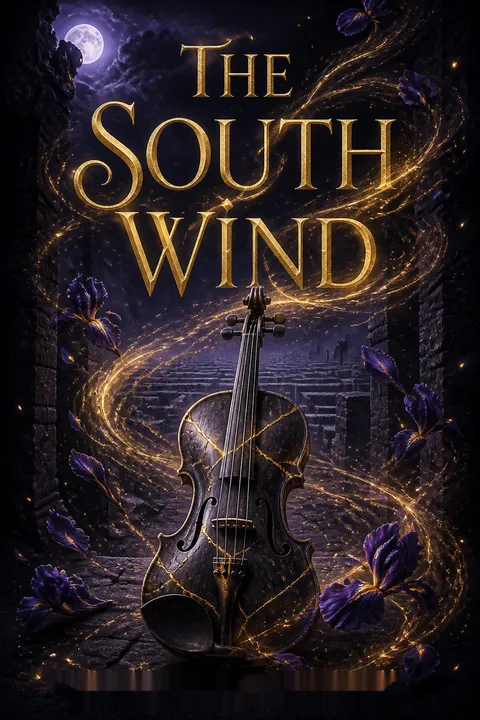


Plot Summary
Prologue
When Princess Sarai is born near death, her father, King Halim, climbs Mount Syr and bargains with the Lord of the Mountain to save her. The god agrees, but the king accepts without learning the full price.
His daughter revives, and a shadow lays a hand on her brow as she sleeps. The bargain will reach across her entire life, binding Sarai’s survival to the fate of Ammara and the stone labyrinth built to contain a beast.
The bargain begins as an act of desperate love, but Halim’s haste makes protection indistinguishable from control: he saves his daughter without understanding what he has promised on her behalf. The shadow touching the infant hints that the bargain is not a single exchange but an ongoing claim on Sarai’s life. The prologue also establishes the story’s central moral tension. A loving intention does not erase the harm caused when one person decides another’s fate for them.
The Bargain Beneath Mount Syr
At twenty-four, Princess Sarai Al-Khatib counts down the days to her twenty-fifth nameday, when she believes the Lord of the Mountain will claim her life. Her father has kept the curse secret from nearly everyone, while drought and darkwalkers weaken Ammara. He hopes an arranged marriage to Prince Balior of Um Salim will bring aid, and Sarai prepares to accept it as another duty.
Before Balior’s arrival, she slips into the souk to hear Haneen, a blind storyteller whose tale of a woman surviving military training gives Sarai a glimpse of courage beyond the palace. Then, during Balior’s formal welcome, a familiar stranger removes his scarf: Notus, the South Wind, the immortal lover who vanished five years earlier.
The countdown makes Sarai’s political obedience personal: marriage is not simply a diplomatic arrangement but a final attempt to give her people protection before her own expected death. Her secret visits to Haneen’s storytelling hour expose the contrast between the princess she performs and the person who longs for agency. The story of Aziza is not decorative foreshadowing; it gives Sarai an example of courage she cannot yet imagine claiming. Notus’s return then collapses the distance she has used to keep grief manageable, setting private heartbreak against a kingdom’s public emergency.
The Prince and the Exiled Wind
Sarai tries to keep her composure as King Halim installs Notus in the Royal Guard, explaining that Ammara needs his strength against the darkwalkers. During a ride to Kir Bashab, Balior suggests their future marriage gives him a right to touch her; when she refuses, he blocks her escape. Notus arrives in a cyclone, throws Balior across the oasis, and warns him away from Sarai.
The prince survives, but his entitlement unsettles her more than his apology later repairs. Back at the palace, Balior’s visits to the labyrinth and Notus’s suspicion of his motives begin to look connected. Sarai still wants Balior’s research to help break her curse, so she cannot simply dismiss him without risking Ammara’s best apparent hope.
The oasis scene tests the difference between political suitability and personal safety. Sarai has been trained to treat marriage as a sacrifice she can make for Ammara, yet Balior’s assumption that courtship entitles him to her body reveals what such a sacrifice might actually cost. Notus’s violence is protective, but it also exposes how readily his power can dominate a scene. Sarai is caught between two forms of control: the prince’s claim over her future and the king’s decision to place her former lover beside her as a guard.
A Beast in the Library
Seeking the truth about the labyrinth, Sarai enters the restricted stacks at night and discovers a journal written by the imprisoned beast. It describes the creature as a once-human descendant of a divine bull, punished for King Minos’s failure to sacrifice it and imprisoned at the Lord of the Mountain’s demand. Before Sarai can escape with the records, a darkwalker breaks into the library.
She evades its claws through the stacks until Notus arrives and kills it with his scimitar. He suspects Balior’s scholarship conceals a plan, then leads Sarai outside the walls, where they find Balior’s army camped secretly within Ammara. Sarai recognizes the danger: marriage could give the prince access to the kingdom and its labyrinth.
The library turns research into bodily danger, forcing Sarai to use the intelligence her courtly role has taught her in a situation where no title can protect her. The beast’s journal complicates the moral map: the supposed monster describes itself as a victim of divine and royal injustice. At the same time, the darkwalker’s appearance proves that danger has already crossed the palace’s defenses. Notus’s rescue deepens their bond, but the discovery of Balior’s hidden army shifts Sarai’s concern from romantic mistrust to the possible loss of her realm.
A Betrothal as a Shield
At a dawn war meeting, Sarai tells King Halim and Balior that she cannot marry the prince because she is already engaged to Notus. The claim is improvised, but Ammara’s law allows an engagement once both parties consent, so the king cannot quietly erase it. Notus supports the lie rather than expose her, though he resents being used without warning.
Sarai explains that Balior may leave if marriage is no longer possible, taking his army with him. The plan fails to produce an immediate retreat: Balior remains, and Halim refuses to bless the match. Sarai and Notus therefore move into the awkward work of appearing devoted, while privately continuing to investigate the labyrinth and the prince.
Sarai’s announcement is a genuine act of agency even though she disguises it as a romantic commitment. She uses the legal structure of marriage to interrupt a political arrangement made over her head, but the strategy repeats the very problem she resists: Notus becomes a means to an end before she asks what he wants. His willingness to stand beside her is meaningful, yet it does not cancel the cost of being recruited into a public fiction. Their new engagement makes intimacy both tactical and emotionally dangerous.
The Ball Breaks Open
Sarai’s brother Amir returns from his honeymoon, unaware that she and Notus have declared themselves engaged. At the palace ball, Sarai ignores Notus while watching him question a woman secretly carrying a dagger; she later learns he had intervened to protect the king. When Amir confronts Notus and draws his sword, Sarai steps between them.
Notus publicly identifies her as his intended, and she confirms it, forcing the court to absorb the truth. Afterward, she and Notus search the library for Balior, who has disappeared, then argue in a linen closet and kiss. Their old desire resurfaces, but Sarai breaks away before it can answer the question of why Notus left.
The ball converts private loyalties into public evidence. Sarai’s willingness to stand between Amir and Notus shows that her feelings have not been erased by resentment, even as she still refuses to trust them. The dagger-bearing guest reveals that Notus’s attention to others can arise from duty rather than flirtation, exposing how fear has trained Sarai to interpret ambiguity as rejection. Their kiss briefly restores the intimacy of the past, but her withdrawal makes clear that physical recognition is easier than emotional explanation.
Ishmah’s Gates Give Way
During the Festival of Rain, darkwalkers pour into Ishmah after the city gates fail. Sarai ignores a guard’s demand that she shelter in the palace and runs into the streets instead. She directs citizens through narrow alleys, finds two lost boys, and follows Notus through the chaos to Haneen’s hidden refuge.
When the South Wind heads for the gates, Sarai stays behind to guide civilians toward safety. She reaches the ramparts, sees the beasts pressing into the city, and falls from the wall while a strange vision of the Lord of the Mountain fills her sight. Notus catches her before she hits the ground. The attack leaves Ishmah devastated, and Sarai realizes the labyrinth may be connected to the invasion.
Sarai’s decision to remain in the city marks a break with the sheltered identity imposed on her. She does not become a warrior; she uses the authority and knowledge she already possesses to move people toward refuge. Her fall makes the danger intimate again, exposing the tension between her wish to serve her people and Notus’s need to keep her alive. The vision of the Lord of the Mountain suggests that the attack is not an isolated military crisis. The threat now reaches into the same divine bargain that has shaped Sarai’s life.
Mirash Under a Red Sky
As the festival continues, Sarai leaves Ishmah with Notus for Mirash, where a jeweler named Amad has information about the labyrinth. He reveals that Balior had sought the same material and shows them a scroll bearing music and a sketch Notus thinks may concern his brother Eurus. A message from Amir warns that King Halim is fading, but darkwalkers attack Mirash before Sarai and Notus can return.
Notus fights while Sarai waits at their sailer. He is wounded, and their journey home is delayed again when a red storm destroys the vessel. Under pressure, Sarai finally tells Notus that her father’s bargain stole Ammara’s rain, though she still conceals her approaching nameday and expected death.
The Mirash journey makes the romance carry information rather than merely pause the political plot. The musical scroll links Sarai’s abandoned gift to Notus’s divine family, while Amad’s account confirms that Balior has been pursuing the labyrinth for years. Sarai’s disclosure of the drought curse is an important act of trust, but her omission of her own deadline shows how deeply she has internalized the idea that her suffering is hers to manage alone. The red storm then turns delay into a moral crisis: she may lose her father before she can repair their relationship.
A Father’s Last Confession
After the storm passes, Notus builds a makeshift sailer from the wreckage, and Sarai reaches King Halim’s bedside. She tells him Balior may be conspiring to release the beast and admits how deeply she has felt unseen by her father. Halim, in turn, tells her that Fahim had asked Notus to leave years earlier, hoping Sarai would not sacrifice her musical future for an immortal lover.
Notus had written a letter, but Fahim never delivered it. Sarai also reveals that Fahim died by suicide, not in the hunting accident the family reported. Halim reassures Sarai of his love and pride, then dies. The truth softens her anger, but cannot return the years they lost.
The deathbed conversation replaces accusation with belated knowledge, but it does not offer a clean repair. Halim’s love was real and still failed to reach Sarai in the form she needed; Fahim’s protective interference was loving and still deprived her of informed choice. Notus’s silence, meant to spare her grief and preserve her brother’s reputation, prolonged the hurt. The family’s pattern is not simple cruelty but care expressed through secrecy and authority. Sarai receives recognition at last, yet only after the possibility of an ordinary future with her father has closed.
Black Iris at the Door
After Halim’s funeral, Sarai and Notus begin speaking honestly about their past. He explains why Fahim pressured him to leave, and Sarai tells him how she found her brother after his suicide. Notus comforts her, but refuses to turn her grief into a hurried intimacy. Later, he leaves wildflowers and an apology at her door, unaware that the black iris is forbidden and deadly to Sarai.
Its thorn pricks her finger, and she collapses. She awakens in the labyrinth, where a mirror shows Amir’s coronation and a vision of Ishmah under attack. Balior appears and admits he arranged the darkwalker crisis to gain access to the beast. Sarai uses Fahim’s violin to make a door appear.
The black iris transforms grief into the mechanism of the curse, but the danger arises through a failure of knowledge rather than malice: Notus intends tenderness and delivers the very flower that can claim Sarai. Their earlier conversation makes the loss sharper because they have only begun to speak without defenses. In the labyrinth, Sarai’s violin becomes both memory and instrument of action. The mirror widens the crisis beyond her personal fate, showing that her survival and the future of Ishmah are bound together.
The Labyrinth Names Its Price
As Sarai navigates the maze, Notus reaches her and they encounter Eurus, his estranged brother. Eurus reveals that he is the Lord of the Mountain and that Sarai was never destined simply to die on her twenty-fifth nameday. The black iris drew her into the labyrinth as a sacrifice for the beast; she can leave only by conquering the darkness within herself.
Eurus admits he took Ammara’s rains but denies sending the darkwalkers, who entered through a weak place between realms. He refuses to help. After the labyrinth separates Sarai and Notus, Sarai faces visions of Fahim, Amir, and her childhood wounds. Instead of fighting the bull, she accepts herself, and it passes through her and escapes.
Eurus’s explanation exposes the difference between prophecy as understood and prophecy as imposed: Sarai has organized her life around a death sentence that was actually a demand for self-confrontation. The labyrinth does not reward physical force, and the bull cannot be defeated by the methods Notus knows. Sarai’s choice to stop resisting it is not passivity; it is the first act that refuses the shame and resentment through which it has controlled her. Yet freedom has a cost. The beast escapes, so Sarai’s inward breakthrough releases a new external danger.
The God-Touched Dagger
Sarai and Notus emerge from the labyrinth to find Ishmah burning and its people under assault from darkwalkers and Balior’s soldiers. They split up to reach the royal family. Sarai finds Amir and Tuleen captured in the palace, with Balior using shadow magic to hold them. When Notus arrives, Balior threatens Sarai with a god-touched dagger and demands the South Wind’s sword and life in exchange for her freedom.
Notus accepts the exchange and stabs himself with the dagger. Balior escapes, leaving the royals alive, while Notus collapses in Sarai’s arms. The weapon does not kill him outright, but its coating traps him in an unending sleep. Sarai has escaped her own supposed death only to lose the man she loves.
Balior turns the lovers’ devotion into leverage, making the sacrifice Notus chooses the precise opposite of the coercive bargains that shaped Sarai’s life. He acts freely, but his decision still leaves Sarai with the burden of survival and grief. The dagger’s strange effect keeps the ending from becoming a simple death scene while making the loss harder to resolve: Notus is present, warm, and unreachable. Balior’s escape also prevents the victory from feeling complete. The immediate hostage crisis ends, but the larger threat to Ammara and the gods remains active.
A Mortal’s Gift to Apollo
With Ishmah in ruins, Sarai exhausts the palace’s books and petitions Eurus for a cure. He directs her toward Boreas, the North Wind, who rules the Deadlands with his wife, Wren. They help Sarai reach the Council of Gods, where she asks Apollo to reverse the sleep spell. The council demands a price: Notus must surrender his immortality and power.
Sarai offers her gift as a violinist instead, performing a concerto that moves the gods and agrees to lose music if they restore him. The bargain works. Notus wakes in Sarai’s bed as a mortal man, while Sarai can no longer play as she once did. Their lives are restored, but neither returns unchanged.
Sarai’s appeal to the gods reverses the posture of the opening: she no longer asks a powerful being to decide her fate without her understanding the cost. She knows what she offers and chooses it herself. Music, once both her identity and her refuge, becomes a language capable of reaching Apollo through shared grief. Still, the bargain is not uncomplicated triumph. Sarai saves Notus by sacrificing a part of herself that cannot be restored on command, while Notus loses the power that had long defined his safety. Love here is not proof that sacrifice is harmless; it is a decision whose consequences must be lived.
The Wind Wakes Mortal
When Notus awakens, Sarai explains that the council took his immortality and her music in exchange for his life. He accepts the loss of power, but grieves that she gave up the violin, reminding her that love should not erase her own life. Sarai insists the choice was hers and that she may return to music in time.
With Halim gone and Amir rebuilding Ishmah, Sarai and Notus decide to leave the palace and see the world she has long wanted to know. Balior and the escaped beast remain unresolved threats, but Sarai will no longer mistake duty for the only life available to her. The two set out together as partners, not as princess and guard or pieces in a political arrangement.
The resolution does not restore the old arrangement in which Notus can protect Sarai through overwhelming power, or Sarai can define herself through musical mastery. Instead, both must imagine identity without the capacities they once treated as central. Notus’s concern that Sarai has made him her whole world challenges the romance to become mutual rather than consuming. Their departure answers the novel’s opening confinement: Sarai chooses movement, uncertainty, and experience. The political danger remains unresolved, preserving the cost of their choice and preventing private happiness from being mistaken for a repaired kingdom.
Epilogue
Months later, Sarai and Notus are married and traveling through Ammara. In the northern town of Marqa, Notus gets lost while trying to find a luthier. He has arranged with King Amir to buy Sarai a new violin, hoping to give music back to her without pretending it can replace what she lost.
When the instrument is opened, Sarai tests its strings, asks for rosin, then embraces Notus through tears. She is afraid she will no longer play well, but he encourages her to begin. Sarai raises the bow and plays.
The epilogue makes recovery practical rather than miraculous. Notus cannot return Sarai’s old instrument, her former skill, or the exact life she relinquished; he can only make room for a beginning. His poor map-reading offers a light counterpoint to the god who once commanded the wind, while Sarai’s willingness to try shows that the sacrifice did not erase her musical self. The scene closes not with mastery but with a first note, a modest act of possibility shared between two people who have chosen a future they cannot fully control.
Analysis
The South Wind makes the conflict between care and control tangible through bargains, marriage negotiations, family secrets, and the labyrinth itself. Halim saves Sarai, but his incomplete understanding of the bargain leaves her believing that her life is already spoken for. Later, he tries to secure Ammara through Balior’s marriage proposal, while Sarai uses a false engagement to resist that plan. Both father and daughter act from love of the kingdom, yet Sarai’s repeated experience of being managed rather than consulted shows why good intentions cannot replace agency.
The book’s treatment of grief is similarly concrete. Fahim’s abandoned musical ambition haunts Sarai’s own career; his decision to send Notus away becomes another family secret; and his suicide makes the cost of silence impossible to contain. Sarai’s journey through the labyrinth turns these losses into encounters with the self she learned to suppress. She escapes not by proving invulnerable, but by acknowledging that anger, longing, fear, and tenderness belong to the same person.
Music carries this argument across the plot. It is first a vocation, then a lost refuge, then a magical instrument of survival, and finally a gift Sarai chooses to exchange for Notus’s waking life. That choice is loving and costly, not an uncomplicated proof that sacrifice is virtuous. Notus’s response challenges the idea that one beloved person should become the whole of another’s identity. The final gift of a new violin offers no restoration of her former mastery, only a chance to begin.
The romance reaches its strongest form when Sarai and Notus stop treating protection as permission to decide for each other. Their future remains uncertain, and Balior and the escaped beast remain threats beyond the novel’s immediate resolution. The ending therefore offers neither a healed kingdom nor a return to the old self. It offers something more modest and hard-won: a life Sarai can help shape, with love as companionship rather than another command.
Review Summary
The South Wind by Alexandria Warwick receives mixed reviews averaging 3.58 stars. Readers praise the slow-burn romance between Princess Sarai and Notus, the desert setting, and Greek mythology elements (Daphne/Apollo, Theseus/Minotaur). Many appreciate Notus's devotion and the second-chance romance trope. However, critics cite Sarai as unlikeable—complaining and lying excessively—and poor communication between characters. The labyrinth sequence confuses readers, and some find the pacing slow with insufficient action. Several note it's weaker than the first book but stronger than the second. Fans enjoy the fake engagement plot and emotional depth.
People Also Read



Characters
Sarai Al-Khatib
Cursed musician-princessSarai is Ammara’s princess, a gifted violinist, and a young woman raised to treat flawless duty as the price of belonging. She is observant, proud, quick with a cutting reply, and more compassionate toward her people than she allows herself to be toward her own needs. Music once gave her a self beyond the palace, but grief and an approaching curse have narrowed her sense of what a future can contain. Her bonds with Notus, her father, and her siblings expose how often she mistakes silence for rejection and self-denial for strength. Sarai’s central drive is to protect Ammara, but beneath it lies a quieter desire: to learn who she is when nobody else is writing her part.
Notus
Exiled South WindNotus is an immortal god of the summer winds, a skilled swordsman and former lover of Sarai. His stillness can look like indifference, but he is deeply attentive to danger and to the people he has chosen to protect. Raised among brothers and a father who valued martial strength, he learned to hide tenderness behind discipline and usefulness. His loyalty to Ammara grows from respect for its people and affection for Sarai, though he struggles to explain what he feels before taking action. Notus wants a home but fears he may never deserve one. His relationship with Sarai forces him to confront the harm caused by choosing what he believes is best for her without asking what she wants.
King Halim
Ammara’s burdened kingHalim rules Ammara with pride, authority, and a fierce sense of responsibility. Widowed soon after Sarai’s birth, he has carried grief and kingship together, often expressing care through protection, instruction, and political decisions rather than emotional openness. He expects his children to endure pressures he himself understands as necessary, which leaves Sarai feeling unseen and his sons struggling under different versions of the same burden. Halim is neither simply cruel nor easily softened; he believes sacrifice is part of leadership and family duty. His bond with Sarai is shaped by affection that exists alongside a painful failure to communicate it in ways she can recognize.
Fahim
The gifted eldest brotherFahim is Sarai’s eldest brother and Ammara’s former heir, remembered for his musical talent, skill as a horseman, and warmth with his siblings. His life is shaped by a painful collision between personal gifts and royal obligation. He understands the cost of surrendering a dream, which informs his concern for Sarai, though his attempts to protect her can become decisions made without her consent. Sarai loves him deeply and carries questions about what he endured. Through their shared music and complicated family history, Fahim remains a powerful presence in her understanding of grief, ambition, and the limits of loving someone on their behalf.
Amir
The reluctant heirAmir is Sarai’s brother, Fahim’s younger sibling, and the next in line to rule Ammara. He is quick-witted, proud, and often more comfortable with action than emotional disclosure. Growing up in Fahim’s shadow leaves him uncertain about his own capacity to lead, even as he loves his family and wants to protect them. His marriage to Tuleen gives him a source of intimacy he has not always known how to accept. Amir’s relationship with Sarai carries old rivalry, grief, and fierce attachment; both siblings have learned to disguise vulnerability, though each longs for the other to notice when the burden becomes too heavy.
Tuleen
The clear-eyed queen-to-beTuleen is Amir’s wife and a poised member of Ammara’s aristocracy. She is observant, self-possessed, and more courageous than Sarai initially expects, particularly when court politics threaten people she cares about. Rather than competing with Sarai for influence, she offers directness and patient support, while also insisting that Sarai examine how fear shapes her choices. Tuleen knows what it is to support a man who struggles under family expectations, and this experience gives her insight into both Amir and Sarai. Her steadiness makes her an important bridge within a family accustomed to guarding its pain.
Prince Balior
The scholar-princeBalior is the prince of Um Salim, a scholar of regional myths who arrives seeking a marriage alliance with Ammara. He is cultivated, politically astute, and initially able to present himself as a considerate partner with an interest in helping a struggling neighbor. Beneath that composure lies a strong appetite for influence and a belief that large ambitions justify calculated deception. He watches how others interpret his behavior and adjusts his manner accordingly. Balior’s relationship with Sarai exposes the difference between generosity offered freely and kindness used to secure access, while his courtship places personal boundaries inside a contest over power.
Eurus
Notus’s guarded brotherEurus is one of Notus’s divine brothers, associated with the east wind and marked by an austere, difficult presence. Notus describes him as troubled by their father and distant from the rest of the family. He is guarded, proud, and reluctant to explain himself, traits that make his rare appearances difficult to read. Eurus’s relationship with Notus is shaped by old family wounds and a long separation. He represents a version of divine authority that does not easily accept responsibility, a contrast to the more relational loyalties Notus has developed in Ammara.
Boreas
The North WindBoreas is Notus’s eldest brother and the North Wind, a formidable figure whose instincts favor suspicion and self-protection. He has lived apart from his brothers for centuries and is not eager to involve himself in their affairs. His life with Wren and their children reveals a more settled, domestic side beneath his wary exterior. Boreas’s position in the Deadlands gives him authority and knowledge beyond the mortal world, but his history with the Council of Gods leaves him reluctant to challenge powerful institutions. He serves as a foil to Notus, whose sense of home is still being formed.
Wren
Boreas’s resolute wifeWren is Boreas’s wife, a mother and a practical woman who does not let her husband’s divine stature silence her judgment. She reads strangers carefully and balances protectiveness with curiosity. Her own history has clearly taught her what it costs to be underestimated, and she recognizes a guarded person in Sarai. Wren’s compassion is not passive: she challenges Boreas when his caution becomes an excuse for inaction. Her brief connection with Sarai offers a glimpse of a partnership built through candor, family, and shared decisions.
Roshar Hammad
The royal tailor and friendRoshar is the royal tailor, a flamboyant craftsman whose love of fabric, fashion, and gossip fills the spaces Sarai’s guardedness leaves empty. His humor can be theatrical, but his friendship is dependable; he notices when Sarai is distressed and offers comfort without demanding that she become easier to understand. He has built a life through talent and self-expression, making him a quiet counterexample to the palace’s rules about how a person should behave. His affection for Sarai is frank, loyal, and generous, even when his curiosity runs ahead of his discretion.
Haneen
The blind storytellerHaneen is an elderly blind bard who gathers children for weekly stories in the lower ring of Ishmah. Her tale of Aziza, a woman who disguises herself to protect her grandfather, gives Sarai a recurring imaginative model for courage. Haneen listens closely to the people around her and has survived long enough to distrust easy definitions of safety. She offers Sarai a place outside palace hierarchy, where stories can make room for choices and identities forbidden in ordinary life.
Ibramin
Sarai’s patient violin teacherIbramin is an esteemed violinist and Sarai’s longtime teacher. Patient and perceptive, he continues to make space for her music even after she stops playing, though he cannot remain indefinitely in a role she refuses to inhabit. His own history of love and regret shapes his belief that art can be both a source of grief and a route back to life. Ibramin understands the discipline behind Sarai’s talent, but also sees that technique cannot substitute for desire. His support does not force her to return; it leaves the possibility open.
Apollo
God of music and lightApollo is a god associated with music, sunlight, and artistic expression. He belongs to a divine council whose members are accustomed to being petitioned by mortals, not challenged by them. Beneath his standing among the gods, he carries a history of grief that makes Sarai’s musical understanding legible to him. Apollo’s attention to art is more receptive than the council’s broader politics, and his presence links Sarai’s craft to a language capable of crossing differences in rank and power.
Dalia Yassin
The court’s sharp-tongued rivalDalia is a wealthy noblewoman who uses gossip and social performance to test Sarai’s standing. She is ambitious, status-conscious, and skilled at turning private insecurities into public pressure. Her antagonism reveals how court life can make women both competitors and instruments of political scrutiny.
Nadia
The honey-cake bakerNadia runs the neighborhood bakery where Sarai and Notus once shared honey cakes. Warm and affectionate, she treats them with the familiarity of old friends and preserves a small, ordinary pocket of happiness amid palace duties and political danger.
Amad
The Mirash jewelerAmad is a jeweler in Mirash whose trade in rare objects brings him into contact with texts about the labyrinth. He is cautious about his clients and livelihood, but he provides Sarai and Notus with a crucial musical clue.
Emin
The bribed palace guardEmin is a young palace guard who knows Sarai’s habit of slipping out of the palace. Her gold and authority make him an unreliable gatekeeper, but his attachment to her and his willingness to carry an urgent message show a more personal loyalty beneath the arrangement.
Sleep
The god of sleepSleep is a divine figure whose weapons carry an enchantment distinct from ordinary fatal wounds. Though he never appears directly, his power shapes the danger surrounding Notus and shows that divine objects can have consequences their users do not understand.
Plot Devices
The Mount Syr bargain
A life with hidden termsKing Halim’s bargain saves Sarai as an infant but ties her life and Ammara’s fortunes to the Lord of the Mountain. The king misunderstands the terms, and that misunderstanding shapes Sarai’s expectation of death, the kingdom’s drought, and the construction of the labyrinth. The bargain is not merely background lore: it drives the arranged marriage, Sarai’s countdown, her later imprisonment, and her confrontation with the god who made it. Its changing interpretation forces Sarai to question whether fate is fixed or whether the meaning of a prophecy can be altered.
The labyrinth and mirror
A maze between realmsThe labyrinth was built to contain a divine-blooded beast, but it also occupies a place where the boundaries between realms are thin. Its passages hold the beast, lead darkwalkers into Ammara, and test Sarai through reflections of her memories and fears. A mirror inside shows the past, present, and possible future, and eventually provides access to other realms. The maze responds to Sarai’s inner state rather than functioning as a simple physical puzzle, so escape requires understanding what the beast represents as well as finding a route through stone.
Sarai’s violin
Music made into actionThe violin embodies Sarai’s identity beyond royal duty and her bond with Fahim. In the labyrinth, music can create doors, barriers, and weapons, turning a talent she abandoned into a practical means of survival. A surviving musical score links the labyrinth’s mystery to Notus’s family, while the instrument ultimately helps Sarai face the emotional patterns that keep her trapped. Later, music becomes the offering she makes to Apollo in exchange for Notus’s life. Its changing function carries the story from artistic self-expression to magic, grief, sacrifice, and the possibility of beginning again.
The black iris
A flower that summons fateBlack iris is a forbidden flower whose thorn is linked to the fate Sarai believes will kill her on her twenty-fifth nameday. It first appears in the market as a quiet omen, then returns when Notus unknowingly brings the blooms to her as an apology. The prick sends Sarai into the labyrinth, where the curse’s true purpose is revealed. Because the flower reaches her through an act of intended kindness, it joins the story’s larger concern with the harm that can follow when people act without knowing the full consequences.
Balior’s alliance
Marriage conceals a conquestBalior’s proposed marriage initially appears to offer Ammara military support, research, and a path toward stability. Sarai’s willingness to consider him is shaped by her desire to protect her people, while his courtship gives him a route into the palace and access to the labyrinth. His secret army and long-standing pact with the beast turn the marriage negotiations into cover for a larger scheme. The political alliance allows the book to connect intimate questions of consent and trust with the danger of a kingdom surrendering its future to someone who presents ambition as generosity.
The Four Winds Series
Download PDF
Download EPUB
.epub digital book format is ideal for reading ebooks on phones, tablets, and e-readers.








