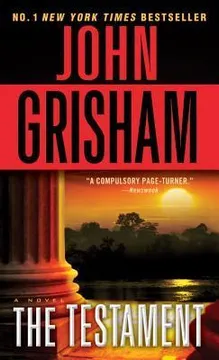


Plot Summary
Troy's Last Deception
Troy Phelan, an isolated billionaire, gathers his estranged children and former wives at his Virginia headquarters, letting them believe a new will will make them rich. He claims an inoperable brain tumor and submits to a psychiatric examination arranged to prove he is competent. The doctors confirm he understands his fortune and his family.
Troy signs the thick will his lawyer prepared, but after the others leave, he produces a handwritten testament that revokes it. He rises from his wheelchair, walks to the terrace, and jumps. His lawyer Josh Stafford and aide Snead witness the fall, while the heirs below arrive expecting an inheritance. Troy's private instructions and handwritten will are now in Stafford's hands.
Troy turns estate planning into his final act of control. The staged examination makes the law certify his competence, while the sudden suicide invites everyone to mistake despair for incapacity. His deception is not merely a trick against his children: it exposes how completely he has reduced family relationships to questions of ownership and entitlement. Yet the elaborate machinery also suggests a man who still wants his choices to matter, even as he rejects the people who might have remembered him.
A Daughter in the Will
After the body is removed, Stafford opens the envelope Troy left behind. The handwritten will gives each of six known children only enough to clear debts incurred by the day of Troy's death, and nothing to his three former wives. The remainder goes to Rachel Lane, born to Evelyn Cunningham and raised far from the Phelan family.
A note says she is a World Tribes missionary near the Brazil-Bolivia border, but Troy had not contacted her in twenty years. His other instructions demand an autopsy, cremation, and a month-long delay before the will is revealed. The autopsy finds no tumor, drugs, or alcohol, confirming that Troy fabricated his illness to make the examination and secret signing possible.
The will reverses the family’s assumed logic: biological proximity earns little, while an absent daughter receives nearly everything. Troy's choice appears both deliberate and emotionally unreadable, forcing Stafford to administer a decision he cannot explain. The autopsy deepens the ambiguity. Troy was not dying of the illness he claimed, yet he was determined to die on his own terms. His care in arranging evidence gives the legal plot its engine and makes uncertainty itself a weapon.
The One-Page Shock
On December 27, Judge Wycliff reads Troy's short handwritten will before the Phelan family, their lawyers, and reporters. The children learn that their bequests are limited to existing debts and vanish if they contest the document; Rachel receives the rest.
The former wives receive nothing. Their shock quickly becomes anger, and all six children challenge the will on grounds that Troy lacked mental capacity. Their lawyers hire new psychiatrists to contradict the three doctors who examined him, while Hark Gettys recruits Snead, who claims intimate knowledge of Troy's supposed decline.
With the fortune at stake, the family divides into legal camps. Even the public spectacle becomes part of the fight, as the heirs and their attorneys try to make Troy look irrational and themselves look wronged.
The courtroom turns private family dysfunction into public performance. The heirs have spent years treating Troy's money as the natural remedy for their failures, so the will reads to them as both financial loss and final rejection. Their lawsuit also reveals the trap in Troy's design: contesting may destroy even the small protection he left them. Rather than pause over that risk, they follow lawyers who translate desperation into strategy, making the family’s dependence on money visible to everyone watching.
A Lawyer Leaves Rehab
Nate O'Riley, a gifted trial lawyer recovering from another addiction crisis, learns that Troy's only substantial heir may be a missionary living among remote Indigenous people. Josh Stafford asks Nate to find her, explain the will, and bring back her decision. Nate has no home, faces an income-tax indictment, and doubts he can return to the courtroom, but the expedition offers a reason to leave the pressures and drinking haunts of Washington.
After 140 days in rehab, he flies to Brazil with a satellite phone, legal papers, and research on the Pantanal. In Corumbá, local lawyer Valdir Ruiz introduces him to Jevy Cardozo, a river guide. Their maps show that finding one woman will require crossing a vast, roadless wetland.
Nate accepts the assignment partly because it is a legal necessity and partly because it postpones a reckoning with his own life. His recovery has given him structure, but not confidence that he can survive outside it. The Pantanal offers no courtroom, calendar, or familiar bar, only physical uncertainty. That makes the journey both a professional task and an experiment in whether Nate can remain responsible when no institution is monitoring him.
A Crash Before Christmas
On Christmas Eve, Nate, Jevy, and pilot Milton take an aging Cessna over the flooded wetlands to scout for villages. A storm overtakes them, and Milton lands hard on a small ranch strip, where the plane strikes a cow and overturns. The three men survive with bruises, and the ranch family shelters them. An army helicopter later rescues them and returns them to Corumbá.
Nate celebrates with beer, then tells himself the drinking is harmless. Loneliness and memories of his children soon draw him to a shop, where he buys vodka and drinks until he is found naked and unconscious beside his bed. Jevy nurses him through the immediate danger, then takes him upriver, refusing to abandon the expedition or its sick lawyer.
The crash makes Nate physically dependent on strangers before his addiction makes him dependent again on alcohol. His relapse is not a dramatic rebellion so much as a familiar private bargain: he believes a dangerous exception proves he is in control. Jevy's practical care counters that self-deception without moralizing. In the Pantanal, survival is collaborative and immediate, while Nate's drinking is an attempt to retreat from dependence and pain by pretending he needs no one.
Lost in the Flood
The Santa Loura carries Nate, Jevy, and young deckhand Welly north along the Paraguay River. At a trading post, Jevy hears of a woman missionary among the Indians, while Nate battles cravings and chooses not to buy beer.
They transfer to a small motorboat and enter the flooded tributaries, where familiar landmarks disappear and the engine repeatedly falters. A fisherman directs them toward a Guato settlement, but the travelers discover they have taken the wrong river.
The Guato chief confirms that a woman missionary lives with the Ipicas, farther north and west. As storms threaten and the group struggles to navigate back toward the main river, Nate must trust Jevy's judgment rather than his own maps. The route to Rachel becomes a test of patience as much as navigation.
The flooded landscape dismantles the fantasy that wealth and professional competence can make uncertainty manageable. Nate can pay for boats and equipment, but he cannot buy reliable landmarks or command the river to behave. His choice to avoid the beer at the trading post matters because it is made without an audience or guarantee of success. Jevy's local knowledge, imperfect but lived, repeatedly proves more useful than the paperwork Nate brought from Washington.
The Missionary in the Trees
After days of wrong turns and a dangerous storm, Nate and Jevy reach an Ipica settlement. Rachel, a physician and missionary, meets them but says she is no longer Rachel Lane. Nate explains that her biological father has died and left her his fortune.
Rachel refuses to sign the court papers or accept the money, insisting that her life belongs with the people she serves. She tells Nate she has spent years avoiding her past and asks him not to expose her location.
Their conversations move beyond the inheritance: Rachel questions Nate's pursuit of money and helps him pray about his addictions and failures. Nate leaves without her signature, but with a promise to protect her privacy and a new awareness of how little he understands about a life not measured in wealth.
Rachel's refusal frustrates the legal process but exposes a deeper conflict: the inheritance assumes that money is universally desirable, while her chosen life is built around service and spiritual commitment. She does not simply reject materialism as an idea; she fears that publicity and wealth will disrupt a community that has already been harmed by outsiders. Nate's response is complicated. He still needs her cooperation, but her questions reach the shame beneath his professional confidence.
A Child and a Fever
An Ipica girl named Ayesh dies after a venomous snakebite because Rachel lacks the antivenin needed to save her. Rachel returns from the unsuccessful treatment to find Nate waiting.
She explains that the local shaman blames her and her Christian converts for the death, and that her medical work is constantly challenged by suspicion and limited supplies. During a walk to a mountain stream, Nate admits the extent of his drinking, drug use, failed marriages, and estrangement from his children.
Rachel listens and prays with him, then urges him to leave before disease spreads. Nate and Jevy depart with Indigenous guides, but Nate develops a severe fever and rash. The illness is diagnosed as dengue, not malaria, and he is carried back to Corumbá for treatment.
Ayesh's death gives Rachel's vocation a material cost: faith cannot substitute for medicine when the needed treatment is absent. Her conflict with the shaman is not a simple contest between knowledge and superstition, since the community's mistrust grows from a long history of outsiders imposing their authority. Nate's confession matters because he stops presenting his failures as legal or logistical problems. He lets Rachel see his dependence without disguising it as a case to be won.
The Chapel in Corumbá
During Nate's fever, Rachel appears at his hospital bedside and comforts him, then disappears before he can understand how she reached him. Once he recovers, he searches Corumbá for her but finds no trace. In a small chapel, he listens to a service and privately confesses the damage he has done to his family and himself.
Back in the United States, he tells Josh that Rachel rejected the inheritance and the legal forms, yet agrees to represent her while the will is challenged. Josh arranges a temporary home at his Chesapeake cottage. Nate begins helping Father Phil, a local rector, renovate church classrooms, and uses the work and quiet routine to build a life outside his former law office.
Nate's spiritual turn is not a cure delivered by a single prayer. The chapel gives him a language for responsibility, while the dengue episode has made his physical vulnerability impossible to deny. His choice to represent Rachel despite her refusal is ethically uneasy, because he and Josh conceal the extent of her disengagement from the court. Still, Nate begins to move from self-punishment toward useful action, measured in work, honesty, and renewed attention to others.
The Heirs Take the Stand
The Phelan children sue to invalidate their father's will, and their lawyers pay Snead half a million dollars for testimony portraying Troy as mentally unstable. Nate questions each heir about the fortunes they already squandered, their debts, and their plans to spend again.
The depositions make them poor witnesses for a jury. Snead fares worse: Nate confronts him with evidence of his new car, condo, and expensive trip, and Snead admits he has been paid.
The secretary Nicolette's claim of an affair also falters when she cannot identify a distinctive birthmark visible in Troy's autopsy photograph. The heirs' legal case remains alive, but their central witnesses are compromised, and Nate sees more clearly why Troy feared giving his children unrestricted control.
The depositions turn legal procedure into a test of credibility, but they also expose how the heirs have been shaped by Troy's neglect. Their wastefulness is real; so is the absence of any parent who taught them how to manage money or failure. Snead's bribery makes the challengers' moral position especially weak. Nate's skill can reveal that weakness, though the work also forces him to use the aggressive tactics and emotional distance that once helped wreck his own life.
The Children He Missed
After the depositions, Nate drives west to see his four children. His younger children, Austin and Angela, cautiously welcome him in Oregon; he attends Austin's soccer game and shares ordinary meals with them, then leaves before his presence overwhelms their routine.
His older son Daniel meets him in a bar and keeps the conversation guarded, while his daughter Kaitlin cancels their meeting with an excuse. Nate does not repair these relationships in a few days, but he recognizes the years of absence he caused through work, drinking, and self-absorption.
Back in St. Michaels, he writes Rachel about the litigation and the Phelan heirs, and sends money through World Tribes for medical supplies and a boat. He has begun acting on care rather than treating money as its substitute.
The family visits deny Nate the easy absolution he might have wanted. Austin's invitation to a game offers a small opening, but Daniel's distance and Kaitlin's cancellation remind him that a parent's remorse does not obligate children to forgive. Nate's restraint is a change: he does not try to purchase closeness or demand emotional reassurance. His letters and donation extend that same movement outward, making support concrete while leaving other people's choices intact.
The Fifty Million Settlement
As discovery weakens the heirs' case, their lawyers recognize that Snead is compromised, their clients make poor witnesses, and the psychiatric experts are divided. Josh Stafford negotiates with them, describing the Phelan children as damaged by privilege and an absent father rather than simply greedy.
He offers twenty million dollars per heir; the lawyers demand fifty. At Judge Wycliff's settlement meeting, Nate agrees to the fifty-million figure, and the heirs accept.
The agreement is signed by the children and their attorneys, then by Nate, but still requires Rachel's consent. Nate returns to Brazil with a proposed charitable trust that would preserve the fortune and direct its earnings toward missions, Indigenous rights, medicine, and relief. He hopes Rachel will authorize it.
The settlement acknowledges two truths the lawsuit had obscured: the heirs are responsible for their choices, and Troy helped create the conditions in which those choices formed. The lawyers turn that complexity into a financial bargain, and their fees consume a substantial share of the money they claim to defend. Nate's proposed trust offers a third path between total inheritance and total renunciation. It would preserve Rachel's agency while making the wealth useful beyond the Phelan family.
The Testament Under the Hut
Back in the Pantanal, Nate and Jevy find Rachel's village emptied of its usual activity. The chief leads them to two graves: Rachel and Lako have died of malaria, part of an outbreak that has killed ten people. In Rachel's hut, Nate finds a handwritten will dated January 6, the day she visited him in the hospital.
She does not renounce Troy's bequest, but directs it into a trust for World Tribes, Christian mission work, Indigenous rights, and people in need. She appoints Nate executor and trustee, giving him broad discretion. Witnesses and a notary have certified the document. Rachel has answered the legal question in her own way, though Nate must now carry out instructions she cannot explain in person.
Rachel's will transforms inheritance from a transfer of private ownership into a duty of stewardship. The date links her unseen hospital visit to the moment Nate was most vulnerable, making her final choice feel continuous with their brief friendship rather than a response to his later bargaining. Her death is not presented as a moral reward or a neat sacrifice. It leaves Nate with grief, legal responsibility, and a task whose scale dwarfs the trust he has learned to place in himself.
A Fortune Becomes a Trust
Nate tells Josh that Rachel is dead and reads him the will. Because Troy's testament remains valid and Rachel's own testament directs the bequest into a trust, the heirs' settlement still stands. They receive their agreed payments, while Rachel's share is protected for the causes she specified.
Nate accepts the role of trustee and executor, though he has no personal claim to the fortune. He leaves the village with Jevy and Welly aboard a slow cargo boat, choosing not to hurry back to Corumbá. The ending gives him neither a courtroom victory nor a repaired family. Instead, he has a responsibility, a renewed faith, and a future organized around serving a purpose Rachel chose.
The resolution replaces Troy's control with Rachel's delegation. Nate is not rewarded with wealth; he is trusted with the difficult work of distributing it without making himself its center. The settlement prevents the Phelan children from taking the whole estate, but it does not erase their grievances or repair their lives. The closing river journey suits Nate's altered sense of time: recovery and responsibility are not a dramatic finish, but a direction he must keep choosing.
Analysis
The novel makes inheritance a conflict over what wealth is supposed to do. Troy's children treat money as both compensation for an absent father and a means of escaping the consequences of their own choices. Troy recognizes their incapacity but cannot separate judgment from punishment: he leaves them almost nothing, then makes the legal process itself a final confrontation. The heirs' contest exposes the way attorneys can convert private pain into a market, especially when Hark's group purchases Snead's testimony and treats a family history as material to be shaped.
Rachel offers a radically different relation to property. She does not deny that money can help; her work as a physician shows how a lack of basic medicine can cost a child's life. What she rejects is ownership as personal reward and the assumption that wealth grants outsiders authority over her community. Her will transforms inheritance into stewardship, but it does not erase the colonial history around the Pantanal or make charitable intentions automatically innocent. The trust's value depends on how Nate uses power he has not earned.
Nate's arc links legal competence to moral change. He begins as a man who can dismantle witnesses while failing to govern himself. The wilderness does not cure his addiction, and a religious experience does not restore the family he neglected. Instead, recovery appears as a succession of choices: accepting Jevy's help, refusing some cravings, confessing without demanding absolution, and attempting to reconnect with his children without buying their affection. His final responsibility is not a prize but a test. The ending suggests that wealth becomes ethically meaningful only when those who control it accept limits, listen to the people affected, and remain answerable for what they do.
Review Summary
The Testament is a popular John Grisham novel that blends legal drama with adventure. It follows the story of a billionaire's will, leaving his fortune to an unknown daughter in Brazil. Readers praise the engaging plot, character development, and exploration of themes like greed and faith. Many consider it one of Grisham's best works, with compelling descriptions of the Brazilian jungle and courtroom intrigue. While some critics found the ending rushed or preachy, most readers found the book entertaining and thought-provoking.
People Also Read










Characters
Troy Phelan
Empire's bitter patriarchA self-made magnate who measures people through the damage they can do to his fortune, Troy is clever, controlling, and deeply lonely. He has raised several families without becoming a reliable father, then treats his final will as a last chance to decide who deserves his wealth. His contempt for his children is rooted partly in their wastefulness and partly in his own refusal to guide them. He understands legal strategy well enough to stage appearances and protect his choices, but emotional intimacy remains beyond his reach. His fortune gives him power over everyone around him, while his private life shows how little power can buy affection.
Nate O'Riley
Wounded trial lawyerA brilliant litigator whose career has been repeatedly interrupted by alcohol, drugs, and self-destruction, Nate begins the story with little confidence that sobriety will last. He is quick-witted and capable of reading witnesses, but has used those talents to avoid confronting his own failures as a husband and father. The search for Rachel forces him out of familiar professional routines and into situations where he must accept help from Jevy, local families, and people whose lives are unlike his own. He is skeptical of easy redemption, yet increasingly willing to practice care through concrete acts rather than promises.
Rachel Lane Porter
Missionary physicianAn American doctor and Christian missionary, Rachel has spent years serving Indigenous communities in the Pantanal. She is disciplined, observant, and deeply committed to the people who have accepted her, while guarding the privacy of the life she has chosen. Her medical work gives her practical authority, but she does not mistake education or religion for permission to dominate others. Rachel regards money and public attention with suspicion because both can disrupt the community she serves. Her quiet certainty unsettles Nate, who is accustomed to treating every problem as something that can be argued, bought, or managed.
Josh Stafford
The executor strategistTroy's longtime attorney and executor, Josh is a seasoned Washington litigator who knows how to turn legal risk into a workable plan. He is loyal to Troy's instructions and protective of his own firm, but his concern for Nate is genuine. He arranges Nate's expedition partly because the firm needs a lawyer to find Rachel and partly because Nate needs distance from his old habits. Josh is strategic, impatient, and capable of bending the truth when he believes the larger objective requires it. His friendship with Nate is expressed through practical help, though he sometimes treats the younger man's life as another problem to manage.
Jevy Cardozo
Fearless river guideA young river pilot raised in the Pantanal, Jevy knows the waterways through experience rather than formal maps. He is physically confident, resourceful, and generous with Nate, even when the lawyer's fear and relapse make the job harder. Jevy's father died on the river, so his confidence is not ignorance of danger; it is a practiced way of living with it. He can be blunt and proud, but he repeatedly chooses responsibility over convenience, guiding Nate through storms, illness, and confusion.
Malcolm Snead
The discarded valetTroy's longtime aide, Snead has spent decades anticipating his employer's needs and covering for his private life. He expects a substantial reward for that loyalty, and feels betrayed when Troy leaves him nothing. His resentment and financial anxiety make him vulnerable to the heirs' lawyers, who offer money for testimony. Snead is observant enough to understand how legal stories are constructed, but he lacks the standing to control the story once others begin shaping it.
Troy Phelan Jr.
Entitled eldest sonKnown as T.J., Troy's eldest son has spent much of his life expecting wealth to repair his mistakes. He has squandered an earlier inheritance, failed in business, and remains hungry for his father's approval even while resenting him. His confidence often masks poor judgment, and he assumes future money is already his before he has read the will. He is one of the clearest examples of how privilege can provide repeated chances without teaching a person how to use them.
Rex Phelan
Debt-ridden schemerTroy's second son is shrewder than T.J. about money and legal strategy, but no more disciplined in using either. Rex has accumulated debts, faced scrutiny over a failed bank, and hidden assets through his wife. He sees the will contest as both a route to relief and a chance to regain control of the family company. His talent for calculation does not extend to self-examination; he repeatedly mistakes a clever maneuver for a sound life.
Libbigail Jeter
Recovering prodigal daughterTroy's eldest daughter once craved her father's attention and later rebelled through drugs, unstable relationships, and years of addiction. By the time of the estate fight, she has built a modest life with Spike and has been sober for years. Libbigail is sharp enough to recognize when others are manipulating her, though her lifelong hunger for affirmation still makes her susceptible to people who offer loyalty. Her history gives Nate one of the few opportunities to meet a Phelan heir without reducing her to a financial profile.
Mary Ross Jackman
The careful spendthriftThe youngest daughter of Troy's first marriage, Mary Ross is more measured than her siblings but remains caught in the family's expensive habits. She has a stable marriage and children, yet she and her husband carry serious debts and live beyond their means. She presents herself as a devoted daughter in the will contest, blending genuine grievance with the financial hope shared by the other heirs. Her relative composure does not make her immune to the family's belief that money can restore what Troy withheld.
Geena Strong
Restless inherited privilegeTroy's daughter from his second marriage, Geena is caught between dwindling personal funds and her husband Cody's repeated business failures. She wants the appearance of security and status, but her choices often deepen the debt she hopes an inheritance will erase. Geena can be socially perceptive, especially when she sees the hypocrisy of her husband's family, yet she participates in the same spending culture she resents. Her testimony reveals how quickly hope for future money becomes present-day obligation.
Ramble Phelan
Alienated youngest sonTroy's youngest child is a teenager whose anger, school absences, drug use, and conspicuous style make him appear more defiant than self-directed. He is ashamed of having an elderly father and expects the estate to grant him freedom without understanding what responsibility would require. Ramble's immaturity is not simply comic; he has been raised amid adult indifference and family conflict, with few dependable limits. His presence makes the prospect of an unrestricted fortune especially alarming.
Lillian, Janie, and Tira
Estranged former wivesTroy's three former wives represent different eras of his life and three different bargains with his wealth. Lillian, his first wife, raised four children after their marriage ended; Janie bore two children and later remarried; Tira married Troy when he was much older and is raising Ramble. Each woman has her own grievances, but none is close to him by the time of his death. Their expectation of further money shows how divorce settlements and old resentments have not ended the family's dependence on Troy.
Hark Gettys
Ambitious estate litigatorRex's lawyer is energetic, opportunistic, and attracted to the publicity and fees of a high-profile will contest. Hark is skilled at finding leverage and persuading clients to accept risky tactics, including the effort to purchase Snead's testimony. He understands that his clients have a weak case but believes litigation can still force a settlement. His professional ambition often outruns his ethical judgment, making him a mirror of the legal culture that turns family grief into billable strategy.
Judge F. Parr Wycliff
Curious probate judgeA young Virginia judge, Wycliff is eager to preside over a case involving one of the country's largest fortunes. He is attentive to procedure and enjoys the public importance of the matter, though his curiosity sometimes blurs into appetite for spectacle. He presses Stafford and Nate to establish the court's authority over Rachel and to move the litigation along. His role reminds the parties that even a private will becomes a public contest once lawyers and a fortune enter the courtroom.
Welly
Young river deckhandWelly is a teenage deckhand who works on the Santa Loura and hopes to prove he can handle many jobs on the river. He is eager, cheerful, and less experienced than he claims, but his presence helps make the boat a working home for Nate and Jevy. He cooks, watches the vessel, and survives the dangers that disrupt the expedition.
Lako
Rachel's steadfast aideA young Ipica man with a limp, Lako helps Rachel move between settlements and communicate with her community. He is quiet, observant, and trusted by the people around him. His presence shows that Rachel's work depends on local relationships rather than solitary heroism, and that he has a life and faith of his own within the community.
Valdir Ruiz
Corumbá's local counselA Brazilian lawyer with strong English and deep local ties, Valdir helps Stafford's firm navigate the practical realities of finding Rachel. He arranges guides, boats, and communications while translating between American legal expectations and the slower rhythms of Corumbá. Valdir is courteous but pragmatic, and his knowledge is essential precisely because the Pantanal cannot be managed from a distant office.
Father Phil Lancaster
Patient country rectorThe rector of Trinity Church in St. Michaels, Phil welcomes Nate into his home and gives him a place in the church's slow renovation work. He is warm, sociable, and serious about spiritual practice without demanding instant transformation. His conversations and shared labor offer Nate a steady community that is neither a courtroom nor a treatment center.
Neva Collier
Mission agency coordinatorNeva coordinates World Tribes' South American missionaries and is one of the few people who knows Rachel's private history. She balances concern for Rachel's privacy with the organization's responsibility to support its field workers.
Cody Strong
Geena's restless husbandGeena's husband, Cody, is an educated aspiring entrepreneur whose speculative ventures repeatedly lose money. He is skilled at presenting failure as the prelude to success, and his ambitions intensify the couple's dependence on Geena's family wealth.
Amber Rockwell
Rex's former dancer wifeRex's wife, Amber, is a former stripper who owns assets and businesses placed in her name. She is socially alert and financially important to Rex, whose security depends on her continued loyalty.
Plot Devices
The holographic wills
Handwritten inheritance pivotsTroy writes a brief will by hand moments before his suicide, revoking the formal documents prepared over the years by Stafford. The handwritten form allows him to act without conventional estate planning and transfers the remainder of his fortune to Rachel. Rachel later writes her own holographic will, directing the inheritance into a charitable trust and appointing Nate to administer it. The matching forms connect their choices while producing two separate legal tests.
The psychiatric examination
A recorded test of capacityThe heirs select three psychiatrists to assess whether Troy can legally make a will. Troy anticipates their questions and performs competence convincingly, then signs his own document after the formal examination. The videotape and the doctors' unanimous conclusions later become the strongest evidence against the heirs' challenge. Their attempt to discredit the original doctors by hiring replacements only creates a divided expert record.
The Phelan contest clause
A costly choice for heirsTroy conditions each child's limited gift on not challenging the will. The clause is designed to make the heirs weigh immediate debt relief against the chance of winning a share of the whole estate. Their lawyers proceed with the contest anyway, believing the potential settlement outweighs the risk. It also gives the legal fight an ironic structure: every step taken to claim more may cancel the only amount Troy explicitly left them.
The Pantanal expedition
A journey beyond controlNate's search for Rachel depends on guides, rivers, weather, and Indigenous knowledge rather than roads or schedules. The satellite phone, maps, boats, and helicopter provide limited help, but storms and flooded tributaries repeatedly defeat the American legal team's planning. The expedition puts Nate in situations where he must rely on others and confront his addictions without the structures that previously contained him. The physical journey therefore carries both the inheritance plot and his personal recovery.
Rachel's charitable trust
Wealth redirected to serviceThe trust gives Rachel a way to retain the legal bequest without making the fortune part of her personal life. Its earnings are intended to support World Tribes, Indigenous rights, medical care, and other humanitarian needs. Troy's will gives the estate to Rachel, while Rachel's testament determines what happens next. Nate's appointment as trustee turns the plot's question of who deserves money into a continuing obligation to use it responsibly.
About the Author
Other books by John Grisham








Download PDF
Download EPUB
.epub digital book format is ideal for reading ebooks on phones, tablets, and e-readers.








