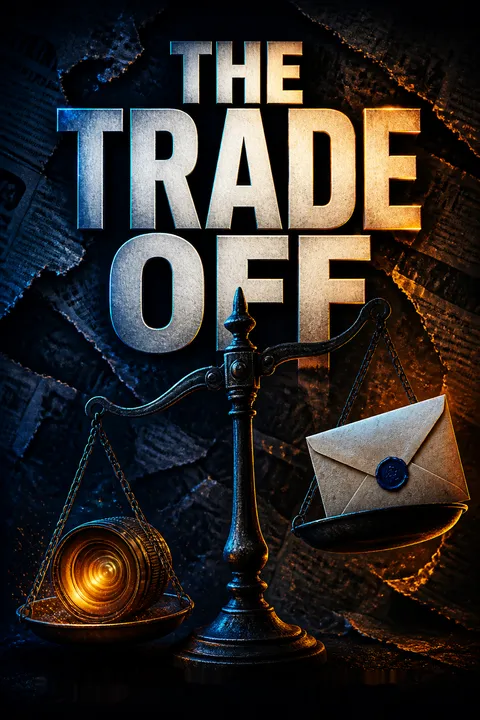


Plot Summary
Prologue
At a funeral, a woman with a plastered arm and broken ribs is confronted by the dead woman’s furious husband. She has come to pay her respects, but he sees her as a traitor and lunges before another woman holds him back.
The injured visitor cannot explain herself; the scene’s force comes from what remains unsaid, including the identity of the person standing behind her. It opens on the aftermath of a betrayal, then the story rewinds to show how a young reporter and a seasoned deputy editor helped bring it about.
The prologue makes grief an accusation before the reader knows what has been lost or who is responsible. The visitor’s injuries suggest that the story’s violence is not confined to headlines, while the husband’s rage gives private suffering a face and a voice without explaining it away. By withholding the people’s identities and the chain of events, the scene creates suspense through moral uncertainty rather than mystery alone. Its funeral setting also establishes a question the plot must answer: what kind of harm can a newspaper cause, and what does accountability look like after the victim can no longer speak?
Jess Enters The Globe
Jess Townsend leaves a local Essex paper for The Globe, Britain’s biggest-selling tabloid, after editor Max Forsythe tests her resolve in a late-night interview. His questions about her private life and his advice about appearing drunk unsettle her, but she refuses to treat unethical conduct as the price of ambition.
Max then introduces the newsroom’s harsher reality: she will work under deputy editor Stella Thorne, whose reporters chase stories through pressure, deception, and relentless deadlines.
Jess arrives eager to learn and quickly discovers that her new colleagues do not share her assumptions about what journalism should be. The job is a chance to reach the national stage, but her first test is whether she can remain herself inside a newsroom built to reward compromise.
Jess’s recruitment establishes the novel’s central conflict in miniature. Max frames moral integrity as something he values, but the newspaper he runs depends on practices that will soon challenge that promise. Jess’s inexperience is not simply a professional weakness; it makes her more likely to notice what veteran staff have learned to normalize. Her decision to accept the job is therefore both hopeful and risky. She believes journalism can serve the public without exploiting its subjects, while The Globe treats ethics as a variable cost in the pursuit of attention.
Stella’s Perfect Sting
While Jess prepares to start work, Stella coordinates a hotel sting against Ned Jacobs, a married shadow home secretary, using sex worker Marianne Kapinsky to draw him into a meeting.
When rival paper The Post offers Marianne more money, Stella refuses to raise The Globe’s payment and instead threatens to expose her identity if she breaks their agreement. Marianne backs down, and the cameras capture Jacobs with her, including footage of cocaine use and a politically damaging remark.
Max praises Stella’s scoop, but the operation also reveals how their newsroom understands leverage: a source’s privacy is protected only while it serves the paper. Stella takes pride in landing an exclusive, even as she knows that the so-called trade-off leaves the target with little real choice.
Stella’s sting shows that coercion is not an accidental excess in The Globe’s culture; it is a method made efficient by contracts, cameras, and editorial authority. Her skill is real, but it is inseparable from her ability to turn another person’s vulnerability into a bargaining chip. The scene also complicates her ambition. Stella wants to become editor because she believes she is more capable than Max, yet she reproduces a system in which power is measured by how completely someone can control a story. Success makes that system feel justified, at least until its costs become personal.
The Newsroom’s First Lesson
On her first day, Jess is handed a tip that reality star Tina Mowbray has been seen with bruises. Tina denies that anything happened, but Stella sends a photographer to capture her injuries and shapes the resulting article to imply that her boyfriend, former cage fighter Rex Macy, beat her.
Jess objects that the story leaves readers to assume what Tina never said, while colleagues treat the ambiguity as a useful angle. She also learns that Yasmin Chopra, a popular cooking-show winner, will not speak to The Globe because Stella once deceived a grieving mother to pursue a story.
Jess’s colleague Lottie explains that such tactics are routine. Max then asks Jess to watch for misconduct and report it, giving her a narrow opening to challenge the culture she has just seen.
The Tina article gives Jess an early lesson in the difference between reporting evidence and arranging it to imply a conclusion. The newspaper does not need to state an outright falsehood if photographs and omissions can do the work for it. Jess’s discomfort shows that ethical judgment begins not only with what a journalist writes, but with what she chooses to leave out. Max’s request to report wrongdoing offers hope, yet it also places Jess in a divided role: she must learn the institution while quietly gathering evidence against its habits.
The Audition Trap
Stella rushes Jess to the Dorchester and dresses her to pose as an entertainment assistant for soap actor Tilly Ashcroft. In a hotel suite, a supposed Sony executive, David Phillips, hints that Tilly’s chance at a major film role depends on pleasing a director. He asks her to obtain cocaine for the gathering, and Jess grows uneasy as Tilly drinks and tries to comply.
Jess later recognizes David as Sean, The Globe’s politics editor, who had been acting under a false identity. When the paper prepares a sensational report portraying Tilly as a drug supplier, Jess confronts Max about the deception. Instead of quitting immediately, she accepts his request to report unethical practices, hoping she can still change the paper from within.
The sting is a coercive performance disguised as an opportunity. Tilly believes she is being evaluated for a career-making role, while the people around her control the setting, the information, and the evidence that will later define her. Jess’s intervention is incomplete: she recognizes the danger but lacks the authority to stop the operation. Her decision to stay after seeing the newsroom’s methods reflects both idealism and a common institutional trap. She hopes access will let her reform the system, even though her continued presence also gives that system another reporter to use.
Jewels for an Interview
Jess tries to put Max’s promise into practice by offering Ned Jacobs’s communications director a family interview in exchange for suppressing the affair footage. Jacobs’s team considers the proposal, and Jess believes she has secured a more responsible outcome.
Meanwhile, Stella tempts Yasmin with Tiffany jewelry for an interview after Yasmin’s agent refuses The Globe. Jess visits Yasmin at the awards and receives only a brief, ordinary account of cooking and family life. Yasmin is guarded because Stella has misrepresented the offer, and Max is furious that the expensive necklace has yielded little copy.
Stella’s separate bargain with Jacobs also collapses when senior editors decide to run the affair story anyway. Jess sees that even a good-faith agreement means little when the paper’s leadership can simply overrule it.
Both deals expose the instability of consent when one side controls the reward and the publication. Jess tries to use access as a path toward fairer coverage, but the decision to honor an agreement remains in the hands of editors who value circulation more than trust. Yasmin’s refusal to provide intimate material is not a failure of interviewing; it is a boundary. The newspaper reads it as a commercial disappointment. This section makes Jess’s ethical project harder, because it shows that individual good intentions cannot correct a hierarchy that can discard promises without consequence.
McAllister Comes Free
Stella’s anxiety has a history. Four years earlier, she and Max used information from Akin Demir to expose a plot against political leader Jeff Greaves, helping police arrest gang figure Ray McAllister.
Stella testified at trial, and McAllister’s wife, Christina, later arranged for men to cut a double cross into Stella’s arm as a warning. Now police source Harry tells Stella that McAllister has received parole. She fears he will seek revenge, even as Harry assures her that parole conditions and electronic monitoring may limit his movements.
Soon after, a motorbike rushes at Stella outside her office and leaves her soaked with liquid and shaken. A mask bearing the prime minister’s face suggests that the incident was deliberate, though she cannot tell who is behind it.
Stella’s fear unsettles the confident persona she uses at work. She has spent years treating risk as part of the job, but the scar on her arm makes the cost bodily and enduring. Her dependence on Harry also reveals a private vulnerability that she usually disguises as control. The threat is deliberately uncertain: she cannot distinguish warning from attack or know whether her own past choices have made her a target. That uncertainty mirrors the newsroom’s moral environment, where facts are often manipulated and danger arrives through people who may be allies, sources, or adversaries.
Yasmin’s Night Collapses
At the National Television Awards, Jess befriends Yasmin, who has just won for her cooking show. After drinking together, Yasmin confides that fame has strained her marriage to Krishan and brought back memories of childhood bullying and her mother’s difficult marriage.
Jess leaves the hotel believing they have shared a genuine confidence. The next morning, The Globe publishes images that appear to show Yasmin kissing a man and behaving indecently, with Jess’s interview attached to the story.
Jess did not see the alleged affair and had not supplied those claims. When she and Stella enter Yasmin’s hotel room to seek a response, they find her dead by suicide. Jess is devastated, while Max immediately begins planning coverage that will protect the paper from blame.
Yasmin’s confession is a moment of genuine connection that the newsroom’s logic cannot recognize as anything but usable material. Jess’s restraint, usually a source of pride, now becomes tangled with guilt because she left Yasmin alone after hearing how overwhelmed she felt. Yet the true betrayal is larger than Jess’s missed warning: manufactured images turn a private, complicated life into a public accusation. Yasmin’s death forces the novel’s ethical debate out of abstraction. A paper can claim to report behavior, but its power to fabricate the appearance of behavior can make the distinction between truth and falsehood fatal.
The Pictures Were Fake
After quitting The Globe, Jess returns to investigate when Max asks her to watch Stella’s work. On Stella’s computer, Jess finds an email from Carlos Moreno, a Brazilian man whose likeness appears in the published Yasmin photographs. The images match his unrelated modeling pictures, but Yasmin has been inserted into them.
Jess realizes the scandal was fabricated rather than merely framed by misleading captions. She then searches Stella’s files and finds the records of Tilly’s hotel sting, including driver Trevor Menzies’s details.
When Jess visits Trevor, he admits that Tilly had no drug contact and that he helped The Globe manufacture the evidence. He has recordings of editor Max directing the setup and describing a plan to infiltrate McAllister’s circle. Jess takes the tapes, gaining proof that the paper’s corruption reaches beyond celebrity coverage.
The visual evidence changes the moral scale of the story. The newspaper has not merely manipulated context; it has altered reality itself, giving the public a counterfeit image that Yasmin could not disprove. Jess’s discovery also reframes her own guilt. She had feared that withholding Yasmin’s private disclosures contributed to the scandal, but the images were not a consequence of her silence. The tapes widen the investigation from Stella’s visible cruelty to Max’s concealed orchestration. Evidence now exists, but possessing it creates fresh danger: those who built their careers on controlling information will fight to control what the recordings reveal.
Peter’s Hidden Victims
When Jess visits Tilly to apologize, the actress explains that she was drugged and assaulted during an earlier meeting with media magnate Peter Kingsley. She had begun trying to find other women with similar experiences, and nine had contacted her, including singer Sasha Peterson.
Stella, meanwhile, is invited to Peter’s country estate and initially mistakes his attention for professional advancement. Elaine Simmons warns her not to drink what Peter offers.
Stella switches their glasses, then secretly records Peter incapacitated after consuming the drink meant for her. The encounter changes Stella’s understanding of her employer and of the stories she has helped him bury. She contacts Sasha and asks her to go public, offering to tell her own story as well.
This revelation connects the newspaper’s public cruelty to the private power that sustains it. Peter does not only exploit subjects through headlines; he can use access, money, and career promises to isolate women in rooms where their choices are constrained. Stella’s near-victimization breaks the emotional distance that allowed her to treat harm as a professional tool. Yet her awakening does not erase her complicity. The recordings and Sasha’s testimony offer a route toward accountability, but Stella must now decide whether she is willing to use the very institution that protected Peter to expose him.
Max’s Recordings Surface
Jess brings the recordings to Stella, who has begun to question her old ally after learning about Peter’s abuse. The tapes confirm that Max ordered Trevor to keep Tilly from leaving and to produce footage linking her to cocaine.
Other recordings show Max arranging for Akin Demir to infiltrate McAllister’s circle and help create the evidence behind the alleged kidnapping plot. Jess also confronts Stella with the fabricated Yasmin photographs, though Stella initially says she received them anonymously and did not know they were altered.
Stella interviews Sasha, records her account of Peter’s assault, and publishes it in The Globe without naming him directly. The article gives readers enough identifying details to recognize Kingsley. Jess sees the story appear and wonders whether Stella has finally chosen exposure over advancement.
The recordings convert suspicion into a chain of responsibility. They distinguish Stella’s willingness to manipulate from Max’s more systematic role in directing people and manufacturing events. That difference matters, but it does not absolve Stella of her own choices. Her decision to publish Sasha’s account is meaningful precisely because she has spent years serving the machinery that silenced women. The anonymous accusation also tests the ethics of identification: naming Peter explicitly could invite legal suppression, while withholding his name risks protecting him. Stella chooses a form that lets the public make the connection, using the paper’s own reach against its owner.
Jess Is Taken
Max sends Jess to meet Christina McAllister under a false identity, claiming that he wants evidence about Ray’s wrongful conviction. Jess gives Christina part of Trevor’s account and proposes that Ray confront Max.
On her way back, men seize Jess in a railway tunnel and take her to a derelict room. Max arrives and tries to obtain the tapes, while Ray appears and exposes the supposed kidnapping as another setup: Max’s men abducted Jess so he could blame McAllister and eliminate the threat she posed.
Max denies nothing convincingly. When Ray demands answers, Max attacks him, then takes Jess at gunpoint and forces her to drive. Stella and Harry track the situation, but Max escapes with Jess in his car, leaving the evidence and the truth in immediate peril.
Jess’s abduction repeats the structure of the earlier stings: an apparently credible story conceals a plan to make someone else carry the blame. This time, however, Jess is not only a reporter investigating manipulation; she is the person being manipulated and physically controlled. Max’s betrayal destroys the remaining distinction between the editor who promised reform and the operator who used her as an instrument. Ray’s arrival complicates the categories of criminal and victim without making his violence harmless. The scene’s central danger is not simply who has a weapon, but who has learned to make a lie look like official truth.
The Blackwall Crash
As Max forces Jess through the Blackwall Tunnel, she refuses to keep driving him toward an isolated place where he can kill her unseen. She accelerates and deliberately loses control, overturning the car.
Stella and Harry arrive behind them; Harry pulls Jess from the wreck while Stella hesitates beside Max, who remains trapped as fire spreads. Stella leaves him to save Jess, and an explosion throws her from the car. Max dies, while Jess survives with serious injuries and Harry is left in a coma.
Before the rescue, Stella had posted video evidence of Peter’s attempted assault, and the allegation against him begins spreading publicly. In the aftermath, women come forward, Kingsley is arrested, and Stella accepts a chance to lead The Post and pursue justice for Yasmin’s family.
The crash makes Jess’s agency physical: she turns the instrument Max is using to control her into the means of breaking his control. Stella’s choice to rescue Jess rather than Max marks the clearest break from her former loyalty, though it costs her safety and leaves lasting consequences. The story does not present publication as justice by itself. Stella’s post gives victims visibility, but the legal case and the support of other women are necessary to challenge Peter’s power. The ending therefore shifts from the fantasy of a clean newsroom to the harder work of building accountability after violence has already occurred.
Epilogue
At Yasmin’s funeral, Jess attends despite her injuries, while Krishan confronts her and Stella for their part in his wife’s public destruction. Stella promises to make The Globe incapable of repeating what it did, and Jess thanks her for pulling her from the wreck.
Harry remains in intensive care, but doctors expect to bring him out of his coma. Peter Kingsley has been arrested as more women come forward. Michael Leith of The Post offers Stella its editorship, and she accepts on the condition that the paper pursue a wrongful-death case for Yasmin’s family. She also asks to bring Jess with her.
The funeral returns the story to its opening accusation, but now Jess and Stella can answer for their actions rather than hide behind the institution that enabled them. Krishan’s anger prevents the resolution from becoming a simple absolution: Stella’s new intentions cannot restore Yasmin or repair the harm already done. The offer from The Post gives Stella a platform, not a guarantee of reform. Her demand for a lawsuit turns remorse into a concrete commitment, while asking Jess to join her suggests that ethical change requires more than one person’s conversion. The ending is cautiously hopeful because accountability has begun, not because the damage has disappeared.
Analysis
The Trade Off treats tabloid journalism as a system of power rather than a collection of individual bad decisions. The Globe’s editors can decide what counts as evidence, arrange the circumstances that produce it, and then present the result as a neutral account. That authority is most dangerous when it borrows the appearance of certainty: a photograph, a recorded conversation, or a source who seems to confirm the paper’s preferred story. The novel’s most consequential fabrications do not merely mislead readers. They alter how families understand one another, how the public judges a woman, and how a court treats a criminal defendant.
Jess and Stella represent different stages of accommodation. Jess arrives believing that truth can be separated from the machinery of publication. Her empathy makes her an attentive reporter, but it cannot protect Yasmin once the paper turns fabricated images into a public verdict. Stella has learned how to succeed inside that machinery. She can recognize its violence, yet ambition and fear have taught her to manage consequences rather than challenge the structure. Her change begins not when she becomes morally pure, but when Peter’s predation makes the cost of her accommodation impossible to ignore.
Yasmin’s death is the novel’s ethical fulcrum because it prevents reform from remaining a comfortable professional ideal. The story does not let Jess’s good intentions erase her proximity to the harm, nor does it let Stella’s eventual courage cancel her earlier complicity. Instead, responsibility is distributed but not equal: the editors who manufacture evidence carry greater power than the junior reporter who misunderstands it, and the owner who exploits that power bears more than the employees who serve him. The ending offers no clean restoration. It offers testimony, evidence, public scrutiny, and the difficult possibility that a newsroom can be made answerable to the people it has used.
Review Summary
The Trade Off receives mixed reviews, with an average rating of 3.25/5. Many praise its fast-paced plot and exploration of tabloid journalism ethics. Readers appreciate the dual perspectives of Stella and Jess, though some find the characters unlikeable. The book is described as a suspenseful thriller with unexpected twists, particularly in the second half. Critics note a slow start and confusing plot elements. Overall, it's viewed as an engaging read that delves into the dark side of media, celebrity culture, and the #MeToo movement.
People Also Read









Characters
Jess Townsend
Rookie with a conscienceJess is a young reporter who leaves a local paper for The Globe, hoping to pursue journalism with both ambition and a clear moral center. She is observant, empathetic, and initially unsure how to survive among colleagues who treat deception as routine. Her instinct to protect sources makes her a more humane interviewer, but it also leaves her vulnerable to guilt when events turn tragic. Jess’s defining tension is between the urge to intervene and the fear that her inexperience makes intervention dangerous. She keeps asking what responsibility a reporter has to the person behind the story, a question that gradually matters more to her than professional approval.
Stella Thorne
Ambitious tabloid operatorStella is The Globe’s deputy editor, a gifted reporter whose polish conceals exhaustion, fear, and a deep need for professional control. She wants the editor’s office and believes her skill earns her the right to shape the paper, yet her work has made her complicit in the machinery she hopes to command. Her relationship with Max mixes loyalty, rivalry, and years of shared newsroom history. Stella is not indifferent to suffering, but she has trained herself to keep empathy at a distance when a story is at stake. The tension between her appetite for power and her buried capacity for solidarity drives her choices.
Max Forsythe
Editor with a double agendaMax runs The Globe with a mixture of charm, calculation, and force. He can recognize a young reporter’s integrity and speak persuasively about reform, while also demanding the circulation-driving stories that keep the paper powerful. His history with Stella is intimate in a professional sense: they rose through the newsroom together, shared sources, and learned to anticipate each other. Max’s ambition is tied to his position and to the influential people who depend on him. He understands how trust works, which makes his ability to invoke it as readily as he exploits it especially unsettling.
Peter Kingsley
Media empire’s ownerPeter owns Global International, the corporation behind The Globe, and expects those around him to protect his business interests. He is accustomed to being courted, obeyed, and treated as the final authority on what sells. His influence reaches across newspapers, entertainment, and politics, allowing him to turn personal favors into professional pressure. Peter sees people as assets or liabilities and considers reputation a resource to be managed. His public stature and private entitlement create the power imbalance that shapes the newsroom’s conduct, particularly for women whose careers depend on access to his company.
Tilly Ashcroft
Soap star seeking a leapTilly is the familiar face of a popular soap, but she is eager to prove that she can play more demanding roles. The promise of a major film opportunity makes her susceptible to the people who control auditions and access. She is not naturally reckless; she tries to read what the industry wants and adapts herself in the hope of being taken seriously. Tilly’s story exposes how ambition can be exploited when someone with less power is made to believe that compliance is the only route to a career. Her guardedness is a response to experience, not a lack of courage.
Yasmin Chopra
Celebrated home cookYasmin rises to fame by winning a televised cooking competition, bringing warmth and skill into viewers’ homes. She is a mother and wife whose public success arrives alongside the demands of a new baby and an altered family life. Her polished media image masks the pressure of scrutiny and the older injuries of bullying and family conflict. Yasmin can be candid in a trusted conversation, but she is wary of outlets that turn intimacy into spectacle. Her character shows how fame can make a person visible everywhere while leaving her with fewer safe places to speak honestly.
Ray McAllister
Gang figure in the frameRay is a feared criminal whose name becomes bound to The Globe’s account of a plot against a political leader. His family, especially his wife Christina, remains central to the consequences of that public accusation. Ray is not presented as harmless: his reputation and past conduct make it easy for others to believe the worst about him. That ambiguity matters, because the paper’s power rests partly on the public’s willingness to accept a plausible story without examining how it was assembled. His presence forces the other characters to confront the difference between guilt and a conviction manufactured to fit a headline.
Harry
Police source and protectorHarry works in security for a senior politician and supplies Stella with information she cannot obtain through ordinary reporting. Their relationship begins as a practical exchange of access and favors, then becomes more emotionally intimate than Stella is comfortable acknowledging. Harry is patient with her defenses and more willing than she is to name what he wants from their relationship. His professional knowledge makes him useful when threats escalate, but his deeper importance is personal: he offers care without demanding that Stella turn it into a transaction.
Flic
Jess’s steadfast flatmateFlic is Jess’s longtime friend and flatmate, a teasing, energetic presence who treats Jess’s family as her own. She encourages Jess to enjoy life beyond work, but she also stays close when the newsroom’s choices leave Jess shaken. Flic is practical enough to question Jess’s ambitions and affectionate enough to support her even when she thinks those ambitions are impossible. Her role grounds the story in an ordinary relationship that is not built on leverage, publicity, or professional advancement.
Christina McAllister
Ray’s protective wifeChristina is Ray’s wife and a witness to the damage that The Globe’s reporting has done to her family. She is wary of journalists and alert to the way they disguise their motives, which makes Jess’s false identity especially risky. Her anger is rooted in a conviction that the public story about Ray does not tell the truth about what happened. Christina’s small café provides a modest, personal setting for a confrontation with an industry that usually controls the room.
Sasha Peterson
Singer finding her voiceSasha is a successful singer whose career brings her into contact with powerful entertainment figures. She is wary of recounting a traumatic experience because public attention can compound the harm, not simply expose it. Her account helps Stella recognize that Peter’s behavior is part of a pattern rather than an isolated rumor. Sasha’s hesitation is psychologically credible: telling the truth may restore agency, but it also requires surrendering privacy to an audience that has not always been kind.
Krishan Chopra
Yasmin’s husbandKrishan is Yasmin’s husband and the father of their children. Jess hears that fame and a new baby have changed the rhythms of their marriage, leaving Yasmin feeling distance where she once expected partnership. He remains largely outside the newsroom’s view, which makes him vulnerable to the newspaper’s fabricated version of his wife. His presence reminds the reader that a tabloid story does not stop at its subject; it enters a household and alters the lives of people who never agreed to be part of the spectacle.
Trevor Menzies
Driver with dangerous knowledgeTrevor is a driver used by The Globe for jobs that require more than transportation. He knows how to manage a source, steer a subject toward a desired situation, and keep his own role out of the published account. Money and drugs make him unreliable, but his recordings preserve evidence that the newsroom assumed it could control. Trevor’s position between editors and targets reveals how institutional wrongdoing depends on intermediaries who can be paid to make coercion look spontaneous.
Akin Demir
Source inside the gangAkin provides The Globe with information about a supposed plot against a political leader and becomes a crucial witness in the resulting case. He is presented as a man claiming to fear the people around him, but the circumstances of his involvement are not as straightforward as the newspaper reports. His role illustrates how a source’s testimony can be shaped by money, pressure, and the needs of the journalist who publishes it.
Lottie
Jess’s newsroom guideLottie is a reporter who offers Jess a friendly face in a demanding newsroom. She explains the unwritten rules and shares her own experience of being sent into questionable assignments, often presenting them as a hardening initiation. Lottie’s kindness is real, but she has also adapted to the culture around her. Through her, Jess sees how people can be supportive on a personal level while still treating unethical methods as normal professional training.
Michael Leith
Rival paper’s proprietorMichael owns The Post, The Globe’s principal rival. He recognizes Stella’s talent and approaches her about a possible leadership role. His offer represents an alternative platform, but not necessarily a clean break from the competitive newspaper industry. He is important because he gives Stella a practical route forward once her position at The Globe collapses.
Ned Jacobs
Targeted shadow ministerNed is a senior opposition politician whose affair becomes the subject of Stella’s hotel sting. The story threatens his marriage and public image, while his political standing makes the footage especially valuable to The Globe. He functions as an early example of how private behavior becomes leverage when a newspaper controls the evidence and the timing of publication.
Plot Devices
The Trade-Off
A bargain built on pressureMax’s term for offering a target a choice between cooperating with The Globe and risking exposure. In practice, the paper controls both the threat and the proposed escape, so the agreement is coercive even when it is described as a deal. The device appears in political coverage and informs the newsroom’s wider approach to sources and subjects. It helps distinguish a freely given interview from consent extracted under the threat of humiliation.
Hotel Stings
Manufactured access and evidenceThe Globe uses hotel suites, hidden cameras, false identities, and carefully staged encounters to capture celebrities or politicians in compromising situations. The operations are designed to produce footage that can be sold as proof, even when the subject has been steered into the event. The Tilly Ashcroft sting makes the device especially clear: a supposed film opportunity becomes a trap built to create incriminating material. It exposes the gap between recording an event and engineering it.
Altered Photographs
A lie made visibleThe images published about Yasmin appear to document an affair, but they are assembled by inserting her into unrelated modeling photographs. Because images often feel more definitive than written claims, the fabrication gives the story a false authority and makes it difficult for Yasmin to answer. Jess recognizes the same male model in Carlos Moreno’s original photographs and discovers that the scandal was constructed. The device turns the novel’s concern with tabloid manipulation into literal image-making.
Trevor’s Recordings
Proof against the editorsTrevor keeps recordings of conversations in which Max gives instructions about trapping Tilly and arranging Akin Demir’s infiltration of Ray McAllister’s circle. The tapes turn rumors into evidence and give Jess a way to challenge the official version of events. Their existence also makes Jess a target, since the recordings threaten editors who have relied on secrecy and plausible deniability. They are not merely clues; they embody the possibility that people used by the newsroom can preserve their own account.
The Tracking Tag
A threat that can be followedHarry tells Stella that McAllister is wearing an electronic tag after his parole, giving security services some ability to monitor his movements. The tag reassures Stella only briefly because she does not know whether her home is a restricted area or whether monitoring can protect her in time. Later, information from McAllister’s tracking helps Harry pursue Jess’s disappearance. The device turns an abstract fear into a question of surveillance: knowing where a dangerous person is does not automatically mean being able to stop him.
FAQ
Synopsis & Basic Details
What is The Trade Off about?
- Ethical lines blurred: The Trade Off explores the cutthroat world of tabloid journalism, where ambition and ethics clash, focusing on the lives of journalists and their targets.
- Power and manipulation: The story delves into the power dynamics within a newsroom, revealing how editors and reporters manipulate stories for personal and professional gain.
- Consequences of choices: The narrative follows the characters as they grapple with the consequences of their actions, highlighting the impact of media scrutiny on individuals and society.
Why should I read The Trade Off?
- Intricate character study: The novel offers a deep dive into the complex motivations and vulnerabilities of its characters, from ambitious reporters to powerful media moguls.
- Moral ambiguity explored: It presents a thought-provoking exploration of ethical dilemmas, forcing readers to question the boundaries of journalism and the pursuit of truth.
- Suspenseful and engaging: The story is filled with suspense, intrigue, and unexpected twists, keeping readers hooked until the very end.
What is the background of The Trade Off?
- Contemporary media landscape: The story is set against the backdrop of the modern media landscape, where tabloid journalism thrives on sensationalism and scandal.
- Ethical debates: It reflects contemporary debates about the role of media in society, the balance between public interest and privacy, and the consequences of unchecked power.
- Power dynamics: The novel explores the power dynamics within a newsroom, revealing how editors and reporters manipulate stories for personal and professional gain.
What are the most memorable quotes in The Trade Off?
- "I won't be trading my morals for a byline.": This quote from Jess highlights her initial commitment to ethical journalism, setting up a central conflict in the story.
- "You'll be nobody's friend if you abstain.": Max's cynical advice to Jess reveals the cutthroat nature of the newsroom and the pressure to compromise one's values.
- "It's time that tabloid journalism cleaned up its act.": This quote from Max, despite his actions, underscores the theme of the need for ethical reform in the media.
What writing style, narrative choices, and literary techniques does Sandie Jones use?
- Dual perspectives: The narrative alternates between the perspectives of Jess and Stella, providing a multifaceted view of the events and their internal conflicts.
- Fast-paced plot: The story is driven by a fast-paced plot, filled with twists and turns that keep the reader engaged and invested in the outcome.
- Foreshadowing and suspense: Jones uses foreshadowing and suspense to build tension, hinting at future conflicts and revelations that keep the reader guessing.
Hidden Details & Subtle Connections
What are some minor details that add significant meaning?
- The recurring mention of "The Trade-Off": Max's casual use of this term for blackmail highlights the unethical practices that are normalized within the newsroom.
- Stella's double cross scar: The scar on Stella's arm serves as a constant reminder of her past and the dangers she faces, adding depth to her character.
- The description of the newsroom: The newsroom's chaotic and competitive atmosphere reflects the moral ambiguity and high-pressure environment of tabloid journalism.
What are some subtle foreshadowing and callbacks?
- The opening funeral scene: The hostility and accusations of betrayal foreshadow the complex relationships and moral conflicts that will unfold throughout the story.
- Max's "integrity test": The seemingly innocuous interview questions foreshadow his manipulative nature and the ethical challenges Jess will face.
- Stella's past encounter: The mention of a past incident involving a hotel room and a death threat foreshadows the danger she faces and the secrets she's hiding.
What are some unexpected character connections?
- Stella and Harry's relationship: The seemingly transactional nature of their relationship reveals Stella's vulnerability and her need for control.
- Jess and Flic's bond: The close friendship between Jess and Flic provides a contrast to the cutthroat world of journalism, highlighting the importance of loyalty and support.
- Max and Peter's dynamic: The power dynamic between Max and Peter reveals the extent of corruption and manipulation within the media industry.
Who are the most significant supporting characters?
- Trevor Menzies: As the driver and middleman, Trevor's actions and testimony reveal the extent of Max's manipulation and the unethical practices of the newspaper.
- Christina McAllister: Her desire for revenge and justice highlights the consequences of the media's actions and the impact on individuals and their families.
- Elaine Simmons: Her warning to Stella about Peter's intentions foreshadows the danger Stella faces and the corrupt nature of the media industry.
Psychological, Emotional, & Relational Analysis
What are some unspoken motivations of the characters?
- Max's fear of losing power: Max's actions are driven by his fear of losing his position and influence, leading him to manipulate and betray those around him.
- Stella's need for control: Stella's desire for control stems from her past trauma and her need to protect herself from vulnerability.
- Jess's desire for validation: Jess's ambition is fueled by her desire to prove herself and make a difference, but she struggles with the ethical compromises required.
What psychological complexities do the characters exhibit?
- Stella's internal conflict: Stella's struggle between her ambition and her conscience reveals her internal conflict and the toll of her choices.
- Max's manipulative nature: Max's ability to manipulate others and justify his actions highlights his psychological complexity and his lack of empathy.
- Jess's moral compass: Jess's unwavering commitment to her values, despite the pressures she faces, reveals her psychological strength and her desire for integrity.
What are the major emotional turning points?
- Jess's discovery of the faked photos: This moment marks a turning point for Jess, as she realizes the extent of the corruption and the impact of her work.
- Stella's encounter with McAllister's wife: This meeting forces Stella to confront the consequences of her actions and the pain she has caused others.
- The revelation of Peter's abuse: The exposure of Peter's predatory behavior marks a turning point for both Stella and Jess, as they realize the depth of his depravity.
How do relationship dynamics evolve?
- Max and Stella's partnership: Their relationship evolves from a close partnership to a bitter rivalry, highlighting the destructive nature of ambition and betrayal.
- Jess and Stella's mentorship: Their relationship shifts from a mentor-mentee dynamic to one of conflict and eventual collaboration, as they both grapple with their values.
- Stella and Harry's connection: Their relationship evolves from a transactional arrangement to a more complex connection, revealing Stella's vulnerability and her need for intimacy.
Interpretation & Debate
Which parts of the story remain ambiguous or open-ended?
- The extent of Peter Kingsley's influence: The novel leaves open the question of how much Peter knew about the unethical practices at the newspaper and the extent of his involvement in the various schemes.
- The future of The Globe: The ending leaves the future of The Globe uncertain, raising questions about whether the newspaper can truly change its ways.
- The long-term impact on the characters: The novel leaves the long-term impact of the events on the characters open-ended, allowing readers to speculate about their future choices and relationships.
What are some debatable, controversial scenes or moments in The Trade Off?
- The sting operation on Tilly Ashcroft: The ethical implications of the sting operation, and the extent to which the journalists are responsible for her actions, are open to debate.
- Stella's decision to run the photos of Yasmin: The decision to publish the photos, despite the potential harm to Yasmin, raises questions about the balance between public interest and privacy.
- Max's manipulation of Jess: Max's use of Jess as a pawn in his schemes raises questions about the extent to which he is willing to go to protect his own interests.
The Trade Off Ending Explained: How It Ends & What It Means
- Exposure of corruption: The ending sees the exposure of Peter Kingsley's predatory behavior and the unethical practices at The Globe, leading to a reckoning for those involved.
- New beginnings: Despite the chaos and destruction, the ending offers hope for a better future, as Jess and Stella find new paths and opportunities for change.
- Ambiguous resolution: The ending leaves some questions unanswered, allowing readers to reflect on the complexities of the characters and the challenges of creating a more ethical media landscape.

Download PDF
Download EPUB
.epub digital book format is ideal for reading ebooks on phones, tablets, and e-readers.








