

Key Takeaways
Turn childhood curiosity into public protection before wild species vanish.
Nature became his first education. Sickly as a child, Roosevelt found relief outdoors and began observing birds, mammals, and insects with unusual care. A fox in a picture book seemed almost sacred to him. By his teens, Darwin's account of evolution had given that wonder a scientific frame: species changed through adaptation and struggle, and careful observation could reveal how they lived. Roosevelt eventually donated 622 bird skins to the Smithsonian, but his interest was never just collecting. He wanted to understand the living world firsthand.
Wonder became a public duty. The book follows that childhood naturalist into politics, where he used federal power to protect habitats and wildlife. His central idea was that nature was not merely scenery or stock to consume. It was a shared inheritance, owed to people not yet born.
What's striking is how an intimate habit of attention becomes a governing principle. Roosevelt's bird-watching trained him to notice species, habitat, and seasonal change, habits that later helped make conservation politically concrete. This resembles citizen science today, where ordinary observation can build evidence that institutions can act on. Yet the connection between wonder and protection is not automatic. Darwinian study also involved killing specimens, and Roosevelt remained a hunter. The book's force lies in showing a real, unresolved transition: affection did not erase exploitation, but it helped him recognize what exploitation might destroy.
Keep the chase ethical, then enlist hunters to defend what remains.
Hunting changed through experience. Roosevelt killed birds and big game for science, food, sport, and trophies. He also watched the buffalo collapse from tens of millions to a remnant population, and saw other animals vanish under market hunting. His 1887 Boone and Crockett Club brought wealthy sportsmen together to promote fair chase, game laws, and protected habitat. Roosevelt still hunted, but he increasingly distinguished regulated sport from commercial slaughter and wasteful killing.
The contradiction stayed visible. He shot buffalo, bears, and cougars, including animals he admired, while arguing for their survival. His defense was that ethical hunters understood the animals and could restrain the worst abuses. The book does not make that defense entirely comfortable: Roosevelt sometimes hunted for the thrill and the trophy, not merely for science or conservation.
The hunter-conservationist is more than a colorful contradiction. It shows how a culture can use its own practices to create rules that limit destruction. Comparable arrangements appear in fisheries management, where regulated harvest can fund monitoring and sustain populations. But the approach depends on restraint, enforcement, and a credible line between sport and exploitation. It can also privilege wealthy hunters, whose access to land and leisure is unequal. Roosevelt's clubs helped protect species, yet they did not dissolve the class divide that shaped who could hunt, who made the rules, and who bore their costs.
Pair field science with enforceable laws and people who patrol the ground.
Knowledge needed an institution. Roosevelt built alliances with scientists and advocates, including George Bird Grinnell, Frank Chapman, and C. Hart Merriam. Merriam led the federal Biological Survey, a Department of Agriculture unit that studied and mapped the distribution of birds and mammals. The work helped replace guesswork with evidence about species and habitat. Roosevelt also backed the 1894 Yellowstone Game Protection Act and the 1900 Lacey Act, which restricted interstate trade in illegally taken birds and wildlife.
Rules needed enforcement. Yellowstone had been a park since 1872, but poachers faced little consequence until new law gave authorities a way to prosecute them. Roosevelt promoted scientifically informed rangers, including local outdoorsmen such as Seth Bullock and David Warford. The principle was practical: a reserve without wardens, clear rules, and penalties existed mostly on paper.
The book's institutional lesson is unusually concrete: conservation requires both information and enforcement. Modern environmental governance makes the same point through monitoring agencies, protected-area staff, and legal penalties. Scientific surveys can identify population decline, but they do not stop a hunter or logger by themselves. Nor can enforcement work without public legitimacy and adequate resources. Roosevelt's preference for rugged local rangers helped bridge federal policy and community knowledge, but it also personalized what should ultimately be a durable public system. Effective protection cannot depend on one forceful president or a handful of unusually devoted wardens.
Make bird protection a public cause, not a private sentiment.
Fashion created a slaughter industry. By 1886, more than five million birds were reportedly killed each year to supply the millinery trade. Feathers from egrets and other birds adorned fashionable hats, while hunters sold skins and sometimes shipped the carcasses for food. Frank Chapman, a popular ornithologist, challenged consumers and helped organize the Audubon movement. He also promoted camera-based bird study and a Christmas bird count that invited ordinary people to record what they saw.
Public attention became policy. Roosevelt supported the Audubon societies, signed New York's Hallock Bird Protection Bill in 1900, and backed the federal Lacey Act. These measures targeted the commercial traffic that made local slaughter profitable. Bird protection thus linked personal observation, consumer choices, state law, and federal authority.
This is an early case of conservation driven by the entire chain of consumption, not simply the person holding the gun. The campaign connected fashion buyers, scientists, volunteer counters, legislators, and wardens. That structure resembles modern environmental campaigns against products whose hidden supply chains cause ecological damage. The book also shows why moral appeals alone are weak: feather demand persisted because it supported an industry and fashionable habits. Laws and enforcement changed the incentives. A useful complication is that Roosevelt's own scientific collecting still involved killing birds, revealing how standards of acceptable use were contested even among conservationists.
Use executive power when delay leaves a habitat defenseless.
Pelican Island became a precedent. In March 1903, Roosevelt learned that plume hunters threatened the brown pelicans and other birds nesting on a small Florida island. The land was federal property, and the president could reserve it by executive order. Pelican Island became the first federal bird reservation. Roosevelt established fifty-one such reservations during his presidency, distributed across seventeen states and territories.
A small refuge became a system. By the refuge system's centennial in 2003, it included more than 540 refuges covering over 95 million acres. Roosevelt's method was to protect breeding and feeding habitat before it disappeared, rather than wait for a species to become extinct. The executive order was brief; its institutional consequences were not.
Pelican Island illustrates the power of administrative tools when legislation stalls and an ecological deadline is near. In contemporary governance, executive action can protect public land quickly, but its legitimacy depends on clear legal authority, transparent reasoning, and durable implementation. Roosevelt's decision met an urgent need, while the later refuge system gave the action continuity beyond his presidency. The same speed can also bypass local voices or encourage leaders to overreach. The lesson is not that presidents should always act alone, but that slow procedures need a way to respond when delay would make protection meaningless.
Protect whole landscapes, from forests and watersheds to ancient ruins.
Scale mattered more than scenery alone. Roosevelt argued that forests protected water, soil, wildlife, and the long-term usefulness of public land. He supported new national forests, five national parks, and the Antiquities Act of 1906, which authorized presidents to designate federal sites as national monuments. That authority helped protect places including the Grand Canyon, Petrified Forest, and Chaco Canyon, where natural and archaeological value overlapped.
The acreage was historic. By the end of his presidency, Roosevelt had set aside more than 234 million acres, about one tenth of the nation's land area at the time. The total included forests, parks, monuments, and wildlife refuges. His approach treated a canyon, a rainforest, a desert, and a nesting island as parts of a national inheritance, not interchangeable parcels for immediate extraction.
Roosevelt's landscape-scale approach anticipated ecosystem thinking: watersheds, migration routes, and habitat mosaics rarely fit neatly inside a single species boundary. It also made conservation legible as a public asset, not just a sentimental preference. Yet acreage alone is a crude measure of success. A protected boundary can still be poorly managed, fragmented, or open to damaging uses. The Antiquities Act offered a powerful and flexible instrument, but its effectiveness depended on the quality of administration and the willingness of later governments to defend what a president had designated.
Build conservation coalitions that connect experts, politicians, and local knowledge.
No single hero could do the work. Roosevelt relied on Grinnell's advocacy, Merriam's biological surveys, Pinchot's forestry expertise, Hornaday's knowledge of buffalo, and Chapman and Dutcher's bird protection campaigns. He also recruited local figures who knew the terrain: Bullock in the Black Hills, Warford in Arizona, and Paul Kroegel on Florida's Indian River. Their skills differed, but they could translate broad policy into on-the-ground protection.
The alliances crossed class and geography. Scientists supplied evidence, clubs lobbied, Congress passed laws, and wardens confronted poachers. Kroegel, a boatbuilder and bird watcher, became the first warden at Pelican Island; his intimate knowledge of the lagoon complemented the national influence of Chapman and Roosevelt. Conservation gained strength when expertise and local presence reinforced one another.
This is a strong model of institutional coalition-building. Research becomes more useful when it travels through trusted local networks, while local experience gains leverage when connected to law and national attention. Modern conservation partnerships often use the same combination of scientific expertise, community monitoring, and public agencies. The book also reveals a tension: Roosevelt prized local knowledge when it served federal goals, but central authority remained firmly in his hands. The most durable coalitions require more than recruiting capable people; they also require shared decision-making and a reason for local communities to trust the rules.
Ask whose heritage a wilderness policy protects, and whose it displaces.
Roosevelt made nature part of national identity. He presented parks and forests as shared inheritance for ordinary Americans and future generations, not private playgrounds for wealthy hunters. The Grand Canyon and Yellowstone, in his telling, could rival celebrated monuments abroad. This patriotic framing helped win support for public protection at a time when many Americans saw forests and wildlife chiefly as resources to consume.
The story had a sharp edge. Roosevelt's histories often celebrated westward conquest and treated Indigenous peoples as obstacles to settlement. He also supported assimilation, even while condemning corrupt treatment of Native Americans and honoring their skill as hunters. His preservationist ideal could therefore protect a landscape while overlooking the sovereignty and historical claims of the people who had lived there.
National pride can mobilize broad support for conservation, especially when distant landscapes feel like part of a common inheritance. But the same language can erase prior relationships to land and make federal protection appear neutral when it is not. Modern environmental justice asks who defines a protected area, who can use it, and whose knowledge counts. Roosevelt's record contains both genuine concern for Native American welfare and an expansionist worldview that subordinated Indigenous authority. Holding both facts together produces a more useful history than either celebrating him without qualification or reducing his conservation work to its exclusions.
Pair restoration with restraint: dams can support farms and damage rivers.
Western water looked like a national project. Roosevelt backed the 1902 Reclamation Act, which used federal funding to build dams, reservoirs, and canals in arid states. He believed irrigation could support farms and stable communities where water scarcity had limited settlement. The program was ambitious: Roosevelt later cited more than three million acres cultivated through reclamation projects. His enthusiasm reflected both concern for western livelihoods and faith in large-scale engineering.
The trade-off was real. The same works altered rivers and landscapes, and Roosevelt did not fully anticipate their ecological costs. His conservation program could protect forests and wildlife while also remaking waterways for human use. This tension is central to his legacy: wise management was his goal, but the definition of wise was often shaped by settlement, agriculture, and national growth.
The reclamation program exposes the limits of conservation framed mainly as efficient use. Dams can provide water and reduce drought risk, while also changing flows, blocking movement, and transforming habitats. Those effects are now basic concerns in river ecology and environmental assessment. Roosevelt's confidence in federal engineering was understandable in a region facing severe water constraints, but the promise of new settlement made ecological limits easy to discount. Conservation policy is strongest when it asks not only what infrastructure can deliver, but what systems it alters and whether those changes can be reversed.
Analysis
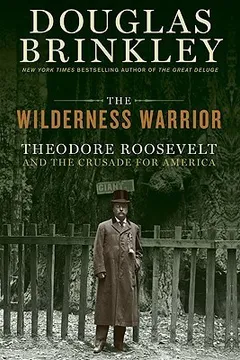
Brinkley's biography presents conservation not as a separate policy chapter in Roosevelt's life, but as the thread connecting his childhood natural history, western ranching, political reform, and presidency. The narrative is strongest when it shows how a personal habit of observation becomes institutional power. Roosevelt's attention to birds, mammals, and landscapes gave him a vocabulary that many politicians lacked; his alliances with scientists and field naturalists helped turn that vocabulary into laws, refuges, forests, and monuments.
The book also makes clear that conservation was never a single doctrine. Roosevelt hunted the animals he wanted protected, promoted dams that could damage the ecosystems he admired, and praised national landscapes through an expansionist history that often marginalized Indigenous people. These tensions are not side notes. They reveal a conservation politics built through compromise among science, recreation, economic development, federal authority, and national identity. Roosevelt's public language emphasized shared inheritance, but the power to define that inheritance remained centralized.
The most durable insight is institutional: love of nature alone does not preserve it. Roosevelt connected scientific surveys to executive orders, legal penalties, forest managers, and local wardens. The reach of his system was extraordinary, yet its weaknesses were equally instructive. Executive action could move faster than Congress, but it could also sidestep communities; wildlife protection could preserve species while predator control simplified ecosystems. In contemporary terms, Roosevelt was an effective builder of environmental state capacity, not a modern ecological purist. His achievements are best understood as a consequential, imperfect foundation for later conservation, one that invites both gratitude for what survived and scrutiny of what was excluded or transformed.
Review Summary
Reviews of The Wilderness Warrior are largely positive, averaging 4.08 out of 5. Readers praise Brinkley's thorough research and his illumination of Roosevelt's remarkable conservation legacy, crediting TR with preserving over 230 million acres of American wilderness. Many found the book inspiring, deepening their appreciation for national parks. Common criticisms include excessive length, poor editing, repetitiveness, and a narrow focus that omits other aspects of Roosevelt's presidency. Several readers noted the unresolved contradiction between Roosevelt's conservation efforts and his passion for hunting.
People Also Read
Glossary
Boone and Crockett Club
Hunters' conservation associationFounded in 1887 by Theodore Roosevelt and George Bird Grinnell, the club joined sportsmen who supported fair chase, wildlife protection, and preservation of big-game habitat. It lobbied for stronger protections in Yellowstone, helped promote national forests, and treated hunting ethics as a tool for resisting market slaughter.
Biological Survey
Federal wildlife research unitA U.S. Department of Agriculture organization that studied and mapped the distribution of birds and mammals. It gathered specimens and field reports, worked with local collectors, and produced research useful to farmers and wildlife managers. Roosevelt relied on its scientists, especially C. Hart Merriam, for evidence about species and habitat.
Fair chase
Ethical hunting codeA sportsman's standard that rejected killing wildlife through unfair advantage or for commercial gain. The Boone and Crockett Club promoted fair chase alongside game laws and habitat protection. Roosevelt considered it a distinction between regulated hunting, which he defended, and wasteful slaughter by market hunters.
Lacey Act
Federal wildlife trade lawThe 1900 law sponsored by Congressman John F. Lacey prohibited interstate commerce in illegally taken birds and wildlife. It gave federal authorities a way to confront market hunters who could evade local rules by shipping animals across state lines. The book distinguishes it from the 1894 Yellowstone Game Protection Act.
Antiquities Act of 1906
Presidential monument authorityA federal law authorizing presidents to designate national monuments on federal lands to protect objects of historic or scientific interest. Roosevelt used it to safeguard archaeological and natural sites, including Devils Tower, the Petrified Forest, and the Grand Canyon. Its executive authority enabled action without waiting for Congress to create a national park.
Newlands Act
Federal western irrigation lawThe 1902 law funded irrigation projects in the arid West through proceeds from public land sales. It authorized federal dams, reservoirs, and canals intended to support farming and settlement. Roosevelt championed the program as a way to make western communities viable, though the projects also altered rivers and habitats.
National Wildlife Refuge System
Federal wildlife refuge networkA system of public lands and waters set aside to protect wildlife and habitat. Pelican Island, established by Roosevelt's 1903 executive order, became its first unit. Roosevelt created fifty-one bird reservations by the time he left office; many were later incorporated into the larger refuge system.
Strenuous life
Effortful civic idealRoosevelt's doctrine that individuals and nations should choose demanding work, physical effort, and responsibility over passive comfort. He linked outdoor exertion with character and national vitality. The ideal also carried imperial and social Darwinist assumptions, making its democratic promise inseparable from its exclusions.
Download PDF
Download EPUB
.epub digital book format is ideal for reading ebooks on phones, tablets, and e-readers.








