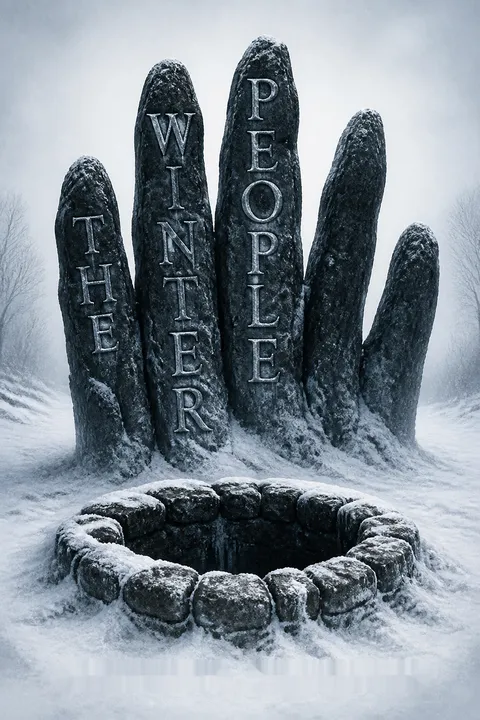


Plot Summary
Prologue
An editor introduces the hidden diary of Sara Harrison Shea, a Vermont woman murdered in 1908, and warns that its most revealing final pages remain missing. In an early entry, nine-year-old Sara sees Hester Jameson, a girl buried two weeks earlier, wandering alive and terrified through the woods.
Hester's mother begs Sara to keep quiet. Sara's mysterious guardian, known only as Auntie, confirms that the dead can return and promises to pass down the dangerous knowledge when Sara is ready.
The opening makes secrecy part of the story's machinery: the diary survives, but its final instructions are absent, so the reader encounters both evidence and a gap. Sara's childhood sighting is not presented as a comforting vision. Hester appears frightened, physically altered, and pursued by a mother whose love has crossed into concealment. Auntie's promise gives Sara a future inheritance before she understands its cost. The prologue therefore establishes the book's central tension in concrete form: grief can make the dead present again, but neither love nor knowledge guarantees that their return will be merciful.
The Ring in the Snow
Martin Shea, a poor farmer with a damaged foot, keeps a carved bone ring he found near the Devil's Hand, despite his wife Sara's urgent warning to bury it again. During a January storm, he follows a fox that has killed their chickens, leaving seven-year-old Gertie behind at the house. He tracks the wounded animal into the woods and kills it in a narrow cave.
When Martin returns, Sara is searching frantically: Gertie followed him outside and vanished. In the barn, Martin finds the fox pelt gone and a lock of Gertie's blond hair nailed in its place. Sara insists the ring has caused the disappearance and sends him to return it, but he cannot find it in his pocket.
The ring turns an ordinary winter emergency into a crisis of responsibility. Martin keeps it partly because poverty has made even a found trinket feel like a possible change in fortune, and partly because Sara's fear seems to him like superstition. His hunt for the fox is also an attempt to prove he can protect his family. Instead, his need to perform competence leaves Gertie unguarded. The hair in the barn makes the consequences brutally personal, while the missing ring shifts the story from an accident toward a mystery. Love, here, is entangled with pride and concealment before anyone understands the danger.
The Well Takes Gertie
Searchers find Gertie at the bottom of an abandoned well on the Bemis property, and Sara cannot stop imagining the fall. She rejects the comfort offered by her husband Martin, his physician brother Lucius, and their minister, then sinks into grief so profound she stops eating and wishes to die.
Memories of Auntie return: the woman who raised Sara, taught her about sleepers, and left her a sealed packet of instructions. Sara retrieves it from a hiding place beneath Gertie's bedroom floor. Auntie's letter says a dead person can be awakened for seven days through a ritual at a local portal, using a loved one's possession, a candle, and a freshly taken animal heart. Sara decides to bring Gertie back.
Sara's decision grows from a specific wound, not an abstract fascination with the supernatural. She has already lost pregnancies and an infant son, and Gertie's death reopens the earlier moment when she could not accept that Charles was gone. The hidden letter makes the temptation actionable: grief now has a procedure, materials, and a promise of limited reunion. Its seven-day boundary offers a false appearance of control, as though loss can be negotiated if the rules are followed. Sara's choice is psychologically recognizable because it transforms helpless mourning into work, even though the work carries consequences she cannot yet measure.
Knocks Behind the Door
After completing Auntie's ritual, Sara hears movement in her bedroom closet and discovers that Gertie has returned, though the child will not come out. Sara leaves food by the door; Gertie accepts it, then smashes the milk and plate. Their contact remains limited to knocks, and the child seems frightened, hungry, and unlike herself.
Sara's hope hardens into determination when she finds notes claiming Gertie was murdered and directing her to examine the dress in which she was buried. Meanwhile, Martin sees Sara speaking to the closet and fears her grief has become dangerous. Lucius gives him medicine to calm her and considers sending her to an asylum. Sara's insistence on the messages deepens the division between the couple.
The closet makes reunion intimate but incomplete. Sara has her child physically near, yet cannot embrace or fully understand her, so care becomes a sequence of food offered, rejected, and interpreted. The notes offer Sara a second task beyond mourning: identify a killer. That possibility gives her new energy, but it also makes Martin and Lucius read her determination as illness. Their responses reflect the period's limited language for trauma, while Sara's secrecy makes concern resemble control. The scene's horror lies partly in this uncertainty: the messages may be evidence, but the only witness to them is a grieving mother others have already decided not to trust.
The Empty Coffin
A note in Gertie's dress directs Sara to a pocket, and Sara finds the bone ring Martin had supposedly buried. Convinced the object may identify the person who killed their daughter, she demands that he help investigate. Martin secretly returns to the grave at night, fearing the truth could condemn Sara, and digs up the coffin. It is empty.
Sara arrives with a rifle and confronts him, but neither can explain the evidence. When Martin reaches for the weapon, it fires and wounds him. He flees into the snowy woods, leaving Sara alone with the empty grave and the ring. The discovery confirms that Gertie is not in the ground, while the accidental shooting pushes the marriage toward catastrophe.
The empty coffin changes the mystery's scale. Sara's private claim that Gertie has returned is no longer only a question of perception; the body is literally absent. Yet the evidence does not bring clarity. The ring points toward Martin, while his decision to investigate secretly suggests guilt even though his motive is protective. Sara's gun gives her a temporary position of authority, but the accidental shot leaves her with less control than before. Both spouses act out of love and fear, and each interprets the other's secrecy as proof of danger. Their marriage becomes a courtroom with no reliable judge.
Auntie's Revenge Returns
Auntie appears at Sara's house alive, scarred from the fire Sara believed had killed her years earlier. She admits she killed Gertie, stole Martin's ring, and planted the false messages to turn Sara against her husband. Gertie emerges from hiding and kills Auntie with Martin's axe.
Martin returns, sees the mutilated body and Sara's bloody clothes, and believes Sara has murdered her; he shoots himself before he can learn the truth. Sara disguises Auntie's body as her own and escapes with Gertie into the caves. By 1910 she is living secretly underground, keeping Gertie company and protecting the town from her. The child is no longer fully human, and Sara's devotion becomes a lifelong burden.
Auntie's return exposes how an old betrayal has shaped the present: Sara's father tried to burn her, and she has come back to punish the family by exploiting its grief. Yet the resulting deaths are not neatly divided between villain and victim. Gertie kills to protect Sara, Martin dies believing the wrong story, and Sara chooses concealment over public truth. Her disguise of Auntie's body makes identity itself unstable, while her refuge in the cave turns mothering into containment. The section refuses a clean restoration of family. Sara saves Gertie from disappearance, but cannot restore the child she remembers or free the living from the consequences.
Alice Vanishes at Home
In the present day, nineteen-year-old Ruthie Washburne returns from a New Year's party to find her mother, Alice, missing and her six-year-old sister Fawn feverish and frightened. Their father has been dead for two years, leaving Ruthie to manage the farm and decide whether to involve the police.
Searching the house, the sisters uncover a hidden compartment in Alice's bedroom containing a loaded pistol, two old wallets belonging to Thomas and Bridget O'Rourke, and Sara Harrison Shea's diary. The diary describes the same farmhouse Ruthie lives in and records Sara's belief that the dead can be brought back. Ruthie, who has never trusted the woods, now has reason to suspect her family's past is bound to them.
Ruthie's crisis is both practical and developmental: she must feed the animals, care for Fawn, and decide what risks to take without the adult who usually manages everything. The discovery of the hidden compartment overturns her image of Alice as merely cautious and self-sufficient. The gun and strangers' wallets imply a concealed history, while Sara's diary attaches that history to the local landscape. Ruthie's instinct is to solve the problem through investigation, but her reluctance to call authorities shows how deeply her parents' distrust has shaped her. Fawn's dependence forces Ruthie to act before she feels ready.
The O'Rourke Connection
Ruthie takes Fawn and her boyfriend Buzz to Connecticut to find the O'Rourkes, but the listed address yields nothing. At a second address, Candace O'Rourke recognizes the wallets and says her brother Thomas, his wife Bridget, and their daughter disappeared sixteen years earlier. Ruthie recognizes the child in a family photograph as herself.
Candace later arrives at the Washburne farm armed, demanding the missing diary pages she believes Alice has hidden. She explains that the pages contain sleeper instructions and claims Ruthie's adoptive parents murdered her birth parents for them. Candace wants to sell the papers to fund a legal fight for custody of her son, Luke. Her story reveals Ruthie's origins but leaves the alleged crime unproven.
The revelation that Ruthie was once the O'Rourkes' missing daughter dismantles the private story she has built about herself, but it does not instantly provide a stable replacement. Candace offers a family connection alongside an accusation, making identity arrive in the same breath as distrust. Her motive is not simply greed: she wants money to regain access to her son, yet she threatens children to get it. That contradiction makes her dangerous without making her incomprehensible. Ruthie must assess a stranger's claims while protecting Fawn, and the pressure strips away the luxury of treating family history as an abstract puzzle.
Gary's Last Vermont Trip
Katherine, a Boston artist grieving the deaths of her young son Austin and husband Gary, moves to West Hall after finding Gary's final credit-card charge at Lou Lou's Café. She learns he ate there with a local woman, then finds Sara's diary and recognizes the bone ring Gary gave her. Lou Lou identifies the woman as Alice, the egg seller, but Alice misses the farmers' market.
A historical photo leads Katherine to the Washburne farmhouse. During a blizzard, she sees Candace holding Ruthie and Fawn at gunpoint and enters the house to intervene. There she discovers Gary's missing camera bag among the girls' newly found belongings, connecting his final journey to Alice and the same hidden history.
Katherine arrives in West Hall seeking an explanation for Gary's lie, but her search is also a way to remain close to a husband she cannot question. Her miniature artworks let her turn evidence into scenes she can handle, while the diary and ring make grief feel newly actionable. The farmhouse interrupts that private investigation with an immediate danger to living children. Katherine's choice to enter despite having no clear plan marks a shift from observing loss to risking herself in response to it. The book links that impulse to her history with Austin: she cannot save the people she lost, but she can still act when someone is in front of her.
The Camera Finds the Cave
Katherine charges Gary's camera and finds photographs of Sara's missing diary pages, Auntie's ritual letter, and a map leading to an opening beneath the Devil's Hand. Images show Gary exploring the same woods and photographing a small figure near the entrance. Candace insists the cave may contain Alice and the papers she wants, and forces Ruthie, Fawn, and Katherine to accompany her.
On the climb, Katherine secretly takes the heart of a freshly killed rabbit and slips away into a side passage. In a chamber covered with sleeper symbols, she performs Auntie's ritual using Gary's camera as his keepsake. She waits for him, then hears a shuffling presence approach and runs, uncertain whether the spell worked.
The camera is evidence, but it is also an inheritance Gary has left Katherine without explanation. Its images turn his secretive final trip into a route she can physically retrace. Candace treats the same evidence as a map to money, while Katherine sees a possible route back to her husband and son. Her decision to perform the ritual is therefore not a detached experiment; it emerges from bereavement and the hope that one more reunion might repair the family. The rabbit's heart makes that hope materially costly. The approaching shuffle breaks the fantasy of controlled resurrection before Katherine knows what, if anything, she has summoned.
The Cave Takes Candace
Inside the caves, Ruthie recognizes her mother's poncho and her childhood green bear, then finds Willa Luce's bloodstained ski jacket beneath a bed. Candace searches the tunnels for Alice, while Katherine slips away. Ruthie and Fawn separate from Candace and discover Alice tied to a chair in another chamber.
As Ruthie works to free her, Katherine returns in panic, warning that something is coming. Alice leads them through the passages, but they find Candace dead with her throat torn open and Sara's missing pages in her hand. Alice identifies the attack as no ordinary animal. The group escapes by following a draft through the tunnels, leaving the cave's hidden resident behind.
The cave gathers the book's separate mysteries into a physical environment: Ruthie's lost childhood, Willa's disappearance, Gary's camera, and the pages all occupy the same underground space. The childhood bear gives Ruthie a bodily memory before she has a complete explanation, while the bloodied jacket makes the town's disappearances more than local folklore. Candace's death is the consequence of treating the cave as a route to leverage rather than a place with its own rules. Ruthie's priorities sharpen under pressure: she abandons the argument over family history and chooses to find Alice, then get Fawn out alive.
Alice Tells the Beginning
Back at the farmhouse, Alice explains that she and her husband James came to West Hall with Thomas and Bridget to examine the diary pages and locate the portal. In the woods, a barefoot little girl drew them into the cave; the sleeper killed Thomas and Bridget, while James carried their toddler, Hannah, to safety.
Alice and James adopted Hannah, raising her as Ruthie, and stayed to watch over Gertie and keep the instructions from being used. Years later, Gary arrived with the map and planned to revive Austin. Alice tried to stop him, then followed his car and witnessed the crash. She took his backpack to hide the photographs and pages, but the camera eventually surfaced in her house.
Alice's account recasts years of secrecy as a moral choice with genuine costs. She and James did not stay because they were indifferent to danger; they believed leaving would abandon both the child they had rescued and the town exposed to Gertie. Their decision made Ruthie their daughter in every daily sense, but concealed origins also deprived her of a truthful account of her life. Gary's visit repeats the earlier pattern: grief makes resurrection seem worth any risk, while Alice's intervention protects others by withholding knowledge. Her confession does not erase the harm of secrecy, but lets Ruthie see its motive and its limits.
The Pages Go Down
Ruthie tells Fawn that biology cannot undo their sisterhood, then takes Sara's papers, the wallets, and the gun to the old well. She drops the instructions into its darkness so no one can use them to make another sleeper. Ruthie decides to remain in West Hall and help Alice guard the hill, though college had been her longed-for escape.
Before leaving, the sisters glimpse Gertie watching them from behind a tree. Katherine returns to her apartment and builds a miniature scene of Gary's last meal, finally understanding why he pursued the chance to bring Austin back. She forgives him, then hears scratching at her door and opens it with hope. The book leaves his return uncertain.
Ruthie's choice is not a rejection of independence so much as a redefinition of what she owes. She has spent much of her life imagining that escape would solve the feeling of being misplaced; now she chooses a responsibility grounded in care for Fawn, Alice, and the town. Destroying the papers interrupts the cycle by removing the instructions, not by defeating Gertie or undoing past deaths. Katherine's ending holds a different response to grief: she accepts Gary's motive and releases her anger, but still leaves the door open to possibility. The two women make incompatible yet emotionally legible choices about whether love should reach toward the dead.
Epilogue
In a final diary entry dated 1939, the elderly Sara admits that Gertie has continued to live beyond the seven days promised by Auntie's instructions because she spilled human blood.
Sara has spent decades feeding and hiding her daughter, sometimes supplying human blood when animals are not enough. She worries about who will protect Gertie after her own death, and confesses that the child she brought back has become both her responsibility and a danger to others.
The epilogue withdraws any easy consolation from the present-day resolution. Ruthie destroys the instructions, but Sara's record shows that the deeper problem is not merely the existence of a recipe. A revived child can survive by harming others, and a parent's protective love can become a system that sustains that harm. Sara's confession is both an admission of guilt and an attempt to keep Gertie legible as her daughter rather than reducing her to a monster. The final moral pressure falls on care itself: affection remains real, but it cannot absolve the choices made to preserve its object.
Analysis
The novel makes grief active rather than merely interior. Sara retrieves Gertie; Gary pursues the possibility of retrieving Austin; Alice and James build their lives around protecting the child who emerged from the earlier resurrection. Each attempt begins in love, but love does not dictate what comes back or what its survival will require. The sleeper ritual offers a temporary illusion of mastery over death, then reveals how quickly care can become complicity when a parent refuses to release a child.
The book's paired timelines make secrecy hereditary. Sara hides instructions in a house full of compartments; Alice and James preserve the papers while concealing Ruthie's origins; Ruthie and Fawn must turn those inherited absences into evidence. The farmhouse is therefore not just a setting but an archive whose concealed objects hold competing versions of kinship. Ruthie's adoption complicates the idea that biology determines family: Alice and James are her parents through the years of work and protection they gave her, and Fawn remains her sister regardless of blood.
The novel also questions the difference between madness and knowledge. Sara's perceptions are dismissed because her grief makes her seem unreliable, while her diary records realities others cannot accept. Yet the story does not simply reward belief in the supernatural. Candace's certainty becomes coercive, Katherine's hope leads her to attempt a dangerous ritual, and Sara's protection of Gertie sustains harm. Evidence matters, but no character can use it without confronting motive.
The final choices resist easy consolation. Ruthie destroys the written method but does not erase the creature or the history that created it. Katherine forgives Gary without knowing whether he will return. Sara's last confession makes the cost unmistakable: love can preserve a bond, but it cannot restore innocence or cancel responsibility. The book's deepest question is not whether the dead can return. It is what the living are willing to do once they do.
Review Summary
The Winter People receives an overall 3.82 rating, with readers praising its atmospheric, creepy tone and dual timeline structure alternating between 1908 and present day. Most enjoyed the historical storyline following Sara Harrison Shea's grief-driven attempts to resurrect her deceased daughter more than the contemporary plot. Common comparisons to Stephen King's Pet Sematary emerge throughout reviews. While the spooky Vermont setting and supernatural "sleepers" concept impressed readers, many felt disappointed by the ending and found some character decisions unrealistic. The book works best as an atmospheric ghost story.
People Also Read




Characters
Sara Harrison Shea
The grieving diaristA farmer's daughter raised by Auntie, Sara has an uncanny sensitivity to people and events, but her certainty often runs ahead of what others can accept. She loves her husband Martin and daughter Gertie fiercely, and the family's earlier losses make her especially vulnerable to the promise of undoing death. Her diary reveals a woman caught between inherited spiritual knowledge and the practical demands of rural life. Sara's imagination is not simply a gift or a flaw: it helps her notice what others dismiss, while also leaving her isolated when she cannot persuade them to believe her.
Ruthie Washburne
The reluctant protectorNineteen-year-old Ruthie wants to leave West Hall for college and resents the limits of her family's self-sufficient life. She is sharp, resourceful, and quick to challenge the explanations adults give her, but she is also impatient with the needs of her much younger sister. When Alice disappears, Ruthie must take over the work her mother quietly carried every day. Her practical intelligence helps her follow clues, while her fear of the woods exposes how deeply family warnings have shaped her. She is learning to separate independence from abandonment and skepticism from refusal to see.
Alice Washburne
The guarded homesteaderAlice is Ruthie and Fawn's mother, a reserved woman who raises vegetables, sells eggs, knits, and avoids the technologies she distrusts. Her habits make her seem stubborn and narrow to Ruthie, but they also reveal a person who values privacy, practical work, and control over what enters her household. Alice's devotion often takes the form of preparation: she teaches her daughters skills, keeps supplies close, and sets firm boundaries around the woods. Her protective instincts are sincere, though her secrecy leaves the people she loves without the information they need to understand her choices.
Katherine
The bereaved artistKatherine is an artist whose husband Gary and young son Austin are dead before the novel's present-day events begin. She responds to grief by making intricate assemblage boxes, arranging objects into scenes that let her study what she cannot change. Gary's last known trip draws her from Boston to West Hall, where her search for an explanation becomes entangled with the town's history. Katherine is observant and imaginative, but her longing for reunion makes her susceptible to extraordinary promises. Her compassion can move her to act, even when she does not know what her actions will cost.
Gertie Shea
The lost childGertie is Sara and Martin's young daughter, a small, imaginative child who loves stories, animals, dreams, and hiding places. She shares a close, wordless bond with Sara and is treated by her parents as the miracle child they feared they might never have. Her way of interpreting the world is vivid and unusual, especially in her talk of dreams and beings caught between life and death. Gertie is central to the emotional gravity of the story, because adults repeatedly make choices on her behalf without fully understanding what she experiences.
Martin Shea
The struggling farmerMartin is Sara's husband, a gentle, bookish man whose injured foot and failing farm leave him feeling inadequate as a provider. He loves Sara and Gertie, but often measures his worth by whether he can protect them materially. His quietness makes it difficult for him to challenge Sara or explain his fears, and he leans on his physician brother Lucius for practical guidance. Martin's longing for a larger life has settled into devotion to his family, although the hardships of the land keep testing his belief that effort can keep disaster away.
Auntie
The keeper of secretsAuntie is a healer, trapper, and teacher who raises Sara after Sara's mother dies. Her knowledge draws on close observation of animals, plants, and spiritual traditions, and she passes it down through stories and written instructions. She can be generous and protective, but also demanding, quick-tempered, and accustomed to controlling what younger people know. For Sara, Auntie is both the first person who understands her unusual perceptions and the source of knowledge that cannot be safely treated as a simple gift.
Fawn Washburne
The watchful little sisterSix-year-old Fawn is Ruthie's younger sister, a quiet child who often seems more absorbed in her private world than in ordinary conversation. She carries a handmade doll named Mimi and treats stories as places she can enter, not merely hear. Fawn is physically small and often dependent on her mother, but she notices details others miss and can act with surprising resolve. Her closeness to Ruthie gives the older girl a reason to move beyond resentment and take responsibility. Fawn's sensitivity should not be mistaken for helplessness.
Gary
The absent photographerGary is Katherine's husband, a photographer who collects old photographs and imagines whole lives behind unfamiliar faces. He was also Austin's father, and the loss of their son left him vulnerable to despair and anger. Katherine remembers his humor, affection, and appetite for ghost stories alongside the secrecy and emotional distance that marked his final weeks. His camera and unfinished journey bring his private grief into the lives of strangers, showing how a desperate hope can remain active even after the person who carried it is gone.
Candace O'Rourke
The desperate claimantCandace is Thomas O'Rourke's sister and a woman whose life has been shaped by family loss and a bitter custody struggle over her son Luke. She is forceful, restless, and willing to cross lines when she believes an opportunity could change her circumstances. Candace's interest in Sara's papers mixes a belief in their financial value with a desire to recover the control she feels she has lost elsewhere. Her charm can turn quickly into coercion, making it difficult for others to know whether she is offering help or preparing to take what she wants.
Buzz
The hands-on skepticBuzz is Ruthie's boyfriend, a mechanic and metal sculptor who is more comfortable fixing machines than explaining himself in a classroom. His fascination with UFOs and local legends makes him an easy target for Ruthie's teasing, yet he is patient and dependable when she needs help. He drives Ruthie and Fawn to Connecticut, handles the gun carefully, and gives Fawn attention when the adults are distracted. Buzz's open-mindedness is not the same as gullibility; he is willing to entertain strange possibilities while still looking for practical evidence.
Lucius Shea
The town physicianLucius is Martin's brother and West Hall's physician, a disciplined man whose professional confidence shapes how he responds to Sara's grief. He tries to protect both Sara and Martin through medical care, though his era offers few humane ways to understand severe trauma. Lucius is loyal to his family and accustomed to taking charge when others falter. His calm manner can comfort people, but it can also make a troubling situation seem settled before its deeper causes have been examined.
Amelia Larkin
Sara's devoted nieceAmelia is Sara's niece, a young woman who moves more freely in West Hall's wealthier social circles than her aunt does. She tries to support Sara after Gertie's death and believes spiritualist gatherings may offer comfort. Amelia's help is affectionate but imperfect: she wants to draw Sara back toward company and convention when Sara's grief has made those things feel unbearable. Her role shows how good intentions can miss the form of care another person actually needs.
Thomas O'Rourke
The missing brotherThomas is Candace's brother and Bridget's husband. His interest in Sara Harrison Shea's papers draws him and his family into a search for the hidden portal. He sees the old documents as a rare opportunity, while his family life gives that pursuit consequences beyond scholarship or profit. Though he is absent from most of the present-day action, his disappearance is one of the clues that gradually connects Ruthie's childhood to West Hall's buried history.
Bridget O'Rourke
The missing motherBridget is Thomas's wife and the mother of a young daughter. She is part of the O'Rourke family's attempt to investigate the papers connected to Sara Harrison Shea. The few traces she leaves, including an old wallet and a small bracelet, become emotionally charged evidence for people who never knew her. Bridget's place in the story emphasizes the human lives behind the mystery's documents, rather than treating the lost family as merely a set of clues.
James Washburne
Ruthie's adoptive fatherJames is Alice's husband and Ruthie's father, a bookish homesteader who moved his family from city life toward self-sufficiency. He values privacy, careful research, and a life less dependent on institutions. His love for Ruthie is visible in the education and practical skills he gives her, as well as in the family routines she remembers. James's presence remains important even after his death, because Ruthie continues to interpret her childhood through the warnings and silences he left behind.
Shep
The old farm dogShep is the aging farm dog who belongs to Sara and Martin's household. Gertie treats him as a companion and includes him in her games, while Martin sees him as part of the family's fragile domestic routine. The dog is attentive to changes in the house and woods, making his behavior another small measure of how the familiar farm has become unsettled.
Plot Devices
Auntie's sleeper ritual
A bargain with the deadAuntie's instructions describe a ritual that uses a dead person's belonging, a candle, and the fresh heart of an animal at a portal between worlds. It can return a dead person for seven days, though the text also warns that spilled human blood may make the sleeper's presence permanent. The ritual connects Sara's diary, Gary's camera, and the present-day cave. Its apparent precision invites grieving people to believe loss can be managed through correct steps, while its conditions make clear that the returned person may not be restored to their former self.
The bone ring
A relic changing handsA carved ring, found near the Devil's Hand, moves through the story as a token of love, warning, and suspicion. Martin keeps it despite Sara's plea to return it to the earth. Gary later gives a similar ring to Katherine, connecting his final Vermont trip to Sara's history. The ring's presence makes separate generations seem to be repeating one another, while its transfer between people raises the question of whether objects carry meaning by themselves or because grieving people invest them with hope and fear.
Sara's hidden diary
A fragmented historical recordSara's diary preserves the 1908 events, but its most important pages are missing from the published account. Its entries emerge through hiding places, family discoveries, and photographs stored on Gary's camera. This structure allows each reader and character to know only part of the truth at first. The diary is simultaneously testimony, evidence, and a dangerous instruction manual. Its gaps encourage speculation, while its intimate record of Sara's decisions makes the supernatural plot inseparable from the emotional reality of bereavement.
The Devil's Hand portal
A landscape concealing passageThe five-fingered rock formation above the Washburne farm serves as a local landmark, a source of frightening stories, and the concealed entrance to a network of caves. The portal links the historical and present-day plots, giving the same landscape different meanings to Sara, Alice, Ruthie, Buzz, and Katherine. It also turns exploration into physical risk: the cave's narrow tunnels, hidden chambers, and darkness make the characters' search for knowledge a literal descent into what their families have tried to bury.
Hidden compartments
Secrets embedded in the houseLoose boards, concealed niches, and blocked closets allow generations of the family to hide papers, objects, and memories inside the farmhouse. Sara uses the house's secret spaces as a child; Ruthie and Fawn later discover them while searching for Alice. The hiding places create a material record of what family members fear others will find. They also turn ordinary domestic exploration into investigation, showing how secrecy can be built into a home until children inherit both its contents and the burden of interpreting them.
About the Author
Other books by Jennifer McMahon

Download PDF
Download EPUB
.epub digital book format is ideal for reading ebooks on phones, tablets, and e-readers.








