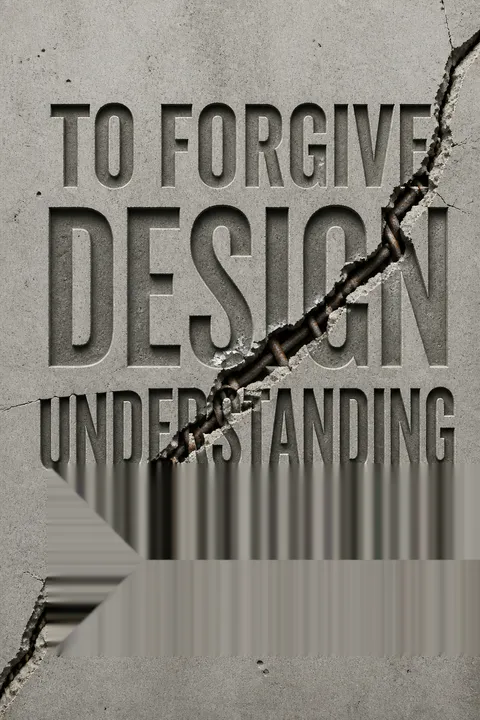


Key Takeaways
Study failures to improve designs, because success conceals its own limits
Success is incomplete evidence. A machine that works proves only that it has worked under the conditions it has met so far. Failure can expose weaknesses that successful use leaves hidden. Galileo used the breakage of oversized ships and stone structures to question simple scaling rules, helping establish that material strength matters alongside shape and size. The book’s central argument is that understanding why things fail is essential to making them work more reliably, not an excuse to welcome accidents.
Turn evidence into learning. A failure becomes useful only when investigators preserve evidence, test explanations, and share what they discover. Early guesses about the Buffalo plane crash blamed icing or faulty equipment; the investigation instead identified the crew’s handling of the aircraft as central. Premature blame can obscure the mechanism and waste the chance to prevent a repeat.
What's striking is the distinction between failure as an event and failure as information. A broken part is not automatically a lesson: the evidence can be lost, the cause misidentified, or the finding buried. This resembles the logic of scientific falsification, where a failed prediction is valuable only if it sharpens the next test. The book also resists treating success as proof of safety. Still, not every failure can be prevented by better analysis, especially when conditions are unprecedented. The practical goal is less certainty than disciplined learning that reduces the odds and consequences of repetition.
Audit the whole system, not just the object that breaks
Failures cross boundaries. A structure’s design is only one link in a chain that includes materials, construction, inspection, operation, and regulation. In Boston’s Big Dig, tunnel leaks reflected poor concrete and careless placement, while a fatal ceiling collapse came from the use of quick-setting epoxy that could not hold heavy panels over time. The basic ceiling concept was not necessarily defective. The installation and material choices changed what the design could safely do.
Look beyond the obvious. A Shanghai apartment building collapsed after excavation and piles of soil changed the pressure in saturated ground around its foundation. The building itself was not found to have a fundamental design flaw. The work surrounding it was treated as separate, though its effects were not. A failure may therefore begin in a neighboring process, a procurement decision, or a maintenance routine, rather than in the broken object.
This systems view is valuable because organizations divide work into departments, while physical consequences do not respect those divisions. A design can be sound on paper yet vulnerable to poor materials, rushed installation, or a neighboring project. The same logic applies to software, medicine, and public policy: local decisions can combine into failures no single team intended. The challenge is accountability. Expanding the unit of analysis should not make responsibility so diffuse that nobody owns a fix. Effective investigation connects the parts without dissolving the people and decisions behind them.
Treat every design change as a new way to fail
Small changes alter systems. Galileo described a marble column resting on two supports. Workers added a third support at its center to prevent it from breaking, but the end supports later sank. The column then broke over the new center support, a failure that the original arrangement would not have produced. An improvement created a new failure mode.
Recheck the whole design. At the Kansas City Hyatt Regency, a change from one continuous hanger rod to two offset rods doubled the load on a critical connection. The walkways collapsed, killing 114 people. A similar warning applies to software updates, materials substitutions, and construction changes: testing a changed part alone may miss how it interacts with the whole system. A change deserves fresh analysis, even when it looks minor or has worked elsewhere.
The lesson reaches beyond engineering: interventions change the conditions they are meant to improve. In medicine, a treatment can create new side effects; in organizations, a new incentive can shift behavior in unplanned ways. The column story makes this feedback tangible. Yet the principle cannot mean resisting all modification. Designs must evolve as needs and evidence change. The better rule is to treat change as a new hypothesis: state what it is expected to improve, identify what new conditions it creates, and verify the full assembly rather than assuming the old safety case still applies.
Make vulnerable parts fail first, predictably, and harmlessly
Some failures protect. A fuse is meant to break when an electrical circuit is overloaded, preventing greater damage. Modern vehicles use crumple zones to absorb collision energy outside the passenger compartment. These are examples of managed failure, in which a component is deliberately designed to give way in a controlled manner so that the larger system or its occupants have a better chance of surviving.
Control the breaking point. The new San Francisco-Oakland Bay Bridge was designed with structural fuses that can deform in a major earthquake while protecting the main tower and bridge sections. Those fuses can then be replaced. The opposite happened at the Indiana State Fair: a stage roof flap meant to release in strong winds was reattached so it held, and the entire stage collapsed. A planned failure works only when its trigger, limits, and maintenance are respected.
Designing for controlled failure is a powerful alternative to the fantasy that every component can be made indestructible. It resembles a circuit breaker in an organization: a small, bounded interruption can prevent a larger cascade. The principle also clarifies why resilience is not simply strength. A resilient system can absorb damage, isolate it, and recover. But sacrificial parts require inspection and replacement plans. A fuse that is bypassed, or a bridge fuse whose failure cannot be repaired promptly, shifts risk rather than removing it.
Inspect for damage that grows invisibly between successful uses
Repeated stress accumulates. Metal fatigue is the gradual growth of cracks under repeated loading. A crack can begin at a tiny imperfection, expand with each cycle, then reach a point where the material breaks suddenly. Petroski compares this process to a cracked tooth that worsens through years of chewing. Bridges flex whenever traffic crosses them, and small defects can become dangerous without dramatic warning signs.
Make inspection possible. Silver Bridge carried traffic for four decades before an eyebar crack, accelerated by corrosion and repeated stress, led to collapse and 46 deaths. Its connection was difficult to inspect, and the defect was inaccessible to ordinary visual checks. The tragedy helped prompt regular inspections of public bridges. A design should not only carry expected loads; it should also let future inspectors find deterioration before it becomes catastrophic.
Fatigue is a useful model for risks that grow through ordinary repetition. No single commute, heartbeat, or operating cycle may seem consequential, yet cumulative stress can change a system’s condition. That makes inspection a form of ongoing measurement, not a bureaucratic ritual. The harder question is whether inspections can detect the failure mode that matters. Silver Bridge shows that a schedule cannot compensate for an inaccessible joint or inadequate method. Inspection regimes need to follow the physics of the structure, and their findings must lead to action.
Give engineers authority to stop work when warnings accumulate
Warnings need a voice. Before the Challenger launch, engineers raised concerns that the shuttle’s O-rings could fail in cold conditions. Managers proceeded despite the warning; the shuttle broke apart 73 seconds after launch. Years later, Columbia was lost after foam struck its wing, and concerns about the damage were again discounted. In both cases, technical signals existed, but the organization did not respond adequately.
Responsibility is broader than blame. Engineers, managers, operators, and regulators all shape the conditions under which technology is used. The Canadian Ritual of the Calling of an Engineer, symbolized by a ring, reminds engineers of their obligation to protect the public and maintain professional standards. Ethical responsibility requires more than making correct calculations. It also requires communicating uncertainty, challenging unsafe decisions, and creating channels where dissent can change the outcome.
The cases reveal that safety depends on the social status of evidence. A warning that cannot alter a schedule is not an effective safeguard. This connects to the broader study of organizational learning: people must be able to report anomalies without being punished, and leaders must distinguish confidence from proof. But individual courage alone is a weak safety system. Organizations should make escalation procedures explicit and give qualified staff real stop-work authority. Ethical codes matter most when they shape decisions under pressure, not when they serve only as ceremonial language.
Price risk openly; budgets and politics are engineering inputs
Safety has a price. Engineers can estimate how likely a failure is and what damage it could cause, but societies still have to decide what level of protection to buy. The Netherlands, after devastating floods in 1953, planned defenses intended to reduce risk in economically crucial areas to one event in 10,000 years. Later proposals aimed for one in 100,000 in some regions, while rural areas were assigned less stringent protection because universal upgrades would cost too much.
Expose the trade-offs. New Orleans’ hurricane defenses and evacuation plans reflected political and financial choices as well as technical ones. The same is true of bridge maintenance, where delaying work can save money in the short term while increasing danger and repair costs. A risk estimate cannot settle the question of acceptable risk. It can make the assumptions and consequences visible to the people making that choice.
This is a crucial corrective to the idea that safety is a purely technical output. Engineering can describe probabilities and consequences, but it cannot decide by itself whose risks count or how public money should be distributed. Those are political judgments that should be made transparently. A further complication is that rare events are easy to underfund precisely because their absence feels like evidence that protection is unnecessary. Clear risk communication can counter that bias, though it cannot eliminate disagreement over fairness, affordability, or acceptable loss.
Make hidden design constraints visible before they become compromises
Design has passengers. A bridge must serve more than its structural calculations: shipping clearances, vehicle lanes, pedestrian access, construction methods, budgets, and local preferences all shape what gets built. The Penobscot Narrows Bridge in Maine combined a cable-stayed crossing with an observation deck to meet both transportation and tourism goals. Its lane arrangement and pedestrian provisions also show how a technically workable solution can create awkward or uncomfortable experiences for users.
Test the lived experience. Automobile headrests illustrate competing needs: they must restrain the head in a crash, fit different bodies, and avoid blocking visibility. Adjustable rests balance these demands, but only if users position them correctly. Such examples show why designers must examine the artifact in use, not only in drawings. Construction realities matter too: inferior concrete, substituted materials, and rushed installation can undermine a design that looked adequate in the office.
The idea of back-seat designers captures a real feature of professional work: codes, clients, users, builders, and budgets all constrain the final form. Treating these forces as external annoyances can hide how they shape safety. Making them explicit early allows teams to debate trade-offs before they harden into costly details. Still, stakeholder input is not a substitute for technical judgment. Popular preferences can conflict with safety, and aesthetic choices can conceal structural consequences. Good design gives each constraint a place in the decision process without pretending that all demands can be fully satisfied.
Keep old failures visible, because success gradually erases their warnings
Memory has a cycle. The book describes a recurring pattern: a major failure triggers caution, then years of safe operation encourage confidence, shortcuts, and forgotten lessons. A study of bridge disasters found notable failures roughly thirty years apart, close to the span of a professional generation. The sequence includes the Dee Bridge, Tay Bridge, Quebec Bridge, and Tacoma Narrows Bridge. The exact timing is not a law, but the pattern warns that institutional memory can fade.
Teach the causes, not just the pictures. Tacoma Narrows is often shown as a dramatic film of a bridge twisting in the wind, reduced to a simple classroom story about resonance. A more complete account examines its unusually slender deck, design choices, and aerodynamic behavior. Historical cases are useful when they preserve the reasoning, assumptions, and mistakes behind the failure. A catalog of old disasters can help new designers recognize when they are entering unfamiliar territory.
The book makes history practical: it is a form of experience that engineers can borrow without repeating the accident. That idea is especially strong when technical tools change faster than human habits. A digital model may be new, but overconfidence, siloed communication, and pressure to deliver are familiar. Yet history is not a checklist that guarantees safety. Each case has distinctive conditions, and analogy can mislead if treated as identity. The best use of precedent is to ask sharper questions: what assumptions made the old design work, and do they still hold here?
Analysis
The book’s most important move is to expand failure beyond the broken object. A bridge, aircraft, or oil rig is the visible endpoint of a system involving design, procurement, construction, operation, inspection, regulation, and institutional memory. This explains why technical competence alone cannot guarantee safety. It also complicates blame: a failure may have no single culpable actor, yet responsibility remains distributed among people who made choices, ignored signals, or created conditions in which errors could spread.
Petroski’s historical cases give that argument unusual force. The Dee Bridge and Silver Bridge reveal how material behavior and inspection limitations can remain poorly understood; the Tacoma Narrows story shows that a design considered modern can rest on untested assumptions; Challenger and Columbia show how a warning can be technically available but institutionally powerless. The book’s recurring contrast between failure and success is especially useful because successful operation is weak evidence about conditions that have not yet occurred. It can reflect sound design, but also luck, limited exposure, or hidden reserve strength.
The account also argues against a simplistic anti-innovation response. Innovation creates new hazards, but freezing technology would impose its own costs and prevent improvements. The practical task is to preserve room for experimentation while building ways to detect, contain, and learn from failure. Sacrificial fuses, inspection access, redundant elements, and open reporting are different expressions of that goal.
A useful qualification is that failure is not automatically instructive. Evidence can be destroyed, investigations can settle on convenient explanations, and lessons can be forgotten or overridden by schedule and cost. Nor can every risk be reduced to a number that determines a fair choice. Engineering judgment therefore combines analysis with institutional design and public accountability. The book’s deepest claim is not that failure can be abolished, but that its consequences depend heavily on whether people treat warning signs as knowledge or as obstacles to progress.
Review Summary
Glossary
Failure analysis
Investigating how failure occurredA systematic investigation of an accident or malfunction to identify the most likely causes and contributing conditions. It may examine design records, materials, construction, maintenance, operating behavior, and physical evidence. Because a failed structure often cannot be reconstructed exactly, conclusions are commonly supported explanations rather than absolute proof.
Factor of safety
Reserve strength in designThe ratio between the load a structure can withstand at its limit and the load it is designed to carry in normal service. A factor above one provides reserve capacity for uncertainty, imperfect materials, or unexpected loads. It is not a guarantee against failure, especially if assumptions are wrong or the reserve is consumed by deterioration or unauthorized changes.
Metal fatigue
Crack growth under repeated stressA process in which repeated loading and unloading gradually initiates or enlarges cracks in metal. The damage may develop over many cycles while the part continues to function, then culminate in sudden fracture when the remaining material can no longer carry the load. Fatigue makes recurring traffic, vibration, and other repeated stresses important design and inspection concerns.
Managed failure
Controlled, sacrificial breakdownA design approach in which a component is intended to fail in a predictable and limited way so that it protects a larger system or its users. A fuse that breaks during an electrical overload is a familiar example. The intended failure must occur under the right conditions, and the system must be able to tolerate and recover from it.
Fracture-critical
Failure can collapse the structureA term used for a structural element whose failure could lead to the collapse of a bridge or another larger assembly. The designation draws attention to components with limited redundancy, where another member may not be able to carry the load if the critical part breaks. Such elements require careful design, inspection, and maintenance.
Ritual of the Calling of an Engineer
Canadian engineering obligation ceremonyA Canadian ceremony established in the 1920s to mark engineers’ professional responsibilities. Participants recite an obligation emphasizing careful workmanship, integrity, and service to society, and receive an iron ring worn on the working hand. The ritual makes professional duty tangible, particularly the obligation to protect the public from preventable harm.
About the Author
Other books by Henry Petroski




Download PDF
Download EPUB
.epub digital book format is ideal for reading ebooks on phones, tablets, and e-readers.








