

Key Takeaways
Read ordinary objects as evidence of engineering, not as finished answers.
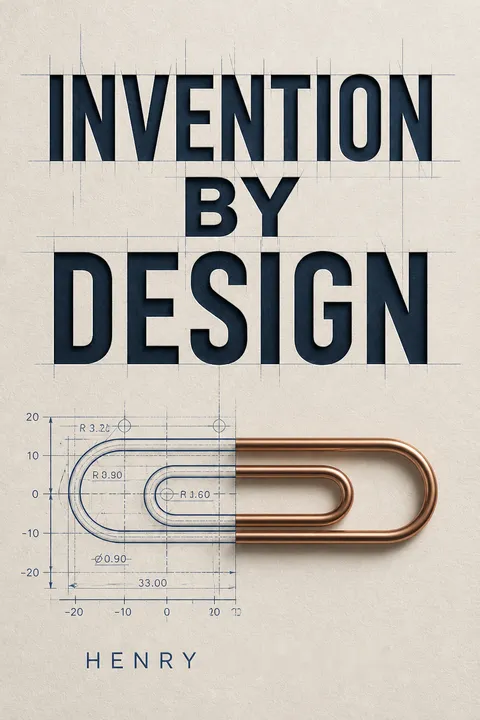
Everyday things contain decisions. A paper clip looks like a piece of bent wire, yet it must grip paper, stay springy, avoid tearing sheets, and be cheap to manufacture. The familiar Gem design is a compromise among those demands, not a perfect solution. The book uses similarly ordinary objects, from pencils and cans to zippers, to reveal the design choices hidden in daily life.
Look beyond the object. Engineering includes the materials, manufacturing methods, users, economics, politics, and infrastructure that make an artifact work. A fax machine, for example, is useful only if another machine and a compatible communications network are available. Looking closely at ordinary products makes engineering visible as a human process of designing, testing, revising, and choosing among imperfect options.
What's striking is how this approach turns passive familiarity into a method of inquiry. An object can be read almost like an archaeological find: its shape hints at the forces it handles, its defects reveal past compromises, and its ubiquity suggests that production and adoption succeeded together. This is a useful corrective to the tendency to treat technology as either a genius's invention or an inevitable march of progress. The caution is that an artifact's visible form rarely tells its whole story. Patents, labor, regulation, and user habits can matter as much as the geometry.
Improve the familiar by making its tolerated annoyances visible.
Criticism starts invention. Before paper clips, people used straight pins to fasten papers. Pins could prick fingers, snag other sheets, and leave holes. Wire clips offered a clear improvement, but the dominant Gem still has drawbacks: users must orient it correctly, spread its loops, and accept that it can snag or distort a thick stack. Inventors repeatedly proposed alternatives, yet most never displaced the familiar design.
Compromise keeps products alive. A clip with longer legs may grip better but use more wire. A turned-up lip can make application easier but add bulk. Manufacturers may shorten the legs to save material and shipping costs, even if the result feels less elegant. A new design succeeds not by being better in the abstract, but by improving something users value enough to justify its tradeoffs.
This is a practical account of path dependence: once a product is familiar, users adapt to its flaws, manufacturers build equipment around it, and competitors must offer more than novelty to dislodge it. The Gem's persistence is therefore not proof of perfection. It reflects a balance of acceptable performance, low cost, recognizable form, and established production. The same logic helps explain why a technically superior alternative can fail commercially. Still, calling an annoyance visible does not guarantee it matters to customers; design criticism becomes useful when paired with observation of actual use.
Design with a material's spring, strength, and limits, not against them.
Materials push back. A paper clip works because its wire bends enough to fit over paper and springs back to hold it. Open it too far and it stays distorted. This boundary is the elastic limit: beyond it, a material does not return to its original shape. Robert Hooke described the relationship between an object's extension and the force applied to it, a principle that helps explain the behavior of wire, beams, elevator cables, and many other structures.
Small objects reveal large forces. A straight pin must flex without staying bent, while a long cable's elasticity can make an elevator ride bounce. Every material has characteristic behavior, and design depends on using that behavior intelligently. A material's strength alone is not enough: engineers must also consider how it deforms, how it is shaped, and whether its performance remains useful in real conditions.
The material-centered view connects design to the broader idea of affordances: objects invite certain actions because of their physical properties. Springiness is not merely a number in a handbook; it is what lets a clip be reusable. The insight also discourages a common engineering shortcut, treating materials as interchangeable once they meet a strength threshold. Fatigue, brittleness, flexibility, and manufacturing variation can change how a product behaves. The useful nuance is that material laws describe idealized behavior within defined limits. Real parts contain imperfections, so calculation and testing must work together.
Treat every calculation as conditional on its assumptions.
A model leaves things out. The pencil point is a small cantilever beam, supported at one end and pushed against paper at the other. Engineers analyzed broken-off pencil points to predict where the lead would fracture. Early calculations matched the size of the broken pieces, yet did not explain why the fracture surface slanted. The missing explanation emerged by reconsidering the forces and assumptions, including stresses acting across the lead.
History is a warning label. Galileo's influential analysis of a cantilever beam treated the resisting force as evenly distributed and consequently overestimated the beam's capacity. Later analysts improved the model by accounting for elasticity and more realistic force distributions. Calculations are useful because they predict behavior before construction, but their results are only as reliable as the assumptions beneath them. Engineers also use factors of safety to account for uncertainty and variation.
This lesson is central to trustworthy modeling in any field. A model can fit observed data and still omit a mechanism that matters outside the tested conditions. That danger grows when software makes complicated calculations look authoritative, because precise outputs can conceal uncertain inputs. A strong practice is to ask what the model excludes, then compare its predictions with experiments, field observations, and alternative formulations. The counterpoint is that no model can include every detail. The goal is not perfect representation, but clarity about which simplifications are harmless for the decision at hand.
An invention is only a proposal until manufacturing and markets work.
Ideas need development. Elias Howe patented an early garment fastener in 1851, but the concept did not become a successful product. Whitcomb Judson's later slide fasteners also struggled: early versions popped open, damaged fabric, and were difficult to manufacture reliably. Gideon Sundback spent years improving both the fastener and the machinery needed to make it. His interlocking design brought the device much closer to the modern zipper, but commercial acceptance still took time.
The whole product must work. The hook-and-loop fastener inspired by cockleburs took about six years to develop into a viable product. Plastic bag closures likewise required changes to the product and its manufacturing process before they could be made economically. These cases show that invention, patenting, reliable production, financing, and customer acceptance are distinct stages. Solving the first technical problem does not automatically solve the rest.
The distinction between invention and innovation is especially useful here. An idea can be technically plausible yet remain commercially inert until production tolerances, distribution, pricing, and customer expectations align. This resembles the development of medicines or software: a promising principle must survive repeated translation into a dependable, usable product. The zipper's long gestation also challenges the popular story of sudden inspiration. However, persistence alone is not a strategy. Continued development is worthwhile only when testing reveals a path to better performance or a market that values the improvement.
Define failure broadly, including waste, discomfort, and environmental harm.
A can has many jobs. An aluminum beverage can must contain pressure, survive transport, sit securely, feel comfortable in the hand, and open without excessive effort. The pop-top improved convenience, but its removable sharp tab became litter and a hazard. The stay-on tab addressed that failure by remaining attached. Can makers also reduced material use: average can weight fell by almost half from the mid-1970s to the early 1990s, while more than six in ten cans were being recycled.
Optimization has boundaries. Thinner walls reduce material costs but can make an opened can feel too flimsy. A smaller top saves aluminum but must still allow a useful opening. Engineering success therefore includes structural safety, manufacturing cost, user comfort, appearance, and environmental effects. The can's design cannot be judged only by whether it holds a drink when sealed. Its billions of units turn small design choices into large material and waste consequences.
The can makes lifecycle thinking concrete: convenience at the point of sale can create costs after disposal, and a minor redesign can change the environmental footprint at enormous scale. This resembles modern lifecycle assessment, which evaluates impacts from material extraction through production, use, and end-of-life. The chapter also shows that engineering criteria can conflict rather than line up neatly. A lighter package may save resources but feel less robust. Recycling helps, but it does not make material use consequence-free. Good evaluation therefore asks who benefits, who bears the costs, and over what period.
Build the network and standards that let a device become useful.
A machine needs a system. Fax technology began in the nineteenth century, but the modern fax depended on telephone networks, compatible machines, and shared transmission rules. In the United States, restrictions on connecting outside equipment to telephone lines limited development. Later access to public telephone networks encouraged new products, but competing manufacturers initially produced machines that could not reliably communicate with one another.
Compatibility unlocks value. International standards established common expectations for transmission, resolution, and communication between machines. Digital Group 3 fax machines could send a page in under a minute, helping the technology spread rapidly. The lesson applies beyond fax: the automobile needs roads and fuel stations, and airplanes need airports. Inventions often succeed when an accompanying network, shared standard, and user practice mature alongside the device.
This is a clear illustration of network effects: a communications device becomes more valuable as the number of compatible users grows. Standards can accelerate adoption by reducing uncertainty for buyers and manufacturers, while also limiting incompatible technical experiments. The balance matters. Early standardization can lock a field into a mediocre approach, but without some common protocol, users may be stranded on isolated systems. The fax's history also shows that infrastructure is political. Access rules and public investment shape which technologies can develop, not merely how clever their inventors are.
Use computers to coordinate engineering, but keep human judgment in control.
Digital design changed collaboration. Boeing's 777 program used computer-aided design to coordinate a project involving more than 130,000 unique parts and millions of components. Engineers working in different teams could examine shared digital models and detect clashes before assembly, reducing reliance on physical mockups and late changes. The project also involved airlines early in the design, shaping decisions such as cabin width and passenger access to overhead bins.
Software does not erase responsibility. The aircraft's computer-controlled flight systems raised questions about what pilots should be able to command and what the computer should prevent. Boeing's approach retained feedback that helped pilots sense the aircraft's behavior. The design story shows that computation can connect engineering work across disciplines, but models and controls still embody human choices about safety, usability, cost, and acceptable risk.
The 777 case anticipates contemporary digital engineering, where shared models can serve as a common workspace for designers, manufacturers, and operators. That integration can expose conflicts earlier, when changes cost less. Yet the system's apparent completeness can create false confidence: a clash-free digital model cannot guarantee that every real-world condition has been represented. The human-factors discussion is equally important. Automation should not merely prevent mistakes; it should help people understand what the system is doing and retain meaningful authority in emergencies.
Treat water systems as public health infrastructure, not hidden plumbing.
Water design shapes health. Roman aqueducts supplied cities, but waste disposal remained uneven and contaminated water could spread disease. In nineteenth-century London, poor sewers allowed sewage to stagnate and pollute the Thames. Engineer Joseph Bazalgette designed intercepting sewers that carried waste away from the crowded city. In 1854, physician John Snow traced a cholera outbreak to a contaminated pump, showing how a public-health investigation could identify a specific failure in the water system.
The network crosses boundaries. Chicago reversed the flow of its river to protect Lake Michigan, its water source, but downstream communities worried about the sewage carried toward them. Modern water engineering also addresses treatment, groundwater contamination, and pollutants from industrial activity. These are not isolated pipe problems. They require scientific evidence, infrastructure investment, regulation, and cooperation among communities that may disagree about who should pay or bear the risk.
Water systems make the social nature of engineering unusually plain: contamination does not respect municipal boundaries, and the people exposed may not be the people who made the design or disposal decisions. The history also shows the value of causal investigation. Snow's comparison of people using different water sources helped distinguish contaminated water from shared exposure to air. Present-day environmental decisions still face uncertainty about long-term risk and acceptable pollutant levels. Technical expertise is essential, but it cannot alone settle questions of fairness, responsibility, or public priorities.
Engineer bridges with politics, finance, and public trust in the design.
A bridge begins before construction. Plans to cross San Francisco Bay accumulated for decades, with engineers proposing tunnels, cantilevers, and suspension spans. The eventual Bay Bridge required decisions about shipping clearance, foundations, rail and vehicle traffic, costs, and the War Department's restrictions. Public ownership and toll revenue helped make financing possible. The bridge opened in 1936, after political negotiation and engineering studies had narrowed the alternatives.
Past failures shape present choices. The collapse of the Tay Bridge damaged confidence in bridge design, while failures during construction of the Quebec Bridge raised further concerns about cantilevers. Engineers had to explain unfamiliar structural ideas to the public and justify why a proposal was safe and affordable. The Bay Bridge's damage in the 1989 earthquake later revealed the limits of its earlier design assumptions. Large projects are built from technical calculations and from decisions about risk, legitimacy, and who pays.
The bridge history is a reminder that infrastructure is a negotiated public commitment, not simply an engineering answer delivered to a waiting society. Political processes can slow projects, but they also surface competing needs that a purely technical design might miss. Public explanation matters because trust affects whether a project can be financed, approved, and used. At the same time, consensus does not guarantee soundness. The 1989 earthquake underscores that designs inherit the knowledge and assumptions of their time, so maintenance, reassessment, and preparedness remain part of responsible engineering.
Design tall buildings as interacting systems, not isolated structures.
A skyscraper is more than a frame. The Crystal Palace used standardized parts, drainage, ventilation, shading, and cleaning arrangements to operate as a building full of people. Later skyscrapers depended on elevators, electrical power, air conditioning, and foundations as much as on structural strength. Elevators made tall buildings practical, while the space they consume can limit rentable floor area. Designers have tested different arrangements, including double-deck cars and systems that reduce dependence on long suspension cables.
Comfort is performance. Wind can make a tall building move enough to unsettle occupants, so some towers use tuned mass dampers, heavy weights that move to counter building motion. Poor ventilation can create unhealthy interiors, and a building's large population strains transportation and other urban services. A structure can remain standing yet fail as a workplace or public environment. Successful design anticipates interactions among structure, machinery, occupants, and the surrounding city.
The systems perspective is now familiar in fields such as systems engineering, but the building examples give it a physical and human scale. A tower's performance emerges from interactions: elevators affect usable area, mechanical systems affect comfort, and the number of occupants affects the neighborhood. This resists the temptation to optimize each subsystem independently. The challenge is that broader system boundaries make prediction harder, not easier. Designers need to decide which external effects belong in the assessment, while remaining alert to consequences that fall outside the building owner's immediate interests.
Analysis
Petroski's most powerful move is to make engineering legible at multiple scales. A paper clip teaches elastic behavior and compromise; a pencil point reveals the limits of analysis; a zipper exposes the distance between invention and a marketable product; and bridges, water systems, aircraft, and skyscrapers show how technical objects depend on institutions and infrastructure. These examples accumulate into a coherent claim: design is not the deduction of a perfect form from scientific laws. It is a practical, revisable activity in which people set criteria, make models, test consequences, and negotiate tradeoffs under constraints.
The book is especially strong on failure as a source of knowledge. Failures are not treated only as spectacular disasters. A paper clip that tangles, a can tab that becomes litter, and a fax that cannot communicate across brands all reveal gaps between intended function and actual use. This wider definition helps engineers notice social and environmental costs before they become crises. The pencil analysis adds an important epistemic lesson: a calculation can succeed locally while its assumptions remain incomplete.
The case-study form also has limits. The examples are vivid, but their variety can make engineering seem more unified than it is. A disposable office product, a public water system, and a commercial aircraft differ sharply in who controls them, how risk is distributed, and how success is measured. Nor does close attention to artifacts alone reveal every labor, political, or ecological consequence. Still, Petroski's method gives readers a durable habit: ask what the object must do, what can go wrong, what its design leaves out, and what larger system makes it possible. That habit is useful well beyond engineering, wherever a seemingly simple solution carries hidden dependencies.
Review Summary
Invention by Design receives mixed reviews, with an average rating of 3.75/5. Readers appreciate the historical insights into everyday objects' evolution and engineering processes. Many find it accessible and fascinating, especially for non-engineers. Some praise Petroski's holistic approach to invention and multidisciplinary perspectives. However, critics note superficiality in certain chapters and desire more technical depth. The book is commended for its readability and ability to spark interest in engineering concepts, though some chapters are considered less engaging than others.
People Also Read








Glossary
Hooke's Law
force follows elastic extensionA principle describing how an elastic object responds to an applied force: within its elastic range, the object's extension is proportional to the force. The relationship helps explain why a paper clip can bend and spring back, and why structures such as beams and cables deform under load. It does not describe behavior after the material exceeds its elastic limit.
elastic limit
boundary of springbackThe limit beyond which a material no longer returns to its original shape after a force is removed. Bending a paper clip past this point leaves it permanently deformed, reducing its ability to grip papers. Engineers must account for this boundary when choosing materials and predicting how parts behave under repeated or excessive loading.
failure criteria
limits for acceptable performanceConditions that define when a design has failed or become unacceptable. They may concern structural strength, deformation, pressure, electrical performance, environmental effects, appearance, or usability. Engineers compare predicted or measured behavior with these limits as a design develops. The criteria determine what counts as success, so they must reflect the product's actual purpose and context.
factor of safety
allowance for uncertaintyA design margin used to account for uncertainties such as variable materials, imperfect construction, unexpected loads, or limitations in calculation. In the book's example, engineers may divide a predicted load capacity by a substantial amount before setting an allowable load. The margin makes a design more reliable, but excessive conservatism can consume resources needed elsewhere.
MAYA
advanced, but acceptableAn industrial design maxim meaning Most Advanced Yet Acceptable. It describes the challenge of making a new product sufficiently different to improve on existing technology, but familiar enough that customers can understand and adopt it. The book illustrates the problem with early reclosable plastic bags, which some manufacturers initially rejected because consumers might not recognize how to use them.
fly-by-wire
computer-mediated flight controlAn aircraft control arrangement in which a pilot's inputs are transmitted electronically to flight-control surfaces through onboard computers, rather than directly through a purely mechanical system of cables and linkages. The software can interpret commands and provide feedback, raising design questions about pilot authority, computer limits, safety, and how clearly the aircraft communicates its condition.
tuned mass damper
weight that counters motionA system that uses a large mass, connected to a building through mechanical or controlled components, to reduce unwanted movement. Sensors and actuators can help the mass move in a way that counters motion caused by wind. The book describes such systems in tall buildings, where excessive movement can disturb occupants even when the structure remains safe.
Broken-off pencil points (BOPPs)
fractured pencil tipsThe broken fragments of pencil lead that prompted engineers to study where and how sharpened points fracture. Their consistent size suggested that the breakage followed a mechanical pattern, not mere chance. Analysis of BOPPs demonstrates how a simple everyday failure can test assumptions about force, material strength, geometry, and the path a fracture takes.
FAQ
1. What is "Invention by Design" by Henry Petroski about?
- Exploration of engineering design: The book examines how engineers turn ideas into real-world objects, using case studies of familiar items like paper clips, pencils, zippers, airplanes, bridges, and buildings.
- Interplay of technology and society: Petroski highlights how engineering is shaped by social, economic, and political factors, making inventions both technical and cultural achievements.
- Emphasis on process and failure: The narrative underscores that engineering is a human process involving creativity, iteration, and learning from failure.
2. Why should I read "Invention by Design" by Henry Petroski?
- Demystifies engineering creativity: The book reveals how engineers use creativity, judgment, and problem-solving to shape both everyday objects and complex systems.
- Insight into design tradeoffs: Readers gain an understanding of how engineers balance cost, safety, aesthetics, and functionality, often making difficult compromises.
- Appreciation of engineering history: Through detailed historical examples, Petroski connects past innovations to modern technology, enriching the reader’s perspective on invention.
3. What are the key takeaways from "Invention by Design" by Henry Petroski?
- Design is iterative and human: Engineering is not just technical; it involves creativity, commonsense reasoning, and learning from mistakes.
- Failure drives progress: Studying and understanding failures is essential for improving designs and ensuring safety and reliability.
- Systems thinking is crucial: Successful engineering requires considering the broader context, including infrastructure, economics, and user needs.
4. How does Henry Petroski define and illustrate the engineering design process in "Invention by Design"?
- From thought to thing: Petroski shows how engineers move from abstract ideas to tangible products through conceptualization, analysis, and iteration.
- Case study approach: The book uses real-world examples—like the evolution of the paper clip and the Boeing 777—to illustrate each stage of the design process.
- Balancing constraints: Engineers must weigh technical, economic, and social factors, making tradeoffs that shape the final product.
5. What role does failure play in engineering according to "Invention by Design" by Henry Petroski?
- Failure as a learning tool: Petroski argues that failures, such as broken pencil points or bridge collapses, provide critical feedback for design improvements.
- Inevitable and instructive: No design is perfect at first; iterative testing and redesign are fundamental to engineering success.
- Examples and analysis: The book discusses notable failures, like the Tay Bridge collapse and aluminum can ruptures, to show how understanding failure leads to safer, more reliable designs.
6. How does "Invention by Design" by Henry Petroski use case studies to explain engineering concepts?
- Learning from artifacts: Case studies of objects like paper clips, pencils, zippers, and aluminum cans reveal common engineering challenges and solutions.
- Design and failure analysis: Each case highlights how design compromises and failure criteria shape the evolution of products.
- Broader context: The studies demonstrate that engineering problems are influenced by social, political, and economic factors, not just technical ones.
7. What engineering lessons does Henry Petroski draw from the paper clip and pencil case studies in "Invention by Design"?
- Complexity in simplicity: Even simple objects like paper clips and pencils involve intricate design challenges, such as material selection and manufacturing methods.
- Design tradeoffs: The dominance of the Gem paper clip and the mechanics of pencil points illustrate how engineers balance usability, cost, and performance.
- Continuous improvement: Multiple patents and design iterations show that even everyday items are subject to ongoing innovation and refinement.
8. How does "Invention by Design" by Henry Petroski explain the evolution and challenges of the zipper?
- Long development timeline: The zipper’s evolution spanned decades, with contributions from multiple inventors and persistent technical hurdles.
- Technical and market barriers: Early designs faced manufacturing difficulties and slow market acceptance, requiring both technical and social solutions.
- Systems and infrastructure: The zipper’s success depended on compatible manufacturing equipment and evolving consumer needs, highlighting the importance of supporting infrastructure.
9. What insights does "Invention by Design" by Henry Petroski provide about the design of airplanes and the use of computer-aided design (CAD)?
- Collaborative design process: The Boeing 777’s development involved early input from airlines to align technical feasibility with customer needs.
- CAD revolution: Computer-aided design enabled integrated, paperless design, reducing errors and improving fit and function in complex projects.
- Balancing tradeoffs: Decisions on fuselage width, wing mechanisms, and cabin features illustrate the negotiation between cost, performance, and passenger satisfaction.
10. How does "Invention by Design" by Henry Petroski address the engineering of large infrastructure, such as bridges and skyscrapers?
- Long project timelines: Large projects like bridges and skyscrapers often span decades, requiring multiple design iterations and political negotiations.
- Structural and system innovations: The book covers advances in bridge types, elevator technology, and building systems that enable greater heights and improved safety.
- Integration of aesthetics and function: Engineers must balance technical requirements with visual appeal and environmental constraints, as seen in iconic structures like the Golden Gate Bridge.
11. What does "Invention by Design" by Henry Petroski reveal about water supply, sanitation, and environmental engineering?
- Historical perspective: The book traces the development of water systems from Roman aqueducts to modern treatment plants, emphasizing engineering’s role in public health.
- Mathematical modeling: Engineers use equations of continuity and energy to design efficient and safe piping networks.
- Environmental challenges: Petroski discusses pollution control, groundwater contamination, and the evolving responsibilities of environmental engineers.
12. What are the best quotes from "Invention by Design" by Henry Petroski and what do they mean?
- "Engineering is the art of doing well for one dollar what any bungler can do with two." This quote highlights the importance of economy and efficiency in engineering.
- "Failure is an essential part of engineering design." Petroski emphasizes that mistakes and breakdowns are not setbacks but opportunities to improve.
- "The decision of how wide an airplane's cabin will be must be fixed early in the design process—at the conceptual design stage—because so much else about the design depends upon that single dimension." This illustrates how early design choices have far-reaching consequences for the entire project.
About the Author
Other books by Petroski



Download PDF
Download EPUB
.epub digital book format is ideal for reading ebooks on phones, tablets, and e-readers.








