

Key Takeaways
Let grief motivate the question, but never count it as evidence.
Longing starts the search. Stacy Horn opens with people reaching for signs that loved ones remain. John Thomas, a bereaved school administrator, recorded thousands of details mediums seemed to know about his dead wife. J. B. Rhine and his wife, Louisa, were drawn to the same question: does anything survive death? The book treats that hope with sympathy, while showing why it cannot settle the matter. A message that comforts a grieving person may be sincere and still have another explanation, including information drawn from the living.
Method sets the boundary. Rhine wanted evidence other researchers could check, not only a story that felt true to one family. The laboratory’s central struggle was to honor the human need behind these accounts without letting that need determine the result.
What's striking is that the book treats grief as both the reason to investigate and a reason to be careful. Emotion reveals which questions matter, but it can also make an ambiguous coincidence feel like a message. That distinction is useful well beyond paranormal research: a powerful experience deserves attention without being granted automatic authority about its cause. The strongest compassionate response is not to mock belief or promise certainty. It is to take the person seriously while remaining honest about what the evidence can and cannot establish.
Test telepathy before declaring that a medium speaks for the dead.
Two explanations compete. Thomas believed that mediums were communicating with his wife, Ethel. Rhine saw another possibility: they might be accessing Thomas’s own memories and knowledge. Telepathy, in the laboratory’s vocabulary, meant information passing between living minds without ordinary senses. If that ability existed, a medium’s accurate statements could not by themselves prove contact with the dead.
A narrower question came first. Rhine therefore focused on testing extrasensory perception, or ESP, before claiming to have answered whether personal identity survives death. His first experiments used simple guessing tasks, eventually with a special deck of symbols. This shift frustrated Thomas, whose hope was to find Ethel, but it gave Rhine a testable problem that did not depend on accepting a spiritual explanation.
This is a clean example of separating an observation from the story attached to it. A medium might produce information that seems unavailable through ordinary means; that would be the observation. Whether the source is a living person, a dead person, chance, or unnoticed cues is a separate question. In philosophy of science, this resembles underdetermination: the same result can fit more than one explanation. The limitation is emotional as well as intellectual. A narrower test may improve clarity while leaving the question that brought a grieving person to the laboratory unanswered.
An unlikely score is evidence of an effect, not its explanation.
Chance became measurable. Rhine and psychologist Karl Zener created cards bearing five simple symbols, reducing the ambiguity of judging drawings by eye. In a 25-card run, random guessing should yield about five correct answers. Hubert Pearce, a divinity student, repeatedly scored far higher. In 1,850 distance trials, Rhine’s team calculated that the overall results would be extraordinarily unlikely by chance alone.
A probability is not a verdict. The lab’s work attracted serious statistical support, but critics continued to question experimental safeguards and reporting. Commercial decks had symbols visible through the card backs; B. F. Skinner demonstrated that the flaw could reveal the answers. Rhine said those cards were not used in the controlled studies, but the episode showed why procedures must be transparent. Even a striking statistical result cannot identify its cause or rescue a poorly controlled experiment.
The key distinction is between statistical surprise and causal knowledge. A low probability under a chance model says that the data fit that model poorly, assuming the trials were properly conducted and the analysis was chosen appropriately. It does not name the alternative mechanism. Modern research practice strengthens this distinction through preregistered methods, independent replication, and complete data sharing. These safeguards do not guarantee truth, but they reduce the room for selective reporting and hindsight. The book’s best lesson here is not that an extraordinary result proves ESP, but that it demands precise scrutiny.
Treat emotion as part of the experiment, not noise to erase.
Performance followed feeling. Pearce’s unusually strong results ended after he received a painful letter from his girlfriend. A young orphanage resident also scored exceptionally when she wanted to stay near a lab worker she cared about, then failed to repeat the performance. These stories do not establish that emotion caused the scores, but they made Rhine wonder whether comfort, motivation, and trust affected results.
The laboratory had a tension. Medium Eileen Garrett said the card tests felt emotionally lifeless, while her trance sessions seemed to depend on personal connection. Rhine needed repeatable procedures; Garrett believed the relationship and mood were part of the phenomenon. The researchers could not easily preserve an emotionally meaningful setting while controlling every cue that might influence a result.
This tension is familiar in psychology: measuring a person can change the situation being measured. Rapport, expectations, and anxiety can affect attention and performance, so removing them may make a test cleaner while also making it less representative of real life. The challenge is to distinguish a genuine condition of an effect from an invitation to unconsciously cue the expected answer. Better research would vary emotional conditions systematically rather than treating them as either magical ingredients or contaminants. The book identifies that problem clearly, even though its historical experiments could not resolve it.
Separate controlled effects from dramatic cases that end before scrutiny.
Simple tests had an advantage. To investigate psychokinesis, or PK, the claimed ability of mind to influence physical objects, the lab tried dice experiments. A target number either appeared or did not, making results easier to count than a levitating table. Later, children tried to influence a machine that dispensed red or blue disks. The lab reported a small effect, not a way to beat a casino.
Field cases resisted control. Recurrent spontaneous psychokinesis, or RSPK, described repeated unexplained movements in a home. In the Seaford case, bottles popped, objects moved, and police Detective Joe Tozzi documented 67 events. Researcher Gaither Pratt judged 17 difficult to explain as pranks, but could not conclude that the cause was paranormal. The disturbances stopped before investigators could fully study them.
The contrast reveals why dramatic evidence is not always strong evidence. A witnessed object in flight may be unforgettable, yet investigators often arrive after the event, amid publicity, fear, and many possible sources of error. A modest test can be less exciting but more informative because its outcomes and controls are defined in advance. Neither setting is sufficient alone: laboratory work can lose the context that matters, while field observation can leave crucial details unrecorded. The Seaford case shows the value of a careful conclusion that stops short of certainty.
A ghostly message can matter without proving a ghost exists.
Louie proposed a different source. After reviewing thousands of letters, Louisa Rhine suggested that a person might unconsciously receive information through ESP and experience it as a ghost, voice, or warning. In one account, a woman heard her dead grandmother and checked on a baby who had fallen beneath clothing. Louie thought the apparition could be the mind’s way of bringing information into awareness, rather than the grandmother appearing in person.
The explanation had limits. It struggled with shared apparitions and details witnesses said they could not have known. Critics argued that it required implausibly powerful, unconscious ESP. Louie also studied reports of voices, which appeared more often than visual apparitions in her collection. Raymond Bayless later recorded sounds he and others interpreted as voices, but radio interference, pattern-finding, and accidental speech remained possible explanations.
This account holds two truths together: an experience can be psychologically real and personally important without proving the explanation attached to it. That position avoids the false choice between dismissing a witness and accepting a supernatural cause. It also puts pressure on Louie’s own theory. If every unexplained detail is attributed to hidden ESP, the hypothesis becomes difficult to test and may simply relocate the mystery. Competing explanations need predictions that could distinguish them, not just enough flexibility to accommodate each new story.
Do not let a psychic sell certainty to a desperate family.
A missing child made the stakes plain. Six-year-old Bruce Kremen vanished during a camping trip in California. Rhine warned Bruce’s father that the laboratory could not reliably locate missing people, but suggested several psychics as possible contacts. Harold Sherman offered a detailed account of a possible killer that later showed similarities to information about convicted child murderer Mack Ray Edwards. That resemblance did not prove Sherman had found the answer.
Peter Hurkos offered a different story. He told the family Bruce had been taken by a childless couple in Oregon, then failed to follow through on promises to help. Bruce was never found. The episode shows why Rhine refused to treat psychic impressions as dependable investigative evidence. A claim that cannot be controlled or checked can deepen a family’s anguish, and a psychic’s confidence is no substitute for corroboration.
The ethical standard should rise with the vulnerability of the person receiving a claim. In a missing-person case, a confident but unsupported lead can divert time, money, and attention, while false hope may compound grief. The book also resists a simplistic verdict: a psychic could be sincere, yet still unreliable, and a coincidence with later evidence does not validate every detail. The useful distinction is between generating a lead and establishing a fact. Only independently verified evidence should guide an investigation or be presented to a family as knowledge.
Investigate extraordinary claims without turning restraint into dismissal.
The lab learned to distrust performances. Before Duke, Rhine and Louie attended a séance by Mina Crandon, whose apparent spirit manifestations relied on darkness, loose restraints, and opportunities for trickery. Their report challenged her claims, though it also included personal speculation about her motives. In another case, investigators could not verify the spectacular claims surrounding young Alice Bell Kirby’s table-lifting demonstrations. Her experiences may have been sincere, but the evidence gathered did not establish her powers.
Overconfidence can harm people. The Maryland boy whose story inspired The Exorcist was subjected to a lengthy exorcism. Later accounts offered ordinary explanations for many events, including a bed on rollers and behavior shaped by the adults around him. Exorcisms have also caused deaths. Careful investigation must therefore resist both premature supernatural diagnoses and the assumption that every witness is lying.
The strongest skepticism is procedural, not performative. It asks what was observed, who observed it, what alternative explanations were checked, and what evidence would change the conclusion. That method protects people from fraud and from harmful interpretations, while preserving room for genuine anomalies. The book also shows that researchers can overreach in the name of rigor: Rhine’s personal attack on Crandon went beyond what the séance evidence could establish. Scientific caution is most credible when it applies equally to believers, skeptics, and investigators.
Scientific recognition can open a door without settling what lies beyond.
Acceptance was not a resolution. In 1969, anthropologist Margaret Mead defended the Parapsychological Association’s application to affiliate with the American Association for the Advancement of Science. The vote passed, a significant institutional milestone for a field that had long faced ridicule. It did not prove ESP, establish a mechanism, or answer the survival question. Rhine and his colleagues continued to report effects, while many scientists remained unconvinced.
The final account is a stalemate. Researchers explored PK, spontaneous cases, recorded voices, and other phenomena; others pursued near-death experiences and reincarnation. Speculative links to quantum physics offered possible directions, not settled explanations. The lab never produced accepted proof that the dead survive, and parapsychology never secured a definitive theory of its reported results. Horn’s account ends with an open question, not a paranormal verdict.
Institutional recognition and evidential confirmation are different achievements. A professional society can judge that a field’s methods and questions merit a place in scientific discussion without endorsing its conclusions. That distinction helps explain how parapsychology could gain formal standing while its central claims remained disputed. The quantum connection also needs careful handling: similarities in language about distance or observation do not demonstrate that psychic effects occur. The most intellectually durable conclusion is modest: unresolved findings deserve neither automatic belief nor automatic erasure, but research capable of narrowing the uncertainty.
Analysis
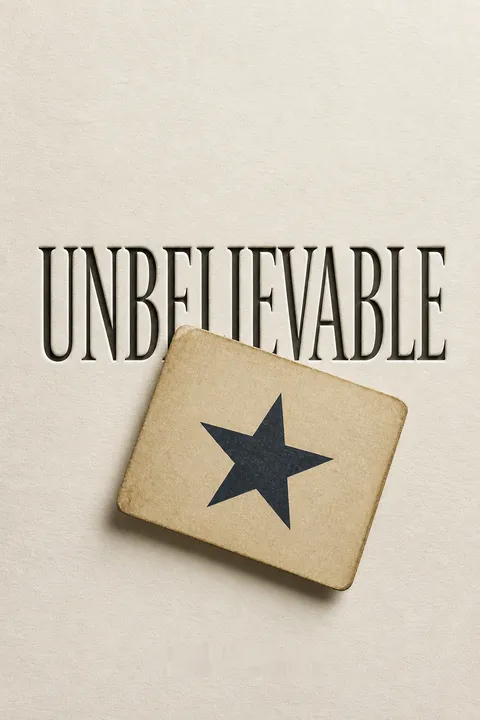
Unbelievable is a history of an institution and a study in how evidence acquires meaning. Its narrative follows J. B. and Louisa Rhine from the emotionally charged séance room into a laboratory, then outward again as letters, poltergeist reports, missing-person pleas, and new theories press against the limits of controlled experiment. The central conflict is not simply believers versus skeptics. It is the conflict between the desire to know whether the dead remain and the narrower claims a replicable experiment can support.
The book is strongest when it separates three levels that are often collapsed: an event was reported, an experiment produced a result difficult to attribute to chance, and a particular explanation accounts for that result. Each level requires different evidence. A high card score, even if statistically robust, does not establish telepathy; telepathy would not establish survival after death. Likewise, an unexplained object movement is not automatically proof of a ghost. This evidential ladder helps explain both the laboratory’s restraint and the frustration of its supporters.
Horn also complicates the usual image of science as a neutral referee. Reputation, disciplinary boundaries, funding, personal loyalty, and fear of ridicule shape what gets studied and how results are received. Yet the book’s sympathy for the Rhines sometimes risks treating persistent criticism as prejudice when unresolved questions about methods and replication remain consequential. The most convincing criticism is neither that anomalies are impossible nor that dissent proves bad faith. It is that the record must be judged claim by claim, with methods open enough for independent scrutiny.
The book’s lasting value is therefore less a proof of ghosts than a portrait of inquiry under emotional pressure. It asks readers to protect wonder without turning it into certainty, and to protect skepticism from becoming a reflexive refusal to look. Its closing stalemate is not a failure of storytelling. It accurately preserves the distance between a compelling anomaly and an explanation that can change scientific understanding.
Review Summary
Unbelievable explores the Duke Parapsychology Laboratory's history and research into ESP, ghosts, and other paranormal phenomena. Readers found it informative but sometimes dry, praising Horn's journalistic approach while noting a lack of emotional depth. The book details J.B. Rhine's efforts to scientifically study ESP, facing skepticism from the scientific community. Some readers appreciated the historical context and scientific rigor, while others hoped for more paranormal stories. Overall, it's seen as a thorough examination of an often-dismissed field of study.
People Also Read







Glossary
extrasensory perception (ESP)
Perception beyond ordinary sensesA term J. B. Rhine used for acquiring information through means not accounted for by the known senses. In the laboratory’s research, it included telepathy, clairvoyance, and precognition. The term was chosen partly to make the subject sound more like a problem in perception than a claim about spirits or spiritualism.
Zener cards
Five-symbol test cardsA deck designed by psychologist Karl Zener for Rhine’s ESP experiments. Each deck contained 25 cards, with five each bearing a circle, square, cross, star, or wavy lines. Because the symbols were simple and had no obvious advantage for guessers, researchers could compare correct guesses against the number expected by chance.
GESP
General extrasensory perceptionRhine’s label for experiments that had not distinguished telepathy from clairvoyance. If a participant guessed a card, the information might have come from the mind of the person holding it, or from the card itself through an unexplained process. The term marked an experimental limitation rather than a separate, fully explained ability.
psychokinesis (PK)
Mind influencing physical eventsThe claimed ability of mental intention to affect physical objects or outcomes without ordinary physical contact. Duke researchers tested it first with dice and later with devices that produced colored disks. They reported small effects under experimental conditions, while stressing that the mechanism was unknown and that dramatic field cases were difficult to verify.
recurrent spontaneous psychokinesis (RSPK)
Repeated unexplained object movementA term used for episodes in which objects appear to move, fall, or break repeatedly in a particular setting, often a home. Researchers used it to describe a possible form of psychokinesis occurring outside planned experiments. It did not establish whether the cause was a person, a spirit, trickery, misperception, or another explanation.
Spontaneous Case Collection
Archive of unusual experiencesA Duke laboratory project led by Louisa Rhine that organized letters describing experiences such as apparitions, dreams, intuitions, and unexplained sounds. The collection was intended to identify patterns and suggest future experiments, rather than to prove that ghosts existed. It grew to more than 30,000 letters, many from people seeking explanation or reassurance.
electronic voice phenomena (EVP)
Voices heard in recordingsA name for apparent voices or speech-like sounds found on audio recordings, sometimes interpreted by researchers as communication from the dead. Raymond Bayless and others recorded sounds they regarded as voices. Alternative explanations include stray broadcasts, accidental speech, and apophenia, the tendency to perceive meaningful patterns in ambiguous noise.
Download PDF
Download EPUB
.epub digital book format is ideal for reading ebooks on phones, tablets, and e-readers.








