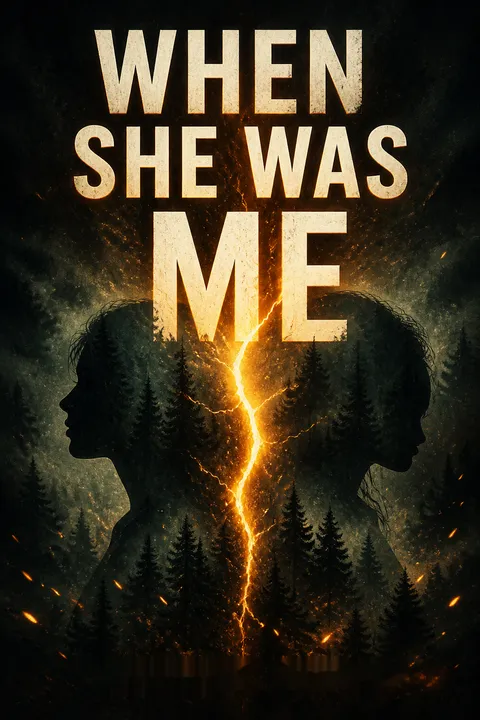


Plot Summary
Prologue
One twin watches the other sleep, unable to separate love from vigilance. She remembers a childhood fire and the family they lost, then admits that whatever her sister does, she will remain beside her. The promise sounds tender until it becomes a warning: the watcher cannot tell where her sister’s danger ends and her own begins.
The opening makes intimacy feel like surveillance. The watcher’s promise to stay close can be read as devotion, but her uncertainty about what her sister might do gives that devotion a coercive edge. The fire is introduced not as an explained event but as a shared wound that has fused the sisters’ identities. That ambiguity prepares the reader to distrust both protection and memory: the person watching may be keeping her sister safe, keeping her under control, or trying to understand a danger she cannot admit is inside herself.
A New Neighbor Arrives
Cassie and Lenora have made a home in two cabins at a remote Tennessee campground, where their old landlord Wayne has just died. His nephew tells barefoot Cassie that the property is being sold and the buyer will honor their informal rent arrangement. That buyer, Sarah Hill, arrives with a cheerful manner and the scent of fruit-flavored vapor.
She notices the twins’ resemblance, but Cassie’s questions leave her uneasy. Soon a family rents the third cabin. Their teenage daughter, Tilly Meadows, slips into the woods to smoke and meets Cassie, who has been peering into Sarah’s cabin. Tilly catches her, trades silence for silence, and returns to her parents. The campground’s new occupants have already begun watching one another.
The campground is a refuge built on an unstable bargain: the sisters depend on a landlord they barely knew, then must trust a stranger who controls their housing. Cassie’s curiosity about Sarah and Tilly’s ability to confront Cassie establish watching as both a defensive habit and a breach of privacy. The cabins create proximity without intimacy. Each character can see fragments of the others’ lives, but those fragments invite projection rather than understanding.
The Empty Cabin Three
The Meadows wake to find Tilly missing and search the grounds with Sarah and the twins. Cassie admits she caught Tilly smoking near the Blacktop two nights earlier, but says nothing about her own reason for being near Sarah’s cabin. She joins volunteers combing the property as rain approaches.
Lenora tells police she may have seen Tilly walk toward the woods, though she waited until after the search began to disclose it. Near the Blacktop, Cassie spots Lenora’s worn silver coin on the ground and secretly pockets it. The coin suggests Lenora was outside that night, contradicting her earlier claim that she only went to the bathhouse. The search finds no trace of Tilly before the storm forces it to pause.
The coin turns an ordinary object into evidence, but its meaning remains uncertain. Cassie sees it as proof that Lenora concealed something; Lenora may simply have lost it while sleepwalking. Their different responses to uncertainty expose the relationship’s central imbalance: Cassie hides information to protect Lenora, while Lenora conceals it because she fears what her own mind might reveal. The missing girl becomes a mirror each sister interprets differently.
A Body at the Blacktop
A search dog leads the rescuers to Tilly’s body near Cassie’s favorite rock. Police treat the death as suspicious but withhold its cause, then interview Cassie and Lenora. Lenora reveals that she saw Tilly argue with her mother, Karen, and watched Karen slap her. Cassie had not known about the fight.
Later, Karen and her husband Robert confront the twins, demanding a fuller account of the night. Lenora accuses Karen of hitting Tilly; Karen answers by striking Cassie. Sarah arrives after the couple leave and helps tend Cassie’s bruised cheek. The sisters now have a concrete reason to suspect Karen, but Lenora’s omissions and Cassie’s growing distrust leave another possibility close at hand.
The violence at the door changes the sisters’ position from witnesses to targets of grief and accusation. Karen’s slap seems to confirm Lenora’s interpretation, while the detectives’ questions make silence feel consequential. Cassie absorbs the blow meant for her sister, repeating a protective pattern that keeps Lenora from facing consequences but deepens Cassie’s own burden. Sarah’s care offers a different kind of closeness, one that may loosen the twins’ closed world.
The Wellesley Fire
Flashbacks return to the twins’ adolescence, when the younger sister’s friendship with Kate Wellesley became entangled with secrecy. She set a fire at the Wellesley property, later describing it as a prank that escaped her control.
Kate died, and Kate’s sister Joan survived with severe burns. The older twin helped hide what had happened and accepted the younger girl’s explanation, though she never stopped wondering whether it had been an accident. Years later, Joan confronts her at church, insisting that the younger sister was responsible.
The older twin denies knowing anything, while the sisters leave together. Their shared cover story becomes the first visible layer of a history in which one girl’s actions are repeatedly absorbed by the other’s loyalty.
The Wellesley fire establishes the moral pattern that governs the sisters’ adult lives: an act is named an accident, and love is used to decide whether that label will be challenged. Joan’s scarred presence makes the past physically visible, while the older sister’s silence turns protection into participation. The scene also complicates the usual roles of victim and culprit. The younger twin may be wounded by her family, yet she can still cause harm; the older twin’s compassion does not make her innocent.
A Father Comes Home
Their father returns after another absence, weakened by drug use but promising to change. The younger twin welcomes him; the older sister distrusts him and resents how quickly he can reclaim her loyalty. The younger girl grows close to Monica, a new friend, while the older twin watches the friendship as a possible rival.
Later, the younger sister claims their father has abused her and asks for help killing both parents. The older twin believes her and considers the plan, but finally proposes that they run away instead. Her wish to protect her sister has become so consuming that escape seems safer than asking whether the accusation is true.
The sisters’ dependence is not simply a response to trauma; it is also a system that can distort what each is willing to know. The older twin distrusts the father but trusts her sister’s account without testing it, because believing her offers a clear enemy and a clear task. The younger twin’s distress may be genuine even as her account is later exposed as false. The scene shows how a protective bond can be manipulated by the very person it is meant to shelter.
A Runaway Plan Unravels
Before they can leave, the older twin finds photographs of Kate and Monica hidden beneath her sister’s mattress. Some show the girls posing; others were taken without their knowledge. The discovery exposes how much the younger twin concealed, including the depth of her connection to Kate.
On the night the sisters expect to escape, Monica and their mother are found dead. The younger twin presents the deaths as a disastrous accident, and the older twin helps conceal what happened before they leave home under new identities. She continues to protect her sister, but the escape does not end their shared violence. It only gives them a new place to bury it.
The photographs are a material counterweight to the younger twin’s shifting explanations. They show attention that can look like affection from one angle and possession from another. The older sister responds to the deaths by choosing concealment over investigation, converting love into an active cover-up. Their flight offers physical distance from their family but no moral separation from what they have done. The secret travels with them, shaping the isolated life they later build.
Lenora’s Missing Hours
Back in Tennessee, Lenora studies Tilly’s social accounts and searches for signs of conflict with Karen. Cassie discovers the open pages and the false profiles Lenora used, then confronts her with the silver coin she found at the Blacktop. Lenora admits she may have been outside but cannot remember what she did.
A hallway camera later records a woman in Lenora’s robe and glasses entering her bedroom, apparently confirming an intruder to Lenora and suggesting sleepwalking to Cassie. Lenora blames Karen; Cassie cannot rule out her sister. They are no longer merely hiding their past from outsiders. Each has begun to doubt the other’s account of the present.
The camera footage offers an image without a trustworthy explanation. Its blurred figure can support Lenora’s fear or Cassie’s suspicion, demonstrating how evidence becomes unstable when the witness is also implicated. Lenora’s research is an attempt to make Tilly’s life legible, but it repeats the same invasive watching that has damaged her relationships. Cassie’s protective certainty weakens as she recognizes that love cannot tell her what happened during Lenora’s missing hours.
Karen Breaks In
After suspecting Lenora knows more about Tilly’s death, Karen enters the twins’ cabin at night and pins Lenora to the floor, demanding an explanation. Cassie returns with a rifle and forces Karen away. Karen says she was searching for proof, not planning an attack, but police arrest her for breaking in. They search the Meadows’ cabin and find evidence they believe links Karen to Tilly’s death.
Cassie and Lenora briefly accept that the case is settled. Then Detective Eubanks calls: prosecutors have released Karen because the evidence will not support a charge. The apparent answer disappears, leaving the sisters with the same unresolved fear and a new question about who could have reached Tilly.
Karen’s break-in initially validates the twins’ suspicion, but her desperation also reveals the cost of treating suspicion as proof. Her arrest gives the sisters temporary relief without resolving the murder. The later release removes that false certainty and forces Cassie to reconsider her own confidence in Lenora’s innocence. The legal process does not provide emotional closure; it leaves a vacuum that the sisters fill with increasingly dangerous guesses.
The Cabin Burns
On the night Karen is released, Cassie is with Parker when smoke fills the cabin. She wakes and tries to find Lenora, while Parker escapes through a window. Lenora, sleepwalking in the woods, sees the flames and returns to the burning building. She crawls through a broken window, finds Cassie unconscious, and drags her toward safety.
Sarah and Parker help pull both sisters clear. The cabin is destroyed, and investigators find that the alarms were disabled and accelerant was used, making the fire look deliberate. Lenora remembers seeing a figure flee, but cannot identify them. At the hospital, Parker suggests Lenora may have caused the fire; Cassie rejects the accusation, though doubt has already taken hold.
The rescue reverses the sisters’ familiar roles: Lenora, usually protected and confined, acts decisively while Cassie cannot save herself. Yet survival does not restore trust. Parker’s suspicion turns Lenora’s sleepwalking into a possible weapon, and Cassie must choose between the evidence of danger and her belief in her sister. The deliberate fire makes the campground’s isolation newly threatening: the place that sheltered them can also become a trap.
Sarah’s Borrowed Name
After the fire, Lenora finds an old photograph of Sarah among the belongings Cassie secretly collected from the campground. A reverse-image search identifies the girl as Sandra Wells, missing since a fire killed her family fifteen years earlier. The sisters realize Sarah has built her life under another name, but they cannot tell why.
Cassie agrees to search Sarah’s cabin while Sarah is away. She finds no clear evidence of a crime, only an orderly home and signs of a private life. When Sarah returns, Cassie slips out through the back. The break-in deepens the sisters’ mistrust of their neighbor, but it also makes their own habit of taking and hiding other people’s stories harder to deny.
The photograph turns the sisters’ own collection of discarded objects into evidence against them. Cassie has treated abandoned belongings as remnants worth preserving, but this image carries a history Sarah did not choose to share. Lenora’s discovery may be accurate, yet accuracy does not grant entitlement to another person’s past. The scene makes secrecy ethically complicated: Sarah’s false identity raises alarm, while the twins’ intrusion repeats the very violation they fear.
The Door Beneath Wayne’s Woods
After the sisters move into Cabin Three, Cassie disappears during the night. Lenora searches the woods, panics, and ends up in Sarah’s cabin, where Sarah comforts her but denies knowing where Cassie is. A walkie-talkie in Sarah’s driveway leads Lenora to suspect Cassie never left the property. Later, a repeated thudding sound draws her into the storm.
She finds a loose hatch built into the ground, the source of the hammering, and descends a ladder into a tunnel. Following the music, she reaches a concealed bunker beneath Wayne’s cabin. Cassie is there, bound beside Sarah and another woman. The hidden space gives Lenora the first physical proof that Sarah’s secrets involve more than a changed name.
The tunnel converts the campground’s landscape into a literal architecture of concealment. Wayne’s unexplained hammering, once a forgotten detail, becomes a route into the secret world beneath the sisters’ apparent refuge. Lenora’s search is both a symptom of her fixation and an act that saves her from passive uncertainty. She finds Cassie by following evidence rather than trusting reassurance, though the discovery leads directly into a more immediate danger.
The Sister in the Bunker
The second woman is Emily, Sarah’s younger sister. The childhood names fit the twins’ past: Sarah was Sandra Wells, and Emily was the sister whose actions the older girl repeatedly covered. Sarah says she had kept Emily in a hidden room for her own safety and believed the chamber had no exit.
Emily had escaped through Wayne’s tunnel and watched the twins. She admits that Tilly saw her in the woods, so she strangled the teenager near the cabins. Sarah insists she did not know Emily was free. The explanation also makes Emily’s access to the sisters’ rooms and the strange camera footage plausible, while leaving the arsonist’s identity uncertain.
Sarah’s protection has become confinement, while Emily turns her sister’s guilt into leverage. Their dynamic echoes Cassie and Lenora’s: one sister assumes responsibility for the other, and that responsibility becomes both love and control. Emily’s calm admission of killing Tilly strips away the comforting theory that violence came only from a stranger. The unresolved fire matters because the story refuses to make every danger neatly attributable to one culprit.
The Sisters Fight Back
Emily attacks Lenora while Cassie works through her restraints, cutting her wrists badly enough to free one hand. Cassie uses a shattered jar to release her ankles and pulls Emily off Lenora. Lenora runs briefly, then returns with a brick and strikes Emily as she attacks Cassie again.
The sisters escape toward the tunnel, but Emily climbs after them and stabs Lenora in the back. Cassie tackles Emily and fights to keep her away from Lenora. Sarah appears with a knife and kills Emily. Lenora is still breathing. The sisters have survived, but the rescue comes from the person who spent years enabling the danger and finally chooses to stop it.
The climax breaks the old pattern of one twin absorbing danger for the other. Cassie frees herself, Lenora returns to fight, and neither sister can survive through protection alone. Sarah’s final action is not a clean moral redemption; it is a decisive interruption of a cycle she helped sustain. The violence leaves care and accountability tangled together, refusing the easy comfort of calling one sister wholly good and another wholly monstrous.
What Their Mother Chose
After Sarah is arrested, Cassie and Lenora finally revisit the night they buried their mother. Cassie had believed Lenora killed her and helped conceal the body, telling police their mother had killed their father and disappeared.
Lenora remembers a different ending: their mother had killed their father, then placed the knife in Lenora’s hand and guided it into herself. The sisters cannot erase their part in the lie, but they can stop treating Lenora as the sole source of their family’s ruin.
Sarah faces prison, while Cassie prepares for an interview and Lenora begins writing her own story. They plan to travel together, no longer bound to the campground, though they still have to decide what responsibility means when love has hidden so much.
The final memory does not absolve the sisters; it redistributes responsibility. Cassie’s version of the past protected Lenora from punishment but fixed her in the role of killer, while Lenora’s recollection makes their mother an agent in her own death. The truth remains painful and partly shaped by memory, yet speaking it changes what the sisters can ask of each other. Their departure from the campground is not a cure. It is a first attempt to live without making secrecy the price of staying together.
Analysis
When She Was Me builds its mystery from a conflict between observation and interpretation. Cassie sees herself as the reliable sister because she can act, organize, and speak plainly. Lenora seems less dependable because anxiety and sleepwalking fracture her memory. Yet Cassie’s confidence is also a defense: she has spent years preserving a version of the past that lets her keep caring for Lenora without examining the cost of that care. Lenora’s suspicions are sometimes distorted, but her habit of noticing what others ignore makes her the person most likely to see that Sarah’s friendliness has a hidden history.
The novel’s repeated sibling pairs make protection morally unstable. Cassie and Lenora, Sarah and Emily, and the twins’ own parents all show how devotion can become confinement, concealment, or permission. Sarah believes she is keeping Emily safe; Cassie believes she is keeping Lenora safe. Both forms of care preserve the person being protected while exposing others to harm. The book refuses to treat love as inherently virtuous. Instead, it asks whether loyalty remains love when it requires silence about victims. That question sharpens through Cassie’s true-crime work. She tries to restore individuality to victims, yet her own urge to enter their final moments risks turning pain into material. Lenora’s watching has the same double edge: it can register danger, but it can also trespass on another person’s privacy. In this world, seeing is never neutral. The sisters’ final movement toward honesty does not erase their complicity or settle every memory. It changes the terms of their bond. They must learn that staying together does not mean carrying one another’s secrets as if secrecy were proof of love.
Review Summary
When She Was Me is a psychological thriller about twin sisters living in an isolated cabin. Many readers found it gripping and twisty, praising the atmospheric setting and unreliable narrators. The slow-burn pacing and repetitive writing divided opinions. Some loved the suspenseful build-up and shocking ending, while others found it confusing and boring. The book explores themes of trauma, sisterly bonds, and perception vs. reality. Overall, reviewers appreciated the debut's potential despite mixed feelings about the execution.
People Also Read







Characters
Cassie
The vigilant twinCassie is blunt, observant, and practiced at turning other people’s tragedies into true-crime stories that center their lives rather than their killers. Her channel gives her a sense of purpose, but it also lets her inhabit victims’ experiences instead of facing her own. She is fiercely protective of Lenora, often taking responsibility for her sister’s safety and emotions before asking what that care costs either of them. Cassie’s strength lies in acting when others freeze; her weakness is that action can become control, and loyalty can become concealment. Her emotional life is more constrained than her sharp honesty suggests. Intimacy with Parker unsettles her because it asks for a life beyond the twin bond.
Lenora
The haunted twinLenora is a writer who lives largely within the cabin, managing anxiety through counting, repeated routines, and careful observation of the world outside her window. She notices details others dismiss, but trauma and sleepwalking make her uncertain about what those details mean. Her attention to other people is partly a longing for connection and partly an attempt to detect danger before it reaches her. Lenora carries guilt intensely and often mistakes self-punishment for moral responsibility. Cassie’s devotion steadies her, yet the same dependence can make her feel permanently fragile. Her work in therapy and her wish to tell her own story show a desire to reclaim authorship over a life she has long experienced as something she must endure.
Sarah Hill
The welcoming strangerSarah is the new owner of the campground, arriving with an easy smile, a practical manner, and a loneliness she rarely names directly. She offers the twins stability and help, and her warmth makes Cassie especially willing to trust her. At the same time, Sarah guards her history and seems to understand the impulse to protect a sibling at almost any cost. Her relationship with Cassie grows through shared grief and candid conversations, while Lenora remains more suspicious of her. Sarah’s kindness is genuine, but kindness does not necessarily make her choices safe or just.
Tilly Meadows
The defiant teenage guestTilly is a sharp-witted fifteen-year-old who resists adult authority and keeps much of her inner life visible through carefully curated social media. Her humor and confidence mask a strained relationship with her mother, and she is alert to hypocrisy in the adults around her. She forms a brief, uneasy connection with Cassie after catching her looking into a cabin window. To Lenora, Tilly’s independence represents a kind of freedom she cannot imagine claiming for herself.
Parker
The unsteady companionParker is a guest at the campground who becomes involved with Cassie. He wants the relationship to move beyond secret, late-night encounters, while Cassie keeps emotional distance and refuses the future he hopes for. His persistence exposes how little space Cassie has made for a life outside Lenora’s needs. He can be attentive, but his concern also becomes suspicion when events make him question what Cassie will not explain.
Karen Meadows
Tilly’s volatile motherKaren is a polished, forceful woman whose composure breaks under the pressure of her daughter’s disappearance. Lenora sees her as cruel after witnessing her strike Tilly, and Karen’s later confrontation with the twins confirms that anger is close to the surface. Yet grief complicates the image of her as merely cold or controlling. Her marriage and her relationship with Tilly appear strained, leaving the people around her to mistake visible anger for a complete account of what happened.
Robert Meadows
Tilly’s grieving fatherRobert is a broad-shouldered father whose fear for Tilly quickly becomes anger at the people who might have seen her. He presents himself as protective, but his strained marriage and his abrupt departure from the campground suggest a family life under pressure. His grief does not make him gentle; it makes him desperate for someone to blame and for an explanation that can restore order.
Wayne
The absent landlordWayne is the conspiracy-minded, increasingly isolated owner who rents the twins a cabin for very little money and leaves them largely undisturbed. Cassie finds his body after he fails to answer his door. His cluttered cabin, old supplies, and mysterious work in the woods leave traces that continue to matter after his death.
Daphne
Lenora’s therapistDaphne conducts Lenora’s therapy sessions remotely and tries to help her distinguish present danger from memories that still feel immediate. She encourages Lenora to examine her anxiety, fixation, and avoidance without forcing disclosure. Lenora often resists her questions, but Daphne provides a steady voice outside the closed world of the twins’ cabin.
The twins’ mother
A troubled parentThe twins’ mother is remembered through contrasting accounts: affectionate family memories sit beside religious certainty, emotional withdrawal, and a household strained by her husband’s addiction. Her daughters interpret her behavior differently, each carrying a distinct version of what she was capable of. That fractured memory shapes their guilt and their understanding of family loyalty.
The twins’ father
An addicted fatherThe twins’ father was once patient and loving, but a back injury, pain medication, and later drug use destabilize the family. His absences and relapses make him a source of both longing and distrust. The daughters remember different versions of him, and the gap between those memories becomes central to how they explain the family’s collapse.
Kate Wellesley
A girl from their pastKate is a privileged girl from the twins’ hometown whose relationship with one sister is more complicated than the family initially understands. Her connection to the childhood fire leaves a lasting mark on the people who survive it.
Monica
A teenage friendMonica is a new friend who draws one twin into a world beyond her sister. Her vulnerability and need for belonging become part of the sisters’ troubled history.
Joan Wellesley
A scarred witnessJoan is Kate’s sister and a survivor of the Wellesley fire. Her visible injuries and direct accusations keep the twins’ past from remaining a private story they can fully control.
Detective Eubanks
The persistent investigatorDetective Eubanks questions the twins about Tilly’s last night and presses for details Lenora initially withholds. Her methodical attention makes the difference between a witness’s vague impression and information the investigation can use.
Detective Harrison
Eubanks’s partnerDetective Harrison assists Eubanks in interviewing the twins and investigating Tilly’s death. He is less forceful in manner, but his presence reinforces that the sisters’ private account is now part of a formal inquiry.
Plot Devices
Lenora’s silver coin
A portable clueLenora carries a coin her father gave her, rubbing its worn surface when anxiety rises. Its discovery on the Blacktop proves she was outside during the night Tilly vanished, even though Lenora cannot account for her movements. The coin works both as a tactile tool for self-soothing and as physical evidence that contradicts her own recollection. It turns an intimate keepsake into a question Cassie cannot ignore.
Sleepwalking and memory
Unstable testimonyLenora’s sleepwalking leaves mud, missing time, and images she cannot distinguish from nightmares. The symptoms make her a possible witness to Tilly’s disappearance and a possible suspect in her own mind. A hallway camera appears to show a woman in Lenora’s robe, but the footage does not establish whether she is awake or in control. The device keeps the reader inside the same uncertainty as the sisters, where observation is real but interpretation remains perilous.
The campground
An isolated pressure chamberThe wooded campground gives Cassie and Lenora privacy from the outside world while placing every cabin within sight and earshot of the others. The Blacktop, bathhouse, cabins, and trails become recurring sites of watching, searching, and mistaken recognition. Wayne’s unexplained construction in the woods eventually reveals a concealed route beneath the property. The setting is not merely remote; its familiar paths conceal the very people and histories the sisters believe they have left behind.
Photographs and true crime
Lives made into evidenceCassie’s videos reconstruct victims as people with tastes, families, and ordinary routines, giving her a way to honor lives rather than focus only on killers. At the same time, Lenora’s stolen or hidden photographs reveal how easily attention becomes surveillance. Sarah’s childhood image exposes a concealed identity, while the sisters’ old photographs reopen questions about the past. Across the novel, images promise access to truth but never explain motive on their own.

Download PDF
Download EPUB
.epub digital book format is ideal for reading ebooks on phones, tablets, and e-readers.








