

Key Takeaways
Shape lived experience into poems that make pain bearable and audible
Writing changes the burden. Gillan argues that writing can help a person turn difficult memories into shaped language. The experience does not disappear, but shaping it can make it more bearable and allow it to reach beyond the writer. She describes growing up shy in an Italian American immigrant family, where her parents lacked the English and social power to tell their stories widely. Writing gave her a way to make those lives visible, and to speak in public with a confidence she did not feel in ordinary conversation.
Private becomes shared. A poem about a family, illness, shame, or love can connect with readers whose lives differ from the writer’s. The aim is not merely to confess, but to create a bridge through a particular human experience.
What's compelling is the movement from expression to relation: writing gives a person language for experience, then offers that language to others. This resembles narrative meaning-making, in which people organize events into a story they can examine rather than simply endure. The claim should not be mistaken for a guarantee of healing. Revisiting painful material can be emotionally demanding, and some experiences need support beyond a writing practice. The book's strongest implication is more modest and more useful: a poem can give difficult experience a form, and form can make room for choice, reflection, and recognition.
Write the life you know, even when it seems too ordinary to matter
Your material is enough. Gillan spent years imitating poets such as Keats and Shelley before trusting that a working-class Italian American mother from Paterson had stories worth reading. Her teacher’s encouragement helped her see that local speech, family tensions, and immigrant life were not lesser subjects. They were the ground she knew best. She tells students to write from their own place and experience rather than inventing a more fashionable or respectable life.
The particular travels. Her account of her mother’s limited English shows how a person can be intelligent and capable in one world, yet dismissed in another. Writing that life restores its complexity. A reader does not need to share the same background to recognize the human stakes of being unheard, ashamed, or fiercely resourceful.
This is also an argument about whose experiences become literature. When writers treat only elite settings or approved subjects as worthy, they narrow the archive of human life. Gillan’s emphasis on local, working-class, and immigrant experience counters that narrowing without claiming that every personal story automatically becomes a strong poem. The craft challenge remains: the writer must make lived experience legible to someone outside it. The useful test is not whether the subject seems grand, but whether the writer can render its human pressures with enough clarity and specificity to invite attention.
Treat self-doubt as a heckler, not as a reliable judge
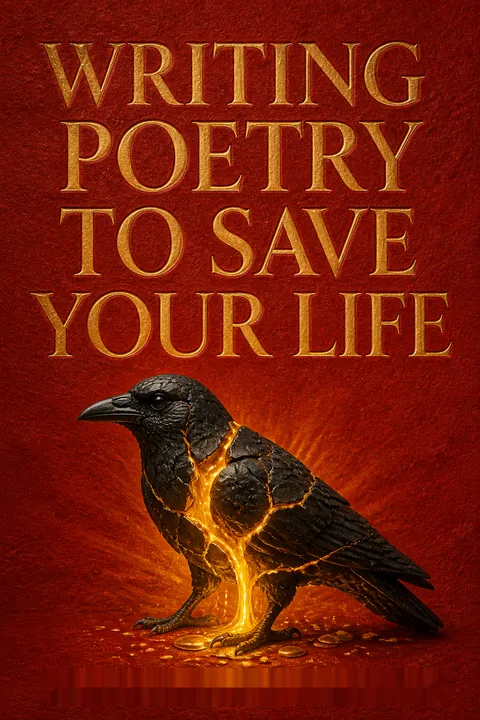
Name the inner critic. Gillan calls the discouraging voice the crow. It gathers old insults, humiliating memories, and imagined criticism, then uses them to argue that writing should not be attempted. Her image of the cave describes the inner store of memories, feelings, fears, and desires from which poems can emerge. The crow obstructs access to that material; it is not a trustworthy evaluator of the work.
Enter before you know. Gillan recommends choosing a prompt and writing without censoring the first response. A prompt about an important person, for instance, can begin with an image of that person in a familiar room, then lead toward something the writer has never dared to say. The goal is to get beneath rehearsed explanations and discover what the memory contains.
Externalizing self-criticism can reduce its authority: a thought becomes something noticed, rather than an order that must be obeyed. That distinction appears in several therapeutic approaches, although Gillan presents it as a practical writing image rather than a clinical technique. The metaphor also avoids a common trap in creativity advice: telling people simply to be confident. Confidence may not arrive before the work begins. A writer can instead learn to recognize the familiar discouraging script and keep the pen moving without having to defeat every doubt.
Draft first, then revise without cutting away the poem's energy
Separate making from judging. Gillan advises writers not to correct lines while drafting. She gives herself twenty minutes to write freely, trusting instinct and postponing decisions about quality, form, or audience. Her story about trying to paint a rose illustrates the same problem: she kept tearing up attempts because they did not match an imagined perfect picture. Once she stopped demanding perfection, she could paint from what she actually saw.
Give the draft distance. In her block method, the writer reads the rough poem aloud, marks lines that seem repetitive or awkward, and puts the piece aside for at least a week before revising. Revision may take several rounds or much longer. The aim is to improve the poem while protecting the force that made the first draft worth writing.
The distinction between generating and evaluating is a useful account of creative work. Constant self-monitoring consumes attention that could otherwise make unexpected associations possible. A pause also changes the writer’s relationship to a draft: distance can reveal what is essential and what was merely exciting in the moment. Yet spontaneity is not a substitute for craft. Gillan’s approach works because it gives both phases their place. The first draft gathers material; revision tests whether that material can carry meaning for someone beyond the person who wrote it.
Anchor memory in the small details only you could have noticed
Make the scene tangible. Gillan credits editor Ruth Lisa Schechter with teaching her that a poem can be emotionally strong yet too general. Schechter pressed her to replace vague description of Gillan’s father with details that made him unmistakable. Gillan recommends imagining a person or place through sight, sound, touch, and smell, almost as if recording a scene with a camera that can sense more than images.
Details carry feeling. A father’s work clothes, a familiar object, a particular food, or the sound of a voice can reveal affection, embarrassment, or regret more effectively than naming the emotion. Gillan points to Joe Weil’s portrait of Elizabeth, New Jersey, where ordinary neighborhood life and a father’s lost voice make one city vivid enough to recall readers’ own hometowns.
Specificity is not decorative realism. It gives readers evidence from which to infer emotion, much as a concrete observation in a case study lets an audience understand an abstract claim. It also protects a personal poem from becoming a general statement that could belong to anyone. There is a balance to strike: a pile of details can become inventory if none changes the reader’s understanding. The strongest particulars are selected, not merely accumulated. They reveal a relationship, a social world, or a contradiction that a broad label would conceal.
Let the language you actually speak shape the poem's voice
Listen for your own cadence. Gillan defines poetic voice as the recognizable sound and character of a poem’s speaker. She traces her own voice through the mix of Italian dialect and English in her family, the Paterson slang she used outside the home, and the formal English she learned at school. In a poem about her father, those shifts in names and language reveal how she adapted to different social settings and how she once felt ashamed of her family.
Read the lines aloud. Gillan encourages writers to speak their poems and notice where the rhythm feels natural, where a word trips the tongue, or where the language sounds borrowed. She warns against using elaborate or old-fashioned diction merely because it appears more poetic. A voice becomes stronger when its language fits the life being described.
The attention to speech makes voice more than a stylistic signature. It can register class, belonging, code-switching, and the pressure to perform a socially acceptable self. Reading aloud also gives writers a practical way to test whether syntax can be spoken and remembered. Still, natural speech is not automatically effective poetry; oral language often needs compression, pattern, and deliberate structure on the page. Gillan’s point is not to transcribe conversation literally, but to begin with a sound that belongs to the writer rather than an imitation of what poetry is supposed to sound like.
Fill your inner life with poetry, books, voices, and art
Writers need a supply. Gillan urges writers to read every day, across genres and periods, and to listen to poems as well as read them. Her own love of literature began in childhood, when she carried library books home and discovered lives far beyond her neighborhood. She also recalls a teacher inviting her to read poetry aloud. The sound and rhythm of the poems gave her an early sense of language as something felt in the body, not just analyzed.
Take in the wider world. Novels, newspapers, everyday conversation, theater, music, and visual art can all feed a writer’s store of images and ways of seeing. If reading feels difficult, Gillan suggests listening to recorded books or finding the book that finally catches a reader’s attention.
Reading is both apprenticeship and exposure. It expands a writer’s sense of what language can do, while providing models that can be absorbed without conscious imitation. Listening adds another dimension: rhythm, pause, and tone become easier to notice when words are heard. Gillan’s invitation to take in ordinary speech and other art forms also guards against a narrow literary diet. The caution is that influence can become mimicry. Reading widely is most productive when a writer pays attention to what moves them, then returns to the distinct material and rhythms of their own life.
Make writing time, and keep a notebook close enough to catch ideas
Give practice a place. Gillan recommends writing for twenty minutes daily, or several times a week if that is more realistic. She kept journals throughout her life and says many poems began there. She also advises carrying a small notebook and leaving others near places where ideas might arrive, including the bed or a favorite chair. When a poem came to her while driving, she learned to pull over rather than try to record it on the road.
Defend the time. A writing retreat need not involve travel. Gillan suggests silencing the phone, setting an out-of-office message, and creating a short interval free of obligations. A writing group, a trusted reader, or an occasional weekend away can provide structure when writing alone is difficult.
This is a practical response to the myth that serious creative work requires long, ideal stretches of solitude. Short sessions and a notebook make writing more compatible with crowded lives, while a retreat creates a temporary boundary around attention. The method also recognizes that ideas are often intermittent, so capture and sustained practice serve different purposes. No schedule can eliminate unequal access to time, privacy, or care responsibilities. Gillan’s advice is best understood as permission to claim workable fragments, not as a moral verdict on people whose circumstances make consistency difficult.
Choose clear language and a flexible form before chasing poetic polish
Get the thought onto paper. Gillan says a poem can take many shapes, from a single word on a line to a block of prose-like text. Writers need not settle the form before they have written the experience. For someone frozen by a blank page, she suggests speaking an essay into a recorder and transcribing it. The point is to get past the idea that writing must begin in polished sentences.
Plain can be difficult. Gillan admires William Stafford’s ability to make simple language carry complicated feeling. She criticizes ornate diction used to hide from emotion, and asks writers to check whether a word is one they would use aloud or one chosen to sound impressive. Clear language is not a ban on imagery or complexity; it is a way to reach the poem’s central feeling without needless disguise.
The argument separates accessibility from shallowness. Plain language can carry ambiguity, conflict, and emotional depth, while elaborate language can sometimes obscure a thin idea. This is a matter of fit, not a universal rule that every poem should sound conversational. Form and difficulty can be artistically necessary. Gillan’s practical sequence is valuable: let content arrive before forcing it into a prestigious shape, then decide what the poem needs. That order reduces the risk of using technique as armor against the subject.
Tell the truth of your memory, then make careful choices about publication
Do not pre-censor the draft. Gillan writes about painful family subjects, including a son’s distance and her husband’s long illness. She describes allowing the poem to reveal mixed feelings, such as love alongside impatience, grief, or shame. She argues that a writer should first put the experience on the page without trying to make the self or the family look ideal. A draft can hold contradictions that ordinary conversation avoids.
Writing and publishing differ. Gillan recounts worrying that poems about her husband might betray him, then discussing the work with him before publication. She also advises writers to consider how a living person may react and to set a poem aside before deciding what to share. Memory is personal and fallible; the writer’s task is to represent what feels true, not claim a perfect transcript.
This distinction between private candor and public disclosure is ethically important. A writer can explore material without assuming every draft belongs in print. That boundary protects both creative freedom and the privacy of people who appear in a poem. The idea of truth as faithful memory rather than courtroom testimony is also useful, especially for scenes remembered from childhood. Still, a writer’s perspective is not the only perspective in a family story. Honest writing can acknowledge that limits: a poem can present one person’s felt experience without claiming final authority over everyone else’s.
Analysis
Gillan’s book is less a manual for producing finished poems than a sustained argument over who is allowed to write, and what kinds of lives count as literary material. Its method follows that argument. First, it lowers the threshold for beginning: prompts, short timed sessions, journals, and permission to write imperfectly. Then it turns toward craft, asking writers to listen for voice, select concrete detail, and simplify language. Finally, it confronts the social cost of telling family stories, separating the freedom to draft from the responsibility of publishing.
The book’s most useful tension is between instinct and revision. Gillan treats the first impulse as a source of emotional energy, not as a finished poem. Her advice to delay editing helps protect that energy, while reading aloud and attending to specificity provide ways to shape it. This is a coherent creative practice: loosen control while generating, then apply judgment when the work can be seen with distance.
The metaphor of a discouraging crow gives self-doubt a memorable form, but the deeper claim is social as well as psychological. The voice that says a working-class immigrant family is too ordinary, or that personal poetry is too embarrassing, may echo real institutions and critics. Gillan’s response is not to reject craft or readers, but to resist letting presumed approval determine what may be written.
The book’s therapeutic promise needs careful interpretation. Writing can support reflection and connection, but the text does not establish that every painful memory becomes manageable through poetry. Nor does a writer’s emotional truth settle the privacy concerns of people represented in the work. Gillan’s practical distinction between drafting and publishing addresses this limitation. The lasting value of the book lies in its combination of permission and method: begin with the life at hand, make it vivid, and decide deliberately what to share.
Review Summary
Writing poetry to save your life receives mostly positive reviews, with readers praising its encouraging tone and practical advice. Many appreciate the author's supportive approach and personal examples. The book offers writing tips, prompts, and inspiration for both new and experienced poets. Some reviewers find it basic, while others value its simplicity and accessibility. The prompts section is particularly well-received, providing a useful resource for writers and teachers. Overall, readers find the book helpful in overcoming writing fears and exploring their poetic voice.
People Also Read


Glossary
the cave
inner store of experienceGillan’s metaphor for the inner territory from which poems emerge. It contains memories, relationships, fears, anger, desire, and other experiences, including those a writer may have avoided examining. Entering the cave means turning toward this personal material with enough openness to discover what can be written.
the crow
voice of self-doubtGillan’s image for the internal critic that repeats old insults, anticipated judgments, and reasons not to write. The crow tries to keep the writer from reaching difficult or meaningful material. Naming it helps a writer recognize discouraging thoughts without treating them as reliable judgments about the work.
20-minute focus
timed, uncensored draftingA short writing session in which the writer puts pen to paper and follows thoughts without stopping to revise or judge them. Gillan recommends using a timer and treating the period as protected time. The purpose is to get past hesitation and generate a first draft, not to produce a finished poem.
The Block Method of Unblocking Writer’s Block
prompt-based writing routineGillan’s process for using grouped prompts to restart writing. The writer chooses a prompt without overthinking, writes freely for a timed session, reads the draft aloud, marks possible problems, and sets the work aside before revising. Moving through prompt groups gives the writer a repeatable way to generate new material.
sausage poetry
polished poetry without heartGillan’s critical label for poems she considers smooth, market-conscious, and technically finished but emotionally cautious. She uses the term to challenge writing that hides behind polish or fashionable language instead of risking a genuine encounter with human experience. It is a polemical description, not a formal poetic category.
FAQ
1. What’s "Writing Poetry to Save Your Life" by Maria Mazziotti Gillan about?
- Empowering Everyday Writers: The book is a guide to finding the courage to tell your personal stories through poetry, especially for those who feel intimidated or unworthy of writing.
- Process Over Perfection: Gillan emphasizes the importance of process, instinct, and emotional truth over technical craft or poetic form.
- Personal and Universal: Through memoir, prompts, and examples, she shows how personal stories can connect across barriers of age, ethnicity, and class.
- Practical Prompts and Advice: The book is filled with hundreds of writing prompts and practical advice to help writers overcome self-doubt and writer’s block.
2. Why should I read "Writing Poetry to Save Your Life" by Maria Mazziotti Gillan?
- Accessible Approach: Gillan demystifies poetry, making it accessible to anyone, regardless of background or experience.
- Emphasis on Courage: The book is a motivational tool for those struggling with self-doubt, encouraging readers to value their own stories.
- Rich with Prompts: It provides a wealth of writing prompts and exercises to jumpstart creativity and help writers develop a daily writing habit.
- Real-Life Examples: The author shares her own poems and experiences, making the advice relatable and grounded in lived reality.
3. What are the key takeaways from "Writing Poetry to Save Your Life"?
- Everyone Has a Story: Your life and memories are valuable sources for poetry; you don’t need to be famous or extraordinary.
- Silence the Inner Critic: Overcoming the “crow” of self-doubt is essential to accessing your creative self.
- Write First, Revise Later: Let instinct and emotion guide your first drafts; save revision and craft for later.
- Specificity and Simplicity Matter: Use concrete details and simple language to make your poems vivid and relatable.
- Courage is Central: The heart of poetry is the courage to tell the truth about your life, even when it’s difficult.
4. How does Maria Mazziotti Gillan define and address writer’s block in "Writing Poetry to Save Your Life"?
- The “Crow” Metaphor: Gillan describes writer’s block as the voice of the “crow,” representing internalized criticism and self-doubt.
- Routine and Prompts: She recommends setting aside regular time to write and using prompts to bypass the inner critic.
- Permission to Be Imperfect: Writers are encouraged to write freely without worrying about quality or correctness in the first draft.
- Supportive Community: Sharing work with trusted friends or groups can help break through blocks and build confidence.
5. What is the "cave" metaphor in "Writing Poetry to Save Your Life," and how does it help writers?
- Source of Creativity: The “cave” is a metaphor for the deep, hidden place inside where memories, emotions, and stories reside.
- Guarded by the Crow: Accessing the cave requires pushing past the crow (self-doubt and criticism) to reach authentic material.
- Emotional Risk: Entering the cave means confronting fears, pain, and vulnerability, but it leads to more powerful writing.
- Prompts as Keys: Gillan’s prompts are designed to help writers access the cave and retrieve meaningful stories.
6. What advice does Maria Mazziotti Gillan give about poetic voice in "Writing Poetry to Save Your Life"?
- Find Your Own Sound: Poetic voice is the unique sound, perspective, and emotional truth that comes from your life and language.
- Imitation as a Starting Point: Imitating other poets can be a learning tool, but ultimately, writers must develop their own voice.
- Rooted in Place and Experience: Gillan encourages using the language and details of your own background and community.
- Authenticity Over Imitation: The most memorable poems are those that are honest and true to the writer’s experience.
7. How does "Writing Poetry to Save Your Life" by Maria Mazziotti Gillan suggest overcoming fear and self-doubt in writing?
- Acknowledge the Fear: Recognize that fear and self-doubt are common, but not insurmountable.
- Write Through the Fear: Use writing prompts and daily practice to push past hesitation and the need for approval.
- Share Your Work: Reading your poems aloud to supportive listeners can help build confidence and lessen fear.
- Reject the “Poetry Police”: Ignore critics who say your stories or style aren’t valid; your truth matters.
8. What role do specificity and simplicity play in poetry according to "Writing Poetry to Save Your Life"?
- Concrete Details: Specific images, smells, sounds, and actions make poems vivid and memorable.
- Avoid Abstraction: Generalities and vague language weaken the impact of a poem; details root it in reality.
- Simplicity is Powerful: Simple, direct language often conveys emotion more effectively than ornate or complex words.
- Relatability: Readers connect more deeply with poems that are clear and grounded in real experience.
9. What is Maria Mazziotti Gillan’s process for drafting and revising poems in "Writing Poetry to Save Your Life"?
- First Drafts are Instinctive: Write quickly and without censorship, letting the subconscious guide the process.
- Delay Revision: Don’t revise as you write; let the poem rest before returning to it with a critical eye.
- Read Aloud: Reading your poem aloud helps identify awkward lines or places that need improvement.
- Retain Vitality: Be careful not to revise away the energy and emotion of the original draft.
10. How does "Writing Poetry to Save Your Life" by Maria Mazziotti Gillan address the issue of writing about family and personal secrets?
- Tell Your Truth: Gillan encourages writers to tell their own stories, even if it means revealing family secrets or difficult truths.
- Balance Honesty and Sensitivity: While honesty is crucial, consider the potential impact on living people before publishing.
- Ownership of Experience: Your perspective and memories are valid, even if others remember differently.
- Courage to Face Reactions: Be prepared for mixed reactions from family, but don’t let fear of disapproval silence you.
11. What are some of the most important writing prompts and exercises in "Writing Poetry to Save Your Life"?
- Hundreds of Prompts: The book contains extensive prompts covering family, memory, place, emotion, and personal history.
- Sensory Details: Many prompts focus on using the senses to recall and describe specific moments or people.
- Direct Address: Exercises often suggest writing directly to a person from your past, saying what you couldn’t say then.
- Repetition and Variation: Some prompts encourage repeating a word or phrase to build momentum and emotional depth.
12. What are the best quotes from "Writing Poetry to Save Your Life" by Maria Mazziotti Gillan, and what do they mean?
- “Poems hide in a place deep inside of you that I call the cave.” – This highlights the idea that creativity comes from deep, often hidden, personal experience.
- “You have to get rid of the crow; you have to push him out of your way.” – The “crow” represents self-doubt and internalized criticism that must be silenced to write authentically.
- “Only poems that make you cry or laugh or make the hair on your arms stand up are worth writing.” – Emotional truth and impact are the hallmarks of meaningful poetry.
- “Tell your own story. Without books and writing, my life would have been dramatically different from what it turned out to be.” – Writing is transformative and empowering, allowing individuals to claim and shape their own narratives.
Download PDF
Download EPUB
.epub digital book format is ideal for reading ebooks on phones, tablets, and e-readers.








