

Key Takeaways
Make the supernatural load-bearing, not decorative.
The removal test. A paranormal novel depends on magic or the supernatural so deeply that removing it would collapse the story. If a werewolf love interest could be replaced by an ordinary man with a monthly bad temper, the supernatural is decoration, not the engine. The same test applies to a magical object: if a phone could do its job, the object may not be carrying enough story weight.
Make strange collide with familiar. Harper points to the appeal of the impossible appearing in ordinary life. Stoker made a vampire frightening by bringing him into modern London; Novik reimagined the Napoleonic wars with dragons. A useful starting move is to ask what happens when two unlike ideas meet, then make the supernatural element change what the protagonist must do.
The removal test works like a counterfactual in scientific reasoning: change one condition and see whether the whole model still holds. It helps writers distinguish a premise from atmospheric dressing. The strongest genre blend often comes from that collision between the known and the impossible, because readers can measure the disruption against a familiar baseline. Still, the test is a guide rather than a border patrol. Some literary works deliberately leave the supernatural uncertain, and ambiguity can be the point. The essential question is whether the story makes a meaningful promise about the uncanny, then fulfills that promise.
Give every supernatural power a cost, a boundary, and a rule.
Limits create plot. An object that can solve every problem ends conflict before the story begins. In Edward Eager's Half Magic, a coin grants only half of a wish, so a child asking for a desert island gets a desert, but not an island. The power remains useful while producing complications. Limits can restrict how often magic works, under what conditions, or what it costs the user.
Keep the rules stable. Decide what a power can do before relying on it to rescue the hero. A character may discover a new use for an established ability, but an unexplained extra power feels like a loophole. Harper calls the escalating accumulation of powers and threats superhero creep. Planning a ceiling for abilities, or making a power temporary, helps prevent every new crisis from requiring a more powerful hero.
This is a design principle as much as a writing technique. In engineering, constraints make a system testable: a tool becomes interesting when its capabilities and failure modes are known. The same is true of magic. A reader can anticipate danger and judge whether a solution has been earned. However, rule-making can become its own trap. A paranormal story need not explain every mystery like a technical manual. The useful distinction is between uncertainty for the characters, which can deepen suspense, and inconsistency for the reader, which can weaken trust.
Build a society around every supernatural species that lasts.
A creature implies a world. If an elf exists, the writer must consider whether other elves exist, how they organize themselves, and how they relate to humans and other beings. Harper distinguishes worlds where the supernatural is hidden from those where it is public, and asks whether nonhumans are persecuted, treated as equals, or dominant. Each choice changes the surrounding society.
Follow consequences into daily life. Culture includes government, resources, belief, family, food, art, technology, and communication. A secret vampire community might have rules to avoid human attention. A modern werewolf group with access to weapons and the internet needs credible reasons not to use them. Likewise, a telepathic hero needs a reason that help cannot simply be summoned. These practical details close plot holes and generate conflict.
The book's world-building advice resembles systems thinking: changing one part of a society changes others. A new species affects law, labor, food supply, security, and identity, not just the scenery. This is also where speculative fiction can examine real institutions at a safe distance. The caution is that a checklist can make cultures feel mechanically assembled. A few specific customs, conflicts, and resource pressures are often more persuasive than a complete invented encyclopedia. Readers need to sense that the world continues beyond the page, not tour every department of it.
Research reality, then use only the facts that serve the story.
Reality supports the impossible. Accurate settings, procedures, and folklore give readers something solid to believe before the magic arrives. Harper recommends researching primary folklore rather than recycling familiar movie versions of vampires or werewolves. He also describes interviewing specialists, using library resources, checking online claims against reliable sources, and getting local details right. A wrong street name in a real town can pull a knowledgeable reader out of the scene.
Stop before research takes over. Harper's research into Victorian climbing boys, children forced to clean chimneys, led him to invent a supernatural threat for his story Thin Man. The discoveries supplied both setting and plot. But he warns against collecting facts without a writing purpose. He calls especially engaging research details neepery, and argues they belong when they establish setting or move events forward.
Research does more than prevent factual errors. It expands the writer's supply of possible stories, and it gives invented elements a texture that pure improvisation may miss. This is close to ethnographic practice: observe actual behavior before explaining it through a theory. Yet research is not neutral. Archives can omit marginalized voices, and folklore often has competing versions. That makes Harper's advice to choose what best serves the story especially useful, provided selection is deliberate rather than careless. The aim is not documentary completeness; it is an imagined world that feels observed.
Give supernatural characters ordinary emotional needs and consequential flaws.
Magic cannot replace character. A vampire's power may attract readers, but the character becomes compelling through recognizable desires, choices, and emotional reactions. Harper suggests developing a protagonist's history, attitudes, relationships, and at least two goals, such as an external objective and an emotional need. A new supernatural being might face hunger, isolation, or fear of losing a former identity, struggles that echo human experiences without making the character ordinary.
Make flaws drive events. A weakness is imposed, like a werewolf's vulnerability to silver. A flaw is a consequential choice or habit, such as gambling despite the risk of losing tuition money. Odysseus's pride repeatedly worsens his journey and must be confronted before he can reclaim his home. Give antagonists goals, too. A fully motivated opponent is more than a convenient target for the hero.
The emotional bridge is a form of translation. Readers do not need firsthand experience of immortality to recognize grief, appetite, shame, or the fear of change. That lets a supernatural premise enlarge familiar emotions rather than replace them. The distinction between weakness and flaw is also useful because it preserves agency: one creates vulnerability, while the other creates responsibility. A caution follows. Not every character needs a redemptive arc, and suffering should not be treated as proof of depth. A believable character can remain difficult, contradictory, or unchanged.
Make clichés specific before you try to make them new.
Familiarity is not the real problem. Paranormal fiction returns to vampires, prophecies, chosen heroes, and magical gateways because readers already understand their appeal. A cliché forms when a familiar idea is predictable and underdeveloped. Harper suggests reversing the expected pattern: a vampire who enjoys being undead, a prophecy that is explicit rather than cryptic, or a benevolent ruler whose pursuit of perfect order becomes frightening.
Add a life beyond the trope. If a wizard seems like a stock mentor, give him a family, a history, and interests unrelated to magic. If a gateway seems generic, decide who made it and why. These choices make the familiar element particular to this story. The goal is not novelty for its own sake. It is to create enough personal, social, or moral detail that readers meet a character rather than recognize a template.
This advice aligns with how genre works: familiar patterns lower the cost of entry, while meaningful variation rewards attention. Readers can enjoy a known structure when the characters complicate what they expect it to mean. Inversion is one efficient tool, but it can become a gimmick if the reversed version has no deeper purpose. Specificity is more durable than surprise alone. A vampire accountant, for example, is not automatically fresh; the character's work, desires, and undead life must interact in ways that matter to the plot.
Escalate setbacks, connect subplots, and make the ending earned.
Build a chain of consequences. A paranormal novel needs a clear central conflict, introduced quickly enough that readers know what kind of story they entered. The protagonist should not solve it on the first try. Repeated attempts can fail, worsen the situation, and force a final high-stakes choice. Harper calls the decisive point when everything appears lost the black moment. The resolution should come from the protagonist's choices and established abilities, not a convenient new spell.
Let the smaller stories matter. Romance, personal flaws, and recurring side problems can deepen the novel, especially when they affect the central conflict. In Harry Potter and the Half-Blood Prince, tension among Harry and his friends leaves him without support for important tasks. Each book in a series should still resolve a substantial problem, even if a larger arc continues. Scenes should earn their space by advancing plot, character, or necessary information.
This model makes narrative escalation more than a succession of louder explosions. The best complication changes the protagonist's options, relationships, or understanding of the problem. Interconnected subplots create a similar effect: a personal conflict can alter access to the resources needed for the supernatural one. That is a form of causal integration, and it makes a story feel tighter. The three-attempt pattern is useful but not mandatory. Repetition becomes formulaic when each failure teaches nothing new. Escalation should increase consequence or insight, not merely repeat the same obstacle at greater volume.
Let a distinctive voice make familiar supernatural material feel new.
Voice is a way of seeing. Harper treats voice as more than word choice: it emerges from the viewpoint character's habits of attention, emotional range, and rhythm. His examples contrast Anne Rice's elaborate vampire narration, Octavia Butler's more direct prose, and Lucienne Diver's brisk teenage perspective. The supernatural subject may be familiar, but the narrator's perspective can make the experience feel singular.
Make wonder emotional. A magical event feels extraordinary when the viewpoint character reacts to it with awe, fear, delight, or curiosity. Sensory detail and the character's perception of setting can carry that response. Harper also urges writers to give the story a theme, a specific idea about what the events mean, rather than only a plot summary. Voice makes the experience immediate; theme gives it resonance after the last scene.
Voice functions like a camera with a personality. It selects what becomes salient, so the same supernatural event can register as grotesque, comic, or sublime depending on who perceives it. This connects craft to attention: description is not a neutral inventory but an interpretation. Theme adds a second layer by asking what the story's events suggest about power, death, or belonging. The challenge is restraint. If every sentence announces wonder, the extraordinary becomes routine; if the theme is explained too directly, readers have no interpretive work left to do.
Finish the manuscript, revise its rules, and keep submitting professionally.
Completion is a craft skill. Harper treats finishing a novel as a major threshold because many aspiring writers never complete one. After drafting, let the manuscript rest, revisit notes, check the consistency of magic and characterization, and cut scenes that do no necessary work. A revision can improve pacing while accidentally removing information readers need, so review the story as if encountering its world for the first time.
Persistence needs judgment. The book advises writers to submit to suitable agents and publishers, follow each one's stated requirements, accept useful criticism, and avoid angry public reactions to rejection. Its publishing advice also stresses that legitimate agents earn commissions from sales, not upfront fees. The industry changes, so its specific submission procedures should be verified. The enduring point is to protect the work, behave professionally, and continue writing another book.
The final advice combines artistic discipline with professional risk management. Revision is not simply polishing sentences; it is testing whether the fictional system remains coherent after the draft has evolved. Persistence matters because creative work is evaluated by gatekeepers, timing, and fit as well as quality. But persistence should not mean submitting blindly or treating every rejection as proof of injustice. Publishing norms shift, particularly around digital formats and representation. The durable practice is to research current markets, protect rights and money, learn from specific feedback, and keep building a body of work.
Analysis
Harper's book treats paranormal writing as a craft of controlled contradiction. The writer invites the reader to accept vampires, magic, and impossible worlds, then earns that acceptance through stable rules, researched surroundings, and emotionally credible people. The supernatural is not an escape from causality. It is a way to intensify it. A magical ability creates consequences, and those consequences ripple outward into family, politics, economics, technology, and plot.
That approach brings together two kinds of plausibility. The first is systemic: readers need to understand enough of the world's rules to judge what can happen. The second is human: characters need recognizable wants and reactions, even when their bodies and powers are unfamiliar. The book's strongest practical insight is that these forms reinforce each other. A vampire's hunger becomes more than lore when it strains a relationship or forces a choice. A dragon's diet becomes more than trivia when it changes how a military treats dragons and how one dragon understands injustice.
The advice also defines a productive balance between preparation and openness. Writers should know more about a world than they reveal, yet avoid turning research into a substitute for drafting. They should plan long arcs without locking every creative discovery in advance. They should use familiar genre patterns as shared shorthand, then individualize them through voice, motive, and consequence.
Some recommendations are historically situated. Submission formats, agent practices, and publishing routes have changed since the book appeared in 2011, so those details require current checking. The craft principles travel better: complete the work, make each scene earn its place, preserve internal coherence, and treat rejection as information rather than a verdict on identity. The book ultimately presents imagination as neither pure invention nor unconstrained wish fulfillment. It is disciplined invention, where every impossible choice must still feel consequential.
Review Summary
Writing the Paranormal Novel receives mostly positive reviews, with an average rating of 4.02 out of 5. Readers appreciate its focus on supernatural elements, world-building, and character development specific to paranormal fiction. Many find it helpful for both beginners and experienced writers, praising its practical advice, exercises, and examples from popular genre novels. Some criticize it for being too basic or promoting the paranormal genre as a trend. Overall, reviewers recommend it as a valuable resource for aspiring paranormal authors.
People Also Read






Glossary
neepery
Interesting researched detailA term for appealing facts or details a writer discovers through research and includes in a story. Harper argues that such material should earn its place by establishing the setting or helping the plot move forward. Interesting information alone is not enough; too much can distract from the characters and make a novel feel like a research scrapbook.
superhero creep
Escalating power inflationThe gradual increase of a protagonist's abilities, often because each new conflict demands a stronger hero. This can force antagonists and threats to grow continually larger until the story has no believable challenge left. Writers can limit the problem by planning a power ceiling, making certain abilities temporary, or developing the character in ways that do not depend on greater strength.
internal consistency
Stable fictional rulesThe principle that a story's magic, supernatural abilities, and world conditions should operate according to rules that remain coherent. Writers may invent any rules they choose, but readers expect those rules to hold. A power that appears only when the plot needs an easy rescue can feel unfair unless its limits and operation have been established.
sense of wonder
Felt response to magicThe reader's experience of amazement, excitement, or awe when a character encounters something supernatural. The effect depends not only on describing the magical event, but also on showing the viewpoint character's emotional and sensory response. If the character treats an extraordinary event as ordinary, the reader is less likely to feel its significance.
tomato surprise
Unsupported plot twistA sudden revelation that shocks the reader but lacks preparation in the story. Because no earlier detail makes the turn plausible, it feels arbitrary rather than surprising. A fair twist can still catch readers off guard, but afterward they should be able to recognize clues that were present and understand how the outcome followed from the story's established conditions.
black moment
Apparent point of defeatA climactic point when the protagonist appears to have lost, support has vanished, or the antagonist seems certain to succeed. The moment raises suspense and forces the protagonist into a final, consequential response. Its resolution should grow from established character choices and story rules, so victory feels earned rather than delivered by an unexplained rescue.
As you know, Bob
Artificial explanatory dialogueA scene in which characters explain facts to each other that they already know, solely so the reader can receive background information. The exchange sounds unnatural because it has no convincing purpose within the characters' relationship or immediate situation. Exposition works more smoothly when it arises from genuine ignorance, conflict, discovery, or a character's need to explain something.
FAQ
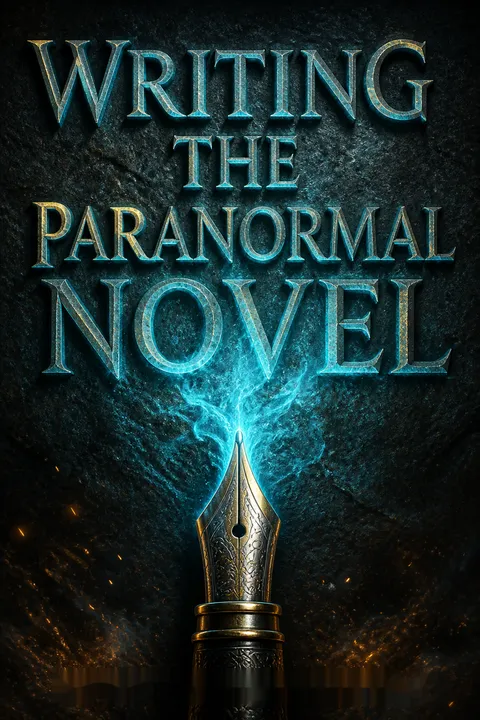
What is Writing the Paranormal Novel by Steven Harper about?
- Comprehensive writing guide: The book is a practical manual for writers who want to craft engaging paranormal novels, focusing on integrating supernatural elements seamlessly into stories.
- Structured approach: It covers everything from defining paranormal elements and world-building to character creation, pacing, dialogue, and polishing the manuscript.
- Emphasis on realism and creativity: Harper stresses the importance of making supernatural elements essential to the story and maintaining internal consistency to keep readers immersed.
Why should I read Writing the Paranormal Novel by Steven Harper?
- Expert advice for writers: Steven Harper draws on examples from renowned authors and his own experience to provide actionable techniques for paranormal storytelling.
- Balance of creativity and craft: The book helps writers develop unique voices and consistent supernatural worlds while encouraging originality.
- Industry insights: It includes practical tips on publishing, querying agents, and building a writing career, making it valuable for both new and experienced authors.
What are the key takeaways from Writing the Paranormal Novel by Steven Harper?
- Supernatural must be integral: The paranormal element should be so essential that the story would collapse without it.
- Developed characters and worlds: Characters need fully realized backgrounds and motivations, and supernatural societies should be rich and believable.
- Practical writing techniques: The book offers exercises, advice on pacing, dialogue, and fight scenes, and guidance on avoiding clichés and infodumps.
How does Steven Harper define a paranormal novel in Writing the Paranormal Novel?
- Essential supernatural element: A true paranormal novel contains at least one supernatural or magical aspect that is vital to the plot.
- Not just decorative: If the supernatural can be swapped out for ordinary elements without changing the story, it’s not genuinely paranormal.
- Rooted in tradition: Harper connects paranormal fiction to ancient myths and storytelling, encouraging writers to tap into these universal themes.
What types of supernatural elements does Steven Harper describe in Writing the Paranormal Novel?
- Supernatural objects: Items like magical swords or rings with defined powers, limitations, and histories that drive the plot.
- Supernatural beings: Characters such as vampires, angels, demons, and shape-shifters, each with unique rules and cultural backgrounds.
- Creatures and gateways: Includes monsters, helpers, and portals to other worlds, all requiring thoughtful world-building and consistent logic.
What guidance does Writing the Paranormal Novel provide on creating supernatural characters?
- Ordinary core, extraordinary traits: Characters should be compelling as people first, with supernatural abilities layered on top.
- Protagonist archetypes: Harper outlines types like the Regular Joe, Reluctant Hero, Hunter, Newbie, Super, and Experienced One, each offering different narrative possibilities.
- Antagonists and supporting cast: Villains and side characters need clear motivations and development, not just supernatural powers.
How does Steven Harper recommend handling clichés in paranormal fiction?
- Identify and avoid clichés: Recognize overused character types and plot devices, such as the Tragic Vampire or Dark Lord.
- Reinvent or subvert: Add unique traits, backgrounds, or motivations to familiar tropes to make them fresh and engaging.
- Use with care: Clichés can work if they’re well-developed and not immediately recognizable, with underdevelopment being the real pitfall.
What advice does Writing the Paranormal Novel give about world-building and culture?
- Secret vs. sunlit worlds: Decide if the supernatural is hidden or openly known, as this shapes plot and setting.
- Cultural depth: Consider government, economy, spirituality, family, art, and technology in your supernatural society for believability.
- Impact on history: The presence of supernatural beings should affect social hierarchies, daily life, and human-paranormal relations.
How does Steven Harper address the use and limits of magic and supernatural powers in Writing the Paranormal Novel?
- Avoid “superhero creep”: Don’t let characters’ powers grow without limits, as this reduces tension and stakes.
- Set clear limitations: Powers should have costs, vulnerabilities, or conditions to maintain conflict and suspense.
- Consistent magic systems: Define the source, rules, and impact of magic, and maintain internal consistency to avoid deus ex machina endings.
What are Steven Harper’s techniques for showing emotion in paranormal characters?
- Show, don’t tell: Use actions and physical sensations to convey feelings instead of stating them outright.
- Figurative language: Employ similes, metaphors, and personification to add depth, but use them sparingly.
- Active emotions: Make emotions act on characters (e.g., “Fear turned Nick’s hands to ice”) for dynamic storytelling.
How does Writing the Paranormal Novel advise on pacing, exposition, and fight scenes?
- Match pace to story: Fast pacing suits adventure-heavy stories, while slower pacing fits character-driven tales.
- Avoid infodumps: Integrate world-building and background information naturally through dialogue and action.
- Effective fight scenes: Use short, punchy sentences and strong verbs, research weapons and combat, and ensure supernatural elements are consistent.
What publishing and career advice does Steven Harper offer in Writing the Paranormal Novel?
- Professional submissions: Follow agent and editor guidelines for query letters, treatments, and sample pages.
- Avoid scams: Never pay agents or editors upfront and be wary of vanity presses.
- Build your career: Network, attend conventions, join writers’ groups, and keep writing to develop a sustainable career. Persistence and professionalism are key.
Download PDF
Download EPUB
.epub digital book format is ideal for reading ebooks on phones, tablets, and e-readers.








