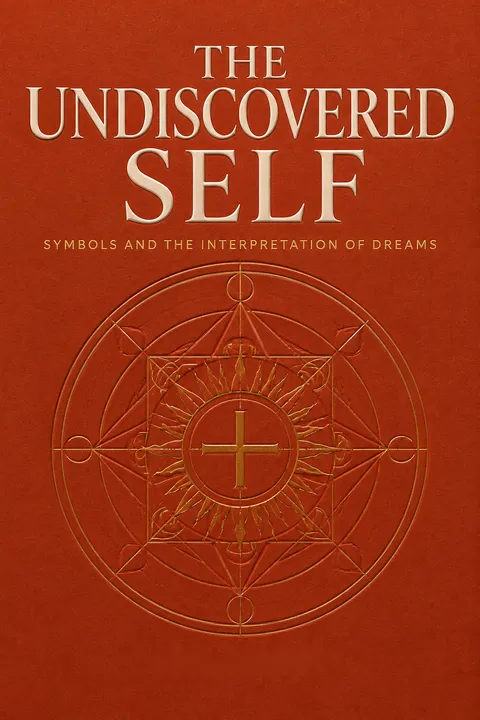


Key Takeaways
Mass movements gain power when individuals surrender judgment and responsibility
The danger starts within. Writing amid Cold War fears, Jung argues that crowds can weaken the independent judgment individuals still possess. When political emotion overwhelms reflection, slogans and fantasies take over, while people hand responsibility to a party, a leader, or an abstract State. A person who feels insignificant beside mass power may stop believing personal choices matter, making submission easier still.
Participation has a price. Jung does not say that every group is tyrannical. His warning concerns mass belonging that suppresses disagreement and treats collective belief as proof. The safeguard he proposes is a person capable of examining motives, resisting group pressure, and accepting responsibility for individual decisions.
What's striking is the shift from blaming a crowd to asking what each person contributes to it. That makes political vulnerability a matter of habits of judgment, not merely institutional design. Yet institutions and groups can also protect people and make coordinated action possible. The useful distinction is not individual versus collective life, but whether collective loyalty leaves room for dissent, accountability, and correction. Jung's alarm is most persuasive when read as a warning about unchecked conformity, rather than as a claim that mass participation is inherently corrupt.
Know yourself beyond the conscious story you tell about yourself
The ego is not the whole self. Jung distinguishes the conscious ego, the part of the mind a person recognizes as “me,” from unconscious contents that can still shape feeling and action. What people call self-knowledge often amounts to a polished account of themselves, calibrated against what friends or society consider normal. It may omit motives, fears, and abilities they would rather not see.
Averages hide exceptions. Statistics can describe a population, Jung says, but an average cannot explain a particular person. Knowing the average weight of a collection of stones would not tell someone the weight of any one stone. General psychology can orient inquiry, but understanding a person requires attention to their particular circumstances, including facts that resist a standard theory.
This is a strong argument for combining general knowledge with close attention to the individual. A category can identify patterns without telling the whole story of any person inside it. The limit is not that statistics are useless, but that they answer population-level questions rather than every personal one. Jung sometimes casts scientific generalization as more hostile to individuality than it needs to be. Used carefully, a general model can be a starting point for inquiry, not a verdict about who someone is.
Treat dreams as material to investigate, not codes to crack
The unconscious is active. Jung treats dreams as spontaneous products of the psyche, not as meaningless noise. They may draw on forgotten memories, unnoticed perceptions, emotional conflicts, or ideas not yet conscious. He calls cryptomnesia the unrecognized return of something encountered before. As an example, he describes a passage in Nietzsche that resembles an older published story, although Nietzsche apparently did not remember reading it as a child.
Images are not simple signs. A symbol suggests more than a conscious explanation can exhaust. Jung distinguishes it from a sign, which points to something already known. A dream image may therefore deserve sustained attention even when its meaning is uncertain. This does not make every dream a prophecy or a supernatural message. It makes the dream a possible clue to mental activity that ordinary self-report misses.
The practical value of this stance is permission to stay curious when an image does not yield an immediate explanation. It also discourages the false confidence of treating a dream dictionary as a decoding machine. Jung's language about a psyche that produces meaning is a theoretical interpretation, not a demonstration that each dream has a single discoverable purpose. Dreams can be explored as prompts for reflection while their meanings remain provisional and open to ordinary explanation.
Interpret a dream's actual images before following loose associations
Stay with the dream. Jung questions an approach that lets a dreamer associate freely from each image until the discussion reaches familiar emotional concerns. He recounts a colleague who began with unreadable Cyrillic signs and, through association, arrived at personal complexes. That showed that associations can lead to emotionally charged material, but not that this material explains a particular dream.
Follow its specific form. Jung instead advises examining the images and events actually present, then exploring what they mean to this dreamer. A dream in which a man sees his wife as disheveled and vulgar may not be a factual judgment about her. Jung reads it as a challenge to the dreamer's flattering view of his own way of relating. The image matters because of its particular fit, not because it belongs to a universal code.
This method puts a useful constraint on interpretation: an explanation should account for the dream's details, rather than merely uncovering a theme that could have emerged from almost any conversation. It also gives the dreamer a role in testing what feels relevant. The risk is that an interpreter can still impose a preferred reading while claiming to honor the image. Careful questioning and willingness to revise an interpretation are essential, especially when the conclusion is uncomfortable.
Let unconscious compensation challenge your conscious one-sidedness
Dreams can correct the balance. Jung uses compensation for the way unconscious material may offset a conscious attitude that has become too narrow or self-satisfied. A man convinced of his own moral superiority dreams of a degraded stranger. Jung connects the figure not only to the dreamer's disreputable brother, but also to qualities the dreamer refuses to recognize in himself. The dream unsettles his belief that virtue belongs entirely to him and failure to someone else.
Correction is not condemnation. A dream that punctures grandiosity might help one person, while the same kind of interpretation could deepen another person's already crushing sense of worthlessness. Jung therefore rejects a universal prescription. The question is not simply what an image could mean in theory, but what conscious attitude it may be counterbalancing in this particular person.
The idea of compensation offers a memorable way to ask what a person's self-image leaves out. It can reveal how a supposedly external flaw is emotionally connected to the observer. But the interpretation should not turn every dream into the opposite of waking belief. Contradiction alone is not evidence. The proposal gains force when the dreamer's circumstances, emotional reactions, and repeated patterns support it, rather than when a therapist simply prefers a balancing explanation.
Build understanding through patient encounter, not psychological formulas
Interpretation is relational. Jung describes dream analysis as a meeting between two individuals, not the mechanical application of a theory. The interpreter brings personal assumptions and can mistake them for the dreamer's truth. Jung's own house dream, discussed with Freud, exposed a gap between their interests and outlooks; Jung felt he could not safely explain what the dream meant to him. The example shows how an interpretation can be shaped by the relationship in which it is offered.
Types orient, they do not settle. Jung uses introversion and extraversion, along with thinking, feeling, sensation, and intuition, to describe different ways of navigating experience. He presents these as useful distinctions, not final labels. A dream's meaning depends on the dreamer's age, situation, and disposition. Two people may report similar images while needing very different interpretations.
The emphasis on relationship is a welcome check on professional authority. A clinician's expertise does not remove the clinician's blind spots, and a patient's resistance may signal a poor fit rather than mere denial. Jung's categories can help people notice differences without treating them as fixed identities. The same caution applies to any personality framework: when labels become explanations in themselves, they can obscure the changing context that made the behavior meaningful.
Recognize your shadow before assigning all evil to opponents
What is disowned gets projected. Jung calls the shadow the qualities a person fails or refuses to recognize in themselves. In politics, he argues, people and nations can locate their own aggression, dishonesty, or appetite for power entirely in an enemy. This creates moral innocence at home and turns the opponent into a complete embodiment of evil. Jung links such projection to the Cold War division between political blocs, while insisting that self-criticism must accompany criticism of others.
Acknowledgment is not equivalence. Recognizing a capacity for wrongdoing does not make every side equally responsible, nor does it excuse actual harm. Jung's point is that denial weakens judgment: people who cannot imagine their own participation may be easier to recruit into destructive actions. Honest self-examination can make relationships more realistic and reduce the certainty that conflict belongs only to someone else.
This framework helps explain why moral certainty can make dialogue harder: the more completely a group identifies itself with goodness, the less it can examine its own conduct. The needed correction is not false balance. Evidence still matters, and responsibility for specific acts must remain distinct. The productive question is whether recognizing one's own capacity for harm improves judgment about the other side, rather than becoming a way to blur differences in power or culpability.
Seek meaning in lived experience, not borrowed certainty
Belief and experience differ. Jung distinguishes a creed, a public body of teachings and customs, from religion as an individual's relationship to a transcendent authority or reality. In his account, inherited belief may not provide a person with a felt source of guidance. He argues that an inner experience can help someone resist the demand that the State or a mass movement be the only authority that matters. He does not claim that the unconscious is God; he describes it as a possible medium of religious experience.
Symbols can carry meaning. Jung thinks religious symbols give emotional shape to questions of suffering, death, and human purpose. He argues that rejecting them as literal facts or dismissing them as nonsense can miss their psychological significance. His proposal is to interpret inherited symbols thoughtfully, rather than demand unquestioning belief or assume that material explanations answer every question of meaning.
The distinction between inherited doctrine and personally meaningful experience clarifies why nominal affiliation may not steady someone in a crisis. Jung also treats meaning as psychologically consequential, not as an optional decoration. Still, the usefulness of a belief does not establish its metaphysical truth, and intense experience can support conflicting convictions. The strongest version of his case invites serious reflection on meaning while leaving room for uncertainty and disagreement about what, if anything, transcends the psyche.
Treat archetypes as inherited patterns, not ready-made stories
Patterns are not preloaded images. Jung defines an archetype as an inherited tendency to form recurring kinds of images, not a fully formed idea passed down intact. He points to a collection of dreams from an eight-year-old girl. They contain striking themes of destruction and renewal, the creation of the world, and a divine fourfold figure, despite her family's limited religious teaching. Jung interprets the similarities to myths as evidence of shared psychological patterns.
Context still matters. Archetypal images take their specific form from a person's life and culture. Jung's claim is that recurring motifs may express deep structures of the psyche, not that every image has the same meaning everywhere. The emotional force of a symbol also matters: an image that is merely a familiar word is different from one that grips and unsettles the dreamer.
The distinction between an inherited disposition and an inherited story is central to Jung's theory and avoids a common misunderstanding. Recurring motifs across settings can invite comparison, but resemblance alone cannot prove that a pattern is biologically inherited; shared culture and less obvious exposure are also possible explanations. Jung's case is most valuable as a prompt to investigate how image, emotion, and personal context interact, not as a conclusive demonstration of the origin of myth.
Analysis
These paired essays move from public crisis to private interpretation. The Undiscovered Self argues that anonymous mass power becomes dangerous when individuals abandon judgment, while Symbols and the Interpretation of Dreams proposes that self-knowledge requires listening to mental activity outside conscious intention. Their bridge is Jung's claim that what goes unrecognized within a person does not simply disappear. It can return as projection, symptom, group fervor, or symbolic image.
The strongest contemporary contribution is methodological rather than metaphysical. Jung insists that a theory should not replace attention to an individual, that an interpreter can project their own assumptions, and that a dream deserves engagement with its actual details. These cautions remain valuable in any setting where people are categorized, diagnosed, or treated as representatives of a group. His account of dreams also anticipates a broad modern recognition: much mental processing happens outside conscious awareness. That general point, however, does not establish his more specific claims about inherited archetypes, the prognostic force of dreams, or a transcendent source of religious experience.
The essays also carry the limitations of their moment. Jung writes through Cold War political categories and often makes broad claims about States, churches, and mass movements that the text does not substantiate systematically. His warning against projection is ethically useful, but it must not flatten differences in evidence, power, or responsibility. Likewise, an interpretation that feels profound may still be wrong. The book is best read as a demanding invitation to examine the relationship between conscious self-image and unacknowledged mental life, not as a settled scientific map of the unconscious. Its lasting challenge is to combine interpretive humility with real scrutiny: neither dismiss inner images as meaningless nor treat them as unquestionable revelation.
Review Summary
The Undiscovered Self receives mostly positive reviews, praised for its insightful analysis of the human psyche and critique of modern society. Readers appreciate Jung's emphasis on individuality, the unconscious, and dream interpretation. Many find his ideas relevant to contemporary issues, though some criticize his writing style and outdated views. The book is seen as a valuable introduction to Jung's work, offering a unique perspective on personal growth and societal challenges. Some readers struggle with the complex concepts but find the overall message compelling.
People Also Read








Glossary
Symbol
Image with unfinished meaningFor Jung, a symbol is an image, name, or expression that points beyond its literal or familiar meaning toward something not yet fully understood. Unlike a sign, which refers to a known idea, a symbol cannot be completely explained by a single definition. Its meaning depends on the image's context, the person encountering it, and its emotional force.
Compensation
Unconscious counterbalanceCompensation is Jung's hypothesis that unconscious processes may offset or correct a one-sided conscious attitude. A dream, for example, may challenge a person's inflated self-image or bring attention to feelings and motives that conscious judgment excludes. It is a way to investigate a possible relation between waking attitudes and dream content, not a rule that every dream means the opposite of what the dreamer believes.
Archetype
Inherited image-forming tendencyJung uses archetype for an inherited tendency to produce recurring forms of image and thought, rather than an inherited, fully formed idea. Different people and cultures may express a shared pattern through different stories and symbols. Jung connects archetypes to instinct and argues that they can appear in dreams and myths, where their emotional force may shape how people experience a situation.
Shadow
Disowned aspects of oneselfThe shadow refers to qualities a person does not recognize, accept, or include in their conscious picture of themselves. It can involve traits judged as negative, but it is not simply a storehouse of evil. Jung argues that denying these qualities can lead people to attribute them wholly to others, making self-examination important in both personal and collective conflict.
Numinosity
A symbol's charged forceNuminosity is the compelling emotional quality Jung associates with certain images and experiences. A numinous symbol is not merely an idea or word; it grips the person and carries psychological force. Jung uses the concept to explain why religious images and archetypal motifs can affect people deeply, even when their meaning cannot be reduced to a rational definition.
Cryptomnesia
Unrecognized return of memoryCryptomnesia is the appearance of a remembered source without conscious recognition that it has been encountered before. A person may experience an image, phrase, or story as newly created while an earlier exposure has been forgotten. Jung uses a parallel between a passage in Nietzsche and an older account to illustrate how forgotten material may reappear in creative work.
Introversion and extraversion
Two orientations of attentionJung uses introversion and extraversion to describe broad differences in how people orient themselves toward inner experience and the outer world. He treats them as practical distinctions for understanding personality and interpretive bias, not complete descriptions of a person. He argues that an interpreter's own orientation can shape how another person's dream or behavior is understood.
FAQ
What's "The Undiscovered Self/Symbols and the Interpretation of Dreams" about?
- Dual Focus: The book combines two of Jung's works: "The Undiscovered Self," which explores the individual's role in society, and "Symbols and the Interpretation of Dreams," which delves into the meaning of dreams and symbols.
- Individual vs. Society: "The Undiscovered Self" discusses the tension between individual self-awareness and societal pressures, emphasizing the importance of self-knowledge in resisting mass-mindedness.
- Dream Analysis: "Symbols and the Interpretation of Dreams" provides insights into how dreams serve as a bridge between the conscious and unconscious mind, using symbols to convey deeper meanings.
- Psychological Exploration: Both works aim to deepen the reader's understanding of the human psyche, encouraging introspection and the exploration of unconscious processes.
Why should I read "The Undiscovered Self/Symbols and the Interpretation of Dreams"?
- Insight into Self: The book offers profound insights into understanding oneself and the unconscious mind, which can lead to personal growth and self-awareness.
- Cultural Relevance: Jung's exploration of the individual's role in society is highly relevant in today's world, where mass culture often overshadows personal identity.
- Dream Interpretation: It provides a framework for interpreting dreams, which can be a valuable tool for psychological self-discovery and understanding hidden aspects of one's personality.
- Timeless Wisdom: Jung's ideas have influenced psychology, philosophy, and spirituality, making this book a valuable resource for anyone interested in these fields.
What are the key takeaways of "The Undiscovered Self/Symbols and the Interpretation of Dreams"?
- Self-Knowledge is Crucial: Understanding oneself is essential for resisting societal pressures and achieving personal freedom.
- Dreams as Guides: Dreams are not random; they are meaningful symbols that can guide individuals toward self-discovery and understanding of the unconscious.
- Archetypes and Symbols: Archetypes are universal symbols that arise from the collective unconscious and play a crucial role in shaping human behavior and culture.
- Balance Between Conscious and Unconscious: A healthy psyche requires a balance between conscious awareness and unconscious influences, which can be achieved through introspection and dream analysis.
How does Jung interpret dreams in "Symbols and the Interpretation of Dreams"?
- Symbolic Language: Jung views dreams as a symbolic language that communicates messages from the unconscious mind to the conscious mind.
- Compensation Mechanism: Dreams often serve as a compensatory mechanism, balancing the conscious mind's one-sidedness by presenting alternative perspectives.
- Archetypal Imagery: Dreams frequently contain archetypal images that reflect universal themes and can provide insights into personal and collective issues.
- Personal Context: While dreams have universal elements, their interpretation must consider the dreamer's personal context and life situation.
What is the significance of symbols in Jung's work?
- Bridge to the Unconscious: Symbols act as a bridge between the conscious and unconscious mind, facilitating communication and understanding.
- Universal and Personal: While symbols can have universal meanings, they also carry personal significance based on the individual's experiences and psyche.
- Dynamic Nature: Symbols are not static; they evolve and change as the individual's consciousness develops and integrates new insights.
- Healing Potential: Engaging with symbols can lead to psychological healing by bringing unconscious content into conscious awareness.
What are archetypes according to Jung?
- Inherited Patterns: Archetypes are innate, universal prototypes for ideas and may be used to interpret observations.
- Collective Unconscious: They reside in the collective unconscious, shared by all humans, and influence thoughts, feelings, and behaviors.
- Symbolic Manifestations: Archetypes manifest in dreams, myths, and cultural symbols, providing a framework for understanding human experiences.
- Dynamic Forces: They are dynamic forces that can shape individual and collective behavior, often emerging during times of crisis or transformation.
How does "The Undiscovered Self" address the individual's role in society?
- Individual vs. Mass Society: Jung emphasizes the importance of individual self-awareness in resisting the homogenizing forces of mass society.
- Self-Knowledge as Resistance: He argues that self-knowledge and personal development are crucial for maintaining individuality in the face of societal pressures.
- Religious Experience: Jung suggests that genuine religious experience can provide a counterbalance to the dehumanizing effects of modern society.
- Psychological Independence: The book advocates for psychological independence as a means of achieving true freedom and authenticity.
What are the best quotes from "The Undiscovered Self/Symbols and the Interpretation of Dreams" and what do they mean?
- "The bigger the crowd, the more negligible the individual becomes." This highlights the danger of losing individuality in mass society.
- "Dreams are the chief source of all our knowledge about symbolism." This underscores the importance of dreams in understanding the symbolic language of the unconscious.
- "The unconscious is not just evil by nature, it is also the source of the highest good." This quote reflects Jung's belief in the dual nature of the unconscious, containing both positive and negative potential.
- "The task of individuation is to become conscious of the contents that press upward from the unconscious." This emphasizes the lifelong journey of self-discovery and integration of unconscious material.
How does Jung's concept of the collective unconscious differ from Freud's theories?
- Beyond Personal Experience: Unlike Freud, who focused on personal unconscious shaped by individual experiences, Jung's collective unconscious contains universal elements shared by all humans.
- Archetypal Content: Jung's collective unconscious is populated by archetypes, which are not present in Freud's model of the psyche.
- Cultural and Historical Influence: Jung believed that the collective unconscious is influenced by cultural and historical factors, whereas Freud emphasized personal history and repressed desires.
- Broader Scope: Jung's theories encompass a broader scope of human experience, including spiritual and cultural dimensions, beyond Freud's focus on sexuality and personal conflict.
What role do religious symbols play in Jung's psychology?
- Connection to the Unconscious: Religious symbols connect individuals to the unconscious, providing a means of accessing deeper layers of the psyche.
- Meaning and Purpose: They offer meaning and purpose, helping individuals navigate existential questions and life challenges.
- Cultural Significance: Religious symbols are deeply embedded in cultural traditions, influencing collective beliefs and values.
- Transformation and Healing: Engaging with religious symbols can facilitate personal transformation and psychological healing by integrating unconscious content.
How can understanding dreams and symbols lead to personal growth?
- Self-Reflection: Analyzing dreams and symbols encourages self-reflection, leading to greater self-awareness and understanding of one's motivations and desires.
- Integration of Unconscious: By bringing unconscious material to consciousness, individuals can integrate previously hidden aspects of themselves, leading to a more balanced and authentic self.
- Emotional Healing: Understanding the symbolic language of dreams can help individuals process emotions and resolve inner conflicts, promoting emotional healing.
- Guidance and Insight: Dreams and symbols can provide guidance and insight into personal challenges, offering new perspectives and solutions.
What is the practical application of Jung's theories in everyday life?
- Dream Analysis: Regularly analyzing dreams can provide valuable insights into one's unconscious mind and guide personal development.
- Symbolic Awareness: Being aware of symbols in daily life can enhance understanding of personal and collective experiences, leading to greater empathy and connection.
- Individuation Process: Engaging in the process of individuation, as described by Jung, can lead to a more authentic and fulfilling life by integrating unconscious content.
- Cultural and Spiritual Exploration: Exploring cultural and spiritual symbols can enrich one's worldview and foster a deeper connection to humanity's shared heritage.
About the Author
Other books by C.G. Jung







Download PDF
Download EPUB
.epub digital book format is ideal for reading ebooks on phones, tablets, and e-readers.








