


Plot Summary
Prologue
Kae, a wind spirit who once delighted in carrying human words, has spent years serving the northern king, Bane. Her devotion shifts when she secretly watches the bard Lorna play for the spirits, then grieves when Lorna dies young.
Ordered to curse the garden that feeds Lorna’s son, Jack, Kae refuses. Bane strikes her, tears away two of her wings, and banishes her to the mortal world with her voice stolen. As she falls toward Cadence, Kae is trapped in a body that can no longer become wind.
Kae’s fall makes the spirit world’s political violence intimate before the human plot begins. Her defiance is not an abstract rebellion: it grows from years of watching Lorna and Jack make music that sustains relationships between mortals and spirits. Bane treats obedience as proof of rule, so Kae’s refusal threatens more than one cruel order. Her severed wings and stolen voice turn exile into a bodily loss of agency. The prologue also establishes a counterpoint to the novel’s later songs: communication can be used to control, but it can also bind different beings through care.
Gold Beneath the Skin
Sidra, the eastern clan’s healer, cannot revive fourteen-year-old Hamish after he drowns near the coast. While preparing his body for his parents, she finds violet-blue discoloration and gold-bright veins beneath one boot. Laird Torin separately discovers that the apple trees Hamish tended are leaking glittering, rotten sap.
The boy’s death and the orchard’s illness point to the same strange affliction, though neither healer nor laird can explain it. Sidra learns that crofter Rodina has a matching mark on her hand after touching fallen fruit, and Sidra herself later steps on a rotten apple. The sickness has already crossed from spirit-struck trees into human bodies.
The mystery enters through care work rather than spectacle. Sidra’s examination of Hamish and Torin’s inspection of the orchard convert a supernatural disturbance into evidence that can be observed, recorded, and feared. The gold-veined blight makes the boundary between the living world and the spirits’ world visibly porous, while Hamish’s hidden symptoms expose the danger of suffering in silence. Sidra’s accidental contact turns professional curiosity into personal risk. The crisis also tests Torin’s new authority: he must respond not only to an unexplained illness but to a family’s grief and a community whose livelihood depends on the infected land.
Poison at the Western Table
Across the clan line, Adaira is learning to live with Innes and David, the Breccan parents she never knew. Innes prepares her for a gathering of western nobles by giving her small doses of Aethyn, a poison that slows the heart and turns spilled blood into blue jewels. Adaira accepts the risk because she wants to meet the thanes and discourage Innes from approving raids on the east.
At dinner, Innes announces a restricted hunt instead of a raid, and Adaira recognizes both her mother’s political skill and the danger of being treated as an outsider. Later, Aethyn leaves her writhing on the floor until distant music steadies her breathing. Jack’s song has crossed into the west.
Adaira’s choice to take Aethyn is a bid for belonging made under coercive conditions. She uses her own body as proof that she can endure the west’s customs, while also hoping her presence will restrain a policy that could restart clan violence. Innes’s protective love is real, but it arrives entangled with tests and inherited danger. The poison makes political acceptance physical: Adaira must literally carry the possibility of death in her blood to sit at the table. Jack’s music then reaches her where strategy cannot, exposing how emotional attachment remains a source of strength even when Adaira is trying to appear self-sufficient.
A Harp Crosses West
Back in the east, Jack returns to music after weeks of grief and plays a song for Adaira, unaware that the wind will carry it across the boundary. The song calms her Aethyn pain, but it also summons a violent storm over the west. Adaira’s letters reveal that her parents inspect her correspondence, so Jack realizes why her replies have been cautious and infrequent.
When the fire in his mother’s hearth refuses to light, Jack sings to the ashes and summons Ash, the fire spirit. Ash warns that Bane intends to strike Cadence and that the clans and spirits must unite against him. Jack understands that the warning points west, toward Adaira, and decides to go.
Music functions here as both intimacy and political force. Jack’s song reaches Adaira across distance, easing pain that no medicine could touch, but the same act gives Bane a reason to retaliate. The consequences complicate Jack’s understanding of his craft: what comforts one person can endanger an entire territory when power is unequally held. The monitored letters deepen that problem by making private affection subject to political surveillance. Ash’s warning reframes Jack’s journey as more than romantic reunion, yet Jack’s desire to be with Adaira is not separate from the mission. The personal bond is the route by which the larger conflict becomes urgent.
The Arena’s Oathbreaker
In the west, Adaira sees a shepherd murdered over scarce food and learns how hunger shapes Breccan law. Innes brings her to a hidden storm shelter and tells her about Skye, the younger daughter killed by Aethyn. At a public culling, Adaira watches a prisoner defeat a young murderer, only to be sent back to the dungeons.
When he removes his helmet, she recognizes him as the man who carried her east as an infant. The Breccans call him Oathbreaker, and he is Jack’s father, Niall. The culling shows Adaira that western justice can reward combat while withholding mercy, and it gives her a new reason to question the rules governing her family.
The culling condenses the west’s material desperation and moral system into a public ritual. Adaira witnesses a society where a fighter’s survival can demonstrate courage without guaranteeing release, revealing how law serves the laird’s discretion as much as communal justice. Niall’s identity ties Adaira’s origin to Jack’s family and makes the political history personal in a new way. Her reaction is shaped by divided loyalties: she cannot ignore the east’s past injuries, but she also sees that the west’s violence grows from scarcity rather than simple cruelty. The scene begins her effort to judge people by their choices rather than by the clan stories that shaped her.
The Laird Vanishes
At home, Torin and Sidra’s argument over moving into the castle ends with Torin walking into the hills alone. He enters a spirit portal and discovers that the spirits’ realm holds him outside ordinary time. He can see Sidra and their daughter, Maisie, but cannot touch or reach them. Sidra and Captain Yvaine search the east before realizing the spirits have taken him.
Graeme recognizes Sidra’s nausea as a sign of pregnancy, while the blight on her foot continues to spread. With Torin absent, succession falls to Sidra, who must act as laird despite her fear and illness. She chooses to keep the clan steady and prepares to seek help beyond the boundary.
Torin’s absence turns a domestic disagreement into a political and temporal crisis. His decision to enter the portal arises partly from responsibility for the blight, but its cost is that Sidra cannot know when or whether he will return. The spirit realm’s altered time makes separation more than distance: it threatens to erase shared life. Meanwhile, Sidra’s pregnancy and infection place care and leadership in the same body, intensifying the pressure she has long managed through competence and concealment. Her new authority does not appear as a sudden transformation into fearlessness. It begins with choosing to continue acting while afraid, and with accepting help from those who know her limits.
A River Crossing
Jack crosses the clan line through the river, using his blood to pass through a weakness in the boundary. He finds his grandmother, Elspeth, at his father’s cottage and learns that Niall is alive but imprisoned. Elspeth explains why the west fears music: a former bard’s songs once drained the spirits and weakened the land.
She urges Jack to hide his harp, but he continues toward Castle Kirstron. On the southern road, Rab Pierce and his riders seize Jack, take his harp and truth blade, and accuse him of stealing an instrument from a forbidden place. Rab has him beaten and imprisoned as the Mad Thief, leaving Jack with no way to reach Adaira except through the Breccan culling.
Jack’s crossing is an act of longing that immediately places him inside the history he hoped to understand. His father’s imprisonment and Elspeth’s account of the west’s musical trauma warn him that his identity as a bard is dangerous there, but he cannot separate love from the need to bring his whole self to Adaira. Rab’s arrest shows how inherited suspicion becomes practical power: a thane’s son can turn an unfamiliar traveler into a criminal simply by controlling the story others hear. Jack’s harp, intended as a tool of connection, becomes incriminating evidence. The journey’s promise of reunion is therefore routed through the west’s violent institution.
Kae’s Hidden Shelter
After spotting Kae fall from the sky, Adaira tracks the wounded spirit to a cave and learns her name through shared memories. Kae cannot speak, so she lets Adaira witness the moments she protected Lorna and Jack from hostile spirits. Adaira sees that Kae guarded Lorna’s secret songs and later tried to warn Jack before Bane struck the orchard.
She tends Kae’s wounds and moves her to an abandoned cottage beside a loch. There Adaira finds old harps, musical pages, and a skeleton, evidence of the western bard who vanished from local history. The cottage gives Kae shelter and gives Adaira a new source of knowledge about the spirits’ past.
Kae’s memories revise Adaira’s understanding of both her parents and the spirits. The apparently capricious beings have private loyalties, long griefs, and protective acts that mortals never noticed. Adaira’s care for Kae also reverses the usual direction of dependence: a human healer tends an immortal who has lost her voice and wings. The abandoned cottage makes history material through its harps and remains, linking the present conflict to the west’s suppressed musical culture. By choosing to shelter Kae, Adaira acts on curiosity and compassion rather than permission, an early sign that her western life will not be defined only by compliance with her parents’ tests.
The Gagged Bard
Rab puts Jack into the culling under a locked helmet, pairing him with the undefeated Oathbreaker. Jack tries to make his father recognize him, but Niall sees only an opponent and drives him across the arena. Adaira arrives before Niall can strike the final blow.
She orders the helmet unlocked, recognizes Jack, and invokes the western custom of draping him in her plaid, placing him under her protection. Rab flees as Adaira sends Jack to her rooms. Later, Jack and Adaira reunite and choose to continue their handfast for the year they promised each other. Jack tells her about Ash’s warning, while Adaira resolves to seek a way to free Niall from the culling.
The arena forces several kinds of recognition into the same public space. Jack’s father cannot identify him beneath the helmet, while Adaira recognizes him through the body and gestures she knows. Her use of the plaid custom turns private love into a public claim with political consequences. Jack’s rescue also exposes how easily the culling can be manipulated by someone like Rab, who controls the prisoner’s identity and circumstances. Their reunion does not erase the hurt caused by Adaira’s earlier decision to leave him behind. Instead, they choose to resume their relationship with that hurt acknowledged, making commitment a deliberate practice rather than a guarantee that separation will never return.
The Heir Comes Home
Moray escapes the eastern dungeon after killing five guards and crosses into the west. In the spirit realm, Torin follows him to Orenna’s graveyard, where Moray steals the flower that grants mortals access to hidden knowledge and strength. Moray reaches Castle Kirstron and confronts Jack in Adaira’s room, holding a dirk to his throat.
Innes restrains her son and sends him back to the dungeons, where he asks for a culling rather than a return to the east. Adaira later hears Moray’s plan: he wants her to help kill Innes and seize power. She refuses to commit, while Jack bargains with Innes for a chance to speak privately with Niall before the next fight.
Moray’s return turns the family reunion into a confrontation with the consequences of his earlier violence. His theft from Orenna repeats the pattern that helped make him dangerous: he treats the spirits’ gifts as instruments for his own survival. Yet he is also shaped by a genuine fear of losing his place in the family and his freedom. Adaira sees that his grievances do not excuse his methods, even as she understands the emotional wound beneath them. Innes’s decision to imprison rather than immediately kill him leaves room for judgment, while Jack’s request to speak with Niall shifts the coming culling from spectacle toward a possible act of repair.
A Bargain Before Midnight
Before the culling, Jack shares a meal with Niall and tells him about the life he built with Mirin and Frae, as well as the music that brought him back to Cadence. Niall admits that guilt has kept him from claiming his family, but Jack urges him to fight for them rather than accept punishment as a substitute for change.
In her own meeting with Moray, Adaira hears his proposed betrayal and gives him no promise of support. Later, Jack finds an unsent letter in which Adaira had described how his song carried her through Aethyn’s agony. The letter prompts them to exchange blood vows, binding themselves beyond the original handfast. Their private commitments precede the public fight that will decide Niall’s fate.
The parallel conversations distinguish responsibility from punishment. Niall’s remorse has become a way to remain passive, so Jack asks him to turn guilt toward a future in which he acts for his family. Moray, by contrast, converts injury into a demand that Adaira betray her mother, treating love as leverage. Adaira’s refusal to answer immediately preserves her judgment under pressure. The unsent letter reveals that both spouses have hidden their vulnerability to protect themselves, while the blood vow gives their relationship a new form by choice. Neither vow solves the political danger ahead; both clarify what each character is willing to stand for when it arrives.
The Culling’s Cost
At midnight, Adaira leaves the flower in her hair, refusing Moray’s signal to help kill Innes. In the arena, Niall initially lets Moray dominate the fight, then turns the contest by anticipating his son’s movements and disarming him. Innes gives Niall permission to finish the fight, and he kills Moray.
She restores Niall’s name, honor, and freedom, honoring the bargain Jack negotiated. Niall leaves the arena before Jack can catch up, uncertain whether he deserves a place in his son’s life. The victory frees Niall from the dungeon, but it cannot undo his years away from Mirin, Jack, and Frae. Adaira’s choice also confirms that she will not let Moray’s ambitions dictate her loyalties.
The culling resolves one plot by ending another: Moray’s bid for power ends in death, while Niall’s defeat of him restores Niall’s legal status. Yet the emotional outcome remains deliberately unsettled. Niall wins the right to return to the clan but still flees the arena rather than immediately claim the family he has neglected. Adaira’s refusal to signal Moray is a quiet act of agency within a ritual designed to make violence decisive. Innes’s authorization to kill her son shows the cost of rule when private attachment collides with public responsibility. The scene grants consequence, not easy absolution.
Poison at the Feast
Sidra reaches the west with four guards and joins David in comparing their records on the blight. At a feast, she refuses to let herself, Adaira, or Jack drink before her guards test their cups. Blair and Keiren’s blood turns to blue jewels, proving that both cups held Aethyn.
Sidra recognizes that the eastern plant fire spurge can counter the poison, prepares its essence, and gives it to the men before the poison kills them. Both recover. Innes bars the hall and exposes the conspiracy to the assembled nobles, while Sidra’s intervention prevents the gathering from turning into a deadly accusation or an immediate war. Her healing work earns the west’s attention, though the blight remains unresolved.
Sidra’s response fuses medical judgment with political risk. She does not merely identify poison; she designs a test that puts her guards in danger because the evidence must be established before anyone will believe her. Her confidence rests on accumulated practice rather than supernatural certainty, and she accepts responsibility for the consequences of her experiment. Fire spurge, an eastern remedy brought into a western crisis, makes cooperation concrete before either clan can fully trust the other. The poisoned cups also expose how the old order reproduces itself through private schemes. Sidra’s treatment saves lives, while Innes’s decision to detain the nobles converts a potentially chaotic accusation into an accountable inquiry.
The Remedy’s Riddle
In the spirit realm, Torin learns that Bane left a riddle in the lightning-split orchard tree. Its clues point him toward the divided sisters Orenna and Whin, a white flower found on the coast, and fire spurge from the east. Torin’s first attempts fail because he treats the ingredients as a formula instead of understanding the cost they require.
After watching Sidra’s healing records, he gathers the correct plants and crushes them with his blistered hands. His tears and blood mix with the flowers and seawater, finally producing a remedy. Torin heals the orchard spirits, then returns through a portal to the mortal world carrying enough salve to treat the infected clans.
Torin’s solution depends on more than decoding symbols. The riddle asks him to understand a relationship among materials, histories, and bodily cost. His failed attempts expose a leader accustomed to solving problems through action before he has learned what the problem requires. Sidra’s records teach him by example, while his own pain makes healing inseparable from vulnerability. The combination of flowers from divided territories turns the remedy into a material expression of the island’s interdependence. His return is not a simple reward for success: it comes as Bane’s storm gathers, so the cure must immediately become a means of protecting people rather than a private victory.
Iagan’s Crown
At Loch Ivorra, Jack and Adaira use Kae’s memories to witness the old bard Iagan force the spirits to surrender pieces of their power: wings, flowers, shells, and Ash’s scepter. Jack recognizes the structure of Iagan’s music as the source of the hierarchy Bane uses to rule.
When the northern storm begins destroying the west, Jack understands that he must sing against the same composition that made the king. He rides toward the Aithwood, where Bane’s lightning pursues him. A spirit sacrifices herself to guide Jack into the forest, and he reaches Niall’s cottage. Jack sends Niall and Elspeth toward Mirin and Frae, then prepares to play alone.
The revelation that Bane’s authority began with a bard’s composition transforms the conflict from a struggle against an unknowable monarch into a struggle over how power was made. Iagan’s songs did not simply persuade the spirits; they compelled them to surrender the elements that made their rule possible. Jack must therefore answer an aesthetic structure with an ethical one, reworking music that once extracted into music intended to release. Kae’s memory is crucial because history has been fragmented and suppressed. The spirit who shields Jack and the family he sends away make clear that his performance will depend on others’ choices, even though he must ultimately play alone.
The Aithwood Burns
Jack begins by singing to the fire, then moves through the river and along the clan line, using Iagan’s music in reverse to free fire, water, earth, and the winds from Bane’s control. The forest burns around him as spirits absorb the king’s attacks. Jack finishes the song, strips Bane of his wings and lightning, and watches the northern king crumble.
The storm breaks, but Jack disappears with the fire. In the east, Torin returns with the remedy and heals the infected, including Sidra, then crosses the storm to the west and treats David and other Breccans. Niall reaches Mirin and Frae, beginning the family reunion his son had urged him to seek.
The climax makes liberation costly without equating sacrifice with simple triumph. Jack’s counter-song restores the spirits’ agency, but the power required carries him out of mortal life. His choice is not a rejection of Adaira; it is an action taken because the spirit hierarchy threatens everyone he loves. Torin’s parallel journey offers a different model of courage: he returns to the people who need him and heals through shared knowledge. Niall’s arrival at Mirin’s home extends the climax into an intimate consequence, as reunion becomes possible only after years of absence and guilt. The storm’s end changes the island’s conditions, but leaves its people to decide what peace will mean.
The River Becomes Road
After Jack’s disappearance, Adaira, Torin, and Sidra find that his song has broken the clan-line curse only where the Aithwood burned. They discover the riverbed dry and recognize it as a possible route between the territories. At Niall’s cottage, Adaira explains how Niall once carried her east; Torin and Sidra invite the family to use the house as a trading post.
Frae accepts Niall as her father, and the east-west exchange grows from cautious barter into shared meals. Using Joan’s journal and Jack’s truth blade, Adaira and Torin later walk the remaining boundary with bleeding hands and offer blessings for both clans. The curse fades, and Innes asks Adaira to consider becoming her heiress.
The novel makes political repair depend on repeated, ordinary acts after the spectacle of battle has passed. The trading post turns a once-secret crossing into a place where goods, food, and stories can move openly. Frae’s recognition of Niall makes that change familial as well as economic. Adaira and Torin’s bloodied walk completes what Jack began, replacing the boundary’s original curse with reciprocal blessings. Their ritual does not erase history; it answers an inherited wound with a different use of blood and speech. Innes’s invitation to Adaira is therefore not merely a succession question. It tests whether the west can be led by someone whose understanding of strength includes restraint.
A Mortal Return
In the spirit court, Jack asks to give up his crown and return to mortal life, even though doing so will cost him the music that made him king. He gives the crown to Kae, whose judgment and care make her a trusted successor, and she carries him back to Cadence. One hundred and eleven days after his disappearance, Jack wakes naked and freezing beside the healed boundary.
Adaira finds him at the trading post and wraps him in her cloak. He learns that Niall lives with Mirin, Frae, and Elspeth, and that Adaira has accepted the western heirship. Jack cannot sing or play as before, but he chooses a life built from daily work and shared decisions. He and Adaira walk east together.
Jack’s return completes the novel’s central distinction between power and life. He could remain an immortal ruler whose deeds would be remembered, but he chooses finite time with the people whose absence has wounded him. Giving the crown to Kae also rejects the old pattern in which a single figure seizes authority through force; a spirit who has shown restraint inherits instead. Jack’s lost music is a real cost, not a detail that can be wished away, and his new idea of making a song through ordinary choices gives that loss emotional weight. His reunion with Adaira is not a restoration of the past but the beginning of a shared mortal future.
Analysis
A Fire Endless treats political division as something reproduced through ordinary practices: who can cross a river, whose letters are read, which clan is allowed to gather food, and whose account of a crime becomes law. The clan line is a boundary, but it is also an inherited explanation for why people should fear one another. The blight interrupts that explanation by infecting both sides and making their dependence undeniable. Healing requires people to exchange evidence, plants, food, and trust before they have resolved every grievance.
The book also distinguishes care from control. Bane and the former bard use power to compel others, while Sidra, Torin, and Jack each learn forms of service that require listening. Sidra tests remedies without pretending certainty. Torin solves the riddle only after observing her work and accepting pain himself. Jack’s final song reverses a coercive musical structure, but his victory costs him the life and craft he once understood as his identity. His later choice to relinquish immortality clarifies that being celebrated as a ruler matters less to him than sharing finite time with Adaira.
Family inheritance is similarly unsettled. Adaira is loved by the family that raised her and claimed by the family that lost her; Niall’s guilt cannot substitute for being present; Moray’s real wounds do not excuse the harm he causes. Their stories resist the idea that blood, title, or remorse alone determines belonging. The novel’s answer is behavioral: people become kin and neighbors through what they protect, repair, and choose together.
The ending does not pretend that catastrophe instantly erases distrust. Trade begins cautiously, the boundary is healed in stages, and leadership remains a decision rather than an automatic reward. Peace is shown as ongoing labor, made possible by shared risk and sustained by ordinary exchange. The island becomes more whole not because its characters discover a painless solution, but because they stop treating inherited division as the only possible future.
Review Summary
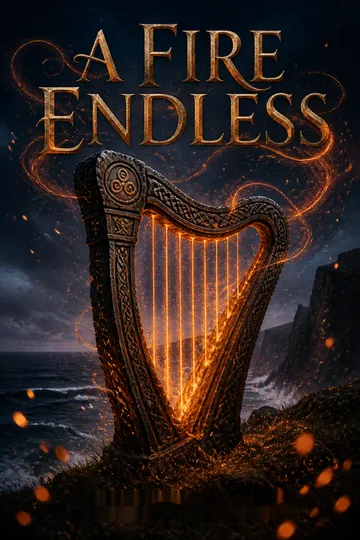
A Fire Endless is a highly praised conclusion to the Elements of Cadence duology. Readers love the atmospheric Scottish-inspired fantasy world, lyrical writing, and character development. The book focuses on healing, romance, and uniting rival clans. Many found it emotionally engaging and an improvement over the first book. Some readers felt certain storylines were underdeveloped, but overall, the duology is considered a beautiful, comforting fantasy with strong themes of love, duty, and self-discovery.
People Also Read

Characters
Jack Tamerlaine
The divided-hearted bardJack is the eastern bard, a gifted musician whose work can summon spirits and alter the balance of Cadence. The son of weaver Mirin and a father from the west, he carries ties to both clans while often feeling he belongs fully to neither. Music is not simply a profession to him; it is how he makes meaning, expresses love, and offers service. His humor and stubbornness protect a more vulnerable fear of being unwanted. His bond with Adaira challenges him to speak plainly about what he needs, while the island’s crisis forces him to ask whether his gift is meant for personal fulfillment, public duty, or both.
Adaira
The displaced heirAdaira was raised among the Tamerlaines as a laird’s daughter, then learns that Innes and David Breccan are her birth parents. She is intelligent, politically observant, and accustomed to turning uncertainty into a plan. Her sense of duty can make her seem composed even when she is lonely or frightened, especially as she tries to earn a place in the west without dishonoring the family that raised her. Her marriage to Jack is a source of both tenderness and difficult choice. Adaira’s central tension is not deciding which clan owns her, but learning to define belonging and leadership on terms that do not require her to erase part of herself.
Torin Tamerlaine
The reluctant lairdTorin is a former captain of the East Guard who inherits the lairdship after Adaira leaves. Protective, capable, and loyal, he tends to measure himself by whether he can solve a problem or shield someone from harm. His attachment to the roles he knows makes new responsibilities difficult, and grief from earlier losses can turn into isolation or impatience. His marriage to Sidra gives him a home beyond duty, though he sometimes fails to recognize how much she carries. Torin’s practical intelligence becomes most useful when he listens, observes, and accepts guidance rather than insisting that leadership means having every answer himself.
Sidra Tamerlaine
The healer who leadsSidra is a skilled eastern healer whose knowledge comes from years of careful observation, practice, and inherited remedies. She is compassionate without being naïve, and she understands that caring for people often means making decisions under uncertainty. Her marriage to Torin and their daughter Maisie are central to her life, but she also has a strong identity as a healer and community member. Sidra often hides her own needs because she believes others depend on her steadiness. The blight and Torin’s absence test that habit, pressing her to accept responsibility and support without abandoning the tenderness that makes her effective.
Kae
The wounded wind spiritKae is a spirit of the northern wind who has served as a messenger in Bane’s court. She is observant, guarded, and shaped by years of living under a ruler who punishes disobedience. Her affection for the mortal bard Lorna teaches her a loyalty that conflicts with her assigned role. Kae’s voice and flight are closely tied to her identity, making silence and confinement especially painful. Though she communicates differently after her injury, she remains perceptive and resourceful, and she forms an unexpected bond with Adaira, whose willingness to help lets Kae act beyond the limits Bane has imposed.
Innes Breccan
The iron-willed western lairdInnes rules the west with a hard pragmatism shaped by scarcity, danger, and years of political calculation. She has learned to conceal tenderness because visible vulnerability can become leverage for rivals. Her daughter Adaira’s return unsettles the distance she has maintained between private longing and public authority. Innes loves fiercely, but her protective instincts can take the form of tests, restrictions, and demands for proof. As laird, she must weigh the survival of her people against inherited customs and personal attachments. Her relationship with David offers a rare place where she can set down her armor, though she does not easily allow others to see that side of her.
Niall Breccan
The exiled family keeperNiall is Jack and Frae’s father, a Breccan who once served as Keeper of the Aithwood. He made a life-altering choice involving the infant Adaira and has spent years carrying the consequences in silence. His love for Mirin is real, but fear and guilt have kept him from claiming the family they made together. Niall is physically formidable and known in the west for surviving the culling, yet his deepest struggle is not combat. It is believing that he can still act as a father after so much absence. His connection to two families makes him a living bridge between the clans’ histories.
Moray Breccan
The restless western heirMoray is Innes and David’s son and Adaira’s twin brother. He is clever, persuasive, and practiced at reading what others want to hear. His sense of injury over Adaira’s childhood separation shapes his view of the Tamerlaines and helps fuel his campaign against them. He can feel genuine attachment to his family, yet often treats people and spirit-given knowledge as tools for correcting his grievances. Moray’s desire for recognition makes him dangerous in a society where authority is inherited and violence can be publicly rewarded. He is more complicated than a simple enemy, but understanding his pain does not make his choices harmless.
Frae
The observant younger sisterFrae is Jack’s younger sister, raised by Mirin in the east after a childhood shaped by family secrets. She is curious, bookish, and attentive to moods adults try to hide. Her shyness can make it difficult for her to challenge others, especially when prejudice turns her mixed heritage into a reason for mockery. Frae longs for Jack’s return and wants to understand the family history that links her to the west. Her compassion is practical: she remembers who is frightened, notices when her mother is unwell, and looks for ways to help. The friendships she makes at school give her a wider sense of belonging.
David Breccan
The healer behind the throneDavid is Innes’s husband and the western laird’s consort. A healer by skill and temperament, he tends to speak carefully and reveal trust through practical gestures rather than declarations. His role in Adaira’s early life remains a source of pain between them, and he struggles with the distance between protecting her and treating her as a daughter with her own judgment. David’s knowledge of western plants and medicine makes him an important partner in the search for a cure. He lives within the political machinery of the west but is less invested in displays of dominance than in repairing the people and relationships around him.
Mirin Tamerlaine
The steadfast weaverMirin is Jack and Frae’s mother, a weaver whose enchanted work supports her family and community. She is independent and resilient, but years of carrying a private love and raising children alone have left her with little room to ask for care. Mirin protects her children by keeping painful truths close, though her silence also leaves them searching for answers. Her loom represents both livelihood and the burden of magic’s physical cost. She wants Jack to choose a life that is truly his, even when that choice takes him far from home.
Ash
The embattled fire lordAsh rules the spirits of fire, whose place in the spirit hierarchy is low despite how essential fire is to mortal life. He is constrained by Bane’s power and can reveal only fragments of what he knows. Ash approaches Jack through the hearth, where his warnings and requests arrive amid danger rather than comfort. He is wary of music because he understands how easily a bard can use it to dominate spirits. His caution reflects an ancient injury, but his willingness to seek Jack’s help also shows that he still hopes the balance of Cadence can be changed.
Bane
The northern wind kingBane is the ruler of the northern wind and the most feared power among the spirits of Cadence. He governs through intimidation, punishing spirits who resist his orders and directing their powers against mortals. His interest in Jack’s music makes clear that he regards a bard not as an entertainer but as a threat to his authority. Bane’s rule has shaped both clans’ habits of fear, silence, and sacrifice. He embodies a political order that depends on others believing that its power is permanent.
Hap
The guiding hill spiritHap is an earth spirit who guides Torin through the spirits’ realm and helps him understand the blight’s riddle. He is warm and wry, but his ability to speak freely is limited by the powers ruling the spirits. Hap’s connection to the land is literal: paths open and close in response to his steps. He knows more than he can explain, so he often helps by directing Torin toward the next necessary experience rather than supplying an answer. His loyalty to the earth spirits makes him a patient guide through Torin’s frustration.
Elspeth
The keeper of old storiesElspeth is Niall’s mother and Jack’s grandmother, living in the Aithwood near the river. She is hospitable, observant, and frank about the dangers hidden in western history. Her stories about the former bard explain why the Breccans fear music, while her care for Jack gives him a first experience of connection to his father’s family. Elspeth is wary of the harp but does not try to control Jack through fear. She offers knowledge, food, and a place to rest, allowing him to make his own decision about the path ahead.
Yvaine
The watchful guard captainYvaine succeeds Torin as captain of the East Guard and manages the clan’s security as the blight spreads. She is disciplined, direct, and deeply loyal, often seeing danger before others acknowledge it. Her concern for Sidra and Torin is not sentimental weakness but an extension of her sense of responsibility for the east. Yvaine is willing to challenge Torin when his choices endanger the people he leads, and she trusts Sidra enough to let her make difficult decisions. Her steady presence gives the eastern clan continuity during upheaval.
Graeme Tamerlaine
The retired laird’s fatherGraeme is Torin’s father, a former leader who declined the chance to rule. He is a reader, storyteller, and collector of small objects, living quietly on the family croft. His affection often takes the form of food, conversation, and practical reassurance. Graeme recognizes Sidra’s pregnancy before she does and helps her face the possibility that Torin may be gone for a long time. His own experience of abandonment gives him insight into the cost of waiting, while his calm counsel helps Sidra imagine leadership as a burden that can be shared.
Rab Pierce
The ambitious thane’s sonRab is the son of a powerful western thane and a man who uses status to make his suspicions seem like facts. He is socially polished when it benefits him, but his insecurity surfaces as coercion and cruelty toward people he considers threats. Rab pursues Adaira despite her refusal and treats Jack’s arrival as an opportunity to assert control. His behavior grows from a political culture where proximity to power is easily mistaken for authority. He is a reminder that the clans’ larger conflicts also create room for individuals to exploit fear for personal advantage.
Lorna Tamerlaine
The vanished bard’s motherLorna was the eastern bard before Jack and Adaira’s adoptive mother. She secretly played for the spirits of earth and water, sustaining a relationship between music and the land. Lorna was warm, perceptive, and deeply devoted to her family, though her secret work exposed her to dangers she could not fully share. Her memory remains vivid for Adaira and shapes Jack’s understanding of what a bard can offer. Through Kae’s recollections, Lorna’s influence reaches beyond her lifetime and connects human music to the spirits’ hidden history.
Lady Whin
The wildflower rulerWhin leads the eastern earth spirits and is closely associated with the wildflowers that grow across Cadence. She is powerful, perceptive, and unwilling to obey senseless commands simply to appease Bane. Her authority carries both tenderness toward her spirits and caution about provoking further punishment. Whin’s relationship with her sister Orenna gives her a personal stake in the island’s division. She represents an older form of leadership grounded in stewardship, even when the spirits’ political circumstances limit what she can safely do.
Orenna
The keeper of secretsOrenna is a flower spirit whose rare blooms are tied to knowledge that mortals would otherwise be unable to reach. Her story is bound to her sister Whin and to a punishment that leaves her isolated in a harsh place. Orenna’s flowers can give a person unusual insight and strength, which makes them valuable and vulnerable to misuse. She is not simply a source of magical assistance; her grief over repeated theft reminds the characters that every resource belongs to someone, and that taking without asking deepens the island’s old wounds.
Maisie Tamerlaine
The curious young daughterMaisie is Torin and Sidra’s young daughter. She is spirited, stubborn about her food, and fond of stories, especially tales about the spirits. Her questions sometimes reveal connections that adults have overlooked. Maisie is closely attached to both parents and gives Torin a vivid sense of what he stands to lose when he leaves. She also reminds Sidra that leadership takes place alongside the ordinary work of raising a child.
Ella
Frae’s first defenderElla is an older schoolmate who intervenes when other children mock Frae’s Breccan heritage. She is confident without being showy and offers friendship through practical kindness, walking Frae home and helping her recover her broken pottery. Her acceptance gives Frae a counterexample to the prejudice she fears from the east.
Rodina
The orchard’s grieving keeperRodina is an elderly crofter whose apple orchard is among the first places struck by the blight. Blunt and self-reliant, she has grown attached to the young worker Hamish and had considered leaving him her land. Her infected hand makes her one of the first adults to share direct evidence of the illness with Sidra.
Thief
Jack’s dungeon cellmateThief is a western prisoner who explains the culling to Jack and warns him that the arena offers little certainty of freedom. His humor is a shield against the cold and hopelessness of the dungeons. By sharing what he knows, he gives Jack a route toward seeing Adaira and a clearer picture of the system that holds Niall.
Plot Devices
The clan line
The island’s dividing woundThe clan line is a magical boundary between the resource-rich east and the craft-enchanted but struggling west. It shapes daily life, enables political separation, and gives raids their recurring logic. The river’s hidden weakness allows certain people to cross by using blood, while spirits can move across in ways mortals cannot. The boundary also influences the spirits’ balance and helps make the blight a shared crisis. Because the line is both a physical route and a historical injury, changing it requires more than crossing it. The characters must confront the history and inherited hostility that keep the two territories apart.
The bard’s harp
Music that summons spiritsA bard’s music can draw spirits into the mortal world and affect the powers they wield. Jack’s harp lets him address fire, water, earth, and wind, but playing exacts a physical cost in the east and attracts Bane’s attention. The western fear of music comes from an older history in which a bard used songs to control rather than serve the spirits. The harp therefore carries both the possibility of intimacy and the risk of domination. Its meaning changes as Jack learns that the crucial question is not whether music is powerful, but whether its power is used to take from others or restore their agency.
The blight
A sickness crossing realmsThe blight first appears in trees as violet-blue decay threaded with gold, then spreads to people who touch infected fruit or wood. It weakens the earth spirits and gives the human clans a visible sign that the trouble is not confined to one territory. Sidra and David document its symptoms and test remedies, while Torin receives a riddle that points toward a cure. The illness turns ecological damage into intimate peril, threatening livelihoods, bodies, and the leaders responsible for their people. It also makes cooperation necessary before either clan has fully overcome its mistrust.
Aethyn
Poison turned into jewelsAethyn is a western flower made into a poison that slows the heart and causes spilled blood to harden into blue gems. Nobles use small doses to build tolerance, while heavier doses can kill without leaving an obvious taste or smell. Adaira takes it to enter the western political world on more secure terms, and Sidra later recognizes its presence in poisoned cups. The visual transformation of blood into jewels makes violence legible, while the poison’s social use shows how fear has been built into the west’s ceremonies and power struggles.
The spirits’ riddle
A cure hidden in old loreBane’s riddle directs Torin toward elements associated with divided sisters, fire, ice, salt, and blood. Torin first tries to solve it as a mechanical recipe, then learns through Sidra’s records and his own experience that the ingredients must be gathered with permission and joined at personal cost. The riddle makes folklore an active form of knowledge rather than decorative legend. Its clues connect plants and places on both sides of the clan line, forcing Torin to recognize that healing Cadence requires knowledge no single territory can provide alone.
Elements of Cadence Series

About the Author
Other books by Rebecca Ross


Download PDF
Download EPUB
.epub digital book format is ideal for reading ebooks on phones, tablets, and e-readers.








