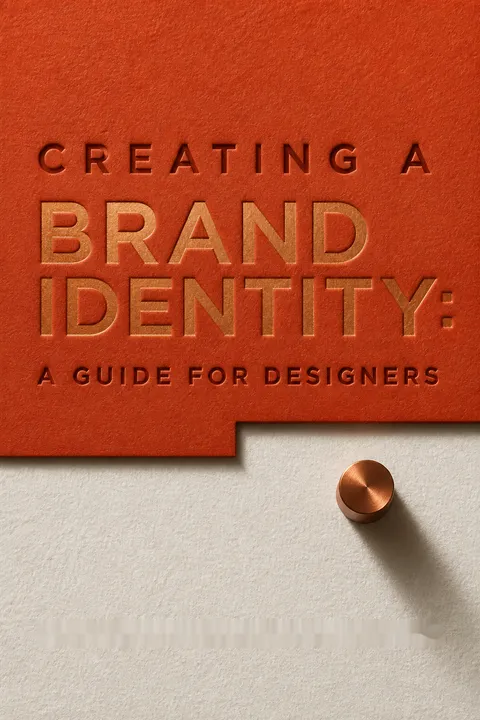


Key Takeaways
Build a brand around a promise people can recognize and trust
More than a mark. A brand is not simply a name, logo, or product. It is the reputation and set of expectations attached to them: customers come to expect a particular quality, character, or experience. The book traces branding from marks used to identify ownership to modern identities that help people choose among competing products and services. A car or clothing label can also signal the kind of person a buyer wants to be, so purchasing is shaped by identity and aspiration as well as practical need.
Make the promise real. Recognition may attract attention, but consistent delivery builds confidence. If customers experience a gap between what a brand implies and what it provides, its identity becomes a liability rather than an asset.
A brand works like a compact decision aid: familiarity reduces the effort of comparing every available option. It also acts as a social signal, helping consumers express affiliation or aspiration without explaining themselves. Those functions explain why a small visual mark can acquire substantial value over time. Yet recognition is not trust. Repetition can make a brand familiar while poor service makes it disliked. The useful test is therefore not simply whether people remember the identity, but whether the experience gives them a sound reason to rely on it.
Make the difference matter to customers, not just to designers
Find a real distinction. A unique selling point, or USP, is the feature or benefit that gives customers a compelling reason to choose one offer over alternatives. It must be both distinctive and meaningful to the intended audience. The book uses M&M’s candy shell, which keeps the chocolate from melting easily in the hand, as a concrete product benefit that can be communicated simply. Research helps determine whether a proposed difference actually matters, rather than merely sounding clever in a presentation.
Make meaning visible. A brand strategy turns that distinction into a consistent way of communicating. Tango’s shift to a bold black package helped reposition the drink toward teenagers, breaking with the familiar bright, child-oriented look of soft drinks. The design worked because it expressed a changed audience and position, not because novelty alone is valuable.
This distinction resembles the difference between a feature and a job a customer needs done. A feature matters when it resolves a practical concern, supports a desired identity, or makes a choice easier. Design can make that value legible, but it cannot manufacture lasting relevance from an empty claim. There is also a strategic risk in chasing uniqueness for its own sake: a brand can become unusual yet confusing. The strongest difference is recognizable quickly and remains credible when customers encounter the product itself.
Research actual lives before inventing a consumer to design for
Start with people. Demographic research describes groups through characteristics such as age, income, and occupation. Psychographic research explores values, interests, attitudes, and lifestyles. Neither alone reveals the whole customer. Interviews, observation, questionnaires, and group discussions can expose how people make choices, what they aspire to, and what gets in the way. Combining different methods to check a question from more than one angle is called triangulation.
Build a useful picture. The book describes the Cross Cultural Consumer Characterization model, or 4Cs, which groups people according to broad motivations and attitudes rather than age or income alone. It also presents consumer-profile boards that use images to make a target audience concrete. The aim is not to pretend one person represents everyone, but to help designers understand a group well enough to communicate with it thoughtfully.
The strongest research here resists the temptation to turn a market segment into a cardboard character. Numbers can show how common a behavior is, while observation and interviews can reveal why it happens. Together, these forms of evidence make assumptions easier to test. A profile board is useful as a team communication device, but it can also conceal variation if treated as a portrait of every customer. Designers should use it as a working hypothesis, then revise it when actual behavior contradicts the imagined consumer.
Map the shelf, the signals, and the gaps before choosing a look
Read the visual category. Product categories develop familiar visual conventions. Coffee may use dark colors and refined lettering; laundry products often rely on bright, clean palettes. Competitor analysis maps these conventions and asks what each brand promises, whom it targets, and how it signals price or quality. This reveals both crowded territory and openings for a new identity.
Understand the signs. Semiotics is the study of how signs create meaning. Designers examine names, images, color, typography, and style, including the associations they may carry from history and culture. The Apple logo, for example, can suggest several ideas beyond the fruit itself, while Milka’s violet cow and Alpine setting connect its packaging to a particular brand world. These readings are not guaranteed interpretations, so they should be checked against audience and context.
Visual conventions function like a shared language: a customer may infer luxury, value, freshness, or technical precision before reading a word. That makes category analysis strategically useful, but it also creates a tension. Following conventions helps people understand an offer, while repeating them can make a new product disappear among its rivals. Breaking convention is most effective when the departure still communicates something intelligible. Semiotic interpretation is also culturally situated, which makes local knowledge and audience testing essential rather than optional.
Design every touchpoint as part of one coherent brand experience
Think beyond the logo. A brand identity includes its name, mark, typography, colors, strapline, and other visual or verbal elements. A touchpoint is any interaction through which people experience the brand, from packaging and websites to stores, customer service, and social media. The book argues that sound, smell, taste, and touch can contribute to recognition too. The familiar ringtone associated with Nokia and the distinctive feel of an iPhone illustrate how sensory cues can become part of an identity.
Coordinate the whole. Brand architecture describes how a company organizes its main brand and related sub-brands. Microsoft’s product names and the BBC’s channel identities show different ways to maintain a parent relationship while giving individual offers their own character. Internal branding matters as well: employees need to understand and enact the promise that external communications make.
A customer experiences a brand as a sequence, not as a logo in isolation. Consistency across touchpoints helps a company feel dependable, while different channels can still adapt to their particular uses. This is closely related to service design, where the quality of handoffs and interactions can matter as much as the product itself. The challenge is to avoid mistaking uniformity for coherence. Every experience need not look identical, but each should make sense as an expression of the same underlying promise.
Use a process to make creativity accountable, not predictable
Give ideas a route. The design process organizes work from research and analysis through concept development, refinement, presentation, testing, and delivery. Its value is not that every project follows an identical script. It helps teams allocate time, explain decisions, involve clients, and check whether the work answers the brief. A documented process also gives students and designers a way to show how a solution emerged rather than presenting it as a sudden flash of inspiration.
Leave room for discovery. Graham Wallas’s model of creative thinking describes preparation, incubation, illumination, and verification. The sequence captures how a problem may be studied, allowed to sit, generate an idea, and then be tested. In practice, creative work can loop and double back. A structured process should support that uncertainty, not force an idea to arrive on schedule.
The process combines two kinds of accountability. The team is accountable to the brief, budget, and client, while the idea must also survive scrutiny as a design solution. That structure can protect creative work from arbitrary preference by making its reasoning visible. Yet procedure can become bureaucratic if each stage is treated as a box to tick. The productive balance is a clear record of decisions with enough flexibility to revisit them when evidence or a better concept changes the direction.
Sketch widely, then test concepts against the brief, not ego
Make many beginnings. Mood boards gather visual cues to define a feeling or tone; inspiration boards collect material that can spark concepts. Sketching lets designers explore options quickly before investing in polished artwork. The book warns against treating the first idea as the best one. Early concepts gain meaning through comparison, and rough drawings make it easier to generate alternatives without becoming attached to a finished-looking solution.
Explore a range. Teams can develop ideas from conservative to daring, or from close evolution of an existing identity to a more radical departure. This gives clients a meaningful set of choices and makes the creative territory visible. Concepts should then be compared with the brief: do they suit the audience, communicate the offer, and distinguish it from competitors? The best idea is not necessarily the designer’s favorite; it is the one that solves the defined problem most convincingly.
Sketching externalizes thought. Once an idea is visible, it can be compared, criticized, and improved instead of remaining an appealing blur in the designer’s mind. Generating alternatives also reduces the risk of confusing familiarity with quality. The book’s emphasis on the brief is valuable, though a brief should not become an unquestioned authority: research may show that its assumptions are wrong. Strong creative judgment tests the brief’s purpose, follows the evidence, and still produces work that feels distinctive rather than merely compliant.
Test the finished identity in real contexts before launch
Check how it behaves. A brand must work at different sizes and across different formats, from a large sign to a small digital icon. Designers refine typography, spacing, color, and image detail, then show how the identity appears in realistic settings. Presentation boards help clients see the work in context, while brand standards specify how elements should be used consistently. Testing with consumers can reveal confusion or weaknesses before a costly launch.
Make approval informed. The client presentation should explain how each proposed identity answers the brief, reaches its intended audience, and expresses the brand’s distinct offer. Showing several clearly different concepts gives clients options without overwhelming them. Feedback should be recorded, and the next steps agreed. The final design may also require trademark checks and careful protection of confidential project information before the identity is released.
Context testing catches failures that a beautiful presentation can hide: illegible small-scale text, confusing navigation, or an identity that loses force on packaging. It also shifts evaluation from personal taste toward observable performance. However, testing is only as useful as the questions asked and the people included. A small focus group cannot guarantee broad acceptance, and early reactions may not predict long-term attachment. Testing should therefore inform judgment, not replace it, especially when a concept introduces an unfamiliar visual language.
Treat ethics and employee belief as operating parts of the brand
Promises have consequences. A brand can lose trust when its public claims conflict with its conduct. The book recounts the controversy over Nestlé’s promotion of infant formula in developing countries, where mothers could become dependent on a product they could not reliably obtain or prepare safely. It also describes the damage to BP’s reputation after the Deepwater Horizon disaster. These cases show that brand value depends on more than visual polish or persuasive advertising.
Bring the promise inside. Employees help deliver the experience customers encounter, so internal communication should explain the brand’s values and how the organization is expected to act. The book invites designers to consider whether a project harms people or presents a claim the company cannot honestly support. Ethical judgment is not a decorative addition to the identity; it concerns the product, the business, and the message.
A brand’s ethical credibility is tested where communication meets power: who bears the risk, who benefits, and whether people can make an informed choice. Internal alignment matters because employees are not merely an audience for brand messaging; they participate in producing the service. Still, a values statement cannot substitute for accountable practices. The most persuasive ethical branding is supported by decisions that customers and workers can verify, including the willingness to disclose limitations rather than hiding them behind a warm tone.
Keep the brand relevant without erasing what customers recognize
Change with purpose. Rebranding can reposition an established offer, but careless change may confuse or alienate existing customers. Lucozade provides an example of deliberate evolution: the drink moved from being associated with recovery from illness toward energy and sport, then developed related products for active consumers. Each shift responded to changing perceptions and audiences while building on a recognizable name.
Keep listening. Digital channels have multiplied the ways customers encounter and discuss brands. Social media can support research and dialogue, but it also makes complaints and contradictions more visible. The book’s Uniqlo case shows how lifestyle apps can communicate brand character beyond clothing sales. Such extensions work when they express a coherent idea and offer a useful experience, not simply because a company can produce another app.
A durable identity needs both continuity and adaptation. Familiar cues help customers recognize a brand, while new products and channels can keep its offer relevant to changing routines. This resembles organizational learning: a company must take feedback seriously without chasing every short-lived signal. Digital engagement makes listening easier, but it can also reward superficial activity such as collecting likes. The meaningful question is whether a new interaction improves the customer’s experience or clarifies the brand’s promise, rather than merely adding another place to advertise.
Analysis
The book’s central contribution is to treat branding as a linked sequence of decisions rather than a logo-making exercise. Consumer understanding informs strategy; strategy clarifies the promise and competitive distinction; analysis shapes the visual language; and testing, implementation, and internal adoption determine whether the identity works outside the design studio. The practical value lies in making those links explicit. A designer can explain not only what a mark looks like, but why its signals suit a particular audience and how it should behave across applications.
This method also offers a corrective to two familiar myths: that branding is purely commercial decoration, and that creativity is an unaccountable flash of inspiration. The book situates identity within consumer culture, where brands help people navigate choice and express affiliations, while giving designers concrete tools for research, concept generation, and presentation. Its examples, from Lucozade’s repositioning to the story-led Warner Edwards gin identity, show how strategy and form can reinforce each other.
The approach has limits worth keeping in view. Consumer profiles and market maps simplify populations, and a tightly managed process can make uncertain creative work appear more linear than it is. A strong rationale does not prove that every audience will interpret an image as intended. Cultural meaning shifts, customers vary, and organizations may fail to live up to their claims. Research, testing, and standards reduce these risks but cannot eliminate them. The deeper lesson is that branding is a continuing practice of alignment: between promise and delivery, identity and context, commercial aims and ethical consequences. The logo is the visible tip of that system, not the system itself.
Review Summary
Creating a Brand Identity receives mostly positive reviews, with an average rating of 4.04/5. Readers find it a solid introduction to branding, particularly useful for beginners and students. The book covers brand history, design processes, and practical considerations, with helpful case studies and exercises. Some reviewers note its brevity on certain topics and consumer product focus. While not comprehensive, it's praised for its clear organization, visual elements, and ability to provide a good foundation in brand strategy and design.
People Also Read






Glossary
Unique selling point (USP)
Distinctive customer benefitThe feature, benefit, or point of difference that gives a product or service a reason to be chosen over competitors. A useful USP matters to the intended audience, is clearly communicated, and can be delivered in practice. It can inform a positioning statement, brand identity, and promotional message.
Brand equity
Value created by perceptionThe value associated with a brand name and the perceptions attached to it, rather than only with the product or service itself. It can appear as customers’ willingness to prefer or pay more for a branded offer. Positive equity supports loyalty and extensions; a damaged reputation can create negative equity.
Semiotics
Study of signs and meaningThe study of how signs communicate meaning. In brand design, semiotic analysis examines elements such as names, colors, images, typography, and style, and asks what associations they may create for an audience. Because those associations depend on culture and context, a designer’s intended meaning may not match every consumer’s interpretation.
Cross Cultural Consumer Characterization
Motivation-based audience modelA psychographic segmentation model developed by Young and Rubicam. It groups consumers according to broad motivations, values, and orientations rather than relying only on demographic categories such as age or income. The model is used to help marketers consider how different audiences may respond to a brand and its communication.
Touchpoints
Brand interaction momentsThe points at which a customer encounters or interacts with a brand. They may occur before, during, or after a purchase and include advertising, packaging, retail settings, websites, products, and service. Reviewing touchpoints helps organizations assess whether the customer experience is consistent, useful, and aligned with the brand promise.
Brand architecture
Organization of related brandsThe structure that defines relationships among a company’s master brand and its sub-brands. It helps determine which identities should be shared, which should remain distinct, and how customers can understand the connection between offers. The term can also describe the broader system of physical and emotional elements that shape a brand experience.
Dimensions of brand personality
Five-trait brand modelJennifer Aaker’s framework for describing brand character through five dimensions: sincerity, excitement, competence, sophistication, and ruggedness. Each dimension is associated with human-like characteristics that can help a design team articulate how a brand should feel and differ from others. It is a strategic aid, not a guarantee of how every consumer will perceive a brand.
The Design Squiggle
Map of creative developmentDamien Newman’s visual representation of the design process. It depicts work moving from uncertainty and exploration toward greater clarity and focus as research and concepts develop into a final design. The model emphasizes that the creative experience can feel disorderly before a solution emerges, unlike a simple sequence of tidy, predictable steps.
FAQ
1. What is "Creating a Brand Identity: A Guide for Designers" by Catharine Slade-Brooking about?
- Comprehensive branding guide: The book is a practical and theoretical guide to the process of creating brand identities, specifically from a designer’s perspective.
- Step-by-step methodology: It covers the entire branding process, from understanding consumer culture and brand anatomy to research, analysis, concept development, and final delivery.
- Visual and practical focus: The book is highly visual, using case studies, diagrams, exercises, and real-world examples to illustrate branding concepts and industry practices.
- For students and professionals: It is designed for design students, educators, recent graduates, and practitioners seeking a refresher or companies commissioning a brand for the first time.
2. Why should I read "Creating a Brand Identity" by Catharine Slade-Brooking?
- Designer-centric approach: Unlike many branding books, it focuses on the creative and practical processes designers use, not just marketing or business theory.
- Real-world insights: The book draws on the author’s professional experience and teaching, offering tested exercises and industry practices.
- Comprehensive coverage: It addresses both the ‘why’ and ‘how’ of branding, including research, strategy, design, and client communication.
- Applicable to various readers: Whether you’re a student, educator, design professional, or business owner, the book provides valuable frameworks and tools for building effective brands.
3. What are the key takeaways from "Creating a Brand Identity" by Catharine Slade-Brooking?
- Branding is holistic: Successful branding involves more than logos; it’s about creating emotional connections, consistent experiences, and clear differentiation.
- Research is foundational: In-depth research into consumers, competitors, and market trends is essential before any creative work begins.
- Process matters: Following a structured, step-by-step design process leads to more innovative, relevant, and effective brand identities.
- Visual and verbal synergy: Strong brands integrate visual identity (logos, colors, typography) with verbal elements (straplines, tone of voice) for maximum impact.
4. How does Catharine Slade-Brooking define a brand and brand identity in "Creating a Brand Identity"?
- More than a logo: A brand is not just a name or symbol, but a set of values, promises, and emotional associations in the minds of consumers.
- Brand identity explained: Brand identity is the unique set of visual and verbal elements (logo, color palette, typography, strapline) that express a brand’s promise and personality.
- Emotional contract: A brand acts as an unwritten contract, promising consistent quality and experience, and aiming to build trust and loyalty.
- Differentiation and meaning: Effective brand identities are distinctive, meaningful, and adaptable, helping brands stand out in crowded markets.
5. What is the step-by-step design process for creating a brand identity according to "Creating a Brand Identity"?
- Research and analysis: Begin with thorough research into the target audience, competitors, and market environment, using both qualitative and quantitative methods.
- Concept development: Generate a wide range of ideas, using inspiration boards, mood boards, and sketching to explore different directions.
- Design development: Refine selected concepts, focusing on logo, color, typography, and other brand elements, ensuring they align with the brand’s strategy and values.
- Implementation and testing: Present concepts to clients, gather feedback, test the identity in real-world contexts, and make final refinements before launch.
6. How does "Creating a Brand Identity" recommend conducting research for branding projects?
- Primary and secondary research: Use interviews, focus groups, surveys, and observations (primary), as well as existing reports and data (secondary).
- Audience profiling: Develop demographic and psychographic profiles to deeply understand the target consumer’s needs, desires, and lifestyle.
- Competitor analysis: Systematically analyze competitors’ brand identities, positioning, and communication strategies to identify opportunities for differentiation.
- Visual research tools: Employ mood boards, consumer-profile boards, and touchpoint analysis to visualize findings and guide creative decisions.
7. What are the key concepts and terminology explained in "Creating a Brand Identity"?
- Brand architecture: The structure of brands within a company, including parent brands, sub-brands, and brand families.
- USP (Unique Selling Proposition): The distinct benefit or feature that sets a brand apart from competitors.
- Semiotics: The study of signs and symbols in branding, including how meaning is built through typography, color, imagery, and style.
- Brand equity and value: The commercial and emotional value a brand holds, influenced by consumer perception, loyalty, and reputation.
8. How does "Creating a Brand Identity" approach the development of logos, straplines, and other brand elements?
- Logo design: Emphasizes simplicity, distinctiveness, flexibility, and functionality, ensuring the logo works across various applications and sizes.
- Straplines/taglines: Should be memorable, align with brand values, and reinforce the brand’s unique promise or positioning.
- Sensory branding: Encourages designers to consider all senses (sight, sound, touch, taste, smell) for a holistic brand experience.
- Naming strategies: Offers methods for creating effective brand names, including descriptive, acronym, neologism, and onomatopoeic approaches.
9. What is the role of research, analysis, and strategy in the branding process according to Catharine Slade-Brooking?
- Foundation for creativity: Research and analysis provide the insights needed to develop relevant and original brand concepts.
- Strategic alignment: A clear brand strategy defines the brand’s goals, target audience, positioning, and competitive advantage.
- Brief development: The design brief synthesizes research findings into actionable objectives and criteria for creative work.
- Continuous evaluation: Analysis continues throughout the process, ensuring concepts remain aligned with strategy and market needs.
10. How does "Creating a Brand Identity" address presenting and delivering final brand identity designs to clients?
- Professional presentation: Recommends clear, well-organized communication boards (physical or digital) that showcase the brand identity in context.
- Client engagement: Stresses the importance of storytelling, rationale, and connecting the design to the client’s goals and audience.
- Feedback and refinement: Encourages iterative feedback, testing, and refinement to ensure the final design meets all objectives.
- Brand standards: Advises delivering comprehensive brand guidelines to ensure consistent application across all touchpoints.
11. What are some common challenges and ethical considerations in branding discussed in "Creating a Brand Identity"?
- Brand failures: Explores reasons brands fail, such as overextension, loss of relevance, or ethical missteps.
- Brand ethics: Highlights the importance of honesty, transparency, and social responsibility in building sustainable brands.
- Cultural sensitivity: Advises designers to research and respect cultural differences, especially when branding for global markets.
- Client relationships: Discusses the need for clear communication, trust, and managing expectations throughout the branding process.
12. What are the most memorable quotes from "Creating a Brand Identity" and what do they mean?
- “Products are created in a factory. Brands are created in the mind.” – Walter Landor: Emphasizes that branding is about perception, not just physical products.
- “The primary function of brands is to reduce our anxiety in making choices.” – Nicholas Ind: Suggests that brands help consumers navigate choices by providing trust and familiarity.
- “Branding is principally the process of attaching a name and reputation to something or someone.” – Jane Pavitt: Underlines the importance of reputation and identity in branding.
- “A successful brand uses its unique set of values to drive a successful business strategy.” – Catharine Slade-Brooking: Connects brand values directly to business success and strategy.
Download PDF
Download EPUB
.epub digital book format is ideal for reading ebooks on phones, tablets, and e-readers.








