

Key Takeaways
Change the historical center, and the meaning of world history changes with it.
Every history has a viewpoint. Tamim Ansary began with a problem: in a draft world-history textbook, Islam was allotted only one chapter out of thirty. Yet from the lands between the Indus and Istanbul, Islam had shaped a vast, connected region for centuries. Ansary calls this region the Middle World, a crossroads linked by overland trade routes and distinct from the Mediterranean world organized around sea routes.
Two histories run in parallel. A Western account often traces a path from Rome through the Renaissance to modern democracy. An Islamic account might center on the early caliphate, its fragmentation, the Mongol catastrophe, the great Muslim empires, and the struggle over modernity. These are not separate inventories of events. Each makes different events central and gives them different meaning.
What's powerful here is the reminder that historical importance is not simply discovered; it is also assigned by the questions a community asks about its present. The comparison makes familiar timelines newly visible as interpretations rather than neutral scaffolding. But a second viewpoint is not automatically more complete or more representative. The Middle World itself contained many languages, religions, and political loyalties. Ansary's frame is most useful as a corrective to omission, not as a replacement master narrative.
Treat the Hijra as Islam's founding of a community, not just a migration.
A preacher becomes a leader. In 622 CE, facing danger in Mecca, Mohammed and his followers moved to Yathrib, later called Medina. The migration, or Hijra, became the starting point of the Muslim calendar because it marked a change in what Islam was: the believers became an organized community, the Umma, with shared political and social responsibilities.
Medina became a civic experiment. Mohammed negotiated a pact among the city's tribes, preserving their religious customs while establishing common rules and a collective defense. Ansar, meaning helpers, took in the Muslim newcomers. Islam now addressed practical matters alongside worship, from justice and charity to disputes and public order. The aim was not only individual salvation, but a community that could protect the vulnerable and embody religious ideals.
The Hijra shows how beliefs become durable when they acquire institutions, obligations, and a place in daily life. In political sociology, this is the difference between a network of adherents and a community capable of making rules and defending shared commitments. That shift helps explain Islam's historical reach without reducing it to faith alone. It also raises a live tension: a community organized around moral purpose can provide solidarity, while its leaders may claim authority over more of life than some members accept.
Read Sunni and Shi'i origins as a dispute over legitimate authority.
Succession exposed competing principles. After Mohammed died, the community chose Abu Bakr as khalifa, or successor. Ali, Mohammed's cousin and son-in-law, had a strong claim for those who believed leadership should remain with the Prophet's family. The disagreement was not simply personal. It asked whether the community should select a capable leader or recognize a spiritually distinctive lineage.
Karbala made the disagreement sacred. Ali's supporters came to emphasize the imam, a divinely guided leader in their understanding. After Ali's son Hussein and his small party were killed at Karbala in 680, their deaths became a defining Shi'i story of resistance and martyrdom. Sunni tradition placed greater emphasis on the Qur'an and the Prophet's example. These traditions developed over time, and neither can be reduced to a quarrel over who inherited political office.
This origin story illustrates a recurring political problem: when a revered founder leaves no uncontested succession rule, each proposed solution can appear both practical and morally dangerous. Election can prevent hereditary concentration of power, but it can also exclude a family seen as carrying special authority. Lineage can preserve continuity, but it can become dynastic privilege. The book's human-scale account helps explain why an early political dispute could shape theology and identity across generations.
Notice how law, philosophy, and mysticism offered different routes to religious certainty.
The revelation needed interpretation. After Mohammed's death, Muslims used the Qur'an and accounts of his words and actions, called hadith, to settle questions the scripture did not answer directly. Scholars known as the ulama developed methods for assessing reports and applying precedent. Their work shaped the shari'a, the broad Islamic way of life, not merely a statute book.
Other seekers challenged the limits. Philosophers drew on Greek and other traditions to investigate reason, nature, and faith. Sufis pursued direct spiritual experience through disciplined practices. The scholar al-Ghazali criticized some philosophical claims, then argued that legal observance needed the inward depth cultivated by Sufism. His synthesis strengthened mysticism's place in orthodox Islam, while weakening the standing of philosophical inquiry in the account Ansary tells.
These traditions are better understood as distinct ways of answering a shared question: how can people know what is true and live accordingly? Law emphasizes continuity and collective practice; philosophy tests claims through argument; mysticism seeks transformation through experience. Their competition is not unique to Islam, but the institutional stakes were unusually clear because scholars held substantial social authority. Ansary's causal account of philosophy's decline is suggestive, though broad intellectual change rarely follows from one thinker or debate alone.
Separate the Mongol catastrophe from the Muslim recovery that followed.
The center was shattered. The Mongol invasions devastated cities and agricultural systems across the Middle World. In 1258, Hulagu's forces sacked Baghdad, ending the Abbasid caliphate's political authority and destroying a major center of learning. The scale of the violence became a theological crisis: if Muslim victories had seemed to confirm divine favor, what did defeat mean?
Recovery took several forms. Mongol rulers in Persia eventually converted to Islam, while new Muslim powers rose elsewhere. The Ottoman, Safavid, and Moghul empires built distinctive political and cultural centers. The Ottomans assembled a complex governing system; Safavid rulers made Shi'ism central to Persian identity; Moghul emperor Akbar pursued religious accommodation, while his successor Aurangzeb reversed many of those policies. There was no simple return to a single united caliphate.
The contrast between devastation and adaptation matters: societies can absorb conquerors culturally without undoing the destruction they caused. Conversion, statecraft, and artistic revival are evidence of recovery, not proof that the catastrophe was minor. The three empires also undermine any notion of a uniform Islamic civilization. Their shared institutions and references coexisted with rival dynasties, sectarian differences, and conflicting models of rule.
Trace Europe's rise through changing systems, not an ancient civilizational feud.
The Crusades were not the whole story. Western Europeans entered the eastern Mediterranean as crusaders, pilgrims, and traders. Muslim rulers were often divided, and early Muslim accounts did not consistently describe the Crusades as a single war between two civilizations. Trade increased, but the exchange of ideas was uneven.
Power shifted through new machinery. European maritime skill opened routes that bypassed Muslim-controlled trade corridors. Later, corporations, industrial production, and capital supplied leverage that conquest alone cannot explain. In the Ottoman Empire, European demand for raw materials strained local guilds and manufacturing; attempts to restrict exports encouraged smuggling and corruption. The empire's decline was gradual, and its rulers remained militarily capable. Economic relationships helped reshape the balance before many contemporaries could see the change.
This account shifts attention from battles to systems: who controls shipping, production, finance, and the terms of trade. That is a useful correction to histories that treat military defeat as the only route to domination. It also resists the seductive idea that the Crusades explain every later conflict. Still, the Ottoman story cannot be reduced to European commerce. Internal political choices and institutional rigidity mattered too, and the mix varied across regions.
Distinguish the three Muslim answers to Western power.
Reform meant more than one thing. As European influence grew, Muslim reformers disagreed about what had gone wrong. Abdul Wahhab urged a return to what he saw as Islam's original teachings, rejecting practices he considered innovations. Sir Sayyid Ahmad of Aligarh recast religion as an ethical tradition compatible with reason and modern education. Jamaluddin-i-Afghan argued that Muslims should adopt Western science without surrendering their own religious and political framework.
These were competing modern projects. Wahhabism tied religious restoration to political authority in Arabia. Aligarh helped inspire secular modernists, while Jamaluddin's ideas fed Islamic modernism and pan-Islamism, the effort to imagine Muslims as a political community across state borders. The movements sometimes overlapped, but they did not offer interchangeable answers to colonial pressure.
This three-part map prevents a common mistake: treating religious revival as mere resistance to change and secular modernization as the only forward-looking option. Each movement sought to repair Muslim weakness, but they disagreed over the source of that weakness and the authority to define a remedy. The categories clarify the argument, though real people and movements often crossed their boundaries. Ideologies become more complicated once they enter institutions, local politics, and daily life.
Ask who controls modernization's gains, not only which buildings it produces.
New states promised progress. Secular modernists built schools, armies, roads, and government systems, often presenting national development as the route to independence and dignity. But European powers also shaped borders, controlled resources, and backed rulers. In the Arab lands after World War I, mandates created states while leaving their populations with limited self-rule. Oil later gave governments money to modernize without depending much on taxes from ordinary citizens.
Development divided societies. A salaried technocracy and ruling elite gained access to the modern economy, while many others remained in traditional work and had little voice in public decisions. Secular leaders could point to visible infrastructure, but prosperity did not necessarily mean participation or shared power. This divide weakened the claim that Western-style modernization alone could restore the community's dignity.
The distinction between material improvement and political inclusion is essential. A new road or school can raise living standards while leaving people without influence over priorities, budgets, or leadership. This resembles a broader development problem: states can deliver services from above and still fail to build public trust. The book is strongest when it shows how outside money altered domestic accountability. Its broad regional picture, however, risks making very different states look more alike than they were.
Treat Islamist resurgence as a response to failed promises, not a sudden eruption.
Secular confidence broke down. The 1967 defeat of Arab forces by Israel badly damaged Nasser's standing and helped discredit secular modernism. Islamist movements, including the Muslim Brotherhood and its offshoots, gained influence among people left outside the governing elite. In Iran, the 1979 revolution brought clerical rule to power; in Afghanistan, resistance to Soviet occupation drew fighters and support from across the Muslim world.
Militancy narrowed a broad tradition. Some jihadist groups framed politics as a final battle between God's community and its enemies, including Muslim governments they judged unfaithful. After the Soviet withdrawal, foreign powers largely abandoned Afghanistan, and competing armed groups fought over the wreckage. Ansary traces how this setting helped militants organize and how the attacks of September 11, 2001, brought the two historical narratives into a dramatic confrontation.
This sequence explains radicalization as political history rather than an expression of timeless religious hostility. Defeat, repression, exclusion, and abandoned conflicts created openings that ideological movements could exploit. That explanation does not excuse attacks on civilians or imply that most Muslims shared militant aims. The distinction between broad Islamism and violent jihadism is crucial: collapsing them together makes both the history and the politics harder to understand.
Translate each side's historical assumptions before calling the conflict a clash.
The same event can tell different stories. In the Western narrative Ansary examines, democracy and individual liberty often define political progress. In the Islamic narrative, the central aspiration may be a just community shaped by religious obligations. A policy that one side describes as empowering individuals may look to the other like pressure on family and communal life. The words freedom, justice, and reform can therefore conceal different assumptions.
Understanding is not agreement. Ansary rejects both the claim that the conflict is merely a misunderstanding and the claim that Islam and the West are destined to fight. He argues that their histories intersected along different paths and that real disagreements remain, including over law, religion, and gender roles. Studying both narratives can clarify what people think they are defending, even when it cannot settle which claims are right.
The book's central method is comparative translation: interpret an action inside the historical story its participants believe they inhabit. That can reveal why appeals to democracy or religious duty persuade one audience and alienate another. Yet narratives are never complete explanations of behavior. Material interests, leaders' strategies, and disagreements within each society matter too. The framework is most valuable when it opens questions, not when it turns either civilization into a single voice.
Analysis
Ansary's most important move is methodological. He does not merely add Islamic rulers and events to a Western timeline; he asks what changes when the timeline's implied protagonist changes. This makes the book an argument about historical selection as much as a history of Islam. The Hijra becomes a political beginning, the caliphate a model of communal authority, and European ascendancy a disruption in a story whose older center lay between the Mediterranean and South Asia.
The narrative is especially effective when it connects political change to institutional life. The rise of scholars, the Ottoman guild system, colonial trade, and oil-funded states show that ideas endure through organizations and incentives, not just doctrine. Its recurring contrast between a communal project and an individualist modernity is similarly clarifying: it helps explain why concepts such as reform, secularism, and democracy may carry different emotional meanings across societies.
The same clarity can become a limitation. A two-narrative structure is memorable, but it risks presenting both the West and the Islamic world as more internally unified than they were. The book does acknowledge sectarian, ethnic, and political divisions, yet a reader should not treat its sweeping arcs as a substitute for local histories. Nor should the contrast between communal and individual priorities be mistaken for a fixed civilizational essence. Those values are contested within societies and change through institutions, class relations, and political struggle.
The strongest conclusion is therefore not that history consists of two sealed worlds, but that historical memory shapes what people notice, fear, and demand. Ansary's lens makes those differences legible while preserving the possibility of shared events and interests. Used carefully, it resists both the claim that Western history is universal and the opposite claim that cultural difference makes conflict inevitable.
Review Summary
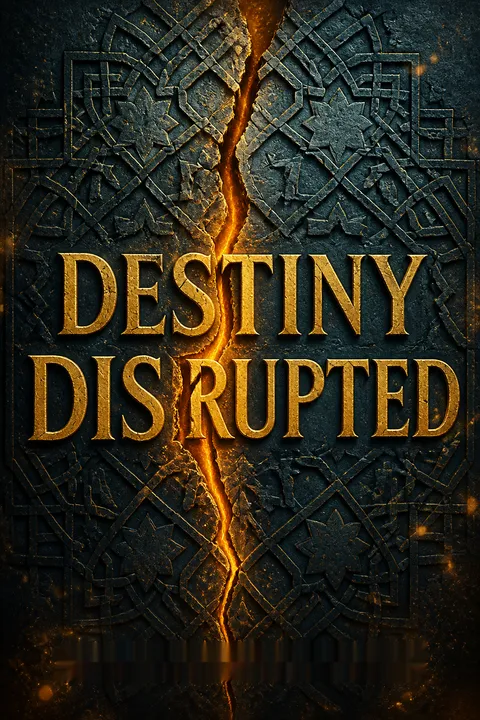
Destiny Disrupted offers a fresh perspective on world history through Islamic eyes. Readers praise Ansary's engaging writing style and ability to synthesize complex historical events. The book provides valuable context for understanding Muslim worldviews and the roots of current geopolitical tensions. Many reviewers found it eye-opening and appreciated its balanced approach. Some noted minor inaccuracies in non-Islamic history but still highly recommended it. The book challenges Western-centric narratives and offers insights into Islamic thought, culture, and historical developments.
People Also Read




Glossary
Middle World
Connected overland crossroadsAnsary's term for the broad region from the Indus to Istanbul, connected historically by trade and travel routes. It places the so-called Middle East within a larger network linking parts of Asia, Africa, and the Mediterranean. The term shifts perspective away from Western Europe, for which the region is supposedly "middle" or "eastern."
Hijra
Migration founding the communityMohammed's migration from Mecca to Medina in 622 CE, where his followers formed a community with shared political and social responsibilities. The Hijra became the starting point of the Muslim calendar. In Ansary's account, its importance lies not simply in escape from danger, but in the emergence of the Umma as an organized community.
Umma
Muslim communityThe community of Muslims, understood in the book as more than a group sharing religious beliefs. From its formation in Medina, the Umma carried political and social obligations, including collective defense and the pursuit of a just society. The idea also became associated with a wider aspiration to Muslim unity across political divisions.
khalifa
Community's political successorA leader who succeeded Mohammed in guiding the Muslim community, without claiming to be a new prophet. Abu Bakr first used the title after Mohammed's death, and its powers were not clearly defined at the outset. Over time, the title came to be associated with rulers of Muslim empires, even as the caliphate's political unity weakened.
Shi'i
Partisans of Ali's lineThe term means partisans and refers to Muslims who held that Ali, Mohammed's cousin and son-in-law, was the rightful successor. Shi'i traditions developed a distinctive understanding of the imam as a spiritually authoritative leader connected to the Prophet's family. Hussein's death at Karbala became central to Shi'i memory and religious identity.
Sunni
Followers of prophetic precedentThe majority tradition of Islam described in the book as emphasizing the Qur'an and the sunna, the example of Mohammed's life, rather than a continuing line of divinely guided leaders from his family. Sunni and Shi'i identities developed through disputes over succession and religious authority, and their differences grew beyond the initial political disagreement.
hadith
Reports about MohammedReports of Mohammed's sayings, actions, and decisions, used to help determine how Muslims should live when the Qur'an did not provide a clear answer. Scholars assessed hadith partly by examining the chain of people who transmitted each report and their reliability. Hadith became a major source of religious and legal authority.
shari'a
Islamic way of lifeThe broad path of Muslim life, developed through interpretation of the Qur'an, hadith, and other scholarly methods. It includes rules and guidance for personal conduct and social relations, not only criminal or civil law. Ansary emphasizes that scholars understood it as a path to be discovered through authoritative sources, rather than freely invented.
ulama
Class of religious scholarsLearned Muslim scholars who developed, interpreted, and taught religious doctrine and law. The ulama were not appointed through a central clerical hierarchy; their standing depended on learning and recognition by other scholars and their communities. They held substantial social influence through education, legal work, and their role in defining accepted religious practice.
ijtihad
Independent legal reasoningReasoned judgment used by qualified scholars to address questions not settled directly by scripture or established precedent. In the book, its scope narrowed as scholarly decisions accumulated into an extensive body of law. Reformers disagreed over whether ijtihad remained open and how new reasoning could remain faithful to Islam's foundational sources.
Dar al-Islam
Realm under Muslim ruleA term meaning the realm of submission to God, used in the book for lands governed by Muslims and, by implication, associated with peace within the Muslim community. Its contrast with Dar al-Harb helped some rulers and thinkers frame expansion as extending a zone of peace. The distinction was an influential historical idea, not a timeless description accepted by all Muslims.
Dar al-Harb
Realm beyond Muslim ruleA term meaning the realm of war, used in contrast with Dar al-Islam. Ansary describes it as part of a historical worldview that divided the world into Muslim-governed territory and lands outside it. Some thinkers used this distinction to justify expansion or armed struggle, while its meaning and application varied across periods and communities.
pan-Islamism
Political Muslim solidarityA political idea associated in the book with Jamaluddin-i-Afghan, who argued that Muslim struggles against European powers were connected rather than isolated disputes. Pan-Islamism called for solidarity across Muslim societies and resistance to foreign domination. Later movements drew on related themes while differing in their goals, methods, and views of modernity.
FAQ
What's Destiny Disrupted: A History of the World Through Islamic Eyes about?
- Islamic Perspective: The book offers a narrative of world history from the Islamic viewpoint, contrasting it with the Eurocentric views commonly found in Western histories.
- Key Historical Events: It covers significant events from the birth of Islam, the establishment of the Khalifate, and the rise of the Umayyad and Abbasid empires.
- Cultural Insights: Tamim Ansary explores cultural, philosophical, and scientific advancements during the Islamic Golden Age, emphasizing contributions of scholars and philosophers.
Why should I read Destiny Disrupted?
- Unique Insight: The book provides a perspective often overlooked in Western narratives, allowing readers to understand the complexities of Islamic history and thought.
- Cultural Relevance: Understanding Islamic history is increasingly important in today’s global context, helping bridge cultural gaps and foster understanding.
- Engaging Storytelling: Ansary writes in a narrative style that makes complex historical events accessible and engaging, akin to a conversation in a coffeehouse.
What are the key takeaways of Destiny Disrupted?
- Parallel Histories: The book illustrates how Islamic and Western histories have developed in parallel, often unaware of each other, leading to misunderstandings.
- Impact of Religion: Ansary emphasizes the role of Islam not just as a religion but as a social and political force that shaped civilizations.
- Modern Context: The author connects historical events to contemporary issues, helping readers understand the roots of current conflicts and cultural dynamics.
What are the best quotes from Destiny Disrupted and what do they mean?
- Distinct Narrative: “The history of the Islamic lands ‘over there’ was not a subset of some single world history shared by all.” This highlights the distinct narrative of Islamic history.
- Comprehensive Way of Life: “Islam is not merely a creed or a set of beliefs: it is a program every bit as concrete as a diet or an exercise regiment.” This emphasizes Islam as a comprehensive way of life.
- Post-Prophet Disillusionment: “The community had fallen off the track, history had gone off course, the Messenger’s mission had been subverted.” This reflects the challenges faced by Muslims after the Prophet’s death.
How does Destiny Disrupted explain the schism between Sunni and Shi’a Islam?
- Historical Context: Ansary outlines the events following Muhammad’s death, particularly the succession disputes that led to the division between Sunni and Shi’a factions.
- Leadership Perspectives: Sunnis believe in elected leadership, while Shi’a hold that leadership should remain within Muhammad’s family, specifically through Ali and his descendants.
- Enduring Impact: The schism has had profound implications for Islamic history, shaping political, social, and religious dynamics that continue to influence the Muslim world today.
What role did the Umayyad and Abbasid dynasties play in Islamic history according to Destiny Disrupted?
- Umayyad Expansion: The Umayyad dynasty is credited with expanding the Islamic empire significantly, establishing Arabic as the administrative language and promoting trade and culture.
- Abbasid Golden Age: The Abbasids are known for fostering a golden age of culture, science, and philosophy, with Baghdad becoming a center of learning and innovation.
- Cultural Synthesis: Both dynasties contributed to the synthesis of various cultures and ideas, integrating Persian, Greek, and Indian influences into Islamic civilization.
How does Destiny Disrupted address the contributions of scholars and philosophers in Islamic history?
- Intellectual Flourishing: Ansary highlights the significant contributions of scholars and philosophers during the Islamic Golden Age, particularly in fields like mathematics, medicine, and philosophy.
- Integration of Knowledge: The book discusses how Muslim scholars preserved and built upon ancient knowledge from Greek and Indian sources, leading to advancements that would later influence the Renaissance.
- Role of Sufism: The author also explores the mystical tradition of Sufism, which sought personal experience of the divine and contributed to the spiritual landscape of Islam.
What is the concept of jihad as explained in Destiny Disrupted?
- Broader Definition: Ansary explains that jihad is often misunderstood; it encompasses not just physical struggle but also the internal struggle for self-improvement and moral integrity.
- Historical Context: The book discusses how the concept of jihad evolved over time, particularly during the early Islamic conquests, where it was framed as a struggle to expand the realm of peace (Dar al-Islam).
- Contemporary Misinterpretations: The author addresses how modern interpretations of jihad have been distorted, leading to misconceptions about Islam and its teachings.
How does Destiny Disrupted portray the relationship between Islam and science?
- Historical Contributions: Ansary emphasizes the significant advancements made by Muslim scholars in various scientific fields, including mathematics, astronomy, and medicine.
- Philosophical Underpinnings: The book discusses how Islamic philosophy sought to reconcile reason and faith, leading to a rich tradition of inquiry and exploration.
- Decline of Inquiry: The author notes that as orthodoxy solidified, the flourishing of scientific inquiry began to wane, particularly with the rise of more conservative interpretations of Islam.
What is Wahhabism as described in Destiny Disrupted?
- Foundational Beliefs: Wahhabism, founded by Abdul Wahhab, emphasizes a return to the original teachings of Islam, rejecting innovations and practices that deviate from the Qur'an and the Sunnah.
- Historical Context: The movement arose in the 18th century in Arabia, seeking to purify Islam and combat what Wahhab viewed as idolatry and corruption within the faith.
- Political Alliances: Wahhabism formed a significant alliance with the Saudi state, leading to the establishment of Saudi Arabia and the spread of its doctrines beyond the Arabian Peninsula.
How does the Aligarh Movement differ from Wahhabism?
- Secular Modernism: The Aligarh Movement, led by Sayyid Ahmad Khan, sought to modernize Islam by integrating Western education and scientific thought while remaining rooted in Islamic traditions.
- Focus on Education: This movement emphasized the establishment of educational institutions, such as Aligarh Muslim University, to promote a rational and ethical interpretation of Islam compatible with modernity.
- Cultural Adaptation: Unlike Wahhabism, which advocates a strict return to original practices, the Aligarh Movement encourages adaptation and engagement with contemporary society.
How does Destiny Disrupted connect historical events to contemporary issues?
- Historical Patterns: Ansary draws parallels between past conflicts and current geopolitical tensions, illustrating how history informs present-day relations.
- Cultural Misunderstandings: The book emphasizes the importance of understanding historical context to address contemporary stereotypes and misconceptions about Islam.
- Call for Dialogue: Ansary advocates for greater dialogue and understanding between cultures, suggesting that learning from history can help bridge divides in the modern world.
Download PDF
Download EPUB
.epub digital book format is ideal for reading ebooks on phones, tablets, and e-readers.








