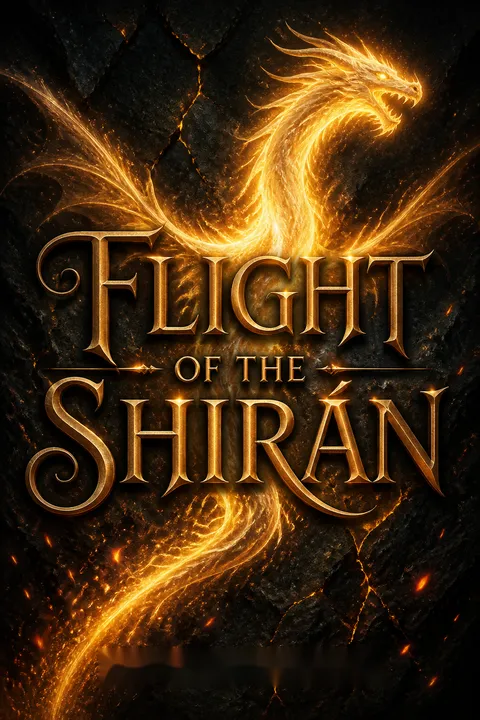


Plot Summary
A Mission Without Memory
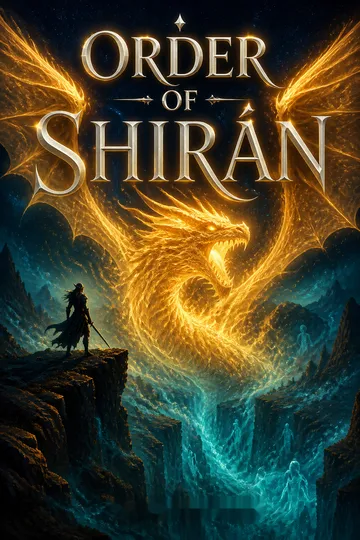
Newly returned to life as a Shirán warrior, Feldar is still learning what it means to become Zionar, a dragon. At his induction ceremony, he reveals that the goddess Aria has tasked him with destroying the Telzoran, weapons that steal souls, and killing Arzen, the revenant ruler behind them. The declaration silences the assembled warriors.
Feldar, however, feels less like a chosen champion than a man trapped in a life he cannot remember. He grieves for Talanor, his dead son, and believes he deserves no happiness because his arrow helped cause the child’s death. His grandfather, General Ortalan, gives him armor and a place in the Order, while Feldar promises only loyalty and service.
Feldar’s assignment makes the story’s central contradiction immediate: he is expected to save a world before he can recover the self that might save it. His guilt is not a vague sadness but a private sentence he imposes on himself, resisting the care offered by Ortalan and his friends. The public ceremony turns that private wound into spectacle, making the hopes of the Shirán another burden. His blunt acceptance of the mission masks not courage alone, but a wish to make his remaining life useful enough to justify his past.
Arzen's Spirit Catchers
Far beneath the desert, Arzen studies a sword he has transformed into a Telzoran, a weapon that tears Guiding Lights from elves and lets him grant stolen immortality to his followers. His chief counsellor, Hajnor Adak, reports that a new Shirán has arrived: Feldar, once the celebrated Silvan warrior Fel’annár.
Arzen fears the return of Feldar’s lightwielding power and decides to capture a Shirán who can reveal where the Illustracorvax creates their painted Keys. If Arzen can stop new Shirán from joining the Order, battle losses will eventually leave the skies without dragons. He also plans to win the human city of Fort Arlys, turning its population into revenants and using it to divide the allied elven realms.
Arzen’s power rests on converting a universal fear, mortality, into a system of ownership. He offers endless life, but ties each new revenant’s survival to weapons he controls. The apparent gift is therefore a political technology: it makes subjects dependent and turns loved ones into leverage. His plan against the Illustracorvax attacks not just the Shirán’s strength but their ability to replenish it. Against this machinery, Feldar’s task is not simply to defeat a villain. It is to break the means by which Arzen makes dependence feel like salvation.
Two Beranor Choose
At Origenta, Feldar’s closest allies, the Dominies Benzir and Onara, reveal that they too have been chosen by Aria. Their work will help Shirán warriors recover from the mental injuries of war and reconsider the Choice that follows death. Onara and Benzir must decide whether their future includes becoming Shirán themselves, a step that would rule out having children.
Their private hopes sharpen when they admit they want a family before that Choice arrives. Commander Dantor gives them practical work: Onara will plan Sanctuary, a refuge where hesitant spirits can reflect before deciding whether to serve, while Benzir will accompany Feldar south. Their assignments separate the couple and make their new divine purpose tangible.
The Beranor’s mission places care beside combat rather than beneath it. Onara and Benzir are not asked to win a battle; they are asked to make its consequences survivable and its costs intelligible. Their uncertainty about children gives this service a personal price, preventing divine duty from reading as uncomplicated virtue. Sanctuary embodies a crucial ethical distinction: invitation is not coercion. By creating space for a genuine Choice, the Dominies challenge the logic of Arzen’s immortality, which offers permanence only by binding the recipient to a master.
The Orders Point South
Dantor sends Ortalan and Feldar to the southern front, while the Rodite scout Manon receives a mission to investigate Arzenon. During training, Feldar spars with Ortalan and begins using the Kah fighting style again, drawing faint traces of light through his movements. He still cannot control that power, but the display convinces Dantor that his gifts may be returning.
The mission also carries a warning: Shirán returning from the third world, Yul’arán, have stopped appearing, and no one knows why. Before the patrol leaves, Feldar flies with Ortalan to Resurrection. The flight terrifies Benzir and Onara, but it gives them their first view of the Source and the worlds their new duties may eventually take them through.
Training makes memory bodily before it becomes autobiographical. Feldar cannot yet explain his former skill, but his movements know what his conscious mind has lost. That partial return offers promise without security: the light appears, then disappears, keeping the mission dangerous. Meanwhile, the missing Shirán from Yul’arán widens the story’s scale. The southern campaign is no longer only a defense of Naz’arán. It may be connected to a fracture in the passage between worlds, where the Order’s ordinary cycle of death, Choice, and return has stopped working.
A Queen's Private Welcome
On the long flight south, Feldar’s patrol reaches Xiondar, the mountain kingdom where Benzir once served as a captain. Queen Tyraquia receives the Shirán, recognizes that Feldar resembles the legendary Fel’annár, and accepts Benzir’s explanation that he cannot remember his first life.
The visit exposes the strain between the Shirán and ordinary warriors, who fear their animal forms and the memories of their deaths. At a tavern, Benzir tries to introduce his companions as allies, but a Xiondarian warrior reacts to Feldar as though seeing a ghost.
Feldar cannot place him. Before leaving the kingdom, Feldar spends a private night with Tyraquia, a choice that unsettles his friends and underscores how little his new life resembles the person he once was.
Xiondar makes Feldar’s amnesia socially visible. Others carry memories of him, while he has only their reactions, a form of intimacy that can feel more like accusation than recognition. The queen’s interest and the tavern’s unease show that his identity has political weight even when it has no personal meaning to him. His encounter with Tyraquia is not a recovered romance but an attempt to inhabit the present without the restraints of a past he cannot access. That freedom is real, yet incomplete, because it risks injuring bonds he does not remember making.
Fort Arlys Refuses Arzen
In Fort Arlys, Hajnor tries to persuade King Jessiah that Arzen’s immortality will preserve the human kingdom. Jessiah rejects the offer because the revenant ruler’s gift depends on stealing elven Guiding Lights and surrendering personal freedom. His daughter and heir, Zedah, sees the growing exodus of humans to Arzenon and urges her father to accept the practical bargain.
Meanwhile, Manon and Captain Saijon enter Arzenon in secret. Manon learns that no formal alliance has been signed, but humans are already travelling to Arzen’s training camps. He also detects rhythmic tremors beneath the desert, suggesting a tunnel toward Fort Arlys. He and Saijon remain inside the enemy realm to learn more, leaving the Alliance without their warning.
Jessiah’s refusal is grounded in a moral calculation, not ignorance of the danger. He recognizes that Arzen’s promise makes one person’s survival depend on another’s dispossession. Zedah, by contrast, treats mortality as a crisis that political compromise might solve. Neither position is abstract: each faces a population whose choices are reshaping the kingdom. Manon’s discovery of tunnelling turns that debate into a deadline. Arzen can exploit the division without first winning Jessiah’s consent, and the spy mission shows how fragile knowledge becomes when the enemy controls the terrain.
Galo Closes the Road
At Galorath, Feldar’s patrol meets Galo, god of Naz’arán. He confirms that the Source to Yul’arán has been closed because its ruler, Yul, has stopped attending the divine council and the Shirán sent there have not returned. Galo suspects the third world may be under attack, but cannot say what has happened.
His warning makes the silence around Yul’arán a crisis rather than a rumour. Feldar also learns that his mission is urgent because Arzen’s power and army are growing. In Tar Madin, the Alliance’s desert base, Feldar meets Ranoor, a guarded Xiondarian captain and the only known Lightwielder in Naz’arán besides Arzen. She agrees to help him recover his command of light.
Galorath’s revelation transforms the Source from a route between worlds into a contested boundary. Closing it protects Naz’arán from a danger Galo cannot identify, but also isolates the people who might need help most. The gods’ limited knowledge complicates any easy faith in divine authority: they have power, yet they cannot simply repair the system they govern. Ranoor’s arrival gives Feldar a human-scale counterpart to this cosmic uncertainty. Both wield light, but she bears its burden alone, making their potential partnership a practical necessity and an emotional risk.
Onara Reaches Tanakai
Left behind in Origenta, the ambitious Squaria Ezrah resents being kept from the front. Onara earns his trust by linking his desire to serve with the task of building Sanctuary. He reveals that he was once a Silvan commander who died before uniting his people against prejudice. Believing he failed, he changed his name and turned his shame into ambition, resentment, and a hunger for rank.
Onara explains that his death cut his purpose short; it did not prove him unworthy. She persuades Dantor to send Ezrah south under her supervision. Ezrah agrees to work with her, while Galara, his new lieutenant, helps keep him accountable. The mission gives him a chance to serve without being handed command.
Ezrah’s injury is a distortion of responsibility: he treats a life cut short by violence as evidence that he personally failed. Onara does not excuse his conduct, but separates his past injustice from the defenses he built around it. That distinction lets him accept guidance without surrendering agency. His return to the front is conditional, so service becomes a practice through which trust can be rebuilt rather than a prize for persuasive self-presentation. Onara’s method echoes Sanctuary itself: she offers a setting for reflection, but Ezrah must choose whether to enter it.
Vengeance Breaks Formation
On the way south, Feldar sees a mounted revenant he recognizes as the Calrazian commander who killed Talanor in his first life. Forgetting Manon’s warning and Lainon’s orders, he charges alone and throws a hunting spear.
When it misses, he fights through the commander’s escort and kills him at close quarters. Lainon and Manon have to join the battle, exposing themselves to danger, while Ortalan arrives to end the fight and reprimand Feldar. Feldar admits that vengeance blinded him to his companions’ safety.
Ortalan places him under their protection, warning that another lapse could end his field service. Feldar’s apology does not erase the risk, but Saijon’s comparison with Ezrah forces him to see how quickly grief can become a threat to others.
Feldar’s first contact with the enemy is also an encounter with the logic of his own trauma. The revenant becomes, in his perception, the past made killable; attacking him promises relief from grief, but instead endangers the people who have chosen to stand beside Feldar. Ortalan’s discipline matters because it refuses to romanticize vengeance as courage. Saijon’s comparison with Ezrah is painful precisely because it reveals a shared mechanism: each man has allowed an old wound to dictate present behavior. Feldar’s apology is a first act of accountability, not proof that the danger has vanished.
The Past Comes Through
After the battle leaves him injured, Feldar hears the name Llyniel in the infirmary and begins to remember the woman he loved. Alone in the desert, the memory opens into a flood: his wife, their children, his family, his friends, and the life he had built in Bel’arán. He understands that his grief over Talanor had sealed away the rest of his past.
With those memories restored, Feldar seeks out Ortalan and Panassar, then learns that Ezrah was once Tanakai, the Silvan hero whose example inspired Feldar as a child. He tells Ezrah that Tanakai’s unfinished work helped make Feldar’s own achievements possible. The two warriors recognize that they were never true enemies and agree to work together.
Memory returns through attachment, not command. Feldar cannot recover himself by being ordered to remember; the sight and name of Llyniel open the door that discipline alone could not. The recovered past does not cancel his guilt or promise reunion with his family. Instead, it restores context around the loss, allowing love, loyalty, and achievement to exist alongside it. His exchange with Ezrah completes this change in a social register: recognizing Tanakai as a source of his own courage replaces rivalry with indebtedness. Recovery becomes less about returning unchanged than learning how to hold a fractured history without being ruled by it.
Zionar Breaks the Telzoran
As Arzen’s forces move through Arlys Canyon, ballistas bring down Rexair, leaving Ortalan and Ranoor stranded on a ledge. Feldar disobeys orders to remain in the squarrig and drops to the ground, intending to rescue them as Zionar.
His first attempt to transform fails under pressure; he steadies himself, activates his Key, and becomes a dragon. When Arzen manifests as a two-headed giant wielding a sword and whip, Zionar answers with blue light. The blast destroys both Telzoran, releasing the captured Guiding Lights and damaging Arzen’s body.
The demigod withdraws. Feldar has not killed him, but he has discovered that his light can reverse Arzen’s magic, giving the Alliance a new weapon and a reason to believe the impossible mission can be attempted.
This is Feldar’s first decisive act as the weapon Aria intended him to become, but the breakthrough depends on disobedience and fear rather than effortless mastery. He chooses to risk himself because Ortalan and Ranoor are trapped, making rescue, not glory, the immediate motive. The Telzoran’s destruction also reveals that Arzen’s magic can be undone, a discovery with consequences beyond the battlefield: the revenants’ immortality is not invulnerable. Yet Arzen survives, and Feldar’s power remains newly awakened. The victory changes what the Alliance believes possible without making its eventual success secure.
Fort Arlys Changes Hands
Arzen advances on Fort Arlys with thousands of revenants while the Elven Alliance arrives to stop him. In the battle, Dorgash is wounded and Zionar combines his light with Ranoor’s. Their violet energy tears through the army, frees more stolen Guiding Lights, and melts sand and stone into glasslike formations that trap some revenants.
Zionar is caught by ropes and forced to crash, but the Shirán keep fighting. Inside the city, Zedah and Commander Dariot reject Jessiah’s command and open the gates to Arzen.
The king loses his city, while the Alliance retreats rather than risk slaughtering its human civilians. Hajnor is captured, but Ezrah and Saijon are taken inside the fortress. Arzen orders the transformed, failing revenants among his own ranks killed, concealing the cost of Feldar’s power.
The battle’s military victory and political defeat arrive together. Feldar and Ranoor expose a weakness in Arzen’s control, but the force of their combined light also produces destruction the Alliance cannot neatly govern. Meanwhile, Fort Arlys falls not through a simple breach but through a choice made inside its walls. Jessiah’s refusal cannot hold against the people who believe Arzen’s promise, and the Alliance’s restraint leaves the city in enemy hands. Arzen’s order to kill his decaying followers reveals the real terms of his immortality: when a subject becomes inconvenient evidence, loyalty offers no protection.
The Rescue Takes Shape
After the battle, Manon returns from Arzenon barely able to crossflesh, and healers take him in. His survival brings relief, but the missing Saijon and captive Ezrah remain unresolved. The Alliance confirms that Arzen now holds Fort Arlys, while Hajnor is its prisoner. Ortalan prepares to report to Aria, even as Feldar, Onara, Benzir, Lainon, Tensari, and Galara commit themselves to returning for their friends.
Feldar’s promise echoes the unity he once shared with his companions in Bel’arán, now joined by relationships formed in this life. Ortalan accepts that he will not abandon Ezrah. The novel ends with the rescue still ahead and Feldar’s larger mission unfinished: Arzen lives, and the remaining Telzoran have not been destroyed.
The ending offers commitment rather than closure. The survivors have won proof that Arzen can be hurt, yet the loss of Fort Arlys and the capture of two allies make that knowledge costly. Manon’s return reconnects the group, but it cannot repair the separations that now define their next task. Feldar’s recovered memories let him recognize the shape of a company again, though this new fellowship is not a restoration of the old one. The promise to rescue Ezrah and Saijon is therefore both strategic and personal: the war will continue because the people who fight it have become responsible for one another.
Analysis
Flight of the Shirán treats immortality not as a simple triumph over death, but as a political arrangement with a price. Arzen’s revenance promises relief from grief and bodily decline, yet it makes every recipient dependent on his weapons and authority. King Jessiah understands this bargain, while his daughter sees the real pressure created by people who already want to escape mortality. Their conflict gives the novel’s fantasy metaphysics a recognizable political shape: a population’s fear can make coercive power appear merciful.
Feldar’s inner struggle works on a parallel scale. He believes his guilt over Talanor disqualifies him from ordinary happiness, and his amnesia initially protects him from memories he cannot bear. But forgetting also prevents him from understanding the love and friendship that once sustained him. When Llyniel’s memory returns, it does not erase the loss. It gives him a fuller life in which grief is one truth among many. His recovery depends not on being declared innocent, but on recovering the context that lets him choose how to live now.
The novel repeatedly tests whether people can change without denying what they have done. Onara helps Ezrah distinguish an unfinished purpose from personal failure; Feldar recognizes that Tanakai’s example mattered even when Tanakai could not complete his mission. Their reconciliation suggests that moral inheritance is not a contest for credit. One person’s work can become another’s foundation. The final battle carries this idea into the physical world when Feldar and Ranoor combine their light. Their power frees souls, but its destructive force also leaves lasting damage, preventing victory from becoming morally clean.
The ending refuses easy consolation. Fort Arlys falls, Ezrah and Saijon are captured, and the route to Yul’arán remains closed. Yet the survivors choose to return for one another. Against Arzen’s system, which values people according to their usefulness, the Shirán’s defining strength is a costly loyalty that continues even when duty offers no guarantee of rescue.
Review Summary
Flight of the Shirán receives high praise from readers, with an average rating of 4.68/5. Reviewers commend the emotional depth, character development, and world-building. Many appreciate the continuation of the story from the previous book, with Feldar's journey and struggles resonating strongly. The book is noted for its blend of action, romance, and humor, with particular excitement around the inclusion of dragons. Some readers found the middle section challenging, but most eagerly anticipate the next installment in the series.
Characters
Feldar
Amnesiac dragon warriorFeldar is a resurrected Shirán warrior, the new name and life of the celebrated Silvan Fel’annár. He begins with only fragments of his past and the crushing knowledge that his son Talanor died through events connected to his own actions. Guilt makes him wary of affection and impatient with the attention his mission attracts. His dragon nature gives him moments of instinctive clarity that his elven mind lacks, while his Kah training survives in his body even when memory does not. Feldar is brave and often perceptive, but grief can make him reckless. His central struggle is to recover a usable self without allowing pain to dictate what he owes the living.
Ortalan
Protective Shirán grandfatherOrtalan is Feldar’s grandfather and a senior Shirán commander. A veteran of kingship, colonization, and war, he is most comfortable turning hard experience into instruction. His pride in Feldar is deep, but he restrains its expression because he knows expectation can make his grandson withdraw. Ortalan is loyal to Aria and the Order, yet his concern for Feldar sometimes puts personal feeling in tension with military duty. He can be stern, irreverent, and warmly attentive in the same breath. His leadership rests on the belief that warriors must be prepared for danger, while his family bond keeps reminding him that a useful soldier is still a person he may lose.
Onara
Dominie with a purposeOnara is a Dominie who helps warriors recover from the mental costs of death, resurrection, and service. Her attentiveness is practical: she watches how people behave, identifies what they are protecting, and looks for ways to help without confusing support with control. She is devoted to Benzir and values the possibility of a family, even as divine service may eventually ask her to choose another path. Onara’s empathy does not make her passive. She challenges Feldar’s self-punishment and finds a way to reach Ezrah when others have given up on him. Her plan for Sanctuary extends her belief that difficult choices deserve time, counsel, and genuine freedom.
Benzir
Wary warrior-scholar DominieBenzir is a former Xiondarian captain who became a Dominie after the trauma of a friend’s death. He is Feldar’s guide and companion, balancing a warrior’s instincts with a scholar’s questions about mortality, resurrection, and the Source. His gruff manner conceals tenderness, especially toward Onara, whom he loves and hopes to build a future with. Benzir understands grief because he has spent years trying to make meaning from a loss that drove him out of military life. He does not promise safety he cannot guarantee, but he stays close to those who need him. His role is to help Feldar live with his memories, not simply recover them.
Ezrah
Ambitious wounded captainEzrah is a Squaria warrior whose hunger for command and recognition makes him difficult to trust. He is intelligent, disciplined, and skilled at reading strategy, but his resentment can distort how he interprets other people’s generosity or success. He wants to serve actively and has little patience for being kept from the front. Beneath his ambition lies an old wound tied to a purpose he believes he failed to complete. Saijon knows a more loyal and vulnerable side of him than most people see. Onara’s counsel offers him a way to examine his past without reducing his entire identity to his worst behavior.
Arzen
Immortal revenant conquerorArzen is a revenant ruler whose magic, ambition, and mastery of the Telzoran make him the central threat to Naz’arán. He offers humans a way out of mortality, but the gift binds them to his authority and depends on power taken from others. He is patient enough to build an underground realm over centuries and ruthless enough to treat people as resources once they no longer serve his plans. Arzen combines political calculation with a taste for domination, adapting his methods when diplomacy fails. He is especially wary of the Shirán because their ability to wield light may counter the system on which his empire depends.
Ranoor
Isolated lightwielding captainRanoor is a Xiondarian captain and the only known Lightwielder in Naz’arán besides Arzen. Her command of light makes her indispensable, but years of expectation have taught her to keep people at a distance. She is blunt, disciplined, and quick to test anyone who approaches her, especially when she suspects they may mistake her power for an invitation to intimacy. Beneath that severity is exhaustion from standing watch over Arzenon and carrying responsibility alone. Feldar’s arrival offers the possibility of another person who understands the burden, though Ranoor is not quick to trust that promise.
Manon
Brown-eyed covert scoutManon is a Rodite Shirán whose brown eyes allow him to move through places where blue-eyed Shirán spies would be recognized. After centuries away from active duty, he returns to the field because he believes there may still be a future beyond his isolation. He is observant, wry, and more emotionally exposed than he likes to admit. His intelligence work in Arzenon is vital, but it forces him into danger without the protections a dragon or a full patrol could provide. Friendship with Onara, Benzir, and Feldar begins to make the attachments he once avoided seem worth the risk.
Saijon
Loyal Falkite captainSaijon is a Falkite captain and a skilled, dependable friend to Ezrah. He understands that Ezrah’s difficult behavior hides a painful history, but he refuses to expose that history before Ezrah is ready. Saijon is candid with Onara and Feldar when their judgments risk becoming unfair. His loyalty is active rather than indulgent: he supports his friend while still recognizing the damage that ambition and resentment can cause.
Lainon
Falkite friend and captainLainon is a Falkite captain and one of Feldar’s closest friends from his former life. He remembers their shared history even when Feldar does not, and tries to protect him without forcing memories he cannot yet bear. Lainon is observant, strategically minded, and often uses dry humor to soften tense moments. His partnership with Tensari is built on long service and mutual trust.
Tensari
Protective osprey lieutenantTensari is a Falkite lieutenant, a skilled warrior, and one of the people most deeply affected by Feldar’s forgotten past. She can be sharp when she believes he is acting carelessly, especially around the relationships he no longer remembers. Her protectiveness grows from shared history, not simple overconfidence in knowing what is best for him. She and Lainon offer Feldar continuity while allowing him room to become someone changed by grief.
Panassar
Scarred Alliance commanderPanassar is a respected commander in the Elven Alliance and a veteran of the wars in Bel’arán. His history includes grave failures, prejudice, and later attempts at redemption, making his relationship with Feldar complicated even before Feldar recovers the memories that explain it. Panassar is a capable strategist who carries the consequences of his earlier leadership rather than pretending they never happened.
Jessiah
Human king of ArlysJessiah is the thoughtful human king of Fort Arlys. He values learning and intellectual debate, but his resistance to Arzen is rooted in a concrete moral objection: he will not purchase his people’s safety through the suffering of others. His commitment to principle becomes harder to sustain as his subjects leave for Arzenon and his own family urges him to compromise.
Zedah
Ambitious royal heirZedah is Jessiah’s daughter and heir. She sees mortality as an immediate political danger and believes her father’s hesitation leaves their people exposed. Her confidence in practical solutions clashes with his moral resistance, and she is impatient with arguments that do not meet the crisis she sees unfolding. Her choices are shaped by ambition, fear for her people, and a desire to inherit a viable kingdom.
Hajnor Adak
Listener and imperial handHajnor is Arzen’s chief counsellor, an Adak Listener able to read people and hear the trees. He serves as diplomat, strategist, and the link between Arzen’s underground realm and human politics. His polished manner lets him argue for revenance as a solution to mortality, while his own loyalty to Arzen makes him capable of threatening those who refuse. Hajnor is more intellectually curious than a mere enforcer, but his skill at understanding others is in service of an empire that treats them as instruments.
Galo
God of the second worldGalo rules Naz’arán from Galorath and guards the world’s passage to Yul’arán. He is powerful but not omniscient, forced to act cautiously when the third world stops answering. His warnings give the Shirán a broader view of the danger they face.
Queen Tyraquia
Warrior queen of XiondarTyraquia is the ruler of Xiondar, a composed queen with a warrior’s authority and a keen interest in Feldar. Her court provides the Shirán with shelter, while her attention makes their brief visit politically and personally charged.
Galara
Wolfish Lupite lieutenantGalara is a Lupite lieutenant who joins Onara and Ezrah on their journey south. Direct and capable, she initially has little patience for Ezrah, but her sense of duty makes her willing to work with him. She becomes an important check on his conduct and an increasingly close companion.
Plot Devices
Shirán Keys and Crossfleshing
Transform warriors into ArimalsA Shirán carries a painted Key that allows them to change between elven and animal forms, called crossfleshing. Each clan has a distinct Arimal nature, from Falkite birds to Squaria dragons. In animal form, Shirán can fly, scout, transport troops, and bring extraordinary force to battle. The transformation also changes how they experience fear and purpose. Injuries can heal through crossfleshing, but the process does not make them invulnerable, and a wounded Arimal may be forced back into elven form. Arzen’s effort to discover where new Keys are painted gives the device a strategic importance beyond combat.
Guiding Lights and Telzoran
Make immortality a weaponA Guiding Light allows an elf to move onward through the worlds after death. Arzen’s Telzoran steal these lights and let him grant revenance to humans, offering them immortality while binding their continued existence to his authority. When a revenant dies, their stolen light moves on, but it does not automatically return to its original owner. Destroying the Telzoran can free the captured lights and interrupt Arzen’s control. The weapons therefore turn the story’s debate over mortality into a physical struggle, with each stolen light representing both a person’s lost future and Arzen’s growing political power.
The Dohai
Channel elemental fighting powerThe Dohai is a disciplined practice through which Kah warriors draw strength from their surroundings and project it through movement. For Feldar, its techniques survive beneath his amnesia: sparring with Ortalan brings back fragments of his combat ability before he can recall the life that taught him. Later, training in the desert helps him approach his lightwielding power. The Dohai links memory to physical action, making mastery something a warrior must perform rather than merely remember. It also provides the discipline that can restrain Feldar when grief and anger threaten to take control of his fighting.
The Source and the Worlds
Connect life, death, and passageThe Source links the elven worlds and governs the journeys of souls, whether they move onward after death or travel between worlds in life. Galorath stands near the passage from Naz’arán to Yul’arán, while the Shirán can use painted Keys to return to the world of their birth. When the Shirán stop returning from Yul’arán, Galo closes that route, protecting Naz’arán while isolating the third world. The Source gives the military conflict cosmic stakes: Arzen’s plans may spread beyond one kingdom, and the gods themselves cannot freely cross the boundaries to discover what has happened.
About the Author



Download PDF
Download EPUB
.epub digital book format is ideal for reading ebooks on phones, tablets, and e-readers.








