

Plot Summary
Prologue
Gra’dón, an exiled prince of Calrazia, studies the face he sees in a pool and finds both beauty and monstrosity there. He and his brothers are Nim’uán, a people feared by elves and driven from their homeland. Their mother died after their changing bodies became unbearable to her; their brother Xar’dón was killed while attacking the elves too soon.
Gra’dón now intends to claim the Great Forest Belt as a home for the surviving brothers and their followers. The forest is rich in water, the prize the Sun King wants, and Gra’dón believes conquest can give his family the acceptance they were denied.
The prologue makes the enemy’s desire for land inseparable from a wound of belonging. Gra’dón’s self-regard and his horror at his own body are not opposites so much as two defenses against rejection: he insists on beauty while naming himself a monster. His account of exile also leaves moral debt on both sides. The elves’ refusal to shelter his mother’s family helped create the threat now approaching them. This history complicates the coming conflict without excusing conquest, and the water-rich forest becomes both a home sought and a resource coveted.
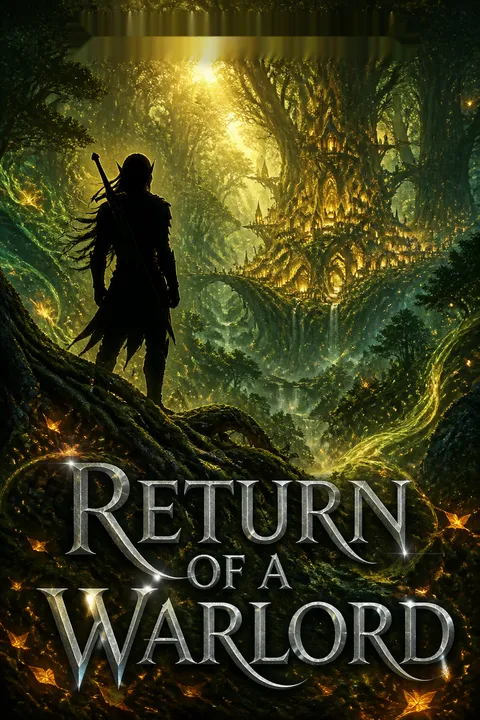
A Warlord’s Return Begins
After the battle against the Nim’uán at Tar’eastór, Fel’annár defeats Captain Sorei in a test and earns the armband that qualifies him as a Blade Master. His mentor, the injured Gor’sadén, cannot celebrate as he wishes, but agrees to continue training him on the journey home.
The victory is shadowed by news from Ea Uaré: Silvan rebels are confiscating goods, the king’s authority is weakening, and Lord Band’orán is using the unrest to argue against restoring a Silvan Warlord. Prince Handir’s proposed Restoration would reunite the divided people, but the returning warriors may find a kingdom already close to civil conflict.
Fel’annár’s promotion is a personal milestone that immediately becomes politically consequential. He has proved himself in a controlled duel, yet the leadership he may soon need cannot be earned by technique alone. Meanwhile, the rebellion exposes how ordinary commerce has become political: confiscated forest goods and threatened merchants make inequality visible in daily life. The section establishes a conflict between earned authority and inherited power. Fel’annár’s martial credentials are growing just as the institutions around him lose the trust that once made their commands effective.
Faith Before Departure
Commander Hobin confirms that Fel’annár belongs to the Ari’atór and carries the Guiding Light left by Lainon, a warrior who died protecting him. Fel’annár tells Llyniel that his divine duty may place service before their life together. She cannot share his certainty about Aria, but accepts him without pretending her doubts have disappeared.
They bond through the Silvan rite, weaving the braid that marks their union. Their intimacy gives Fel’annár the courage to tell Gor’sadén the same truth, while the bond also sharpens the stakes of his coming mission: danger to him will reach Llyniel too.
The revelation tests intimacy not by asking whether Llyniel can adopt Fel’annár’s faith, but whether she can love him without surrendering her own judgment. Their bond depends on difference being spoken rather than erased. For Fel’annár, disclosure breaks a pattern of withholding born from fear of rejection. At the same time, the Guiding Light reframes personal identity as obligation, a potentially perilous idea when a young warrior is already being cast as a political symbol. Love offers him belonging, but does not release him from the demands others place upon him.
Letters Beneath the Desk
While sorting papers in Tar’eastór, Handir discovers intercepted letters linking Lord Sulén to a powerful unknown patron. The correspondence refers to a target called a Listener and describes a pledge to kill him; other papers suggest Silvan lands have been mapped for Alpine seizure.
Handir recognizes that the danger is immediate and summons Fel’annár, the commanders, Llyniel, and The Company. They decide to avoid the main road and return by river and sea, concealing Fel’annár’s identity until they know what awaits them. The documents are their best evidence against Band’orán, but carrying them makes the whole party a target.
Handir’s discovery turns suspicion into a material problem: paper can be stolen, hidden, and used as proof, but only if its carriers survive. His value lies not in swordsmanship but in reading how ambition leaves traces across letters, maps, and promises. The planned seizure of Silvan territory reveals that the conflict is not merely about representation on a council. It concerns who controls land and labor. Choosing the dangerous southern route shows Handir’s emerging political judgment: delay may be safer for individuals, but catastrophic for the kingdom.
Four Princes, One Blade
The group leaves Tar’eastór carrying the letters and a drawing of the Nim’uán’s weapon. At Senge, a Listener among the king’s messengers recognizes that Fel’annár is with them but keeps his identity secret. The village sends them off with food and thanks, and Fel’annár comforts a child grieving over a plant left by his mother.
That night, Idernon compares the sword’s script with fragmentary studies of Calrazian language. He identifies a phrase meaning four princes, evidence that the Nim’uán killed at Tar’eastór was one of four royal brothers. The discovery turns a defeated monster into a warning of a larger threat.
The sword makes violence legible as history. Idernon’s scholarship links a single battlefield enemy to a political family and a wider future danger, while the child’s plant gives Fel’annár’s care a smaller, more intimate scale. Both moments concern inheritance: one reveals a bloodline that may bring war, the other preserves a mother’s memory through living growth. The juxtaposition resists treating all family legacy as destiny. Some inherit a claim to rule, others a fragile responsibility to tend what remains.
The River Takes Them
Mercenaries ambush the party beside the swollen Cor’hidén, forcing the group into boats as spring melt and a storm turn the river violent. Their craft strikes a boulder and begins to capsize. When Handir is trapped beneath the water, Fel’annár lets go of the boat to keep hold of him.
The brothers tumble through the canyon, and Fel’annár shields Handir as they plunge over Horizon Falls. A tree tears free of its roots and breaks their fall before they hit the water. They reach a quieter shore, but Fel’annár’s attempt to revive Handir leaves him exhausted and injured, while the rest of the party believes both are lost.
The river forces the relationship between the brothers out of abstraction. Fel’annár’s choice is a tactical sacrifice, but it also reveals an attachment he has not yet admitted. Handir’s survival depends on a body willing to bear the impact, while the tree’s intervention makes the forest an active participant in protection. The scene also exposes the limits of command: Pan’assár must stop pursuing them when the current makes rescue impossible. Duty here is neither obedience nor invulnerability. It is deciding whom to hold on to when every available choice carries a cost.
Hounds on the Ridge
While Fel’annár shelters the feverish Handir in a cave, the separated Company searches the riverbanks and finds Fel’annár’s tracking marks. Mountain Hounds corner the injured warrior outside the cave, where he fights with a crude spear. Tensári, an Ari’atór who followed the Guiding Light, arrives in time to kill the pack’s leader and drive the others away.
The reunited party continues toward the coast and finds Sulén’s camp destroyed by Deviants. Sulén and his son are dead, but their bodies have been displayed in the same manner as the Nim’uán’s, suggesting deliberate retaliation. Pan’assár finds Or’Talán’s journal hidden on Sulén’s body.
The rescue gives Tensári’s arrival a practical and emotional purpose: she follows a duty she has only begun to understand, while Fel’annár survives through skill rather than power alone. The dead at Sulén’s camp broaden the threat beyond the immediate political conspiracy. The matching display suggests that Nim’uán violence has its own memory and intention. Or’Talán’s journal, hidden among the dead, turns a violent aftermath into a source of evidence. The party’s progress now depends on reading traces left by enemies as carefully as it reads the forest itself.
A Sea Full of Knives
At Bulls Bay, Llyniel persuades her old human friends Bredja and Hamon to shelter the travelers, then helps secure passage aboard a merchant ship. The Company’s Silvan warriors see the sea for the first time, and Ramien is overwhelmed by a giant aquatic creature leaping beside the vessel.
Near Port Helia, pirates board the ship, using the confusion to let mercenaries attack the party. Handir helps defend Llyniel, and the group fights its way back together, though Carodel’s lyre is destroyed. At the stables beyond the port, Captain Turion finds them and confirms the king’s summons. He also learns that his friend Lainon has died.
The sea passage is both a necessary shortcut and a world that strips Fel’annár of his usual orientation. Without trees to warn him, he must rely on human allies, military habits, and the instincts of his companions. Bredja’s hospitality shows that trust can cross species and social boundaries, while the pirate assault exposes how easily commercial spaces become sites of violence. Ramien’s wonder at the sea and Turion’s grief over Lainon give the journey emotional breadth. Survival does not erase loss; it carries loss onward.
The King Goes Missing
In Ea Uaré, King Thargodén is lured away from his escort by Captain Bendir and taken to Band’orán’s residence. After the king disappears and his guards are found dead, suspicion falls on Silvan rebels. Crown Prince Rinon imprisons Angon, a forceful Silvan warrior, but soon recognizes that the evidence may have been staged.
He questions Angon, who swears his innocence, then frees him to help search for the king and demonstrate Silvan loyalty. Their uneasy alliance gives both sides a chance to challenge Band’orán’s story. Meanwhile, the Silvan encampment grows, Alpine crowds turn hostile, and the coming votes threaten to turn political exclusion into open war.
Rinon’s decision to listen to Angon is a break from the reflexive suspicion that has shaped relations between the two peoples. Their alliance is not founded on sudden trust; it is a strategic wager that shared evidence can interrupt a cycle of accusation. Band’orán’s advantage comes from making every response confirm his story: Silvan resistance looks like guilt, while Alpine repression looks like order. The section shows how political violence can be manufactured through interpretation before armies ever meet. Rinon’s task is to create a public test that neither side can dismiss as mere rhetoric.
The Forest Chooses Fel’annár
As the party enters Ea Uaré, Fel’annár communes with the forest and senses that the king is in danger. He reaches the Silvan camp with The Company, where the elders want to install him as Warlord immediately. Fel’annár refuses to make the ceremony his priority while Thargodén is missing.
He confronts Amareth, the aunt who raised him, about concealing his family and identity. She explains that she feared Band’orán would find and kill him, but Fel’annár also sees that her secrecy denied him a choice. Before they can repair their trust, Farón, a trusted Silvan warrior, incapacitates Fel’annár and Tensári with Dream Vine and carries Fel’annár away.
The forest’s recognition of Fel’annár seems to confirm the destiny others have assigned him, but his refusal to accept immediate elevation asserts that vocation cannot substitute for consent. Amareth’s protection has preserved his life, yet it has also shaped that life through concealment. Fel’annár’s anger names a cost often hidden beneath benevolent paternalism: being kept safe can mean being denied knowledge and agency. Farón’s attack exploits the very community that should shelter him. The betrayal makes trust, not merely physical strength, the central vulnerability of a leader expected to unite his people.
A Son in the Flood Pit
In the caverns beneath Analei, Thargodén is chained beside Fel’annár after Band’orán captures the young warrior. The king recognizes his son’s resemblance to Or’Talán and learns that the boy is the child of Lássira, the woman he loved.
Band’orán admits that he ordered Lássira’s death because he feared her union with Thargodén would make them too powerful, and he resents the brother whose brilliance eclipsed his own. Fel’annár tells Thargodén that Or’Talán had secretly tried to protect Lássira rather than reject their bond. As the underground chamber begins to flood, Fel’annár breaks the king’s chain, but cannot free himself before the water rises.
The father and son meet only after both have been reduced to captives, a setting that strips away royal ceremony and leaves them with unfinished grief. Band’orán’s confession links private humiliation to public tyranny, but his pain does not lessen his responsibility for murder. Fel’annár’s account of Or’Talán begins to repair a family history built on a false belief in betrayal. Yet revelation comes too late to guarantee reconciliation. The rising water makes the emotional problem physical: understanding has arrived, but time may not allow the family to use it.
The Inner Circle’s Old Crime
As the searchers locate the hidden chambers, Pan’assár studies Or’Talán’s journal and notices that its account of the final battle contradicts Captain Dinor’s. Or’Talán had sent for reinforcements from Sen’uár, where Dinor was stationed, but Dinor later claimed he had been elsewhere.
During the Inner Circle’s vote on the Warlord, Pan’assár confronts Dinor and General Huren with the discrepancy. Huren finally admits that he and Band’orán arranged for reinforcements not to reach Or’Talán, leaving him to die. Pan’assár arrests the conspirators and wins the captains’ renewed allegiance to Thargodén, then leads them toward the Royal Council.
Pan’assár’s investigation is also an act of moral self-revision. For years he treated Silvan soldiers as inferior and accepted Huren’s command, while his loyalty to Or’Talán remained a source of pride. The journal forces those parts of his identity into conflict. By naming the old crime publicly, he exposes the institutional failure behind the kingdom’s present crisis: treason was not an isolated act but a breach concealed within military procedure. His renewed authority comes not from claiming innocence, but from accepting responsibility and making the evidence answerable to others.
A Warlord Is Armed
After the Company frees Fel’annár and Gor’sadén channels energy from the Dohai to revive him, the exhausted group returns to the Silvan camp. Amareth dresses him in carefully made armor and ceremonial clothes, each piece carrying the work and symbols of Silvan communities. She braids his hair to represent his Alpine, Silvan, and Ari heritage, along with his warrior training and bond with Llyniel.
Fel’annár accepts the role he had refused earlier, not because the council has demanded it, but because he now understands the people’s hope and the danger facing them. Across the city, Handir prepares to challenge Band’orán at the Council while the Inner Circle considers its vote.
The armor transforms a political title into a collective labor. Its materials bear the names and skills of people Fel’annár has not yet met, making leadership something made by many hands rather than bestowed by birth alone. Amareth’s braiding is both an act of care and an acknowledgment of what her earlier secrecy cost. Fel’annár’s acceptance is therefore neither simple submission to prophecy nor triumph over doubt. He takes up the role after seeing its human constituency. The section also sets up a contrast between ceremonial legitimacy and the evidence Handir must place before a divided council.
The Council Catches Fire
Handir presents the intercepted letters and maps to the Royal Council, arguing that Band’orán used fear of Silvan rebellion to conceal his plan to seize land and power. At the Inner Circle, Pan’assár’s evidence implicates Huren and Dinor in Or’Talán’s death. The council’s confrontation turns violent when Band’orán’s guards reveal themselves as illicit Kah Warriors.
Thargodén, rescued from Analei, enters with Pan’assár and the captains, but Band’orán escapes through the secret Dark Road after stabbing Huren and ordering the hall attacked. Barathon, who had begun doubting his father, has already been strangled by Band’orán. The fight spreads through the palace as the king’s remaining forces struggle to regroup.
The council scene demonstrates how evidence can briefly restore public judgment, but cannot by itself dissolve a private army already positioned for violence. Handir’s argument and Pan’assár’s discovery expose different layers of Band’orán’s plan: the immediate conspiracy and the older betrayal that made it possible. The secret road turns institutional knowledge into an operational advantage for the usurper. Barathon’s fate makes the cost of family loyalty especially stark: his desire for his father’s approval leaves him vulnerable to the very person he tries to understand. Political revelation opens the truth, but force determines whether anyone can act on it.
The Ashorn Calls Silvans
Outside the palace, Thargodén’s small loyal force faces a much larger army of Band’orán’s trained Kah Warriors. The king sounds the Ashorn, and Fel’annár arrives with hundreds of Silvan fighters, organized into an arrowhead with archers positioned to answer the enemy’s bows. Fel’annár leads the charge and directs the battle while his companions fight beside him.
The Silvans use pairs and small units to counter the more highly trained opponents. Angon helps protect Rinon and dies in the fighting, asking the prince to honor their wager by winning. His sacrifice deepens Rinon’s resolve. The tide turns, but Band’orán escapes into the Evergreen Wood with Bendir and Dinor.
The Ashorn converts a private hope into a public coalition. The Silvans do not arrive because prejudice has vanished; they arrive because Fel’annár’s leadership offers a cause that can hold difference without denying it. His command is concrete, involving formations, archers, and timely redeployment, rather than a purely symbolic claim to authority. Angon’s death gives the alliance a painful cost and prevents the victory from feeling effortless. The battle also reveals that shared training can serve either domination or defense. Band’orán’s escape leaves the final conflict outside the institutions he has manipulated.
The Evergreen’s Sentence
Fel’annár follows Band’orán into the Evergreen Wood, where the trees restrain Bendir and Dinor and answer the Warlord’s command. Band’orán’s skill nearly overcomes him, then he throws blinding powder into Fel’annár’s eyes. Though unable to see clearly, Fel’annár reads his opponent through sound, heat, and the forest’s shifting light, and uses the Enha’rei to cut Band’orán’s royal collar from his neck.
Thargodén sentences his uncle, then lets Fel’annár decide the punishment. The Warlord releases the trees, which kill Band’orán and his captains. Sontúr treats Fel’annár’s eyes, which remain covered as the party returns to the palace. Thargodén is restored, but Fel’annár understands that rebuilding trust and the kingdom has only begun.
The final duel makes Fel’annár’s authority depend on perception beyond ordinary sight, but it does not render his injury a costless miracle. He wins through training, adaptation, and communion with the forest, while remaining physically vulnerable afterward. Thargodén’s decision to leave punishment to Fel’annár recognizes the Warlord’s agency without turning the king into a spectator. The forest’s vengeance is powerful, yet its violence cannot repair the institutions or relationships damaged by Band’orán. The ending therefore resists a clean restoration: the old ruler returns, but the work of making the realm worthy of its people remains unfinished.
Epilogue
Far to the south, a pale traveler draws water from a shallow well and looks toward the green lands he intends to claim for his people. The Evergreen’s Sentinels sense him and stir. In the palace, Fel’annár wakes from a long healing sleep with cloth still over his eyes.
He feels his bond with Llyniel and hears the distant warning carried through water and earth. The sound recalls the Nim’uán’s strange beauty and horror. Although Band’orán is gone, the forest has noticed another presence approaching, and the Warlord’s recovery begins under the sign of a new threat.
The epilogue refuses to equate political victory with safety. Fel’annár has helped restore a king and overcome the enemy who shaped the book’s immediate crisis, yet the Sentinels detect an older danger moving toward the forest. Water, previously a source of wealth and a motive for conquest, becomes a medium through which distant threats can be sensed. The parallel images of the traveler seeking a home and the injured Warlord waking suggest that belonging will remain contested. The conclusion closes one struggle while making clear that the forest’s history exceeds any single ruler’s triumph.
Analysis
Return of a Warlord makes restoration a problem of relationships as much as a change of government. The political crisis grows from real injuries: Silvans have been denied an equal voice, Thargodén has been hollowed by grief, and Pan’assár has mistaken inherited command for deserved loyalty. Band’orán exploits these wounds, but his grievance does not absolve him. The novel distinguishes understanding a motive from excusing its consequences.
Fel’annár’s identity is repeatedly claimed by others before he can decide what it means. His family concealed his ancestry for protection; the Silvans imagine him as their Warlord; Aria assigns him a sacred purpose. His strongest steps toward leadership come when he makes choices within those pressures: telling Llyniel the truth, refusing to accept immediate investiture while the king is missing, and taking command when the danger becomes unavoidable. The story therefore treats agency not as freedom from obligation, but as the capacity to judge obligations rather than merely inherit them.
The journeys through river, sea, forest, and palace make political instability tangible. The river separates the brothers and then forces Fel’annár to protect Handir with his own body. The sea deprives the forest-born company of familiar warnings. The palace’s hidden passage allows a coup to become a military assault. Each setting changes what kind of knowledge matters, from reading currents to reading letters, tracks, and loyalties.
The final victory does not erase the structures that made Band’orán’s rise possible. His defeat leaves the kingdom with a damaged army, frightened citizens, and relationships built on secrecy or prejudice. Fel’annár’s blindness, though not permanent according to Sontúr, underscores that victory has a bodily cost. The novel ends by making restoration an ongoing practice: rebuilding trust, sharing authority, and treating the forest’s people as participants in rule rather than resources to be managed.
Review Summary
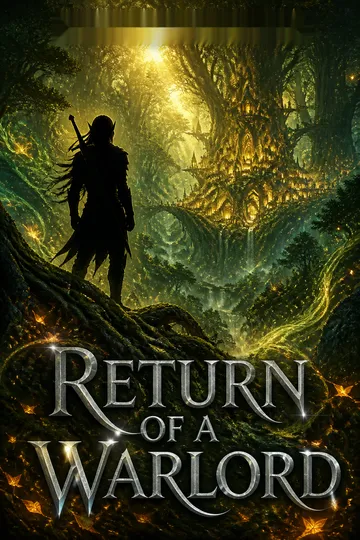
Readers highly praise Return of a Warlord, the fourth book in R.K. Lander's Silvan series. With an average rating of 4.6/5, reviewers commend the immersive world-building, character development, and action-packed plot. Many consider it the best in the series, appreciating the resolution of previous storylines while setting up future conflicts. Fans love the emotional depth, complex relationships, and political intrigue. Some readers note confusion with character names and suggest re-reading previous books. Overall, most eagerly anticipate the next installment in this epic fantasy series.
Characters
Fel’annár
The reluctant forest leaderA young warrior raised in the Deep Forest, Fel’annár is known for unusual listening abilities, exceptional discipline, and a face that recalls the rulers of Ea Uaré. He wants the ordinary achievements of a soldier, especially mastery of the Kal’hamén’Ar, but his sense of responsibility keeps drawing him toward larger burdens. His relationships give him competing forms of belonging: Llyniel offers chosen intimacy, Gor’sadén offers paternal guidance, and The Company offers brotherhood. Fel’annár’s defining tension is between being treated as a symbol and being allowed to act as a person. He is most convincing when he joins instinctive compassion to careful, learned command.
Thargodén
The grieving kingKing of Ea Uaré and father to Handir, Rinon, and Fel’annár, Thargodén has spent years diminished by grief for Lássira and by his belief that his father betrayed him. His private sorrow has public consequences: others read withdrawal as weakness and use it to question his right to rule. He is not naturally cold, but he has learned to contain feeling behind royal duty. His relationship with his children reflects different kinds of distance, shaped by absence, inheritance, and old wounds. Thargodén’s desire to govern well is real, though recovering the capacity to act requires him to face the history he has avoided.
Handir
The scholar-princeHandir is Thargodén’s younger son, a thoughtful prince trained in council work rather than combat. He once kept Fel’annár at a distance, partly because their mothers’ histories and his own grief made closeness difficult. His strengths are attention, patience, and the ability to recognize patterns in documents and political behavior. Handir’s composure can conceal anxiety, especially when physical danger exposes how little warrior training he has. He respects skill without pretending to possess it and becomes more effective as he learns to use his own gifts publicly. His friendship with Llyniel and growing bond with Fel’annár help him move from private study into consequential action.
Llyniel
The healer and soulmateLlyniel is a healer with Silvan roots and an independent, practical temperament. She loves Fel’annár but does not share his certainty about divine guidance, and she refuses to disguise that difference to reassure him. Her compassion is active: she tends injuries, makes plans, and draws on friendships beyond the royal and military worlds. She also has a complicated history with her parents, who kept her close to court when she longed for the forest. Llyniel’s strength lies in combining emotional candor with competence. She can comfort those she loves without surrendering her judgment or reducing herself to a role beside them.
Gor’sadén
The wounded Kah MasterA Kah Master and one of the legendary Three, Gor’sadén mentors Fel’annár through rigorous weapons training and teaches him that command requires more than technical skill. A severe injury limits his movement, but not his resolve to remain beside his pupil. He is capable of deep affection without making it sentimental, and his bond with Fel’annár becomes a form of chosen fatherhood. Gor’sadén trusts discipline, experience, and loyalty, yet remains open to discoveries that challenge what he thought possible. His steady presence helps Fel’annár interpret power without mistaking it for permission to rule unchecked.
Pan’assár
The burdened commanderPan’assár commands Ea Uaré’s army and shares a history of war with Gor’sadén and Or’Talán. He is disciplined, formidable, and accustomed to being obeyed, but his judgment has been compromised by old resentment toward the Silvans. He believes himself loyal to the crown even when his conduct harms the people he is meant to protect. Encounters with Fel’annár and the unfolding crisis force him to consider the difference between formal loyalty and moral responsibility. His relationship with the younger warrior is difficult but increasingly marked by respect. Pan’assár’s defining struggle is whether he can acknowledge the damage he has helped sustain.
Band’orán
The ambitious royal uncleBand’orán is Or’Talán’s brother and Thargodén’s uncle, a powerful councillor whose public composure masks a consuming sense of being overlooked. He values martial prestige, political influence, and the recognition he believes his family denied him. His grievance is not invented, but he turns it into a justification for domination, manipulation, and hostility between peoples. Band’orán understands how pride and fear can move groups more effectively than direct force, which makes him a persuasive political operator. His private attachment to an idealized past complicates his self-image without excusing the harm he causes.
Idernon
The searching scholar-warriorIdernon is a member of The Company and Fel’annár’s childhood friend. His curiosity is methodical, especially when he studies languages, histories, and the Nim’uán sword. He can be skeptical of spiritual explanations, but his skepticism comes from an honest desire to understand rather than contempt. In danger, he combines observation with courage, sometimes blaming himself too readily when events go wrong. His loyalty to Fel’annár is profound, though not blind: he is willing to question the costs of leadership and to admit when evidence changes his view.
Tensári
The watchful Ari warriorTensári is an Ari’atór warrior who follows a demanding code and carries herself with reserve. Her grief over Lainon’s death initially complicates her feelings toward Fel’annár, whom she associates with the loss. She is not quick to offer comfort or explanation, but her actions are decisive when danger arrives. Tensári’s discipline often conceals uncertainty about the unusual guidance she receives. Her developing trust in Fel’annár rests on recognizing his limitations as well as his purpose. She is most at ease when duty can be expressed through concrete protection.
Sontúr
The healer-princePrince Sontúr of Tar’eastór is a member of The Company and an ally of Fel’annár. Dry-witted and observant, he brings practical medical knowledge to a group more accustomed to fighting than resting. His empathy is often expressed through preparation: remedies, supplies, and attention to what others overlook. Sontúr is also willing to leave royal comfort for a difficult journey, showing that his loyalty is chosen rather than imposed by rank. His familiarity with the sea and healing traditions helps the company survive unfamiliar terrain.
Amareth
The protective auntAmareth raised Fel’annár as her own after the death of his mother, Lássira. She is a determined political actor who has worked to protect Silvan interests while concealing facts she believed would endanger him. Her devotion is genuine, but it can become controlling when fear persuades her that she alone should decide what others are allowed to know. Fel’annár’s questions force her to confront the difference between loving someone and preserving their agency. She is also shaped by her connection to the Ari’atór and by the burden of maintaining a secret over many years.
Rinon
The hard-edged heirRinon is Thargodén’s elder son and a military captain whose anger can sharpen into poor judgment. He has spent much of his life estranged from his father, while remaining protective of his siblings. Rinon is quick to challenge others and slow to grant trust, but he is not incapable of revising his assumptions. His dealings with Angon reveal a more strategic side: he understands that public confidence must be earned through visible fairness. He represents a form of leadership grounded in action, but one that must learn to temper force with patience.
Turion
The loyal field captainTurion is a seasoned captain who helped bring Fel’annár into military life and remains closely connected to Lainon. He is practical, observant, and careful about the people entrusted to his command. His loyalty is personal as well as institutional, which makes the losses and political betrayals around him deeply affecting. Turion has earned the confidence of both soldiers and statesmen because he can translate between their different concerns. He is less interested in prestige than in getting people safely through the next danger.
Angon
The restless Silvan rebelAngon is a Silvan warrior who believes his people have waited too long for fair treatment. He is blunt, forceful, and capable of inspiring those who are tired of polite appeals. His frustration can lead him toward unilateral action, though he remains sensitive to the difference between protecting his people and speaking for them without consent. Angon’s loyalty is grounded in comradeship and the safety of the forest communities. He distrusts Alpine authority, but his convictions are not simply hatred; he wants a society in which Silvan lives and skill count.
Farón
The respected Silvan warriorFarón is a skilled Silvan fighter whose standing comes partly from his connection to Lainon’s teaching and the trust of the community. He is ambitious to learn the Kal’hamén’Ar and sees military training as a means of protecting Silvan interests. His confidence in strong leadership makes him susceptible to promises of influence and order. Farón’s role highlights how a community’s trusted figures can be pulled toward competing visions of what justice requires.
Huren
The king’s senior generalHuren is an experienced general who manages deployments and commands respect within the army. He is capable of strategic patience and presents himself as a reliable servant of the crown. His relationships with powerful lords and ambitious captains place him at the center of military decision-making. Huren’s professional composure makes him difficult for others to read, particularly in a kingdom where the appearance of loyalty can be as important as its substance.
Barathon
Band’orán’s uncertain sonBarathon is Band’orán’s son and a captain who has grown up measuring himself against his father’s expectations. He longs for recognition but feels perpetually overshadowed, making praise and approval unusually powerful for him. Barathon’s social position offers privilege without emotional security; he is surrounded by ambitious companions but lacks the warmth he seeks at home. His hesitation about his father’s conduct reflects a conflict between family loyalty and his own developing moral judgment.
Bredja
Llyniel’s human friendBredja is a human healer in Bulls Bay and a longtime friend of Llyniel. Warm, irreverent, and generous, she offers shelter without losing her healthy suspicion of danger. Her mortality gives their friendship a different rhythm from Llyniel’s immortal life.
Narosén
The Silvan Ari elderNarosén is an Ari’atór elder who advises the Silvan leadership. He is perceptive and difficult to surprise, often noticing what others conceal about themselves. His calm presence lends spiritual and political weight to the Council of Elders.
Gra’dón
The exiled Nim’uán princeGra’dón is one of four royal Nim’uán brothers, exiled from Calrazia and determined to secure a home for his surviving family. He struggles with the contradiction between his elven ancestry and his feared, predatory nature. His need for acceptance is sincere, but his chosen path of conquest threatens the forest people whose homeland he covets.
Plot Devices
Or’Talán’s Journal
A record that reopens historyThe journal is carried by Sulén and later recovered by Pan’assár. Its entries complicate the accepted account of Or’Talán’s final battle, guide Pan’assár toward the truth about Dinor and Huren, and help correct Thargodén’s belief that his father rejected Lássira. The journal functions as more than evidence: it gives the dead king a voice in the disputes of his descendants. Its private observations also show how historical records can preserve truth while remaining incomplete, requiring readers to compare them with testimony and military records.
The Guiding Light
A bond that signals dangerAri’atór receive a supernatural connection associated with their duty to protect a Ber’anor. Fel’annár and Tensári gradually understand this guidance through sensation rather than ordinary communication. It helps Tensári find Fel’annár after the river disaster and later directs the search toward the place where he is held. The device makes spiritual duty concrete without making it simple: the characters still have to interpret what they feel, make choices, and accept the danger of acting on uncertain signals.
The Forest’s Voice
A living landscape warns and answersFel’annár listens to the forest as a network of living awareness. Trees warn him about danger, guide his movement, and at moments act physically to protect people. His connection becomes more powerful during communion with Ea Uaré and shapes both his battlefield command and his pursuit of Band’orán. The forest is not a neutral weapon under his control: its movements can be imprecise, and its anger can endanger allies as well as enemies. The device links ecological belonging to political responsibility, while making clear that power over a place carries obligations to it.
The Bonding Braid
A visible choice to uniteThe Seven Wheels and interwoven strands mark a voluntary Silvan union. Fel’annár and Llyniel exchange braids after he tells her about his Ari’atór nature and duty. The braid makes their commitment legible to a community that may otherwise question the relationship or its status. It also acts as a recurring sign of chosen belonging: Fel’annár’s connections are not limited to ancestry, royal titles, or prophecy. The device carries cultural meaning while remaining rooted in the personal decision of two people to accept one another honestly.
The Dark Road
A hidden route for royal powerThe Dark Road is a network of concealed underground passages intended to let the royal family escape danger. Its existence shapes the returning party’s plans for entering the city and later gives Band’orán’s forces a covert route into the palace. The route embodies the double nature of political infrastructure: a safeguard created to protect a legitimate ruler can be exploited by those who know its secrets. Its concealed exits also make the final conflict a question of preparation, intelligence, and control of access rather than a simple contest at the gates.
The Silvan Series



About the Author
Download PDF
Download EPUB
.epub digital book format is ideal for reading ebooks on phones, tablets, and e-readers.








